Tribal Museum
Explore the Tribal Museum in Koraput, Odisha. Sourced travel guide covers indigenous Bonda and Gadaba exhibits, Keranga textiles, timings, entry fees, and route.
Location
Koraput, Odisha
A closer look
Your visit, at a glance.
Koraput, Odisha
GET TO KNOW THE PLACE
Situated gracefully atop the breezy hillock of Pujariput at an elevation of 2,900 feet (884 metres) in the heart of Koraput town, the Tribal Museum stands as southern Odisha’s…
The story of Tribal Museum
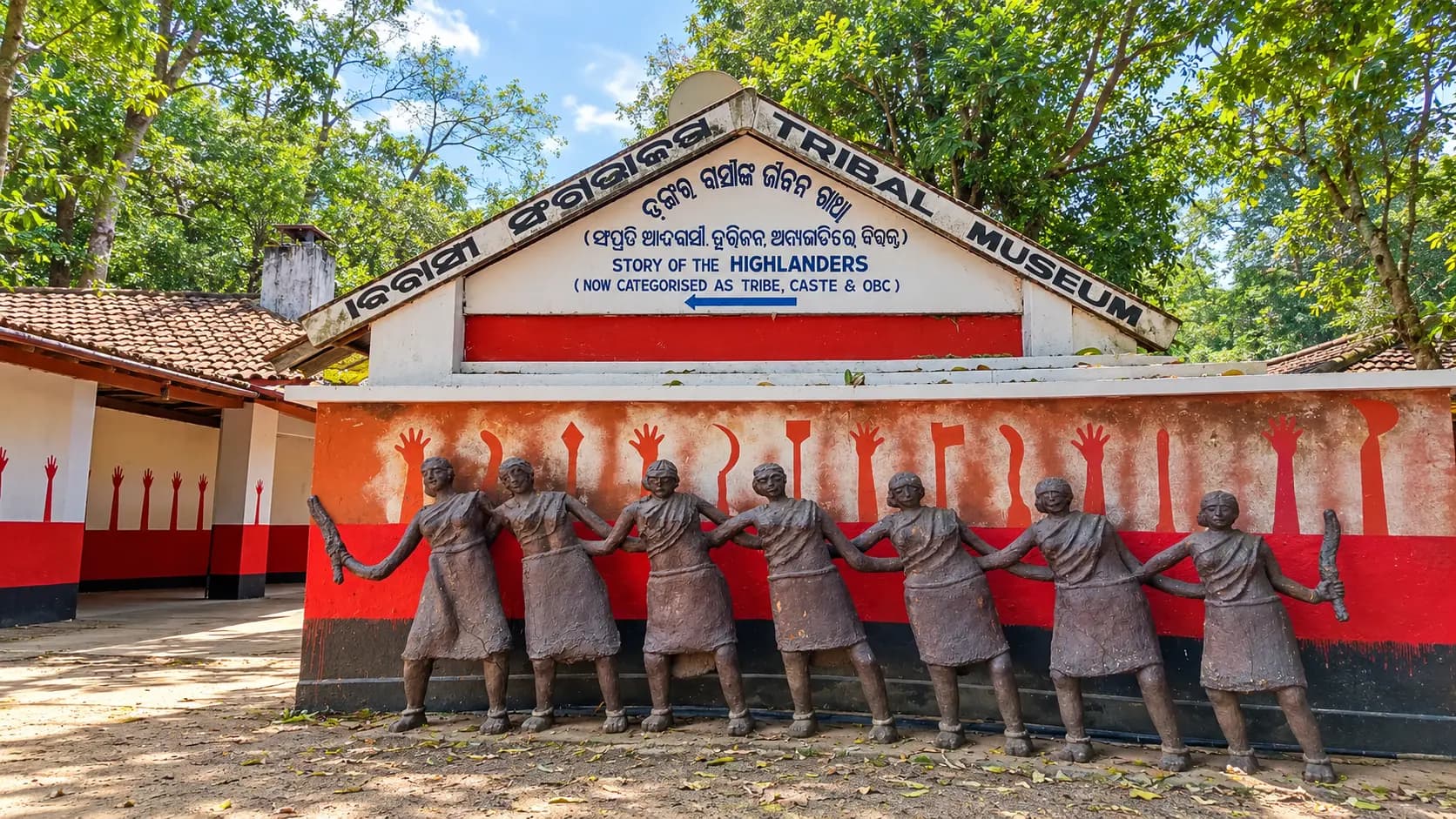
Situated gracefully atop the breezy hillock of Pujariput at an elevation of 2,900 feet (884 metres) in the heart of Koraput town, the Tribal Museum stands as southern Odisha’s most vital institution dedicated to the preservation, documentation, and celebration of indigenous heritage. Located immediately behind the sacred precincts of the Sabara Srikhetra Jagannath Temple, this evocative cultural complex provides visitors with an authentic, respectful, and comprehensive gateway into the vibrant world of Odisha’s 62 Scheduled Tribes. With an intensive focus on the unique communities inhabiting the rugged mountains of the undivided Koraput region - including the Bonda, Gadaba, Kondha, Paraja, Saura, and Didayi - the museum serves as an indispensable educational and anthropological landmark.
Koraput is internationally recognized by sociologists and anthropologists as a living cradle of indigenous civilization, where communities have nurtured profound spiritual ties with nature, sustainable agricultural systems, and extraordinary artistic traditions for thousands of years. The Tribal Museum was established to honour this profound legacy and ensure that tribal material culture is safeguarded against rapid modern erosion. Within its stone-paved galleries, visitors encounter an astonishing treasury of genuine material culture: ancient hunting weaponry, traditional fishing apparatus, sacred animist ritual objects, intricate bell-metal (dhokra) castings, ancestral musical instruments, and dazzling ceremonial jewellery.
Beyond its indoor galleries, the museum grounds feature an enchanting open-air ethnographic park with full-scale, authentic reconstructions of traditional tribal homes. Each dwelling has been meticulously crafted using traditional bamboo wattle, sun-dried clay plaster, hand-cut timber pillars, and thick thatched roofs, complete with sacred wall paintings (jhotis and iditals) created by tribal artists. Pairing a visit to the Tribal Museum with the egalitarian Sabara Srikhetra temple next door offers travellers a deeply enriching, holistic perspective on how tribal cosmology, sacred worship, and daily life are harmoniously intertwined in the Eastern Ghats.
Start here. Open a tile for the full details.
Why goRead details
- Premier Repository of Koraput Tribal Heritage: While many travellers know of the large state museum in Bhubaneswar, the Koraput Tribal Museum offers an intimate, highly localized focus on the distinct ethnic groups of southern Odisha's highlands. It is the best place in the region to understand tribal history before visiting weekly rural haats (markets).
- Home to the Legendary Century-Old Keranga Cloth: The museum proudly preserves rare historical specimens of Keranga cloth - traditional garments painstakingly hand-woven by Bonda and Gadaba women using natural fibres stripped from the wild keranga shrub (Calotropis). As documented in the District Gazetteer of Koraput, this remarkable organic textile is so durable that a single cloth can endure for nearly a century across generations.
- Walk Through Life-Size Tribal Homesteads: The outdoor compound features authentic, life-size architectural replicas of traditional homes belonging to the Bonda, Gadaba, Kondha, and Paraja tribes. Visitors can step inside, observe traditional indoor granaries, clay hearths, and verandah layouts, gaining tactile insight into indigenous architectural ingenuity.
- Fascinating Metallurgy and Ceremonial Adornments: The jewellery galleries showcase dazzling arrays of traditional tribal ornaments, including heavy cast-brass neck collars (khagla), silver hairpins, multi-strand beaded necklaces, and pierced brass nose rings that reflect the aesthetic sophistication and identity of tribal women.
- Convenient Hilltop Location: Positioned directly adjacent to Sabara Srikhetra in central Koraput town, the museum can be effortlessly integrated into any travel itinerary, requiring no lengthy detours into remote jungle tracks.
When to visitRead details
The museum is open year-round, but seasonal factors and cultural events in Koraput enhance the overall visiting experience:
Entry & permissionsRead details
Fees, visiting hours and entry rules may change. Confirm the latest details with the official operator or local authority before travelling.
- Admission Fees:
- Adults: ₹5 to ₹10 per person.
- Children (under 12): ₹2 to ₹5 per person.
- Camera Permit (DSLR / Professional Video): A nominal ticket fee of ₹20 to ₹50 applies for carrying professional photography equipment into the campus. Mobile phone photography in outdoor areas is typically permitted at no extra charge.
- Museum Operating Hours:
- Tuesday to Sunday:
- Morning Session: 09:30 to 13:00
- Lunch Break: 13:00 to 14:00 (Galleries closed)
- Afternoon Session: 14:00 to 17:30
- Weekly Closure: Closed on Mondays and state government gazetted public holidays.
- Tuesday to Sunday:
- Permissions & Photography Rules:
- Photography and videography are freely permitted in the outdoor ethnographic park containing the model tribal dwellings.
- Photography inside the indoor galleries is permitted only with a valid camera token; flash photography is strictly prohibited to prevent light degradation of delicate vegetable dyes, feathers, and organic bark textiles.
- Touching, leaning upon, or removing exhibited artefacts is strictly forbidden.
- Accessibility & Facilities:
- The museum features clean drinking water dispensers, public restrooms, and bench seating in the garden courtyard.
- The ground-floor galleries and outdoor village huts are accessible via paved garden paths, though certain raised verandahs require stepping over low stone thresholds.
Plan your visitRead details
The Tribal Museum is centrally situated in Koraput town and is easily accessed via local and regional transit:
Explore the full guide - choose a topic below.
Why visit?
Premier Repository of Koraput Tribal Heritage: While many travellers know of the large state museum in…Explore detailsClose details
- Premier Repository of Koraput Tribal Heritage: While many travellers know of the large state museum in Bhubaneswar, the Koraput Tribal Museum offers an intimate, highly localized focus on the distinct ethnic groups of southern Odisha's highlands. It is the best place in the region to understand tribal history before visiting weekly rural haats (markets).
- Home to the Legendary Century-Old Keranga Cloth: The museum proudly preserves rare historical specimens of Keranga cloth - traditional garments painstakingly hand-woven by Bonda and Gadaba women using natural fibres stripped from the wild keranga shrub (Calotropis). As documented in the District Gazetteer of Koraput, this remarkable organic textile is so durable that a single cloth can endure for nearly a century across generations.
- Walk Through Life-Size Tribal Homesteads: The outdoor compound features authentic, life-size architectural replicas of traditional homes belonging to the Bonda, Gadaba, Kondha, and Paraja tribes. Visitors can step inside, observe traditional indoor granaries, clay hearths, and verandah layouts, gaining tactile insight into indigenous architectural ingenuity.
- Fascinating Metallurgy and Ceremonial Adornments: The jewellery galleries showcase dazzling arrays of traditional tribal ornaments, including heavy cast-brass neck collars (khagla), silver hairpins, multi-strand beaded necklaces, and pierced brass nose rings that reflect the aesthetic sophistication and identity of tribal women.
- Convenient Hilltop Location: Positioned directly adjacent to Sabara Srikhetra in central Koraput town, the museum can be effortlessly integrated into any travel itinerary, requiring no lengthy detours into remote jungle tracks.
What to expect
Visiting the Tribal Museum is an engaging, educational journey across multiple dedicated galleries and landscaped…Explore detailsClose details
Visiting the Tribal Museum is an engaging, educational journey across multiple dedicated galleries and landscaped outdoor courtyards:
1. The Entrance Courtyard and Architecture
The museum complex is set within a quiet, landscaped compound overlooking the mist-clad hills of Koraput. Visitors enter through a traditional arched doorway that opens into an expansive reception courtyard shaded by indigenous trees. After purchasing a nominal entry ticket at the reception desk, you begin your self-guided tour through interconnected exhibition halls designed to evoke the organic warmth of tribal village life.
2. Gallery of Traditional Attire and Textiles
This gallery showcases the distinctive sartorial traditions of southern Odisha’s indigenous communities:
- Bonda Attire: The famous Ringa, a narrow handwoven cloth measuring barely a foot wide, traditionally woven by Bonda women on indigenous waist-looms using keranga bark fibres and dyed with natural forest roots. It is complemented by cascades of brightly coloured glass beads and brass collars worn around the neck and shaved head.
- Gadaba Textiles: The striking striped Kotu cloth woven with alternating horizontal bands of indigo, madder red, and white, traditionally worn wrapped elegantly around the body by Gadaba women.
- Historic Keranga Specimens: The highlight of the textile collection is the display of century-old Keranga textiles. The gazetteer highlights that these robust bark-spun cloths withstand decades of daily use without fraying, representing an ancient triumph of botanical craftsmanship.
3. Gallery of Ornaments and Metalwork
Tribal jewelry is not merely decorative; it serves as a powerful badge of social status, marital identity, and clan belonging. Glass vitrines display an astonishing variety of brass, bell-metal (cire perdue or lost-wax casting), silver, and aluminium ornaments:
- Spiral brass armlets and chunky anklets worn during communal festival dancing.
- Elaborate headpins shaped like birds and lotuses used by Paraja women to anchor their elaborate hair buns.
- Heavy cast brass neck bands (khagla) that weigh several kilograms yet are worn with effortless grace.
- Traditional brass tobacco and lime containers (khapra) engraved with geometric talismanic symbols.
4. Hunting, Warfare and Agricultural Implements
Reflecting centuries of forest subsistence and hillside terrace cultivation, this gallery displays the practical implements of tribal daily life:
- Hunting Gear: Iron-tipped bamboo arrows, recurve bamboo bows (kamana), curved battle-axes (tangia), hunting spears, and animal hide shields used during annual ceremonial hunts (Benta).
- Traps & Fishing Tackle: Ingeniously woven bamboo funnel traps, wicker baskets, and hand-cast nets used to catch fish in fast-flowing hill torrents.
- Agricultural Tools: Traditional iron-tipped wooden ploughs (nangala), curved sickles, and heavy wooden mortar-and-pestle sets used for pounding millets (ragi and mandia).
5. Sacred Arts, Wall Murals and Musical Instruments
In this gallery, the deep spiritual world of tribal animism and ancestor worship comes alive:
- Saura Idital Paintings: Magnificent wall murals painted by the Lanjia Saura tribe using natural pigments (rice paste, red ochre, charcoal). These complex pictograms depict the celestial spirit world, spirit trains, divine horses, and ancestral ceremonies.
- Musical Instruments: An extensive collection of tribal percussion and wind instruments, including the deep-toned Dhol, the conical clay Tamak, the flat frame-drum Changoo, hollow bamboo flutes, and brass trumpets that provide the pulsing heartbeat for community dances like the Gadaba Dhemsa.
6. The Outdoor Ethnographic Village
Step outside into the outdoor park to explore full-size reconstructed tribal dwellings. Walk through a traditional Kondha house featuring low eaves designed to deflect fierce mountain monsoon winds, an intricately mud-plastered Paraja verandah decorated with clay relief art, and a traditional Bonda hut with separate grain storage lofts. Informational signboards explain the cultural purpose and construction materials of each dwelling.
Best time to visit
The museum is open year-round, but seasonal factors and cultural events in Koraput enhance the overall visiting…Explore detailsClose details
The museum is open year-round, but seasonal factors and cultural events in Koraput enhance the overall visiting experience:
Season | Months | Climate & Regional Events | Travel Recommendation |
|---|---|---|---|
Winter | October to February | Crisp, cool sunny weather (16°C - 24°C); coincides with the mega cultural festival Parab in November. | Peak Season: The absolute best time to visit. Koraput is alive with cultural performances, tribal artisan fairs, and comfortable outdoor weather. |
Spring Transition | March to April | Warm and pleasant (24°C - 32°C); regional celebration of the Chaitra Parab tribal festival across rural villages. | Great Season: Excellent for combining museum visits with excursions to nearby weekly tribal markets and flowering coffee estates. |
Summer | May to mid-June | Warm days (30°C - 36°C); indoor museum galleries remain pleasantly cool due to hillock cross-ventilation. | Moderate Season: Plan your visit during the morning session (09:30 to 12:30) to avoid afternoon heat while walking the outdoor huts. |
Monsoon | Late June to September | Frequent showers; lush green gardens; coincides with the grand Sabara Srikhetra Rath Yatra festival in June/July. | Vibrant Cultural Window: Ideal for combining museum study with the colorful, casteless Rath Yatra celebrated next door. |
Recommended Time of Day: The best time to visit is either mid-morning from 10:00 to 12:30 or mid-afternoon from 14:30 to 16:30. Visiting in the afternoon allows you to tour the museum at a relaxed pace, step next door to Sabara Srikhetra for the 17:30 sunset over the valley, and attend the evening temple arati at 18:30.
How to reach
The Tribal Museum is centrally situated in Koraput town and is easily accessed via local and regional transit…Explore detailsClose details
The Tribal Museum is centrally situated in Koraput town and is easily accessed via local and regional transit:
[Visakhapatnam (185 km)] ----> [Sunabeda (23 km)] ----> [Koraput Bus Stand (1.5 km)] ----> [TRIBAL MUSEUM & TEMPLE]
                                                                        ^
                                                                        | (NH-26)
[Jeypore Town (25 km)] -------------------------------------------------+
Local Transport in Koraput Town
- From Koraput Main Bus Stand (1.5 km, 5 minutes): Shared or private auto-rickshaws are available round-the-clock outside the bus terminal. Direct the driver to "Tribal Museum" or "Sabar Srikhetra Jagannath Temple" at Pujariput.
- From Koraput Railway Station (KRPU, 3 km, 10 minutes): Taxis and auto-rickshaws can be engaged directly from the railway station exit concourse, ascending smoothly up the paved hillock road.
- Walking Route: For visitors staying in central town hotels, walking up the tree-lined hill road takes approximately 20 to 25 minutes.
Regional Highway Connections
- From Jeypore (25 km, 45 minutes): Drive east along NH-26 across the rolling plateau into Koraput town. Frequent government (OSRTC) and private buses run between Jeypore and Koraput every 15 minutes.
- From Sunabeda (23 km, 35 minutes): Travel northwest along NH-26 past the HAL township directly into central Koraput.
- From Visakhapatnam (185 km, 4.5 to 5 hours): Ascend the scenic Salur Ghat via NH-26 through Vizianagaram, Pottangi, and Sunabeda.
- From Bhubaneswar (500 km, 10 hours): Multiple overnight executive sleeper buses connect Bhubaneswar and Cuttack to Koraput daily.
By Rail
- Koraput Junction (KRPU, 3 km): Direct express trains connect Koraput to Bhubaneswar (Hirakhand Express), Visakhapatnam (Kirandul Express), Rayagada, Rourkela, and Raipur.
- Damanjodi Railway Station (DMNJ, 35 km): Alternative railway station served by long-distance express services.
By Air
- Jeypore Airport (PYB, ~25 km): Nearest domestic airport, operating regional scheduled flights under UDAN connecting to Bhubaneswar and Visakhapatnam.
- Visakhapatnam International Airport (VTZ, ~185 km): The major commercial aviation gateway with nonstop flights to Delhi, Mumbai, Bengaluru, Chennai, and Kolkata.
Entry, timings and permissions
Fees, visiting hours and entry rules may change.Explore detailsClose details
Fees, visiting hours and entry rules may change. Confirm the latest details with the official operator or local authority before travelling.
- Admission Fees:
- Adults: ₹5 to ₹10 per person.
- Children (under 12): ₹2 to ₹5 per person.
- Camera Permit (DSLR / Professional Video): A nominal ticket fee of ₹20 to ₹50 applies for carrying professional photography equipment into the campus. Mobile phone photography in outdoor areas is typically permitted at no extra charge.
- Museum Operating Hours:
- Tuesday to Sunday:
- Morning Session: 09:30 to 13:00
- Lunch Break: 13:00 to 14:00 (Galleries closed)
- Afternoon Session: 14:00 to 17:30
- Weekly Closure: Closed on Mondays and state government gazetted public holidays.
- Tuesday to Sunday:
- Permissions & Photography Rules:
- Photography and videography are freely permitted in the outdoor ethnographic park containing the model tribal dwellings.
- Photography inside the indoor galleries is permitted only with a valid camera token; flash photography is strictly prohibited to prevent light degradation of delicate vegetable dyes, feathers, and organic bark textiles.
- Touching, leaning upon, or removing exhibited artefacts is strictly forbidden.
- Accessibility & Facilities:
- The museum features clean drinking water dispensers, public restrooms, and bench seating in the garden courtyard.
- The ground-floor galleries and outdoor village huts are accessible via paved garden paths, though certain raised verandahs require stepping over low stone thresholds.
Nearby places to consider
Pair your visit to the Tribal Museum with these premier cultural and natural landmarks in the immediate Koraput…Explore detailsClose details
Pair your visit to the Tribal Museum with these premier cultural and natural landmarks in the immediate Koraput vicinity:
[Sabara Srikhetra Temple] (Directly Adjacent)
                     ^
                     |
            [TRIBAL MUSEUM]
             /           \
            v             v
[Upper Kolab Dam Park]  [Jeypore Palace & Sagar]
(15 km southwest) (25 km west)- Sabara Srikhetra Jagannath Temple (Directly adjacent): The renowned hilltop temple celebrating the tribal Sabara origins of Lord Jagannath, famous for welcoming visitors of all castes and global nationalities.
- Upper Kolab Dam and Reservoir Park (15 km southwest): A majestic masonry dam across the Kolab River, featuring landscaped terraced gardens, illuminated fountains, and scenic lakeside picnic grounds.
- Jeypore Royal Palace and Jagannath Sagar (25 km west): The historic seat of the Maharajas of Jeypore, showcasing heritage royal courtyards, ancient stone step-wells, and the vast Jagannath Sagar lake with boating amenities.
- Bagra Waterfall (18 km northeast): A picturesque triple-tiered waterfall formed by the Kolab River cascading through dense forest glades near Koraput town.
- Deomali Mountain Peak (40 km east): The highest peak in Odisha (1,672 m) in Pottangi block, renowned for rolling alpine meadows, hang-gliding launch pads, and 360-degree highland panoramas.
In pictures
The practical bits
Before you go.
Plan ahead
Make the most of your educational and cultural visit to the Tribal Museum by observing these four essential…Explore detailsClose details
Make the most of your educational and cultural visit to the Tribal Museum by observing these four essential planning guidelines:
Timing Your Schedule around the Midday Closure
The museum galleries close promptly at 1:00 PM for lunch and remain shut until 2:00 PM.Explore detailsClose details
The museum galleries close promptly at 1:00 PM for lunch and remain shut until 2:00 PM. Avoid arriving between 12:45 PM and 2:00 PM. An ideal itinerary is to arrive at 10:30 AM, spend an hour and a half exploring the indoor galleries and outdoor dwellings, and then visit the Sabara Srikhetra temple next door before its 12:30 PM afternoon closure. Alternatively, visit the museum at 2:30 PM, followed by the temple at 4:00 PM when it reopens.
Engaging a Museum Guide or Reading Gallery Notes
While all major exhibits are accompanied by bilingual descriptive plaques in English and Odia, engaging an…Explore detailsClose details
While all major exhibits are accompanied by bilingual descriptive plaques in English and Odia, engaging an on-duty museum docent or staff caretaker dramatically deepens your understanding. Staff members can explain the specific ceremonial rituals associated with particular musical instruments, decipher the symbolic meanings of Saura wall pictograms, and share fascinating anecdotes about how particular artefacts were collected from remote highland hamlets.
Preparation for Weekly Tribal Market (Haat) Visits
The Tribal Museum is the single best preparatory experience before venturing out into Koraput's famous rural…Explore detailsClose details
The Tribal Museum is the single best preparatory experience before venturing out into Koraput's famous rural weekly markets (such as the Onukudelli Bonda market on Thursdays or the Kunduli market on Fridays). Familiarizing yourself with tribal attire, jewelry, and social customs in the museum prevents intrusive behaviour in the field, helping you treat tribal communities with the dignity, sensitivity, and respect they deserve.
Supporting Local Tribal Artisans
Near the museum reception, a small gift and crafts kiosk periodically offers authentic tribal handicrafts…Explore detailsClose details
Near the museum reception, a small gift and crafts kiosk periodically offers authentic tribal handicrafts, including miniature brass dhokra figurines, handwoven cotton shawls, organic Koraput coffee beans, and terracotta sculptures. Purchasing crafts here directly supports indigenous artisan co-operatives and provides a meaningful, ethical keepsake of your travels in southern Odisha.
A few things you might wonder
Common questions about visiting Tribal Museum. Fees, visiting hours and ceremonies are researched details that may change; confirm current arrangements with the operator before travelling.
Where is the Tribal Museum located in Koraput?
Is this the same museum as the Odisha State Tribal Museum in Bhubaneswar?
What are the opening hours and weekly holidays for the museum?
How much does an entry ticket cost at the Tribal Museum?
What are the most famous exhibits to see inside the museum?
Is photography permitted inside the Tribal Museum?
How much time should I spend at the Tribal Museum?
Is the Tribal Museum suitable for children and school groups?
Explore more in Koraput
Discover other destinations around this hub

More Hubs in Odisha
Continue exploring other travel hubs in this state
Planning a trip to Koraput?