Rani Duduma
Plan your trip to Rani Duduma Waterfall near Nandapur in Koraput, Odisha. Sourced travel guide covers the multi-tiered cascades, nature trails, route, and tips.
Location
Koraput, Odisha
A closer look
Your visit, at a glance.
Koraput, Odisha
GET TO KNOW THE PLACE
Tucked into the emerald folds of the Eastern Ghats just three kilometres outside the ancient settlement of Nandapur, Rani Duduma - literally translated as the "Queen Waterfall" -…
The story of Rani Duduma
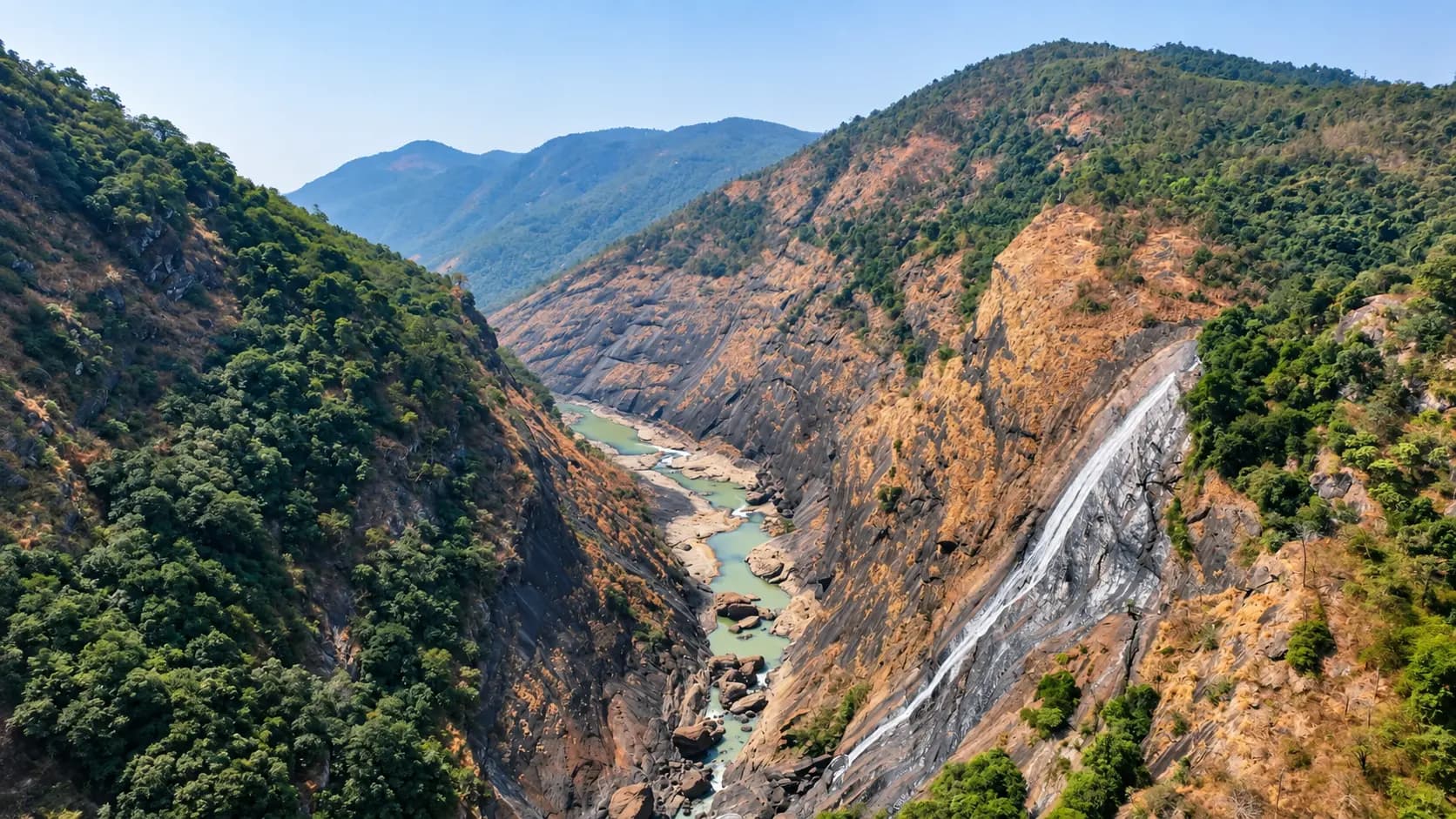
Tucked into the emerald folds of the Eastern Ghats just three kilometres outside the ancient settlement of Nandapur, Rani Duduma - literally translated as the "Queen Waterfall" - is one of Koraput district’s most charming and accessible natural retreats. While its grand namesake, the mighty Duduma Waterfall on the interstate Machkund River, roars with monumental hydroelectric fury over a 175-metre cliff 55 kilometres to the west, Rani Duduma presents a profoundly different, gentle character. Here, an upland mountain stream tumbles gracefully over a succession of stepped granite and schist ledges, creating a scenic, multi-tiered cascade with an aggregate drop of roughly 60 to 70 feet (18 to 21 metres). Shaded by dense stands of native sal, wild mango, bamboo thickets, and rolling agricultural terraces, Rani Duduma has earned an enduring reputation among regional travellers as an ideal day-excursion, photography setting, and winter picnic sanctuary.
Geologically situated on the elevated Nandapur plateau at an altitude between 850 and 920 metres above sea level, the waterfall benefits from a pristine catchment basin fed by perennial hill springs. The journey to the cascade is as enchanting as the destination itself: visitors park along a quiet rural road and embark on a picturesque one-kilometre nature walk that skirts lush paddy fields, traverses tranquil stream shallows, and descends through a gentle forest path flanked by mossy boulders. The soothing rush of cascading water echoes through the tree canopy long before the multi-step falls come into full view, providing an immediate sense of seclusion and pristine wilderness.
Beyond its natural beauty, Rani Duduma is steeped in the rich cultural and royal heritage of southern Odisha. Nandapur, situated just minutes away, served for centuries as the glorious medieval capital of the Silavamsi and Suryavamsi dynasties that ruled the historic Kingdom of Jeypore before the royal seat was relocated in the seventeenth century. Combining a morning excursion to Rani Duduma’s tranquil waters with an afternoon exploration of Nandapur’s storied Batisa Simhasana (the legendary 32-stepped royal throne) and ancient rock sculptures creates one of the most rewarding and balanced travel itineraries in the Koraput highlands.
Start here. Open a tile for the full details.
Why goRead details
- A Graceful, Multi-Tiered Cascade: Unlike single-drop vertical plunges that can only be observed from distant rim viewpoints, Rani Duduma features a stepped staircase of cascading tiers. Water pours over multiple broad stone shelves into swirling plunge pools, creating picturesque curtains of white foam that can be appreciated from multiple vantage points along the riverbank.
- Serene, Uncommercialised Natural Setting: Free from intrusive commercial installations, concrete amusement structures, or neon storefronts, Rani Duduma preserves the authentic, unhurried charm of rural Odisha. The surrounding landscape remains an active agricultural and forest ecosystem nurtured by local tribal farming communities.
- An Engaging Nature Walk: Reaching the waterfall requires an easy-to-moderate one-kilometre walk along field borders and boulder-strewn stream paths. The short trek is thoroughly enjoyable for nature lovers, photographers, and families with children, offering views of rural village life, grazing cattle, and vibrant birdlife.
- Perfect Synergy with Nandapur’s Royal Heritage: Located merely 3 km from the historic heart of Nandapur, the waterfall provides a natural counterpart to the town’s ancient archaeological monuments, including the 32-stepped throne mound of legendary King Vikramaditya, centuries-old shrines, and rock-cut Jain tirthankara reliefs.
- Ideal Cool-Climate Picnic Haven: During the mild winter months from November to February, the shaded glades, polished flat boulders, and gentle stream banks surrounding Rani Duduma turn into one of the Koraput region's most beloved picnic destinations.
When to visitRead details
The experience of visiting Rani Duduma is heavily shaped by the seasonal rhythm of the Indian monsoon and the montane climate of the Eastern Ghats:
Entry & permissionsRead details
Fees, visiting hours and entry rules may change. Confirm the latest details with the official operator or local authority before travelling.
- Admission Fees: Visiting Rani Duduma is completely free. There are no government entry turnstiles or ticketing counters.
- Vehicle Parking Fees: Visitors park along the wide shoulder or in an open clearing near the roadside culvert. During peak winter picnic weekends (November through January), local village youth committees or gram panchayat representatives may collect a nominal community parking fee of ₹10 to ₹20 for two-wheelers and ₹30 to ₹50 for four-wheelers to help maintain the clearing.
- Visiting Timings: The natural waterfall site is open daily from sunrise to sunset (06:00 to 17:30). Overnight stays, late-evening wandering, and pitch-dark camping are strictly discouraged due to the remote rural forest surroundings and lack of security infrastructure.
- Permits & Regulatory Clearances:
- Standard day tourists (both domestic and foreign nationals) do not require any inner-line permits or prior forest department passes to visit Rani Duduma.
- Foreign tourists are reminded to carry valid identification (passport and visa copies) as standard practice when travelling through interior districts of southern Odisha.
- Commercial film productions, music video shoots, or professional aerial drone operations require formal prior written permission from the Koraput District Collectorate and local police administration.
Plan your visitRead details
Rani Duduma is conveniently reached from major towns and transit hubs across the Koraput tourist circuit:
River Safety and Swimming Precautions
While the shallow river edges and natural rock pools look inviting on warm afternoons, visitors must exercise high caution. The stream current can be deceptively swift, particularly between October and December when the water is deep. Natural potholes and underwater fissures in the rocky riverbed pose serious entrapment risks, and the deep scour pools beneath the cascading drops can have strong undertows. Swimming or diving into the main pools is strongly discouraged. Children and non-swimmers must be closely supervised at all times when stepping near the water's edge.
Explore the full guide - choose a topic below.
Why visit?
A Graceful, Multi-Tiered Cascade: Unlike single-drop vertical plunges that can only be observed from distant rim…Explore detailsClose details
- A Graceful, Multi-Tiered Cascade: Unlike single-drop vertical plunges that can only be observed from distant rim viewpoints, Rani Duduma features a stepped staircase of cascading tiers. Water pours over multiple broad stone shelves into swirling plunge pools, creating picturesque curtains of white foam that can be appreciated from multiple vantage points along the riverbank.
- Serene, Uncommercialised Natural Setting: Free from intrusive commercial installations, concrete amusement structures, or neon storefronts, Rani Duduma preserves the authentic, unhurried charm of rural Odisha. The surrounding landscape remains an active agricultural and forest ecosystem nurtured by local tribal farming communities.
- An Engaging Nature Walk: Reaching the waterfall requires an easy-to-moderate one-kilometre walk along field borders and boulder-strewn stream paths. The short trek is thoroughly enjoyable for nature lovers, photographers, and families with children, offering views of rural village life, grazing cattle, and vibrant birdlife.
- Perfect Synergy with Nandapur’s Royal Heritage: Located merely 3 km from the historic heart of Nandapur, the waterfall provides a natural counterpart to the town’s ancient archaeological monuments, including the 32-stepped throne mound of legendary King Vikramaditya, centuries-old shrines, and rock-cut Jain tirthankara reliefs.
- Ideal Cool-Climate Picnic Haven: During the mild winter months from November to February, the shaded glades, polished flat boulders, and gentle stream banks surrounding Rani Duduma turn into one of the Koraput region's most beloved picnic destinations.
What to expect
Visiting Rani Duduma offers a classic rural eco-tourism experience that blends light hiking, scenic water…Explore detailsClose details
Visiting Rani Duduma offers a classic rural eco-tourism experience that blends light hiking, scenic water landscapes, and authentic tribal pastoral life:
1. The Trailhead and Approach Walk
Your visit begins approximately 3 km south of Nandapur town, where a rural roadway crosses a small culvert. Vehicles are left in an informal clearing or along the firm shoulder of the road. From this point, you set out on foot along a well-trodden walking trail spanning roughly one kilometre. The trail winds gently alongside irrigated paddy terraces and vegetable plots maintained by local Paraja and Gadaba cultivators. As you progress, the rural farmland gradually gives way to riparian forest dominated by tall sal trees, wild figs, and flowering seasonal undergrowth.
2. The Stepped Cascade and Splash Pools
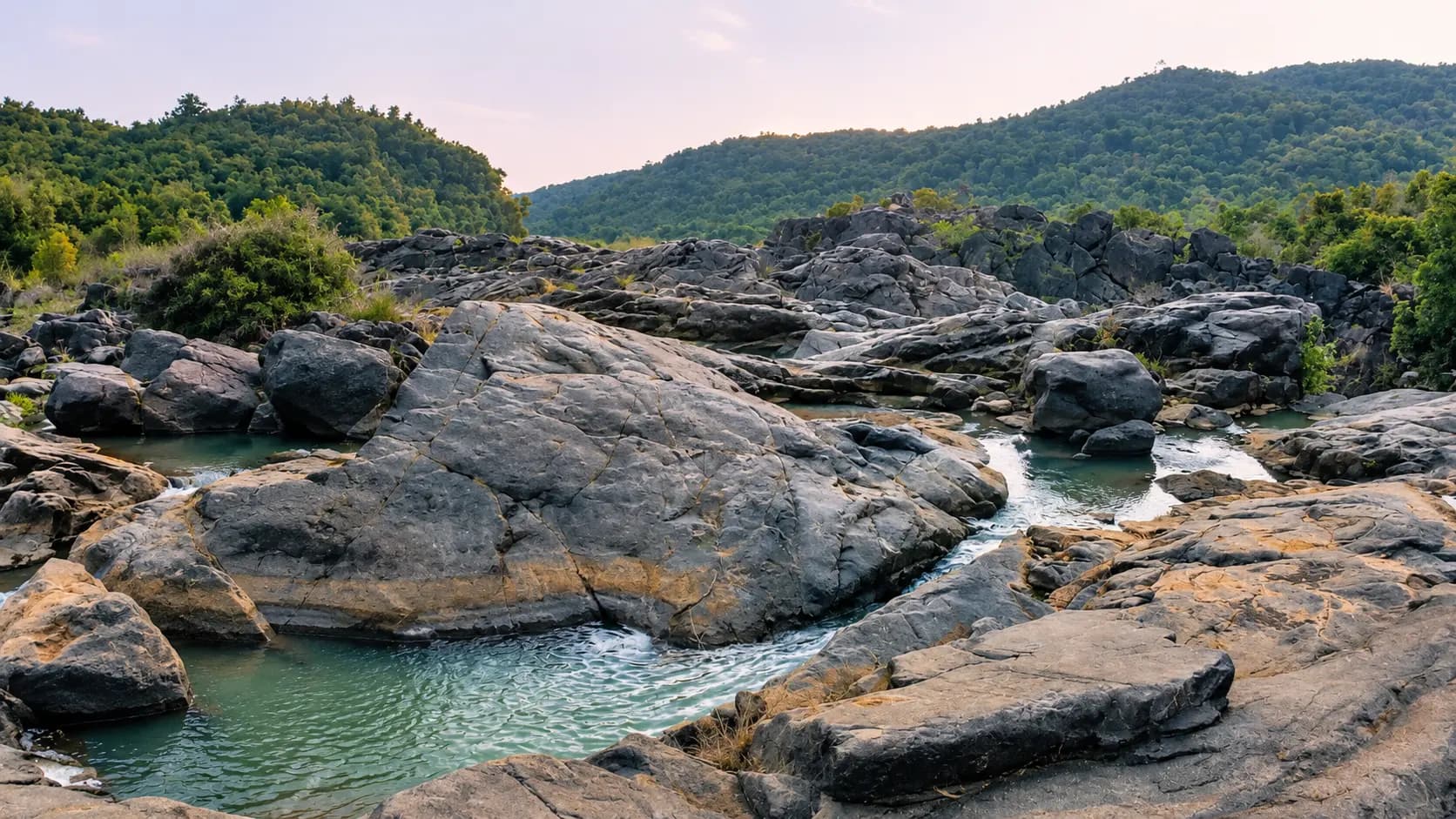
As you approach the sound of tumbling water, the path descends through a short series of roughly cut stone steps and natural earthen ramps. Rani Duduma reveals itself not as a single sheer drop, but as an elegant multi-step cascade spanning approximately 60 to 70 feet in total vertical relief. The stream divides across weathered crystalline bedrock, spilling over multiple horizontal shelves and tumbling through natural chutes into shallow rock-rimmed pools before continuing its journey down the forested ravine. The spray from the tumbling water generates a refreshing microclimate, cooling the air even on sunny afternoons.
3. Riverside Boulders and Viewing Platforms
Broad, naturally smoothed granite slabs flank both sides of the stream, providing natural viewing perches where visitors can sit, rest, and photograph the cascading water. During the post-monsoon and winter months, the clear water flows briskly through the channels, making it a delight to dip your feet into the shallows near the banks. However, visitors must exercise caution: submerged rock surfaces are frequently coated with slick green algae, and water depth in the central plunge troughs can be deceptive.
4. Peaceful Forest Environment and Birdlife
Because Rani Duduma sits in a tranquil rural valley buffered from heavy highway traffic, the natural soundscape is dominated by the rhythm of cascading water, wind rustling through sal leaves, and native birdsong. Keen birdwatchers and naturalists can spot kingfishers darting across the stream, white-browed wagtails hopping along the wet stones, racket-tailed drongos calling from the upper canopy, and vibrant sunbirds feeding on forest wildflowers.
Best time to visit
The experience of visiting Rani Duduma is heavily shaped by the seasonal rhythm of the Indian monsoon and the…Explore detailsClose details
The experience of visiting Rani Duduma is heavily shaped by the seasonal rhythm of the Indian monsoon and the montane climate of the Eastern Ghats:
Season | Months | Weather & Flow Characteristics | Travel Recommendation |
|---|---|---|---|
Post-Monsoon | October to November | Peak hydrological flow; lush green countryside; roaring multi-tiered cascade; mild daytime temperatures (22°C - 28°C). | Prime Season: Ideal for spectacular waterfall photography and seeing the falls at full volumetric strength. Trails may be slightly muddy. |
Winter | December to February | Crystal-clear cascading water; crisp, sunny days (18°C - 25°C) with chilly mornings and evenings (8°C - 14°C); completely dry walking paths. | Best Overall Window: Supreme conditions for family picnics, relaxed nature walking, and combining the waterfall with heritage sightseeing in Nandapur. |
Pre-Summer Transition | March | Warming temperatures (28°C - 33°C); steady, moderate stream flow; vibrant spring foliage and blossoming mahua trees across the valley. | Good Window: Pleasant morning visits; recommended to explore between 07:00 and 11:00 before the midday sun heats up the valley. |
Summer | April to June | Hot, dry weather (33°C - 38°C); stream volume reduces drastically to a narrow trickle over bare sunbaked rock ledges. | Low Season: Not recommended for primary waterfall sightseeing due to diminished water volume, though shaded riverbed rocks remain accessible. |
Monsoon | July to September | Heavy regional rainfall; turbulent, silt-laden brown water surging over the rocks; slippery and muddy walking trails. | Exercise Caution: Scenic and dramatic, but walking trails can become waterlogged and wet rocks dangerously slick; flash floods can occur. |
Time of Day: The best hours to visit Rani Duduma are early morning between 07:00 and 10:30 or mid-afternoon between 14:00 and 16:30. Early morning light filters beautifully through the forest canopy, casting radiant golden rays across the cascading water. Visitors should ensure they begin their return walk back to their vehicle before 17:00, as darkness settles quickly over the rural valleys and the unpaved nature trail lacks artificial illumination.
How to reach
Rani Duduma is conveniently reached from major towns and transit hubs across the Koraput tourist circuit…Explore detailsClose details
Rani Duduma is conveniently reached from major towns and transit hubs across the Koraput tourist circuit:
[Visakhapatnam (160 km)] ----> [Araku Valley] ----> [Semiliguda (26 km)] ----> [Nandapur (3 km)] ----> [Rani Duduma Trailhead]
                                                            ^
                                                            | (NH-26)
[Koraput Town (45 - 48 km)] ----------------------------------+
                                                            |
[Jeypore Town (65 km)] -------------------------------------+
By Road (Private Vehicle, Taxi, or Rental)
Travelling by road is by far the most convenient and practical way to reach Rani Duduma:
- From Nandapur Town (3 km, 10 minutes): From the central Nandapur market junction, proceed southward along the rural connecting road toward the waterfall approach. Signage is minimal, so asking local residents for "Rani Duduma" will quickly keep you on the correct road to the culvert parking area.
- From Semiliguda (26 km, 45 minutes): From the bustling highway junction at Semiliguda, take the paved Semiliguda - Nandapur Road heading southwest. The drive winds through scenic rural landscapes, crossing gentle ghat sections and pine-dotted valleys before entering Nandapur.
- From Koraput Town (45 - 48 km, 1 hour 15 minutes): Head south along National Highway 26 (NH-26) past Sunabeda to Semiliguda (approx. 20 km), then turn right onto the state road to Nandapur. The entire route consists of smooth, well-maintained two-lane asphalt.
- From Jeypore (65 km, 1 hour 45 minutes): Drive east via Koraput town or take the scenic interior rural route via Kundra and Borigumma to reach Semiliguda and Nandapur.
- From Visakhapatnam (160 km, 4.5 hours): A highly popular interstate road trip route ascends the Ananthagiri ghats via Araku Valley, enters Odisha near Sunki, and connects to Semiliguda and Nandapur.
By Rail
- Damanjodi Railway Station (DMNJ, ~33 km): The closest major rail stop on the East Coast Railway line, receiving express trains such as the Hirakhand Express from Bhubaneswar and Jagdalpur. Taxis and auto-rickshaws can be hired from Damanjodi or nearby Semiliguda.
- Koraput Junction (KRPU, ~48 km): A major regional junction well connected to Visakhapatnam, Rayagada, Rourkela, and Raipur via the scenic Koraput - Rayagada and K-K (Kottavalasa - Kirandul) railway lines.
- Dumiliput / Semiliguda Halt: Small passenger train halts operate along the line, but long-distance travellers should rely on Koraput or Damanjodi for reliable taxi connections.
By Air
- Jeypore Airport (PYB, ~65 km): The nearest regional domestic airport, offering scheduled regional flights under the UDAN scheme connecting to Bhubaneswar and Visakhapatnam.
- Visakhapatnam International Airport (VTZ, ~160 km): The primary commercial international air gateway, offering daily nonstop flights to major Indian metros (Delhi, Mumbai, Bengaluru, Hyderabad, Kolkata, Chennai) and international connections. Taxis can be hired at the airport for the 4.5-hour scenic drive into the Koraput highlands.
Entry, timings and permissions
Fees, visiting hours and entry rules may change.Explore detailsClose details
Fees, visiting hours and entry rules may change. Confirm the latest details with the official operator or local authority before travelling.
- Admission Fees: Visiting Rani Duduma is completely free. There are no government entry turnstiles or ticketing counters.
- Vehicle Parking Fees: Visitors park along the wide shoulder or in an open clearing near the roadside culvert. During peak winter picnic weekends (November through January), local village youth committees or gram panchayat representatives may collect a nominal community parking fee of ₹10 to ₹20 for two-wheelers and ₹30 to ₹50 for four-wheelers to help maintain the clearing.
- Visiting Timings: The natural waterfall site is open daily from sunrise to sunset (06:00 to 17:30). Overnight stays, late-evening wandering, and pitch-dark camping are strictly discouraged due to the remote rural forest surroundings and lack of security infrastructure.
- Permits & Regulatory Clearances:
- Standard day tourists (both domestic and foreign nationals) do not require any inner-line permits or prior forest department passes to visit Rani Duduma.
- Foreign tourists are reminded to carry valid identification (passport and visa copies) as standard practice when travelling through interior districts of southern Odisha.
- Commercial film productions, music video shoots, or professional aerial drone operations require formal prior written permission from the Koraput District Collectorate and local police administration.
Nearby places to consider
Maximise your journey to the Nandapur plateau by pairing Rani Duduma with these compelling nearby cultural and…Explore detailsClose details
Maximise your journey to the Nandapur plateau by pairing Rani Duduma with these compelling nearby cultural and natural landmarks:
[Batisa Simhasana & Nandapur Ruins] (3 km north)
                     ^
                     |
       [RANI DUDUMA WATERFALL]
        /                     \
       v                       v
[Bagra Waterfall]       [Subai Jain Monasteries]
(35 km northwest) (18 km northeast)- Batisa Simhasana and Ancient Nandapur (3 km north): The historic heart of Nandapur is home to the legendary 32-stepped royal throne mound (Batisa Simhasana), traditionally linked to King Vikramaditya and the ancient Silavamsi monarchs. The town also features the ancient Sarveswar Shiva temple, monumental stone sculptures of royal elephants, and centuries-old Ganesh shrines that reveal Nandapur’s glorious past as the imperial capital of the Jeypore Kingdom.
- Subai Jain Temple Complex (18 km northeast): Located near Semiliguda, this remarkable ninth-century archaeological site features a cluster of ancient stone shrines and weathered chlorite idols of Jain Tirthankaras, including a magnificent image of Lord Rishabhanatha, testifying to the vibrant Jain monastic presence in ancient Koraput.
- Bagra Waterfall (35 km northwest): Another celebrated natural cascade in the district, formed by the Kolab River dropping across three rocky stages amidst dense forest glades near Koraput town, offering an excellent companion picnic excursion.
- Deomali Mountain Peak (45 km east): The highest mountain peak in Odisha (1,672 metres above sea level), situated in the Pottangi block. Accessible via Semiliguda, Deomali offers breathtaking 360-degree vistas across rolling green tablelands, dramatic deep valleys, and paragliding take-off view decks.
- Duduma Waterfall (Matsya Tirtha) (55 km west): The monumental 175-metre vertical cataract formed by the Machkund River on the Odisha - Andhra border near Onukudelli. A visit here highlights the dramatic contrast between Rani Duduma's gentle, multi-tiered woodland cascade and Duduma's colossal industrial-scale gorge.
In pictures
The practical bits
Before you go.
Plan ahead
To make the most of your excursion to Rani Duduma, observe these four essential planning considerations:Explore detailsClose details
To make the most of your excursion to Rani Duduma, observe these four essential planning considerations:
Footwear and Walking Trail Preparation
Reaching the cascading tiers of Rani Duduma requires traversing an unpaved one-kilometre trail consisting of…Explore detailsClose details
Reaching the cascading tiers of Rani Duduma requires traversing an unpaved one-kilometre trail consisting of packed dirt, agricultural dykes, loose river pebbles, and natural stone ramps. Wearing sturdy closed-toe walking shoes or trekking sandals with deep rubber treads is strongly advised. Footwear with smooth soles, flip-flops, and high heels are dangerous on the slick, water-smoothed granite rocks flanking the splash pools, which can become exceptionally slippery due to microscopic algae film.
Supplies, Hydration and Dining Logistics
There are no permanent restaurants, sit-down eateries, or grocery shops at the waterfall trailhead or along the…Explore detailsClose details
There are no permanent restaurants, sit-down eateries, or grocery shops at the waterfall trailhead or along the stream. While seasonal village vendors occasionally sell bottled water, biscuits, and hot tea on busy winter weekends, visitors should not rely on them. Pack an adequate supply of drinking water (at least 1.5 litres per person), light snacks or a packed picnic lunch, electrolyte packets, and basic medical essentials. Full-scale grocery stores, traditional Odia restaurants, pharmacies, and ATMs are located just 3 km away in Nandapur town.
River Safety and Swimming Precautions
While the shallow river edges and natural rock pools look inviting on warm afternoons, visitors must exercise…Explore detailsClose details
While the shallow river edges and natural rock pools look inviting on warm afternoons, visitors must exercise high caution. The stream current can be deceptively swift, particularly between October and December when the water is deep. Natural potholes and underwater fissures in the rocky riverbed pose serious entrapment risks, and the deep scour pools beneath the cascading drops can have strong undertows. Swimming or diving into the main pools is strongly discouraged. Children and non-swimmers must be closely supervised at all times when stepping near the water's edge.
Environmental Stewardship and Waste Management
Rani Duduma remains a pristine rural commons that provides vital irrigation water and livestock sustenance for…Explore detailsClose details
Rani Duduma remains a pristine rural commons that provides vital irrigation water and livestock sustenance for neighbouring tribal hamlets. The indiscriminate dumping of plastic wrappers, thermocol picnic plates, empty water bottles, and broken glass bottles severely harms this fragile ecosystem. Practice strict Leave No Trace principles: bring along heavy-duty garbage bags, pack out every scrap of waste generated during your visit, and dispose of it in municipal bins upon returning to Nandapur or Semiliguda. Open campfires should be strictly contained and extinguished completely before leaving.
A few things you might wonder
Common questions about visiting Rani Duduma. Fees, visiting hours and ceremonies are researched details that may change; confirm current arrangements with the operator before travelling.
Is Rani Duduma the same destination as Duduma Waterfall?
Can visitors drive directly to the edge of Rani Duduma Waterfall?
Are there entrance fees or parking charges at Rani Duduma?
Is it safe to swim in the plunge pools at Rani Duduma?
What facilities and amenities are available at the waterfall site?
How long does a typical visit to Rani Duduma take?
Can senior citizens and young children complete the walk to the waterfall?
Are overnight camping or evening visits allowed at Rani Duduma?
Explore more in Koraput
Discover other destinations around this hub

More Hubs in Odisha
Continue exploring other travel hubs in this state
Planning a trip to Koraput?