Gupteswar Cave
Explore Gupteswar Cave in Koraput, Odisha. Sourced travel guide covering the holy underground Shiva lingam, Sabari River, timings, steps, and Biodiversity Heritage Site.
Location
Koraput, Odisha
A closer look
Your visit, at a glance.
Koraput, Odisha
GET TO KNOW THE PLACE
Tucked into the dense sal forests of the Ramagiri hills in south-western Odisha, Gupteswar Cave - revered across eastern and central India as "Gupta Kedara" - is one of the…
The story of Gupteswar Cave
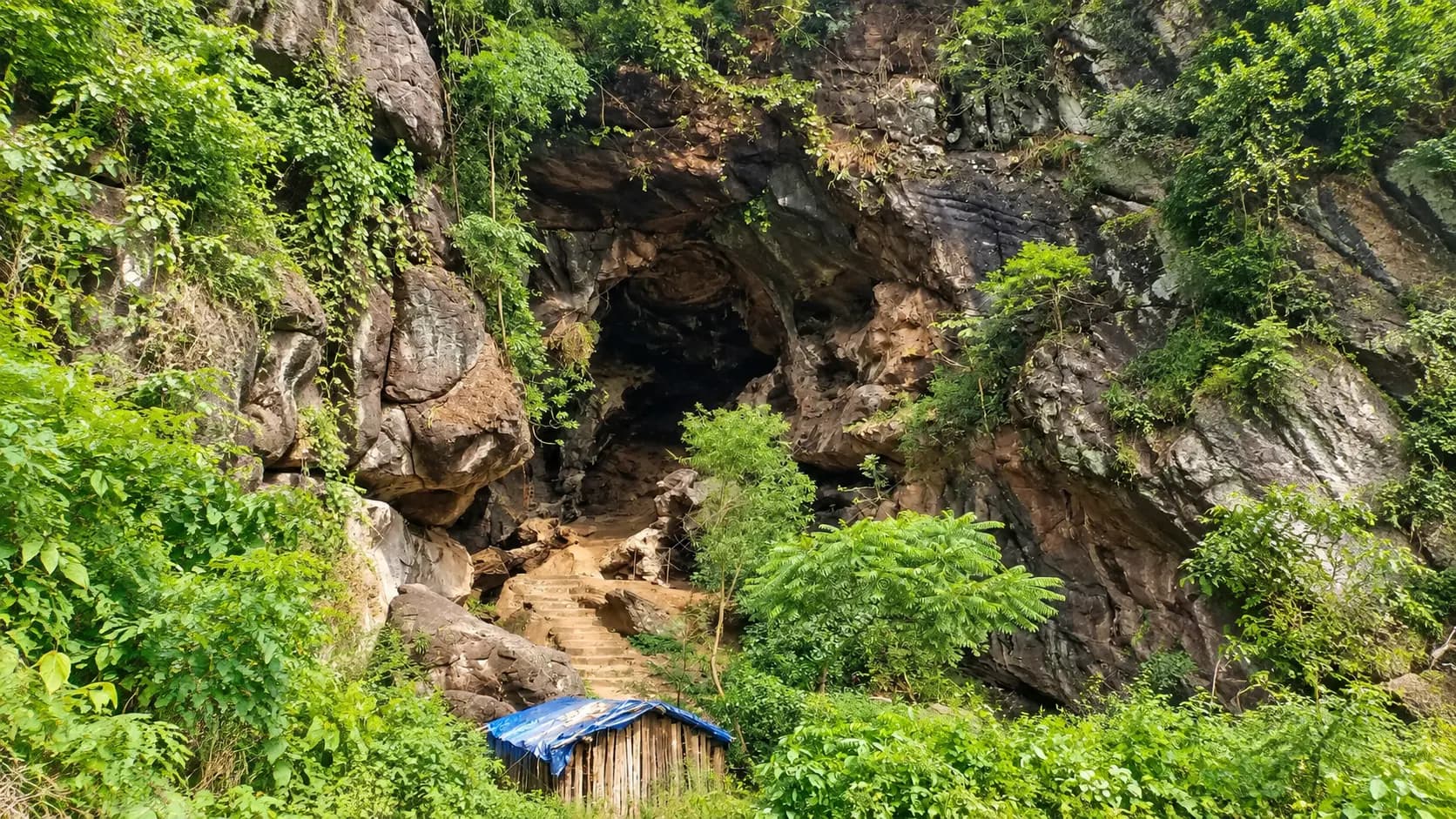
Tucked into the dense sal forests of the Ramagiri hills in south-western Odisha, Gupteswar Cave - revered across eastern and central India as "Gupta Kedara" - is one of the subcontinent's most extraordinary subterranean shrines. The cavern houses an enormous, naturally formed limestone Shiva lingam upon which clear groundwater constantly drips from subterranean fissures. Beyond its sacred aura, the surrounding 350 hectares of primeval woodland were officially designated as Odisha’s fourth Biodiversity Heritage Site in February 2024, recognizing the region's rich bat colonies, sacred groves, endangered fauna, and pristine riverine ecosystem along the border with Chhattisgarh.
Whether you visit as a spiritual seeker drawn to ancient Shaivite lore or as an ecotraveller curious about limestone karst geomorphology and protected wildlife corridors, Gupteswar offers a serene journey deep into the highland hinterlands of Koraput district.
Start here. Open a tile for the full details.
Why goRead details
Gupteswar Cave represents an exceptional union of natural karst geology, living tribal religious heritage, and high-priority ecological conservation.
When to visitRead details
Gupteswar Cave is accessible throughout the year, but the quality of the journey varies significantly depending on regional seasonal cycles.
Entry & permissionsRead details
Fees, visiting hours and entry rules may change. Confirm the latest details with the official operator or local authority before travelling.
- Entry Fees: General admission to Gupteswar Cave and the surrounding riverfront is completely free. There are no mandatory ticketing gates. Visitors may voluntarily purchase ritual offering packages (flowers, incense, milk) from local vendors or obtain official archana receipts from the temple trust counter inside.
- Visiting Timings: The cave temple is open daily from 6:00 AM to 6:00 PM. During major festivals like Maha Shivaratri (Jagara) and the holy month of Shravana, the temple remains open around the clock or extends darshan hours from 3:30 AM to late night.
- Biodiversity Heritage Site Regulations: Because the surrounding 350 hectares are designated as a protected Biodiversity Heritage Site under the Biological Diversity Act, visitors must strictly adhere to eco-conservation guidelines:
- Do not discard plastic bags, plastic bottles, or food wrappers anywhere in the forest or along the riverbanks.
- Do not use chemical soaps or shampoos when taking ritual baths in the Sabari River.
- Avoid loud music, horn-honking, or disruptive noise that stresses roosting bats inside cave chambers or wildlife in the canopy.
- Sanctum Protocols: Footwear must be removed before entering the upper temple steps and cave entrance. Photography is strictly prohibited inside the active inner sanctum to preserve the sacred atmosphere and protect nocturnal bat colonies from harsh flash light. Photography of the exterior hills, staircase, and river ghats is allowed.
Plan your visitRead details
Gupteswar Cave is situated in the Boipariguda block of south-western Koraput district, roughly 58 km west of Jeypore and 80 km west of Koraput town.
Cave Lighting and Surface Safety
While basic electric bulb lighting is installed along the main interior corridor, certain recessed niches and corner steps can remain shadowy. Carrying a small pocket flashlight or fully charged smartphone torch will help you navigate uneven subterranean rock surfaces safely. Watch your head near lower limestone overhangs.
Explore the full guide - choose a topic below.
Why visit?
Gupteswar Cave represents an exceptional union of natural karst geology, living tribal religious heritage, and…Explore detailsClose details
Gupteswar Cave represents an exceptional union of natural karst geology, living tribal religious heritage, and high-priority ecological conservation.
- The Majestic Underground Lingam: The focal point of the main cavern is a massive, naturally formed stalagmitic Shiva lingam. Revered as a Swayambhu (self-manifested) deity, the lingam is bathed by constant mineral drops falling from the arched limestone roof, creating a cool, reverent atmosphere deep within the living rock. Official historical chronicles in the Koraput District Gazetteer record that this hidden shrine was discovered during the mid-17th century reign of King Viravikrama Deo of Jeypore, who established royal endowments for perpetual daily worship.
- Odisha’s Fourth Biodiversity Heritage Site: Declared a Biodiversity Heritage Site under Section 37(1) of the Biological Diversity Act, 2002, the contiguous 350-hectare reserve preserves ancient sacred groves protected by indigenous communities for generations. The forest supports 608 faunal species - including mugger crocodiles in the river, 188 species of birds like the Malabar trogon, and 8 specialized bat species roosting within the limestone fissures, notably Hipposideros galeritus and Rhinolophus rouxii.
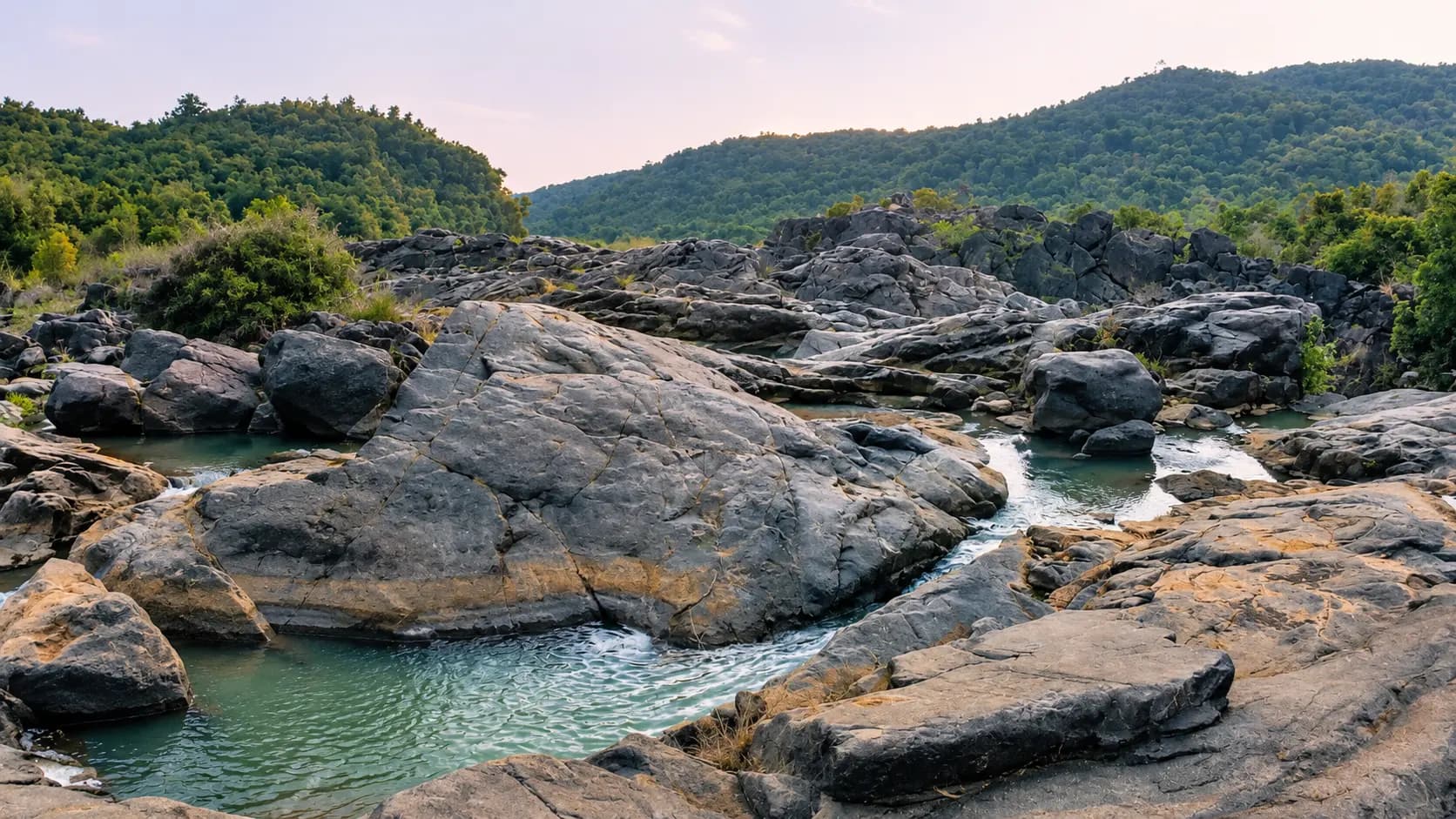
- The Scenic Sabari River Border: The pristine, boulder-strewn Sabari (Shabari) River rushes past the base of the hillock, carving a natural boundary between Odisha and Chhattisgarh. Devotees take ritual dips in the crystalline waters before ascending to the shrine, while nature lovers can admire dense riverside canopy trees, smooth granite river boulders, and limestone cliff faces.
- Living Tribal & Regional Syncretism: The cave has been cherished for centuries by local tribal communities as well as mainstream Hindu pilgrims. The annual Jagara Mela (Maha Shivaratri) transforms the secluded valley into a bustling interstate cultural congregation where indigenous rituals harmonize with classical Vedic prayers.
What to expect
Visiting Gupteswar is an immersive, multi-sensory journey involving quiet forested highways, a gradual stair…Explore detailsClose details
Visiting Gupteswar is an immersive, multi-sensory journey involving quiet forested highways, a gradual stair climb, subterranean cave chambers, and serene riverbanks.
The Hillside Ascent
From the base village, road terminal, and riverside parking area, visitors approach the cliff base where approximately 200 to 250 broad stone and concrete steps ascend the flank of the Ramagiri ridge. The path is flanked by ancient shade-giving trees, flowering creepers, and small roadside stalls offering flowers, coconuts, earthen lamps, and sacred bilva leaves. Handrails are provided along steeper sections, though the steps can become slick during the monsoon season.
The Cavern Interior
Upon reaching the cave mouth, visitors leave footwear at designated stands outside the stone portal before stepping into the multi-chambered cavern. The natural limestone opening leads into a cavernous antechamber where ambient daylight gives way to soft electric lamps and traditional brass oil lights.
The air temperature drops noticeably inside the cave, offering cool respite from external heat. In the central sanctum, the monolithic Swayambhu lingam rises prominently from the rocky floor. Priests perform regular abhishekams with holy water and milk, while droplets from overhead stalactites maintain a perpetual natural ablution. Surrounding alcoves contain smaller rock formations traditionally identified with Lord Rama, Sita, and Lakshmana, linked to the epic tradition that Rama traversed the Dandakaranya wilderness here during his exile.
The Sabari Riverfront
Downhill from the cave stairs, a path leads to the rocky bathing ghats along the Sabari River. In the dry winter months, the river flows gently over polished granite and limestone ledges, creating crystal-clear pools where visitors rest along shaded banks. Local wooden country boats sometimes ferry passengers across the narrow waterway into the adjoining forested reaches of Chhattisgarh.
Best time to visit
Gupteswar Cave is accessible throughout the year, but the quality of the journey varies significantly depending…Explore detailsClose details
Gupteswar Cave is accessible throughout the year, but the quality of the journey varies significantly depending on regional seasonal cycles.
- Winter (October to March) - Ideal Season: This is by far the most comfortable and rewarding period to visit. Daytime temperatures range pleasantly between 18°C and 28°C, humidity remains low, and the Ramagiri forest canopy retains its post-monsoon greenery. Roads from Jeypore are completely dry and easily navigable.
- Maha Shivaratri / Jagara Mela (February / March) - Peak Pilgrimage: Celebrated over three to five days during the new moon of Phalguna, Jagara Mela is Gupteswar’s defining festival. Tens of thousands of pilgrims from Odisha, Chhattisgarh, and northern Andhra Pradesh converge on the valley. Temple rituals continue uninterrupted through the night, temporary markets spring up along the river, and traditional folk dances fill the valley. Travelers seeking tranquility should avoid these dates, but cultural enthusiasts will find the fair unforgettable.
- Monsoon (July to September) - Lush but Challenging: The southwest monsoon drenches the Eastern Ghats, turning the Ramagiri forest into a vibrant tropical wilderness and swelling the Sabari River into a roaring torrent. However, continuous rainfall makes the cave steps slippery, groundwater seepage inside the cave can become heavy, and rural approach roads may experience temporary localized washouts.
- Summer (April to June) - Hot and Arid: Temperatures on the lower valley floor can climb above 38°C to 40°C during midday hours. While the interior of the limestone cave remains naturally cool, the outdoor step climb and daytime transit can prove exhausting.
How to reach
Gupteswar Cave is situated in the Boipariguda block of south-western Koraput district, roughly 58 km west of…Explore detailsClose details
Gupteswar Cave is situated in the Boipariguda block of south-western Koraput district, roughly 58 km west of Jeypore and 80 km west of Koraput town.
By Road
Road travel is the standard and most reliable method to reach Gupteswar:
- From Jeypore (58 km): Head west along National Highway 26 / State Highway toward Boipariguda (approx. 22 km). At Boipariguda, branch northwest toward Ramagiri Junction (approx. 22 km), and follow the forested district road for the final 14 km into Gupteswar village. The total driving time is roughly 1.5 to 2 hours.
- From Koraput Town (80 km): Travel downhill along the scenic ghat road of NH-26 to Jeypore (22 km), then continue through Boipariguda and Ramagiri as outlined above. Driving time is approximately 2 to 2.5 hours.
- Public Transport: Frequent state transport (OSRTC) and private buses run between Koraput, Jeypore, and Boipariguda. From Boipariguda or Ramagiri, shared utility jeeps, auto-rickshaws, or private hired taxis provide the final link to the cave. Hiring a private taxi from Jeypore for a half-day or full-day round trip is strongly recommended.
By Rail
- Jeypore Railway Station (JYP, 58 km): The closest railhead, offering passenger and express trains connecting to Koraput, Visakhapatnam, Jagdalpur, and Rourkela.
- Koraput Junction (KRPU, 80 km): A major junction on the East Coast Railway network with direct express links to Bhubaneswar, Visakhapatnam, Kolkata (Howrah), and Raipur. Taxis and buses are readily available outside the station.
By Air
- Visakhapatnam International Airport (VTZ, approx. 245 km): The primary commercial airport servicing the district, operating daily non-stop flights to major Indian metros including Delhi, Mumbai, Bengaluru, Hyderabad, and Chennai. Travelers can hire an inter-district private cab or board a scenic train journey via the Araku Valley line to Koraput or Jeypore.
Entry, timings and permissions
Fees, visiting hours and entry rules may change.Explore detailsClose details
Fees, visiting hours and entry rules may change. Confirm the latest details with the official operator or local authority before travelling.
- Entry Fees: General admission to Gupteswar Cave and the surrounding riverfront is completely free. There are no mandatory ticketing gates. Visitors may voluntarily purchase ritual offering packages (flowers, incense, milk) from local vendors or obtain official archana receipts from the temple trust counter inside.
- Visiting Timings: The cave temple is open daily from 6:00 AM to 6:00 PM. During major festivals like Maha Shivaratri (Jagara) and the holy month of Shravana, the temple remains open around the clock or extends darshan hours from 3:30 AM to late night.
- Biodiversity Heritage Site Regulations: Because the surrounding 350 hectares are designated as a protected Biodiversity Heritage Site under the Biological Diversity Act, visitors must strictly adhere to eco-conservation guidelines:
- Do not discard plastic bags, plastic bottles, or food wrappers anywhere in the forest or along the riverbanks.
- Do not use chemical soaps or shampoos when taking ritual baths in the Sabari River.
- Avoid loud music, horn-honking, or disruptive noise that stresses roosting bats inside cave chambers or wildlife in the canopy.
- Sanctum Protocols: Footwear must be removed before entering the upper temple steps and cave entrance. Photography is strictly prohibited inside the active inner sanctum to preserve the sacred atmosphere and protect nocturnal bat colonies from harsh flash light. Photography of the exterior hills, staircase, and river ghats is allowed.
Nearby places to consider
A trip to Gupteswar can be easily combined with other celebrated cultural, industrial, and natural attractions…Explore detailsClose details
A trip to Gupteswar can be easily combined with other celebrated cultural, industrial, and natural attractions across the Jeypore and Koraput region:
- Jeypore Royal Town (58 km): The historic capital of the erstwhile Jeypore Kingdom, home to the vintage Jeypore Raj Palace, Jagannath Sagar lake, colorful local bazaars, and traditional weaving centers.
- Kolab Reservoir & Hydroelectric Park (approx. 72 km): A magnificent water body near Jeypore offering panoramic lakeside views, landscaped gardens, and a peaceful sunset spot.
- Deomali Peak (approx. 115 km): The highest mountain peak in Odisha (1,672 m), located in the Pottangi range, offering breathtaking 360-degree vistas across rolling green meadows and the Eastern Ghats.
- Duduma Falls (approx. 90 km): One of India's most spectacular plunge waterfalls, dropping 175 metres on the Machkund River amidst deep gorges and tribal heartlands.
- Dumuriput (approx. 70 km): A prominent spiritual landmark along NH-26 near Sunabeda, celebrated for its Sri Ram Temple and the highest kneeling statue of Lord Hanuman in Odisha.
In pictures
The practical bits
Before you go.
Plan ahead
A smooth, enjoyable excursion to Gupteswar requires practical preparation, especially regarding footwear, timing…Explore detailsClose details
A smooth, enjoyable excursion to Gupteswar requires practical preparation, especially regarding footwear, timing, and local environmental awareness.
Footwear and Stair Climb
Prepare for climbing over 200 stone steps.Explore detailsClose details
Prepare for climbing over 200 stone steps. Wear sturdy, comfortable walking shoes for the approach and stair climb. Since shoes must be left outside the cave portal, carrying a lightweight cloth bag to store your footwear - or having clean socks if the damp limestone ground feels cold - can make the underground visit much more comfortable.
Cave Lighting and Surface Safety
While basic electric bulb lighting is installed along the main interior corridor, certain recessed niches and…Explore detailsClose details
While basic electric bulb lighting is installed along the main interior corridor, certain recessed niches and corner steps can remain shadowy. Carrying a small pocket flashlight or fully charged smartphone torch will help you navigate uneven subterranean rock surfaces safely. Watch your head near lower limestone overhangs.
Wildlife and Forest Etiquette
As an ecologically sensitive Biodiversity Heritage Site, the forest around Gupteswar is home to protected…Explore detailsClose details
As an ecologically sensitive Biodiversity Heritage Site, the forest around Gupteswar is home to protected wildlife, including mugger crocodiles in deeper downstream river pools and sensitive bat populations (Hipposideros galeritus and Rhinolophus rouxii) inside undisturbed cave recesses. Keep to demarcated trails, supervise children near the river, and never attempt to throw stones or illuminate bat roosts with bright lights.
Food, Cash, and Communication
Facilities at Gupteswar are modest, consisting of simple roadside tea stalls, fruit stands, and local dhabas…Explore detailsClose details
Facilities at Gupteswar are modest, consisting of simple roadside tea stalls, fruit stands, and local dhabas serving hot rice, dal, and Odia snacks. If you have specific dietary needs, carry packed meals from Jeypore. Mobile network connectivity (BSNL and Jio) is patchy around the base village and completely unavailable inside the cave; carry sufficient physical cash for local purchases, auto fares, and donations, as digital UPI payments frequently fail due to weak signal.
A few things you might wonder
Common questions about visiting Gupteswar Cave. Fees, visiting hours and ceremonies are researched details that may change; confirm current arrangements with the operator before travelling.
What is the religious and mythological significance of Gupteswar Cave?
How many steps must visitors climb to reach the cave entrance?
Why was the Gupteswar Forest declared a Biodiversity Heritage Site?
Is it safe to bathe in the Sabari River near the temple?
Can elderly travelers or individuals with mobility challenges visit Gupteswar?
What are the primary festivals celebrated at Gupteswar Cave?
Are private vehicles and hired taxis able to drive directly to the cave base?
Are photography and videography permitted inside Gupteswar Cave?
Explore more in Koraput
Discover other destinations around this hub
More Hubs in Odisha
Continue exploring other travel hubs in this state
Planning a trip to Koraput?