Chilika Lake
Comprehensive guide to Chilika Lake in Odisha. Discover Irrawaddy dolphins, winter bird migrations, boat safaris from Satapada, Barkul, and Rambha.
Location
Chilika & South Coast, Odisha
A closer look
Your visit, at a glance.
Chilika & South Coast, Odisha
GET TO KNOW THE PLACE
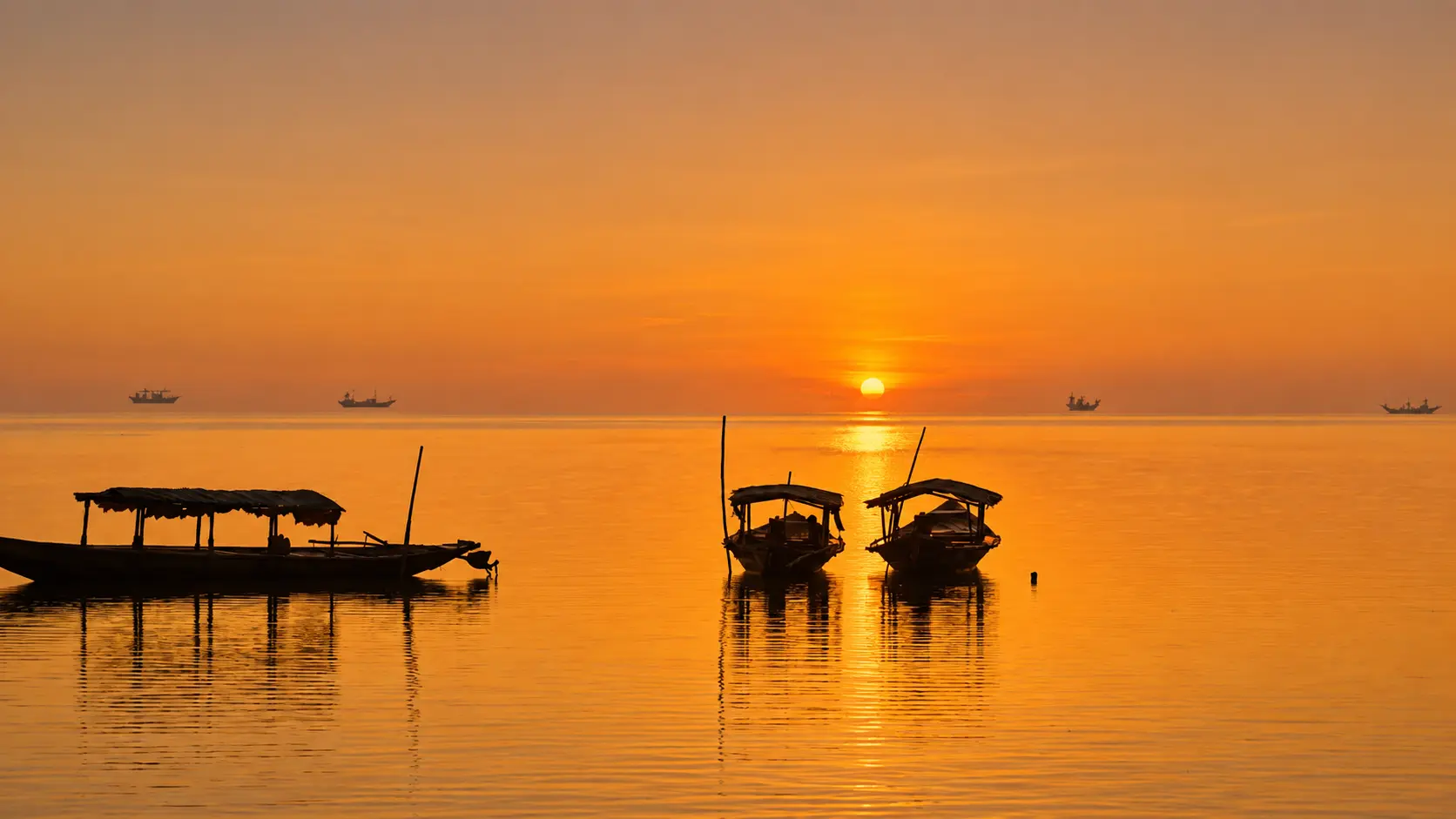
Stretching across more than 1,100 square kilometres of Odisha's coastline through Puri, Khordha, and Ganjam districts, Chilika Lake represents Asia's largest brackish water…
The story of Chilika Lake
Stretching across more than 1,100 square kilometres of Odisha's coastline through Puri, Khordha, and Ganjam districts, Chilika Lake represents Asia's largest brackish water lagoon and India's very first wetland of international importance designated under the Ramsar Convention in 1981. Fed by 52 perennial rivers and seasonal distributaries of the Mahanadi delta and replenished by the surging ocean tides of the Bay of Bengal, this immense aquatic wonderland forms a dynamic, living mosaic of freshwater marshlands, deep saline channels, rocky granite islands, and golden sand barrier spits.
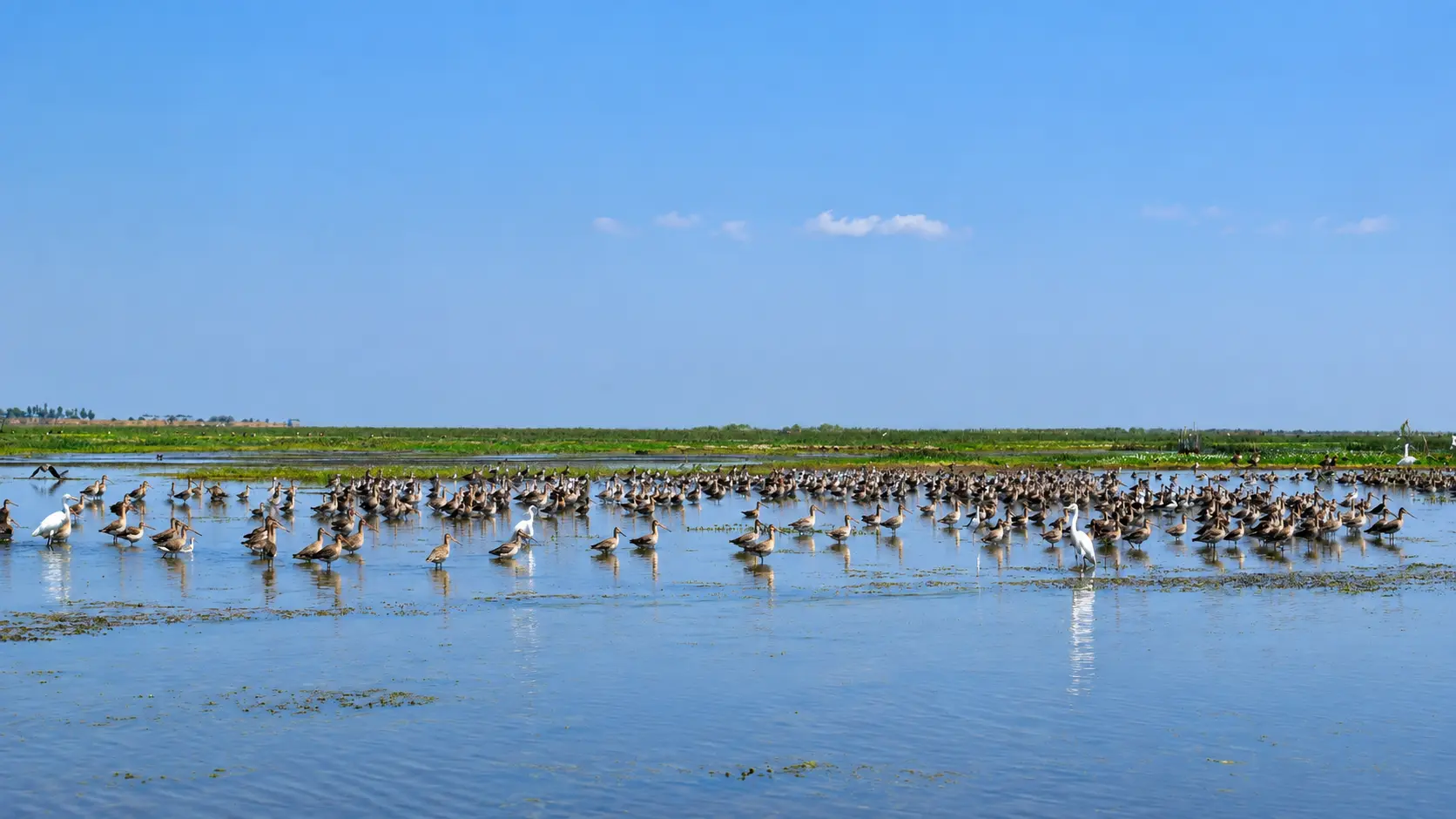
Globally celebrated by conservationists, ornithologists, and cultural travelers alike, Chilika is home to the world's largest single-waterbody population of the endangered Irrawaddy dolphin (Orcaella brevirostris), with 159 individuals recorded in the latest January 2026 state census. Every winter, as icy blizzards freeze northern Eurasia, the lagoon becomes the grand terminus of the Central Asian Flyway, hosting an astonishing congregation of over 1.1 million migratory waterfowl - including greater flamingos, northern pintails, and bar-headed geese - that blanket the shallow flats in fluttering clouds of color and chorus.
Beyond its ecological supremacy, Chilika is an enchanting human landscape supporting the traditional livelihoods of more than 150,000 fisherfolk and celebrated in timeless Odia poetry. Whether watching playful dolphins break the sunlit waves at Satapada, cruising past conical forested islets at Rambha, witnessing silent close-range bird safaris at Mangalajodi, or offering prayers at the legendary island shrine of Kalijai from Barkul, Chilika Lake delivers an unforgettable maritime odyssey through coastal India's natural crown jewel.
Start here. Open a tile for the full details.
Why goRead details
- Asia's Largest Brackish Coastal Lagoon: Spanning an enormous expanse between 900 and 1,165 square kilometres, Chilika offers an inland marine experience of vast horizons, open skies, and unique tidal hydrology unmatched anywhere in South Asia.
- Encounter Rare Irrawaddy Dolphins: Cruise out from Satapada into the outer channel near Magarmukh to watch the world-famous resident pod of shy, blunt-headed Irrawaddy dolphins surfacing gracefully in the calm waters.
- The Avian Spectacle of the Central Asian Flyway: From November through February, witness more than a million migratory birds from Siberia, Mongolia, and the Tibetan Plateau feeding across the lake, centered around the 15.53 sq km Nalabana Bird Sanctuary and Mangalajodi wetlands.
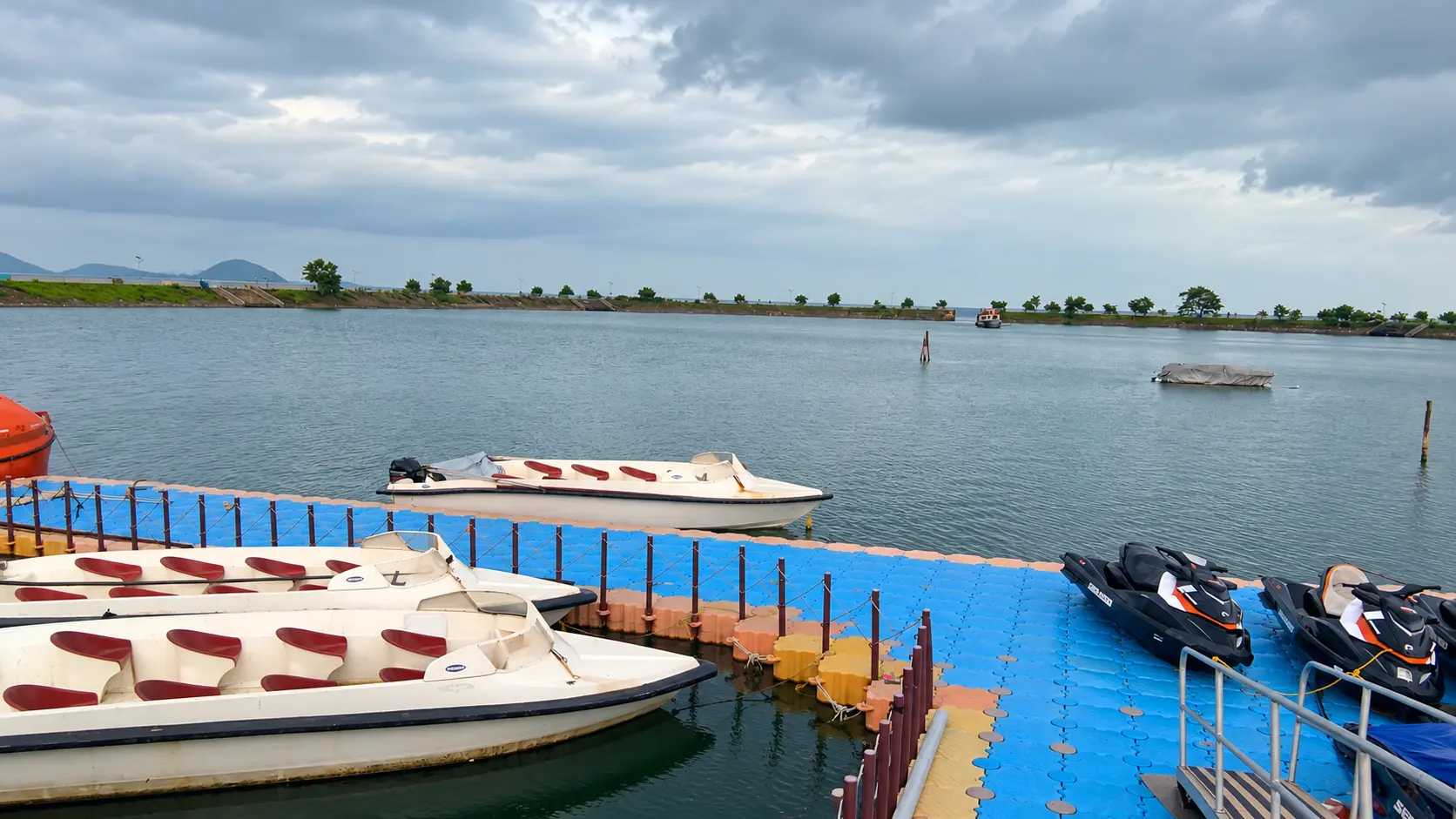
- Multiple Diverse Tourism Gateways: Tailor your journey across four distinct entry bases: wildlife safaris at Satapada, water sports and cultural folklore at Barkul, island-hopping tranquility at Rambha, and silent wooden-boat photography at Mangalajodi.
- Legendary Island Exploration: Sail across the lagoon to discover historic and sacred islets, including Kalijai Island (abode of the lake's guardian deity), Breakfast Island with its colonial beacon spire, Honeymoon Island, and the secluded sea-spit of Rajhans.
- World-Famous Chilika Seafood: Savor sweet and savory culinary treasures straight from the lagoon nets, including jumbo tiger prawns (Penaeus monodon), giant mud crabs, and local bhekti prepared in traditional Odia mustard gravies.
- India's Premier Ramsar Conservation Success: Learn about the historic ecological restoration engineered by the Chilika Development Authority that restored tidal flushing to the lagoon and earned the prestigious Ramsar Wetland Conservation Award.
When to visitRead details
Entry & permissionsRead details
Fees, visiting hours and entry rules may change. Confirm the latest details with the official operator or local authority before travelling.
- Lake Entry Fee: There is no general admission fee to visit or gaze upon Chilika Lake. Costs are incurred solely for boat charters, vehicle parking, and temple donations.
- Boat Boating Hours: Boat operations across all gateways run daily from 06:30 AM to 17:00 PM, weather permitting. Boat ticketing counters generally close by 16:00 PM to ensure that all passenger vessels dock safely before nautical dusk. Night boating is strictly prohibited.
- Standard Boating Tariffs (Official OTDC & Association Rates):
- Satapada Dolphin & Sea Mouth Safari: ₹1,500 to ₹2,500 per boat (3-hour cruise covering dolphin spotting, Rajhans beach, and the sea mouth).
- Barkul to Kalijai Island: ₹150 to ₹250 per passenger on shared launches, or ₹1,200 to ₹1,800 for private speedboats.
- Rambha Island Circuit: ₹1,500 to ₹3,000 per boat (2 to 3-hour tour of Breakfast, Honeymoon, and Beacon islands).
- Mangalajodi Birding Safari: ₹1,200 to ₹1,500 per hand-poled wooden catamaran (2 to 3-hour silent bird photography cruise).
- Wildlife Protection Regulations:
- Nalabana Sanctuary: Landing on or entering the island of Nalabana is strictly forbidden under the Wildlife Protection Act (1972). Forest department patrol boats enforce a 500-metre perimeter buffer.
- Dolphin Safety: Chasing dolphins or circling them with multiple high-speed boats is illegal. Boat pilots are trained to keep engines in neutral gear within 50 metres of dolphin sightings.
- Lifejackets: Wearing an approved lifejacket is legally mandatory for every boat passenger across Chilika Lake.
Plan your visitRead details
The primary air gateway to Chilika Lake is Biju Patnaik International Airport (BBI) in Bhubaneswar. The airport offers frequent non-stop flights to major Indian cities including New Delhi, Mumbai, Kolkata, Bengaluru, Hyderabad, and Chennai, as well as selected international routes. Distance to the various lake gateways from Bhubaneswar airport:
- To Mangalajodi (Northern Sector): ~70 km (approx. 1.5 hours via NH-16).
- To Barkul (Central Sector): ~105 km (approx. 2 hours via NH-16).
- To Satapada (Outer Channel Sector): ~110 km (approx. 2.5 hours via Puri on SH-15).
- To Rambha (Southern Sector): ~130 km (approx. 2.5 hours via NH-16).
Water Safety and Lifejackets
Always ensure that every member of your party - especially young children and non-swimmers - is properly fitted with a securely fastened lifejacket before the boat departs the jetty. Chilika can experience sudden gusty squalls and surface chop, particularly during the afternoon. Avoid standing or leaning over the boat gunwales while the vessel is in motion.
Explore the full guide - choose a topic below.
Why visit?
Asia's Largest Brackish Coastal Lagoon: Spanning an enormous expanse between 900 and 1,165 square kilometres…Explore detailsClose details
- Asia's Largest Brackish Coastal Lagoon: Spanning an enormous expanse between 900 and 1,165 square kilometres, Chilika offers an inland marine experience of vast horizons, open skies, and unique tidal hydrology unmatched anywhere in South Asia.
- Encounter Rare Irrawaddy Dolphins: Cruise out from Satapada into the outer channel near Magarmukh to watch the world-famous resident pod of shy, blunt-headed Irrawaddy dolphins surfacing gracefully in the calm waters.
- The Avian Spectacle of the Central Asian Flyway: From November through February, witness more than a million migratory birds from Siberia, Mongolia, and the Tibetan Plateau feeding across the lake, centered around the 15.53 sq km Nalabana Bird Sanctuary and Mangalajodi wetlands.
- Multiple Diverse Tourism Gateways: Tailor your journey across four distinct entry bases: wildlife safaris at Satapada, water sports and cultural folklore at Barkul, island-hopping tranquility at Rambha, and silent wooden-boat photography at Mangalajodi.
- Legendary Island Exploration: Sail across the lagoon to discover historic and sacred islets, including Kalijai Island (abode of the lake's guardian deity), Breakfast Island with its colonial beacon spire, Honeymoon Island, and the secluded sea-spit of Rajhans.
- World-Famous Chilika Seafood: Savor sweet and savory culinary treasures straight from the lagoon nets, including jumbo tiger prawns (Penaeus monodon), giant mud crabs, and local bhekti prepared in traditional Odia mustard gravies.
- India's Premier Ramsar Conservation Success: Learn about the historic ecological restoration engineered by the Chilika Development Authority that restored tidal flushing to the lagoon and earned the prestigious Ramsar Wetland Conservation Award.
What to expect
Chilika is not a uniform body of water; its vast pear-shaped basin changes dramatically in salinity, depth, and…Explore detailsClose details
The Four Ecological Sectors of Chilika
Chilika is not a uniform body of water; its vast pear-shaped basin changes dramatically in salinity, depth, and character across four distinct ecological sectors:
+-----------------------------------------------------------------------------------+
|                        CHILIKA LAKE: ECOLOGICAL SECTORS & GATEWAYS                |
+-----------------------------------------------------------------------------------+
|                                                                                   |
|  [ NORTHERN SECTOR ] ──────── Mangalajodi (Freshwater Marshes / Bird Photography) |
|         │                     Fed by Daya & Bhargavi Rivers                       |
|         ▼                                                                         |
|  [ CENTRAL SECTOR ] ───────── Barkul & Kalijai Island (Brackish Water / Sports)   |
|         │                     Nalabana Bird Sanctuary (Core Reserve Island)       |
|         ▼                                                                         |
|  [ SOUTHERN SECTOR ] ──────── Rambha (Saline / Hill Islands: Breakfast, Beacon)   |
|         │                     Framed by Eastern Ghats Foothills                   |
|         ▼                                                                         |
|  [ OUTER CHANNEL ] ────────── Satapada, Magarmukh, Sea Mouth & Rajhans Island     |
|                               Marine / Saline (Home of Irrawaddy Dolphins)        |
|                                                                                   |
+-----------------------------------------------------------------------------------+
- The Northern Sector (Freshwater & Marshlands): Fed directly by the Daya and Bhargavi rivers, this sector has low salinity and is dominated by dense reed beds, water hyacinths, and freshwater marshes. It centers on the global birding haven of Mangalajodi, where non-motorized wooden catamarans allow photographers to glide silently within feet of foraging waders.
- The Central Sector (Brackish & Cultural Heart): Situated between Khordha and Puri districts, this sector transitions into brackish water. It hosts the water-sports base at Barkul, the sacred island of Kalijai, and the core protected breeding habitat of the Nalabana Wildlife Sanctuary.
- The Southern Sector (Scenic & Hill-Studded): Bordering Ganjam district near Rambha, this is the most visually dramatic sector of the lake. Here, the rugged spurs of the Eastern Ghats plunge directly into deep, saline waters, creating a cluster of picturesque islets including Breakfast Island, Honeymoon Island, Beacon Island, and Somolo Island.
- The Outer Channel Sector (Marine & Dolphin Waters): Stretching parallel to the Bay of Bengal for 32 kilometres, this saline corridor connects the mainland base of Satapada with the dynamic ocean mouth (Muhan) where the lagoon exchanges water with the open sea. This channel is the prime sanctuary of the endangered Irrawaddy dolphins and opens out onto the peaceful beaches of Rajhans Island.
The Irrawaddy Dolphins of Satapada
One of Chilika's greatest wildlife attractions is its resident population of Irrawaddy dolphins (Orcaella brevirostris). Characterized by their unique slate-blue or gray coloration, rounded melon-shaped heads, and lack of a prominent beak, these cetaceans are gentle, social mammals that inhabit coastal lagoons and major rivers across South and Southeast Asia.
Motorized dolphin safaris embark daily from the OTDC Yatri Nivas jetty at Satapada. Skimming across the channel toward Magarmukh (the historic confluence zone), skilled boat captains cut their engines once pods are sighted, allowing the boats to drift silently. Watching a mother and calf break the placid surface in tandem, blowing gentle mist into the morning air before diving smoothly back beneath the ripples, is an awe-inspiring wildlife experience. The annual census of January 2026 confirmed that Chilika's dolphin population remains healthy and stable at 159 individuals, making it the world's most accessible location to witness these rare creatures in the wild.
The Winter Avian Phenomenon
Between late October and early March, Chilika Lake becomes an avian metropolis. Driven south by the brutal freezing winters of northern Eurasia, more than 160 bird species travel thousands of miles along the Central Asian Flyway to winter in the nutrient-rich shallows of the lagoon.
At the core of the lake lies Nalabana Island, a 15.53 sq km designated wildlife sanctuary. Nalabana (literally "Island of Reeds" in Odia) is completely submerged during the summer monsoon and gradually emerges as water levels drop in winter, exposing vast mudflats teeming with mollusks, crustaceans, and aquatic plants. While human foot traffic is strictly banned on Nalabana to safeguard breeding grounds, boat safaris idling along its boundary buoys offer sweeping panoramas of thousands of vibrant pink greater flamingos feeding in unison alongside elegant bar-headed geese, northern shovelers, Eurasian wigeons, black-tailed godwits, and majestic white-bellied sea eagles wheeling overhead.
Island Wonders and Maritime Culture
Chilika's aquatic landscape is punctuated by dozens of historic, sacred, and natural islands:
- Kalijai Island: The religious center of the lagoon, consecrated to Goddess Kalijai, the protective deity revered by all Chilika sailors.
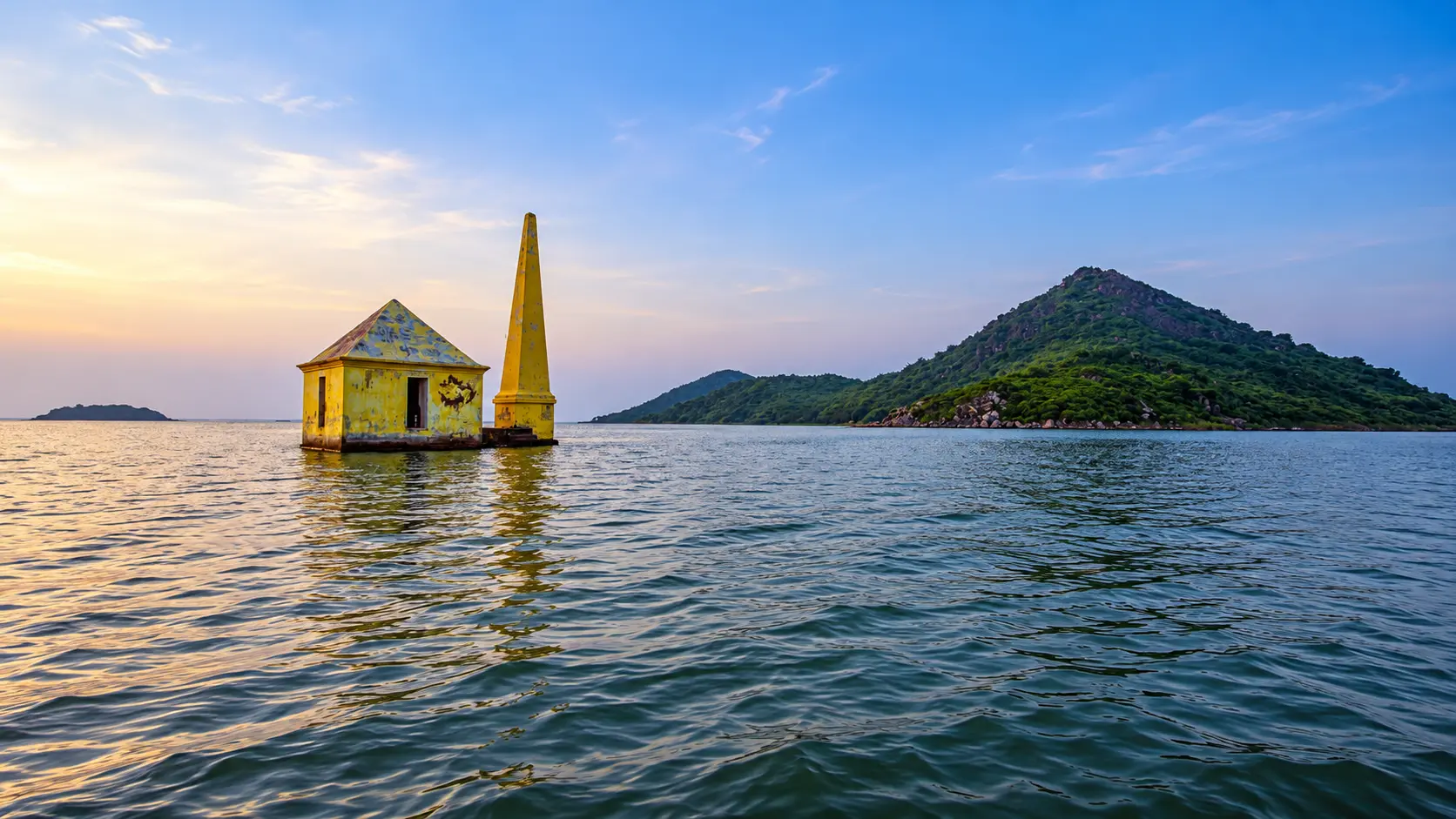
- Breakfast Island (Sankuda): A charming miniature rocky islet near Rambha, where the British collector Thomas Snodgrass built a stone beacon and bungalow in the late 18th century to enjoy leisurely breakfasts while watching passing boats.
- Beacon Island: A dramatic conical rocky knoll topped by an ancient stone pillar built by the British East India Company to guide sailboats entering Rambha bay.
- Rajhans Island: A long, unspoiled barrier sand spit between the outer channel and the Bay of Bengal, where visitors can disembark to walk across golden ocean beaches and enjoy fresh fried fish and crab cooked by local fisher families.
Best time to visit
Explore detailsClose details
Seasonal breakdown
Season | Months | Daytime Temp (°C) | Nighttime Temp (°C) | Lagoon Conditions & Travel Experience |
|---|---|---|---|---|
Peak Winter | November - February | 24°C - 28°C | 14°C - 18°C | Optimal. Perfect weather, calm waters, peak numbers of over 1.1 million migratory birds, and excellent visibility for Irrawaddy dolphin sightings. |
Early Spring | October & March | 29°C - 33°C | 19°C - 23°C | Very Good. Pleasant cruising conditions; early mornings and late afternoons are glorious for boat rides and photography. Moderate midday warmth. |
Pre-Monsoon Summer | April - June | 35°C - 40°C | 26°C - 29°C | Hot & Humid. Strong solar glare and high humidity. Midday boat rides can be scorching without shade. Best to embark before 08:30 AM or after 04:00 PM. |
Monsoon Season | July - September | 30°C - 33°C | 25°C - 27°C | Stormy & Wet. Heavy monsoon downpours replenish the lagoon, but strong winds, high tides, and choppy water frequently lead to temporary boating suspensions. |
How to reach
The primary air gateway to Chilika Lake is Biju Patnaik International Airport (BBI) in Bhubaneswar.Explore detailsClose details
By air
The primary air gateway to Chilika Lake is Biju Patnaik International Airport (BBI) in Bhubaneswar. The airport offers frequent non-stop flights to major Indian cities including New Delhi, Mumbai, Kolkata, Bengaluru, Hyderabad, and Chennai, as well as selected international routes. Distance to the various lake gateways from Bhubaneswar airport:
- To Mangalajodi (Northern Sector): ~70 km (approx. 1.5 hours via NH-16).
- To Barkul (Central Sector): ~105 km (approx. 2 hours via NH-16).
- To Satapada (Outer Channel Sector): ~110 km (approx. 2.5 hours via Puri on SH-15).
- To Rambha (Southern Sector): ~130 km (approx. 2.5 hours via NH-16).
By train
Chilika is bordered by major railway networks on both its eastern and western shorelines:
- For Western & Southern Gateways (Barkul & Rambha):
- Balugaon Railway Station (BALU): Just 5 km from Barkul jetty; major express stop on the Howrah - Chennai mainline.
- Khallikote (KIT) & Rambha (RBA): Located within 2 to 12 km of Rambha tourist hub.
- For Eastern Gateways (Satapada):
- Puri Railway Station (PURI): Located 50 km northeast of Satapada. Puri is a major national terminus served by high-speed Vande Bharat, Shatabdi, and superfast express trains from across India. Taxis and regular buses run directly from Puri railway station to Satapada jetty in about 1 hour and 15 minutes.
By road
The highway connectivity around Chilika Lake is exceptional:
- National Highway 16 (NH-16): The 4-to-6-lane Golden Quadrilateral highway runs right along the western shoreline, providing direct, high-speed access to Mangalajodi (turnoff at Tangi), Barkul, and Rambha.
- State Highway 15 (SH-15): A smooth, scenic two-lane paved highway links the holy city of Puri directly to Satapada (50 km), passing through lush coconut groves, Casuarina plantations, and serene coastal villages.
- Vehicle Ferry Service: The Inland Water Transport department operates a roll-on/roll-off (Ro-Ro) vehicle ferry connecting Satapada with Janhikuda on the opposite bank, allowing motorists to cross the outer channel and continue on toward Barkul and Rambha without backtracking through Bhubaneswar.
Entry, timings and permissions
Fees, visiting hours and entry rules may change.Explore detailsClose details
Fees, visiting hours and entry rules may change. Confirm the latest details with the official operator or local authority before travelling.
- Lake Entry Fee: There is no general admission fee to visit or gaze upon Chilika Lake. Costs are incurred solely for boat charters, vehicle parking, and temple donations.
- Boat Boating Hours: Boat operations across all gateways run daily from 06:30 AM to 17:00 PM, weather permitting. Boat ticketing counters generally close by 16:00 PM to ensure that all passenger vessels dock safely before nautical dusk. Night boating is strictly prohibited.
- Standard Boating Tariffs (Official OTDC & Association Rates):
- Satapada Dolphin & Sea Mouth Safari: ₹1,500 to ₹2,500 per boat (3-hour cruise covering dolphin spotting, Rajhans beach, and the sea mouth).
- Barkul to Kalijai Island: ₹150 to ₹250 per passenger on shared launches, or ₹1,200 to ₹1,800 for private speedboats.
- Rambha Island Circuit: ₹1,500 to ₹3,000 per boat (2 to 3-hour tour of Breakfast, Honeymoon, and Beacon islands).
- Mangalajodi Birding Safari: ₹1,200 to ₹1,500 per hand-poled wooden catamaran (2 to 3-hour silent bird photography cruise).
- Wildlife Protection Regulations:
- Nalabana Sanctuary: Landing on or entering the island of Nalabana is strictly forbidden under the Wildlife Protection Act (1972). Forest department patrol boats enforce a 500-metre perimeter buffer.
- Dolphin Safety: Chasing dolphins or circling them with multiple high-speed boats is illegal. Boat pilots are trained to keep engines in neutral gear within 50 metres of dolphin sightings.
- Lifejackets: Wearing an approved lifejacket is legally mandatory for every boat passenger across Chilika Lake.
Nearby places to consider
Puri Jagannath Temple & Golden Beach (~50 km from Satapada): One of Hinduism's four sacred Char Dham pilgrimage…Explore detailsClose details
- Puri Jagannath Temple & Golden Beach (~50 km from Satapada): One of Hinduism's four sacred Char Dham pilgrimage centers, famed for the grand 12th-century Jagannath Temple, the annual Ratha Yatra, and Blue Flag certified beaches.
- Konark Sun Temple (~85 km from Satapada via Puri): UNESCO World Heritage monument renowned for its breathtaking 13th-century chariot architecture covered in exquisite stone carvings.
- Gopalpur-on-Sea (~45 km from Rambha): A serene historic seaport and tranquil beach resort in Ganjam district featuring colonial beach villas, a heritage lighthouse, and golden surf.
- Taratarini Temple (~60 km from Rambha): An ancient Shakti Peetha perched atop a dramatic hillock beside the Rushikulya River near Purushottampur, accessible via ropeway or 999 stone steps.
- Narayani Temple (~14 km from Barkul): A revered hillside Durga shrine set amidst lush Eastern Ghats sal forests near Balugaon, famous for perennial mountain springs.
In pictures
The practical bits
Before you go.
Choosing the Right Gateway
Because Chilika Lake is immense (spanning over 1,100 sq km), traveling between Satapada on the eastern shore and…Explore detailsClose details
Because Chilika Lake is immense (spanning over 1,100 sq km), traveling between Satapada on the eastern shore and Barkul/Rambha on the western shore requires either a 2.5-hour road detour via Bhubaneswar or a vehicle ferry crossing. Choose your base based on your primary travel goal:
- Pick Satapada if your priority is viewing Irrawaddy dolphins, exploring the ocean mouth, and combining your visit with Puri Jagannath Temple.
- Pick Barkul if you enjoy water sports, folklore, and comfortable lakeside dining at OTDC Panthanivas.
- Pick Rambha if you seek tranquil island landscapes, romantic sunset vistas, and panoramic hill backdrops.
- Pick Mangalajodi if you are a serious birder or wildlife photographer looking for close-up waterfowl portraits.
Water Safety and Lifejackets
Always ensure that every member of your party - especially young children and non-swimmers - is properly fitted…Explore detailsClose details
Always ensure that every member of your party - especially young children and non-swimmers - is properly fitted with a securely fastened lifejacket before the boat departs the jetty. Chilika can experience sudden gusty squalls and surface chop, particularly during the afternoon. Avoid standing or leaning over the boat gunwales while the vessel is in motion.
Sun and Weather Protection
With open water reflecting intense coastal sunlight, solar glare can be severe.Explore detailsClose details
With open water reflecting intense coastal sunlight, solar glare can be severe. Bring wide-brimmed hats with chin straps, polarized sunglasses (which also significantly reduce water glare for spotting dolphins beneath the surface), broad-spectrum sunscreen, and lightweight, breathable cotton clothing. Carry at least 1.5 litres of bottled drinking water per person on boat excursions, as bottled drinks are not sold on open water.
Optics and Photographic Gear
A quality pair of binoculars (8x42 or 10x42) is indispensable for scanning dolphin fins and identifying distant…Explore detailsClose details
A quality pair of binoculars (8x42 or 10x42) is indispensable for scanning dolphin fins and identifying distant migratory birds along the Nalabana perimeter. For wildlife and bird photographers, a telephoto lens of at least 300mm to 600mm focal length is highly recommended. Bring dry bags or water-resistant covers to shield camera electronics from inadvertent salt spray.
A few things you might wonder
Common questions about visiting Chilika Lake. Fees, visiting hours and ceremonies are researched details that may change; confirm current arrangements with the operator before travelling.
Where is the best place in Chilika Lake to see Irrawaddy dolphins?
What is the best season to visit Chilika Lake for birdwatching?
Can tourists set foot on Nalabana Island?
How do I choose between staying at Satapada, Barkul, or Rambha?
How many Irrawaddy dolphins live in Chilika Lake?
Are lifejackets mandatory on boats in Chilika Lake?
Can I cross Chilika Lake with my car?
What special seafood is Chilika Lake famous for?
Explore more in Chilika
Discover other destinations around this hub
More Hubs in Odisha
Continue exploring other travel hubs in this state
Planning a trip to Chilika & South Coast?