Ratnagiri Mahavihara
Comprehensive visitor guide to Ratnagiri Mahavihara in Jajpur, Odisha. Explore the carved chlorite portal, colossal Buddha, 700 votive stupas, and ASI museum.
Location
Buddhist Circuit, Odisha
A closer look
Your visit, at a glance.
Buddhist Circuit, Odisha
GET TO KNOW THE PLACE
Crowning a gentle, low-lying khondalite hillock in the Bari sector of Jajpur District, Ratnagiri Mahavihara (ରତ୍ନଗିରି ମହାବିହାର; literally "The Hill of Jewels") is universally…
The story of Ratnagiri Mahavihara
Crowning a gentle, low-lying khondalite hillock in the Bari sector of Jajpur District, Ratnagiri Mahavihara (ରତ୍ନଗିରି ମହାବିହାର; literally "The Hill of Jewels") is universally acclaimed as the most artistically breathtaking and spiritually influential Buddhist monastic complex in eastern India. As the crown jewel of Odisha's renowned "Diamond Triangle" (Ratnagiri - Udayagiri - Lalitgiri), Ratnagiri stands on par with Nalanda, Vikramashila, and Sarnath in historical importance, while surpassing almost all of them in the exquisite quality and preservation of its stone architectural carving. Excavated meticulously by the Archaeological Survey of India under renowned archaeologist Dr. Debala Mitra between 1958 and 1961, Ratnagiri revealed a colossal monastic city that flourished with uninterrupted splendour for nearly nine centuries - from the Gupta era in the 5th Century CE through the Bhauma-Kara and Somavamsi dynasties until the 13th Century CE.
In world religious history, Ratnagiri holds an exalted, sacred place as the supreme cradle of esoteric Vajrayana Buddhism and the intellectual fountainhead of the Kalachakratantra (the "Wheel of Time Tantra"). Classical Tibetan chronicles, including the monumental 18th-century treatise Pag Sam Jon Zang by Sumpa Khanpo and the histories of the 16th-century Tibetan master Lama Taranatha, state unequivocally that the profound teachings of the Kalachakra were revealed, codified, and disseminated from Rathnagiri-vihara in Odra (Odisha). Tibetan scholars and yogis undertook arduous Himalayan crossings over many centuries to study under the great Siddhas and Panditas of Ratnagiri, carrying esoteric manuscripts, tantric iconographies, and monastic meditation practices directly to the rooftop of the world. Thousands of inscribed clay sealings discovered at the site, proudly bearing the institutional legend Sri Ratnagiri Mahavihariyaryabikshu Sanghasya ("Of the noble monastic community of the Great Monastery of Sri Ratnagiri"), substantiate the university's immense prestige.
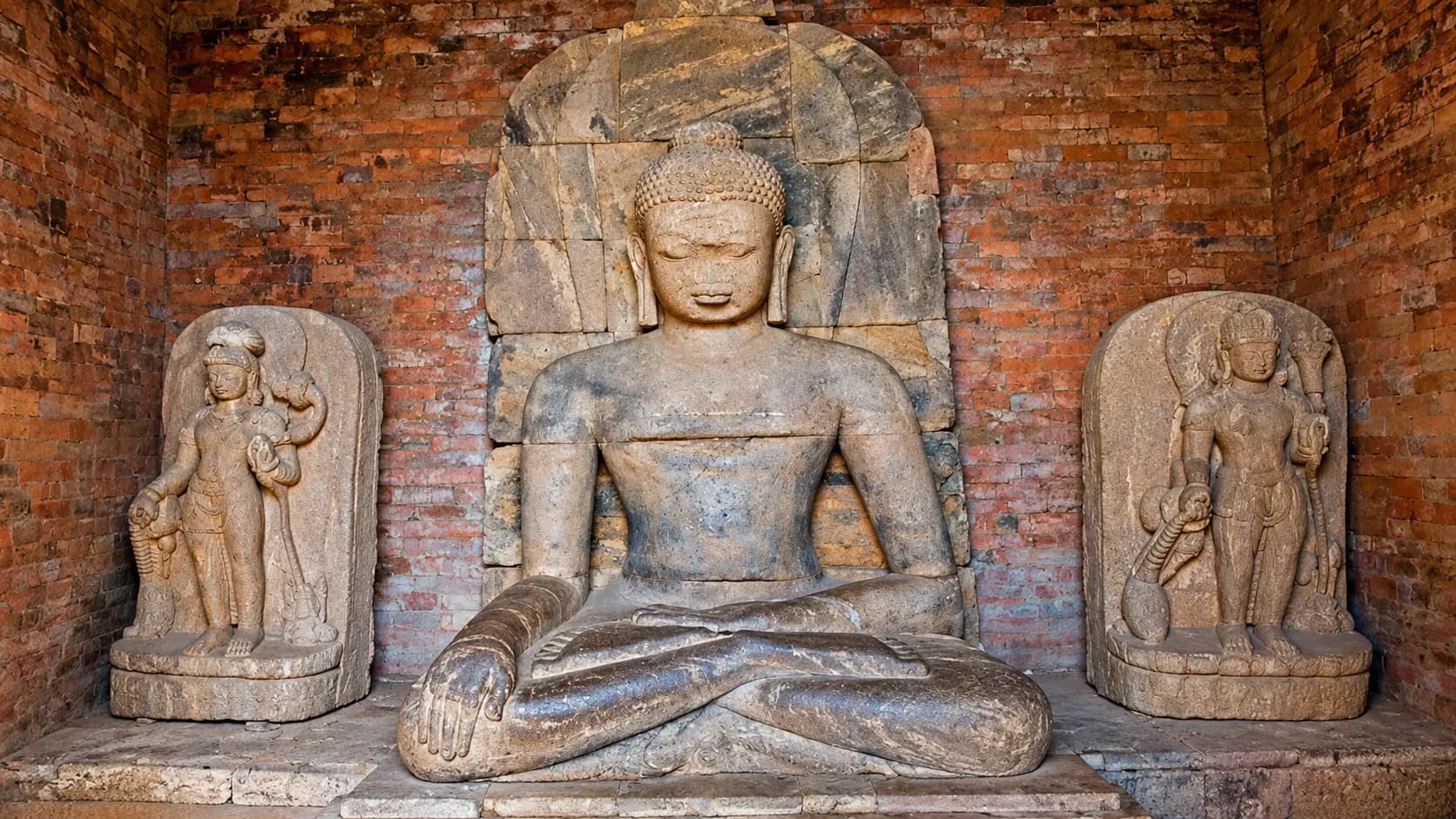
Artistically, Ratnagiri is nothing short of miraculous. The monument is globally famous for its monumental Monastery 1, featuring an entrance doorway carved from lustrous dark green chlorite that art historians rank among the greatest sculptural achievements of the ancient world. Passing through this breathtaking portal, visitors emerge into a vast paved courtyard flanked by 24 monk dormitories, leading to a cavernous rear sanctum where a colossal 3.7-metre-tall seated Buddha in the earth-touching Bhumisparsha Mudra radiates timeless serenity. Across the southern terrace rises the monumental Maha Stupa, surrounded by an extraordinary necropolis of over 700 stone votive stupas carved with intricate figures of Mahayana and Vajrayana deities.
Today, preserved with meticulous care by the Archaeological Survey of India, Ratnagiri offers travelers, art historians, and pilgrims an unforgettable experience of ancient intellectual grandeur. A world-class Archaeological Site Museum on the campus displays thousands of excavated antiquities - including rare cast bronze and copper-alloy idols, terracotta seals, inscribed dharanis, and ivory artifacts - completing an extraordinary journey into the golden age of classical Indian Buddhist civilization.
Start here. Open a tile for the full details.
Why goRead details
The doorframe consists of multiple concentric receding bands of deeply undercut relief work:
- Floral and Foliage Bands: Delicate scrolling arabesques, curling lotus creepers, and geometric fretwork executed with the precision of fine ivory carving.
- The Mithuna Panels: Harmonious amorous couples (Mithunas) displaying classical postures of tenderness, grace, and romantic poise.
- The Vidyadharas: Celestial garland-bearers floating gracefully across the upper lintel, their robes billowing in divine breezes.
- Gajalaksmi Lintel: At the centre of the over-door lintel sits Goddess Laksmi flanked by ceremonial elephants pouring sacred lustrations from inverted water pitchers, blessing all who cross the sacred threshold.
When to visitRead details
Because exploring Ratnagiri involves walking across extensive open-air brick courtyards, stone stupa fields, and unshaded hill terraces, timing your trip according to seasonal weather patterns is essential:
Entry & permissionsRead details
Fees, visiting hours and entry rules may change. Confirm the latest details with the official operator or local authority before travelling.
Visitor access to Ratnagiri Mahavihara is regulated by the Archaeological Survey of India (ASI) under national monument preservation statutes:
+-----------------------------------------------------------------------------------+
|                        RATNAGIRI OPERATIONAL POLICIES & TARIFFS                   |
+------------------------+----------------------------------------------------------+
| Category               | Operational Policy / Guidelines                          |
+------------------------+----------------------------------------------------------+
| Excavated Ruins Hours  | Open daily from 09:00 AM to 17:00 PM (Sunrise to Sunset) |
+------------------------+----------------------------------------------------------+
| ASI Site Museum Hours  | Open 09:00 AM to 17:00 PM; STRICTLY CLOSED ON FRIDAYS    |
+------------------------+----------------------------------------------------------+
| Combined Entry Ticket  | ₹25 per Indian adult / SAARC / BIMSTEC nationals;        |
| (Monuments & Museum)   | Free for children under 15 years; ₹300 for foreigners    |
+------------------------+----------------------------------------------------------+
| Photography Policy     | Still camera: Allowed (No flash in the bronze gallery);  |
|                        | Commercial film crews & tripods require written permit   |
+------------------------+----------------------------------------------------------+
| Drone Regulations      | Flying civilian drones/UAVs strictly PROHIBITED across   |
|                        | the protected monument perimeter under ASI regulations   |
+------------------------+----------------------------------------------------------+
| Vehicle Parking        | Gated parking plaza outside monument entrance (nominal   |
|                        | fee of ₹10 for two-wheelers, ₹20 for private cars)       |
+-----------------------------------------------------------------------------------+
Combined Admission Tariffs
A single integrated ASI ticket grants complete admission to both the excavated outdoor ruins of Monasteries 1 and 2, the Maha Stupa, and the indoor Archaeological Site Museum. Entry tariffs are standardized and economical:
- Indian Citizens & Visitors from SAARC / BIMSTEC Nations: ₹25 per person (discounted when paid digitally via QR code at the ticket counter).
- Children (under 15 years): Completely free admission.
- Foreign Tourists: ₹300 per person.
Tickets can be purchased directly at the entrance pavilion counter or booked in advance online via the official ASI monument portal (asi.nic.in).
Crucial Notice: Friday Museum Closure
Travelers planning their trip must note that while the outdoor archaeological ruins, monasteries, and stupa fields are open seven days a week, the indoor Archaeological Site Museum at Ratnagiri is strictly closed every Friday. To ensure you can tour the bronze antiquities and stone sculptures in the museum, plan your visit for any day between Saturday and Thursday.
Plan your visitRead details
Ratnagiri is centrally situated in the Diamond Triangle region of Jajpur District, seamlessly connected to major highways, railways, and air gateways:
Explore the full guide - choose a topic below.
Why visit?
The single most celebrated architectural treasure of Ratnagiri is the entrance doorway leading into the central…Explore detailsClose details
The Incomparable Green Chlorite Entrance Portal
The single most celebrated architectural treasure of Ratnagiri is the entrance doorway leading into the central courtyard of Monastery 1. Carved from rare, dense dark-green chlorite stone that has retained a glass-like polish for over a thousand years, this monumental portal is widely celebrated as one of the finest surviving examples of decorative stone carving in human history.
The doorframe consists of multiple concentric receding bands of deeply undercut relief work:
- Floral and Foliage Bands: Delicate scrolling arabesques, curling lotus creepers, and geometric fretwork executed with the precision of fine ivory carving.
- The Mithuna Panels: Harmonious amorous couples (Mithunas) displaying classical postures of tenderness, grace, and romantic poise.
- The Vidyadharas: Celestial garland-bearers floating gracefully across the upper lintel, their robes billowing in divine breezes.
- Gajalaksmi Lintel: At the centre of the over-door lintel sits Goddess Laksmi flanked by ceremonial elephants pouring sacred lustrations from inverted water pitchers, blessing all who cross the sacred threshold.
Passing beneath this portal creates an immediate, awe-inspiring sensation of entering a sacred architectural realm crafted by master sculptors operating at the very summit of their technical and aesthetic power.
The Colossal Seated Buddha of Monastery 1
Inside the rear principal sanctum of Monastery 1, seated majestically upon a high molded stone plinth, sits the presiding icon of Ratnagiri: a monumental 3.7-metre-tall Buddha carved from fine-grained khondalite. Portrayed in the iconic Bhumisparsha Mudra (the earth-touching gesture invoking the Earth Goddess Sthavara to witness his supreme enlightenment under the Bodhi tree), the statue possesses an extraordinary, transcendent spiritual gravitas.
The Tathagata is flanked by two equally colossal Bodhisattvas standing over 2.5 metres in height: Bodhisattva Padmapani holding a blossoming lotus bud, and Bodhisattva Vajrapani brandishing the diamond thunderbolt. The sheer scale of the icons, combined with the soft natural light filtering into the dark stone sanctum, evokes an intense atmosphere of silence, spiritual power, and serene contemplation.
The Necropolis of 700 Stone Votive Stupas
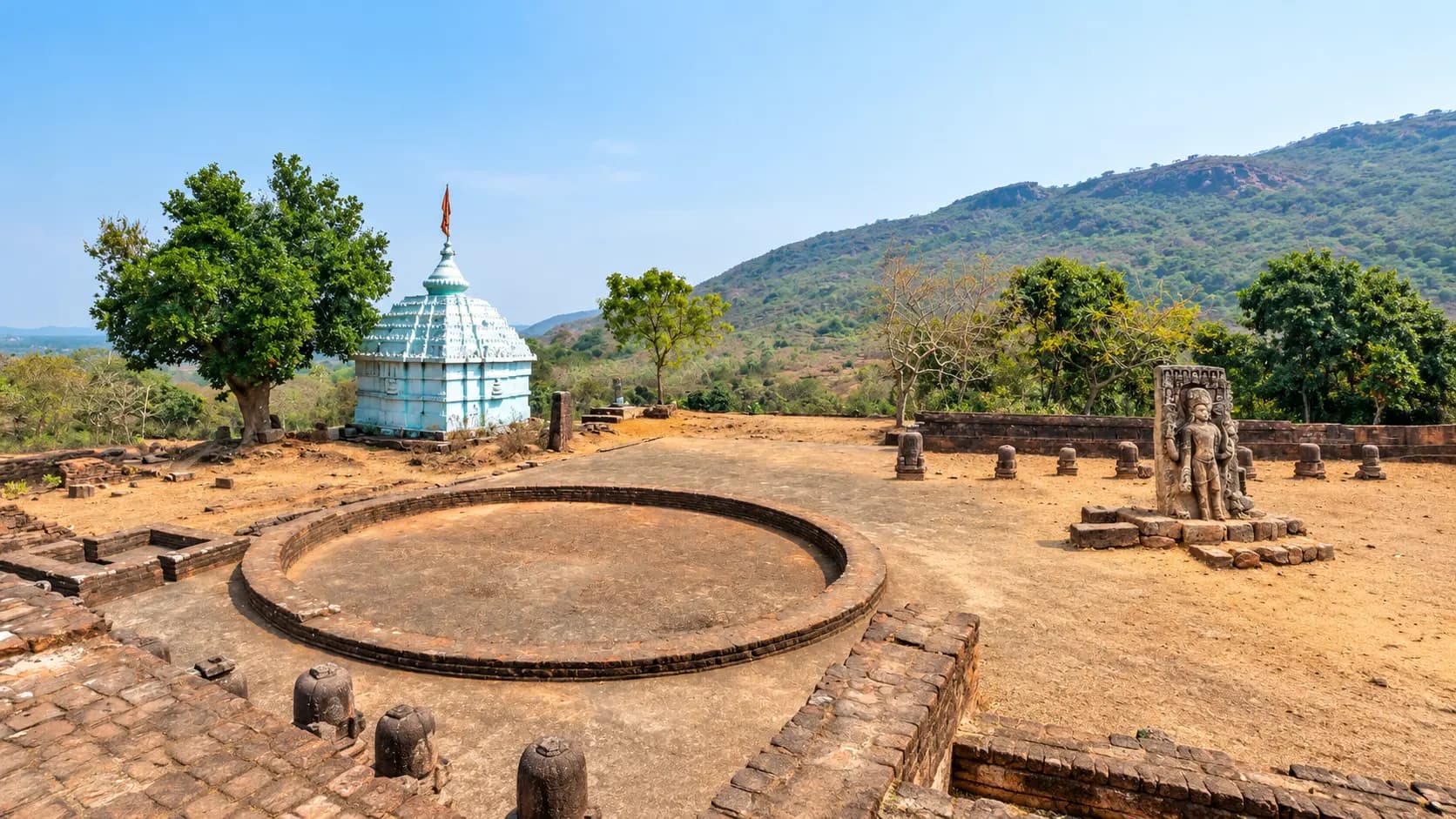
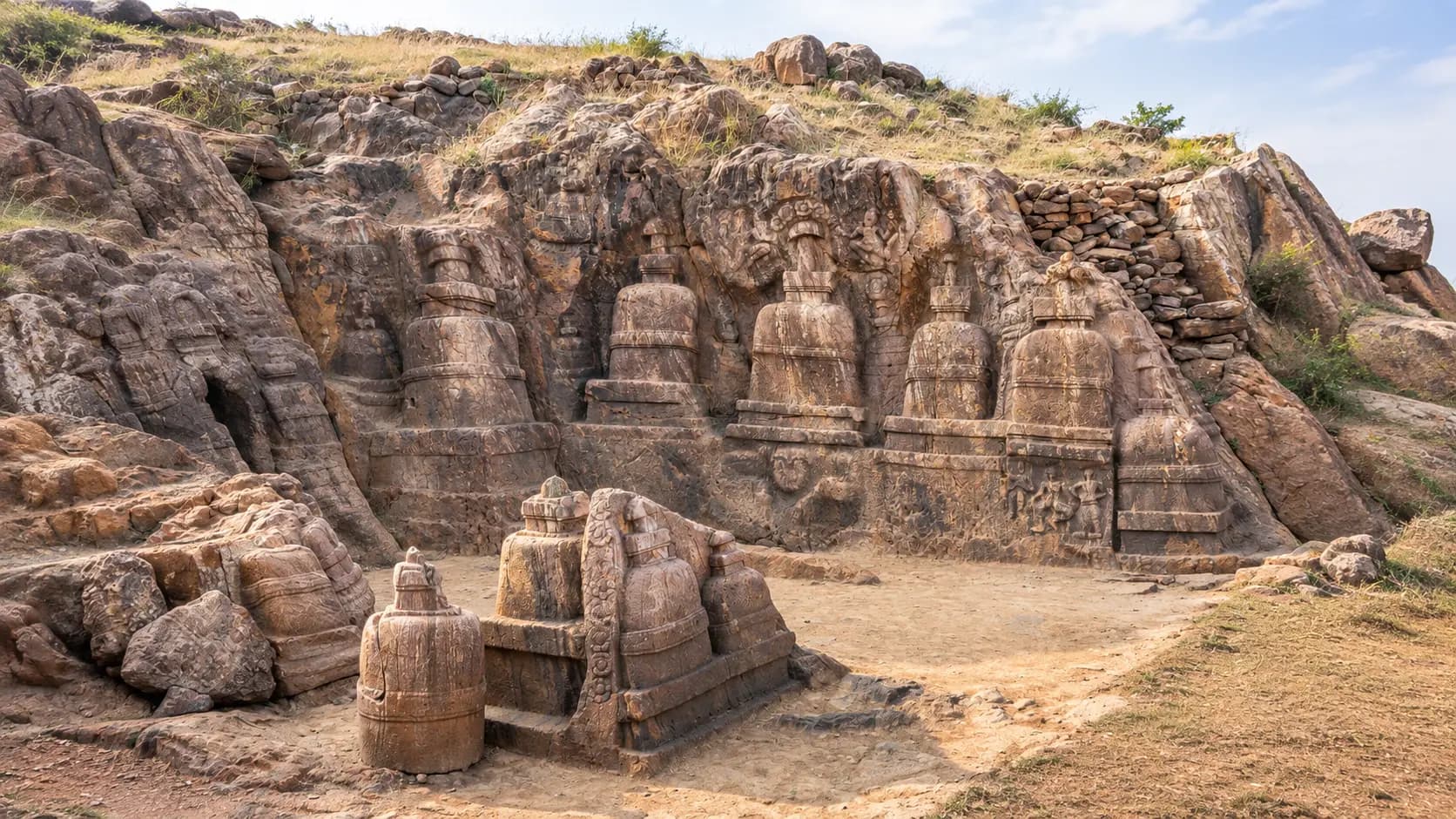
Surrounding the grand brick core of the Maha Stupa on the southern terrace is an extraordinary, dense field of over 700 carved stone votive stupas. Ranging in height from 0.5 metres to over 3 metres, these monolithic and portable stone stupas were consecrated by visiting pilgrims, monks, royalty, and merchant scholars as acts of supreme spiritual merit (Kusalakarma).
What makes Ratnagiri’s stupa field uniquely valuable to world art is that hundreds of these stupas feature hollowed-out sculptural niches containing exquisitely detailed miniature figures of the Vajrayana pantheon. Walking through this stone forest reveals breathtaking relief figures of:
- Dhyani Buddhas: Akshobhya, Vairochana, Ratnasambhava, Amitabha, and Amoghasiddhi.
- Bodhisattvas & Deities: Four-armed Avalokiteshvara, Tara, Manjushri, Vajrasattva, and Prajnaparamita.
- Tantric Emanations: Ferocious wrathful deities such as Yamari, Heruka, and Mahakala, illustrating the flourishing development of esoteric Buddhist tantra during the 8th to 11th centuries.
Monastery 2 and the Advanced Engineering of Monastic Life
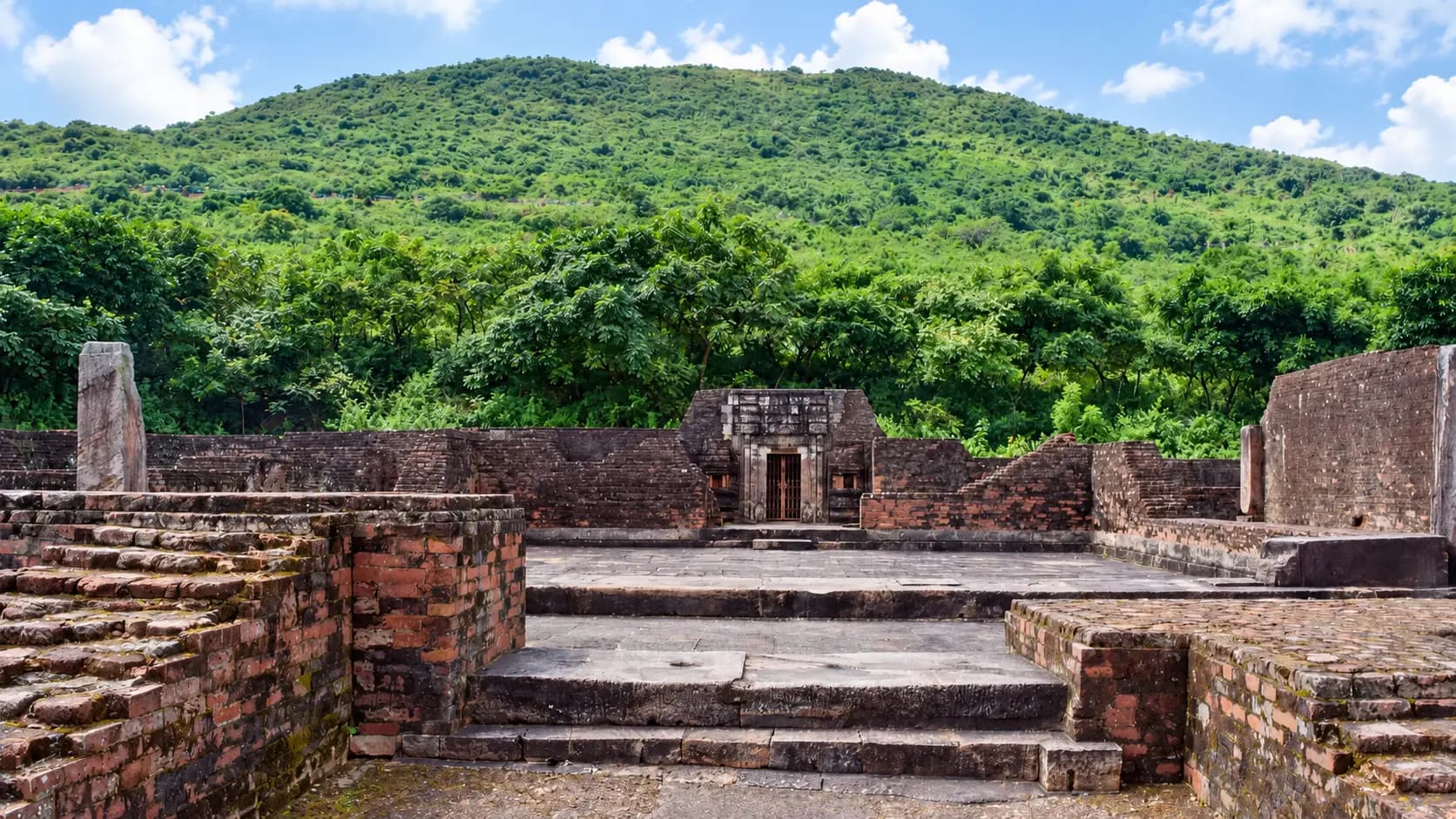
Adjacent to the main Mahavihara lies Monastery 2, a beautifully proportioned single-storeyed vihara featuring a paved central courtyard, 18 residential monk cells, and an impressive entrance porch. The layout of both monasteries reveals the sophisticated hydraulic and sanitary engineering mastered by ancient Odishan builders:
- Covered Stone Drainage: Elaborate stone-lined subterranean drain channels engineered to flush monsoon rainwater out of the inner courtyards.
- Monastic Cells: Individual monk quarters featuring stone sleeping platforms, recessed niches for palm-leaf manuscripts and oil lamps, and heavy wooden door pivots.
- Curvilinear Roof Architecture: Inscriptions and fallen architectural fragments demonstrate that Ratnagiri featured unique curvilinear-roofed upper chambers, a distinctive hallmark of ancient Kalingan structural genius rarely seen in northern Indian brick monasteries.
The ASI Archaeological Site Museum
Located within a modern landscaped pavilion on the northern slope of the hill, the Archaeological Museum at Ratnagiri preserves over 3,400 antiquities unearthed during the 1958 - 1961 excavations. Spread across four spacious, well-lit galleries, the museum displays:
- Exquisite Metal Bronzes: A world-renowned hoard of over two dozen cast bronze and octo-alloy (Ashtadhatu) icons of Buddha, Maitreya, Kurukulla, and Tara, reflecting advanced metallurgical casting techniques comparable to Nalanda and Kurkihar.
- Inscribed Monastic Seals: Hundreds of baked clay bullae and sealings bearing the official emblem of the Wheel of Law (Dharmachakra) flanked by two recumbent deer, providing direct administrative proof of Ratnagiri’s identity.
- Tantric Stone Statues: Colossal stone heads of Buddha, a six-headed and twelve-armed deity, and intricate panels depicting jataka tales.
What to expect
Visiting Ratnagiri Mahavihara is an expansive, visually stunning journey that combines manicured open-air…Explore detailsClose details
Visiting Ratnagiri Mahavihara is an expansive, visually stunning journey that combines manicured open-air archaeological exploration with a world-class site museum:
+-----------------------------------------------------------------------------------+
|                        RATNAGIRI COMPLEX VISITOR HIGHLIGHTS                       |
+-----------------------------------------------------------------------------------+
| Campus Section             | Featured Architectural Sights & Exhibits             |
+----------------------------+------------------------------------------------------+
| Entry Gate & Garden Plaza  | Ticket pavilion, shaded parking area, and landscaped |
|                            | lawns framing the base of the ancient monastic hill. |
+----------------------------+------------------------------------------------------+
| ASI Site Museum            | 4 modern galleries exhibiting over 3,400 antiquities,|
| (Closed on Fridays)        | including bronzes, terracotta seals, and stone icons.|
+----------------------------+------------------------------------------------------+
| Monastery 1 (Mahavihara)   | Famous carved green chlorite doorway, 24 monk cells, |
|                            | central paved courtyard, and colossal seated Buddha. |
+----------------------------+------------------------------------------------------+
| Monastery 2                | Charming smaller monastic quadrangle with paved      |
|                            | courtyard, stone drainage channels, and verandah.    |
+----------------------------+------------------------------------------------------+
| Maha Stupa & Stupa Field   | Massive circular brick stupa surrounded by over 700  |
|                            | intricately carved stone votive stupas and shrines.  |
+-----------------------------------------------------------------------------------+
Arrival and Garden Pathways
Upon arrival, visitors park in the dedicated plaza outside the ASI complex. The approach to Ratnagiri is exceptionally peaceful, surrounded by rolling green agricultural fields and shaded groves of casuarina and mango trees. The site is maintained to immaculate standards, with broad paved stone pathways winding through lush emerald lawns bordered by flowering shrubs.
After obtaining tickets at the automated counter, visitors ascend a gentle paved ramp leading to the central monastic terrace. High-resolution bilingual interpretive display boards positioned outside each monument provide detailed ground plans and historical commentary.
Entering Monastery 1
The highlight of the tour begins at the monumental entrance gateway of Monastery 1. Standing before the green chlorite doorframe, the incredible crispness of the stone carving commands total attention. Stepping through the portal reveals the immense stone courtyard, paved with large khondalite flagstones.
Walking around the perimeter of the courtyard, you can peer into the dark, cool chambers of the monk dormitories, observing the clever recessed wall niches where ancient Buddhist scholars once stored their palm-leaf texts. At the far western end of the courtyard, passing into the rear sanctum brings you into the direct, powerful presence of the 3.7-metre-tall seated Buddha, whose tranquil stone gaze has held vigil across the centuries.
Walking the Votive Stupa Necropolis
Exiting Monastery 1 and heading south brings you to the elevated terrace of the Maha Stupa. Here, the landscape transforms into a vast, sprawling stone necropolis. Walking among the 700 votive stupas is a mesmerizing experience; each individual stupa reveals unique sculptural reliefs, from delicate seated Taras to ferocious multi-armed protective deities. The terrace offers magnificent panoramic views overlooking the Birupa river delta and the distant purplish ridges of Udayagiri Hill across the valley.
The Archaeological Site Museum Tour
Conclude your visit at the Archaeological Museum at Ratnagiri, located just inside the main entrance gate. The four spacious galleries are equipped with modern display vitrines, specialized lighting, and informative curatorial text. Viewing the delicate cast bronze statues and miniature terracotta monastic seals adds an essential personal and spiritual layer to the grand monumental stone ruins outside.
Best time to visit
Because exploring Ratnagiri involves walking across extensive open-air brick courtyards, stone stupa fields, and…Explore detailsClose details
Because exploring Ratnagiri involves walking across extensive open-air brick courtyards, stone stupa fields, and unshaded hill terraces, timing your trip according to seasonal weather patterns is essential:
Season | Months | Weather, Site Conditions & Visitor Advice |
|---|---|---|
Winter Peak (Best Time) | October to March | Temperature: 15°C - 28°C. Clear blue skies, mild sunshine, cool river breezes. Perfect for outdoor courtyard walks, photographing the chlorite portal, and touring the museum. |
Summer Season (Hot & Arid) | April to June | Temperature: 28°C - 42°C. Severe radiant heat on brick courtyards and stone ruins. Arrive strictly at 09:00 AM; explore outdoor ruins early and spend midday in the museum. |
Monsoon Season (Verdant & Atmospheric) | July to September | Temperature: 25°C - 33°C. Dramatic overcast skies, lush green lawns, washed dark stone. Flagstones can be slick; carry an umbrella and wear shoes with dependable grip. |
Winter Season (October to March) - The Golden Window
The winter months represent the absolute pinnacle for visiting Ratnagiri Mahavihara. During this period, daytime temperatures hover pleasantly between 20°C and 28°C, while mornings and evenings are cool and invigorating at 15°C. The dry, clear winter air ensures comfortable walking across the extensive outdoor ruins and provides crystal-clear natural light for photographing the intricate chlorite carvings.
This is the optimal time to undertake a complete, leisurely tour of the Diamond Triangle, comfortably visiting Ratnagiri, Udayagiri (5 km south), and Lalitgiri (18 km south) in a single day trip.
Summer Season (April to June) - High Heat and Glare
Summer in coastal Jajpur brings intense heatwaves, with afternoon temperatures routinely reaching 40°C to 42°C. The exposed brick walls and stone courtyard flagstones absorb solar heat, creating severe thermal radiation during the midday hours.
Check the current visiting hours and permitted access with the site operator before departure; ceremonies, closures and visitor sessions can affect access.
Monsoon Season (July to September) - Lush Riverine Beauty
The southwest monsoon washes the ruins in deep tropical beauty. The landscaped lawns turn a brilliant emerald green, the red-brick monastic walls glow with warm terracotta hues, and the dark green chlorite doorway glistens with dramatic moisture.
However, visitors must walk carefully on the ancient stone courtyard flagstones and stupa terraces, which can become slippery when wet. Sturdy walking footwear with deep rubber treads and a rain umbrella are essential.
How to reach
Ratnagiri is centrally situated in the Diamond Triangle region of Jajpur District, seamlessly connected to major…Explore detailsClose details
Ratnagiri is centrally situated in the Diamond Triangle region of Jajpur District, seamlessly connected to major highways, railways, and air gateways:
+-----------------------------------------------------------------------------------+
|                        REGIONAL GATEWAYS & HIGHWAY ACCESS                         |
|                                                                                   |
|   Biju Patnaik Airport (BBI), Bhubaneswar          Cuttack Junction Railway (CTC) |
|            (~100 km / 2.0 hrs via NH-16)                (~62 km / 1.5 hrs drive)  |
+------------------------------------------+----------------------------------------+
                                           |
                                           v
+-----------------------------------------------------------------------------------+
|                           MAJOR HIGHWAY HUB: CHANDIKHOLE                          |
|   Intersection of NH-16 (Kolkata-Chennai) & NH-5A (Paradip Port Expressway)       |
+------------------------------------------+----------------------------------------+
                                           |
                                           | (12 km east on NH-5A to Balichandrapur)
                                           v
+-----------------------------------------------------------------------------------+
|                        SUB-DISTRICT ROAD: BALICHANDRAPUR                          |
|   Branch northeast onto well-paved state highway through Udayagiri to Ratnagiri   |
+------------------------------------------+----------------------------------------+
                                           |
                                           | (10 km scenic rural highway / 15 mins)
                                           v
+-----------------------------------------------------------------------------------+
|                            RATNAGIRI MAHAVIHARA COMPLEX                           |
|        Gated Parking Plaza | ASI Ticket Office | Site Museum | Monastery 1        |
+-----------------------------------------------------------------------------------+
By Air
The closest airport offering regular domestic and international commercial flights is Biju Patnaik International Airport (BBI) in Bhubaneswar, located approximately 95 to 100 kilometres southwest of Ratnagiri. Bhubaneswar operates direct non-stop flights from major Indian metropolitan centres including New Delhi, Mumbai, Kolkata, Bengaluru, Hyderabad, and Chennai, along with direct international services to Dubai, Singapore, and Bangkok. Pre-paid airport taxis and rental cars take approximately 2 hours to reach Ratnagiri via National Highway 16 through Cuttack and Chandikhole.
By Rail
Ratnagiri is easily reached from two major mainline railway stations:
- Jajpur Keonjhar Road Railway Station (station code: JJKR): Situated approximately 55 kilometres northwest, JJKR is a major railway junction on the South Eastern Railway / East Coast Railway trunk corridor, serviced by premier express trains (Howrah - Puri Vande Bharat Express, Dhauli Express, Coromandel Express). Taxis from JJKR station reach Ratnagiri in about 1 hour and 15 minutes.
- Cuttack Junction Railway Station (station code: CTC): Located 62 kilometres southwest, Cuttack is one of Odisha’s primary rail junctions offering direct train connections to all parts of India. Taxis from Cuttack reach Ratnagiri in approximately 1.5 hours via NH-16.
By Road
The road approach to Ratnagiri is well-maintained and predominantly multi-lane divided highway:
- Driving from Bhubaneswar / Cuttack (62 - 100 km): Travel north along National Highway 16 (NH-16). Pass Cuttack and proceed 40 kilometres north to the major highway hub of Chandikhole. At Chandikhole, branch east onto National Highway 5A (NH-5A, the Paradip Expressway) and drive 12 kilometres to the town of Balichandrapur. At Balichandrapur, turn northeast onto the smooth two-lane state highway, pass the entrance to Udayagiri (5 km before Ratnagiri), and arrive directly at the entrance gate of Ratnagiri.
- The Diamond Triangle Circuit Road: Ratnagiri is located just 5 kilometres north of Udayagiri and 18 kilometres north of Lalitgiri, connected by an idyllic, well-paved rural highway that crosses scenic river bridges and quiet agricultural hamlets, making inter-monastery transit fast and scenic.
Entry, timings and permissions
Fees, visiting hours and entry rules may change.Explore detailsClose details
Fees, visiting hours and entry rules may change. Confirm the latest details with the official operator or local authority before travelling.
Visitor access to Ratnagiri Mahavihara is regulated by the Archaeological Survey of India (ASI) under national monument preservation statutes:
+-----------------------------------------------------------------------------------+
|                        RATNAGIRI OPERATIONAL POLICIES & TARIFFS                   |
+------------------------+----------------------------------------------------------+
| Category               | Operational Policy / Guidelines                          |
+------------------------+----------------------------------------------------------+
| Excavated Ruins Hours  | Open daily from 09:00 AM to 17:00 PM (Sunrise to Sunset) |
+------------------------+----------------------------------------------------------+
| ASI Site Museum Hours  | Open 09:00 AM to 17:00 PM; STRICTLY CLOSED ON FRIDAYS    |
+------------------------+----------------------------------------------------------+
| Combined Entry Ticket  | ₹25 per Indian adult / SAARC / BIMSTEC nationals;        |
| (Monuments & Museum)   | Free for children under 15 years; ₹300 for foreigners    |
+------------------------+----------------------------------------------------------+
| Photography Policy     | Still camera: Allowed (No flash in the bronze gallery);  |
|                        | Commercial film crews & tripods require written permit   |
+------------------------+----------------------------------------------------------+
| Drone Regulations      | Flying civilian drones/UAVs strictly PROHIBITED across   |
|                        | the protected monument perimeter under ASI regulations   |
+------------------------+----------------------------------------------------------+
| Vehicle Parking        | Gated parking plaza outside monument entrance (nominal   |
|                        | fee of ₹10 for two-wheelers, ₹20 for private cars)       |
+-----------------------------------------------------------------------------------+
Combined Admission Tariffs
A single integrated ASI ticket grants complete admission to both the excavated outdoor ruins of Monasteries 1 and 2, the Maha Stupa, and the indoor Archaeological Site Museum. Entry tariffs are standardized and economical:
- Indian Citizens & Visitors from SAARC / BIMSTEC Nations: ₹25 per person (discounted when paid digitally via QR code at the ticket counter).
- Children (under 15 years): Completely free admission.
- Foreign Tourists: ₹300 per person.
Tickets can be purchased directly at the entrance pavilion counter or booked in advance online via the official ASI monument portal (asi.nic.in).
Crucial Notice: Friday Museum Closure
Travelers planning their trip must note that while the outdoor archaeological ruins, monasteries, and stupa fields are open seven days a week, the indoor Archaeological Site Museum at Ratnagiri is strictly closed every Friday. To ensure you can tour the bronze antiquities and stone sculptures in the museum, plan your visit for any day between Saturday and Thursday.
Nearby places to consider
Ratnagiri forms the geographic and artistic centerpiece of a magnificent corridor of Buddhist and medieval…Explore detailsClose details
Ratnagiri forms the geographic and artistic centerpiece of a magnificent corridor of Buddhist and medieval monuments across Jajpur and Cuttack districts:
                            [ Historic Jajpur Town & Biraja Temple ]
                          (Ancient capital of Kalinga & Shakti Peetha,
                                       35 km north)
                                             ▲
                                             │
[ Langudi Hill Pushpagiri ] ◄───────── [ Ratnagiri ] ─────────► [ Udayagiri Monastery ]
(34 rock-cut Ashokan stupas,                 │                  (Colossal rock-cut Buddha,
  25 km northwest)                           │                     5 km south)
                                             ▼
                               [ Lalitgiri Buddhist Site ]
                             (Oldest relic stupa & museum,
18 km south)- Udayagiri Buddhist Complex (~5 km south): The largest excavated monastic valley in Odisha, featuring a monumental 3-metre-tall stone Buddha in Bhumisparsha mudra, an ancient stepped rock-cut well (Vapi), and Monasteries 1 and 2 (Madhavapura Mahavihara).
- Lalitgiri Buddhist Complex (~18 km south): The oldest Buddhist site in the Diamond Triangle (dating to 3rd Century BCE), famous for the hilltop Maha Stupa where sacred golden relic caskets of Lord Buddha were unearthed, a rare apsidal chaitya, and an ASI museum.
- Langudi Hill (~25 km northwest): The epigraphically verified site of ancient Pushpagiri Mahavihara, featuring 34 rock-cut cliff stupas, a rare Ashokan relief panel and inscription, and early Buddhist cliff carvings.
- Maa Biraja Temple, Jajpur Town (~35 km north): The premier historic Shakti Peetha of Odisha, dedicated to the ancient two-armed Goddess Durga (Biraja), featuring centuries-old temple architecture and sacred pitru-shraddha ghats along the Baitarani River.
- Mahavinayak Temple, Chandikhole (~22 km west): A revered Shaivite temple nestled in a lush green valley near Chandikhole, famous for a unique single natural stone idol embodying Shiva, Vishnu, Durga, Surya, and Ganesha.
In pictures
The practical bits
Before you go.
Plan ahead
To make the most of your excursion to Ratnagiri Mahavihara, observe these practical preparation recommendations:Explore detailsClose details
To make the most of your excursion to Ratnagiri Mahavihara, observe these practical preparation recommendations:
Friday museum closure planning
Schedule your visit on Saturday, Sunday, or any weekday from Monday through Thursday; visiting on a Friday means…Explore detailsClose details
Schedule your visit on Saturday, Sunday, or any weekday from Monday through Thursday; visiting on a Friday means you will not be able to enter the ASI museum to view the exquisite bronze hoard and terracotta seals.
Footwear and courtyard navigation
Wear comfortable, slip-resistant walking shoes; exploring the vast flagstone courtyards of Monastery 1…Explore detailsClose details
Wear comfortable, slip-resistant walking shoes; exploring the vast flagstone courtyards of Monastery 1, navigating the gravel stupa terrace, and touring Monastery 2 involves approximately 1.5 to 2 kilometres of walking.
Sun protection and hydration
Carry a refillable water bottle, a wide-brimmed sun hat, and UV sunglasses; the open brick courtyards of the…Explore detailsClose details
Carry a refillable water bottle, a wide-brimmed sun hat, and UV sunglasses; the open brick courtyards of the monasteries and the stupa necropolis face direct sunlight with minimal tree shade during the middle of the day.
Photography lighting strategy
Photograph the famous green chlorite doorway of Monastery 1 in the morning between 09:30 and 11:30 AM when the…Explore detailsClose details
Photograph the famous green chlorite doorway of Monastery 1 in the morning between 09:30 and 11:30 AM when the sun illuminates the eastern facade, casting rich, crisp highlights across the intricate floral and mithuna carvings.
Combine the Diamond Triangle into a single day trip
Experience the full grandeur of Odishan Buddhist history by starting early at Lalitgiri (09:00 AM), exploring…Explore detailsClose details
Experience the full grandeur of Odishan Buddhist history by starting early at Lalitgiri (09:00 AM), exploring Udayagiri’s rock-cut caves and colossal Buddha (11:30 AM), and dedicating the entire afternoon to Ratnagiri (14:00 to 17:00 PM).
A few things you might wonder
Common questions about visiting Ratnagiri Mahavihara. Fees, visiting hours and ceremonies are researched details that may change; confirm current arrangements with the operator before travelling.
What are the primary visiting hours of Ratnagiri, and is the museum open every day?
What is the historical connection between Ratnagiri and the Kalachakratantra?
What makes the entrance doorway of Monastery 1 so famous among art historians?
How many votive stupas are preserved at Ratnagiri, and what do they represent?
How much is the admission fee to visit Ratnagiri and its site museum?
What facilities are available for visitors at Ratnagiri?
How far is Ratnagiri from Bhubaneswar and Cuttack?
Can tourists visit Ratnagiri, Udayagiri, and Lalitgiri on the same day?
Explore more in Buddhist Circuit
Discover other destinations around this hub
More Hubs in Odisha
Continue exploring other travel hubs in this state
Planning a trip to Buddhist Circuit?