Satkosia Gorge
Complete visitor guide to Satkosia Gorge in Odisha. Explore the 22-km Mahanadi River canyon, Ramsar wetlands, Tikarapada Gharial sanctuary, and boat safaris.
Location
Satkosia & Daringbadi, Odisha
Duration
Plan around your confirmed activity and camp arrangements rather than a fixed boat duration.
Best Time
Check current reserve, camp and boating notices before booking. River and forest access may be restricted during adverse weather.
Difficulty
Choose an activity suited to your needs after confirming boarding, walking and accessibility arrangements.
A closer look
Your visit, at a glance.
Satkosia & Daringbadi, Odisha
GET TO KNOW THE PLACE
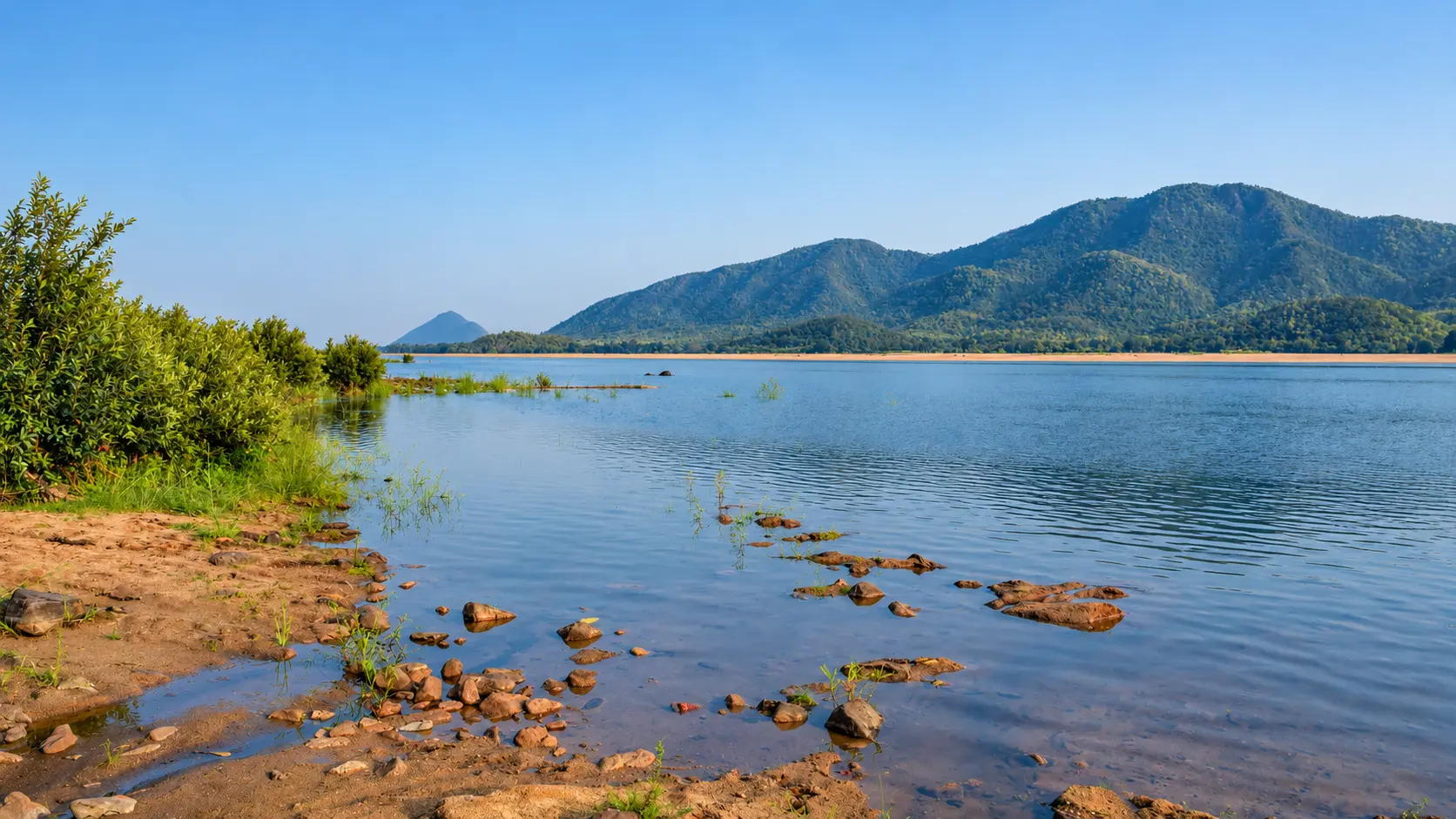
Slicing through the rugged, ancient heart of the Eastern Ghats in central Odisha, the Satkosia Gorge is one of India’s most monumental river canyon landscapes and an…
The story of Satkosia Gorge
Slicing through the rugged, ancient heart of the Eastern Ghats in central Odisha, the Satkosia Gorge is one of India’s most monumental river canyon landscapes and an international wetland sanctuary of paramount ecological importance. Carved over millions of years by the mighty Mahanadi River as it forces its way through resistant ridges of metamorphic khondalite and charnockite rock, the gorge stretches for an astonishing 22 kilometres. Its traditional name reflects this grand scale: Satkosia derives from the historic Odia unit of distance, sat kosh (seven kos, where one kos equals roughly two miles, spanning approximately 14 miles or 22 kilometres).
Recognized globally in October 2021 as an official Ramsar Wetland Site (Odisha’s third, alongside Chilika Lake and Bhitarkanika Mangroves) and forming the core of the Satkosia Tiger Reserve, this magnificent river gorge is a sanctuary of global renown. Centered at Tikarapada in Angul District on the northern bank of the Mahanadi, Satkosia is internationally celebrated as the cradle of crocodile conservation in India. It is one of the only places in the country where both the critically endangered fish-eating Gharial (Gavialis gangeticus) and the robust Mugger crocodile (Crocodylus palustris) coexist in wild breeding populations. Combining thrilling river boat cruises through soaring canyon walls, tranquil sandbar walks, eco-tented camps perched along the riverbanks, and dense tiger-and-elephant wilderness, Satkosia Gorge offers one of the most compelling wildlife adventures in South Asia.
Start here. Open a tile for the full details.
Why goRead details
Whether you are an ardent wildlife enthusiast, an adventurous eco-traveler, a birdwatcher, or an admirer of dramatic natural geology, Satkosia Gorge offers a wealth of captivating experiences:
When to visitRead details
Satkosia’s riverine climate is governed by the powerful hydrology of the Mahanadi River basin. Selecting the appropriate season is vital to ensuring that boating, wildlife viewing, and camping activities are available.
Entry & permissionsRead details
Fees, visiting hours and entry rules may change. Confirm the latest details with the official operator or local authority before travelling.
A visit to Satkosia Gorge requires adherence to standard Tiger Reserve entry regulations:
- Sanctuary Entry Permit Fees:
- Collected at the Pampasar Checkpost (for northern entry via Angul) or the Purunakote Gate:
- Indian Citizens: ₹40 per person per day
- Foreign Nationals: ₹500 per person per day
- Students (with valid ID): ₹20 per student
- Vehicle Entry Charges:
- Two-wheelers: ₹20
- Cars, Jeeps, and SUVs: ₹100
- Mini-buses: ₹150; Full-size Tourist Buses: ₹200
- Boat Safari Charges:
- Standardized rates set by the Forest Department and local Eco-Tourism Committee:
- Approximately ₹1,200 to ₹1,800 per boat (accommodating up to 6 - 8 passengers) for a 45-minute to 1-hour escorted river cruise, inclusive of life jackets and a certified local eco-guide.
- Operating Hours:
- Sanctuary Entry Gates: Open daily from 06:00 to 18:00. All day-trippers must exit the reserve gates by 18:00.
- River Boat Safaris: Operate daily from 07:00 to 16:30 (suspended from July to September).
- Gharial Research Unit: Open daily from 08:00 to 17:00.
- Advance Booking for Nature Camps:
- Overnight stays at Tikarapada Nature Camp, Chhotkei Nature Camp, Purunakote Eco-Camp, and Satkosia Sands Resort (Badmul) must be reserved in advance via the official state booking portal (ecotourodisha.com).
- Tariffs generally range from ₹4,000 to ₹6,500 per cottage/tent per night, inclusive of all three meals, morning and evening tea, sanctuary entry permits, and a guided boat cruise or forest walk.
- Sanctuary Rules and Prohibitions:
- Zero Tolerance for Plastic and Alcohol: Bringing liquor, beer, or single-use plastic into the tiger reserve is strictly prohibited and subject to severe fines.
- No Private Boating or Angling: Deploying private inflatable rafts, canoes, or fishing gear in the gorge is an offense under the Wildlife Protection Act.
- No Night Driving: Driving private vehicles along interior forest tracks after 18:00 is strictly banned to protect nocturnal wildlife and elephant herds.
Plan your visitRead details
Satkosia Gorge is centrally located in Odisha and is easily accessible from Bhubaneswar, Cuttack, and Angul via well-maintained national and state highways.
Life Jackets and Boat Safety Discipline
Wearing the provided life jacket throughout the entire duration of the boat safari is mandatory under state maritime safety laws. The waters of the Satkosia Gorge are exceptionally deep (over 30 metres in places) with strong subsurface cross-currents. Never lean excessively over the boat gunwales, trail your hands in the water, or attempt to touch basking crocodiles. Maintain quiet, respectful speech to avoid alarming nesting birds and basking reptiles.
Explore the full guide - choose a topic below.
Why visit?
Whether you are an ardent wildlife enthusiast, an adventurous eco-traveler, a birdwatcher, or an admirer of…Explore detailsClose details
Whether you are an ardent wildlife enthusiast, an adventurous eco-traveler, a birdwatcher, or an admirer of dramatic natural geology, Satkosia Gorge offers a wealth of captivating experiences:
- A Globally Renowned Ramsar Riverine Ecosystem: In October 2021, Satkosia Gorge was formally inducted into the prestigious Ramsar list of Wetlands of International Importance (Site no. 2488). The gorge creates an extraordinarily deep, sheltered freshwater canyon where the Mahanadi - typically a mile wide across the plains - compresses into a dramatic corridor barely 100 to 200 metres wide, creating tranquil deep-water pools (gandas) reaching depths of over 30 to 40 metres that serve as irreplaceable ecological refuges during dry summer months.
- The World-Famous Gharial and Mugger Sanctuary: Satkosia is the birthplace of India's crocodilian revival. In 1975, with assistance from the United Nations Development Programme (UNDP) and the FAO, the Government of Odisha established the Gharial Research and Conservation Unit at Tikarapada. Today, visitors can inspect the captive breeding pools, observe baby gharials and muggers being reared by specialized biologists, and take river boat safaris to watch adult gharials - distinguished by their long, slender snouts and bulbous pot-like gharas - basking side-by-side with massive muggers on the sunny golden sandbanks.
- Exhilarating River Boat Safaris: Gliding silently across the jade-green waters of the Mahanadi aboard an eco-tourism motorboat while enclosed on either side by near-vertical mountain slopes rising over 600 metres into the sky is an awe-inspiring experience. The silence of the gorge is broken only by the hum of the boat engine and the calls of ospreys and hornbills echoing off the rock cliffs.
- Critical Breeding Grounds for Endangered Birdlife: Satkosia's exposed sandbars, tranquil river islands, and rock shoals provide vital nesting and roosting habitat for several threatened avian species. It is a premier sanctuary for the endangered Indian Skimmer (Rynchops albicollis), whose scissor-like red beaks can be seen skimming the water's surface at dawn. The gorge is also frequented by river lapwings, great thick-knees, brahminy ducks (ruddy shelducks), river terns, and white-bellied sea eagles.
- Award-Winning Community Eco-Resorts: Through the Odisha Forest Department’s community-managed eco-tourism initiative, visitors can stay at the Tikarapada Nature Camp on the northern embankment or the famous Badmul Satkosia Sands Resort on the southern bank. Guests sleep in deluxe safari tents or river-facing cottages, dine on freshly prepared organic meals cooked by local Van Suraksha Samiti (VSS) members, and participate in guided forest walks led by indigenous community trackers.
What to expect
Visiting Satkosia Gorge is a wilderness adventure that shifts from dense deciduous forests to dramatic river…Explore detailsClose details
Visiting Satkosia Gorge is a wilderness adventure that shifts from dense deciduous forests to dramatic river canyon vistas and intimate wildlife encounters.
The Forest Drive and Sanctuary Checkposts
Accessing the northern bank of the gorge at Tikarapada involves driving south from Angul town via Purunakote. After passing the official Forest Department checkpost at Pampasar or Purunakote, where vehicle entry permits and visitor fees are processed, the road enters the core wilderness of the Satkosia Tiger Reserve.
The two-lane paved forest corridor winds through dense, towering canopies of Sal, Asan, Mahua, and giant bamboo brakes. Wildlife sightings along this approach road are common; travelers routinely spot herds of spotted deer (chital), sambar, wild boars, troop of langurs, and occasionally wild Asian elephants crossing the road. The forest is clean, well-patrolled, and free of commercial clutter.
Arrival at Tikarapada and the River Panorama
The road culminates at the historic village and riverbank outpost of Tikarapada, nestled right against the northern entrance of the gorge. Stepping out onto the river overlook, the sudden view of the Mahanadi is breathtaking.
Here, the vast river is squeezed between towering, jungle-draped mountain walls of the Eastern Ghats. Broad golden sandbanks line the water's edge during the winter and summer months, contrasting brilliantly against the deep turquoise-green river water. The atmosphere is serene, wild, and untouched, filled with the fresh river breeze and the calls of kingfishers and cormorants diving into the shallows.
The Gharial Research and Conservation Unit
Before boarding river boats, most visitors head to the Gharial Research and Conservation Unit situated on the high embankment overlooking the river. Established in 1975, this facility features a series of open-air water enclosures, incubation pits, and interpretive galleries.
Visitors can observe gharials and mugger crocodiles across various life stages, from tiny, energetic hatchlings in nursery tanks to immense, 14-foot adult breeding pairs basking on concrete banks. Informative display boards educate travelers on the delicate biology of the gharial, its specialized fish-catching teeth, the threats posed by commercial gill nets, and the sophisticated satellite-tagging programs conducted by Odisha wildlife researchers to monitor released animals across the Mahanadi basin.
The River Boat Safari
The quintessential Satkosia experience is the River Boat Safari. Authorized motorized boats, operated by trained local boatmen and community eco-guides, depart from the Tikarapada jetty throughout the day between 07:00 and 16:30.
All passengers are equipped with mandatory life jackets before the boat glides out into the main current. Moving quietly down the gorge, the towering rock cliffs loom overhead, their lower tiers polished smooth and dark by centuries of monsoonal floods. Along the sandy spits and warm, flat granite boulders jutting out of the water, passengers can observe wild crocodiles basking with their mouths wide open to regulate their body temperature. Giant freshwater softshell turtles (Chitra indica) frequently sun themselves on half-submerged logs, slipping silently into the water as the boat draws near. Flocks of ruddy shelducks, bar-headed geese, and river terns wheel across the sky, while crested serpent eagles watch from dead snags along the cliff tops.
Trekking and Wilderness Watchtowers
Back on land, several nature trails maintained by the Forest Department fan out from Tikarapada into the surrounding sal forests. Accompanied by local community guides, hikers can ascend to elevated wooden watchtowers overlooking natural forest clearings and waterholes. In the late afternoon, these towers offer excellent opportunities to spot herds of Indian gaur (bison), barking deer, and four-horned antelopes emerging from the deep bamboo cover to drink.
Best time to visit
Satkosia’s riverine climate is governed by the powerful hydrology of the Mahanadi River basin.Explore detailsClose details
Satkosia’s riverine climate is governed by the powerful hydrology of the Mahanadi River basin. Selecting the appropriate season is vital to ensuring that boating, wildlife viewing, and camping activities are available.
Seasonal Breakdown
- Winter (October to March) - The Peak Season: Winter is by far the finest and most rewarding time to explore Satkosia Gorge. The weather is dry, crisp, and comfortable, with daytime temperatures ranging between 18°C and 28°C under bright blue skies. Nights in the forested river valley are delightfully chilly (10°C to 15°C). The Mahanadi River settles into a crystal-clear, steady flow, exposing wide golden sandbanks where crocodiles and freshwater turtles bask in large numbers throughout the midday sun. All boat safaris, eco-camps, and forest trekking trails are fully operational.
- Summer (April to June) - Superb Wildlife Sightings, High Heat: As temperatures rise across central Odisha, reaching 40°C to 44°C between late April and early June, the forest interior becomes dry and leafless. While midday heat can be intense, early morning and late evening boat rides remain pleasant. Wildlife viewing is at its absolute peak during summer: with interior water sources dried up, large herds of elephants, gaur, sambar, and leopards are frequently seen congregating along the river margins to bathe and drink.
- Monsoon (July to September) - Closed for Boating & Flood Spectacle: The southwest monsoon brings massive rainfall to the 83,000 sq km Mahanadi catchment. Upstream reservoir discharges cause the river in the gorge to swell by up to 15 to 20 metres, transforming the peaceful canyon into a roaring, turbulent, muddy brown flood that submerges all sandbars and low-lying jetties. River boat safaris are completely suspended during this period for passenger safety, and several interior sanctuary roads are closed. Tourism is largely restricted to watching the ferocious power of the flooded river from elevated viewpoints.
Ideal Daily Hours
- Early Morning (07:00 to 09:30): The prime time for birdwatching along the river. Soft morning mist drifts across the water, and active flocks of Indian skimmers, lapwings, and ospreys feed in the shallows.
- Midday (11:00 to 14:30): The absolute best window for crocodile spotting. Because crocodiles are cold-blooded ectotherms, they haul themselves out of the chilly river onto the sunny sandbars to absorb solar warmth during the warmest hours of the day.
How to reach
Satkosia Gorge is centrally located in Odisha and is easily accessible from Bhubaneswar, Cuttack, and Angul via…Explore detailsClose details
Satkosia Gorge is centrally located in Odisha and is easily accessible from Bhubaneswar, Cuttack, and Angul via well-maintained national and state highways.
By Air
- Biju Patnaik International Airport, Bhubaneswar (BBI): The closest major airport, located approximately 160 kilometres southeast of Tikarapada. Bhubaneswar connects via multiple daily flights to all major Indian cities. From Bhubaneswar, you can hire a private tourist cab to reach Tikarapada via NH-55 through Dhenkanal and Angul in roughly 3.5 to 4.5 hours.
- Veer Surendra Sai Airport, Jharsuguda (JRG): Situated approximately 210 kilometres northwest. Travelers arriving at Jharsuguda can drive southeast along the Biju Expressway / NH-53 and NH-55 via Sambalpur and Redhakhol to Angul and Satkosia (approx. 4.5 to 5 hours).
By Train
- Angul Railway Station (ANGL): The primary and most convenient rail gateway, located approximately 60 kilometres north of Tikarapada. Angul is a major railway station on the East Coast Railway’s Talcher - Sambalpur route, connected by direct superfast and express trains to New Delhi, Kolkata, Mumbai, Bhubaneswar, Puri, and Ahmedabad. From Angul station, private taxis, pre-arranged eco-camp pickup cabs, and auto-rickshaws take approximately 1.5 to 2 hours to reach Tikarapada via Purunakote.
- Talcher Railway Station (TLHR): Located roughly 80 kilometres northeast.
By Road
- The Main Route via Angul (Bhubaneswar - Angul - Tikarapada / 160 km / ~4 hours): From Bhubaneswar or Cuttack, travel northwest along the newly widened four-lane National Highway 55 (NH-55) past Dhenkanal to Angul town (approx. 100 km). From Angul, turn south onto the state highway towards Purunakote (approx. 35 km). At the Pampasar/Purunakote checkpost, complete forest entry registration and continue along the scenic 25-km paved forest road winding down to Tikarapada on the gorge rim.
- Accessing the Southern Bank (Badmul / Satkosia Sands): If visiting the southern bank resort at Badmul, travel from Bhubaneswar west via Khordha and Nayagarh along NH-57 to Kantilo and Gania, arriving directly at Badmul (approx. 110 km / 2.5 hours).
- Public Bus Services: Frequent government (OSRTC) and private express buses connect Bhubaneswar, Cuttack, and Sambalpur to Angul bus terminal. From Angul, regular rural private buses and shared jeeps operate to Purunakote and Tikarapada twice daily.
Entry, timings and permissions
Fees, visiting hours and entry rules may change.Explore detailsClose details
Fees, visiting hours and entry rules may change. Confirm the latest details with the official operator or local authority before travelling.
A visit to Satkosia Gorge requires adherence to standard Tiger Reserve entry regulations:
- Sanctuary Entry Permit Fees:
- Collected at the Pampasar Checkpost (for northern entry via Angul) or the Purunakote Gate:
- Indian Citizens: ₹40 per person per day
- Foreign Nationals: ₹500 per person per day
- Students (with valid ID): ₹20 per student
- Vehicle Entry Charges:
- Two-wheelers: ₹20
- Cars, Jeeps, and SUVs: ₹100
- Mini-buses: ₹150; Full-size Tourist Buses: ₹200
- Boat Safari Charges:
- Standardized rates set by the Forest Department and local Eco-Tourism Committee:
- Approximately ₹1,200 to ₹1,800 per boat (accommodating up to 6 - 8 passengers) for a 45-minute to 1-hour escorted river cruise, inclusive of life jackets and a certified local eco-guide.
- Operating Hours:
- Sanctuary Entry Gates: Open daily from 06:00 to 18:00. All day-trippers must exit the reserve gates by 18:00.
- River Boat Safaris: Operate daily from 07:00 to 16:30 (suspended from July to September).
- Gharial Research Unit: Open daily from 08:00 to 17:00.
- Advance Booking for Nature Camps:
- Overnight stays at Tikarapada Nature Camp, Chhotkei Nature Camp, Purunakote Eco-Camp, and Satkosia Sands Resort (Badmul) must be reserved in advance via the official state booking portal (ecotourodisha.com).
- Tariffs generally range from ₹4,000 to ₹6,500 per cottage/tent per night, inclusive of all three meals, morning and evening tea, sanctuary entry permits, and a guided boat cruise or forest walk.
- Sanctuary Rules and Prohibitions:
- Zero Tolerance for Plastic and Alcohol: Bringing liquor, beer, or single-use plastic into the tiger reserve is strictly prohibited and subject to severe fines.
- No Private Boating or Angling: Deploying private inflatable rafts, canoes, or fishing gear in the gorge is an offense under the Wildlife Protection Act.
- No Night Driving: Driving private vehicles along interior forest tracks after 18:00 is strictly banned to protect nocturnal wildlife and elephant herds.
Nearby places to consider
Satkosia Gorge is ideally positioned to be paired with other outstanding natural, cultural, and spiritual…Explore detailsClose details
Satkosia Gorge is ideally positioned to be paired with other outstanding natural, cultural, and spiritual destinations in Central Odisha:
- Baisipalli Wildlife Sanctuary (adjoining southern boundary): Forming the southern half of the Satkosia Tiger Reserve in Nayagarh and Boudh districts, Baisipalli is a dense, untamed forest reserve celebrated for wild elephants, leopards, and deciduous biodiversity.
- Kantilo Nilamadhaba Temple (approx. 80 km southeast): Perched majestically on the Brahmadri hill overlooking the Mahanadi River in Nayagarh district, this revered 12th-century shrine dedicated to Lord Nilamadhaba (the primordial manifestation of Lord Jagannath) is famed for its riverside architecture and master brass craft artisans.
- Dhenkanal & Kapilash Temple (approx. 110 km east): Famous for the ancient hilltop Shiva shrine of Kapilash (the "Kailash of Odisha") perched 450 metres high, as well as the royal palaces and brass-casting tribal artisans of Dhenkanal.
- Bhirung Temple & Saptasajya (approx. 120 km east): A serene mountain valley and pilgrimage center near Dhenkanal associated with the Pandavas' exile and the hermitage of Sage Saptarshi.
- Debrigarh Wildlife Sanctuary & Hirakud Dam (approx. 180 km northwest): Located upstream along the Mahanadi in Sambalpur and Bargarh districts, offering a wonderful multi-day continuation of the Mahanadi riverine conservation circuit.
In pictures
The practical bits
Before you go.
Plan ahead
To maximize your wilderness adventure and ensure seamless logistics, keep the following structured planning…Explore detailsClose details
To maximize your wilderness adventure and ensure seamless logistics, keep the following structured planning guidelines in mind:
Choosing Between North and South Bank
Satkosia Gorge has two distinct visitor access hubs separated by the river: -Explore detailsClose details
Satkosia Gorge has two distinct visitor access hubs separated by the river:
Tikarapada (North Bank, Angul District)
Best for seeing the historic Gharial Research and Conservation Unit, exploring the narrowest, most dramatic…Explore detailsClose details
Best for seeing the historic Gharial Research and Conservation Unit, exploring the narrowest, most dramatic section of the rocky gorge, and enjoying traditional boat safaris.
Badmul / Satkosia Sands (South Bank, Nayagarh District)
Best for seasonal tented camping directly on the vast white sandbanks of the river, river rafting, and canopy…Explore detailsClose details
Best for seasonal tented camping directly on the vast white sandbanks of the river, river rafting, and canopy birdwatching, located closer to Bhubaneswar (110 km). Note: There is no bridge crossing the Mahanadi within the gorge; traveling by road between Tikarapada and Badmul requires an extensive 140-km detour via Cuttack or Boudh. Choose your target bank and book your camp accordingly.
Life Jackets and Boat Safety Discipline
Wearing the provided life jacket throughout the entire duration of the boat safari is mandatory under state…Explore detailsClose details
Wearing the provided life jacket throughout the entire duration of the boat safari is mandatory under state maritime safety laws. The waters of the Satkosia Gorge are exceptionally deep (over 30 metres in places) with strong subsurface cross-currents. Never lean excessively over the boat gunwales, trail your hands in the water, or attempt to touch basking crocodiles. Maintain quiet, respectful speech to avoid alarming nesting birds and basking reptiles.
Binoculars and Camera Gear
Because boats maintain an ethical safety distance of at least 25 to 40 metres from basking gharials, muggers, and…Explore detailsClose details
Because boats maintain an ethical safety distance of at least 25 to 40 metres from basking gharials, muggers, and nesting bird colonies, a pair of quality binoculars (8x42 or 10x42) is indispensable. For wildlife photographers, a telephoto zoom lens (minimum 300mm to 600mm) is strongly recommended to capture crisp portraits of crocodile eyes, textured scales, and skimming bird behaviors.
Advance Reservations During Winter
Winter weekends, Christmas, New Year, and school holiday periods see heavy demand for the limited luxury tents…Explore detailsClose details
Winter weekends, Christmas, New Year, and school holiday periods see heavy demand for the limited luxury tents and eco-cottages at Tikarapada and Badmul. Accommodations on EcoTour Odisha routinely sell out 4 to 8 weeks in advance for December and January. Book your dates early to avoid disappointment.
A few things you might wonder
Common questions about visiting Satkosia Gorge. Fees, visiting hours and ceremonies are researched details that may change; confirm current arrangements with the operator before travelling.
What is Satkosia Gorge and what does the name mean?
When was Satkosia declared a Ramsar Site and why is it important?
Where is the best place to enter Satkosia Gorge?
Can tourists take boat rides on the river, and is it safe?
What is the difference between the Gharial and the Mugger crocodile found here?
Where can tourists stay when visiting Satkosia?
How far is Satkosia Gorge from Bhubaneswar and how long does the journey take?
What animals can be spotted in the Satkosia Tiger Reserve?
Explore more in Satkosia Daringbadi
Discover other destinations around this hub
More Hubs in Odisha
Continue exploring other travel hubs in this state
Planning a trip to Satkosia & Daringbadi?