Khasada Waterfall
Complete visitor guide to Khasada Waterfall near Chandragiri in Gajapati, Odisha. Explore natural granite water-slides, plunge pools, Jirang Monastery, and safety tips.
Location
Satkosia & Daringbadi, Odisha
Duration
Plan a viewing visit around the permitted approach and return journey.
Best Time
Choose daylight and check rainfall, local closures and water conditions. A season alone does not establish safe access.
Difficulty
The exact walk, paving and accessible route are unverified. Ask locally about the approach before visiting with children or anyone with limited mobility.
A closer look
Your visit, at a glance.
Satkosia & Daringbadi, Odisha
GET TO KNOW THE PLACE
Hidden amidst the rolling forested foothills of the Eastern Ghats in Gajapati District, Southern Odisha, Khasada Waterfall is one of the region's most beloved and distinctive…
The story of Khasada Waterfall
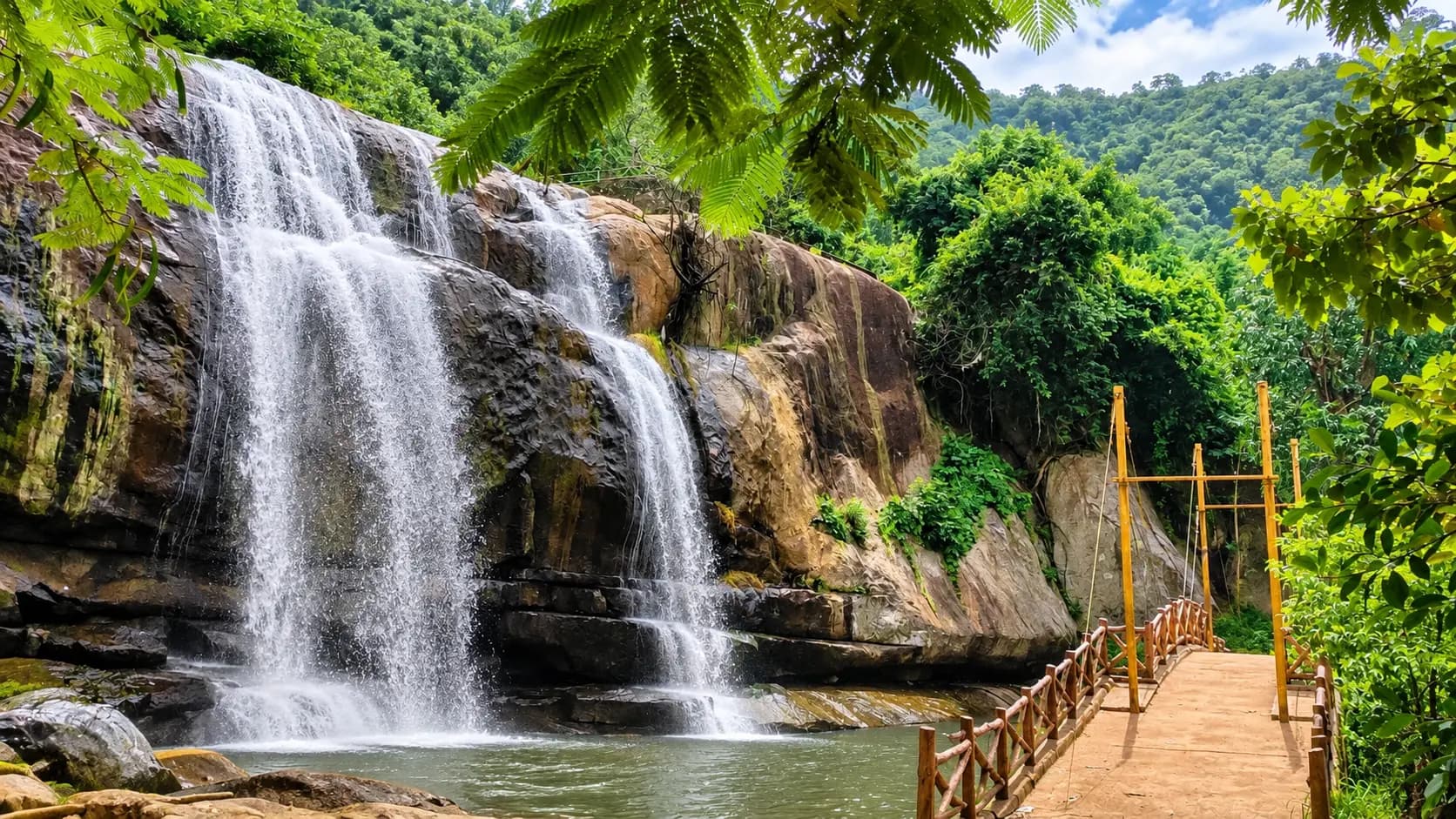
Hidden amidst the rolling forested foothills of the Eastern Ghats in Gajapati District, Southern Odisha, Khasada Waterfall is one of the region's most beloved and distinctive natural wonders. Situated near the rural hamlet of Kamalapur in Mohana Block, roughly 11 to 13 kilometres from Chandragiri and only 5 kilometres from the renowned Jirang Tibetan Buddhist Monastery, this scenic watercourse offers an enchanting blend of mountain forest greenery, sculpted granite topography, and rushing highland waters.
What gives Khasada its unique charm is its singular geological formation. In the Odia language, the word Khasada translates directly to "slippery" or "gliding" - a name that perfectly describes the waterfall's character. Rather than plunging off a sheer vertical precipice into a dark canyon, the perennial mountain stream cascades over broad, expansive sheets of water-worn granite and metamorphic gneiss. Over countless millennia, the continuous flow of water has polished the stone into smooth, curved chutes, tiered rock slides, and shallow emerald-green pools. Surrounded by ancient groves of wild mango, jackfruit, sal, and mahua trees, Khasada is both an exhilarating natural playground and a peaceful haven where visitors can dip their feet into cool mountain currents, listen to the rhythmic roar of the water, and relax under the forest canopy.
Start here. Open a tile for the full details.
Why goRead details
Khasada Waterfall provides a wonderful escape for families, nature photographers, and travelers exploring the Eastern Ghats. Here is why this picturesque spot is well worth including in your regional travel plans:
When to visitRead details
The volume of water, temperature, and scenic charm of Khasada Waterfall vary noticeably across the seasons. Choosing the right time of year ensures both safety and maximum enjoyment.
Entry & permissionsRead details
Fees, visiting hours and entry rules may change. Confirm the latest details with the official operator or local authority before travelling.
A visit to Khasada Waterfall is simple, informal, and free from administrative hurdles:
- Admission Charges: Entrance to Khasada Waterfall and the surrounding riverbank is completely free. No ticketing counter exists.
- Vehicle Parking Fees: A nominal community parking fee is collected by local village youth for vehicles parked in the cleared forest lot:
- Two-wheelers: ₹10
- Auto-rickshaws and Cars: ₹20 - ₹30
- Tourist Vans and Mini-buses: ₹50
- Operating Hours:
- The waterfall area is open daily from 06:00 to 18:00.
- All visitors are strongly advised to leave the river gorge before 18:00 (sunset). The approach road through the forest has no street lighting, and the riverbed becomes pitch-black after dusk.
- Permit and Regulatory Requirements:
- No special permits or inner-line passes are required for Indian or foreign nationals to visit the waterfall.
- Foreign nationals exploring the nearby Tibetan settlements in Chandragiri/Jirang should carry valid passports and Indian visas.
- Safety and Behavioral Rules:
- Zero Intoxication Tolerance: Consuming alcohol, bringing liquor bottles into the riverbed, or swimming under the influence of alcohol is strictly prohibited under district police orders. Local police patrols conduct routine checks, especially on weekends and holidays.
- No Glass or Plastic Litter: Glass bottles, broken shards, and plastic garbage pose severe hazards to barefoot bathers and the forest ecosystem. All trash must be carried back to designated bins in the parking area.
- Prohibited Deep Water Zones: Bathing is permitted only in the shallow rock pools and calm downstream edges. Swimming or diving into the turbulent rock gorges directly beneath the main upper drops is strictly prohibited due to strong hydraulic undertows and hidden granite crevices.
Plan your visitRead details
Khasada Waterfall is conveniently situated in southwestern Odisha and can be easily reached by road as part of a day trip from Berhampur, or as an excursion from Daringbadi.
Footwear and Traction Precautions
Footwear choice is critical at Khasada. Standard flip-flops or smooth-soled street shoes offer zero grip on wet, algae-covered granite and can cause sudden, dangerous slips. Wear sturdy waterproof sandals with textured rubber grip soles, or go barefoot when wading in shallow areas while stepping deliberately on rough, unpolished stone surfaces. Never step onto dark green, slime-coated rock slopes.
Explore the full guide - choose a topic below.
Why visit?
Khasada Waterfall provides a wonderful escape for families, nature photographers, and travelers exploring the…Explore detailsClose details
Khasada Waterfall provides a wonderful escape for families, nature photographers, and travelers exploring the Eastern Ghats. Here is why this picturesque spot is well worth including in your regional travel plans:
- A Unique Natural Water-Slide Phenomenon: Unlike typical vertical waterfalls that can only be admired from afar, Khasada's tiered, sloping granite bedrock creates a wide, cascading terrace stretching 80 to 100 metres across. Water sheets glide over the smooth rock surfaces, forming shallow channels and gentle natural flumes where visitors can sit and let the cool mountain water rush around them.
- The Perfect Complement to Jirang Monastery: Located just a 10-minute drive (5 km) from the magnificent Padmasambhava Mahavihara - the largest Tibetan Buddhist monastery in Eastern India - Khasada offers the perfect natural companion to a spiritual and cultural morning in Chandragiri. Visitors can marvel at the monastery’s towering gilded Buddha, prayer wheels, and ornate Tibetan frescoes before spending a relaxing afternoon picnicking by the waterfall.
- A Scenic Haven of Pristine Eastern Ghats Ecology: The stream feeds a lush micro-ecosystem fringed with vibrant riparian vegetation, wild orchids, freshwater crabs, and diverse bird species. Sitting beside the river under the shade of giant fig and mango trees while butterflies flutter around the sun-dappled rocks offers a rejuvenating communion with nature.
- Accessible and Family-Friendly Natural Picnic Destination: The approach to Khasada requires no exhausting multi-mile trek or strenuous mountain climb. Vehicles can drive to within a few hundred metres of the riverbank, and a gentle walk over earthen paths brings visitors directly to the rock terraces, making it accessible to family members of all generations.
- Rich Indigenous and Local Mythology: The hills encircling Khasada are steeped in regional tribal lore. An ancient hilltop shrine dedicated to Lord Rama overlooks the waterfall from an adjacent ridge, and local legends hold that celestial nymphs (Apsaras) once frequented these secluded rock pools, infusing the waters with protective healing energies.
What to expect
Visiting Khasada Waterfall is a relaxed, outdoor-oriented experience that revolves around water, rock, and…Explore detailsClose details
Visiting Khasada Waterfall is a relaxed, outdoor-oriented experience that revolves around water, rock, and woodland shade.
Arrival and Village Approach
The journey to Khasada winds off the main highway through scenic rural Gajapati countryside, passing verdant terraced paddy fields, groves of bamboo, and small tribal farming settlements. Near Kamalapur village, a short branch road leads into an open, shaded forest clearing that serves as the vehicular parking area.
Local village vendors set up rustic thatched kiosks selling hot tea, roasted corn on the cob (bhutta), fresh tender coconuts, bottled water, and local seasonal fruits such as guavas and bananas. The sound of tumbling water is audible from the parking area, guiding visitors along a short, gentle trail through a grove of ancient mango and jackfruit trees down to the water’s edge.
The Rock Terraces and Cascades
Stepping out onto the riverbank, the wide expanse of the cascade opens up before you. The river flows over a massive, multi-tiered formation of pink and grey granitic gneiss that slopes gradually over a vertical drop of approximately 50 to 80 feet.
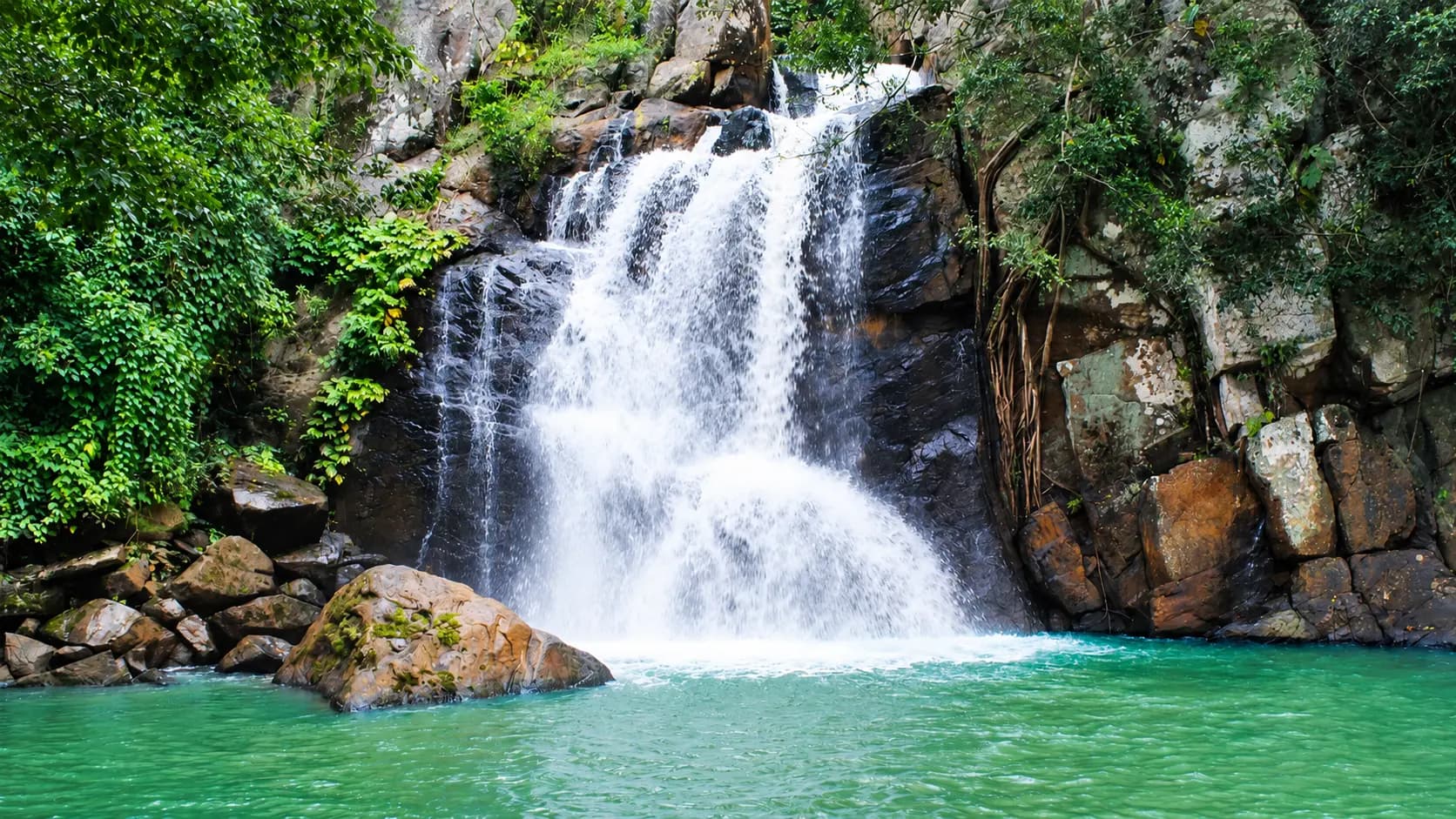
The water spreads out into several distinct streams that race down polished stone chutes. In some sections, the rock forms broad, smooth stone slides where shallow water glides across at high velocity, creating a shimmering curtain of foam. Between the inclined rock sheets, the water pools in natural stone basins - some shallow and clear with sandy bottoms, others deeper and swirling with circular currents.
Visitors of all ages can be found sitting on the dry, warm upper granite boulders, dipping their feet into the refreshing stream, or splashing in the shallow edge pools. The water is remarkably clear and cool, originating from forested catchment springs deep in the surrounding hills.
Exploring the Riverbed and Water Safety
Walking across the rock bed requires mindful attention. While the dry granite provides excellent foot grip, any stone surface touched by flowing water develops a microscopically thin coating of river algae, making it as slick as wet ice. Local children and adventurous youth often slide down the shallowest, gentlest water flumes into knee-deep pools; however, navigating the steeper drops or attempting stunts on algae-coated ledges can lead to painful slips.
Downstream from the main cascade, the river widens and calms, winding past tranquil gravel bars and shady sandy banks where families unpack picnic baskets, children skip stones across the shallows, and amateur photographers capture the motion of the water against the lush green forest backdrop.
Hilltop Shrine Viewpoint
For visitors who enjoy a short hike, an unpaved trail ascends the adjacent forested ridge to a modest hilltop shrine dedicated to Lord Rama and local village deities. From this elevated vantage point, you can enjoy a panoramic view looking down upon the entire Khasada waterfall gorge, the snaking mountain stream, and the surrounding green valleys of the Eastern Ghats.
Best time to visit
The volume of water, temperature, and scenic charm of Khasada Waterfall vary noticeably across the seasons.Explore detailsClose details
The volume of water, temperature, and scenic charm of Khasada Waterfall vary noticeably across the seasons. Choosing the right time of year ensures both safety and maximum enjoyment.
Seasonal Breakdown
- Winter (October to March) - Ideal Season: This is universally considered the finest time to visit Khasada. Following the retreat of the monsoon, the mountain stream maintains a steady, crystal-clear flow, while the surrounding hills remain vividly green. Daytime temperatures are delightfully pleasant, hovering between 20°C and 27°C with bright blue skies and low humidity. The water flow is gentle enough for safe paddling and sitting along the rock terraces, and the cool weather makes open-air picnicking exceptionally enjoyable.
- Monsoon (July to September) - Roaring Torrent & High Water: During the southwest monsoon, heavy rainfall across the Gajapati highlands swells the stream into a powerful, foaming torrent. The waterfall expands dramatically across its entire granite terrace, creating a spectacular visual and acoustic display. However, visiting during peak monsoon requires extreme caution: the force of the water makes entering the stream hazardous, strong underwater currents develop in the plunge pools, and the rocks become dangerously slick. Visitors should view the cascade from safe, dry vantage points along the upper bank during this season.
- Summer (April to June) - Hot Days & Reduced Flow: Summers in the Gajapati foothills are hot and dry, with afternoon temperatures routinely reaching 38°C to 40°C. While the cool water of the stream provides refreshing relief, the waterfall's volume shrinks considerably, reducing the cascades to narrow trickles in some channels. If visiting in summer, plan your trip during the early morning hours (07:00 to 10:00) before the midday heat sets in.
Recommended Timing During the Day
- Early Morning (07:00 to 10:00): The most tranquil time of day. Soft morning sunlight filters through the forest canopy, the air is cool, and you can enjoy the natural scenery in peaceful solitude before picnic groups arrive.
- Late Afternoon (15:00 to 17:30): The setting sun casts a warm golden glow over the granite rocks, creating wonderful conditions for photography. Ensure you pack up and depart by 18:00, as darkness falls quickly in the forested valley.
- Weekdays vs. Weekends: Khasada is a popular weekend picnic getaway for residents of Berhampur and nearby towns. If you prefer a quiet, meditative experience, schedule your visit on a weekday (Monday through Friday).
How to reach
Khasada Waterfall is conveniently situated in southwestern Odisha and can be easily reached by road as part of a…Explore detailsClose details
Khasada Waterfall is conveniently situated in southwestern Odisha and can be easily reached by road as part of a day trip from Berhampur, or as an excursion from Daringbadi.
By Air
- Biju Patnaik International Airport, Bhubaneswar (BBI): The closest major airport within Odisha, located approximately 265 kilometres northeast of Khasada. Bhubaneswar operates frequent direct flights to all major Indian cities. From the airport, travelers can hire a private taxi to Khasada via the NH-16 coastal highway to Berhampur, then turning west via Digapahandi and Mohana (approx. 5.5 to 6.5 hours).
- Visakhapatnam International Airport, Andhra Pradesh (VTZ): Located approximately 285 kilometres south. From Visakhapatnam, the route proceeds north via Srikakulam and Paralakhemundi to Mohana and Khasada (approx. 6 to 7 hours drive).
By Train
- Brahmapur Railway Station (BAM): The primary and most accessible railhead, situated roughly 90 kilometres east of Khasada. As a major junction on the East Coast Railway mainline, Berhampur is directly connected by express and superfast trains to Kolkata, New Delhi, Chennai, Bengaluru, Hyderabad, and Puri. From Berhampur station, private cabs, auto-rickshaws, and tourist taxis can be hired for round trips to Chandragiri, Jirang Monastery, and Khasada Waterfall (approx. 2.5 hours drive).
- Paralakhemundi Railway Station (PLND): Located about 75 kilometres south, serving select regional passenger trains on the Naupada - Gunupur line.
By Road
- From Berhampur (approx. 90 km / 2.5 hours): Head west along State Highway 17 (SH-17) / NH-326 passing through Digapahandi to Mohana. From Mohana, turn south toward Chandragiri along the Chandragiri - Paralakhemundi road for about 10 kilometres, then follow the well-marked local branch road at Kamalapur toward Khasada Waterfall. The roads are paved, two-lane asphalt in good condition.
- From Chandragiri Town (approx. 11 km / 20 minutes): Drive north along the main road toward Mohana for approximately 6 kilometres, then turn east toward Kamalapur and Khasada.
- From Jirang Monastery (approx. 5 km / 10 minutes): Khasada is just a short 5-kilometre hop from the main Padmasambhava Mahavihara complex along a scenic village road.
- From Daringbadi (approx. 100 km / 2.5 to 3 hours): Drive southeast via Raikia, Bhanjanagar, and Sorada to Mohana, then proceed to Khasada.
- Public Transport: Regular OSRTC and private buses run between Berhampur and Chandragiri/Mohana throughout the day. From Chandragiri or the Kamalapur junction, local auto-rickshaws can be hired for the final short leg to the waterfall.
Entry, timings and permissions
Fees, visiting hours and entry rules may change.Explore detailsClose details
Fees, visiting hours and entry rules may change. Confirm the latest details with the official operator or local authority before travelling.
A visit to Khasada Waterfall is simple, informal, and free from administrative hurdles:
- Admission Charges: Entrance to Khasada Waterfall and the surrounding riverbank is completely free. No ticketing counter exists.
- Vehicle Parking Fees: A nominal community parking fee is collected by local village youth for vehicles parked in the cleared forest lot:
- Two-wheelers: ₹10
- Auto-rickshaws and Cars: ₹20 - ₹30
- Tourist Vans and Mini-buses: ₹50
- Operating Hours:
- The waterfall area is open daily from 06:00 to 18:00.
- All visitors are strongly advised to leave the river gorge before 18:00 (sunset). The approach road through the forest has no street lighting, and the riverbed becomes pitch-black after dusk.
- Permit and Regulatory Requirements:
- No special permits or inner-line passes are required for Indian or foreign nationals to visit the waterfall.
- Foreign nationals exploring the nearby Tibetan settlements in Chandragiri/Jirang should carry valid passports and Indian visas.
- Safety and Behavioral Rules:
- Zero Intoxication Tolerance: Consuming alcohol, bringing liquor bottles into the riverbed, or swimming under the influence of alcohol is strictly prohibited under district police orders. Local police patrols conduct routine checks, especially on weekends and holidays.
- No Glass or Plastic Litter: Glass bottles, broken shards, and plastic garbage pose severe hazards to barefoot bathers and the forest ecosystem. All trash must be carried back to designated bins in the parking area.
- Prohibited Deep Water Zones: Bathing is permitted only in the shallow rock pools and calm downstream edges. Swimming or diving into the turbulent rock gorges directly beneath the main upper drops is strictly prohibited due to strong hydraulic undertows and hidden granite crevices.
Nearby places to consider
Khasada Waterfall is situated in a rich cultural and natural landscape that offers several compelling nearby…Explore detailsClose details
Khasada Waterfall is situated in a rich cultural and natural landscape that offers several compelling nearby attractions:
- Padmasambhava Mahavihara, Jirang (approx. 5 km west): The crown jewel of Eastern India's Buddhist heritage, this magnificent multi-tiered monastery was inaugurated by the 14th Dalai Lama in 2010. Featuring brilliant traditional Tibetan architecture, five-story high meditation halls, and ornate Buddhist iconography, it is a serene haven of spiritual beauty.
- Chandragiri Tibetan Settlement (approx. 11 km southwest): Established in 1963, Chandragiri is famous for its vibrant Tibetan refugee community, traditional carpet-weaving workshops, Tibetan handicraft cooperatives, horticulture orchards (famous for maize and seasonal fruits), and authentic Tibetan culinary spots.
- Mahendragiri Mountain (approx. 85 km south): The second-highest peak in Odisha (1,501 metres), steeped in Ramayana and Mahabharata mythology as the hermitage of Sage Parashurama. The summit features ancient stone temples built by the Pandavas and offers breathtaking views of the Bay of Bengal.
- Taptapani Hot Springs (approx. 45 km northeast): Located along the highway toward Berhampur, Taptapani is famous for its natural perennial sulphur hot water springs, believed to possess powerful therapeutic properties for skin ailments and joint pain, featuring OTDC bathing pools.
- Brahmapur / Berhampur (approx. 90 km east): The commercial and cultural capital of Southern Odisha, famous worldwide for its exquisite handwoven Berhampuri Patta silk sarees and delicious regional street food.
In pictures
The practical bits
Before you go.
Plan ahead
To make the most of your excursion to Khasada Waterfall, keep the following practical planning guidelines in mind:Explore detailsClose details
To make the most of your excursion to Khasada Waterfall, keep the following practical planning guidelines in mind:
Combine with the Jirang Tibetan Settlement
The most fulfilling way to experience Khasada is as part of an integrated full-day itinerary centered on…Explore detailsClose details
The most fulfilling way to experience Khasada is as part of an integrated full-day itinerary centered on Chandragiri. Spend your morning (08:30 to 11:30) exploring the majestic Padmasambhava Mahavihara (Jirang Monastery), admiring the massive 23-foot gilded statue of Lord Buddha, spinning the prayer wheels, and enjoying Tibetan momos and butter tea at local cafes. Around midday, make the short 5-kilometre drive to Khasada Waterfall to spend the afternoon unwinding in nature.
Footwear and Traction Precautions
Footwear choice is critical at Khasada.Explore detailsClose details
Footwear choice is critical at Khasada. Standard flip-flops or smooth-soled street shoes offer zero grip on wet, algae-covered granite and can cause sudden, dangerous slips. Wear sturdy waterproof sandals with textured rubber grip soles, or go barefoot when wading in shallow areas while stepping deliberately on rough, unpolished stone surfaces. Never step onto dark green, slime-coated rock slopes.
Pack Water, Food, and Dry Clothes
While village kiosks near the parking lot sell packaged snacks, bottled water, and tea, there are no full-service…Explore detailsClose details
While village kiosks near the parking lot sell packaged snacks, bottled water, and tea, there are no full-service restaurants or proper dining facilities at the waterfall site. If you plan an extended picnic, bring your own prepared food, drinking water, paper napkins, and garbage bags. Always pack a change of dry clothes, extra towels, and waterproof bags for mobile phones, cameras, and car keys.
Sanitation and Facility Realities
Khasada is an undeveloped natural eco-spot.Explore detailsClose details
Khasada is an undeveloped natural eco-spot. There are currently no permanent public washrooms, changing cubicles, or cloakrooms at the water's edge. Visitors wishing to change out of wet clothes should make use of facilities at nearby hotels or guesthouses in Chandragiri or Jirang.
A few things you might wonder
Common questions about visiting Khasada Waterfall. Fees, visiting hours and ceremonies are researched details that may change; confirm current arrangements with the operator before travelling.
Where is Khasada Waterfall located and what does its name mean?
How far is Khasada Waterfall from Jirang Buddhist Monastery and Chandragiri?
Is there an entry fee to visit Khasada Waterfall?
What are the opening and closing hours of the waterfall?
Is it safe to bathe or slide on the rocks at Khasada Waterfall?
What is the best time of year to visit Khasada Waterfall?
Are there changing rooms, restrooms, or restaurants at the waterfall?
How do I reach Khasada Waterfall from Berhampur?
Explore more in Satkosia Daringbadi
Discover other destinations around this hub
More Hubs in Odisha
Continue exploring other travel hubs in this state
Planning a trip to Satkosia & Daringbadi?