Srirangapatna
Comprehensive visitor guide to Srirangapatna island in Mandya near Mysuru. Details on Sri Ranganathaswamy Temple, Dariya Daulat Bagh, Gumbaz, timings, and history.
Location
Bengaluru Mysuru, Karnataka
A closer look
Your visit, at a glance.
Bengaluru Mysuru, Karnataka
GET TO KNOW THE PLACE
Naturally sculpted by the bifurcating waters of the sacred Cauvery (Kaveri) River into an oval riverine island, Srirangapatna (historically anglicized as Seringapatam) is one of…
The story of Srirangapatna
Naturally sculpted by the bifurcating waters of the sacred Cauvery (Kaveri) River into an oval riverine island, Srirangapatna (historically anglicized as Seringapatam) is one of the most storied and consequential heritage destinations in South India. Situated within the Srirangapatna Taluk of Mandya District in southern Karnataka - just 15 kilometers northeast of Mysuru and 125 kilometers southwest of Bengaluru - this 5-kilometer-long island sits at an elevation of 657 meters (2,155 feet) above mean sea level. Revered since the 9th century as a premier Vaishnavite pilgrimage sanctuary and celebrated globally as the de facto imperial capital of Hyder Ali and Tipu Sultan (the "Tiger of Mysore"), Srirangapatna represents an extraordinary collision of deep spiritual antiquity and pivotal geopolitical drama.
Start here. Open a tile for the full details.
Why goRead details
Few destinations in India pack as much dramatic history, architectural diversity, and spiritual reverence into a single compact landscape as Srirangapatna. Walking the sun-drenched stone corridors of this river island takes you on an unforgettable journey through a thousand years of South Indian history: from the peaceful incantations of early medieval Ganga and Hoysala ascetics to the roaring cannonades of the 18th-century Anglo-Mysore Wars that fundamentally shaped the course of British colonial rule in India.
When to visitRead details
Entry & permissionsRead details
Fees, visiting hours and entry rules may change. Confirm the latest details with the official operator or local authority before travelling.
Because Srirangapatna houses both active religious pilgrimage temples and centrally protected national heritage monuments, distinct operational schedules and regulations apply across different sites.
+----------------------------------------------------------------------------------------------------+
|                                    ADMISSION AND TIMINGS SUMMARY                                   |
|                                                                                                    |
|  [SRI RANGANATHASWAMY TEMPLE]                                                                      |
|  - Morning Darshan: 06:00 to 13:00.                                                                |
|  - Evening Darshan: 16:00 to 20:00.                                                                |
|  - General Darshan Fee: Completely free.                                                           |
|  - Special Quick Darshan: ₹50 to ₹100 per person.                                                  |
|  - Footwear: Must be deposited outside at temple shoe counter (nominal ₹5 token).                  |
|                                                                                                    |
|  [DARIYA DAULAT BAGH (SUMMER PALACE & ASI MUSEUM)]                                                 |
|  - Operating Hours: Daily 09:00 to 17:30.                                                          |
|  - Adult Admission (Indian Citizens): ₹25 per person.                                              |
|  - Foreign Tourist Admission: ₹300 per person.                                                     |
|  - Children Below 15 Years: Free admission.                                                        |
|  - Photography: Strictly prohibited inside wooden palace; permitted in outer gardens.              |
|                                                                                                    |
|  [THE GUMBAZ (ROYAL MAUSOLEUM)]                                                                    |
|  - Operating Hours: Daily 08:00 to 18:30.                                                          |
|  - Admission: Completely free public access.                                                       |
|                                                                                                    |
|  [COLONEL BAILEY'S DUNGEON & WATER GATE]                                                           |
|  - Operating Hours: Daily 08:00 to 18:00.                                                          |
|  - Admission: Completely free public access.                                                       |
+----------------------------------------------------------------------------------------------------+
Temple Etiquette and Dress Codes
When visiting the Sri Ranganathaswamy Temple and Sri Nimishamba Temple, visitors must adhere to traditional Hindu temple protocols:
- Attire: Modest traditional clothing is expected. Men are encouraged to wear dhotis, kurtas, or full-length trousers; women should wear sarees, salwar suits, or long skirts. Shorts, sleeveless tops, and revealing clothing are discouraged.
- Footwear: Footwear of all kinds must be removed before entering the temple gopuram. Secure shoe custody counters are available outside the main entrance.
- Photography: Photography, videography, and mobile phone usage are strictly banned inside the inner temple sanctums and halls.
Archaeological Survey Regulations at Dariya Daulat Bagh
Dariya Daulat Bagh is a delicate 240-year-old timber structure adorned with irreplaceable natural-pigment frescoes:
- Strict Interior Camera Ban: To protect the delicate 18th-century wall paintings from light degradation, photography and videography are strictly prohibited inside the wooden palace and museum rooms. Mobile phones must be kept inside pockets or bags. Photography is freely allowed in the surrounding Charbagh gardens.
- Footwear Protocol: Visitors are required to remove shoes or wear protective shoe covers before stepping onto the wooden floorboards of the palace interior.
Plan your visitRead details
Srirangapatna’s strategic location along Karnataka’s premier transport corridor makes it exceptionally easy to reach from both Bengaluru and Mysuru via world-class expressways, passenger railways, and regional bus networks.
Explore the full guide - choose a topic below.
Why visit?
Few destinations in India pack as much dramatic history, architectural diversity, and spiritual reverence into a…Explore detailsClose details
Few destinations in India pack as much dramatic history, architectural diversity, and spiritual reverence into a single compact landscape as Srirangapatna. Walking the sun-drenched stone corridors of this river island takes you on an unforgettable journey through a thousand years of South Indian history: from the peaceful incantations of early medieval Ganga and Hoysala ascetics to the roaring cannonades of the 18th-century Anglo-Mysore Wars that fundamentally shaped the course of British colonial rule in India.
At the heart of the island's spiritual identity stands the monumental Sri Ranganathaswamy Temple, consecrated in 894 CE by the Western Ganga Dynasty and expanded over centuries by Hoysala, Vijayanagara, and Wadiyar monarchs. As the revered Adi Ranga - the first of the three sacred river-island sanctuaries along the course of the Cauvery River - the temple enshrines a colossal, 15-foot-long black stone murti of Lord Vishnu reclining peacefully upon the multi-hooded cosmic serpent Adisesha. Pilgrims have journeyed here for over eleven centuries to offer worship at this ancient spiritual citadel, walking beneath its soaring Vijayanagara gopuram and intricately carved stone colonnades.
Just a short distance from the temple gates lie the evocative ruins and surviving masterworks of the Mysore Sultanate (1761 - 1799). Here, Hyder Ali and his brilliant, fiercely independent son Tipu Sultan turned the natural moat of the Cauvery into an impregnable military capital. Visitors can step inside Dariya Daulat Bagh, Tipu Sultan’s 1784 wooden Summer Palace, marveling at the astonishing density of hand-painted tempera frescoes covering every square inch of its teakwood walls and vaulted ceilings - including a celebrated, highly detailed panoramic mural depicting the Battle of Pollilur (1780), where Mysore's forces crushed a British army with advanced iron-cased Mysorean rockets.
Further across the island, visitors can pay solemn homage at The Gumbaz, the regal mausoleum housing the tombs of Tipu Sultan, Hyder Ali, and his mother Fakhr-un-Nisa, surrounded by 36 polished black hornblende pillars and fragrant cypress groves. Along the riverbanks, travelers can explore the haunting stone breach of the Water Gate, where Tipu Sultan fought his final desperate duel and met his death during the climactic Siege of Seringapatam on May 4, 1799. With subterranean military dungeons, scenic river confluences (Sangama) offering traditional coracle boat rides, and the riverside goddess temple of Nimishamba, Srirangapatna is an indispensable cultural and historical pilgrimage.
What to expect
Exploring Srirangapatna is a comprehensive half-day or full-day immersion that transitions fluidly between serene…Explore detailsClose details
Exploring Srirangapatna is a comprehensive half-day or full-day immersion that transitions fluidly between serene riverside temple courtyards, lush Mughal gardens, dark military dungeons, and dramatic river confluences. The island measures roughly 5 kilometers from east to west and 2 kilometers north to south, making it easy to navigate between major sites via automobile, auto-rickshaw, or bicycle.
+----------------------------------------------------------------------------------------------------+
|                                  SRIRANGAPATNA ISLAND PRECINCT MAP                                 |
|                                                                                                    |
|                             [Northern Arm of Cauvery (Kaveri) River]                               |
|                                                  |                                                 |
|                   +------------------------------+------------------------------+                  |
|                   |                              |                              |                  |
|         +---------+---------+          +---------+---------+          +---------+---------+        |
|         |  WATER GATE &     |          | SRI RANGANATHA-   |          | COLONEL BAILEY'S  |        |
|         |  BREACH POINT     |          |  SWAMY TEMPLE     |          |    DUNGEON        |        |
|         | (Tipu's Fall 1799)|          | (894 CE Shrine)   |          | (Subterranean)    |        |
|         +---------+---------+          +---------+---------+          +---------+---------+        |
|                   |                              |                              |                  |
|                   +------------------------------+------------------------------+                  |
|                                                  |                                                 |
|   [West: Paschima Vahini] <--- [Central Town & Bengaluru-Mysuru Expressway] ---> [East: Sangama     |
|    (Sacred River Ghats)                          |                                & Nimishamba]    |
|                                        +---------+---------+                                       |
|                                        | DARIYA DAULAT BAGH|                                       |
|                                        | (Summer Palace &  |                                       |
|                                        | Battle Murals)    |                                       |
|                                        +---------+---------+                                       |
|                                                  |                                                 |
|                                        +---------+---------+                                       |
|                                        |     GUMBAZ        |                                       |
|                                        | (Tipu & Hyder Ali |                                       |
|                                        |  Royal Mausoleum) |                                       |
|                                        +---------+---------+                                       |
|                                                  |                                                 |
|                             [Southern Arm of Cauvery (Kaveri) River]                               |
+----------------------------------------------------------------------------------------------------+
Sri Ranganathaswamy Temple: The Sacred Adi Ranga
The spiritual heart of Srirangapatna is the Sri Ranganathaswamy Temple, commanding the northwestern sector of the island. According to historical epigraphs, the temple was consecrated in 894 CE by Tirumalaiah, a Western Ganga chieftain, and substantially enriched in the 12th century by the Hoysalas under the spiritual guidance of the Vaishnavite reformer Sri Ramanujacharya. Subsequent additions - including the majestic four-tiered eastern raja gopuram, grand pillared pavilions (mukhamantapas), and granite compound walls - were erected under Vijayanagara emperors and Mysore Wadiyars.
Entering through the soaring stone gateway, visitors cross a stone-flagged courtyard leading to the inner sanctuary. Within the garbhagriha rests the breathtaking icon of Lord Ranganatha - a colossal 15-foot-long stone carving depicting Lord Vishnu reclining on the coils of the seven-headed serpent Adisesha. The deity's right hand cradles his head, while at his feet sits Goddess Lakshmi (Ranganayaki), and the creator Brahma emerges on a lotus from his navel. The temple is reverenced as Adi Ranga (the first of three island shrines on the Cauvery), forming a sacred trilogy with Madhya Ranga (at Shivanasamudra) and Antya Ranga (at Srirangam in Tamil Nadu). Devotees believe that visiting all three Ranganatha temples in a single day between sunrise and sunset confers immense spiritual merit.
Dariya Daulat Bagh (Tipu Sultan's Summer Palace)
Set within a tranquil, 20-acre formal Mughal Charbagh garden surrounded by manicured lawns and flowering shrubs, Dariya Daulat Bagh ("Wealth of the Sea") was constructed in 1784 by Tipu Sultan. Serving as his cool summer residence away from the hot stone fort, the two-storied palace is an architectural marvel built entirely of seasoned teakwood in the Indo-Saracenic style, resting upon an elevated stone plinth.
+----------------------------------------------------------------------------------------------------+
|                                    DARIYA DAULAT BAGH EXTERIOR FRESCO                              |
|                                                                                                    |
|                                   THE BATTLE OF POLLILUR (1780)                                    |
|                                                                                                    |
|     [MYSORE SULTANATE CAVALRY & ROCKETEERS]            [BRITISH DEFENSIVE SQUARE UNDER BAILLIE]    |
|   - Hyder Ali on elephant leading the vanguard.      - Col. William Baillie trapped in square.     |
|   - Tipu Sultan riding his war horse with sword.     - Ammunition tumbril exploding in flames.     |
|   - French artillery officers aiming cannons.        - Sepoy infantry retreating under barrage.    |
|   - Mysorean iron-cased war rockets showering fire.  - Surrendering British officers with flags.   |
|                                                                                                    |
|  ================================================================================================  |
|  [ALL WALLS, CORNICES & PILLARS COVERED IN INTRICATE FLORAL ARABESQUES, BIRDS & MINIATURE PORTRAITS]|
+----------------------------------------------------------------------------------------------------+
What makes Dariya Daulat Bagh globally famous is its wall art. Every square inch of the exterior walls, pillared arcades, and vaulted wooden ceilings is coated with fine lime plaster and painted in vibrant tempera frescoes. The western exterior wall features a colossal, continuous narrative painting depicting the Battle of Pollilur (1780), fought near Kanchipuram during the Second Anglo-Mysore War.
The mural shows Hyder Ali and Tipu Sultan mounted on war elephants and horses, surrounded by French mercenary artillerymen and Mysorean rocketeers launching iron-cased war rockets, while British Colonel William Baillie sits desperately in a defensive infantry square just as an ammunition wagon explodes into a ball of fire. The interior upper floor, managed by the Archaeological Survey of India (ASI), functions as a museum exhibiting oil portraits, Persian manuscripts, gold and copper coins minted by Tipu Sultan, hand-carved silver furniture, and captured European cannons.
The Gumbaz: Royal Mausoleum of the Mysore Sultanate
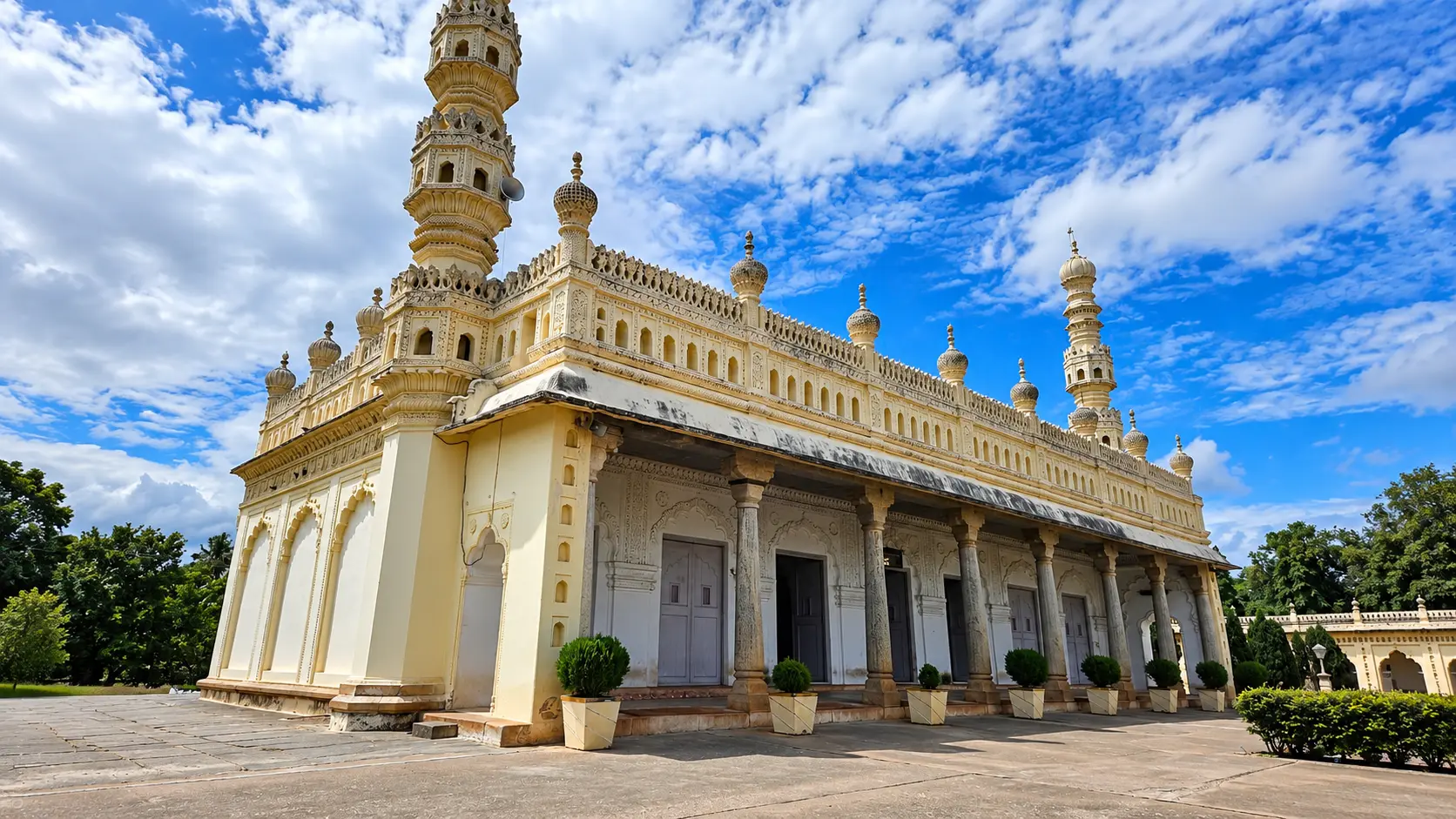
Situated at the eastern tip of the island in the historic suburb of Ganjam, The Gumbaz is the solemn royal burial place of Tipu Sultan, his father Hyder Ali, and his mother Fakhr-un-Nisa. Built by Tipu Sultan in 1784 following the death of his father, the mausoleum sits majestically atop a high raised stone plinth in the center of an expansive formal cypress garden.
The architecture of the Gumbaz is striking: a monumental bulbous dome crafted of fine lime plaster rises above a square chamber, entirely enveloped by an open gallery supported by 36 polished pillars of deep black hornblende stone quarried from nearby hills. These pillars have been polished to an astonishing, mirror-like gloss that gleams under the sun.
The grand double entrance doors are masterpieces of rosewood carving richly inlaid with pure ivory, donated by Lord Dalhousie (then Governor-General of India) in 1855 as a tribute to Tipu's regal stature. Inside the dimly lit chamber, under heavy silk canopies and fragrant rose petals, lie the three royal tombs: Hyder Ali in the center, Fakhr-un-Nisa on the left, and Tipu Sultan on the right, draped in rich tiger-striped silk fabrics (babri). Outside in the surrounding courtyard lie the tombs of Tipu’s relatives, royal commanders, and court nobles.
Srirangapatna Fort, The Water Gate, and The Breach Point
Enclosing the western end of the island are the surviving stone ramparts of Srirangapatna Fort. Originally built in 1454 by Timmanna Nayaka, a Vijayanagara feudatory, the fortress was heavily modernized and reinforced between 1765 and 1792 by French military engineers in the service of Hyder Ali and Tipu Sultan. The fort was protected by double granite walls, massive bastions, and a wide moat fed directly by the swirling currents of the Cauvery River.
- The Water Gate (Hole Bagilu): This small, arched stone portal in the northern ramparts opens directly to the river. It was here, on the afternoon of May 4, 1799, during the climax of the Fourth Anglo-Mysore War, that Tipu Sultan rode to lead the counter-attack after British forces breached the western wall. Caught in a crossfire between British redcoats and facing overwhelming odds, Tipu refused to surrender, famously declaring that "to live two days like a tiger is far better than to live two hundred years like a sheep." He was shot multiple times and fell beneath the archway. A simple granite memorial slab erected by the Archaeological Survey marks the exact spot where his body was discovered late that evening beneath a pile of fallen soldiers.
- The Breach Point and Obelisk Memorial: Just 200 meters west of the Water Gate sits the breach where the British 73rd and 74th Regiments under Major-General David Baird crossed the Cauvery at low water and stormed through a 100-foot gap in the battered stone walls. Atop the rampart stands an imposing stone Obelisk Monument, erected in 1907 by the Government of Mysore to commemorate the British soldiers and officers who fell during the final assault.
Colonel Bailey's Dungeon
Located just north of the Sri Ranganathaswamy Temple near the river ramparts, Colonel Bailey's Dungeon is a grim and chilling subterranean military prison. Built entirely below ground level of heavy granite stone blocks with bomb-proof vaulted arches, this underground chamber was used by Tipu Sultan to detain captured British officers and soldiers during the Anglo-Mysore Wars.
Walking down the steep stone stairs into the dark, damp subterranean vault, visitors see stone waist-high slabs along the walls fitted with heavy iron rings, where prisoners were chained by their wrists and ankles. The dungeon is named after Colonel William Baillie, commander of the British forces defeated at the Battle of Pollilur in 1780, who was imprisoned here along with his surviving officers and died in captivity in 1782. Resting in the center of the dungeon floor is a massive 24-pounder iron cannon, which fell through a shell hole in the vaulted ceiling when a British siege mortar struck the fort roof during the bombardment of 1799.
Sangama and Sri Nimishamba Temple
At the far eastern point of Srirangapatna island lies Sangama, the scenic confluence where the northern and southern arms of the Cauvery reunite and merge with the Lokapavani River. Surrounded by lush bamboo clumps and granite boulders, Sangama is a sacred spot where Hindu pilgrims perform ancestral rites (pinda daana) and take purifying holy dips. Local boatmen operate traditional round woven coracles (harigolu), paddling visitors across the gentle river currents for peaceful water views.
A short two-minute drive along the riverbank leads to the revered Sri Nimishamba Temple in Ganjam. Dedicated to Goddess Parvati, this riverside shrine attracts thousands of devotees who believe that sincere prayers offered to the deity are answered within a nimisha (one minute). The temple compound also enshrines deities of Lord Shiva (Moukthikeshwara) and Lord Ganesha, and offers serene vistas over the flowing waters of the Cauvery.
Best time to visit
Srirangapatna is situated in the fertile Cauvery river basin on the Mysore plateau at an elevation of 657 meters.Explore detailsClose details
Seasonal Weather Patterns
Srirangapatna is situated in the fertile Cauvery river basin on the Mysore plateau at an elevation of 657 meters. It enjoys pleasant, moderate weather for much of the year, though summer mid-days can be warm:
+----------------------------------------------------------------------------------------------------+
|                                    SEASONAL VISITING CLIMATE & WATER GUIDE                         |
|                                                                                                    |
|  [OCTOBER TO MARCH: IDEAL HERITAGE & EXPLORATION SEASON]                                           |
|  - Temperatures: 18°C to 30°C. Cool, breezy mornings; warm sunny afternoons; pleasant evenings.    |
|  - Experience: Absolute best period for walking outdoor battlefields, gardens, and fort ramparts.  |
|  - Special Highlight: Deepavali and Vaikunta Ekadashi festivals celebrated at the temple.          |
|                                                                                                    |
|  [APRIL TO MAY: WARM SUMMER]                                                                       |
|  - Temperatures: 22°C to 36°C. Clear skies; hot direct mid-day sunshine on stone temple courtyards.|
|  - Experience: River water levels lower; morning (08:00 - 11:00) and evening visits are recommended. |
|  - Tip: Wear comfortable socks for walking barefoot on sun-warmed stone temple floors.             |
|                                                                                                    |
|  [JUNE TO SEPTEMBER: MONSOON & HIGH CAUVERY RIVER FLOW]                                            |
|  - Temperatures: 20°C to 29°C. Moderate to heavy rainfall; Cauvery river runs full and muddy-red.  |
|  - Experience: Gardens at Dariya Daulat Bagh and Gumbaz are radiant green; lush river scenery.     |
|  - Caution: Coracle boating at Sangama may be suspended during peak dam water discharge periods.   |
+----------------------------------------------------------------------------------------------------+
Ideal Time of Day
To experience Srirangapatna at its finest, arrive on the island around 08:00 AM. Begin your morning with a tranquil darshan at Sri Ranganathaswamy Temple before the pilgrim queues swell. Check the current visiting hours and permitted access with the site operator before departure; ceremonies, closures and visitor sessions can affect access. Tour Colonel Bailey's Dungeon and the Water Gate by mid-day, enjoy lunch at a riverside restaurant, and spend the afternoon visiting The Gumbaz, Sangama, and the Nimishamba Temple as golden-hour shadows fall across the river.
How to reach
Srirangapatna’s strategic location along Karnataka’s premier transport corridor makes it exceptionally easy to…Explore detailsClose details
Srirangapatna’s strategic location along Karnataka’s premier transport corridor makes it exceptionally easy to reach from both Bengaluru and Mysuru via world-class expressways, passenger railways, and regional bus networks.
+----------------------------------------------------------------------------------------------------+
|                                      REGIONAL TRANSIT CONNECTIONS                                  |
|                                                                                                    |
|  [Bengaluru City Center: 125 km Northeast] <--- NH-275 Expressway (approx. 75-80 mins)             |
|  [Mysuru City Center: 15 km Southwest]     <--- NH-275 Arterial Highway (approx. 20 mins)          |
|                                                                                                    |
|                                                  |                                                 |
|                                                  v                                                 |
|  ============================== [BENGALURU-MYSURU EXPRESSWAY (NH-275)] =========================== |
|  - Dedicated Srirangapatna flyover exit ramp connecting directly to island bypass road.            |
|  - KSRTC non-stop express buses halt at Srirangapatna Highway Bus Stop.                            |
|                                                  |                                                 |
|                                                  v                                                 |
|  ============================== [SRIRANGAPATNA RAILWAY STATION (SBC)] ============================= |
|  - Located right on the island, 500 meters from Sri Ranganathaswamy Temple.                       |
|  - Frequent daily express trains: Chamundi Express, Malgudi Express, Tipu Express.                 |
|  - Fast transit from Bengaluru (approx. 2 hrs) and Mysuru (approx. 15 mins).                       |
|                                                  |                                                 |
|                                                  v                                                 |
|  ============================== [SRIRANGAPATNA ISLAND HISTORIC CIRCUIT] =========================== |
|  - Paved ring road linking Temple, Dariya Daulat Bagh, Gumbaz, Bailey's Dungeon & Sangama.         |
+----------------------------------------------------------------------------------------------------+
By Road: Bengaluru-Mysuru Expressway (NH-275)
The 119-kilometer, 10-lane access-controlled Bengaluru-Mysuru Expressway (NH-275) directly bypasses and serves Srirangapatna:
- From Bengaluru (125 km): Drive southwest via the expressway past Bidadi, Ramanagara, and Mandya. Take the clearly marked Srirangapatna exit ramp just before crossing the Cauvery bridge. Driving time from central Bengaluru is only 75 to 80 minutes.
- From Mysuru (15 km): Drive northeast along the four-lane highway across the southern Cauvery bridge. Driving time from central Mysuru (Palace or Railway Station) is roughly 20 minutes.
- By KSRTC Bus: Virtually all KSRTC express, semi-deluxe, and Airavat buses running between Bengaluru and Mysuru pass through Srirangapatna, with scheduled stops at the main town bus shelter on the highway.
By Rail: Srirangapatna Railway Station (SBC)
Srirangapatna has its own functioning passenger railway station (Station Code: SBC) situated right on the island, located just 500 meters east of Sri Ranganathaswamy Temple.
- Express Train Halts: Multiple daily express trains halt at Srirangapatna, including the Chamundi Express, Malgudi Express, Rajya Rani Express, and several daily Bengaluru-Mysuru MEMU passenger services.
- Transfers from Mysuru Junction (MYS): Trains take just 15 minutes to run between Mysuru Junction and Srirangapatna, offering a fast, punctual, and inexpensive travel option.
By Air
- Mysuru Mandakalli Airport (MYQ): Situated 25 km south along the Ooty road, operating regional domestic flights to Chennai, Hyderabad, and Goa. Taxis from the airport reach Srirangapatna in approximately 35 minutes via the Mysuru Ring Road.
- Kempegowda International Airport Bengaluru (BLR): Situated 165 km northeast. Travelers landing at BLR can board the direct KSRTC Flybus to Mysuru and alight at Srirangapatna along the highway, or take a pre-booked taxi via the airport expressway and NH-275 in approximately 2.5 hours.
Entry, timings and permissions
Fees, visiting hours and entry rules may change.Explore detailsClose details
Fees, visiting hours and entry rules may change. Confirm the latest details with the official operator or local authority before travelling.
Because Srirangapatna houses both active religious pilgrimage temples and centrally protected national heritage monuments, distinct operational schedules and regulations apply across different sites.
+----------------------------------------------------------------------------------------------------+
|                                    ADMISSION AND TIMINGS SUMMARY                                   |
|                                                                                                    |
|  [SRI RANGANATHASWAMY TEMPLE]                                                                      |
|  - Morning Darshan: 06:00 to 13:00.                                                                |
|  - Evening Darshan: 16:00 to 20:00.                                                                |
|  - General Darshan Fee: Completely free.                                                           |
|  - Special Quick Darshan: ₹50 to ₹100 per person.                                                  |
|  - Footwear: Must be deposited outside at temple shoe counter (nominal ₹5 token).                  |
|                                                                                                    |
|  [DARIYA DAULAT BAGH (SUMMER PALACE & ASI MUSEUM)]                                                 |
|  - Operating Hours: Daily 09:00 to 17:30.                                                          |
|  - Adult Admission (Indian Citizens): ₹25 per person.                                              |
|  - Foreign Tourist Admission: ₹300 per person.                                                     |
|  - Children Below 15 Years: Free admission.                                                        |
|  - Photography: Strictly prohibited inside wooden palace; permitted in outer gardens.              |
|                                                                                                    |
|  [THE GUMBAZ (ROYAL MAUSOLEUM)]                                                                    |
|  - Operating Hours: Daily 08:00 to 18:30.                                                          |
|  - Admission: Completely free public access.                                                       |
|                                                                                                    |
|  [COLONEL BAILEY'S DUNGEON & WATER GATE]                                                           |
|  - Operating Hours: Daily 08:00 to 18:00.                                                          |
|  - Admission: Completely free public access.                                                       |
+----------------------------------------------------------------------------------------------------+
Temple Etiquette and Dress Codes
When visiting the Sri Ranganathaswamy Temple and Sri Nimishamba Temple, visitors must adhere to traditional Hindu temple protocols:
- Attire: Modest traditional clothing is expected. Men are encouraged to wear dhotis, kurtas, or full-length trousers; women should wear sarees, salwar suits, or long skirts. Shorts, sleeveless tops, and revealing clothing are discouraged.
- Footwear: Footwear of all kinds must be removed before entering the temple gopuram. Secure shoe custody counters are available outside the main entrance.
- Photography: Photography, videography, and mobile phone usage are strictly banned inside the inner temple sanctums and halls.
Archaeological Survey Regulations at Dariya Daulat Bagh
Dariya Daulat Bagh is a delicate 240-year-old timber structure adorned with irreplaceable natural-pigment frescoes:
- Strict Interior Camera Ban: To protect the delicate 18th-century wall paintings from light degradation, photography and videography are strictly prohibited inside the wooden palace and museum rooms. Mobile phones must be kept inside pockets or bags. Photography is freely allowed in the surrounding Charbagh gardens.
- Footwear Protocol: Visitors are required to remove shoes or wear protective shoe covers before stepping onto the wooden floorboards of the palace interior.
Nearby places to consider
Srirangapatna sits at the strategic geographic nexus of the Cauvery valley, surrounded by renowned wildlife…Explore detailsClose details
Srirangapatna sits at the strategic geographic nexus of the Cauvery valley, surrounded by renowned wildlife sanctuaries, royal cities, and historic waterfalls.
+----------------------------------------------------------------------------------------------------+
|                                    NEARBY DESTINATIONS NETWORK                                     |
|                                                                                                    |
|  [Ranganathittu Bird Sanctuary: 3 km West]       [Melukote Temple Town: 35 km North]               |
|  (Nesting Storks, Spoonbills & River Safari)     (Ancient Cheluvanarayana Swamy, Kalyani Stepwell) |
|         ^                                              ^                                           |
|          \                                            /                                            |
|           \                                          /                                             |
|  ================== [SRIRANGAPATNA: HISTORIC CAUVERY RIVERINE CITADEL] ============================ |
|           /                                          \                                             |
|          /                                            \                                            |
|         v                                              v                                           |
|  [Mysore Palace: 15 km Southwest]                [Brindavan Gardens: 18 km West]                   |
|  (Magnificent Wadiyar Royal Seat & Illumination) (KRS Dam Reservoir, Terraced Fountains & Light)   |
+----------------------------------------------------------------------------------------------------+
Ranganathittu Bird Sanctuary (3 km West)
Located just a five-minute drive west along the Cauvery River, Ranganathittu Bird Sanctuary is Karnataka’s largest bird sanctuary, spanning 40 acres across six picturesque islets. Established in 1940 following the advocacy of legendary ornithologist Dr. Salim Ali, Ranganathittu is a crucial breeding ground for thousands of migratory birds, including painted storks, Asian openbills, Eurasian spoonbills, spot-billed pelicans, and black-headed ibises. Guided rowboat tours navigate the tranquil waters just meters from basking marsh crocodiles (Crocodylus palustris) and fruit-bat colonies.
Mysuru City & Mysore Palace (15 km Southwest)
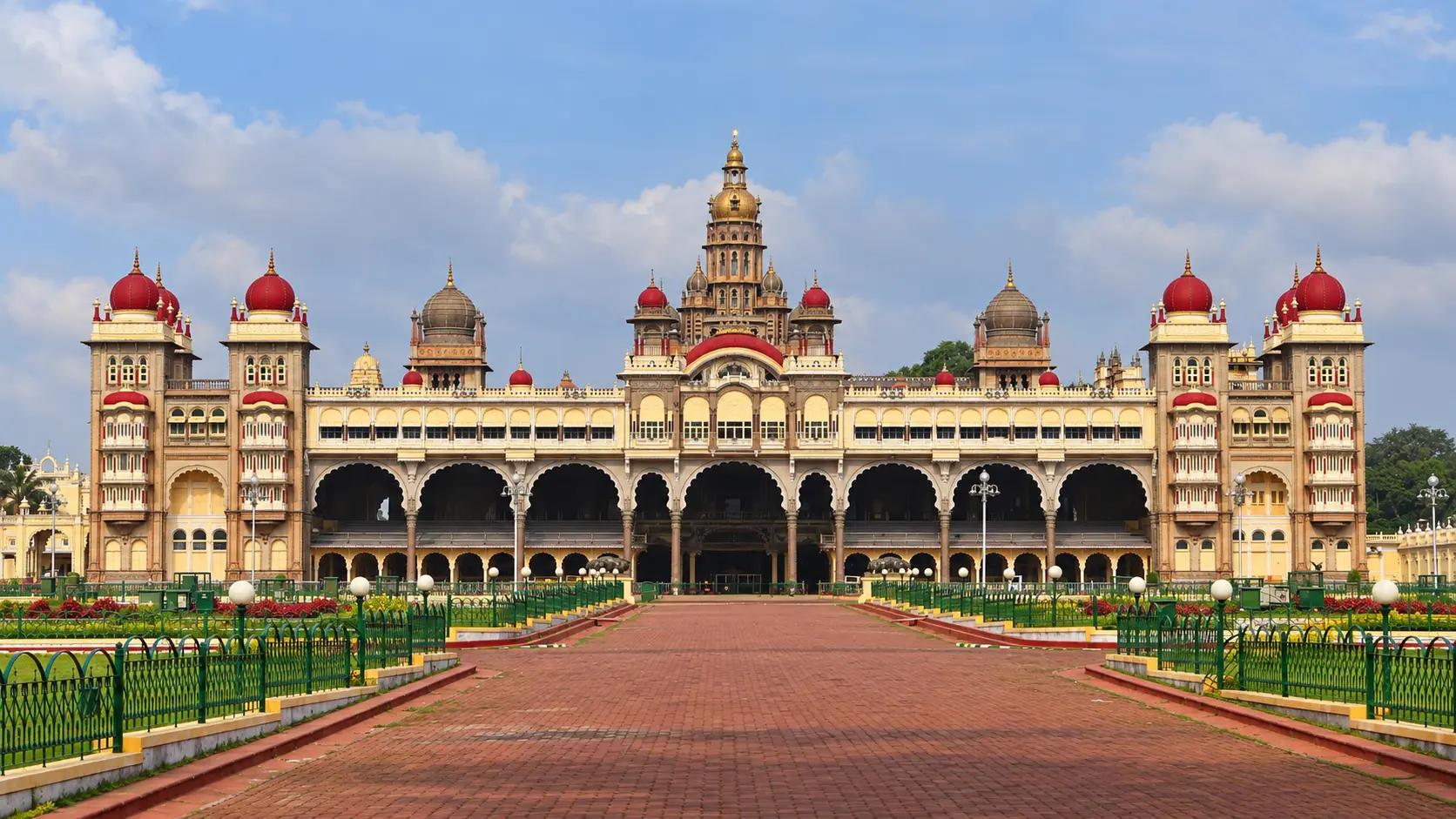
A short 20-minute drive southwest along NH-275 brings you into Mysuru, Karnataka’s cultural capital. Explore the monumental Mysore Palace (Amba Vilas), tour the prestigious Jaganmohan Palace Art Gallery, climb the sacred 1,000 steps of Chamundi Hill to visit Sri Chamundeshwari Temple, and browse the fragrant jasmine and sandalwood lanes of Devaraja Market.
Brindavan Gardens & KRS Dam (18 km West)
Built across the Cauvery River, the historic Krishna Raja Sagara (KRS) Dam was engineered in the 1920s under Sir M. Visvesvaraya. Flanking the dam is the famous Brindavan Gardens, a 60-acre terraced garden modeled after the Shalimar Gardens of Kashmir, celebrated for illuminated musical dancing fountains that delight evening visitors.
Melukote (35 km North)
Perched atop rocky granite ridges in Mandya District, Melukote is an ancient temple town deeply revered in the Sri Vaishnava tradition. It is renowned for the hilltop Yoga Narasimha Temple, the historic Cheluvanarayana Swamy Temple, and the magnificent Kalyani (Panchakalyani) Stepwell, framed by intricately carved stone pavilions where classical films and festivals are celebrated.
In pictures
The practical bits
Before you go.
Plan ahead
To make the most of your excursion to Srirangapatna, plan a balanced sequence that combines temple darshan…Explore detailsClose details
To make the most of your excursion to Srirangapatna, plan a balanced sequence that combines temple darshan, historical palace exploration, and scenic riverside leisure.
Begin with Early Morning Temple Darshan
Check the current visiting hours and permitted access with the site operator before departure; ceremonies…Explore detailsClose details
Check the current visiting hours and permitted access with the site operator before departure; ceremonies, closures and visitor sessions can affect access. Early morning visits offer serene, uncrowded access to the sanctum to view Lord Ranganatha in the soft glow of oil lamps before tourist buses arrive from Bengaluru and Mysuru.
Hire an ASI Licensed Heritage Guide at Dariya Daulat Bagh
The complex visual iconography of the 1780 Battle of Pollilur murals and the subtle architectural details of the…Explore detailsClose details
The complex visual iconography of the 1780 Battle of Pollilur murals and the subtle architectural details of the teakwood Summer Palace come alive when explained by an experienced, government-licensed guide. Guides are available near the ASI ticket booth for a modest regulated fee.
Wear Comfortable, Easily Removable Footwear
You will be removing your shoes multiple times - at Sri Ranganathaswamy Temple, Dariya Daulat Bagh, The Gumbaz…Explore detailsClose details
You will be removing your shoes multiple times - at Sri Ranganathaswamy Temple, Dariya Daulat Bagh, The Gumbaz, and Nimishamba Temple. Wearing slip-on sandals or loafers with a comfortable pair of walking socks makes transitions quick, comfortable, and hygienic.
Combine with Ranganathittu Bird Sanctuary
Situated just 3 kilometers upstream along the Cauvery from Srirangapatna, Ranganathittu Bird Sanctuary is…Explore detailsClose details
Situated just 3 kilometers upstream along the Cauvery from Srirangapatna, Ranganathittu Bird Sanctuary is Karnataka’s premier birding haven. After touring the monuments of Srirangapatna in the morning, spend the afternoon taking a guided boat ride among the nesting islets of painted storks, pelicans, and mugger crocodiles.
Savor Authentic Local Cuisine
Take time to enjoy a traditional South Indian meal at a local restaurant in town or along the riverbank.Explore detailsClose details
Take time to enjoy a traditional South Indian meal at a local restaurant in town or along the riverbank. Don't miss trying local Mandya sugarcane juice, fresh tender coconut water, and traditional Ragi Mudde (steamed finger millet balls) served with piping-hot spiced sambar and country-style greens.
+----------------------------------------------------------------------------------------------------+
|                                  SUGGESTED COMBINED DAY ITINERARY: HISTORIC SRIRANGAPATNA          |
|                                                                                                    |
|Check the current visiting hours and permitted access with the site operator before departure; ceremonies, closures and visitor sessions can affect access.|
|  - Witness morning puja at the 9th-century sanctum; admire colossal 15-foot reclining Vishnu.      |
|  - Walk through ancient Vijayanagara pillared halls and circumambulate the inner shrine.           |
|                                                                                                    |
|  09:30 AM to 10:45 AM  -  Dariya Daulat Bagh (Tipu's Summer Palace)                                  |
|  - Tour the exquisite teakwood palace; inspect the Battle of Pollilur murals with a local guide.   |
|  - Browse the ASI museum exhibiting Tipu Sultan's weapons, coins, and royal garments.             |
|                                                                                                    |
|  11:00 AM to 12:15 PM  -  Battlefield Circuit: Bailey's Dungeon, Water Gate & Breach Point          |
|  - Descend into the subterranean stone vault of Colonel Bailey's Dungeon; see the 24-pounder gun.  |
|  - Stand at the Water Gate where Tipu Sultan fell on May 4, 1799; view the British Obelisk.        |
|                                                                                                    |
|  12:30 PM to 01:45 PM  -  Traditional Riverside Lunch                                                |
|  - Savor an authentic Karnataka thali with fresh tender coconut water at a local riverside cafe.   |
|                                                                                                    |
|  02:00 PM to 03:15 PM  -  The Gumbaz & Cypress Gardens                                               |
|  - Admire the 36 polished black hornblende pillars, ivory-inlaid doors, and royal tombs.           |
|                                                                                                    |
|  03:30 PM to 04:30 PM  -  Sangama & Nimishamba Temple                                                |
|  - Take a peaceful coracle boat ride on the Cauvery at Sangama; visit riverside Nimishamba shrine. |
|                                                                                                    |
|  04:45 PM to 06:15 PM  -  Ranganathittu Bird Sanctuary Excursion                                     |
|  - Drive 5 minutes upstream; board sunset rowboat safari to observe pelicans and crocodiles.       |
+----------------------------------------------------------------------------------------------------+
A few things you might wonder
Common questions about visiting Srirangapatna. Fees, visiting hours and ceremonies are researched details that may change; confirm current arrangements with the operator before travelling.
Is Srirangapatna in Mysuru District or Mandya District?
What is the significance of the Adi Ranga title?
Who was buried in the Gumbaz at Srirangapatna?
What is the entry fee for Dariya Daulat Bagh?
What is the historical significance of the Water Gate?
Can visitors take boat rides at Srirangapatna?
Is photography allowed inside Dariya Daulat Bagh?
How far is Srirangapatna from Bengaluru and Mysuru?
Explore more in Bengaluru Mysuru
Discover other destinations around this hub
More Hubs in Karnataka
Continue exploring other travel hubs in this state
Planning a trip to Bengaluru Mysuru?