Chamundi Hill
Plan your visit to Chamundi Hill in Mysuru, Karnataka. Complete guide covering Sri Chamundeshwari Temple, 1,008 stone steps, colossal Nandi, timings, and routes.
Location
Bengaluru Mysuru, Karnataka
A closer look
Your visit, at a glance.
Bengaluru Mysuru, Karnataka
GET TO KNOW THE PLACE
Rising with commanding, ancient prominence over the verdant Deccan plateau of southern Karnataka, Chamundi Hill (known locally as Chamundi Betta) is the spiritual apex…
The story of Chamundi Hill
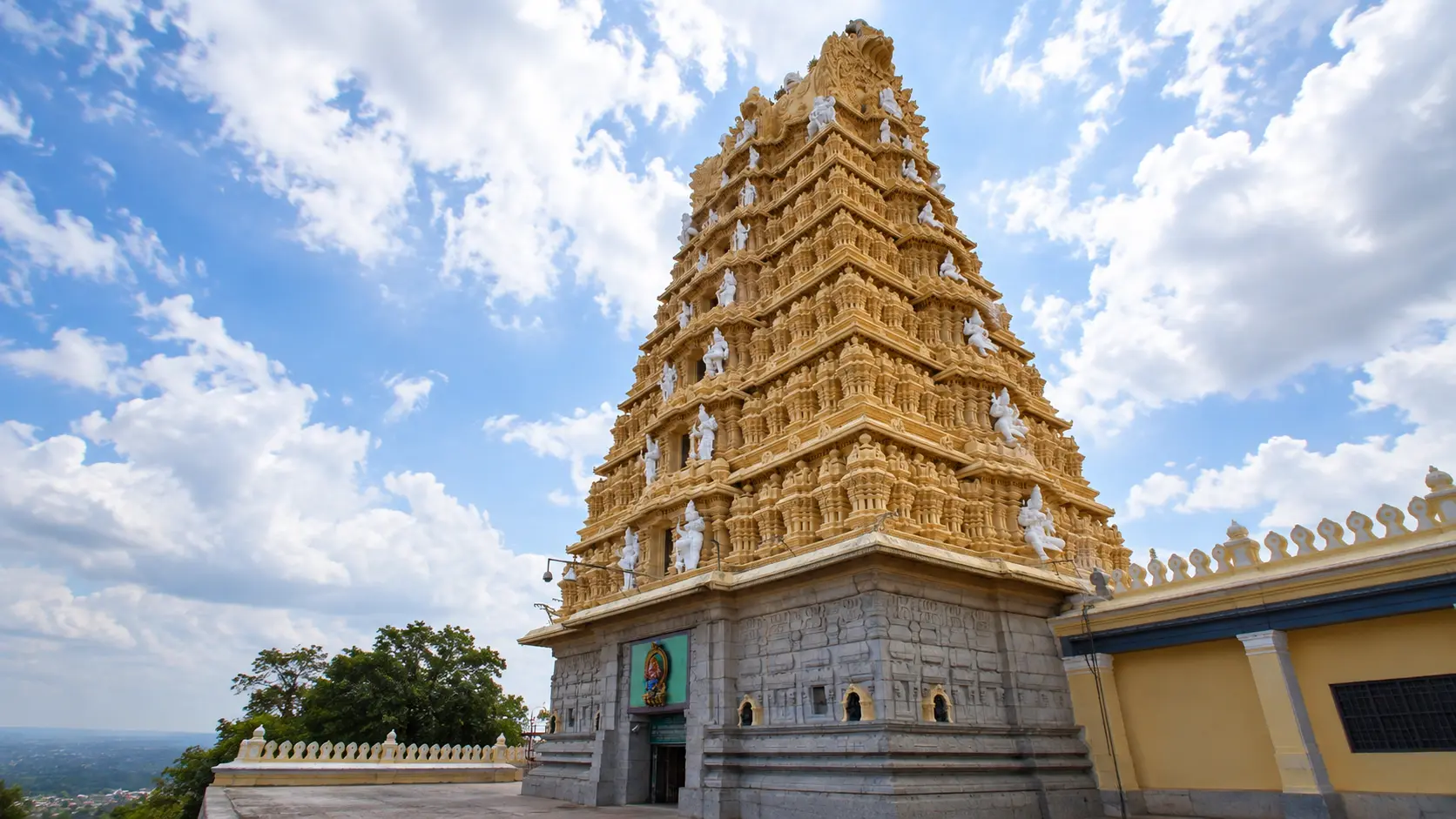
Rising with commanding, ancient prominence over the verdant Deccan plateau of southern Karnataka, Chamundi Hill (known locally as Chamundi Betta) is the spiritual apex, historical cradle, and geographic landmark of the royal city of Mysuru. Reaching an elevation of 1,062 meters (3,484 feet) above mean sea level and soaring roughly three hundred meters above the city floor, this iconic granitic inselberg is situated approximately thirteen kilometers east of the historic Mysore Palace (Amba Vilas) within the Mysuru Taluk of Mysuru District. Visible from virtually every terrace, boulevard, and park across the city, Chamundi Hill has served as a sacred beacon of Shakti worship, royal coronation rites, and cultural identity for more than a thousand years.
The hill derives its sacred name from the goddess Chamundeshwari (a fierce, multi-armed manifestation of Durga or Shakti), who is revered as the titular guardian deity (kuladevata) of the royal Wodeyar dynasty and the spiritual protector of the people of Mysuru. According to ancient mythological lore recorded in the Skanda Purana, it was atop this rugged rocky ridge - originally called Mahabaladri - that the warrior goddess engaged in an epic, nine-day battle to destroy the tyrannical buffalo-demon king Mahishasura, whose defeat liberated the three realms and gave the city its enduring name: Mahishooru, later Anglicized to Mysore. Crowned by the magnificent Dravidian rajagopuram of the Sri Chamundeshwari Temple, linked to the plains by a historic pilgrimage staircase of 1,008 hand-cut stone steps, and guarded halfway by a monumental seventeenth-century monolithic black granite Nandi bull, Chamundi Hill is a living, breathing monument to Karnataka's spiritual devotion, imperial architecture, and natural beauty.
+----------------------------------------------------------------------------------------------------+
|                                    CHAMUNDI HILL ELEVATION & SACRED PROFILE                        |
|                                                                                                    |
|                                  [SUMMIT CREST: 1,062 m]                                           |
|                   (Sri Chamundeshwari Temple, 40 m Rajagopuram, Mahishasura Statue)                |
|                                            /\                                                      |
|                                           /  \                                                     |
|                                          /    \                                                    |
|  [Historic 1,008 Stone Steps Flight]    /      \    [Paved 13 km Mountain Ghat Road]               |
|  (Carved in 1659 by Dodda Devaraja)    /        \   (Winding 2-Lane Highway from Lalitha Mahal)    |
|                                       /          \                                                 |
|  ================================== [700th STEP: MONOLITHIC NANDI BULL: ~900 m] =================== |
|  - 4.9 m High, 7.6 m Long Single-Stone Black Granite Sculpture (Carved 1659)                       |
|  - Intricate Bell Chains, Garlands, Shiva Shrine, Overlooking Valley                               |
|                                       \          /                                                 |
|  ================================== [FOOTHILL BASE: TAVAREKATTE: ~760 m] ========================== |
|  - Step Trailhead, Jockey Quarters, Lalitha Mahal Palace, High-Frequency City Bus Terminus         |
|                                                                                                    |
|  Summit Elevation: 1,062 m | Relief Above Plain: ~300 m | Administrative District: Mysuru          |
+----------------------------------------------------------------------------------------------------+
Start here. Open a tile for the full details.
Why goRead details
Chamundi Hill is the quintessential Mysuru experience. It unites centuries of sacred Hindu mythology, magnificent Dravidian stone architecture, royal pageantry, and sweeping aerial panoramas over one of India's most graceful heritage cities.
When to visitRead details
Chamundi Hill is a year-round destination, but the quality of the visit is enhanced by seasonal weather patterns and cultural festivities.
Entry & permissionsRead details
Fees, visiting hours and entry rules may change. Confirm the latest details with the official operator or local authority before travelling.
Visiting Chamundi Hill is accessible to the general public daily, governed by religious endowment protocols and civic parking guidelines.
+----------------------------------------------------------------------------------------------------+
|                                    TIMING & TARIFF SCHEDULE MATRIX                                 |
|                                                                                                    |
|  Category             | Operational Schedule & Tariffs                                             |
|  ---------------------+--------------------------------------------------------------------------- |
|  Hill Entry Fee       | Free; No toll or road fee for pedestrians or public bus passengers         |
|  Summit Parking Fee   | Two-Wheelers: ₹20; Cars / SUVs: ₹30 - ₹50; Minibuses / Buses: ₹100         |
|  Temple Darshan Hours | 07:30 to 14:00, 15:30 to 18:00, and 19:30 to 21:00 daily                   |
|  Free General Darshan | Free of charge for all devotees across all open hours                      |
|  Special Fast-Track   | ₹100 per person (Dedicated accelerated queue)                              |
|  VIP Quick Darshan    | ₹300 per person (Direct sanctum viewing access)                            |
|  Free Dasoha Lunch    | 12:30 PM to 15:00 PM daily at Dasoha Bhavan (Complimentary hot meals)      |
|  Camera Restrictions  | Cameras allowed on hill; strictly prohibited inside inner temple sanctum   |
+----------------------------------------------------------------------------------------------------+
Temple Darshan Timings and Ritual Schedule
The Sri Chamundeshwari Temple operates under a disciplined liturgical schedule:
- Morning Shift: 07:30 AM to 14:00 (2:00 PM)
- Afternoon Shift: 15:30 PM (3:30 PM) to 18:00 (6:00 PM)
- Evening Shift: 19:30 PM (7:30 PM) to 21:00 (9:00 PM)
- Sanctum Closures for Abhisheka: The inner sanctum is closed to general viewing during sacred bathing (abhisheka) rituals between 06:00 AM and 07:30 AM and between 18:00 PM and 19:30 PM, and briefly during afternoon pooja between 14:00 and 15:30. Visitors should plan their arrival within the open darshan windows.
Dress Code and Temple Etiquette
As one of Karnataka's most sacred pilgrimage shrines, strict behavioral standards are upheld:
- Modest Dress Code: Devotees must dress respectfully. Clothing covering shoulders and knees is mandatory. Men are permitted in trousers, dhotis, or shirts; sleeveless shirts, tank tops, and short pants are strictly prohibited.
- Footwear Policy: Shoes, sandals, and socks must be deposited at the free or nominal municipal shoe-care counters outside the temple courtyard.
- Photography Ban: Photography and videography are strictly prohibited once inside the temple complex. Mobile phones must be switched off or placed on silent mode.
- Macaque Safety: The hill is home to large troops of wild bonnet macaques. While accustomed to human presence, they are opportunistic: never carry exposed food, fruits, plastic bags, or open drink cans in your hands, as monkeys may snatch them aggressively. Keep all personal items secured inside zippered backpacks.
Plan your visitRead details
Chamundi Hill is exceptionally well connected to Mysuru city center and the broader Karnataka transport network, offering multiple convenient transit choices.
Explore the full guide - choose a topic below.
Why visit?
Chamundi Hill is the quintessential Mysuru experience.Explore detailsClose details
Chamundi Hill is the quintessential Mysuru experience. It unites centuries of sacred Hindu mythology, magnificent Dravidian stone architecture, royal pageantry, and sweeping aerial panoramas over one of India's most graceful heritage cities.
1. The Epicenter of Mysuru’s Spiritual and Royal Identity
To understand the history of the Kingdom of Mysore is to understand Chamundi Hill:
- The Seat of the Kuladevata: The royal Wodeyars regarded Goddess Chamundeshwari as their supreme protector. Every major decision, military campaign, and coronation was consecrated with offerings atop this peak. The inner sanctum enshrines an exquisite, solid-gold idol of eight-armed Chamundeshwari depicted slaying the demon Mahishasura, surrounded by silver-plated doorframes endowed by generations of maharajas.
- The World-Famous Dasara Celebrations: During the legendary ten-day Mysuru Dasara festival (celebrated in September or October), Chamundi Hill becomes the focal point of state-wide devotion. The festival honors the goddess’s victory over Mahishasura. On the climactic tenth day (Vijayadashami), the sacred presiding idol is escorted down from the hill to Mysore Palace, placed inside an ornate, 750-kilogram solid-gold howdah (ambari) mounted atop a caparisoned royal lead elephant, and paraded through the city before millions of spectators in the majestic Jumboo Savari procession.
2. The Colossal Monolithic Nandi Bull
Carved into the hillside at the 700th step along the historic walking route stands one of India’s greatest sculptural masterpieces:
- A 360-Year-Old Single-Stone Monolith: Commissioned in 1659 CE by Maharaja Dodda Devaraja Wadiyar, this gargantuan statue of Lord Shiva’s sacred mount, Nandi the bull, was carved directly out of a single continuous boulder of fine-grained black granite.
- Monumental Dimensions and Artistic Mastery: Standing 4.9 meters (16 feet) high and stretching 7.6 meters (25 feet) long, the Nandi sits in a peaceful, recumbent posture. The sculptors achieved an astonishing level of detail: intricate stone chains of ringing bells, floral garlands, heavy ear rings, and a fringed decorative saddle cloth are carved with razor-sharp precision across its massive, polished flanks. Devotees and tourists regularly gather at the small open-air Shiva shrine adjoining the monolith to receive holy vermilion (kumkuma) and admire the valley panorama.
3. The 1,008 Ancient Stone Steps
For pilgrims, fitness enthusiasts, and nature lovers, ascending Chamundi Hill on foot is an exhilarating tradition:
- The Royal Pilgrim Staircase: Commissioned alongside the Nandi in 1659 by Dodda Devaraja Wadiyar, the 1,008 wide stone steps climb the western ridge from the base at Tavarekatte. For centuries, before the construction of modern vehicular ghat roads, everyone - from common barefoot pilgrims to maharajas traveling in palanquins - ascended via these steps.
- The Walking Experience: The steps are shaded by ancient banyan trees, native tamarind groves, and blooming frangipani. Climbing in the cool dawn hours provides a peaceful workout, accompanied by the calls of grey junglefowl and peacocks, culminating in breathtaking morning vistas of the waking city below.
4. Sweeping Panoramic Vistas of Mysuru City
From the viewpoint terraces near the summit and along the winding ghat road, Chamundi Hill provides an unmatched bird’s-eye perspective of Mysuru:
- Daytime Geometry: Gaze down upon the symmetrical grid of the city, identifying the golden domes of Mysore Palace, the white Italianate dome of Lalitha Mahal Palace, the blue expanse of Karanji Lake, the lush greenery of the Mysuru Zoo, and the twin spires of St. Philomena’s Cathedral.
- The Illuminated Night Vista: Visiting the hill viewpoints after dusk reveals an enchanting sea of twinkling city lights. On Sunday evenings and during the Dasara festival, when Mysore Palace is illuminated by nearly 100,000 glowing light bulbs, the view of the glowing palace from the heights of Chamundi Hill is one of the most magical sights in India.
What to expect
Visiting Chamundi Hill is a vibrant sensory encounter that seamlessly blends the intense devotion of an active…Explore detailsClose details
Visiting Chamundi Hill is a vibrant sensory encounter that seamlessly blends the intense devotion of an active Hindu pilgrimage destination with the leisurely pleasures of a scenic mountain retreat.
+----------------------------------------------------------------------------------------------------+
|                                    CHAMUNDI HILL VISITOR EXPERIENCE MATRIX                         |
|                                                                                                    |
|  Feature              | Practical Details & Expectations                                           |
|  ---------------------+--------------------------------------------------------------------------- |
|  Operating Timings    |Check the current visiting hours and permitted access with the site operator before departure; ceremonies, closures and visitor sessions can affect access.|
|  Temple Darshan Queues|Confirm the current charge and what it includes with the operator or service provider. Visitor admission, vehicles, parking, activities and accommodation can have separate charges.|
|  Climatic Conditions  | Breezy and pleasant; 3°C to 5°C cooler than the plains; strong wind gusts  |
|  Summit Infrastructure| Multi-level parking complex, shoe counters, prasad stalls, clean restrooms |
|  Pilgrim Free Meals   | Complimentary *Dasoha* lunch served daily from 12:30 PM to 15:00 PM        |
|  Wildlife Precautions | Habituated bonnet macaques around temple; keep food and bags secured       |
|  Average Visit Time   | 2 to 3 hours (ghat drive, temple darshan, Nandi visit, viewpoint gazing)   |
+----------------------------------------------------------------------------------------------------+
The Summit Atmosphere
Upon reaching the summit plateau, visitors are greeted by the iconic, vividly painted statue of the demon Mahishasura, brandishing a curved sword in one hand and a coiled cobra in the other - a popular photo spot for families and pilgrims. Beyond the statue lies the busy temple precinct, bustling with devotional energy. Flanking the pedestrian approach are traditional flower stalls selling fragrant garlands of orange marigolds, sweet white jasmine (Mysore mallige), coconuts, and betel leaves for temple offerings.
The temple exterior is dominated by its towering, forty-meter-high, seven-tiered Dravidian rajagopuram, adorned with hundreds of intricately sculpted stucco figures depicting gods, goddesses, celestial dancers, and mythological battles, crowned by seven gleaming golden kalashas (finials). Inside the temple complex, the scent of burning camphor, crushed flowers, and sandalwood paste fills the air, accompanied by the resonant ringing of brass temple bells and the rhythmic chanting of Vedic hymns by hereditary priests.
Navigating Temple Darshan and Etiquette
Visiting the inner sanctum requires patience and cultural mindfulness:
- Queue Management: Confirm the current charge and what it includes with the operator or service provider. Visitor admission, vehicles, parking, activities and accommodation can have separate charges.
- Shoe Storage: Footwear must be removed before entering the temple complex; secure, organized shoe counters operate near the main entrance gates.
- Sanctum Protocols: Modest attire covering shoulders and knees is mandatory. Photography and video recording inside the inner sanctum are strictly prohibited. Devotees receive sacred vermilion (kumkuma), holy water (theertha), and the goddess's grace.
- The Dasoha Dining Hall: Confirm the current charge and what it includes with the operator or service provider. Visitor admission, vehicles, parking, activities and accommodation can have separate charges.
Best time to visit
Chamundi Hill is a year-round destination, but the quality of the visit is enhanced by seasonal weather patterns…Explore detailsClose details
Chamundi Hill is a year-round destination, but the quality of the visit is enhanced by seasonal weather patterns and cultural festivities.
+----------------------------------------------------------------------------------------------------+
|                                    ANNUAL SEASONAL & CULTURAL CALENDAR                             |
|                                                                                                    |
|  Season               | Months         | Temperature Range | Weather Atmosphere & Festival Highlights|
|  -------------+----------------+-------------------+-------------------------------------- |
|  Winter (Prime Window)| Oct - Feb      | 15°C to 28°C      | Crisp cool mornings, pleasant breezes,|
|                       |                |                   | crystal-clear city vistas; ideal steps|
|  Dasara Festivities   | Sep or Oct     | 20°C to 28°C      | Grand cultural peak; illuminated hill;|
|                       |                |                   | massive crowds; golden howdah parade  |
|  Summer (Dry Season)  | Mar - May      | 22°C to 36°C      | Warm dry afternoons; cool hill nights;|
|                       |                |                   | clear evening skies for night views   |
|  Monsoon (Rains)      | Jun - Sep      | 20°C to 28°C      | Sweeping mist, rain-washed greenery,  |
|                       |                |                   | fresh air, occasional slippery steps  |
+----------------------------------------------------------------------------------------------------+
Winter (October to March): The Peak Tourist Season
The winter months offer the most comfortable and pleasant climate for exploring Chamundi Hill. Daytime temperatures hover comfortably between 24°C and 28°C under sunny skies, while nights and early mornings are refreshingly cool (15°C to 18°C). The cool morning air makes climbing the 1,008 stone steps an absolute delight without excessive perspiration. The atmosphere is clear, affording sharp visibility across the entire city and surrounding rural lakes.
The Dasara Season (September / October): The Grand Cultural Spectacle
Visiting during the ten-day Mysuru Dasara is an extraordinary, once-in-a-lifetime cultural immersion. The entire temple, gopuram, and the winding ghat road are illuminated with thousands of fairy lights, creating a glowing serpent of light visible for miles across the plains. Special religious ceremonies, Vedic recitations, and classical music concerts are conducted daily. However, travelers should prepare for immense crowds, with hundreds of thousands of pilgrims visiting the peak; traffic restrictions are enforced, and taking KSRTC city shuttle buses is mandatory on peak festival days.
Summer and Monsoon (April to September): Solitude and Breezes
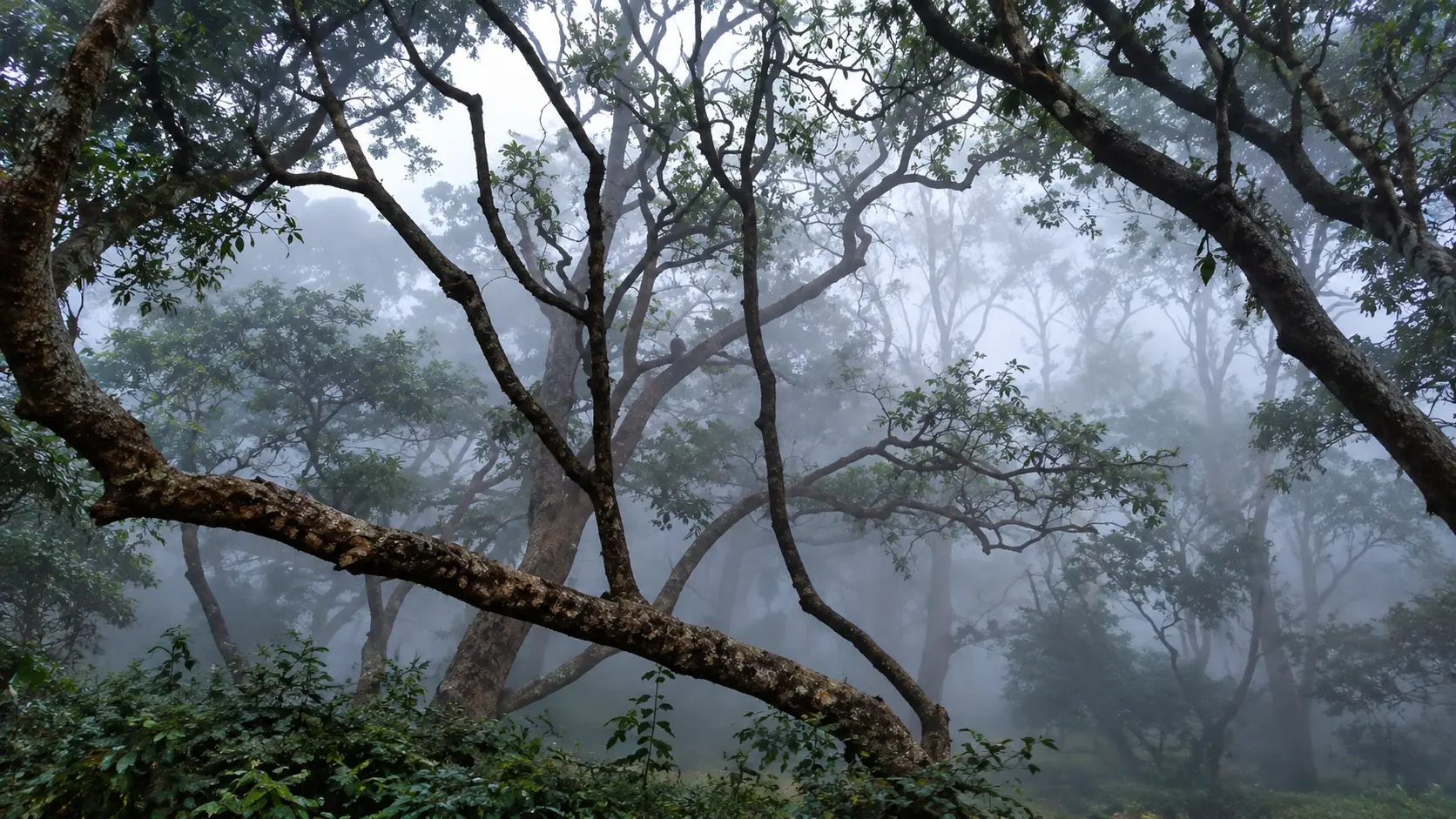
Summer afternoons can be hot on the stone temple courtyards, but early mornings (06:00 to 09:00 AM) and evenings (05:00 to 08:00 PM) remain pleasantly cool, with refreshing hilltop winds. The southwest monsoon from June to September brings passing rain showers, cloaking the hill in swirling mists and transforming the surrounding reserve forest into a vibrant green canopy. Travelers climbing the stone steps during the monsoon should wear footwear with strong grip, as the granite steps become slick when wet.
How to reach
Chamundi Hill is exceptionally well connected to Mysuru city center and the broader Karnataka transport network…Explore detailsClose details
Chamundi Hill is exceptionally well connected to Mysuru city center and the broader Karnataka transport network, offering multiple convenient transit choices.
+----------------------------------------------------------------------------------------------------+
|                                    ACCESS ROUTES TO CHAMUNDI HILL                                  |
|                                                                                                    |
|  [Route 1: Winding Mountain Ghat Road: 13 km]                                                      |
|  Mysore Palace / City Center ---> Lalitha Mahal Road ---> Chamundi Hill Entry Gate                  |
|  Two-lane paved asphalt ghat road (smooth switchbacks) ---> Summit Parking Complex (13 km)         |
|  Driving Time: 20 to 25 minutes by taxi, auto-rickshaw, or private car                             |
|                                                                                                    |
|  [Route 2: High-Frequency City Public Bus (Route 201 Series)]                                     |
|  Mysuru City Bus Stand (Near Palace) ---> Direct KSRTC City Bus (departs every 10 min)             |
|Confirm the current charge and what it includes with the operator or service provider. Visitor admission, vehicles, parking, activities and accommodation can have separate charges.|
|                                                                                                    |
|  [Route 3: The Historic 1,008 Stone Steps Foot Ascent]                                             |
|  Tavarekatte Foothill Base (Jockey Quarters) ---> Stone Steps (700th step: Nandi Monolith)         |
|  700th Step ---> 1,008th Step ---> Chamundeshwari Temple (Climbing Time: 45 to 75 minutes)         |
+----------------------------------------------------------------------------------------------------+
Approach via the Mountain Ghat Road (13 km)
The most common vehicular approach follows the paved, well-maintained two-lane ghat road:
- From central Mysuru (near Mysore Palace or the Race Course), vehicles drive east past the majestic white palace of Lalitha Mahal.
- Passing the forest department checkpost, the road begins its scenic ascent, winding through gentle switchbacks flanked by dry deciduous forest and granite boulders.
- Approximately eight kilometers into the climb, a designated branch road forks to the right, leading down to the Monolithic Nandi parking terrace, while the main road continues upward to terminate at the spacious multi-level vehicle parking facility at the summit.
- Taxis, app-based cabs (Ola and Uber), and auto-rickshaws are readily available throughout Mysuru for the return trip to the hill.
Public Transit via KSRTC City Buses
The Karnataka State Road Transport Corporation (KSRTC) operates a dedicated, world-class city bus service connecting Chamundi Hill:
- Route 201 Series: Buses depart from the Mysuru City Bus Stand (CBS) every ten to fifteen minutes throughout the day, operating between 06:00 AM and 21:30 PM. Confirm the current charge and what it includes with the operator or service provider. Visitor admission, vehicles, parking, activities and accommodation can have separate charges.
The Pilgrim Foot Ascent via the 1,008 Stone Steps
For travelers seeking spiritual merit, physical fitness, or a classic cultural journey:
- The stone steps begin at Tavarekatte at the western foot of the hill (near the Jockey Quarters / Chamundi Vihar Stadium area).
- The 1,008 wide granite steps are well-graded and flanked by handrails in steeper sections.
- At approximately the 700th step, the path reaches the stone terrace housing the colossal Monolithic Nandi Bull, offering an ideal resting point and photo opportunity before climbing the final three hundred steps to the temple summit.
- The climb takes between forty-five and seventy-five minutes depending on physical fitness. It is best undertaken between 06:00 AM and 08:00 AM before the heat of the day.
Entry, timings and permissions
Fees, visiting hours and entry rules may change.Explore detailsClose details
Fees, visiting hours and entry rules may change. Confirm the latest details with the official operator or local authority before travelling.
Visiting Chamundi Hill is accessible to the general public daily, governed by religious endowment protocols and civic parking guidelines.
+----------------------------------------------------------------------------------------------------+
|                                    TIMING & TARIFF SCHEDULE MATRIX                                 |
|                                                                                                    |
|  Category             | Operational Schedule & Tariffs                                             |
|  ---------------------+--------------------------------------------------------------------------- |
|  Hill Entry Fee       | Free; No toll or road fee for pedestrians or public bus passengers         |
|  Summit Parking Fee   | Two-Wheelers: ₹20; Cars / SUVs: ₹30 - ₹50; Minibuses / Buses: ₹100         |
|  Temple Darshan Hours | 07:30 to 14:00, 15:30 to 18:00, and 19:30 to 21:00 daily                   |
|  Free General Darshan | Free of charge for all devotees across all open hours                      |
|  Special Fast-Track   | ₹100 per person (Dedicated accelerated queue)                              |
|  VIP Quick Darshan    | ₹300 per person (Direct sanctum viewing access)                            |
|  Free Dasoha Lunch    | 12:30 PM to 15:00 PM daily at Dasoha Bhavan (Complimentary hot meals)      |
|  Camera Restrictions  | Cameras allowed on hill; strictly prohibited inside inner temple sanctum   |
+----------------------------------------------------------------------------------------------------+
Temple Darshan Timings and Ritual Schedule
The Sri Chamundeshwari Temple operates under a disciplined liturgical schedule:
- Morning Shift: 07:30 AM to 14:00 (2:00 PM)
- Afternoon Shift: 15:30 PM (3:30 PM) to 18:00 (6:00 PM)
- Evening Shift: 19:30 PM (7:30 PM) to 21:00 (9:00 PM)
- Sanctum Closures for Abhisheka: The inner sanctum is closed to general viewing during sacred bathing (abhisheka) rituals between 06:00 AM and 07:30 AM and between 18:00 PM and 19:30 PM, and briefly during afternoon pooja between 14:00 and 15:30. Visitors should plan their arrival within the open darshan windows.
Dress Code and Temple Etiquette
As one of Karnataka's most sacred pilgrimage shrines, strict behavioral standards are upheld:
- Modest Dress Code: Devotees must dress respectfully. Clothing covering shoulders and knees is mandatory. Men are permitted in trousers, dhotis, or shirts; sleeveless shirts, tank tops, and short pants are strictly prohibited.
- Footwear Policy: Shoes, sandals, and socks must be deposited at the free or nominal municipal shoe-care counters outside the temple courtyard.
- Photography Ban: Photography and videography are strictly prohibited once inside the temple complex. Mobile phones must be switched off or placed on silent mode.
- Macaque Safety: The hill is home to large troops of wild bonnet macaques. While accustomed to human presence, they are opportunistic: never carry exposed food, fruits, plastic bags, or open drink cans in your hands, as monkeys may snatch them aggressively. Keep all personal items secured inside zippered backpacks.
Nearby places to consider
Chamundi Hill sits at the very heart of southern Karnataka’s cultural landscape, surrounded by imperial palaces…Explore detailsClose details
Chamundi Hill sits at the very heart of southern Karnataka’s cultural landscape, surrounded by imperial palaces, historic lakes, zoological gardens, and ancient battlefields.
+----------------------------------------------------------------------------------------------------+
|                                    NEARBY DESTINATIONS NETWORK                                     |
|                                                                                                    |
|  [Mysore Palace (Amba Vilas): 13 km]             [Lalitha Mahal Palace: 6 km]                      |
|  (Wodeyar Dynasty Seat, Gilded Durbar Halls)     (Italianate White Marble Palace, Foothills)       |
|         ^                                              ^                                           |
|          \                                            /                                            |
|           \                                          /                                             |
|  ================= [CHAMUNDI HILL: 1,062 m SUMMIT] =============================================== |
|           /                                          \                                             |
|          /                                            \                                            |
|         v                                              v                                           |
|  [Mysuru Zoo & Karanji Lake: 10 km]              [Srirangapatna Island Fortress: 20 km]            |
|  (1892 Heritage Zoo, India's Largest Aviary)     (Tipu Sultan Summer Palace, Kaveri River)         |
+----------------------------------------------------------------------------------------------------+
Mysore Palace (Amba Vilas - 13 km)
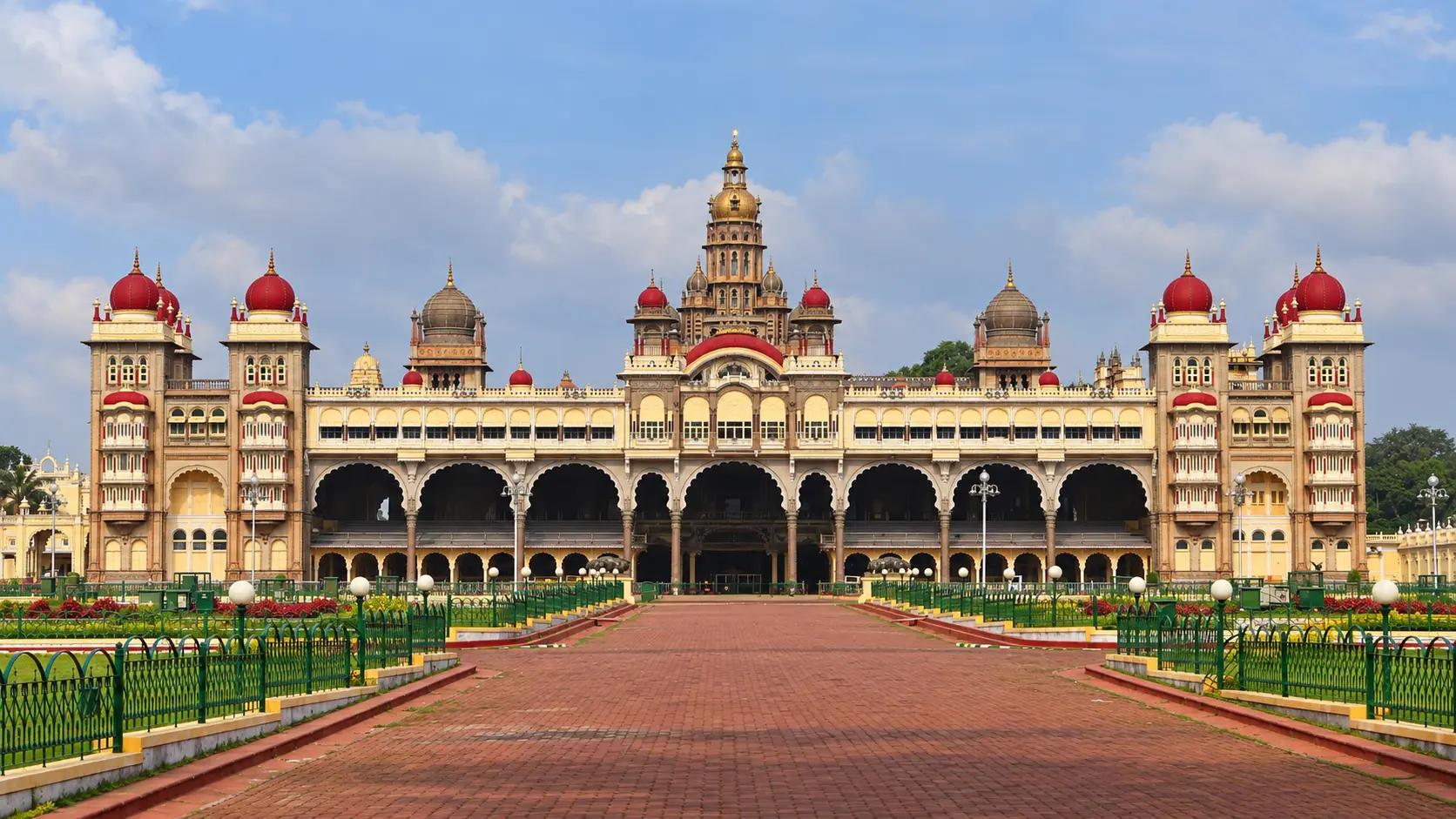
Located thirteen kilometers west at the center of the city, Mysore Palace is the official residence of the Wadiyar dynasty and one of the most visited monuments in India. Designed in the Indo-Saracenic style by British architect Henry Irwin and completed in 1912, the palace features soaring granite arches, intricately carved mahogany ceilings, stained-glass peacock domes, and the magnificent Gombe Thotti (Doll's Pavilion). On Sunday evenings and during public holidays, the entire exterior is illuminated by nearly 100,000 light bulbs.
Lalitha Mahal Palace (6 km)
Situated at the northeastern base of Chamundi Hill, Lalitha Mahal is the second-largest palace in Mysuru. Built in 1921 by Maharaja Krishnaraja Wadiyar IV to host the Viceroy of India, this gleaming white palace was modeled after St. Paul's Cathedral in London. Featuring pure Italian marble floors, crystal chandeliers, a grand double-flight staircase, and sweeping views of the hill, it now operates as a heritage hotel.
Sri Chamarajendra Zoological Gardens and Karanji Lake (10 km)
Located ten kilometers northwest of the hill summit, the Mysuru Zoo was established in 1892 by Chamaraja Wadiyar X, making it one of the oldest and most progressive zoos in the world. Set amidst lush botanical gardens, it houses elephants, rhinos, gorillas, and giraffes. Adjoining the zoo is Karanji Lake, a scenic 90-acre freshwater wetland featuring a sprawling butterfly park and India’s largest walk-through aviary.
Srirangapatna Island Fortress (20 km)
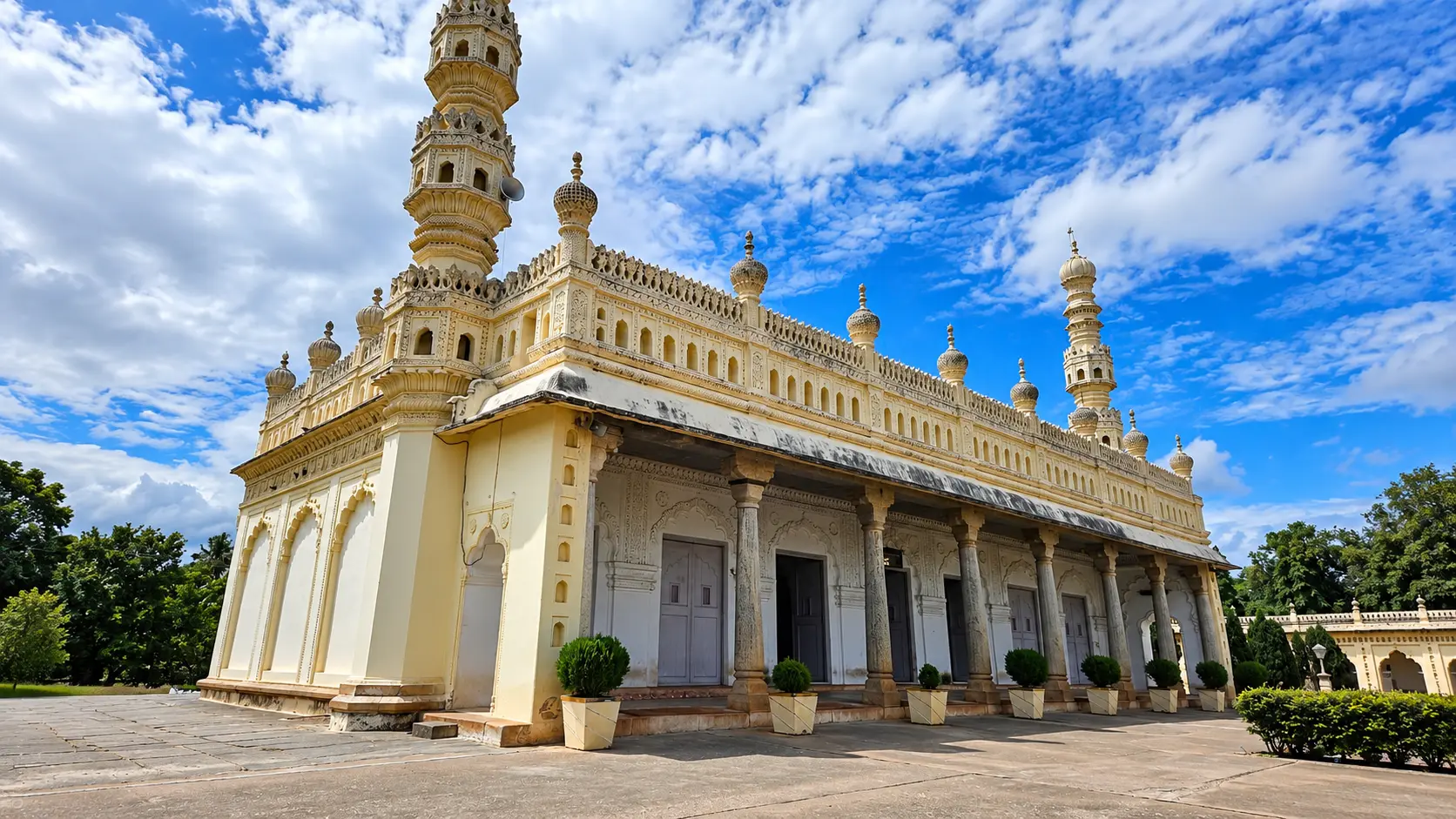
Situated twenty kilometers north along the Kaveri River, Srirangapatna is an ancient fortified island town that served as the capital of the Mysore Kingdom under Hyder Ali and Tipu Sultan. Highlights include the monumental tenth-century Sri Ranganathaswamy Temple, Dariya Daulat Bagh (Tipu's wooden Summer Palace), and the Gumbaz mausoleum.
In pictures
The practical bits
Before you go.
Plan ahead
A seamless, enriching excursion to Chamundi Hill requires thoughtful scheduling, choosing between vehicular…Explore detailsClose details
A seamless, enriching excursion to Chamundi Hill requires thoughtful scheduling, choosing between vehicular ascent and the stone steps, and combining the visit with nearby royal landmarks.
Early Morning or Late Afternoon Scheduling
Schedule your temple visit either between 07:30 AM and 09:30 AM to avoid long queue lines and enjoy fresh morning…Explore detailsClose details
Schedule your temple visit either between 07:30 AM and 09:30 AM to avoid long queue lines and enjoy fresh morning hill air, or after 17:30 PM to witness the sunset over the city and see Mysuru’s glittering nighttime illuminations.
Queue Strategy During Peak Days
Confirm the current charge and what it includes with the operator or service provider.Explore detailsClose details
Confirm the current charge and what it includes with the operator or service provider. Visitor admission, vehicles, parking, activities and accommodation can have separate charges.
Monolithic Nandi Stopover Coordination
If driving up the ghat road, make a deliberate stop at the Monolithic Nandi parking terrace on your descent…Explore detailsClose details
If driving up the ghat road, make a deliberate stop at the Monolithic Nandi parking terrace on your descent, allowing you to admire the 16-foot black granite sculpture without having to hike the entire step staircase.
Secure Footwear and Valuables Against Monkeys
Keep sunglasses, mobile phones, prasad bags, and water bottles tucked securely inside zippered backpacks…Explore detailsClose details
Keep sunglasses, mobile phones, prasad bags, and water bottles tucked securely inside zippered backpacks, completely refraining from feeding or teasing the bonnet macaques that congregate near the temple steps.
Coordinate with Mysuru Royal Heritage Circuit
Plan your day to combine Chamundi Hill with an afternoon tour of Mysore Palace (Amba Vilas), a stroll through the…Explore detailsClose details
Plan your day to combine Chamundi Hill with an afternoon tour of Mysore Palace (Amba Vilas), a stroll through the lush grounds of the Sri Chamarajendra Zoological Gardens (Mysuru Zoo), and an evening view of the illuminated palace from the hill viewpoints.
+----------------------------------------------------------------------------------------------------+
|                                  SUGGESTED COMBINED DAY ITINERARY: ROYAL MYSURU                    |
|                                                                                                    |
|  07:00 AM to 09:30 AM  -  Chamundi Hill & Monolithic Nandi                                           |
|  - Drive up scenic 13 km ghat road or climb 1,008 stone steps from Tavarekatte.                    |
|  - Complete darshan of Goddess Chamundeshwari; photograph the historic 40 m Rajagopuram.           |
|  - Stop at the 700th step to admire the massive 16-foot Monolithic Nandi Bull.                     |
|  - Pause at the viewpoint terrace for panoramic morning city photographs.                          |
|                                                                                                    |
|  10:00 AM to 11:00 AM  -  Traditional Mysuru Breakfast                                               |
|  - Enjoy authentic Mysore Masala Dosa, hot idlis, and filter coffee at a heritage city cafe.       |
|                                                                                                    |
|  11:30 AM to 02:00 PM  -  Mysore Palace (Amba Vilas) Grand Heritage Tour                             |
|  - Tour the Durbar Halls, stained-glass pavilions, and royal portrait galleries of Mysore Palace. |
|                                                                                                    |
|  02:30 PM to 04:30 PM  -  Sri Chamarajendra Zoological Gardens (Mysuru Zoo)                          |
|  - Stroll through one of Asia’s oldest and most renowned zoological parks; visit Karanji Lake.    |
|                                                                                                    |
|  05:00 PM to 06:30 PM  -  Devaraja Market & Silk Shopping                                            |
|  - Walk through historic Devaraja Market; browse Mysore silk saris and authentic sandalwood goods. |
|                                                                                                    |
|  07:00 PM to 07:45 PM  -  Night Viewpoint Return or Palace Illumination                              |
|  - Witness the golden illumination of Mysore Palace or gaze at the city lights from Chamundi Hill. |
+----------------------------------------------------------------------------------------------------+
A few things you might wonder
Common questions about visiting Chamundi Hill. Fees, visiting hours and ceremonies are researched details that may change; confirm current arrangements with the operator before travelling.
What is the significance of the Chamundeshwari Temple on Chamundi Hill?
How many steps lead up to Chamundi Hill, and where does the climb start?
Where is the Monolithic Nandi Bull located, and how big is it?
What are the temple darshan timings, and are special tickets available?
How do visitors reach Chamundi Hill using public transport?
Are free meals provided at the temple for pilgrims?
What happens at Chamundi Hill during the Mysuru Dasara festival?
Are monkeys a safety problem on Chamundi Hill?
Explore more in Bengaluru Mysuru
Discover other destinations around this hub
More Hubs in Karnataka
Continue exploring other travel hubs in this state
Planning a trip to Bengaluru Mysuru?