Shore Temple
Essential visitor guide to Shore Temple in Mahabalipuram, Tamil Nadu. Explore the 8th-century Pallava structural stone temple, UNESCO heritage, tickets & entry hours.
Location
Chennai & Mahabalipuram, Tamil Nadu
A closer look
Your visit, at a glance.
Chennai Mahabalipuram, Tamil Nadu
GET TO KNOW THE PLACE
Greeting the morning sun across the cerulean expanse of the Bay of Bengal, Shore Temple stands as one of the most evocative and consequential architectural monuments in South…
The story of Shore Temple
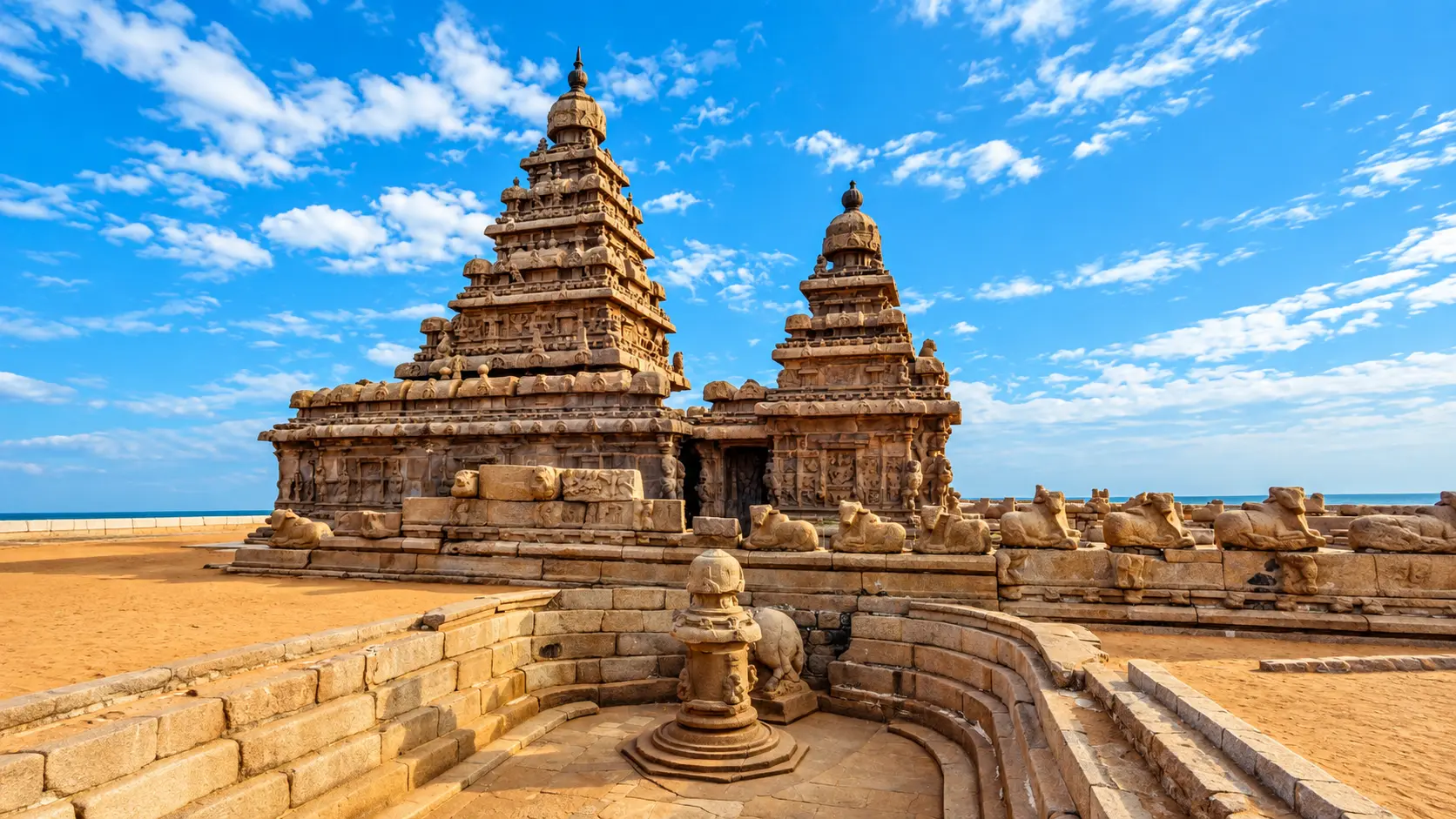
Greeting the morning sun across the cerulean expanse of the Bay of Bengal, Shore Temple stands as one of the most evocative and consequential architectural monuments in South Asian history. Situated at the edge of the historic port town of Mamallapuram (Mahabalipuram) in Chengalpattu District, Tamil Nadu, this 8th-century sanctuary has withstood more than thirteen centuries of punishing salt spray, cyclonic winds, and pounding ocean breakers. Inscribed in 1984 as a foundational anchor of the UNESCO World Heritage Site "Group of Monuments at Mahabalipuram," Shore Temple represents the sublime dawn of freestanding Dravidian stone architecture - a revolutionary departure from earlier rock-cut caverns and monolithic excavations toward meticulously engineered structural temples built from quarried granite masonry.
Whether observed at dawn when the first rays of sunlight illuminate the weathered grey granite carvings, or at twilight when warm architectural floodlights cast golden reflections across the surrounding casuarina groves, Shore Temple radiates an indelible aura of timeless dignity. A visit here offers not merely an inspection of ancient masonry, but a sensory encounter with an ancient maritime civilisation that launched intrepid mercantile voyages across the Indian Ocean to the empires of Southeast Asia.
Start here. Open a tile for the full details.
Why goRead details
When to visitRead details
- Winter Season (November to February): This is by far the finest season to visit Shore Temple. Daily temperatures range between 21°C and 30°C, accompanied by refreshing coastal sea breezes and clear blue skies. The moderate temperatures allow visitors to leisurely inspect the outdoor sculptures, walk the grounds, and photograph the monument without suffering from midday sunstroke.
- Summer Season (March to June): Summers along the Coromandel coast are intensely hot and humid, with midday temperatures regularly climbing past 38°C to 40°C. Check the current visiting hours and permitted access with the site operator before departure; ceremonies, closures and visitor sessions can affect access.
- Monsoon Season (July to October / November): The region receives moderate showers from the Southwest Monsoon (July - September) and heavy deluges accompanied by strong winds from the Northeast Monsoon (October - November). While overcast skies and dramatic rain clouds create stunning photographic opportunities against the dark wet granite, cyclonic sea conditions can occasionally prompt temporary coastal safety alerts.
Entry & permissionsRead details
Fees, visiting hours and entry rules may change. Confirm the latest details with the official operator or local authority before travelling.
Operating Hours
- Temple Grounds: Open every day of the week from 06:00 to 18:00 (sunrise to sunset).
- Ticket Counters: Open on-site from 06:00 until 17:30.
- Evening Illumination: Architectural exterior floodlights illuminate the spires from approximately 18:00 to 20:00. Note that visitors must exit the interior compound at 18:00, but the illuminated temple towers can be viewed from adjacent public beach promenades.
Entry Fees and Composite Ticket Regulations
Admission is regulated under the Archaeological Survey of India (ASI) national monument ticketing framework:
- Indian, SAARC, and BIMSTEC Citizens:
- Cashless Digital Payment (UPI / QR Code): ₹35 per person
- Cash / Standard Counter Rate: ₹40 per person
- Foreign Nationals (Non-SAARC):
- Cashless Digital Payment: ₹550 per person
- Cash / Standard Counter Rate: ₹600 per person
- Children (Under 15 Years): Free admission upon presentation of age verification.
Crucial Ticketing Rule (The Composite Pass): Your entry ticket to Shore Temple is a single-day composite ticket. It automatically grants admission to the Five Rathas (Pancha Rathas) monument complex located on the southern side of Mahabalipuram on the same date. Do not discard your digital QR code or physical ticket stub after visiting Shore Temple; present it at the turnstiles of Five Rathas to avoid paying twice.
Photography and Filming Guidelines
- Handheld Photography: Non-commercial still photography using mobile phones, DSLRs, and mirrorless cameras is completely free and unrestricted across the outer grounds.
- Tripods and Commercial Equipment: Operating tripods, lighting stands, and bulky professional equipment requires formal prior written permission and payment of photography fees to the ASI Chennai Circle office.
- Drones and Aerial Filming: Flying consumer or commercial camera drones over Shore Temple and the Mahabalipuram archaeological park is strictly prohibited. The monument is located within a sensitive coastal security buffer near the Kalpakkam nuclear facility, and unauthorised drone operation will result in immediate police confiscation and legal prosecution.
Plan your visitRead details
Explore the full guide - choose a topic below.
Why visit?
To comprehend the singular importance of Shore Temple, one must understand its evolutionary role in the history…Explore detailsClose details
The Dawn of Structural Dravidian Architecture
To comprehend the singular importance of Shore Temple, one must understand its evolutionary role in the history of Indian temple design. Prior to the reign of Pallava king Narasimhavarman II (revered by the royal title Rajasimha, meaning "Lion among Kings", c. 700 - 728 CE), South Indian sacred architecture was predominantly subtractive: artisans carved out natural granite hillsides to fashion subterranean cave temples (mandapas) or sculpted giant boulders from the top down to create monolithic shrines (rathas), such as the nearby Pancha Rathas. Shore Temple broke completely new ground as one of Southern India's earliest freestanding structural temples. Here, skilled stonecutters quarried massive granite blocks, shaped and dressed them with chisels, and laid them in mortarless interlocking courses to create soaring, multi-tiered towers. This innovative structural paradigm established the architectural blueprint that would inspire subsequent Chola, Pandya, and Vijayanagara master builders, directly paving the way for monumental wonders like the Brihadeeswara Temple in Thanjavur and the temple cities of Madurai.
An Extraordinary Tripartite Shavite and Vaishnavite Sanctum
Shore Temple features a fascinating, highly unusual layout that harmoniously incorporates both Shaivite and Vaishnavite traditions within a single unified sanctuary. Rather than a solitary central shrine, the complex comprises three distinct sanctums arranged in a linear east-west alignment:
- The East-Facing Kshatriyasimhesvara Temple: The primary, larger tower rising five tiers in a steep pyramidal vimana. Facing due east toward the ocean waves to greet the dawn, the sanctum enshrines a broken 16-faceted black basalt/granite Dharalingam. Behind the lingam, carved into the back wall, is a magnificent Pallava bas-relief of Somaskanda - depicting Lord Shiva and Goddess Parvati seated serenely with their youthful son Skanda (Murugan), flanked by Brahma and Vishnu.
- The West-Facing Rajasimhesvara Temple: A smaller, three-tiered pyramidal tower facing inland to the west. It also enshrines a Shiva lingam and a matching Somaskanda relief panel, accessible through an enclosed vestibule.
- The Intermediate Vishnu Shrine (Narapatisimha Pallava): Nestled directly between the two soaring Shiva shrines lies a low, roofless rectangular sanctuary carved directly out of the living bedrock. Within this chamber rests a monumental granite carving of Lord Vishnu in his reclining pose (Anantasayana Perumal or Stalasayana). In a striking iconographic departure, Vishnu is depicted without his traditional multi-headed serpent couch (Adishesha) and without his usual celestial attributes, resting his head directly upon the bare rock - a sacred reminder of the natural coastal outcrop around which the entire temple was conceived.
The Myth and Reality of the "Seven Pagodas"
For centuries, European mariners navigating the Coromandel coast recorded the sighting of what they named the "Seven Pagodas" - a succession of soaring temple spires along the coastline that served as vital navigational landmarks. According to local folklore and historical travelogues, six majestic companion temples once lined the surf, but were consumed by a jealous sea that submerged their towers beneath the waves. While long dismissed as romantic maritime mythology, the legend received dramatic physical corroboration during the tragic Indian Ocean tsunami of December 26, 2004. In the minutes before the tsunami waves made landfall, the sea receded nearly five hundred metres from the shoreline. Stunned onlookers and archaeologists observed long-submerged rows of dressed granite boulders, eroded wall foundations, carved animal figures, and fallen stone blocks protruding from the ocean floor. Subsequent underwater archaeological expeditions conducted by the Archaeological Survey of India (ASI) and the National Institute of Oceanography (NIO) confirmed the existence of submerged structural ruins offshore, proving that Shore Temple was indeed part of an extensive coastal urban and sacred complex that extended much farther into what is now the Bay of Bengal.
The Serene Coastal Setting and Sculpted Courtyards
Enclosing the three central sanctuaries is a low granite perimeter wall surmounted by dozens of weathered, life-sized statues of seated Nandi bulls. These monolithic guardians gaze outwards across the courtyard, their forms softened and rounded by thirteen hundred years of maritime breezes. In the northern courtyard stands an imposing monolithic lion sculpture, depicted in a rampant posture with a small rectangular cavity carved directly into its breast housing a miniature bas-relief of the warrior goddess Durga. Nearby, an ancient stepped masonry bathing pool (kalyani) and a sacrificial stone altar complete an atmospheric setting where the sound of crashing ocean waves constantly reverberates through ancient granite corridors.
What to expect
Visitors approach Shore Temple from the eastern terminus of Shore Temple Road, passing through an entry precinct…Explore detailsClose details
Arrival and Coastal Approach
Visitors approach Shore Temple from the eastern terminus of Shore Temple Road, passing through an entry precinct featuring ticket scanning turnstiles, cloakrooms, and souvenir stalls. Beyond the gate, an expansive, meticulously manicured lawn maintained by the ASI unfolds, crisscrossed by neat paved flagstone walkways. A belt of tall, salt-resistant Casuarina trees flanks the southern perimeter, their feathery branches swaying gently in the maritime breeze and serving as a vital botanical windbreak that deflects abrasive beach sand away from the monument.
The Granite Enclosure and Weathered Façade
As you draw near the temple enclosure, the golden-grey granite masonry reveals the tangible effects of time and nature. Centuries of airborne salt crystals, moisture, and sea spray have smoothed the crisp chisel marks of the Pallava sculptors, lending the stone figures an ethereal, almost dreamlike quality. Outer wall panels display relief carvings of dvarapalas (celestial gatekeepers), Pallava royal dignitaries, frolicking ganas, and mythical aquatic creatures (makaras). Despite the softening of fine details, the proportions of the towers remain immaculately balanced, demonstrating the architectural sophistication of Rajasimha’s master builders.
Interior Sanctums and Ritual Spaces
Visitors are permitted to walk through the outer courtyards and circumnavigate the perimeter of the shrines along a designated one-way visitor path. While entry into the inner sanctum cella (garbhagriha) is restricted to prevent wear on the fragile foundations, visitors can look directly into the east-facing Kshatriyasimhesvara sanctum through a protective metal grille to view the 16-faceted lingam and the Somaskanda panel illuminated by interior spotlighting. Walking along the northern flank, you can gaze down into the open-air intermediate Vishnu chamber, admiring the elongated form of the reclining deity carved into the bedrock.
The Seaward Breakwater and Protective Revetment
At the eastern edge of the temple compound, a sturdy modern revetment wall constructed from massive boulders shields the temple's foundation rocks from direct wave action. From this vantage point, visitors can lean against the railing and look out across the azure surf of the Bay of Bengal, watching traditional wooden fishing boats bobbing in the distance and listening to the rhythmic roar of the breakers that have crashed against these granite stones for more than 1,300 years.
Best time to visit
Mahabalipuram experiences a tropical maritime climate marked by high humidity throughout the year, making…Explore detailsClose details
Seasonal Weather Patterns
Mahabalipuram experiences a tropical maritime climate marked by high humidity throughout the year, making seasonal timing an essential factor for an enjoyable exploration.
- Winter Season (November to February): This is by far the finest season to visit Shore Temple. Daily temperatures range between 21°C and 30°C, accompanied by refreshing coastal sea breezes and clear blue skies. The moderate temperatures allow visitors to leisurely inspect the outdoor sculptures, walk the grounds, and photograph the monument without suffering from midday sunstroke.
- Summer Season (March to June): Summers along the Coromandel coast are intensely hot and humid, with midday temperatures regularly climbing past 38°C to 40°C. Check the current visiting hours and permitted access with the site operator before departure; ceremonies, closures and visitor sessions can affect access.
- Monsoon Season (July to October / November): The region receives moderate showers from the Southwest Monsoon (July - September) and heavy deluges accompanied by strong winds from the Northeast Monsoon (October - November). While overcast skies and dramatic rain clouds create stunning photographic opportunities against the dark wet granite, cyclonic sea conditions can occasionally prompt temporary coastal safety alerts.
Best Time of Day
- Sunrise (06:00 to 07:30): The quintessential time to experience Shore Temple. As the sun rises directly out of the Bay of Bengal, its golden rays strike the east-facing vimana, illuminating the ancient carvings in warm, radiant hues. Crowds are virtually non-existent, the air is cool, and the atmosphere is deeply peaceful.
- Sunset and Twilight (16:30 to 18:00): Late afternoon brings cooler sea breezes and soft golden hour lighting that accentuates the texture of the weathered granite. Check the current visiting hours and permitted access with the site operator before departure; ceremonies, closures and visitor sessions can affect access.
Cultural Festivals
- Mamallapuram Dance Festival (December - January): Spanning four vibrant weeks during the winter peak, this nationally renowned classical dance festival is organised by Tamil Nadu Tourism. Renowned exponents of Bharatanatyam, Kuchipudi, Kathakali, Mohiniyattam, and Odissi perform on an open-air stage against the illuminated backdrop of ancient Pallava rock sculptures, creating an unforgettable cultural spectacle.
How to reach
Shore Temple is situated at the eastern edge of Mamallapuram town in Chengalpattu District, Tamil Nadu (pin code…Explore detailsClose details
Geographic Orientation
Shore Temple is situated at the eastern edge of Mamallapuram town in Chengalpattu District, Tamil Nadu (pin code 603104). It is located approximately 55 km south of Chennai International Airport, 58 km south of Chennai Central Railway Station, and 95 km north of Pondicherry.
By Air
Chennai International Airport (MAA) is the nearest airport. From the airport terminal, visitors can hire prepaid taxis or book app-based cabs (Uber, Ola) directly to Mahabalipuram. The journey takes approximately 1 hour and 15 minutes to 1.5 hours via the scenic, four-lane East Coast Road (SH 49), passing through scenic coastal countryside and fishing hamlets.
By Train
- Chengalpattu Junction (CGL): Located approximately 29 km west of Mahabalipuram, Chengalpattu is the closest major railway junction, serviced by numerous express trains running between Chennai, Madurai, Tiruchirappalli, and Kanyakumari. From Chengalpattu station, frequent TNSTC state buses and private taxis reach Mahabalipuram in roughly 40 minutes.
- Chennai Central (MAS) and Egmore (MS): Located roughly 58 km north. Travellers arriving at Chennai’s main rail terminals can easily arrange private rental cars, express taxis, or direct intercity buses to Mahabalipuram.
By Road and Public Bus
The road link between Chennai and Mahabalipuram is among the most scenic drives in Tamil Nadu:
- East Coast Road (ECR / SH 49): A smooth, four-lane coastal highway offering panoramic glimpses of the sea, backwaters, and coastal resorts. The drive takes around 75 to 90 minutes from South Chennai (Adyar / Thiruvanmiyur).
- Old Mahabalipuram Road (OMR / Rajiv Gandhi Salai): The primary inland expressway traversing Chennai’s southern IT corridor, joining ECR near Kovalam or Mahabalipuram.
- Government Public Buses: Metropolitan Transport Corporation (MTC) and State Express Transport Corporation (SETC) operate very frequent bus services from Chennai to the Mamallapuram Bus Stand (located just 1.2 km from Shore Temple):
- Bus 102: Operates from Broadway / Chennai Central to Mamallapuram along OMR/ECR.
- Bus 588 / 599: Operates from CMBT Koyambedu and T. Nagar directly to Mamallapuram.
- From the Mamallapuram bus depot, auto-rickshaws, cycle-rickshaws, or a brisk 15-minute walk through town will bring you directly to the Shore Temple entrance.
Entry, timings and permissions
Fees, visiting hours and entry rules may change.Explore detailsClose details
Fees, visiting hours and entry rules may change. Confirm the latest details with the official operator or local authority before travelling.
Operating Hours
- Temple Grounds: Open every day of the week from 06:00 to 18:00 (sunrise to sunset).
- Ticket Counters: Open on-site from 06:00 until 17:30.
- Evening Illumination: Architectural exterior floodlights illuminate the spires from approximately 18:00 to 20:00. Note that visitors must exit the interior compound at 18:00, but the illuminated temple towers can be viewed from adjacent public beach promenades.
Entry Fees and Composite Ticket Regulations
Admission is regulated under the Archaeological Survey of India (ASI) national monument ticketing framework:
- Indian, SAARC, and BIMSTEC Citizens:
- Cashless Digital Payment (UPI / QR Code): ₹35 per person
- Cash / Standard Counter Rate: ₹40 per person
- Foreign Nationals (Non-SAARC):
- Cashless Digital Payment: ₹550 per person
- Cash / Standard Counter Rate: ₹600 per person
- Children (Under 15 Years): Free admission upon presentation of age verification.
Crucial Ticketing Rule (The Composite Pass): Your entry ticket to Shore Temple is a single-day composite ticket. It automatically grants admission to the Five Rathas (Pancha Rathas) monument complex located on the southern side of Mahabalipuram on the same date. Do not discard your digital QR code or physical ticket stub after visiting Shore Temple; present it at the turnstiles of Five Rathas to avoid paying twice.
Photography and Filming Guidelines
- Handheld Photography: Non-commercial still photography using mobile phones, DSLRs, and mirrorless cameras is completely free and unrestricted across the outer grounds.
- Tripods and Commercial Equipment: Operating tripods, lighting stands, and bulky professional equipment requires formal prior written permission and payment of photography fees to the ASI Chennai Circle office.
- Drones and Aerial Filming: Flying consumer or commercial camera drones over Shore Temple and the Mahabalipuram archaeological park is strictly prohibited. The monument is located within a sensitive coastal security buffer near the Kalpakkam nuclear facility, and unauthorised drone operation will result in immediate police confiscation and legal prosecution.
Nearby places to consider
Located roughly 1.8 km south of Shore Temple, this world-renowned UNESCO monument group consists of five…Explore detailsClose details
The Five Rathas (Pancha Rathas)
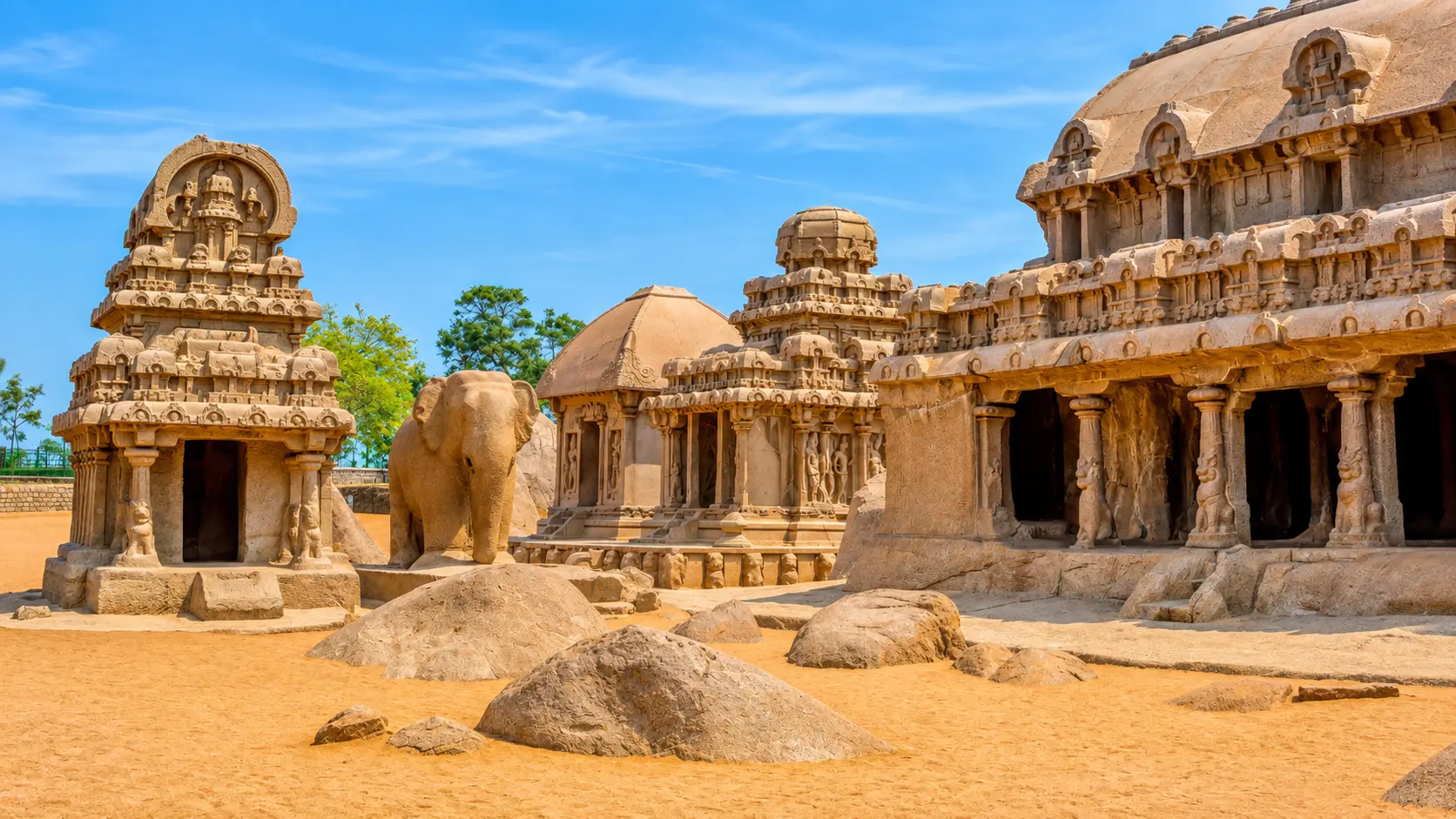
Located roughly 1.8 km south of Shore Temple, this world-renowned UNESCO monument group consists of five monolithic shrines carved out of a single enormous granite outcrop during the reign of King Narasimhavarman I (Mamalla) in the 7th century. Named after the five Pandava brothers and Draupadi from the Mahabharata epic, each ratha exemplifies a distinct Dravidian architectural style, flanked by monumental monolithic carvings of an elephant, a lion, and a bull. Remember that your Shore Temple entry ticket covers admission here on the same day.
Arjuna’s Penance (Descent of the Ganges)
Situated 1 km west in the heart of Mahabalipuram, this colossal open-air bas-relief measures an astonishing 27 metres long by 9 metres high, carved across two massive granite boulders. The relief depicts either Arjuna performing rigorous ascetic penance to attain Lord Shiva’s divine weapon (Pashupatastra) or the celestial descent of the river Ganges from the heavens to the earth. The carving is populated by over a hundred naturalistic figures, including celestial devas, gandharvas, wild animals (such as a life-sized elephant family), and the famous humorous relief of a meditating cat tricking unsuspecting mice. Confirm the current charge and what it includes with the operator or service provider. Visitor admission, vehicles, parking, activities and accommodation can have separate charges.
Krishna’s Butter Ball
Located immediately adjacent to Arjuna's Penance on the grassy hillside, Krishna’s Butter Ball is a gigantic, 250-tonne natural granite boulder precariously perched on a 45-degree smooth rock slope. Defying visual laws of gravity, the massive stone has rested on its razor-thin natural friction point for over a thousand years, famously resisting attempts by Pallava kings and British governors to dislodge it with teams of elephants. It is a wildly popular spot for playful photography.
Mahabalipuram Beach and Seafront Promenade
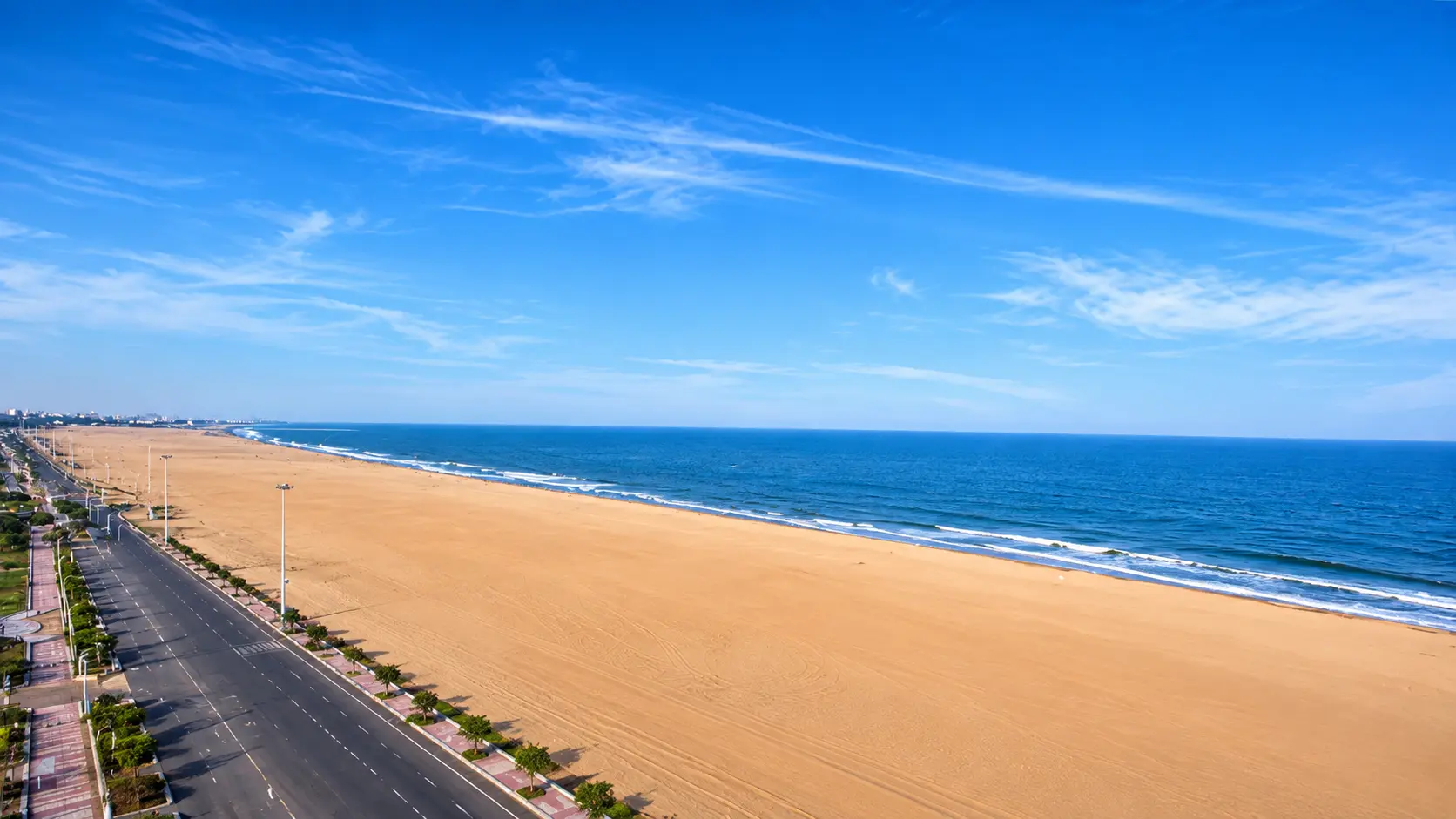
Directly bordering the northern boundary of Shore Temple lies Mahabalipuram Beach. While strong offshore rip currents make swimming dangerous and ill-advised, the beach is lined with local seafood eateries serving freshly caught grilled fish and prawns, surf schools offering beginner lessons, and open-air handicraft stalls where local hereditary sculptors carve intricate stone statues using traditional hammer-and-chisel techniques.
Tiger Cave (Saluvankuppam)
Located 5 km north of Mahabalipuram along the East Coast Road, Tiger Cave is an 8th-century Pallava rock-cut open-air theatre and mandapa. The cave mouth is framed by an elaborate ring of eleven sculpted tiger heads (technically yalis or mythical leonine beasts). Set within a serene, shaded grove of casuarina and coconut palms just off the highway, it makes an excellent, peaceful stop on your return journey toward Chennai.
In pictures
The practical bits
Before you go.
Ticket Purchase Strategy
Save valuable time by avoiding physical queues at the ticket booth, which can become congested on weekends and…Explore detailsClose details
Save valuable time by avoiding physical queues at the ticket booth, which can become congested on weekends and public holidays. Visitors can scan the ASI QR code boards displayed outside the entrance gate to purchase instant e-tickets via UPI apps (Google Pay, PhonePe, Paytm) on their smartphones, or book in advance through the official ASI ticketing website. Ensure you keep an offline screenshot of your digital ticket on your phone, as cellular data networks can occasionally experience congestion near the beach.
Footwear and Walking Considerations
Exploring the Shore Temple complex requires walking across open paved stone flagstones, packed earth, and sandy…Explore detailsClose details
Exploring the Shore Temple complex requires walking across open paved stone flagstones, packed earth, and sandy paths. During late morning and early afternoon hours, the dark stone paving can become scorching hot under the tropical sun. Wear comfortable, supportive walking shoes or sandals that are easy to walk in. Unlike active religious temples, Shore Temple is a protected archaeological monument rather than an active worship site; therefore, you are permitted to keep your shoes on throughout the entire monument complex.
Hydration and Sun Protection
The temple grounds are almost entirely open to the sky, with virtually no shaded pavilions within the inner…Explore detailsClose details
The temple grounds are almost entirely open to the sky, with virtually no shaded pavilions within the inner enclosure. It is essential to carry a refillable water bottle, a wide-brimmed hat or umbrella, and high-SPF sunscreen, particularly if visiting between 10:00 and 15:30. Filtered RO drinking water dispensing kiosks and clean public washrooms are available near the ticket validation entrance.
Hiring Certified Local Guides
While informational signboards installed by the ASI offer basic historical context, hiring a licensed ASI tour…Explore detailsClose details
While informational signboards installed by the ASI offer basic historical context, hiring a licensed ASI tour guide at the monument entrance can significantly elevate your visit. Knowledgeable guides can decipher the intricate iconographic details of the Somaskanda panels, explain the engineering secrets of Pallava mortarless joints, and walk you through the archaeological discoveries made following the 2004 tsunami. Confirm the current charge and what it includes with the operator or service provider. Visitor admission, vehicles, parking, activities and accommodation can have separate charges.
A few things you might wonder
Common questions about visiting Shore Temple. Fees, visiting hours and ceremonies are researched details that may change; confirm current arrangements with the operator before travelling.
Is Shore Temple an active place of religious worship?
Does my Shore Temple entry ticket include other monuments in Mahabalipuram?
Can I swim in the sea right next to Shore Temple?
How did Shore Temple survive the devastating 2004 Indian Ocean Tsunami?
Is Shore Temple accessible for visitors with limited mobility?
What is the best time of day for photography at Shore Temple?
Are certified tour guides available on-site, and how much do they charge?
How much time should I set aside for visiting Shore Temple and Mahabalipuram?
Explore more in Chennai Mahabalipuram
Discover other destinations around this hub
More Hubs in Tamil Nadu
Continue exploring other travel hubs in this state
Planning a trip to Chennai Mahabalipuram?