DakshinaChitra
Comprehensive visitor guide to DakshinaChitra Heritage Museum on ECR, Tamil Nadu. Explore 18 authentic reconstructed South Indian houses, crafts & timings.
Location
Chennai & Mahabalipuram, Tamil Nadu
A closer look
Your visit, at a glance.
Chennai Mahabalipuram, Tamil Nadu
GET TO KNOW THE PLACE
Nestled amidst coastal casuarina groves along the scenic East Coast Road (ECR) at Muttukadu in Chengalpattu District, Tamil Nadu, DakshinaChitra - translating from Sanskrit as "A…
The story of DakshinaChitra
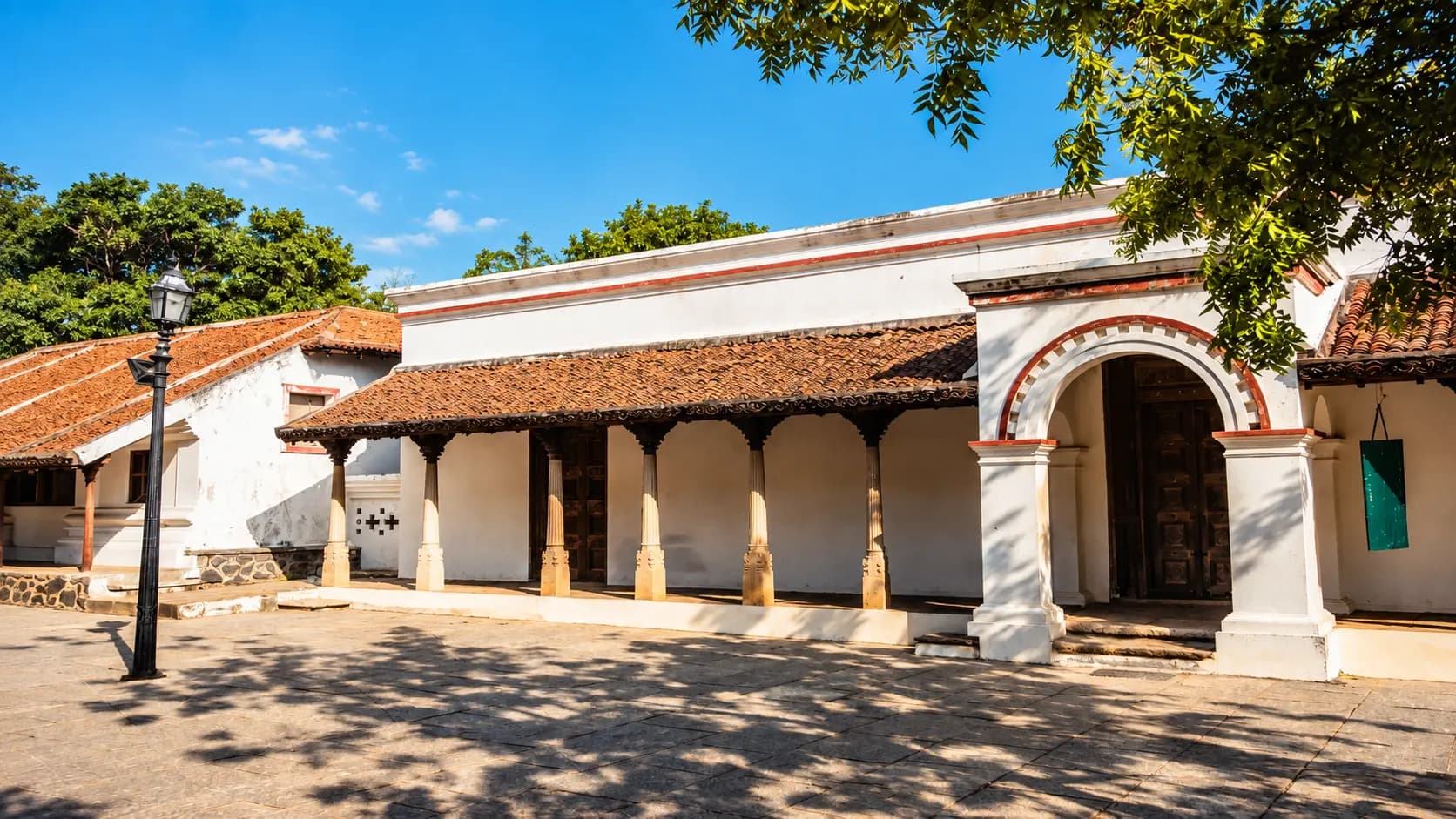
Nestled amidst coastal casuarina groves along the scenic East Coast Road (ECR) at Muttukadu in Chengalpattu District, Tamil Nadu, DakshinaChitra - translating from Sanskrit as "A Picture of the South" - is one of India's most extraordinary cultural institutions. Overlooking the blue waters of the Bay of Bengal and the serene Muttukadu backwaters, roughly 25 kilometres south of Chennai and 30 kilometres north of the rock-cut monolithic wonders of Mahabalipuram, this 10-acre open-air living-history museum serves as an authentic, immersive gateway to the vernacular architecture, artisanal crafts, and living traditions of South India.
Established in December 1996 by the Madras Craft Foundation (MCF) under the visionary direction of cultural anthropologist Deborah Thiagarajan, and master-planned by the legendary pioneer of sustainable low-cost architecture Laurie Baker, DakshinaChitra is fundamentally different from a conventional museum. There are no static glass display cases here; instead, the museum is composed of 18 authentic, historic vernacular domestic dwellings from the four southern states: Tamil Nadu, Kerala, Karnataka, and Andhra Pradesh (including Telangana).
Rather than constructing modern imitations, the Madras Craft Foundation established an unprecedented preservation protocol: historic village homes slated for imminent demolition by their original owners were meticulously documented, purchased, dismantled piece by piece, numbered, and transported to the Muttukadu campus. There, traditional village carpenters (sthapatis), stone carvers, and theresa-thatchers rebuilt them using original Burma teak beams, Athangudi handmade floor tiles, granite plinths, and terracotta roof tiles, creating an authentic living sanctuary of rural Indian domestic heritage.
Start here. Open a tile for the full details.
Why goRead details
For travelers exploring the Chennai - Mahabalipuram cultural corridor, DakshinaChitra offers a deeply enriching, interactive cultural experience:
When to visitRead details
DakshinaChitra’s coastal location along the Bay of Bengal makes seasonal and daily timing essential for a pleasant visit.
Entry & permissionsRead details
Fees, visiting hours and entry rules may change. Confirm the latest details with the official operator or local authority before travelling.
DakshinaChitra operates with organized, affordable ticketing managed by the non-profit Madras Craft Foundation:
- Operating Hours:
- Open Wednesday through Monday from 10:00 AM to 18:00 PM.
- Closed Every Tuesday (and on the festival of Deepavali).
- Admission Charges:
- Indian Citizens (Weekdays): ₹175 per adult; ₹50 for children (5 to 12 years).
- Indian Citizens (Weekends & Festival Holidays): ₹200 per adult; ₹60 for children.
- Students: ₹100 per student (must present a valid school or college student identification card).
- Foreign Nationals: ₹350 per adult; ₹200 for foreign students and children.
- Photography Charges: Still cameras / smartphones ₹50; video cameras ₹100.
- Rules and Regulations:
- No Commercial Video Without Prior Permission: Handheld photography for personal use is welcome. Pre-wedding photoshoots, commercial modeling, and video productions require prior written approval and payment of specialized campus booking fees.
- Respect Historic Fabrics: Visitors are requested not to touch fragile antique woodwork, climb on historic looms, or enter roped-off exhibits inside the reassembled homes.
- No Drones: Operating camera drones over the campus is strictly prohibited for visitor safety and structural preservation.
Plan your visitRead details
DakshinaChitra is located directly on the East Coast Road (State Highway 49) at Muttukadu, midway between Chennai and Mahabalipuram.
Explore the full guide - choose a topic below.
Why visit?
For travelers exploring the Chennai - Mahabalipuram cultural corridor, DakshinaChitra offers a deeply enriching…Explore detailsClose details
For travelers exploring the Chennai - Mahabalipuram cultural corridor, DakshinaChitra offers a deeply enriching, interactive cultural experience:
- 18 Authentic Reassembled Heritage Dwellings: Walk through authentic village homes representing diverse socioeconomic communities across South India: a palatial 19th-century Chettiar merchant mansion, an 1850s Brahmin temple-street Agraharam house from Tirunelveli, an ancient Syrian Christian timber dwelling from Kerala (built 1790), a Hindu Nair matrilineal taravad, an Ilkal silk weaver’s house from Karnataka, and a cyclone-resistant coastal Andhra round thatch house (chuttillu).
- Mastery of Sustainable Vernacular Architecture: The entire 10-acre campus is a living classroom of traditional tropical architecture. Designed with Laurie Baker’s signature exposed-brick "rat-trap" walls, natural clay terracotta roofs, courtyard skylights (nadumuttam), and cross-ventilating jali screens, the houses demonstrate how pre-modern Indian builders achieved natural air-conditioning without electricity.
- Hands-On Live Artisan Craft Workshops: Unlike passive museums, DakshinaChitra is staffed by resident master craftspeople who demonstrate ancient craft techniques. Visitors of all ages can sit with a traditional potter to spin clay on a manual wooden wheel, watch silk weavers operate Kanchipuram pit-looms, observe master glass-blowers, try block-printing on cotton, and learn the art of palm-leaf toy weaving.
- Vibrant Folk Performing Arts: On weekends and festive holidays, the open-air village plazas come alive with traditional Tamil and South Indian performing arts. Experience the thrilling acrobatic balance of Karagattam (dancing with towering decorated brass pots on the head), Oyilattam (cloth-wave folk dance), Poikkal Kuthirai Attam (dummy horse dance), and ancient Silambattam bamboo-stick martial arts.
- Authentic Culinary Heritage at Kadambari Restaurant: Complete your cultural immersion with a traditional, hot vegetarian South Indian meal served on a fresh, fragrant plantain banana leaf at the on-site Kadambari restaurant, featuring fragrant sambar, rasam, kootu, curd, crisp appalams, and frothy Kumbakonam degree filter coffee.
What to expect
Visiting DakshinaChitra is a relaxing, unhurried outdoor walking journey through four distinct regional village…Explore detailsClose details
Visiting DakshinaChitra is a relaxing, unhurried outdoor walking journey through four distinct regional village enclaves connected by shaded red-brick pathways.
The Tamil Nadu Village Enclave
Your exploration begins in the Tamil Nadu sector, which recreates the streetscapes of traditional agricultural and merchant settlements:
- The Chettinad Merchant Mansion: Brought from Kadiapatti village in Pudukkottai, this grand mansion represents the opulent lifestyle of the Nattukottai Chettiars, the banking merchant elite of 19th-century maritime Asia. Stepping through the massive carved wooden main portal (thalavaram), visitors enter an expansive central courtyard flanked by massive pillars sculpted from imported Burma teak. The floors are paved in geometric Athangudi handmade cement tiles that retain their glossy sheen after more than a century.
- The Tirunelveli Brahmin Agraharam House: Reconstructing the traditional row-house architecture of Tamil temple towns, this 1850s dwelling features shared party walls, a street-facing veranda (thinnai) where travelers were welcomed, and an open inner courtyard with rainwater harvesting drains.
- Artisan Cottages: Watch a silk weaver weave intricate golden zari motifs on a working Kanchipuram handloom, and visit the potter's shed to shape clay cups and lamps on a spinning wooden wheel.
The Kerala Enclave
Passing through a lush grove of coconut palms and banana trees, you enter the rain-drenched domestic realm of Kerala:
- The Syrian Christian House (1790 CE): Relocated from Puduppally in Kottayam, this timber home features high-pitched wooden gables designed to shed torrential monsoon rains, an ornate entrance lintel carved with Christian crosses and floral motifs, and a massive subterranean timber granary (ara) used to store harvested paddy.
- The Hindu Nair Taravad: Constructed strictly according to Thachu Shastra (the ancient Vedic canon of Kerala wood architecture). Its open-to-sky central courtyard (nadumuttam) captures gentle breezes and rainwater, while the upper-floor timber louvers allow cool mountain breezes to ventilate the living quarters without letting in harsh sunlight.
- The Calicut Muslim House: Featuring intricate wood carvings and screened verandas reflecting the seafaring spice trade culture of the Malabar coast.
The Karnataka & Andhra Pradesh Enclaves
- Karnataka Enclave: Explore an agricultural planter's home from Chikmagalur in the Western Ghats, alongside an authentic weaver’s dwelling from Ilkal (Bagalkot district), where artisans demonstrate the weaving of traditional cotton saris with distinctive red silk pallus.
- Andhra Pradesh Enclave: The highlight here is the remarkable Chuttillu (Coastal Round House), relocated from the cyclone-battered coast of Srikakulam. Constructed with circular mud walls and a thick, conical overhanging palmyra palm thatch roof reaching nearly to the ground, this ingenious design allows gale-force cyclonic winds to glide harmlessly over the structure without lifting the roof.
Best time to visit
DakshinaChitra’s coastal location along the Bay of Bengal makes seasonal and daily timing essential for a…Explore detailsClose details
DakshinaChitra’s coastal location along the Bay of Bengal makes seasonal and daily timing essential for a pleasant visit.
Seasonal Breakdown
- Winter (November to February) - Prime Touring Weather: Winter is the most comfortable and rewarding season to visit DakshinaChitra. Daytime temperatures average a pleasant 22°C to 29°C with refreshing coastal sea breezes blowing off the Bay of Bengal. The outdoor campus is shaded, walking between the village houses is effortless, and weekends are filled with colorful folk dance recitals.
- Monsoon (October to November) - The Northeast Deluge: Coastal Tamil Nadu experiences its primary rainy season during the northeast monsoon. Heavy rainfall and coastal showers can make walking between the open-air houses muddy and wet, though the lush green gardens and dripping Kerala gables look enchanting. Carry a sturdy umbrella if visiting during these months.
- Summer (March to June) - Hot and Humid: Summer in the Chennai coastal belt is hot and humid, with midday temperatures reaching 35°C to 38°C accompanied by high humidity. Check the current visiting hours and permitted access with the site operator before departure; ceremonies, closures and visitor sessions can affect access.
Festivals and Special Celebrations
- Pongal Festival (January): The harvest festival of Tamil Nadu is celebrated with immense joy at DakshinaChitra. The village courtyards feature traditional earthen pot Pongal cooking over wood fires, colorful rangoli (kolam) competitions, bullock cart rides, and live folk performances of Karagattam and Oyilattam.
- Margazhi Dance & Music Season (December / January): DakshinaChitra hosts special classical Bharatanatyam recitals, Carnatic music concerts, and regional artisan exhibitions throughout the winter heritage month.
How to reach
DakshinaChitra is located directly on the East Coast Road (State Highway 49) at Muttukadu, midway between Chennai…Explore detailsClose details
DakshinaChitra is located directly on the East Coast Road (State Highway 49) at Muttukadu, midway between Chennai and Mahabalipuram.
By Road & Public Transit
- By Metropolitan Bus (MTC): Numerous public city buses running along the ECR from Chennai toward Kovalam, Thiruporur, or Mahabalipuram stop directly outside the DakshinaChitra entrance gate. Popular routes include Bus No. 109 (from Broadway / Central Station), Bus No. 19B (from Saidapet), and Bus No. 588 (from Thiruvanmiyur / Adyar). The bus stop is known as Muttukadu DakshinaChitra.
- By App-Based Cab (Uber / Ola): Cabs can be chartered from anywhere in Chennai. Confirm the current charge and what it includes with the operator or service provider. Visitor admission, vehicles, parking, activities and accommodation can have separate charges.
- Driving from Chennai (approx. 25 km / 45 minutes): Head south along the scenic East Coast Road past Thiruvanmiyur, Neelankarai, and Uthandi. DakshinaChitra is situated on the right-hand side of the road, immediately opposite the Muttukadu backwaters boat house.
- From Mahabalipuram (approx. 30 km / 40 minutes): Drive north along the ECR past Paiyanur and Kovalam directly to Muttukadu.
By Train & Air
- Tambaram Railway Station (TBM): Located approximately 25 kilometres west, offering connections across southern Tamil Nadu.
- Chennai Central Railway Station (MAS): Situated approximately 28 kilometres north.
- Chennai International Airport (MAA): Located roughly 26 kilometres northwest. Taxis take about 50 to 60 minutes via the Pallavaram - Thoraipakkam 200 Feet Radial Road and ECR.
Entry, timings and permissions
Fees, visiting hours and entry rules may change.Explore detailsClose details
Fees, visiting hours and entry rules may change. Confirm the latest details with the official operator or local authority before travelling.
DakshinaChitra operates with organized, affordable ticketing managed by the non-profit Madras Craft Foundation:
- Operating Hours:
- Open Wednesday through Monday from 10:00 AM to 18:00 PM.
- Closed Every Tuesday (and on the festival of Deepavali).
- Admission Charges:
- Indian Citizens (Weekdays): ₹175 per adult; ₹50 for children (5 to 12 years).
- Indian Citizens (Weekends & Festival Holidays): ₹200 per adult; ₹60 for children.
- Students: ₹100 per student (must present a valid school or college student identification card).
- Foreign Nationals: ₹350 per adult; ₹200 for foreign students and children.
- Photography Charges: Still cameras / smartphones ₹50; video cameras ₹100.
- Rules and Regulations:
- No Commercial Video Without Prior Permission: Handheld photography for personal use is welcome. Pre-wedding photoshoots, commercial modeling, and video productions require prior written approval and payment of specialized campus booking fees.
- Respect Historic Fabrics: Visitors are requested not to touch fragile antique woodwork, climb on historic looms, or enter roped-off exhibits inside the reassembled homes.
- No Drones: Operating camera drones over the campus is strictly prohibited for visitor safety and structural preservation.
Nearby places to consider
DakshinaChitra is situated at the gateway to the celebrated coastal heritage and wildlife belt of Northern Tamil…Explore detailsClose details
DakshinaChitra is situated at the gateway to the celebrated coastal heritage and wildlife belt of Northern Tamil Nadu:
- Muttukadu Boat House (directly opposite on ECR): A popular backwater lake managed by TTDC offering speed boating, water-skiing, pedal boats, and rowing across the Muttukadu estuary.
- Madras Crocodile Bank Trust & Centre for Herpetology (approx. 10 km south on ECR): World-famous reptile conservation centre founded by Romulus Whitaker, home to thousands of crocodiles, alligators, gharials, and venomous snakes.
- Covelong (Kovalam) Beach & Surfing Village (approx. 5 km south): A historic fishing village and crescent beach famous for Dutch fort ruins, a historic Catholic church, and premier surfing schools.
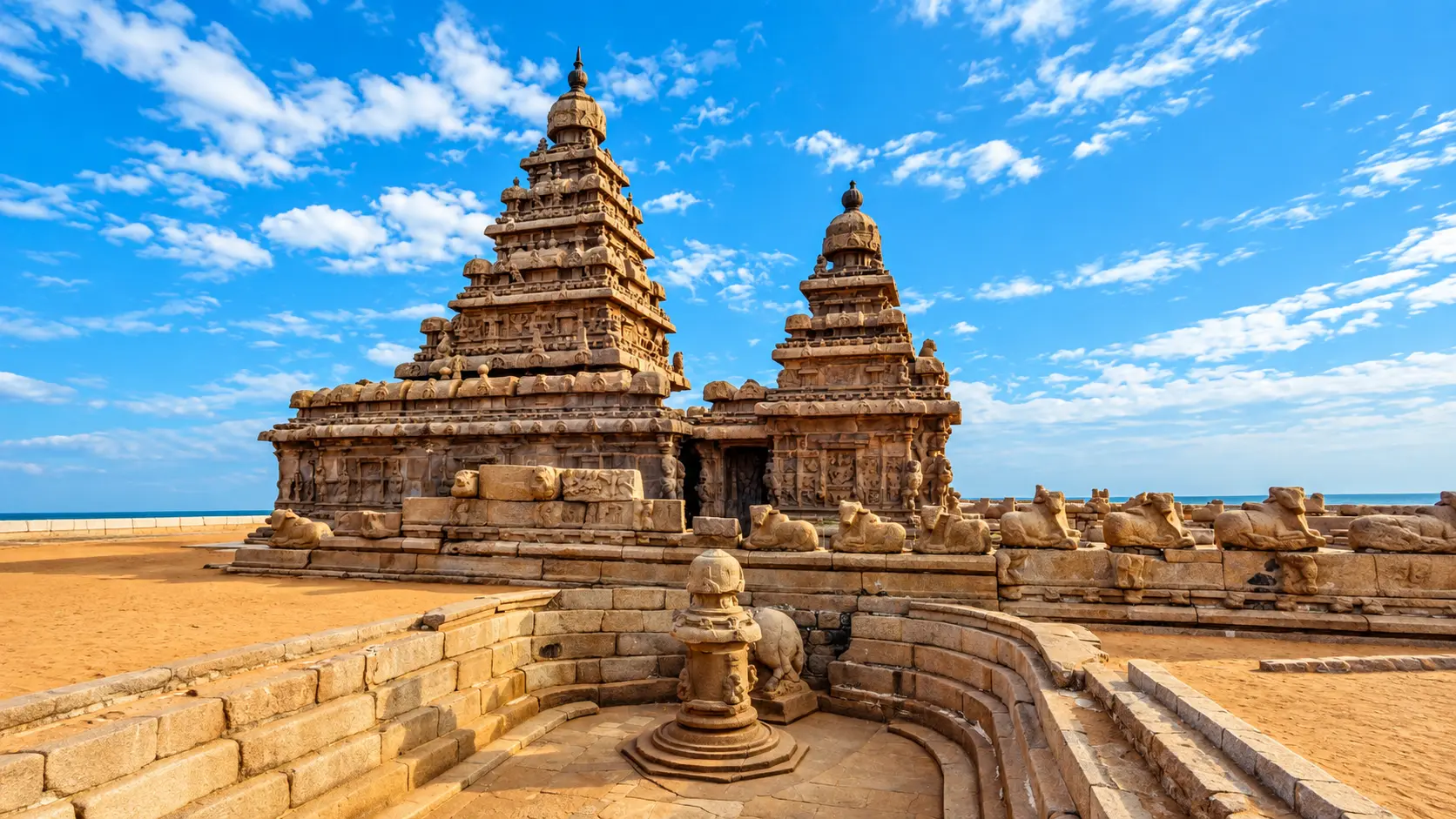
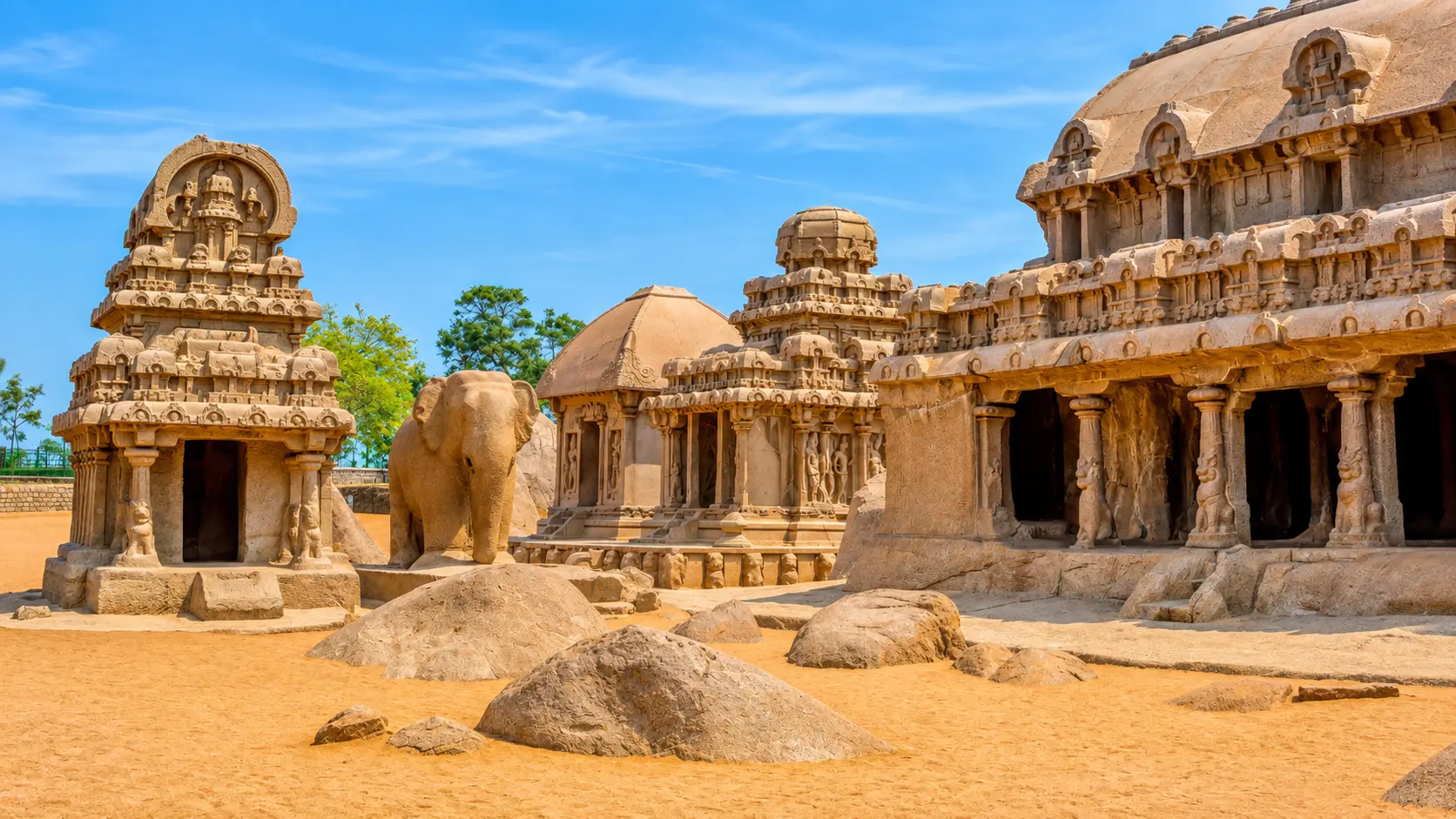
- Mahabalipuram / Mamallapuram (approx. 30 km south on ECR): The UNESCO World Heritage 7th-century Pallava port city, celebrated for the oceanfront Shore Temple, the monolithic Five Rathas, and Arjuna’s Penance rock relief.
- Cholamandal Artists’ Village (approx. 12 km north toward Chennai): India’s largest self-supporting artists' commune, founded in 1966 by K.C.S. Paniker, featuring modern art galleries, sculpture gardens, and artist studios.
In pictures
The practical bits
Before you go.
Plan ahead
To make the most of your journey to DakshinaChitra, keep the following structured planning guidelines in mind:Explore detailsClose details
To make the most of your journey to DakshinaChitra, keep the following structured planning guidelines in mind:
Remember the Mandatory Tuesday Closure
A very common travel mistake is planning a road trip along the East Coast Road on a Tuesday, only to find the…Explore detailsClose details
A very common travel mistake is planning a road trip along the East Coast Road on a Tuesday, only to find the gates of DakshinaChitra locked. Schedule your itinerary for any day between Wednesday and Monday. Visiting on a weekend (Saturday or Sunday) offers the bonus of live folk dance and music performances in the village courtyards.
Allow at Least 3 to 4 Hours to Explore
DakshinaChitra is not a quick roadside photo-stop.Explore detailsClose details
DakshinaChitra is not a quick roadside photo-stop. Thoroughly walking through the 18 houses, reading the detailed interpretive signage, engaging with craftspeople at their looms and wheels, watching a folk dance, and having lunch at the Kadambari restaurant takes between 3 and 4 unhurried hours.
Pair with the ECR Coastal Heritage Circuit
DakshinaChitra makes a perfect morning or midday stop on an all-day excursion along the East Coast Road.Explore detailsClose details
DakshinaChitra makes a perfect morning or midday stop on an all-day excursion along the East Coast Road. Combine your visit with the Muttukadu Boat House (located directly across the road for boating on the backwaters), the Madras Crocodile Bank Trust (10 km south), and continue southward to spend the afternoon exploring the UNESCO World Heritage monuments of Mahabalipuram (Shore Temple and Five Rathas).
Wear Comfortable Slip-On Footwear
Because the 18 heritage houses are authentic domestic and sacred dwellings, you will be required to remove your…Explore detailsClose details
Because the 18 heritage houses are authentic domestic and sacred dwellings, you will be required to remove your footwear before stepping onto the polished timber verandas and Athangudi tiled rooms of several houses. Wearing comfortable slip-on shoes or walking sandals will save you time and hassle throughout your visit.
A few things you might wonder
Common questions about visiting DakshinaChitra. Fees, visiting hours and ceremonies are researched details that may change; confirm current arrangements with the operator before travelling.
Where is DakshinaChitra located and what does the name mean?
Who founded DakshinaChitra and who designed the campus?
Are the houses inside DakshinaChitra real or replicas?
Which four states are represented at DakshinaChitra?
What are the opening hours and weekly closing days of DakshinaChitra?
How much does an entry ticket to DakshinaChitra cost?
What activities can visitors do at DakshinaChitra?
How do visitors travel to DakshinaChitra from Chennai?
Explore more in Chennai Mahabalipuram
Discover other destinations around this hub
More Hubs in Tamil Nadu
Continue exploring other travel hubs in this state
Planning a trip to Chennai Mahabalipuram?