Jakhoo Temple
Visit Jakhoo Temple in Shimla. Comprehensive guide covering the 108-foot Hanuman statue, Ramayana history, Jakhoo ropeway, monkeys, timings, and trekking.
Location
Shimla, Himachal Pradesh
A closer look
Your visit, at a glance.
Shimla, Himachal Pradesh
GET TO KNOW THE PLACE
Crowning the soaring crest of the highest geographical summit in Shimla at an elevation of 2,455 meters (8,054 feet) above mean sea level, Jakhoo Temple (historically venerated…
The story of Jakhoo Temple
Crowning the soaring crest of the highest geographical summit in Shimla at an elevation of 2,455 meters (8,054 feet) above mean sea level, Jakhoo Temple (historically venerated as Jakhu Mandir) is the ancient spiritual heart and skyline landmark of Himachal Pradesh’s capital city. Rising roughly 250 vertical meters above the colonial promenade of Mall Road and The Ridge, the forested apex of Jakhoo Hill has served as a revered pilgrimage sanctuary for millennia. It is dedicated to Lord Hanuman, the supreme exemplar of devotion, selfless service, and invincible spiritual strength in the Hindu epic tradition.
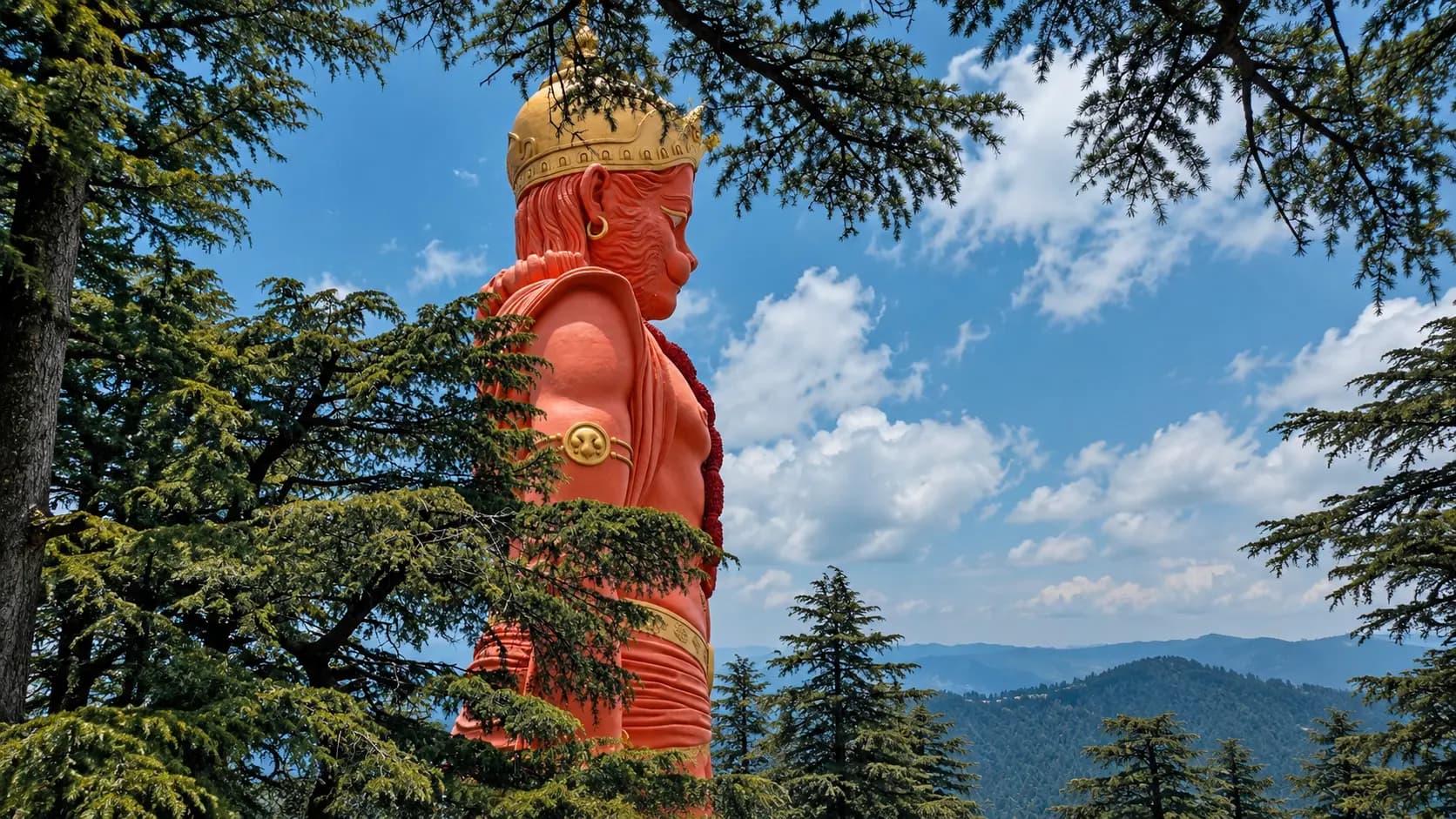
Enveloped by dense, mist-laden ancient groves of Himalayan deodar cedar (Cedrus deodara), weeping oak, and spring-blooming wild rhododendrons, Jakhoo Temple is renowned worldwide for its captivating juxtaposition of ancient Vedic mythology and modern monumental art. Towering high above the cedar forest canopy stands the temple's iconic landmark: an immense, colossal 108-foot (33-meter) statue of Lord Hanuman painted in brilliant vermilion orange. Consecrated in 2010, this majestic sculpture stands at an absolute elevation higher than Rio de Janeiro’s famous Christ the Redeemer, making it visible from virtually every vantage point across Shimla, the surrounding valleys, and approaching Himalayan mountain highways.
Whether reached via the thrilling, scenic five-minute ride aboard the modern Jakhoo Ropeway aerial cable car, a scenic drive through the deodar woods of Sanjauli, or an invigorating 45-minute uphill walking pilgrimage from The Ridge past historic colonial estates, Jakhoo Temple offers travelers a soul-stirring blend of deep epic lore, sacred relic worship, vibrant monkey colonies, and breathtaking 360-degree panoramas of the snow-clad Great Himalayan Range.
Start here. Open a tile for the full details.
Why goRead details
For cultural travelers, spiritual pilgrims, architecture enthusiasts, and mountain photographers, a journey to Jakhoo Temple is an indispensable part of exploring the Shimla hills. It combines profound epic heritage, monumental sculpture, and unrivaled Himalayan vistas.
When to visitRead details
Jakhoo Temple is an all-season mountain destination, with each time of year offering unique atmospheric beauty and spiritual celebrations.
Entry & permissionsRead details
Fees, visiting hours and entry rules may change. Confirm the latest details with the official operator or local authority before travelling.
Understanding temple operating schedules, free admission policies, and sanctuary etiquette ensures an effortless visit.
Admission Charges and Public Access
- Temple Entry: Completely Free. There is no entry ticket, toll, or religious admission fee required to visit Jakhoo Temple, explore the summit plateau, worship before the sacred footprints (charan paduka), or view the 108-foot Hanuman statue.
- Voluntary Offerings: Devotees wishing to offer traditional puja items (marigold garlands, coconuts, red vermilion, or sweets) can purchase them from authorized stalls outside the gate for ₹30 to ₹100. Sealed charity boxes (hundi) are maintained by the temple management committee for voluntary cash donations.
- Jakhoo Ropeway Tariff: The aerial cable car is an independent commercial concessionaire charging approximately ₹850 round-trip and ₹550 one-way per adult passenger.
Operating Hours
Facility / Section | Operating Days | Operating Hours | Operational Notes |
|---|---|---|---|
Jakhoo Temple Sanctum | All 7 Days (Mon to Sun) | 05:00 to 21:00 (Summer) / 06:00 to 20:00 (Winter) | Morning aarti at ~06:00; evening aarti at ~19:00 |
108-Foot Statue Courtyard | All 7 Days | 05:00 to 21:00 | Open for walking, photography, and viewing |
Jakhoo Aerial Ropeway | All 7 Days | 09:30 to 18:00 | Operates continuously; stops during severe gales or thunderstorms |
Summit Refreshment Stalls | All 7 Days | 07:30 to 19:30 | Tea, coffee, snacks, and prasad counters |
Permissions, Photography, and Filming Regulations
- Handheld Photography: Casual smartphone photography, handheld DSLR photography, and personal travel videography are completely permitted throughout the outer courtyard, around the 108-foot statue, and across viewing terraces without any fee.
- Temple Sanctum Etiquette: Photography inside the immediate inner sanctum during active puja rituals is traditionally restricted out of respect for worshippers.
- Drone Operations: Operating unmanned aerial vehicles (drones) over Jakhoo Hill is strictly prohibited. The hill is a sensitive high-altitude zone directly overlooking the Governor’s Raj Bhavan, the Chief Minister’s official residence, and the Indian Army Western Command communications towers. Unauthorized drone flights will result in immediate equipment confiscation and police prosecution.
- Commercial Filmmaking: Commercial portfolio shoots, music video productions, and television filming require prior written clearance and statutory fees through the Shimla District Magistrate and the Department of Tourism.
Plan your visitRead details
Jakhoo Temple is centrally situated above Shimla town and can be accessed via three distinct transit modes: on foot, via aerial ropeway, or by road.
Primate Precautions & Eyewear Security
Remove all prescription eyeglasses, reading spectacles, and sunglasses before arriving at the summit or walking the trail, and pack them safely inside an opaque, zipped compartment in your backpack. Never carry food, plastic carry-bags, or water bottles openly in your hands. Confirm the current charge and what it includes with the operator or service provider. Visitor admission, vehicles, parking, activities and accommodation can have separate charges.
10:15 - 10:45: Morning Tea & High-Altitude Vistas
Visit a summit tea stall to enjoy a hot cup of cardamom masala chai or fresh mountain coffee while gazing through the coin-operated viewing telescopes across the distant snow-capped Pir Panjal peaks.
Explore the full guide - choose a topic below.
Why visit?
For cultural travelers, spiritual pilgrims, architecture enthusiasts, and mountain photographers, a journey to…Explore detailsClose details
For cultural travelers, spiritual pilgrims, architecture enthusiasts, and mountain photographers, a journey to Jakhoo Temple is an indispensable part of exploring the Shimla hills. It combines profound epic heritage, monumental sculpture, and unrivaled Himalayan vistas.
1. The Highest Geographic Apex of the Shimla Hills
Standing atop Jakhoo Hill places you at the undisputed physical zenith of Shimla:
- Panoramic Mountain Horizons: At 2,455 meters, the summit terrace provides an unobstructed, 360-degree panoramic vista across the Western Himalayas. Looking north and northeast on a clear morning, you can gaze upon the shimmering, snow-covered ramparts of the Great Himalayan Range, including the glistening summits of the Shrikhand Mahadev massif, the Kinnaur Kailash range, and the jagged peaks of the Pir Panjal.
- Bird's-Eye View of Shimla: Looking downward reveals the entire historical settlement of Shimla laid out like a colorful architectural mosaic across the mountain spurs: the neo-Gothic yellow facade of Christ Church, the timbered roof of the Town Hall, the copper spires of the Viceregal Lodge, and the dense terraced bazaars clinging to the ridges.
2. The Ancient Ramayana Legend of the Sanjeevani Booti
The spiritual foundation of Jakhoo Temple is intimately linked to the Yuddha Kanda of the ancient Sanskrit epic Ramayana:
- The Quest for the Miracle Herb: During the titanic war in Lanka, Lord Rama’s brother, Prince Lakshmana, was struck down by a deadly, venomous dart (shakti) unleashed by the demon warrior Indrajit. As Lakshmana lay unconscious near death, the royal physician Sushena declared that his life could only be saved before sunrise by the magical herb Sanjeevani Booti, which grew exclusively on the high glacial slopes of Mount Dronagiri in the Himalayas.
- The Landing on Jakhoo Hill: Bound on his aerial flight across northern India, Lord Hanuman noticed a serene hermitage nestled atop this majestic, cedar-clad mountain peak. Descending from the clouds, Hanuman sought guidance from a wise, saintly sage named Yaaku (or Yaku), who meditated here amidst the pines. The colossal weight, speed, and divine kinetic energy of Hanuman’s landing was so immense that local lore holds it permanently flattened the formerly sharp, conical crest of the hill into the broad mountain plateau seen today.
- The Divine Promise & The Relic: After receiving precise directions from Sage Yaaku, Hanuman promised to stop at the hermitage on his return journey. However, delayed by a fierce battle with the illusionist demon Kalanemi, Hanuman flew directly back to Lanka to save Lakshmana’s life before dawn. To honor his promise, Hanuman later appeared to Sage Yaaku in a radiant divine vision. In gratitude, Sage Yaaku constructed the original temple over the sacred rock where Hanuman had landed, preserving the holy footprints (charan paduka) of the monkey deity, which devotees still worship today inside the inner sanctum. Over centuries of linguistic evolution, the sage’s name Yaaku transformed colloquially into Jakhoo.
3. The Colossal 108-Foot Hanuman Statue
Dominating the summit courtyard is one of the most awe-inspiring modern religious monuments in India:
- Monumental Dimensions: Unveiled and consecrated in November 2010, the statue rises to an exact height of 108 feet (33 meters) - a sacred number in Vedic numerology representing cosmic wholeness.
- Artistic Splendor: Sculpted in striking, traditional vermilion-orange stucco and reinforced concrete, the statue depicts Lord Hanuman standing tall and noble, his right hand raised in divine benediction (abhaya mudra) and his left hand grasping his formidable golden mace (gada).
- Global Elevation Milestone: Erected at a summit altitude of 2,455 meters, the Jakhoo statue stands at an elevation higher than the world-famous Christ the Redeemer in Rio de Janeiro (710 m) and the Statue of Liberty in New York. The statue is illuminated at night by high-intensity golden floodlights, creating a glowing beacon visible for tens of kilometers across the darkened Himalayan mountains.
4. The Sacred Troops of Rhesus Macaques
Jakhoo Hill is famous - and delightfully notorious - for its permanent population of several hundred wild rhesus macaques (Macaca mulatta):
- The Living Monkey Vanguard: Local Hindu devotees revere these agile primates as the living earthly descendants and divine monkey army (vanara sena) of Lord Hanuman. Pilgrims regularly feed them offerings of roasted chickpeas (chana), bananas, and puffed rice.
- A Mischievous Cultural Spectacle: Watching generations of monkeys groom one another on temple railings, nurture tiny infants, and leap acrobatically through seventy-foot cedar branches provides endless entertainment. However, they are also master pickpockets and object snatchers, adding an exhilarating dash of mountain adventure to your visit!
What to expect
Visiting Jakhoo Temple is an energetic, multi-sensory mountain excursion.Explore detailsClose details
Visiting Jakhoo Temple is an energetic, multi-sensory mountain excursion. Knowing what to expect regarding temple layout, walking terrain, and monkey behavior will guarantee a safe and deeply enjoyable visit.
1. The Approach: Three Ways to Reach the Summit
Depending on your physical fitness and personal preferences, you can arrive at the temple in three distinct ways:
- The Walking Pilgrimage from The Ridge: A scenic, paved pedestrian path winding steeply uphill for 2.5 kilometers through ancient deodar woods (takes 45 - 60 minutes of vigorous climbing).
- The Jakhoo Ropeway: An exhilarating 5-minute flight aboard an enclosed glass aerial cable car departing from the base station near The Ridge.
- By Road / Taxi: A narrow, winding 7-kilometer asphalt drive climbing through Sanjauli and Navbahar, terminating at the small upper parking lot near the temple entrance.
2. The Temple Complex & Outer Courtyard
Emerging onto the summit plateau brings you into a vibrant, spacious stone-flagged courtyard:
- The Towering Statue: The colossal 108-foot Hanuman statue stands prominently on a raised red-and-gold plinth in the western courtyard. Stone benches, viewing telescopes, and manicured alpine shrubs encircle the base, providing fantastic photo vantage points.
- Children's Park & Amenities: Adjacent to the courtyard is a small municipal children’s amusement park equipped with swings, slides, and shaded gazebos, alongside small souvenir shops selling brass Hanuman chalisa amulets, wooden walking sticks, and religious prayer books.
3. The Inner Sanctum (The Ancient Shrine)
Stepping across the threshold into the historic red-and-yellow painted pagoda-style temple brings you into an atmosphere of deep spiritual devotion:
- Shoe Removal Protocol: Visitors must remove their shoes at the marble steps before entering the temple veranda.
- The Sacred Charan Paduka: Inside the brass-paneled inner sanctum, illuminated by the warm glow of burning camphor and brass oil lamps (diyas), lies the sacred natural rock bearing the imprinted footprints of Lord Hanuman (charan paduka). A beautifully adorned brass idol of Hanuman, smeared in vermilion paste (sindoor) and draped in shimmering red silks and marigold garlands, presides over the altar.
- Priestly Blessings: Resident Brahmin priests chant sacred Sanskrit verses, tie protective red sacred threads (moli) around the wrists of devotees, apply a vermilion tilak to the forehead, and distribute sweet sugar balls and coconut prasad.
4. Primate Encounters: The Cardinal Rules of Monkey Safety
The rhesus macaques of Jakhoo Hill are extraordinarily clever, fearless, and observant. To avoid having your belongings stolen, adhere strictly to these proven guidelines:
- Conceal Eyeglasses & Sunglasses: Monkeys at Jakhoo are specialized in snatching spectacles straight off people's faces. Take off your prescription eyeglasses, sunglasses, and reading glasses and secure them deep inside a zipped backpack before stepping onto the summit or trail.
- No Plastic Bags or Open Food: Never carry transparent plastic carry-bags, food boxes, juice cartons, or loose snacks in your hands. Monkeys instantly recognize plastic bags as sources of food and will jump onto your shoulders to rip them open.
- Secure Smartphones & Cameras: Hold your mobile phone with a firm, two-handed grip or wrist strap when taking photographs. Never extend your arm out toward a monkey to take a close-up selfie.
- Never Show Fear or Make Direct Eye Contact: Direct eye contact is interpreted by primates as a challenge or threat. If a monkey approaches, stay calm, walk at a steady pace, and do not scream, run, or attempt to hit the animal. Carrying a simple wooden stick (lathi), widely available for rent at the trailhead, is a universal visual deterrent that keeps monkeys at a respectful distance.
Best time to visit
Jakhoo Temple is an all-season mountain destination, with each time of year offering unique atmospheric beauty…Explore detailsClose details
Jakhoo Temple is an all-season mountain destination, with each time of year offering unique atmospheric beauty and spiritual celebrations.
Season / Period | Daytime Temp | Nighttime Temp | Atmospheric Highlights & Seasonal Realities |
|---|---|---|---|
Spring (March to April) | 14°C to 20°C | 6°C to 10°C | Wild rhododendrons bloom in brilliant pink along the trails; crisp mountain breezes; crystal-clear skies; excellent walking conditions. |
Summer (May to June) | 18°C to 26°C | 11°C to 16°C | Check the current visiting hours and permitted access with the site operator before departure; ceremonies, closures and visitor sessions can affect access. |
Monsoon (July to August) | 16°C to 22°C | 12°C to 15°C | Misty cloudscapes wrap the 108-foot statue in surreal swirling fog; lush green mosses; walking trail stone steps can become slick. |
Autumn (September to November) | 12°C to 20°C | 4°C to 8°C | Prime Clarity & Dussehra: Flawless azure skies with razor-sharp views of 6,000 m snow peaks; grand Dussehra celebrations on the summit. |
Winter (December to February) | 4°C to 12°C | -3°C to 3°C | Winter Snowscape: Jakhoo Hill receives Shimla’s heaviest snowfall; cedar branches laden with powder snow; warm winter sunshine. |
The Clear Autumn Window & Dussehra Festival (September to November)
Autumn is widely considered the finest season to visit Jakhoo Temple. The monsoon rains have departed, cleansing the atmosphere of haze and providing breathtaking, crystalline visibility across the Great Himalayan Range. October is also the time of the grand Dussehra Festival, celebrated with tremendous religious fervor at Jakhoo. Mammoth effigies of the demon king Ravana, Kumbhakarna, and Meghanada are erected on the hill and ritually burned amidst fireworks and temple drum beats, commemorating the triumph of Lord Rama and Hanuman over evil.
The Snowy Winter Magic (December to February)
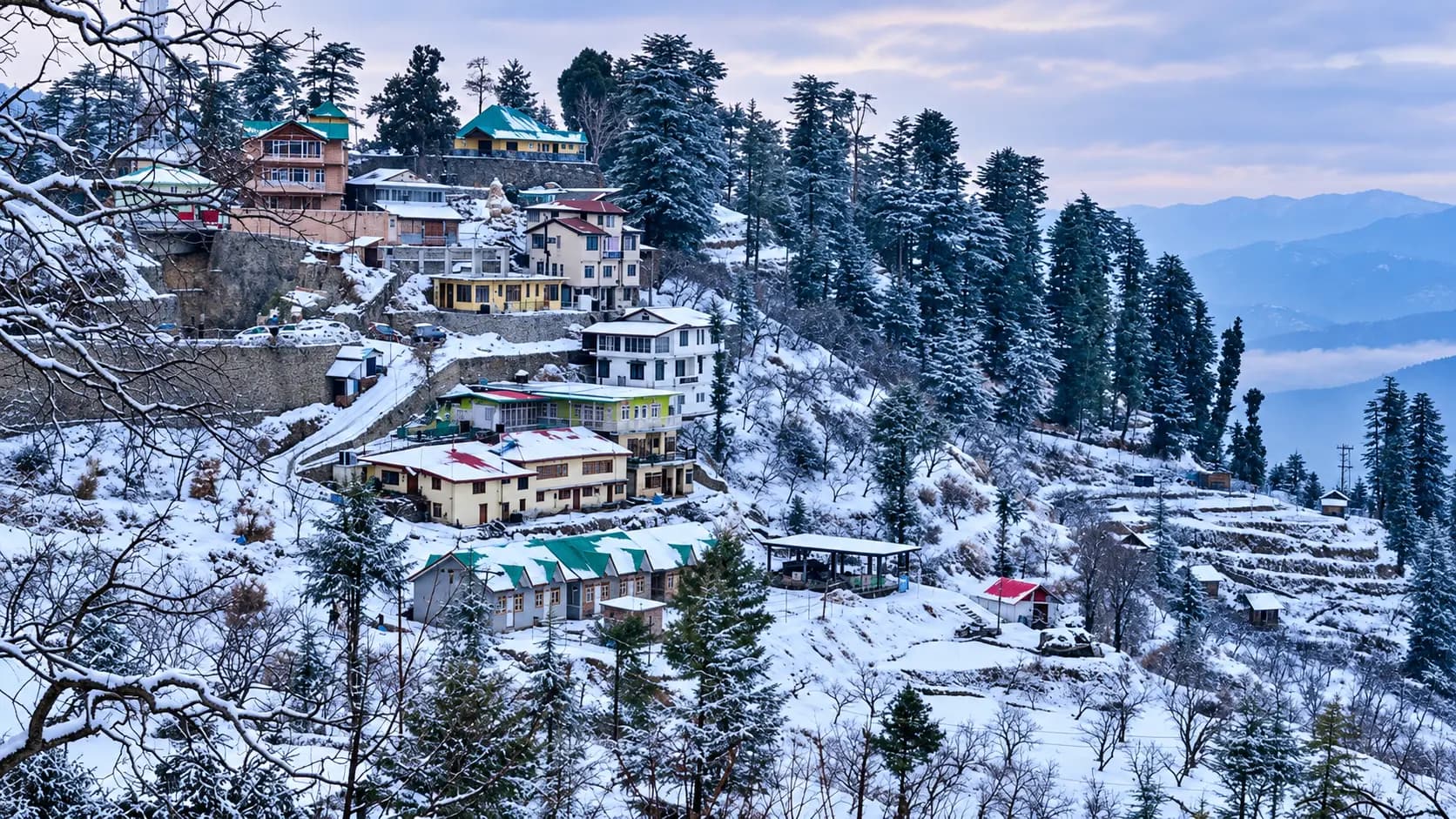
Because Jakhoo Hill is the highest elevation in Shimla (2,455 m), it is always the first place to receive snow and the last place where snow melts. A winter ascent after a fresh blizzard transforms the deodar forest and the 108-foot Hanuman statue into a magical, pristine alpine wonderland. The temperature is chilly, but clear sunny winter days provide dazzling, snow-reflected light that is paradise for photographers.
How to reach
Jakhoo Temple is centrally situated above Shimla town and can be accessed via three distinct transit modes: on…Explore detailsClose details
Jakhoo Temple is centrally situated above Shimla town and can be accessed via three distinct transit modes: on foot, via aerial ropeway, or by road.
1. On Foot via the Historic Ridge Trail (The Pilgrim Hike)
For travelers of average fitness, walking is the traditional, invigorating, and most rewarding way to experience Jakhoo:
- The Trailhead: Begins just behind the historic yellow Christ Church at the eastern end of The Ridge.
- Distance & Elevation: Total distance is approximately 2.5 kilometers, climbing roughly 250 vertical meters through steep, winding concrete switchbacks.
- Duration: Takes roughly 45 to 60 minutes of steady uphill walking.
- The Route: The trail winds past historic colonial Raj-era wooden cottages, shaded benches, and towering deodar cedars. Confirm the current charge and what it includes with the operator or service provider. Visitor admission, vehicles, parking, activities and accommodation can have separate charges.
2. Via the Jakhoo Aerial Ropeway (Fast & Scenic)
The most convenient, scenic, and accessible option for families, children, and elderly travelers:
- Base Terminal: Located near the Ridge at the US Club (approx. 5 minutes walk from Christ Church).
- Ride Duration & Distance: The modern Doppelmayr-designed gondola glides across a 1.1-kilometer cable span in just 5 to 6 minutes, floating high above the green deodar canopy.
- Tariff: Confirm the current charge and what it includes with the operator or service provider. Visitor admission, vehicles, parking, activities and accommodation can have separate charges.
- Operating Hours: Operates daily from 09:30 to 18:00 (subject to wind conditions).
3. By Road / Local Taxi via Sanjauli
For travelers who prefer vehicular transit:
- The Route: From central Shimla, vehicles cannot drive directly up from Mall Road (which is a strictly pedestrian zone). Taxis must take the bypass road around the northern flank of the mountain through Sanjauli or Navbahar (Chotta Shimla), climbing a narrow, steep single-lane road to the upper parking gate.
- Distance & Driving Time: Total driving distance is approximately 7 kilometers, taking about 25 to 35 minutes depending on suburban traffic.
- Taxi Fares: Confirm the current charge and what it includes with the operator or service provider. Visitor admission, vehicles, parking, activities and accommodation can have separate charges.
- Parking Limitations: Vehicle parking at the summit is very limited (spaces for roughly 20 to 25 cars). On weekends and festival days, private vehicles face severe congestion.
Connectivity to Airport and Railheads
- Nearest Airport (Shimla - Jubbarhatti - SLV): Located approximately 22 kilometers southwest of Jakhoo Hill (approx. 1 hour driving time).
- Nearest Railway Station (Shimla Toy Train): Located approximately 3.5 kilometers southwest (narrow-gauge UNESCO World Heritage line connecting to Kalka).
- Nearest Major Broad-Gauge Railhead (Kalka - KLK): Located at the foot of the hills, approximately 92 kilometers southwest of Shimla.
- Inter-State Bus Terminal (Shimla ISBT Tutikandi): Located roughly 8 kilometers southwest, receiving direct luxury Volvo bus services from New Delhi and Chandigarh.
Entry, timings and permissions
Fees, visiting hours and entry rules may change.Explore detailsClose details
Fees, visiting hours and entry rules may change. Confirm the latest details with the official operator or local authority before travelling.
Understanding temple operating schedules, free admission policies, and sanctuary etiquette ensures an effortless visit.
Admission Charges and Public Access
- Temple Entry: Completely Free. There is no entry ticket, toll, or religious admission fee required to visit Jakhoo Temple, explore the summit plateau, worship before the sacred footprints (charan paduka), or view the 108-foot Hanuman statue.
- Voluntary Offerings: Devotees wishing to offer traditional puja items (marigold garlands, coconuts, red vermilion, or sweets) can purchase them from authorized stalls outside the gate for ₹30 to ₹100. Sealed charity boxes (hundi) are maintained by the temple management committee for voluntary cash donations.
- Jakhoo Ropeway Tariff: The aerial cable car is an independent commercial concessionaire charging approximately ₹850 round-trip and ₹550 one-way per adult passenger.
Operating Hours
Facility / Section | Operating Days | Operating Hours | Operational Notes |
|---|---|---|---|
Jakhoo Temple Sanctum | All 7 Days (Mon to Sun) | 05:00 to 21:00 (Summer) / 06:00 to 20:00 (Winter) | Morning aarti at ~06:00; evening aarti at ~19:00 |
108-Foot Statue Courtyard | All 7 Days | 05:00 to 21:00 | Open for walking, photography, and viewing |
Jakhoo Aerial Ropeway | All 7 Days | 09:30 to 18:00 | Operates continuously; stops during severe gales or thunderstorms |
Summit Refreshment Stalls | All 7 Days | 07:30 to 19:30 | Tea, coffee, snacks, and prasad counters |
Permissions, Photography, and Filming Regulations
- Handheld Photography: Casual smartphone photography, handheld DSLR photography, and personal travel videography are completely permitted throughout the outer courtyard, around the 108-foot statue, and across viewing terraces without any fee.
- Temple Sanctum Etiquette: Photography inside the immediate inner sanctum during active puja rituals is traditionally restricted out of respect for worshippers.
- Drone Operations: Operating unmanned aerial vehicles (drones) over Jakhoo Hill is strictly prohibited. The hill is a sensitive high-altitude zone directly overlooking the Governor’s Raj Bhavan, the Chief Minister’s official residence, and the Indian Army Western Command communications towers. Unauthorized drone flights will result in immediate equipment confiscation and police prosecution.
- Commercial Filmmaking: Commercial portfolio shoots, music video productions, and television filming require prior written clearance and statutory fees through the Shimla District Magistrate and the Department of Tourism.
Nearby places to consider
Jakhoo Temple is centrally situated above Shimla's historic colonial core, making it effortless to link your…Explore detailsClose details
Jakhoo Temple is centrally situated above Shimla's historic colonial core, making it effortless to link your visit with several of the town’s most celebrated cultural and heritage landmarks:
1. The Ridge & Christ Church (Approx. 2.5 km by Foot / 1.1 km by Ropeway)
The grand open-air public promenade of Shimla, famous for its sweeping northern views of the Himalayas. Anchoring The Ridge is the iconic yellow Christ Church, consecrated in 1857 in neo-Gothic style, celebrated for its five magnificent stained-glass windows representing faith, hope, charity, fortitude, and patience.
2. Mall Road & Gaiety Heritage Cultural Complex (Approx. 2.5 km Southwest)
Located immediately below The Ridge, Mall Road is the bustling pedestrian shopping spine of Shimla. Here stands the historic Gaiety Theatre, a Victorian Gothic masterpiece opened in 1887 that has hosted legendary colonial plays and performances by Rudyard Kipling and K.L. Saigal.
3. Kali Bari Temple (Approx. 3.5 km Southwest)
A historic Hindu sanctuary built in 1845 atop a hillock overlooking the valley, dedicated to Goddess Shyamala (an incarnation of Goddess Kali), from whose name the city of Shimla derives its modern title.
4. Indian Institute of Advanced Study / Viceregal Lodge (Approx. 6 km West)
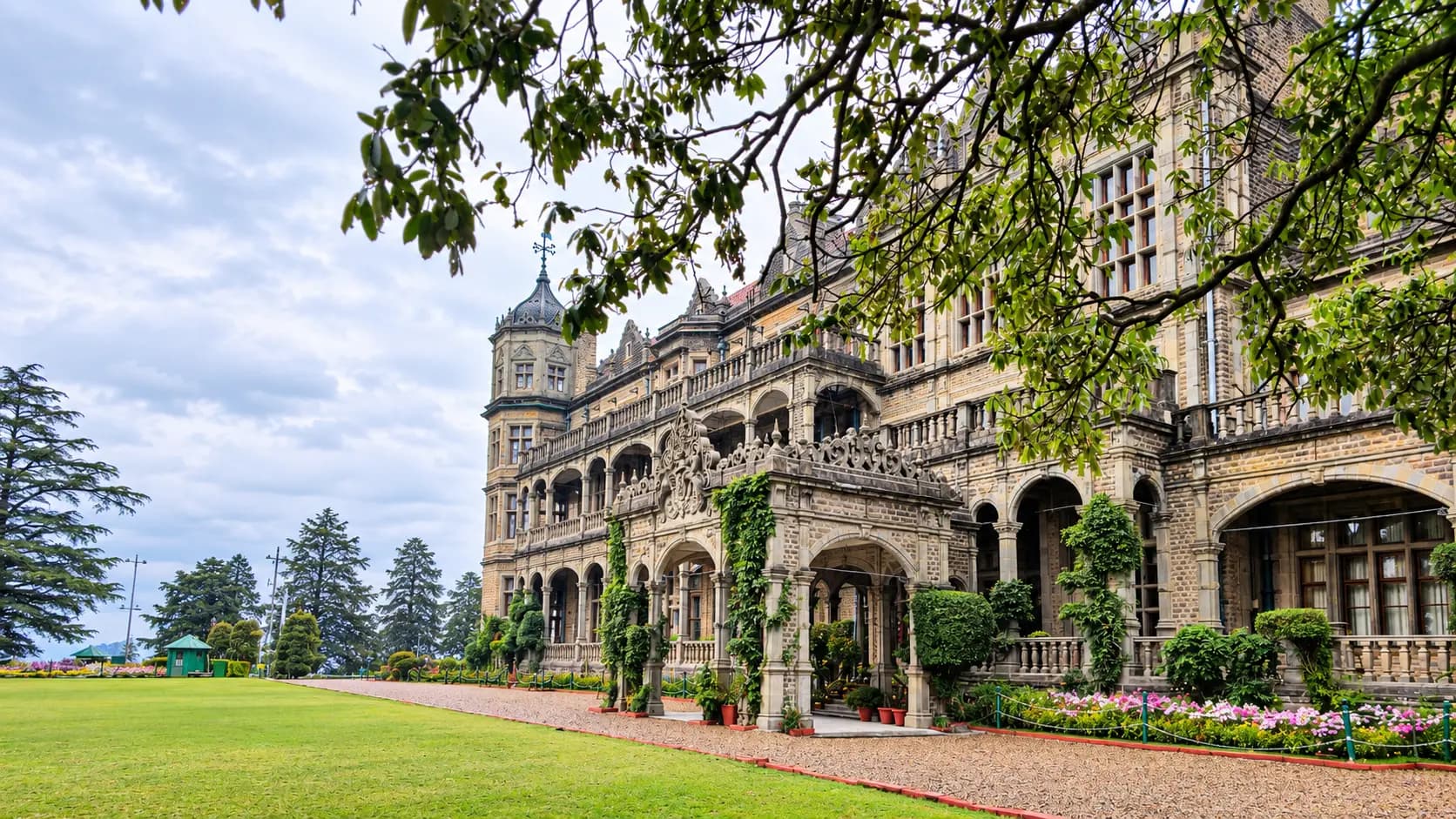
The historic summer palace of the British Viceroys of India, designed by Henry Irwin in English Renaissance style. Set amidst pristine botanical lawns atop Observatory Hill, it witnessed monumental historical events leading to Indian independence and the 1947 partition.
5. Chadwick Falls (Approx. 8.5 km Northwest via Summer Hill)
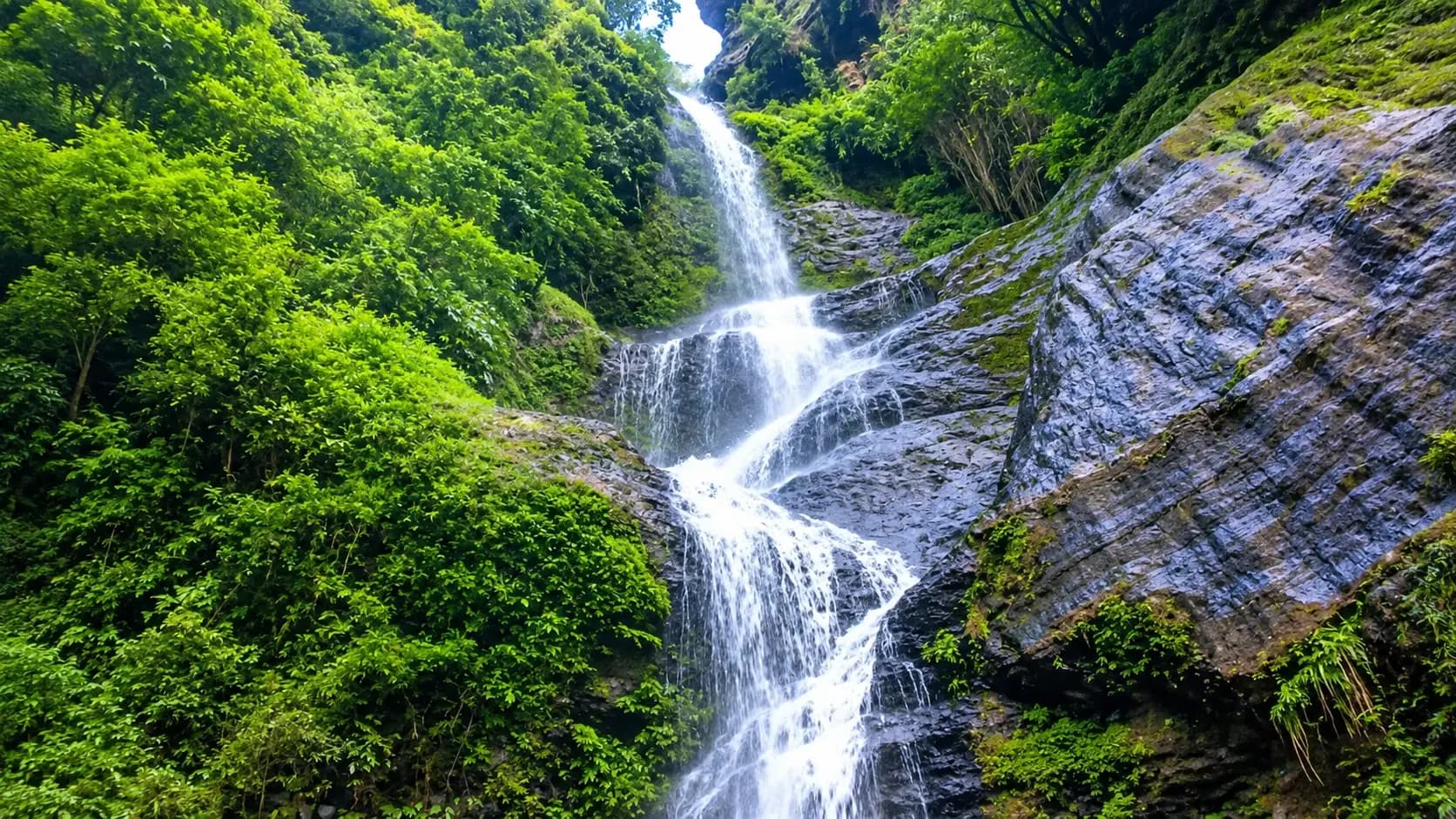
A secluded 67-meter mountain waterfall tumbling through a dense granite ravine in the Glen Reserve Forest, offering a tranquil woodland hiking escape away from urban commercial centers.
In pictures
The practical bits
Before you go.
Plan ahead
To make your trip to Jakhoo Temple comfortable, safe from mischievous primates, and physically rewarding, review…Explore detailsClose details
To make your trip to Jakhoo Temple comfortable, safe from mischievous primates, and physically rewarding, review these four mandatory preparation blocks:
Primate Precautions & Eyewear Security
Remove all prescription eyeglasses, reading spectacles, and sunglasses before arriving at the summit or walking…Explore detailsClose details
Remove all prescription eyeglasses, reading spectacles, and sunglasses before arriving at the summit or walking the trail, and pack them safely inside an opaque, zipped compartment in your backpack. Never carry food, plastic carry-bags, or water bottles openly in your hands. Confirm the current charge and what it includes with the operator or service provider. Visitor admission, vehicles, parking, activities and accommodation can have separate charges.
Footwear Strategy for Steep Incline
If walking up the 2.5-kilometer trail from The Ridge, wear supportive athletic running shoes or hiking sneakers…Explore detailsClose details
If walking up the 2.5-kilometer trail from The Ridge, wear supportive athletic running shoes or hiking sneakers with good arch support and grippy rubber outsoles. The paved concrete trail has an average incline of over 15%, with several steep stair sections. Because you must remove your shoes at the temple entrance deck, wear footwear that slips on and off easily, and carry an extra pair of warm socks during the chilly winter months.
Optimal Timing for Clear Mountain Views
Plan your ascent to arrive at the summit between 07:30 and 09:30 in the morning, or between 16:30 and 18:00 in…Explore detailsClose details
Plan your ascent to arrive at the summit between 07:30 and 09:30 in the morning, or between 16:30 and 18:00 in the late afternoon. Early mornings provide the crispest, cloud-free views of the snow-capped Himalayan peaks before mid-day thermal clouds obscure the horizon. Late afternoons treat you to a spectacular golden sunset over the Shivalik hills and the dramatic illumination of the 108-foot statue under twilight floodlights.
Combine Walking Up with Ropeway Down
Confirm the current charge and what it includes with the operator or service provider.Explore detailsClose details
Confirm the current charge and what it includes with the operator or service provider. Visitor admission, vehicles, parking, activities and accommodation can have separate charges.
Suggested 3-Hour Jakhoo Temple & Ridge Itinerary
08:00 - 08:15: Gathering at The Ridge
Begin at the historic Christ Church on The Ridge.Explore detailsClose details
Begin at the historic Christ Church on The Ridge. Secure all eyeglasses, sunglasses, and loose snacks inside your zipped daypack, and rent a wooden walking stick from a local vendor.
08:15 - 09:15: The Scenic Deodar Forest Ascent
Ascend the winding paved footpath.Explore detailsClose details
Ascend the winding paved footpath. Walk at a steady, rhythmic pace beneath the towering deodar cedars, enjoying sweeping views of Shimla town awakening below and stopping at shaded benches to hydrate.
09:15 - 10:15: Temple Worship & 108-Foot Statue Exploration
Reach the summit plateau.Explore detailsClose details
Reach the summit plateau. Remove your shoes and enter the inner sanctum to receive blessings and view the sacred charan paduka rock relic. Step outside into the courtyard to marvel at the towering 108-foot vermilion Hanuman statue, photograph the Himalayan mountain panorama, and enjoy the playful antics of the sacred monkey troops from a safe distance.
10:15 - 10:45: Morning Tea & High-Altitude Vistas
Visit a summit tea stall to enjoy a hot cup of cardamom masala chai or fresh mountain coffee while gazing through…Explore detailsClose details
Visit a summit tea stall to enjoy a hot cup of cardamom masala chai or fresh mountain coffee while gazing through the coin-operated viewing telescopes across the distant snow-capped Pir Panjal peaks.
10:45 - 11:00: Scenic Descent via Jakhoo Ropeway
Board the enclosed glass gondola of the Jakhoo Ropeway.Explore detailsClose details
Board the enclosed glass gondola of the Jakhoo Ropeway. Float smoothly above the deodar treetops, enjoying a breathtaking 5-minute aerial glide that drops you right back at the US Club base terminal next to The Ridge.
A few things you might wonder
Common questions about visiting Jakhoo Temple. Fees, visiting hours and ceremonies are researched details that may change; confirm current arrangements with the operator before travelling.
What is the elevation of Jakhoo Temple, and where is it located?
How tall is the famous Hanuman statue at Jakhoo Temple?
What is the Ramayana legend associated with Jakhoo Temple?
Is there an entry fee to visit Jakhoo Temple?
How does the Jakhoo Ropeway work, and how much does it cost?
How dangerous are the monkeys at Jakhoo Temple, and how can I stay safe?
Explore more in Shimla
Discover other destinations around this hub
More Hubs in Himachal Pradesh
Continue exploring other travel hubs in this state
Planning a trip to Shimla?