Safdarjung Tomb
Visit Safdarjung Tomb in New Delhi. Comprehensive guide to the last Mughal garden tomb, entry tickets, timings, charbagh gardens, and Jor Bagh metro access.
Location
South Delhi, Delhi NCR
A closer look
Your visit, at a glance.
South Delhi, Delhi Ncr
GET TO KNOW THE PLACE
At the historic junction where the leafy boulevards of central New Delhi meet the ancient arterial route heading south toward Mehrauli stands one of the capital’s most evocative…
The story of Safdarjung Tomb
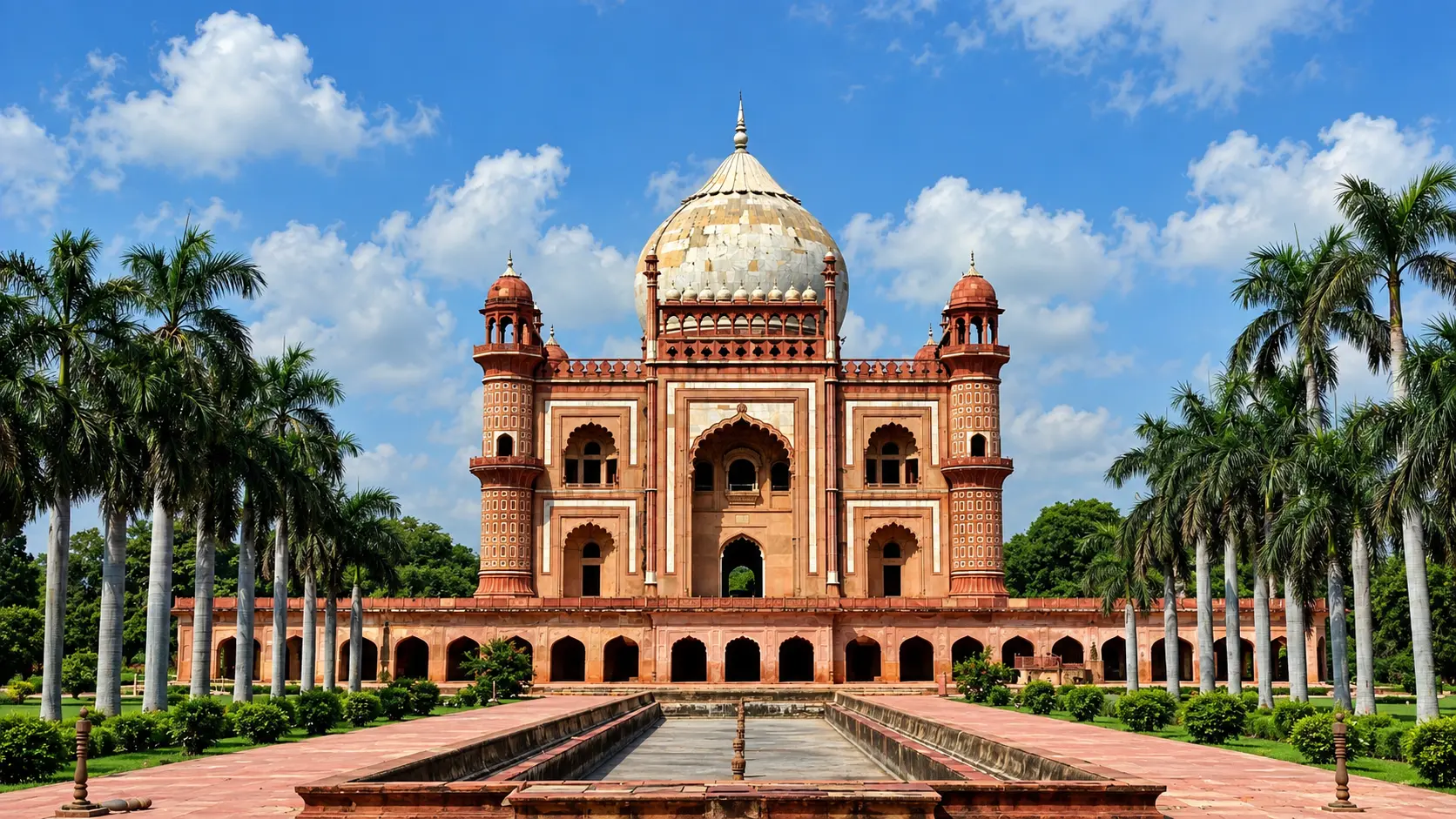
At the historic junction where the leafy boulevards of central New Delhi meet the ancient arterial route heading south toward Mehrauli stands one of the capital’s most evocative architectural monuments: Safdarjung Tomb (Maqbara-i-Safdarjung). Commissioned in 1753 - 1754 CE by Nawab Shuja-ud-Daula for his father, Mirza Muqim Abul Mansur Khan - popularly known by his royal title Safdarjung (meaning "Cleaver of Battle Ranks") - this monumental mausoleum represents the poignant final chapter in the grand saga of classical Mughal garden architecture. Described by architectural historians as the "last flicker in the lamp of Mughal architectural genius," Safdarjung Tomb was the very last monumental enclosed garden tomb (charbagh) ever erected under the waning authority of the Mughal Empire.
Surrounded by a fortified perimeter wall enclosing thirty acres of manicured lawns, formal Persian watercourses, and tranquil paved avenues, the tomb stands in stark contrast to the relentless pace of the surrounding metropolis. While monuments like Humayun's Tomb and the Taj Mahal represent the ascendant power and boundless imperial treasury of the Mughal Empire at its peak, Safdarjung Tomb tells a gripping human and geopolitical tale of resilience, artistic ambition, and resourcefulness during the twilight years of the dynasty. Today, maintained with exquisite care by the Archaeological Survey of India (ASI, Delhi Circle), the complex offers visitors a serene, uncrowded sanctuary where one can study late Mughal stonecraft, wander peaceful charbagh pathways, and experience one of Delhi's most beautifully proportioned historic silhouettes.
Start here. Open a tile for the full details.
Why goRead details
Safdarjung Tomb holds a unique, irreplaceable position in the architectural landscape of Delhi. It serves as the ultimate bookend to a two-century architectural tradition that began in 1565 with Humayun's Tomb, located just three kilometers to the east. Comparing the two structures offers an unparalleled masterclass in the stylistic evolution, symbolic messaging, and material realities of imperial Indian architecture.
When to visitRead details
Visiting Safdarjung Tomb is possible year-round, but planning around Delhi’s seasonal weather extremes and daily sunlight angles will dramatically elevate your experience.
Entry & permissionsRead details
Fees, visiting hours and entry rules may change. Confirm the latest details with the official operator or local authority before travelling.
Safdarjung Tomb is an Archaeological Survey of India (ASI) Centrally Protected Monument of National Importance. Ticketing and visitor access are governed by standard statutory protocols.
Admission Charges
Category | Cashless Online Booking (QR Code / ASI Portal) | Physical Booking Counter (Cash) |
|---|---|---|
Indian Citizens | ₹25 | ₹30 |
SAARC Nationals (Afghanistan, Bangladesh, Bhutan, Maldives, Nepal, Pakistan, Sri Lanka) | ₹25 | ₹30 |
BIMSTEC Nationals (Bangladesh, Bhutan, Myanmar, Nepal, Sri Lanka, Thailand) | ₹25 | ₹30 |
Foreign Tourists (All other nationalities) | ₹300 | ₹325 |
Children (Up to 15 years, Indian and Foreign) | Free (Valid age ID proof recommended) | Free |
Ticketing Note: Digital ticketing is strongly encouraged by the ASI. High-speed QR code signboards located outside the entrance gate allow smartphone users to purchase instant digital e-tickets via UPI or credit/debit card, bypassing queues at the manual booking window.
Operating Hours
Facility / Area | Operating Days | Timings | Notes |
|---|---|---|---|
Monument Gates & Gardens | All 7 Days (Monday to Sunday) | Sunrise to Sunset (~06:00 to 18:00 / 18:30) | Entry ticket counter closes 30 minutes before official sunset |
Central Mausoleum Chamber | All 7 Days | 06:00 to 18:00 | Natural light illumination only; closed after sunset |
ASI On-Site Booking Counter | All 7 Days | 06:00 to 17:30 | Digital ticketing via QR code available until closing |
Exterior Facade Lighting | Daily (Select Evenings) | Sunset to 21:00 | Illuminated exterior visible from Sri Aurobindo Marg and lawns |
Permissions, Photography, and Filming Guidelines
- Personal Photography: Non-commercial personal photography and amateur videography using handheld smartphones, compact digital cameras, and mirrorless or DSLR cameras are permitted throughout the gardens and monument complex without any fee.
- Tripods and Professional Shoots: In accordance with ASI statutory regulations across all national monuments, the use of camera tripods, monopods, portable lighting rigs, and professional fashion portfolio or pre-wedding photography crews requires prior written permission and payment of statutory commercial filming fees through the official ASI Delhi Circle portal (
asidelhicircle.bih.nic.in). Security guards will prohibit tripod use if an official permit is not presented. - Drone Operations: Flying drones (unmanned aerial vehicles) is strictly prohibited across the entire Safdarjung Tomb compound. The monument sits directly adjacent to the sensitive airspace of Safdarjung Airport and the VIP security zone of Lutyens' New Delhi.
Plan your visitRead details
Safdarjung Tomb is located at the intersection of Sri Aurobindo Marg and Lodhi Road in the Chanakyapuri Sub-Division of the New Delhi revenue district. Positioned directly between Lutyens’ New Delhi and South Delhi, it enjoys world-class transit connectivity via the Delhi Metro, bus networks, and major arterial roads.
Explore the full guide - choose a topic below.
Why visit?
Safdarjung Tomb holds a unique, irreplaceable position in the architectural landscape of Delhi.Explore detailsClose details
Safdarjung Tomb holds a unique, irreplaceable position in the architectural landscape of Delhi. It serves as the ultimate bookend to a two-century architectural tradition that began in 1565 with Humayun's Tomb, located just three kilometers to the east. Comparing the two structures offers an unparalleled masterclass in the stylistic evolution, symbolic messaging, and material realities of imperial Indian architecture.
The Final Masterpiece of the Mughal Garden Tomb Tradition
From the reign of Emperor Akbar through Shah Jahan, Mughal grandees expressed dynastic immortality through the medium of the rauza - an elevated domed tomb placed centrally within a symmetrical, quadripartite Persian paradise garden (charbagh). By the mid-eighteenth century, following the devastating sack of Delhi by the Persian warlord Nadir Shah in 1739, the authority of the Mughal emperor in the Red Fort had dwindled to little more than a ceremonial fiction. Real political power was wielded by ambitious regional governors, of whom Safdarjung, Subahdar of Awadh and Prime Minister (Wazir-ul-Mumalik) of Hindustan, was the most formidable.
When Safdarjung died in 1754, his son Shuja-ud-Daula sought to construct a memorial that would reaffirm his family's supreme standing at the imperial court. Designed by royal architect Bilal Muhammad Khan, the tomb deliberately emulated the grand scale, elevated plinth, double dome, and charbagh layout of Humayun's Tomb and the Taj Mahal. To stand before its towering red sandstone gateway and view the bulbous white marble dome rising above symmetrical cypress causeways is to witness imperial architecture making its final, defiant statement before the onset of colonial British rule.
A Masterclass in Late Mughal Materiality and Stonecraft
Because the imperial treasury was depleted and access to the pure white marble quarries of Makrana in Rajasthan was severed by regional conflicts, Safdarjung Tomb embodies the resourceful ingenuity of late Mughal masons. Historical chronicles and structural analyses reveal that the red sandstone, buff stone, and decorative marble revetments used on the exterior were largely salvaged from the nearby sixteenth-century tomb of Abdul Rahim Khan-i-Khanan.
Rather than relying purely on solid marble blocks, the architects utilized polished stucco plaster (chunam) to simulate fine marble on interior vaults, combining it with delicate polychrome relief medallions, painted floral scrollwork, and incised geometric strapwork. The resulting decorative program is rich, theatrical, and deeply expressive, displaying an ornate, Baroque-like complexity that anticipates the architectural exuberance of nineteenth-century Lucknow.
An Uncrowded Oasis of Contemplation and Photography
Unlike Delhi's major tourist hubs - such as the Red Fort or Qutub Minar, which welcome thousands of visitors every hour - Safdarjung Tomb remains wonderfully peaceful throughout the day. Because large tour groups rarely linger here, independent travelers, artists, photographers, and writers can wander through the vast gardens in relative solitude.
The low-angled golden sunlight of early morning and late afternoon illuminates the warm buff and red sandstone facades, casting deep shadows through the arched galleries of the raised plinth and reflecting the soaring marble dome in the still waters of the central reflecting pool. It is widely considered one of the finest locations in Delhi for architectural, portrait, and heritage photography.
Integral Gateway to South and Central Delhi
Situated directly across from the fashionable Jor Bagh neighborhood and adjacent to the historic airstrip of Safdarjung Airport (originally Willingdon Airfield, established in 1929), the tomb is exceptionally well located. A visit here pairs effortlessly with a morning stroll through the nearby Lodhi Gardens, an artisanal lunch in Khan Market, or an afternoon of handicraft shopping at Dilli Haat INA, all located within a two-kilometer radius.
What to expect
Safdarjung Tomb occupies a rectangular walled compound measuring approximately 300 meters on each side.Explore detailsClose details
Safdarjung Tomb occupies a rectangular walled compound measuring approximately 300 meters on each side. The entire complex is planned with strict geometric symmetry along a primary north-south and east-west axial grid. Understanding the spatial components of the compound will guide your visit from the ceremonial gateway through the paradise gardens to the subterranean crypt.
1. The Monumental Entrance Gateway (Darwaza)
Visitors enter the complex from the east via a magnificent two-storey red sandstone portal that ranks among the most imposing monumental gates in Delhi.
- Architectural Detailing: The facade features a deep central pointed archway framed by slender marble border moldings, flanked by double-tiered cusped arched niches (jharokhas). Above the central arch runs a row of ornamental stone merlons and delicate octagonal corner turrets. The rear (western) facade of the gate, facing into the garden, contains an elaborate upper-level residential suite with arched plaster loggias that historically housed royal guards and musicians.
- Interior Stucco Work: The vaulted ceiling of the gate passage is adorned with intricate incised plasterwork displaying scrolling floral tendrils, geometric arabesques, and medallion patterns executed in lime stucco.
2. The Charbagh Paradise Gardens
Stepping through the gateway reveals the sprawling 30-acre charbagh (four-fold garden) layout, inspired by Quranic descriptions of the gardens of paradise.
- Water Channels and Axial Walkways: Four broad, stone-paved causeways radiate from the central mausoleum toward the four cardinal directions, dividing the terrain into four primary quadrants. In the center of each causeway runs a sunken red sandstone water channel (nahr) lined with decorative fountain jets and punctuated by square reflecting pools.
- Landscape Plantings: Each quadrant is further subdivided into symmetrical lawn plots framed by mature trees, including royal palms, weeping figs (Ficus benjamina), spreading neem trees, and fragrant frangipani (champa). During winter (November to February), municipal gardeners plant vibrant seasonal flowerbeds of petunias, marigolds, and salvias along the causeway edges.
3. The Garden Wall Pavilions
Set directly into the three exterior perimeter walls are distinct two-storeyed multi-room pavilions designed as pleasure retreats and residential quarters for visiting noblemen:
- Moti Mahal ("Pearl Palace"): Situated in the center of the northern boundary wall, featuring open arcaded verandas, vaulted rooms, and decorative plaster moldings. Historically, this served as the official summer residence and banquet suite for the Nawab’s family.
- Badshah Pasand ("The King's Favorite"): Positioned along the southern wall, comprising a series of arched chambers that provided cool, shaded retreats during hot summer afternoons.
- Jangal Mahal ("Forest Palace"): Located in the center of the western boundary wall behind the tomb, offering quiet, shaded balconies overlooking the open fields and forest that historically bordered the Yamuna floodplains. Today, these perimeter pavilions house administrative offices and documentation archives of the Archaeological Survey of India.
4. The Raised Plinth Terrace
The central mausoleum does not sit at ground level; it is elevated atop a massive square stone plinth rising approximately 5.5 meters (18 feet) above the gardens.
- Arcaded Plinth Facade: The exterior face of the plinth is punctuated by a continuous arcade of vaulted stone cells on all four sides. Historically, these chambers served as rest quarters (musafirkhana) for traveling pilgrims, scholars, and royal retainers.
- Ascending Staircases: Wide flights of stone steps ascend to the grand terrace level on the eastern side. The expansive stone-paved terrace provides a panoramic 360-degree viewpoint over the entire charbagh gardens, the manicured lawns, and the surrounding tree-lined avenues of New Delhi.
5. The Central Mausoleum and Dome
The main tomb structure is a square two-storey building with deeply chamfered corners, measuring roughly 28 meters across.
- Polygonal Corner Minarets: At each of the four corners rises an attached polygonal minaret built of buff sandstone and red stone, adorned with vertical fluting, geometric inlay panels, and topped with an octagonal domed kiosk (chhatri) resting on slender stone pillars.
- The Marble Double Dome: The architectural crown of the monument is a lofty, bulbous white marble dome that swells outward above an octagonal drum before tapering into an elegant finial. Built using the double-dome engineering technique (an inner structural dome ensuring proper interior ceiling proportions and an outer shell creating an imposing exterior skyline presence), the dome was constructed using salvaged marble panels detailed with delicate black slate borders.
6. The Interior Octagonal Chamber and Cenotaphs
Entering through the high arched central iwan on the terrace brings you into the cool, shadowed central burial hall.
- The Cenotaphs: In the center of the polished stone floor, enclosed by a low marble rail, stand two intricately carved white marble cenotaphs: the larger one belonging to Safdarjung himself, and the companion cenotaph belonging to his pious wife, Amat-uz-Zahra (Taj Bakhsh).
- Stucco Vaulting and Medallions: Look up into the high vaulted ceiling to admire the breathtaking geometric stucco relief. The ceiling is decorated with interlocking octagonal ribs, stylized floral bosses, and polychrome plaster medallions painted in rich ochre, vermilion, and turquoise tones that have survived with remarkable fidelity for more than 270 years.
- Subterranean Vault: Directly below the central chamber, sealed beneath the stone floor of the raised plinth, lies the dark, vaulted underground burial vault containing the actual earthen graves of Safdarjung and his wife, maintaining the traditional Islamic burial practice of humble internment beneath symbolic floor-level cenotaphs.
Best time to visit
Visiting Safdarjung Tomb is possible year-round, but planning around Delhi’s seasonal weather extremes and daily…Explore detailsClose details
Visiting Safdarjung Tomb is possible year-round, but planning around Delhi’s seasonal weather extremes and daily sunlight angles will dramatically elevate your experience.
Winter (October to March) - The Golden Season
Winter is by far the most enjoyable and photogenic time to visit Safdarjung Tomb.
- Atmospheric Comfort: Ambient daytime temperatures hover between 18°C and 25°C from November through February, accompanied by brilliant blue skies and gentle breezes. Morning temperatures dip to 8°C - 12°C, making a light jacket or woolen wrap comfortable.
- Garden Bloom: The charbagh gardens are maintained in peak floral condition during winter, with neatly edged flowerbeds blooming with colorful seasonal flowers and lush, bright green turf.
- Lighting Conditions: The low winter sun illuminates the warm red and yellow tones of the sandstone facade, creating exceptional lighting for photography between 07:30 and 10:00 in the morning and from 15:30 to 17:30 in the afternoon.
Summer (April to June) - Intense Heat
Summer in Delhi brings scorching temperatures that routinely climb between 38°C and 44°C during midday hours.
- Thermal Realities: Check the current visiting hours and permitted access with the site operator before departure; ceremonies, closures and visitor sessions can affect access.
- Strategy for Summer Visits: If visiting in summer, enter the monument immediately at sunrise between 06:00 and 08:00. The gardens are cool, bird calls echo through the trees, and the stone plinth remains pleasantly cool underfoot.
Monsoon (July to September) - Vibrant Lushness
The arrival of the southwest monsoon brings dramatic rainfall and high humidity.
- Landscape Beauty: The gardens transform into an intense, vibrant emerald green, while the red sandstone walls of the tomb darken against moody, overcast monsoon clouds. The central stone reflecting pools often fill with rainwater, creating mirror-like reflections of the white marble dome.
- Photography: Overcast skies eliminate harsh midday glare, providing soft, diffused illumination ideal for capturing intricate carved stone textures and stucco plasterwork.
How to reach
Safdarjung Tomb is located at the intersection of Sri Aurobindo Marg and Lodhi Road in the Chanakyapuri…Explore detailsClose details
Safdarjung Tomb is located at the intersection of Sri Aurobindo Marg and Lodhi Road in the Chanakyapuri Sub-Division of the New Delhi revenue district. Positioned directly between Lutyens’ New Delhi and South Delhi, it enjoys world-class transit connectivity via the Delhi Metro, bus networks, and major arterial roads.
By Delhi Metro (Fastest and Most Convenient)
Confirm the current charge and what it includes with the operator or service provider. Visitor admission, vehicles, parking, activities and accommodation can have separate charges.
-
Jor Bagh Metro Station (Yellow Line) - Closest Station:
- Located less than 200 meters south of the monument on Sri Aurobindo Marg.
- For visitors traveling from Central Delhi (Rajiv Chowk / Connaught Place, New Delhi Railway Station, Kashmere Gate) or South Delhi / Gurugram (Hauz Khas, Saket, Millennium City Centre), take the Yellow Line directly to Jor Bagh.
- Exit via Gate 1 or Gate 2. From the exit, simply cross the entrance lane and walk two minutes northward along the tree-lined sidewalk of Sri Aurobindo Marg; the monumental entrance gate of Safdarjung Tomb is immediately visible on your left.
-
Lok Kalyan Marg Metro Station (Yellow Line):
- Located approximately 1.2 km north along Sri Aurobindo Marg, near the Prime Minister’s residence. An easy 15-minute walk or a 3-minute auto-rickshaw hop.
-
Dilli Haat - INA Metro Station (Yellow & Pink Line Interchange):
- Located roughly 1 km south along Sri Aurobindo Marg. Convenient for passengers transferring from the Pink Line (East and West Delhi).
By Bus (Delhi Transport Corporation - DTC)
Numerous DTC bus routes operate along Sri Aurobindo Marg and Lodhi Road:
- Key Bus Stops: Alight at Safdarjung Tomb Bus Stop, Jor Bagh Metro Station Stop, or Lodhi Garden / Safdarjung Intersection Stop.
- Connectivity: Frequent low-floor AC (red/blue) and non-AC (green) buses connect directly to Connaught Place, Central Secretariat, AIIMS, Lajpat Nagar, and railway terminals across Delhi.
By Auto-Rickshaw and App-Based Cabs
Pre-paid three-wheelers, auto-rickshaws, and ride-hailing services (Uber and Ola) operate continuously throughout New Delhi.
- Drop-off Point: Set your navigation pin to "Safdarjung Tomb Main Gate" on Sri Aurobindo Marg. Cabs can pull directly into the entrance drop-off lane outside the ticket counter.
- Travel Times: Approximately 10 to 15 minutes from Connaught Place (5 km); 15 minutes from India Gate (4 km); and 25 to 35 minutes from Indira Gandhi International Airport (12 km).
By Private Car & Parking Information
Driving to Safdarjung Tomb is very straightforward:
- Driving Route: From Central Delhi, drive south down Janpath or Prithviraj Road onto Sri Aurobindo Marg. The monument entrance gate is on your right-hand side just after the Lodhi Road traffic intersection.
- Parking Facility: A designated surface parking lot managed by municipal authorities is located immediately outside the main entrance gateway. Confirm the current charge and what it includes with the operator or service provider. Visitor admission, vehicles, parking, activities and accommodation can have separate charges. Ample parking space is generally available throughout the day on weekdays and weekends.
Rail and Airport Connections
- Indira Gandhi International Airport (DEL): Located approximately 12 km west via Rao Tula Ram Marg and Vasant Vihar. Travel time by taxi is approximately 25 to 35 minutes.
- New Delhi Railway Station (NDLS): Located roughly 7 km north. Directly accessible via an effortless 12-minute ride on the Delhi Metro Yellow Line from New Delhi Station to Jor Bagh Station.
- Hazrat Nizamuddin Railway Station (NZM): Located roughly 5 km east via Lodhi Road and Lala Lajpat Rai Marg (approx. 12 - 15 minutes by auto-rickshaw or taxi).
Entry, timings and permissions
Fees, visiting hours and entry rules may change.Explore detailsClose details
Fees, visiting hours and entry rules may change. Confirm the latest details with the official operator or local authority before travelling.
Safdarjung Tomb is an Archaeological Survey of India (ASI) Centrally Protected Monument of National Importance. Ticketing and visitor access are governed by standard statutory protocols.
Admission Charges
Category | Cashless Online Booking (QR Code / ASI Portal) | Physical Booking Counter (Cash) |
|---|---|---|
Indian Citizens | ₹25 | ₹30 |
SAARC Nationals (Afghanistan, Bangladesh, Bhutan, Maldives, Nepal, Pakistan, Sri Lanka) | ₹25 | ₹30 |
BIMSTEC Nationals (Bangladesh, Bhutan, Myanmar, Nepal, Sri Lanka, Thailand) | ₹25 | ₹30 |
Foreign Tourists (All other nationalities) | ₹300 | ₹325 |
Children (Up to 15 years, Indian and Foreign) | Free (Valid age ID proof recommended) | Free |
Ticketing Note: Digital ticketing is strongly encouraged by the ASI. High-speed QR code signboards located outside the entrance gate allow smartphone users to purchase instant digital e-tickets via UPI or credit/debit card, bypassing queues at the manual booking window.
Operating Hours
Facility / Area | Operating Days | Timings | Notes |
|---|---|---|---|
Monument Gates & Gardens | All 7 Days (Monday to Sunday) | Sunrise to Sunset (~06:00 to 18:00 / 18:30) | Entry ticket counter closes 30 minutes before official sunset |
Central Mausoleum Chamber | All 7 Days | 06:00 to 18:00 | Natural light illumination only; closed after sunset |
ASI On-Site Booking Counter | All 7 Days | 06:00 to 17:30 | Digital ticketing via QR code available until closing |
Exterior Facade Lighting | Daily (Select Evenings) | Sunset to 21:00 | Illuminated exterior visible from Sri Aurobindo Marg and lawns |
Permissions, Photography, and Filming Guidelines
- Personal Photography: Non-commercial personal photography and amateur videography using handheld smartphones, compact digital cameras, and mirrorless or DSLR cameras are permitted throughout the gardens and monument complex without any fee.
- Tripods and Professional Shoots: In accordance with ASI statutory regulations across all national monuments, the use of camera tripods, monopods, portable lighting rigs, and professional fashion portfolio or pre-wedding photography crews requires prior written permission and payment of statutory commercial filming fees through the official ASI Delhi Circle portal (
asidelhicircle.bih.nic.in). Security guards will prohibit tripod use if an official permit is not presented. - Drone Operations: Flying drones (unmanned aerial vehicles) is strictly prohibited across the entire Safdarjung Tomb compound. The monument sits directly adjacent to the sensitive airspace of Safdarjung Airport and the VIP security zone of Lutyens' New Delhi.
Nearby places to consider
Safdarjung Tomb is ideally situated at the geographical pivot between New Delhi and South Delhi, surrounded by…Explore detailsClose details
Safdarjung Tomb is ideally situated at the geographical pivot between New Delhi and South Delhi, surrounded by some of the capital’s most prestigious cultural, architectural, and commercial attractions:
1. Lodhi Gardens (Approx. 400 m North)
Located just across the Lodhi Road intersection, this world-renowned 90-acre municipal heritage park contains the majestic fifteenth-century tombs of the Sayyid and Lodhi dynasties. Highlights include the imposing octagonal mausoleum of Muhammad Shah Sayyid (1444 CE), the towering Bada Gumbad mosque complex, the glazed blue-tiled Sheesh Gumbad, and Sikandar Lodhi's fortified garden tomb. It is Delhi’s favorite public park for morning fitness, botanic appreciation, and quiet relaxation.
2. Khan Market (Approx. 2 km Northeast)
One of India's most upscale and celebrated shopping and dining enclaves. A vibrant U-shaped commercial precinct packed with premier bookshops (such as Bahrisons and Faqir Chand), designer fashion boutiques, organic cosmetics, gourmet grocery stores, and acclaimed cafes, bistros, and fine-dining restaurants. Accessible within a 5-minute auto-rickshaw ride from Safdarjung Tomb.
3. Dilli Haat INA (Approx. 1 km South)
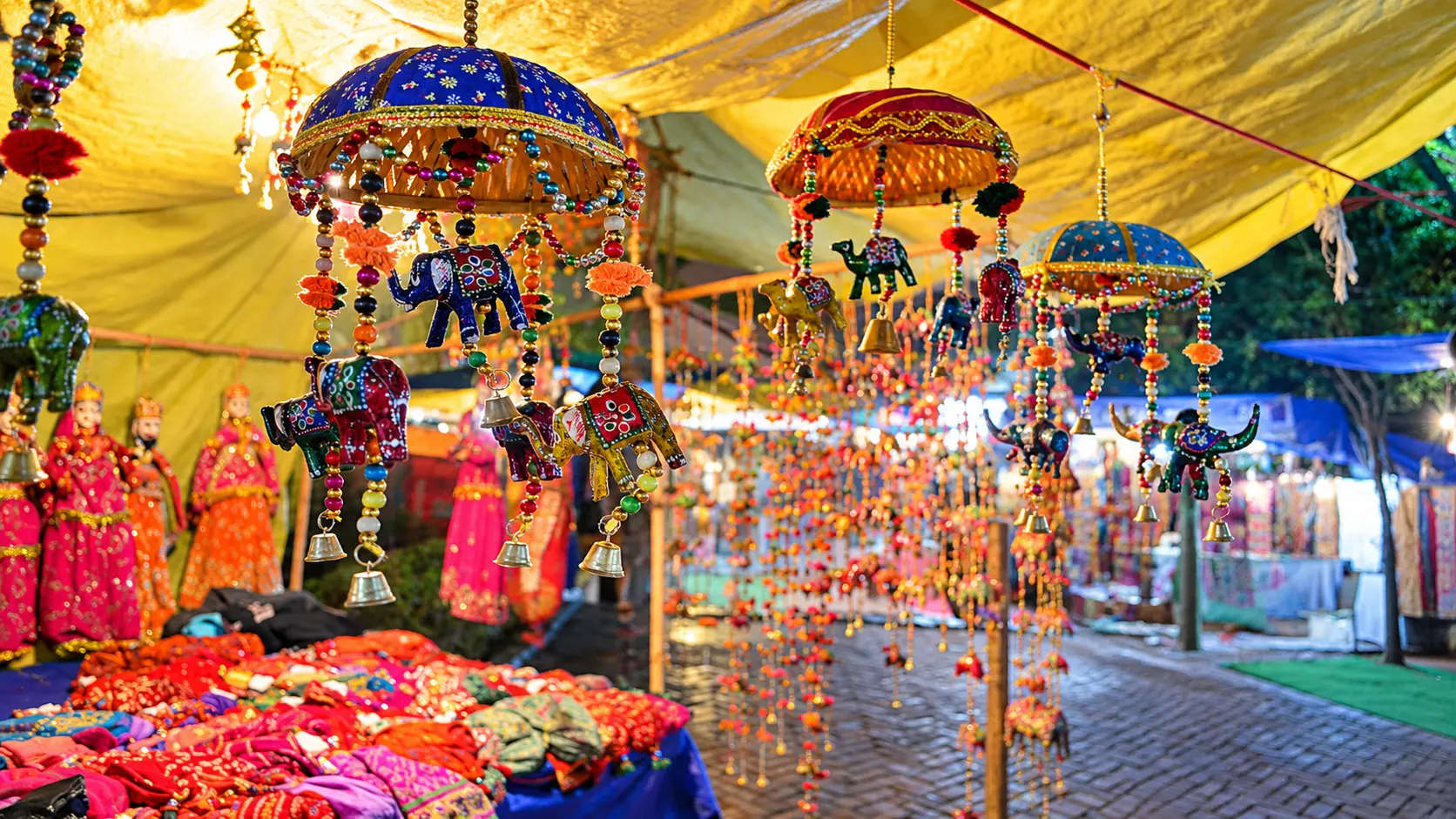
Operated by Delhi Tourism, Dilli Haat INA is an open-air village craft bazaar and cultural showcase featuring over 160 rotational artisan stalls allotted to master craftsmen and handloom weavers from across all Indian states. It also features 25 authentic state food pavilions serving regional delicacies ranging from Kashmiri wazwan to Nagaland momos. Located just one stop southbound on the Yellow Line to Dilli Haat - INA Metro Station.
4. Humayun’s Tomb & Sunder Nursery (Approx. 3.5 km East)
Located a short 8-minute taxi ride eastbound along Lodhi Road, the UNESCO World Heritage-listed Humayun's Tomb complex presents the sixteenth-century prototype of the Mughal garden tomb that directly inspired Safdarjung Tomb two centuries later. Directly adjacent lies Sunder Nursery, a breathtaking 90-acre Mughal-era heritage park and botanical arboretum featuring 15 conserved monuments, marble watercourses, and lake walking paths.
5. National Museum, New Delhi (Approx. 3.5 km North)
Situated along Janpath, India’s premier repository of art, archaeology, and cultural heritage houses over 200,000 priceless artifacts spanning five millennia of human civilization. Galleries showcase masterpieces of the Indus Valley Civilization (including the iconic bronze Dancing Girl), Buddhist stone sculptures from Gandhara and Mathura, Chola sacred bronzes, Mughal miniature paintings, and medieval decorative arts.
In pictures
The practical bits
Before you go.
Plan ahead
To make the most of your excursion to Safdarjung Tomb, review these four essential preparation blocks covering…Explore detailsClose details
To make the most of your excursion to Safdarjung Tomb, review these four essential preparation blocks covering timing, footwear, hydration, and architectural sequencing:
Early Morning Arrival for Golden Light and Solitude
Enter the monument gate immediately at sunrise between 06:00 and 07:30.Explore detailsClose details
Enter the monument gate immediately at sunrise between 06:00 and 07:30. During early morning hours, the gardens are tranquil, misty, and virtually devoid of visitors. The rising sun casts a soft golden glow upon the east-facing red sandstone facade and the white marble dome, providing pristine conditions for unhurried architectural photography and peaceful contemplation.
Comfortable Footwear for High Plinths and Stone Causeways
Wear comfortable, supportive walking shoes.Explore detailsClose details
Wear comfortable, supportive walking shoes. Exploring the 30-acre complex requires walking along extensive stone causeways, ascending two steep, wide flights of stone steps to reach the 5.5-meter elevated plinth, and traversing polished stone terrace pavements. Shoes can be kept on while walking the exterior plinth terrace and central burial hall, though removing them or wearing cloth shoe covers is appreciated near the central cenotaph enclosure.
Sun Protection and Self-Supplied Hydration
Bring a reusable water bottle, sunglasses, and a sun hat, particularly if visiting between 10:00 and 16:00.Explore detailsClose details
Bring a reusable water bottle, sunglasses, and a sun hat, particularly if visiting between 10:00 and 16:00. While the central tomb chamber is cool and shaded, the expansive garden causeways and elevated plinth terrace are completely exposed to the open sky without tree shade. A purified drinking water dispenser and modern restrooms are available near the entrance gate.
Sequential Exploration Strategy
Begin by admiring the monumental entrance gateway and its vaulted plaster ceiling before entering the charbagh.Explore detailsClose details
Begin by admiring the monumental entrance gateway and its vaulted plaster ceiling before entering the charbagh. Walk westward along the central causeway to appreciate the grand axial symmetry. Ascend to the elevated plinth, complete a full 360-degree circuit of the exterior terrace to examine the polygonal minarets and panoramic garden views, and then step inside the central octagonal chamber to view the cenotaphs and intricate ceiling plasterwork. Conclude by walking the perimeter to inspect the historic Moti Mahal and Badshah Pasand pavilions.
Suggested Half-Day Lutyens & Heritage Itinerary (Approx. 4 Hours)
07:30 - 09:00: Safdarjung Tomb
Arrive via Jor Bagh Metro Station.Explore detailsClose details
Arrive via Jor Bagh Metro Station. Spend 90 minutes exploring the entrance gateway, wandering the peaceful charbagh gardens, examining the late Mughal architecture, and photographing the marble double dome in morning light.
09:00 - 10:30: Lodhi Gardens Walk
Exit Safdarjung Tomb and walk 400 meters north along Sri Aurobindo Marg to enter Lodhi Gardens.Explore detailsClose details
Exit Safdarjung Tomb and walk 400 meters north along Sri Aurobindo Marg to enter Lodhi Gardens. Stroll past the fifteenth-century Sayyid and Lodhi royal monuments - including the monumental Bada Gumbad, Sheesh Gumbad, and Sikandar Lodhi’s walled tomb - surrounded by ancient banyan trees, manicured lawns, and rose gardens.
10:30 - 11:30: Artisanal Brunch / Coffee
Check the current visiting hours and permitted access with the site operator before departure; ceremonies…Explore detailsClose details
Check the current visiting hours and permitted access with the site operator before departure; ceremonies, closures and visitor sessions can affect access.
11:30 - 12:30: Dilli Haat INA or National Crafts Museum
Hop on the Yellow Line at Jor Bagh for one stop southbound to Dilli Haat - INA to browse authentic regional…Explore detailsClose details
Hop on the Yellow Line at Jor Bagh for one stop southbound to Dilli Haat - INA to browse authentic regional handicrafts, handlooms, and folk art from across the Indian states.
A few things you might wonder
Common questions about visiting Safdarjung Tomb. Fees, visiting hours and ceremonies are researched details that may change; confirm current arrangements with the operator before travelling.
Who was Safdarjung, and why was this tomb built?
Why is Safdarjung Tomb called the "last flicker of Mughal architecture"?
What are the ticket prices and visiting hours for the monument?
How do I reach Safdarjung Tomb by Delhi Metro?
Is it true that stone materials were taken from another monument to build Safdarjung Tomb?
Can I take photos inside Safdarjung Tomb, and are tripods allowed?
Explore more in South Delhi
Discover other destinations around this hub
Planning a trip to South Delhi?