Mehrauli Archaeological Park
Explore Mehrauli Archaeological Park in South Delhi. Detailed guide to Jamali Kamali, Rajon ki Baoli, Balban's Tomb, timings, metro access, and walking trails.
Location
South Delhi, Delhi NCR
A closer look
Your visit, at a glance.
South Delhi, Delhi Ncr
GET TO KNOW THE PLACE
Directly adjoining the soaring sandstone tower of the UNESCO World Heritage-listed Qutub Minar lies one of the most remarkable, densely layered historical landscapes in the…
The story of Mehrauli Archaeological Park
Directly adjoining the soaring sandstone tower of the UNESCO World Heritage-listed Qutub Minar lies one of the most remarkable, densely layered historical landscapes in the entire Indian subcontinent: Mehrauli Archaeological Park. Spanning roughly 200 acres of undulating scrub forest, ancient quartzite rocky outcrops, and landscaped gardens in the heart of South Delhi, this public heritage reserve preserves over one hundred historic structures spanning more than a thousand years of continuous architectural and political evolution. Unlike isolated standalone monuments encircled by modern road grids, Mehrauli presents a rare contiguous archaeological preserve where the visitor can trace the physical transition of Delhi across successive imperial eras - from the early fortified citadels of the Tomara and Chauhan Rajputs, through the Mamluk (Slave), Khalji, Tughlaq, Sayyid, and Lodhi dynasties of the Delhi Sultanate, to the zenith of the Mughal Empire, and finally into the romantic colonial transformations orchestrated by nineteenth-century British administrators.
Walking through Mehrauli Archaeological Park is a journey of discovery. Hidden beneath the dense foliage of indigenous keekar, neem, and babool trees stand monumental milestones of structural engineering: the ruined tomb of Sultan Ghiyas-ud-din Balban, which preserves the earliest surviving true arch in South Asia; the four-tiered subterranean grandeur of Rajon ki Baoli, one of northern India's most architecturally sophisticated stepwells; the pristine pre-Mughal elegance of the Jamali Kamali mosque and its jewel-like tiled tomb chamber; and the quirky country residence Dilkusha, fashioned from a sixteenth-century Mughal mausoleum by the British Resident Sir Thomas Metcalfe. Maintained jointly as an open green lung and an archaeological sanctuary by the Delhi Development Authority (DDA), the Archaeological Survey of India (ASI), and the Indian National Trust for Art and Cultural Heritage (INTACH), the park offers visitors an unhurried, contemplative encounter with deep history, far removed from the tourist crowds that flock to the adjacent minaret.
Start here. Open a tile for the full details.
Why goRead details
While almost every traveler to Delhi visits the Qutub Minar, comparatively few venture past its southern boundary wall into the forested expanse of Mehrauli Archaeological Park. Those who do discover what architectural historians and heritage enthusiasts consider one of the richest open-air classrooms of medieval history anywhere in Asia.
When to visitRead details
Because Mehrauli Archaeological Park is an expansive outdoor environment requiring 2 to 3 hours of walking across unshaded stone ruins and open scrubland, timing your visit according to season and time of day is essential for an enjoyable experience.
Entry & permissionsRead details
Fees, visiting hours and entry rules may change. Confirm the latest details with the official operator or local authority before travelling.
A significant advantage of Mehrauli Archaeological Park compared to other major historic sites in Delhi is its open, community-accessible governance model.
Entry Fees
- Park Admission: Completely Free. There is no entry fee, gate tariff, or admission ticket required to enter Mehrauli Archaeological Park, walk its trails, or explore any of its conserved monuments, including Jamali Kamali, Rajon ki Baoli, Balban’s Tomb, or Metcalfe’s Dilkusha.
- Crucial Distinction: While the adjacent Qutub Minar complex requires an ASI ticket (₹40 for Indians, ₹600 for foreigners), Mehrauli Archaeological Park is an open public green space maintained jointly by the DDA and ASI with free public access for all visitors.
Operating Hours
Facility / Area | Days of Operation | Timings | Notes |
|---|---|---|---|
Park Gates & Walking Trails | All 7 Days (Monday to Sunday) | Sunrise to Sunset (~06:00 to 18:30) | Entry gates close at sunset; visitors must exit before darkness falls |
Jamali Kamali Complex | All 7 Days | 06:00 to 18:00 | Mosque courtyard accessible; tomb chamber interior viewed through jali screens |
Rajon ki Baoli | All 7 Days | Sunrise to Sunset | Accessible year-round; caution advised on steep, unbarricaded lower steps |
DDA Surface Parking | All 7 Days | 06:00 to 19:00 | Standard municipal hourly parking charges apply |
Permissions, Filming, and Drone Regulations
- Personal Photography: Still photography using handheld mobile phones, compact digital cameras, and mirrorless or DSLR bodies for personal, non-commercial use is entirely permitted across the park without any fee or permit.
- Tripods and Commercial Shoots: While casual handheld photography is welcome, the use of professional tripods, light reflectors, fashion portfolio crews, and commercial video production teams within ASI-protected structures requires formal prior statutory permission and fee submission through the Archaeological Survey of India Delhi Circle portal (
asidelhicircle.bih.nic.in). - Pre-Wedding Shoots: Due to the park’s romantic ruins and lush foliage, Mehrauli is a favored location for pre-wedding photography. Security personnel stationed at Jamali Kamali may ask for an ASI permit if professional lighting equipment or multiple costume changes are observed.
- Drone Operations: Flying drones (unmanned aerial vehicles) is strictly illegal across the entire Mehrauli Archaeological Park and the Qutub Minar precinct. The airspace falls under strict security restrictions due to proximity to the Indira Gandhi International Airport flight corridor and central VIP zones.
Plan your visitRead details
Mehrauli Archaeological Park is located within the Mehrauli Sub-Division of the South Delhi revenue district, directly south of Sri Aurobindo Marg and west of Anuvrat Marg, immediately adjacent to the Qutub Minar complex. Its strategic South Delhi position makes it exceptionally well connected by public metro transit, road networks, and app-based cabs.
Personal Safety and Daylight Awareness
Because Mehrauli Archaeological Park is a large, semi-forested woodland with dense acacia thickets and isolated trail spurs, visitors should stick to well-trodden, marked heritage paths and avoid wandering alone into secluded, overgrown sections of the park. Always plan your exit to coincide with sunset; the interior trails are unlit after dark, and municipal security personnel clear the grounds at dusk.
Suggested 3-Hour Heritage Trail Itinerary
To ensure you experience all major historical landmarks without unnecessary backtracking, follow this proven sequential walking circuit:
Explore the full guide - choose a topic below.
Why visit?
While almost every traveler to Delhi visits the Qutub Minar, comparatively few venture past its southern boundary…Explore detailsClose details
While almost every traveler to Delhi visits the Qutub Minar, comparatively few venture past its southern boundary wall into the forested expanse of Mehrauli Archaeological Park. Those who do discover what architectural historians and heritage enthusiasts consider one of the richest open-air classrooms of medieval history anywhere in Asia.
A Millennial Architectural Chronicle
Mehrauli is the oldest continuously inhabited urban center in the Delhi region. It was here, in the eighth to eleventh centuries, that the Tomara Rajput king Anangpal II established Lal Kot, the earliest known fortified city of Delhi. The Chauhan Rajputs subsequently enlarged these defenses into Qila Rai Pithora, before the fortress fell to Muhammad of Ghor’s general, Qutb-ud-din Aibak, in 1192 CE, marking the establishment of the Delhi Sultanate. Over the subsequent eight centuries, rulers, Sufi saints, prime ministers, noblemen, and imperial masons continued to build tombs, mosques, palaces, pleasure pavilions, and water-harvesting stepwells across these rocky slopes.
In a single two-hour walking loop, visitors can observe:
- Trabeate to Arcuate Engineering: The momentous shift from early Indian corbelled stone construction (where horizontal stones overlap until they meet) to the true radiating voussoir arch introduced from Central Asia and Persia.
- Dynastic Transition: The stark, functional rubble-and-plaster architecture of the thirteenth-century Slave Dynasty yielding to the refined proportions, glazed ceramic tilework, and intricate stone carvings of the Lodhis and early Mughals.
- Colonial Adaptation: The bizarre Victorian practice of converting sacred medieval Muslim tombs into romantic English neoclassical country retreats adorned with porticos and whimsical decorative follies.
The Birthplace of the True Arch in India
For architects, historians, and heritage connoisseurs, the park holds immense technical importance as the site of the Tomb of Sultan Ghiyas-ud-din Balban (built c. 1287 CE). Prior to this building, Indian stonemasons did not employ the radiating voussoir system with a central keystone; earlier arches, such as the famous screen arches at the nearby Quwwat-ul-Islam Mosque, were constructed using indigenous corbelled masonry that was subsequently chiseled into arched contours. Balban’s tomb represents the first surviving example in India where true structural arches were successfully engineered, alongside an early attempt at constructing a true hemispherical dome. Though largely in ruins today, standing beneath these weather-beaten quartzite keystones is an awe-inspiring experience for anyone interested in the history of civil engineering.
Subterranean Splendor at Rajon ki Baoli
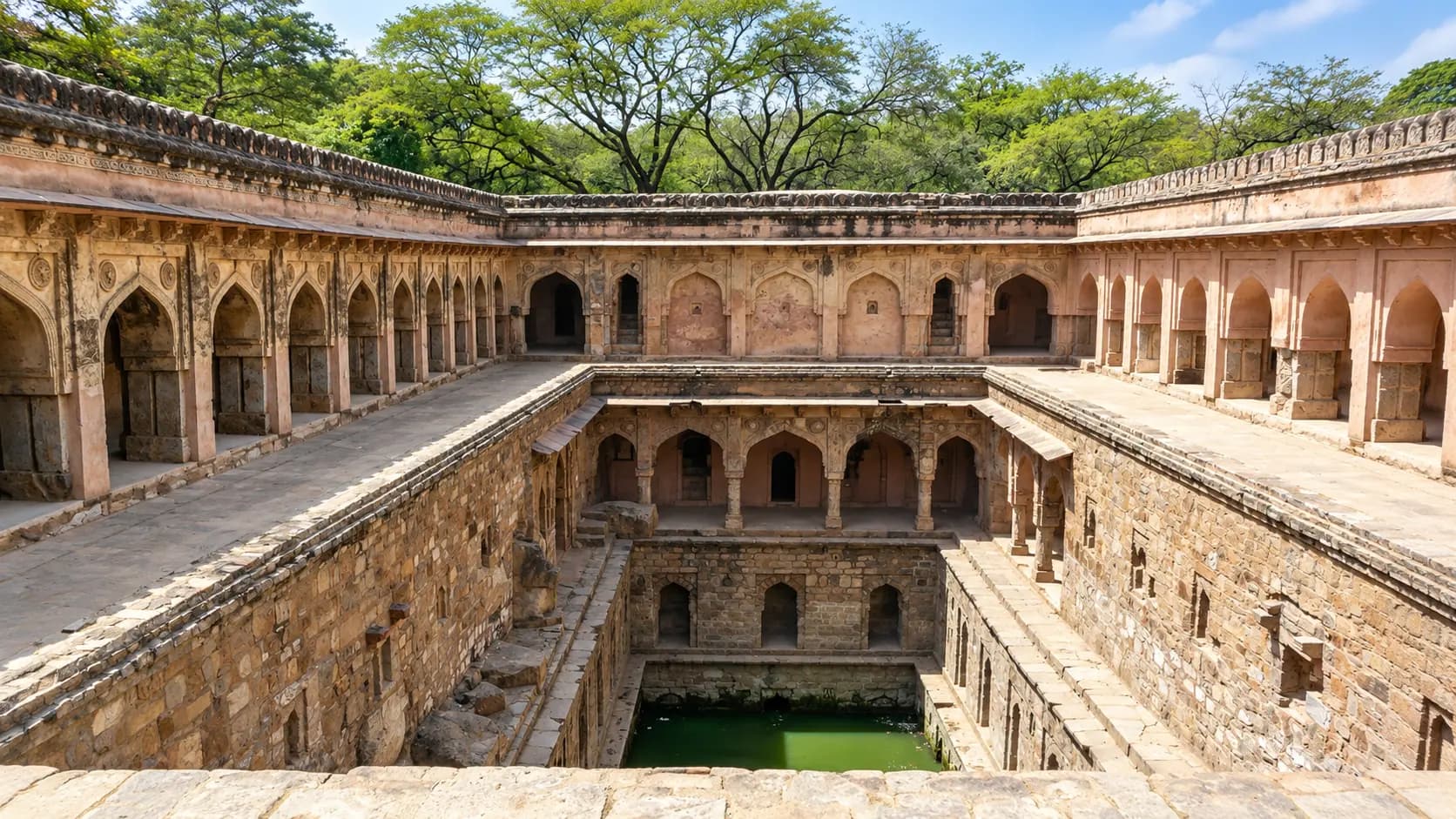
Few historical structures in Delhi elicit the sheer sensory surprise of Rajon ki Baoli. Approached across a level, dusty forest clearing, the ground suddenly drops away into a dramatic four-storeyed subterranean chasm carved directly into the bedrock. Built in 1506 CE during the reign of Sultan Sikandar Lodhi, this majestic stepwell (baoli) was commissioned by nobleman Daulat Khan for the stone-carvers and masons (raaj) working on imperial projects. With its tiers of arched galleries, subterranean stone halls designed to offer cool respite from the blistering summer sun, descending grand stone staircases, and an adjoining stone mosque topped with an ornate domed chhatri, Rajon ki Baoli is widely regarded as Delhi's most aesthetically complete and atmospheric stepwell.
Tranquil Natural Woodland and Birdwatching Sanctuary
Mehrauli Archaeological Park is as much an ecological asset as it is an open-air museum. Forming part of the Southern Ridge ecosystem, the park’s 200 acres provide a vital refuge for indigenous semi-arid flora and wildlife. Unlike the manicured, manic traffic-choked avenues of central Delhi, the park’s winding dirt and stone trails are quiet, shaded, and alive with birdsong. Flocks of peacocks strut across ancient masonry walls; Indian grey hornbills, spotted owlets, parakeets, laughing doves, and golden orioles flit through the tree canopy; and wandering nilgai antelopes graze amidst medieval ruins during the early morning hours.
What to expect
Covering 200 acres of undulating terrain, the park is traversed by a network of paved footpaths, stone trails…Explore detailsClose details
Covering 200 acres of undulating terrain, the park is traversed by a network of paved footpaths, stone trails, and dirt tracks. Monuments are dispersed throughout the wooded landscape, interspersed with green lawns, stone retaining walls, and ancient water channels. Expect a walking-intensive visit involving unpaved terrain, stone staircases, and gradual elevation changes across the rocky Aravalli spur.
1. Jamali Kamali Mosque and Tomb Complex
Situated close to the park’s main northern entrance, the Jamali Kamali complex is the best-preserved and most architecturally refined pre-Mughal ensemble in Mehrauli.
- The Mosque (1528 - 1529 CE): Begun during the closing years of the Lodhi Dynasty and completed under Emperor Babur, the mosque represents a pivotal transitional phase bridging the Sultanate and Mughal styles. Its eastern facade features five arched openings, with the central arch rising prominently within a raised rectangular frame (pishtaq). The facade is constructed of deep red sandstone inlaid with white marble bands, carved strapwork, and delicate stone jaalis. The interior prayer hall contains five vaulted bays, with the central bay crowned by a well-proportioned hemispherical dome supported on squinches. Fluted octagonal turrets flank the rear corners, prefiguring the minarets of later Mughal mosques.
- The Tomb of Jamali (c. 1536 CE): Located within an enclosed walled courtyard north of the mosque, this modest flat-roofed chamber houses the cenotaphs of Shaikh Fazlu'llah - the esteemed Sufi saint and poet who adopted the pen name Jamali (meaning "beauty" or "grace") - and his companion Kamali. While the exterior appears understated, the interior ceiling is a masterpiece of decorative art: completely covered in incised and painted lime plaster, embellished with brilliant blue and yellow glazed ceramic tiles, and inscribed with verses from Jamali’s own Sufi poetic compositions (Siyar al-Arifin). The chamber is generally kept locked by the ASI for conservation purposes, but visitors can view the exquisite interior through the stone jali screens.
2. The Tomb of Ghiyas-ud-din Balban and Khan Shahid
Located a short walk southwest along a dirt forest path, this monument is one of the most historically significant yet hauntingly ruined sites in Delhi.
- Balban's Mausoleum (c. 1287 CE): Sultan Ghiyas-ud-din Balban ruled the Delhi Sultanate with an iron fist, consolidating royal power through his policy of "blood and iron" (lahu aur loha). His tomb is a square, roofless chamber built of rough quartzite rubble originally finished in smooth white plaster. On each of its four sides, opening outward toward the forest, stands a monumental arched gateway built with radiating stone voussoirs and a central keystone - the earliest verified structural true arches in South Asian architectural history.
- Tomb of Khan Shahid: Directly adjacent to Balban’s tomb stands a smaller ruined rectangular tomb chamber attributed to his beloved eldest son and heir apparent, Prince Muhammad (popularly remembered as Khan Shahid, or "The Martyr Prince"). A renowned patron of literature who brought the poet Amir Khusrau to his court in Multan, Prince Muhammad was killed defending the northwestern frontier against Mongol invaders in 1285 CE. Balban never recovered from the grief of his son’s death, dying soon after in 1287.
3. Rajon ki Baoli Stepwell Complex
Descending a shaded stone walkway into a natural depression brings visitors to Rajon ki Baoli, an awe-inspiring subterranean monument built in 1506 CE.
- Four Subterranean Tiers: The stepwell descends through four distinct stone-tiered levels to the water reservoir at the bottom. Each level features deeply recessed arcaded colonnades and chambers where travelers and quarry masons could rest in the cool subterranean microclimate during Delhi's blistering 45°C summer heatwaves.
- Adjoining Mosque and Tomb: At the ground level on the southern lip of the stepwell stands an elegant three-bay stone mosque, its central arch framed by decorative stone battlements. Adjoining the mosque is a raised square stone plinth carrying a magnificent twelve-pillared open chhatri with an ornate stone dome adorned with incised plasterwork and remnants of blue ceramic tile glazing, marking the final resting place of Daulat Khan.
4. Gandhak ki Baoli
Located near the southern periphery of the park, close to the entrance of Mehrauli village, Gandhak ki Baoli is Delhi’s oldest surviving stepwell, traditionally attributed to the reign of Sultan Shams-ud-din Iltutmish (reigned 1211 - 1236 CE).
- Architecture and Hydrology: A five-tiered stepped stone well constructed of rough coursed quartzite masonry. The name Gandhak derives from the Hindi word for sulfur, referencing the natural sulfurous spring that fed the deep well basin. Historically, the sulfur-rich water was celebrated across southern Delhi for its curative and dermatological healing properties, attracting pilgrims seeking relief from skin ailments.
5. Metcalfe’s Dilkusha and Colonial Follies
In the 1840s, Sir Thomas Metcalfe, the British Resident at the imperial Mughal court of Emperor Bahadur Shah Zafar, selected the high ground of Mehrauli to build a grand summer retreat where he could escape the heat, dust, and political intrigue of Shahjahanabad (Old Delhi).
- Dilkusha ("Heart's Delight"): Rather than building from scratch, Metcalfe audaciously appropriated the sixteenth-century octagonal Mughal tomb of Muhammad Quli Khan (the foster brother of Emperor Akbar) and remodeled it into an English neoclassical country villa. He knocked out stone walls, installed fireplaces, added exterior porticos, dining halls, and living suites, and converted the surrounding rocky scrubland into landscaped English gardens complete with an artificial lake.
- Architectural Follies and Watchtowers: Metcalfe constructed fanciful stepped stone follies, battlemented watchtowers, and artificial ruins around his estate to satisfy the English romantic aesthetic of the "picturesque." He also converted a medieval octagonal stone pavilion into a summerhouse (known as Metcalfe’s Canopy) overlooking his private boathouse. Following the 1857 uprising, the estate was looted, and today its evocative ruins stand as a fascinating colonial layer superimposed upon Mughal sacred architecture.
6. Chaumukha Darwaza and Overlooked Ruins
Scattered across the park’s western woodlands are dozens of lesser-known structures:
- Chaumukha Darwaza: A massive four-way arched gateway that historically marked an entrance into the fortified precincts of the medieval city.
- Tomb of Maulana Jamali’s Brother (Bagh-i-Alam): Nearby stone tombs with graceful fluted domes.
- Lodhi and Mughal Wall-Mosques: Modest open-air prayer terraces (eidgahs) featuring decorated mihrabs, stone minbars (pulpits), and carved plaster calligraphy standing quietly amidst the acacia thickets.
Best time to visit
Because Mehrauli Archaeological Park is an expansive outdoor environment requiring 2 to 3 hours of walking across…Explore detailsClose details
Because Mehrauli Archaeological Park is an expansive outdoor environment requiring 2 to 3 hours of walking across unshaded stone ruins and open scrubland, timing your visit according to season and time of day is essential for an enjoyable experience.
Winter (October to March) - The Golden Season
Winter is unquestionably the prime period for exploring Mehrauli.
- Weather Conditions: Daytime temperatures average a pleasant 18°C to 24°C from November through February, accompanied by clear, sunlit skies and gentle breezes. Morning temperatures can dip to 8°C - 12°C, making warm layers advisable for early walks.
- Visuals and Ambiance: The crisp winter air, low-angled golden sunlight, and absence of summer dust create idyllic conditions for architectural photography, particularly around the recessed colonnades of Rajon ki Baoli and the intricate sandstone facade of Jamali Kamali.
- Wildlife Activity: Winter mornings bring maximum bird activity, with migratory flycatchers, warblers, and raptors joining resident hornbills, owlets, and peacocks.
Summer (April to June) - Challenging Heat
Summer in Delhi is severe, with midday temperatures routinely exceeding 42°C to 45°C.
- Visitor Experience: Exploring an open 200-acre park under blistering solar radiation is physically taxing and poses risks of heat exhaustion and severe dehydration.
- Timing Window: If visiting during summer, restrict your exploration strictly to the first two hours after sunrise (06:00 to 08:30). Early mornings remain relatively cool, and the subterranean tiers of Rajon ki Baoli provide natural thermal insulation. Midday visits should be entirely avoided.
Monsoon (July to September) - Vibrant Greens and Atmospheric Skies
The arrival of the southwest monsoon revives the parched landscape of the Aravalli Ridge.
- Landscape Transformation: The thorny scrub forest turns an intense, vibrant emerald green; mosses and wild creepers cling to weathered quartzite stones; and the subterranean basin of Rajon ki Baoli fills with rainwater, reflecting the ancient arched galleries in dark water.
- Visiting Tips: Carry a sturdy umbrella, waterproof footwear, and insect repellent, as muddy forest trails and mosquitoes can be prevalent following heavy rains. Overcast skies provide soft, diffuse lighting that enhances the rich red sandstone hues of the monuments.
How to reach
Mehrauli Archaeological Park is located within the Mehrauli Sub-Division of the South Delhi revenue district…Explore detailsClose details
Mehrauli Archaeological Park is located within the Mehrauli Sub-Division of the South Delhi revenue district, directly south of Sri Aurobindo Marg and west of Anuvrat Marg, immediately adjacent to the Qutub Minar complex. Its strategic South Delhi position makes it exceptionally well connected by public metro transit, road networks, and app-based cabs.
By Delhi Metro (Fastest and Most Efficient)
The Delhi Metro system offers the simplest, most reliable way to reach the park without navigating South Delhi traffic:
-
Qutab Minar Metro Station (Yellow Line):
- The closest metro station, situated approximately 800 meters to 1 km south along Anuvrat Marg.
- For travelers arriving from Central Delhi (Rajiv Chowk / Connaught Place), New Delhi Railway Station, Central Secretariat, or Gurugram (Millennium City Centre), take the Yellow Line directly to Qutab Minar Station.
- Exit via Gate 1 or Gate 2. Confirm the current charge and what it includes with the operator or service provider. Visitor admission, vehicles, parking, activities and accommodation can have separate charges.
- Alternatively, it is a comfortable 10-minute walk northbound along the pedestrian sidewalk of Anuvrat Marg past the Ahinsa Sthal rock.
-
Saket Metro Station (Yellow Line):
- Located approximately 1.5 km northeast along Mehrauli-Badarpur (MB) Road.
- Provides an alternative arrival point with readily available auto-rickshaws and feeder buses connecting directly to the Mehrauli terminal roundabout.
By Bus (Delhi Transport Corporation - DTC)
Multiple DTC bus routes serve the Mehrauli transit hub:
- Key Bus Stops: Alight at Qutub Minar Bus Stop, Ahinsa Sthal, or the Mehrauli Bus Terminal.
- Connectivity: Frequent low-floor AC (red/blue) and non-AC (green) buses connect Mehrauli directly to Central Secretariat, Kashmiri Gate, Connaught Place, Nehru Place, and railway terminals across the National Capital Territory. From the Qutub bus stop, the park entrance gate is less than 300 meters away on foot.
By Auto-Rickshaw and App-Based Cabs
Pre-paid three-wheelers, metered autos, and cab aggregators (Uber and Ola) operate continuously throughout the area.
- Drop-off Destination: Set your navigation destination specifically to "Mehrauli Archaeological Park Main Gate" or "Jamali Kamali Parking" off Anuvrat Marg.
- Taxi Access: Cabs can pull directly up to the main vehicular entrance gate and parking lot, allowing visitors to disembark immediately at the start of the pedestrian walking trails.
By Private Car & Parking Information
Driving to Mehrauli Archaeological Park is straightforward via major arterial corridors:
- Driving Route: From Central or New Delhi, drive south down Sri Aurobindo Marg past IIT flyover and Adchini, continuing straight onto Anuvrat Marg toward Gurugram. The park entrance gate is on your right-hand side, directly opposite the prominent rock-top statue of Ahinsa Sthal and roughly 200 meters before the Qutub Minar complex turnoff.
- Surface Parking: A designated surface parking lot managed by DDA/MCD is available at the main park entrance gate. Ample parking space is generally available on weekday mornings, though spots fill up on winter weekend afternoons due to visitors overflowing from the neighboring Qutub Minar. Confirm the current charge and what it includes with the operator or service provider. Visitor admission, vehicles, parking, activities and accommodation can have separate charges.
Airport and Inter-City Railway Connections
- Indira Gandhi International Airport (DEL): Located approximately 13 km northwest via Vasant Kunj and Mahipalpur. Travel time by taxi is approximately 25 to 35 minutes depending on traffic conditions.
- Hazrat Nizamuddin Railway Station (NZM): Located roughly 14 km northeast via Lala Lajpat Rai Marg and Mehrauli-Badarpur Road (approx. 30 - 40 minutes by cab).
- New Delhi Railway Station (NDLS): Located roughly 16 km north. Accessible directly via a convenient 30-minute ride on the Delhi Metro Yellow Line from New Delhi Station to Qutab Minar Station.
Entry, timings and permissions
Fees, visiting hours and entry rules may change.Explore detailsClose details
Fees, visiting hours and entry rules may change. Confirm the latest details with the official operator or local authority before travelling.
A significant advantage of Mehrauli Archaeological Park compared to other major historic sites in Delhi is its open, community-accessible governance model.
Entry Fees
- Park Admission: Completely Free. There is no entry fee, gate tariff, or admission ticket required to enter Mehrauli Archaeological Park, walk its trails, or explore any of its conserved monuments, including Jamali Kamali, Rajon ki Baoli, Balban’s Tomb, or Metcalfe’s Dilkusha.
- Crucial Distinction: While the adjacent Qutub Minar complex requires an ASI ticket (₹40 for Indians, ₹600 for foreigners), Mehrauli Archaeological Park is an open public green space maintained jointly by the DDA and ASI with free public access for all visitors.
Operating Hours
Facility / Area | Days of Operation | Timings | Notes |
|---|---|---|---|
Park Gates & Walking Trails | All 7 Days (Monday to Sunday) | Sunrise to Sunset (~06:00 to 18:30) | Entry gates close at sunset; visitors must exit before darkness falls |
Jamali Kamali Complex | All 7 Days | 06:00 to 18:00 | Mosque courtyard accessible; tomb chamber interior viewed through jali screens |
Rajon ki Baoli | All 7 Days | Sunrise to Sunset | Accessible year-round; caution advised on steep, unbarricaded lower steps |
DDA Surface Parking | All 7 Days | 06:00 to 19:00 | Standard municipal hourly parking charges apply |
Permissions, Filming, and Drone Regulations
- Personal Photography: Still photography using handheld mobile phones, compact digital cameras, and mirrorless or DSLR bodies for personal, non-commercial use is entirely permitted across the park without any fee or permit.
- Tripods and Commercial Shoots: While casual handheld photography is welcome, the use of professional tripods, light reflectors, fashion portfolio crews, and commercial video production teams within ASI-protected structures requires formal prior statutory permission and fee submission through the Archaeological Survey of India Delhi Circle portal (
asidelhicircle.bih.nic.in). - Pre-Wedding Shoots: Due to the park’s romantic ruins and lush foliage, Mehrauli is a favored location for pre-wedding photography. Security personnel stationed at Jamali Kamali may ask for an ASI permit if professional lighting equipment or multiple costume changes are observed.
- Drone Operations: Flying drones (unmanned aerial vehicles) is strictly illegal across the entire Mehrauli Archaeological Park and the Qutub Minar precinct. The airspace falls under strict security restrictions due to proximity to the Indira Gandhi International Airport flight corridor and central VIP zones.
Nearby places to consider
The southern district of Delhi is packed with extraordinary heritage, shopping, and natural sights.Explore detailsClose details
The southern district of Delhi is packed with extraordinary heritage, shopping, and natural sights. Combining Mehrauli Archaeological Park with adjacent landmarks makes for a comprehensive day-long South Delhi cultural expedition:
1. Qutub Minar Complex (Directly Adjacent - 200 m North)
The towering 72.5-meter victory minaret erected by Qutb-ud-din Aibak and completed by Iltutmish and Firuz Shah Tughlaq is a UNESCO World Heritage site. Explore the Quwwat-ul-Islam Mosque built from the architectural spoils of 27 ancient Hindu and Jain temples, marvel at the rust-resistant fourth-century Iron Pillar of Chandragupta II, walk beneath the magnificent red sandstone arches of the Alai Darwaza gateway, and inspect the massive unfinished base of Alauddin Khalji’s Alai Minar. Accessible within a 5-minute walk from the park's northern perimeter.
2. Ahinsa Sthal (Directly Opposite - 150 m East)
Perched atop a massive rocky hillock directly across Anuvrat Marg from the park entrance, Ahinsa Sthal is a serene Jain memorial established in 1980. A flight of stone steps leads to an open-air marble pavilion housing a colossal 13.5-foot carved stone statue of Lord Mahavira seated in the lotus posture (padmasana). The summit provides sweeping panoramic views across Mehrauli Archaeological Park and the Qutub Minar silhouette.
3. Zafar Mahal and Dargah of Qutbuddin Bakhtiyar Kaki (Approx. 1 km South)
Located deep within the bustling, narrow lanes of historic Mehrauli village lies Zafar Mahal, the summer palace of the last Mughal emperor, Bahadur Shah Zafar. Its grand red sandstone gateway (Hathi Gate) was designed to allow imperial elephants to pass through. Inside the courtyard lies an empty marble enclosure where Bahadur Shah Zafar had hoped to be buried alongside his ancestors - a poignant monument given his eventual exile and death in Rangoon (Yangon). Nearby stands the venerated shrine of Hazrat Qutbuddin Bakhtiyar Kaki, one of the foremost Sufi saints of the Chishti order in India.
4. Sanjay Van & Delhi Southern Ridge (Approx. 1.5 km Northwest)
For avid hikers and naturalists, Sanjay Van is a sprawling 783-acre protected city forest contiguous to Mehrauli. Filled with ancient quartzite crags, restored water bodies, and walking trails that follow the tenth-century stone ramparts of Qila Rai Pithora, it is Delhi’s foremost urban wilderness for hiking, trail running, and birding.
5. Hauz Khas Village and Deer Park (Approx. 5.5 km North)
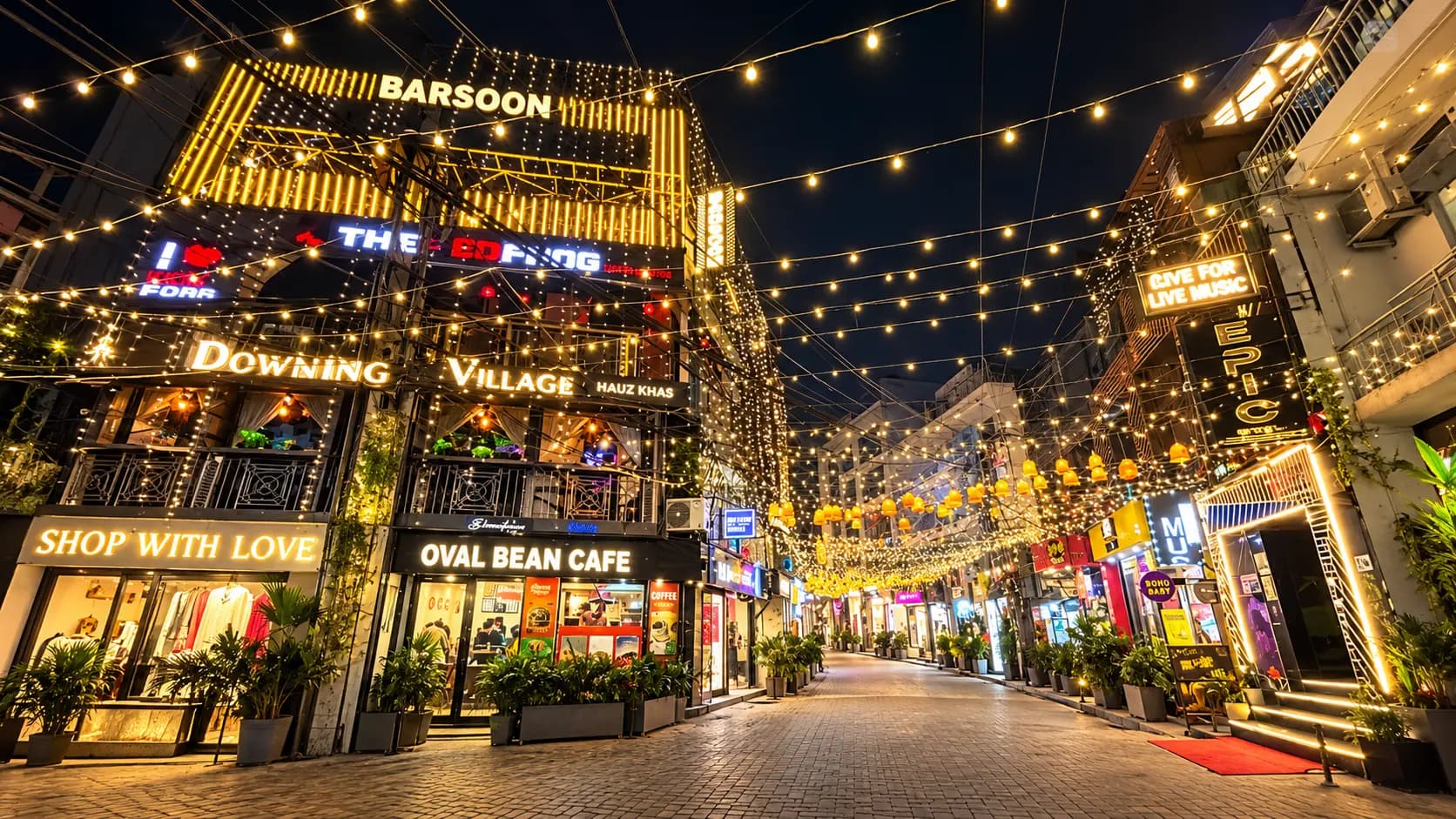
Located a short 12-minute taxi ride or four metro stops northbound on the Yellow Line, Hauz Khas Village offers another captivating pairing of fourteenth-century Sultanate ruins (Firuz Shah Tughlaq's madrasa and tomb) with an expansive water reservoir, contiguous deer parklands, and a bohemian village filled with designer fashion boutiques, art studios, and rooftop dining.
In pictures
The practical bits
Before you go.
Plan ahead
To maximize your experience while walking through this expansive, 200-acre heritage landscape, observe these four…Explore detailsClose details
To maximize your experience while walking through this expansive, 200-acre heritage landscape, observe these four indispensable preparation blocks covering safety, footwear, hydration, and route planning:
Morning Arrival for Optimal Light and Comfort
Plan your arrival at the park gate between 07:00 and 08:30.Explore detailsClose details
Plan your arrival at the park gate between 07:00 and 08:30. Early morning visits provide soft, golden side-lighting that illuminates the carved red sandstone facade of the Jamali Kamali mosque and casts long shadows across the multi-tiered colonnades of Rajon ki Baoli. Furthermore, arriving early guarantees comfortable ambient temperatures before the midday sun heats the exposed stone courtyards.
Sturdy, Closed-Toe Walking Footwear
Wear durable athletic shoes or hiking footwear with solid rubber treads.Explore detailsClose details
Wear durable athletic shoes or hiking footwear with solid rubber treads. The park terrain comprises loose gravel trails, uneven ancient quartzite flagstones, exposed tree roots, and steep, unbarricaded subterranean stone staircases inside Rajon ki Baoli and Gandhak ki Baoli. Avoid open sandals, flip-flops, or heeled shoes, which pose severe slipping hazards on weathered stone edges.
Hydration and Sun Protection Supplies
Bring a reusable water bottle (at least 1 liter per person), sunglasses, a broad-brimmed sun hat, and high-SPF…Explore detailsClose details
Bring a reusable water bottle (at least 1 liter per person), sunglasses, a broad-brimmed sun hat, and high-SPF sunscreen. While basic packaged beverages and snacks are available from small kiosks near the main entrance gate on Anuvrat Marg, there are no commercial vendors or cafes located within the deep interior forest trails around Balban’s Tomb or Rajon ki Baoli.
Personal Safety and Daylight Awareness
Because Mehrauli Archaeological Park is a large, semi-forested woodland with dense acacia thickets and isolated…Explore detailsClose details
Because Mehrauli Archaeological Park is a large, semi-forested woodland with dense acacia thickets and isolated trail spurs, visitors should stick to well-trodden, marked heritage paths and avoid wandering alone into secluded, overgrown sections of the park. Always plan your exit to coincide with sunset; the interior trails are unlit after dark, and municipal security personnel clear the grounds at dusk.
Suggested 3-Hour Heritage Trail Itinerary
To ensure you experience all major historical landmarks without unnecessary backtracking, follow this proven sequential walking circuit:
08:00 - 08:45: Jamali Kamali Mosque and Tomb
Enter through the main gate off Anuvrat Marg and follow the paved central walkway 150 meters northwest to Jamali…Explore detailsClose details
Enter through the main gate off Anuvrat Marg and follow the paved central walkway 150 meters northwest to Jamali Kamali. Spend 45 minutes examining the pre-Mughal red sandstone prayer facade, the corner turrets, the five vaulted bays, and peer through the stone jali into Jamali's polychrome tiled tomb chamber. 2.
08:45 - 09:30: Balban’s Tomb and Khan Shahid
Walk southwest along the shaded dirt path for approximately 300 meters into the tranquil wooded depression…Explore detailsClose details
Walk southwest along the shaded dirt path for approximately 300 meters into the tranquil wooded depression housing Sultan Ghiyas-ud-din Balban’s mausoleum. Examine the ancient quartzite keystones forming the subcontinent's earliest surviving true arch, then visit the adjacent ruined tomb of Prince Muhammad (Khan Shahid). 3.
09:30 - 10:15: Rajon ki Baoli & Mosque Complex
Continue westward along the forested trail following INTACH directional signposts for 400 meters to reach Rajon…Explore detailsClose details
Continue westward along the forested trail following INTACH directional signposts for 400 meters to reach Rajon ki Baoli. Spend 45 minutes walking the four subterranean tiers, descending carefully to the water level, exploring the cool arcaded stone galleries, and photographing the adjoining Lodhi-era mosque and chhatri. 4.
10:15 - 10:45: Metcalfe’s Dilkusha and Metcalfe's Canopy
Head north toward the elevated ridge overlooking the park.Explore detailsClose details
Head north toward the elevated ridge overlooking the park. Explore the curious ruins of Muhammad Quli Khan's tomb remodeled by Sir Thomas Metcalfe into a Victorian country estate, climb the knoll to Metcalfe's Canopy, and take in the panoramic vista of the Qutub Minar rising above the tree canopy. 5.
10:45 - 11:00: Exit to Mehrauli Village / Qutub Minar
Complete the loop by walking back toward the main gate, or exit via the southern gate past Gandhak ki Baoli into…Explore detailsClose details
Complete the loop by walking back toward the main gate, or exit via the southern gate past Gandhak ki Baoli into historic Mehrauli village for a cup of masala chai.
A few things you might wonder
Common questions about visiting Mehrauli Archaeological Park. Fees, visiting hours and ceremonies are researched details that may change; confirm current arrangements with the operator before travelling.
What is the historical significance of Mehrauli Archaeological Park?
Is there an entry fee to visit Mehrauli Archaeological Park?
What are the park's opening hours, and when is the best time to visit?
How do I reach the park using the Delhi Metro?
Is Mehrauli Archaeological Park safe for solo visitors and families?
Can I visit both Qutub Minar and Mehrauli Archaeological Park together?
Explore more in South Delhi
Discover other destinations around this hub
Planning a trip to South Delhi?