Hauz Khas Village
Plan your visit to Hauz Khas Village in South Delhi. Comprehensive guide covering the 14th-century Tughlaq madrasa, lake, entry tickets, cafes, and Deer Park.
Location
South Delhi, Delhi NCR
A closer look
Your visit, at a glance.
South Delhi, Delhi Ncr
GET TO KNOW THE PLACE
In the urban fabric of southern Delhi, few enclaves embody the dramatic juxtaposition of imperial antiquity and contemporary bohemian energy as vividly as Hauz Khas Village.
The story of Hauz Khas Village
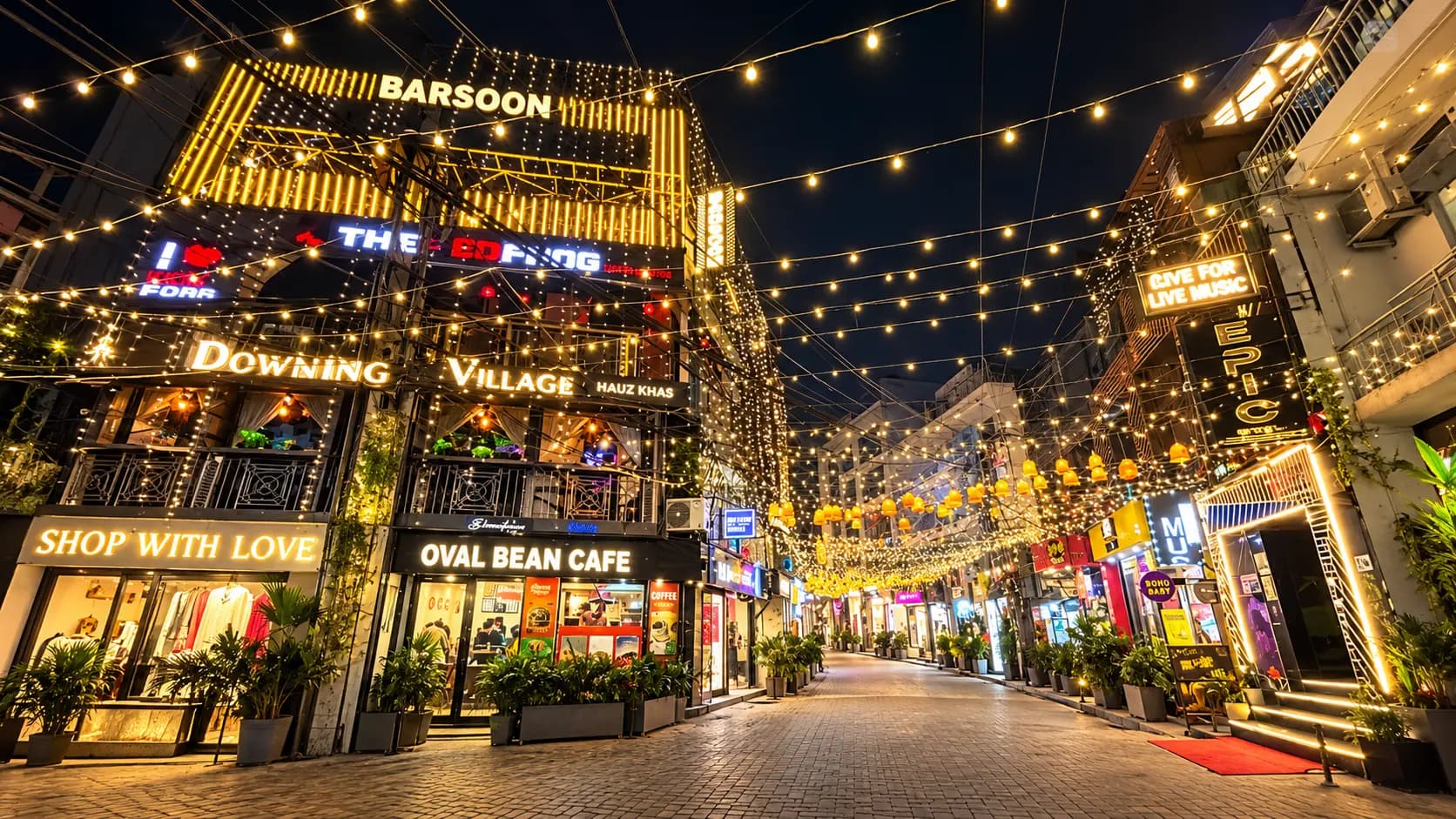
In the urban fabric of southern Delhi, few enclaves embody the dramatic juxtaposition of imperial antiquity and contemporary bohemian energy as vividly as Hauz Khas Village. Known colloquially to generations of Delhi residents, university students, scholars, and global travelers as HKV, this compact urban village (lal dora settlement) sits directly at the intersection of fourteenth-century Delhi Sultanate grandeur and twenty-first-century lifestyle culture. To step through the narrow, high-density pedestrian street of the village is to transition abruptly from an eclectic labyrinth of fashion ateliers, vintage poster shops, vinyl record dens, artisanal coffee roasters, and rooftop bistros into the open expanse of one of the medieval Islamic world’s most celebrated seats of higher learning: the fourteenth-century Madrasa-e-Firuz Shahi, anchored by the tomb of Sultan Firuz Shah Tughlaq, flanked by an L-shaped colonnade of stone classrooms and assembly halls, and gazing out over the waters of a vast medieval royal reservoir.
Beyond the stone ramparts of the monument complex extends a sweeping green belt comprising the Hauz Khas Lake embankment, the contiguous woodlands of the A.N. Jha Deer Park, the Delhi Development Authority (DDA) District Park, and the ancient wilderness of the Southern Ridge at Sanjay Van. The result is a multi-layered destination where one can spend the early morning birdwatching along tranquil lake trails, spend the midday examining Delhi Sultanate stone masonry, spending the late afternoon browsing bespoke textile design and contemporary Indian art, and watching the sunset cast golden reflections across ancient stone arches from a rooftop lakeside cafe. Whether approached as an archaeological masterwork, an ecological sanctuary, or a creative urban quarter, Hauz Khas Village offers one of the most multifaceted day outings anywhere in the National Capital Territory.
Start here. Open a tile for the full details.
Why goRead details
Hauz Khas Village stands apart from Delhi’s other major historical monuments by virtue of its integrated, living urban context. While monumental complexes like Humayun's Tomb or the Qutub Minar are preserved inside isolated, formal archaeological enclosures, Hauz Khas is intimately entwined with a vibrant village neighborhood. The historical ruins do not exist in a vacuum; they form the daily backyard of independent fashion designers, culinary innovators, painters, photographers, and local residents whose ancestral roots in the village span centuries.
When to visitRead details
South Delhi experiences a subtropical semi-arid climate characterized by three distinct meteorological seasons: a cool, dry winter; an extremely hot, arid summer; and a humid monsoon season. Planning your visit around these seasonal patterns ensures optimal outdoor walking and sightseeing comfort.
Entry & permissionsRead details
Fees, visiting hours and entry rules may change. Confirm the latest details with the official operator or local authority before travelling.
A clear understanding of the regulatory distinction between the ASI-protected monument zone and the public village precinct will help you plan your itinerary smoothly.
Monument Complex Entry Tariffs (ASI Protected Site)
The fourteenth-century madrasa, Firuz Shah’s tomb, and the adjacent lakeside pavilions are designated as a Centrally Protected Monument of National Importance under the Archaeological Survey of India (ASI, Delhi Circle). Access to this historical enclosure requires an admission ticket:
Category | Cashless Online Booking (QR Code / ASI Portal) | Physical Booking Counter (Cash) |
|---|---|---|
Indian Citizens | ₹25 | ₹30 |
SAARC Nationals (Afghanistan, Bangladesh, Bhutan, Maldives, Nepal, Pakistan, Sri Lanka) | ₹25 | ₹30 |
BIMSTEC Nationals (Bangladesh, Bhutan, Myanmar, Nepal, Sri Lanka, Thailand) | ₹25 | ₹30 |
Foreign Tourists (All other nationalities) | ₹300 | ₹325 |
Children (Up to 15 years, Indian and Foreign) | Free (Valid age ID recommended) | Free |
Ticketing Note: The Archaeological Survey of India strongly encourages digital ticketing. QR codes displayed at the monument entrance gate allow visitors to purchase instant e-tickets using smartphones and unified payment interfaces (UPI), bypassing potential queues at the manual booking window.
Public Zone Admissions
- Hauz Khas Village Market Precinct: Public access to the urban village lanes, boutiques, galleries, and cafes is completely free and unrestricted.
- A.N. Jha Deer Park and DDA District Park: Entry to the public parklands, jogging trails, deer viewing enclosures, and lake promenade is entirely free of charge year-round.
Operating Timings
Facility / Precinct | Operating Days | Standard Timings | Notes |
|---|---|---|---|
ASI Monument Complex | All 7 Days (Monday to Sunday) | Sunrise to Sunset (~06:00 to 18:00 / 18:30) | Entry gates close 30 minutes before official sunset |
DDA Deer Park & District Park | All 7 Days (Monday to Sunday) | 05:00 to 20:00 (Summer: Apr - Sep)05:30 to 19:00 (Winter: Oct - Mar) | Open daily for morning and evening public recreation |
Village Boutiques & Art Ateliers | Daily (Individual shop schedules vary) | 11:00 to 20:00 | Select independent designer shops open at 11:30 |
Village Cafes, Bistros & Restaurants | All 7 Days | 11:30 to 00:00 midnight | Weekend dinner services extend to 00:30 per municipal excise guidelines |
Permissions, Photography, and Filming Guidelines
- Casual Photography: Non-commercial personal photography and amateur videography using handheld smartphones, compact digital cameras, and mirrorless bodies are permitted throughout the monument complex, parklands, and village lanes without any supplementary fee.
- Tripods and Commercial Shoots: As with all ASI-protected monuments across India, the use of camera tripods, monopods, lighting stands, and commercial equipment requires prior written authorization and payment of statutory commercial filming fees through the Archaeological Survey of India's official web portal (
asidelhicircle.bih.nic.in). Pre-wedding shoots, commercial fashion portfolio sessions, and corporate advertising campaigns without valid ASI permits are strictly stopped by site security guards. - Drone Operations: Flying unmanned aerial vehicles (drones) is strictly prohibited across the entire Hauz Khas monument complex, Deer Park, and the surrounding South Delhi airspace due to strict Directorate General of Civil Aviation (DGCA) security regulations governing the National Capital Territory.
Plan your visitRead details
Hauz Khas Village is situated in the Hauz Khas Sub-Division of the South Delhi revenue district, conveniently positioned between Sri Aurobindo Marg to the east and Africa Avenue to the west. Thanks to its central South Delhi location, it is easily reachable via Delhi's public transit system, app-based ride-hailing services, and private vehicles.
Explore the full guide - choose a topic below.
Why visit?
Hauz Khas Village stands apart from Delhi’s other major historical monuments by virtue of its integrated, living…Explore detailsClose details
Hauz Khas Village stands apart from Delhi’s other major historical monuments by virtue of its integrated, living urban context. While monumental complexes like Humayun's Tomb or the Qutub Minar are preserved inside isolated, formal archaeological enclosures, Hauz Khas is intimately entwined with a vibrant village neighborhood. The historical ruins do not exist in a vacuum; they form the daily backyard of independent fashion designers, culinary innovators, painters, photographers, and local residents whose ancestral roots in the village span centuries.
Architectural Masterpiece of the Tughlaq Renaissance
The architectural centerpiece of Hauz Khas is the Madrasa-e-Firuz Shahi, commissioned in 1352 CE by Sultan Firuz Shah Tughlaq (reigned 1351 - 1388 CE). Unlike the heavily fortified, austere citadels characteristic of earlier Tughlaq construction - such as the massive battered stone bastions of Tughlaqabad - the buildings of Hauz Khas reveal an elegant, intellectual, and contemplative spirit. Built using grey quartzite rubble sourced from the nearby Aravalli Ridge, coated in hard lime plaster (chunam), and detailed with red sandstone and white marble trim, the double-storeyed, L-shaped madrasa hugs the eastern and southern edges of the royal reservoir.
Its arched arcades, recessed student niches (hujras), pillared porticos, deep-set cantilevered balconies (jharokhas), and stepped ghats down to the water created a microclimate that drew cooling breezes off the lake into lecture halls and living quarters. At the hinge of this monumental L-shaped layout rises Firuz Shah’s own tomb - a stately square mausoleum topped with an octagonal drum, an expansive hemispherical dome, and intricately carved stone jali screens. For students of Islamic architecture, architectural historians, and photographers, Hauz Khas provides one of the finest extant examples of Sultanate-era collegiate planning anywhere in Asia.
A Royal Water Reservoir Reborn
The origins of the site predate Firuz Shah by more than half a century. Around 1295 - 1300 CE, the ambitious Sultan Alauddin Khalji excavated an enormous 70-hectare (approximately 100-acre) masonry-lined water tank known as Hauz-i-Alai ("The Royal Tank") to serve the acute drinking and domestic water requirements of his newly fortified capital at Siri, Delhi's second medieval city. While the tank subsequently fell into disrepair and silted up following the fall of the Khalji Dynasty, Firuz Shah Tughlaq undertook a massive desilting and civil engineering restoration project in the 1350s, renaming it Hauz Khas (the Special or Royal Tank).
Today, following extensive ecological restoration initiatives undertaken by the Delhi Development Authority (DDA), municipal engineering bodies, and environmental trusts, the lake has been revitalized into a thriving 15-hectare urban wetland. Outfitted with aerating fountains, constructed wetland bio-swales, and perimeter walking paths, the reservoir draws dozens of resident and migratory bird species throughout the winter months, offering a peaceful waterfront atmosphere virtually unmatched in central and southern Delhi.
Bohemian Urban Enclave and Contemporary Design Hub
During the late 1980s and early 1990s, Hauz Khas Village underwent a radical spatial reinvention. Pioneering fashion designers and couturiers - most notably Bina Ramani - recognized the picturesque potential of the village's rustic cattle sheds, brick residences, and winding lanes. Over the subsequent three decades, HKV evolved into an internationally recognized hub for Indian fashion design, antique furnishings, folk art, independent bookshops, vintage Bollywood memorabilia, and progressive gastronomy.
Unlike sanitized suburban shopping malls, HKV offers an authentic urban stroll through narrow, pedestrian-only corridors where centuries-old stone gateways share walls with concept boutiques, bespoke tailoring ateliers, independent jewelry designers, and avant-garde art galleries. When twilight arrives, the village's lake-facing terraces transform into ambient dining spaces where patrons enjoy artisanal cuisines ranging from Kashmiri wazwan and Kerala coastal delicacies to Italian wood-fired pizza and Mediterranean mezze, all set against the silhouette of medieval domed pavilions.
Integrated Woodland Trails and Wildlife Walks
Directly contiguous to the monument complex lies the A.N. Jha Deer Park and the sprawling Hauz Khas District Park. This continuous green canopy covers hundreds of acres of South Delhi, featuring manicured rose gardens, jogging circuits, open-air calisthenics zones, and protected wildlife enclosures hosting herds of spotted chital deer, peacocks, and nilgai (blue bull antelopes). Walking trails meander under canopies of ancient neem, peepal, babool, and semal trees, connecting the urban village directly to southern recreational greens and ancient Sultanate monuments scattered across the park, including the fourteenth-century Bagh-i-Alam Gumbad and the Kali Gumti. For trail runners, dog walkers, and families, the parklands provide an expansive natural retreat right next to the village core.
What to expect
Visiting Hauz Khas Village is a multi-phased experience that seamlessly combines historical exploration, nature…Explore detailsClose details
Visiting Hauz Khas Village is a multi-phased experience that seamlessly combines historical exploration, nature walking, retail browsing, and dining. Because the site encompasses both an enclosed, ticketed archaeological zone and an open, public urban neighborhood, understanding the physical layout and daily rhythm of the complex ensures a rewarding visit.
1. The Medieval Monument Complex (Madrasa-e-Firuz Shahi and Firuz Shah's Tomb)
The ticketed historical monument complex, managed by the Archaeological Survey of India (ASI, Delhi Circle), is accessed via a dedicated entrance at the southern terminus of the main village lane. Upon passing through the security checkpoint, visitors enter a lush, terraced garden containing a series of freestanding fourteenth-century stone pavilions (chhatris), domed assembly rooms, and tomb structures.
- The Tomb of Firuz Shah Tughlaq: The focal point of the complex is the sultan’s tomb, situated at the exact corner where the two wings of the L-shaped madrasa intersect. Measuring roughly 14 meters on each side, the structure features heavy, battered rubble walls with a slight inward taper - a signature engineering hallmark of the Tughlaq era that conveys enduring solidity. The entrance archway is framed by red sandstone jambs and carved marble bands. Inside, beneath the lofty hemispherical dome, lies the polished plaster floor bearing four stone cenotaphs: the central one belonging to Firuz Shah himself, flanked by his son and grandsons. The interior dome ceiling preserves exquisite incised plaster medallions decorated with Qur’anic calligraphy, geometric strapwork, and floral motifs in shades of vermilion and turquoise.
- The L-Shaped Madrasa Arcades: Stretching along the eastern and southern stone embankments overlooking the lake, the double-storeyed madrasa ruins can be explored through a network of interconnecting chambers, vaulted corridors, stone stairs, and colonnaded halls. Historically, students and scholars lived and studied here under royal stipends provided by the sultan's treasury, with the upper storey serving as lecture halls and faculty residences while the lower tier provided cool, shaded study cells (hujras) directly overlooking the water. Open stone balconies (jharokhas) project outward, framing scenic views across Hauz Khas Lake.
- The Assembly Halls and Mosque Ruins: At the northern end of the east wing stand the remains of the congregational mosque that served the madrasa community, featuring a row of arched mihrabs and an open prayer terrace facing west toward Mecca. Across the lawns, picturesque chhatris with ornate stone brackets and domed cupolas mark the burial sites of revered teachers, theologians, and holy men associated with the college.
2. Hauz Khas Lake and Embankment Promenade
At the foot of the madrasa walls lies the vast stepped stone embankment leading down to Hauz Khas Lake. While direct access down the historic stone steps is gated to protect the fragile masonry, visitors can exit the monument complex and enter the public promenade that circles the lake within the DDA parklands.
- Ecological Revival: The lake's modern revitalisation is an impressive urban ecology case study. Following decades of neglect in the mid-twentieth century during which the reservoir dried out completely, the lake was systematically restored using treated tertiary-grade wastewater pumped from the Vasant Kunj sewage treatment plant (STP), which is further purified through constructed wetland bio-swales and floating reed islands.
- Waterfowl and Birdlife: From late October through February, the lake becomes an oasis for avian life. Spot-billed ducks, common moorhens, little grebes, white-throated kingfishers, and black-crowned night herons are common resident species, joined in midwinter by migratory visitors including northern shovelers, Eurasian teals, and common pochards. Wooden benches along the shaded gravel promenade offer tranquil viewpoints for nature sketching and photography.
3. A.N. Jha Deer Park and District Park Greens
Immediately adjacent to the lake is the A.N. Jha Deer Park (named after Aditya Nath Jha, the first Lieutenant Governor of Delhi). The park is divided into several thematic sectors:
- Deer Enclosure: A large fenced habitat home to spotted chital deer, where visitors can observe the herd grazing beneath indigenous forest trees.
- Peacock Grove: Dense thickets where hundreds of Indian peafowl roam freely, their calls echoing through the forest canopy during early mornings and late afternoons.
- Heritage Trails: Pathways wind past forgotten medieval monuments nestled deep within the woods, including the Bagh-i-Alam Gumbad (a towering Lodhi-era tomb dated to 1501 CE featuring exquisite blue ceramic tilework along its upper parapet) and the Kali Gumti (a compact, arched domed structure).
- Public Recreation: Well-paved perimeter tracks spanning over 3.5 kilometers make this South Delhi’s favorite venue for distance runners, walking clubs, yoga groups, and birding societies.
4. Hauz Khas Village Urban Precinct
Outside the monument gates, the village precinct consists of a dense network of multi-storey buildings separated by narrow, winding alleys that prohibit vehicular traffic.
- Boutique Fashion & Design: Unlike mainstream retail districts, HKV specializes in niche couture, organic handloom clothing, upcycled apparel, bespoke footwear, silver jewelry, and handcrafted leather accessories.
- Art Galleries & Curio Shops: Ground-floor and basement ateliers house contemporary Indian art exhibitions, traditional Pichwai and Madhubani folk paintings, antique brassware, vintage vinyl gramophone records, classic cinema lobby cards, and rare collectible prints.
- Culinary Landscape: HKV has long been celebrated for its gastronomic diversity. Specialty cafes serve pour-over coffees and organic baked goods; terrace restaurants feature panoramic views overlooking the Tughlaq madrasa and lake; and boutique eateries present regional Indian cuisines alongside Mediterranean, Mexican, and pan-Asian menus.
Best time to visit
South Delhi experiences a subtropical semi-arid climate characterized by three distinct meteorological seasons: a…Explore detailsClose details
South Delhi experiences a subtropical semi-arid climate characterized by three distinct meteorological seasons: a cool, dry winter; an extremely hot, arid summer; and a humid monsoon season. Planning your visit around these seasonal patterns ensures optimal outdoor walking and sightseeing comfort.
Winter (October to March) - Prime Tourism Season
The winter months represent the absolute best time of year to explore Hauz Khas Village, the monument complex, and Deer Park.
- Weather & Temperatures: Daytime temperatures range between a pleasant 18°C and 25°C from November through February, dropping to brisk lows of 7°C to 12°C during midwinter nights and early mornings. October and March feature warm, sunlit afternoons (25°C to 30°C) with cool, refreshing evenings.
- Avian Migrations: This period coincides with the arrival of migratory waterfowl at Hauz Khas Lake, making it the peak season for birdwatchers and wildlife photographers.
- Outdoor Dining: Check the current visiting hours and permitted access with the site operator before departure; ceremonies, closures and visitor sessions can affect access.
- Visitor Footfall: Winter weekends (Saturdays and Sundays) experience high visitor volumes, particularly between 14:00 and 19:00. To enjoy quiet, contemplative walks through the monument ruins and peaceful birding around the lake, plan your arrival for a weekday morning between 07:00 and 10:00.
Summer (April to June) - Hot and Arid
Summer in Delhi brings severe daytime heat, with ambient temperatures regularly climbing to between 38°C and 44°C during late May and June.
- Atmospheric Conditions: Dry, scorching westerly winds (loo) blow across the capital during midday hours, making exploration of open stone monument courtyards physically exhausting and dehydrating.
- Strategy for Visiting: If traveling during summer, plan your outdoor itinerary exclusively during the early morning hours (06:00 to 09:00) when Deer Park and the monument ruins are cool and shaded. Midday hours are best spent inside air-conditioned art galleries, boutiques, and cafes. In the evening, the lake creates a mild cooling breeze on rooftop terraces after 19:30.
Monsoon (July to September) - Humid and Lush
The southwest monsoon arrives in early July, bringing episodic downpours and high relative humidity.
- Visual Splendor: While sudden rain showers and muggy conditions require rain gear, the monsoon transforms Hauz Khas into an intensely lush, emerald landscape. The woodlands of Deer Park flourish, the lake fills to its maximum seasonal depth, and the dark grey quartzite walls of the madrasa glisten against overcast skies.
- Photography: Overcast monsoon light produces dramatic photographic opportunities across the water reservoir, with storm clouds rolling low over the medieval dome of Firuz Shah’s tomb.
How to reach
Hauz Khas Village is situated in the Hauz Khas Sub-Division of the South Delhi revenue district, conveniently…Explore detailsClose details
Hauz Khas Village is situated in the Hauz Khas Sub-Division of the South Delhi revenue district, conveniently positioned between Sri Aurobindo Marg to the east and Africa Avenue to the west. Thanks to its central South Delhi location, it is easily reachable via Delhi's public transit system, app-based ride-hailing services, and private vehicles.
By Delhi Metro (Fastest and Most Convenient)
Confirm the current charge and what it includes with the operator or service provider. Visitor admission, vehicles, parking, activities and accommodation can have separate charges.
-
Green Park Metro Station (Yellow Line):
- Located approximately 1.5 km northeast of Hauz Khas Village.
- For visitors traveling from Central Delhi (Connaught Place / Rajiv Chowk), New Delhi Railway Station, Kashmere Gate, or Old Delhi, take the Yellow Line heading toward Samaypur Badli or Millennium City Centre Gurugram.
- Exit via Gate 2 or Gate 3. Confirm the current charge and what it includes with the operator or service provider. Visitor admission, vehicles, parking, activities and accommodation can have separate charges. Alternatively, it is a pleasant 18-minute walk through the peaceful residential avenues of Green Park Main.
-
Hauz Khas Metro Station (Yellow Line & Magenta Line Interchange):
- Located approximately 1.8 km southeast of Hauz Khas Village.
- This major underground interchange station connects the north-south Yellow Line with the east-west Magenta Line (Janakpuri West to Botanical Garden Noida).
- This station is particularly advantageous for travelers arriving directly from Indira Gandhi International Airport Terminal 1 (domestic flights), Noida, or West Delhi.
- Exit via Gate 1 or Gate 4 onto Sri Aurobindo Marg, where auto-rickshaws and app-based cabs are readily available to ferry visitors to the village entrance (travel time: 7 - 10 minutes).
-
IIT Delhi Metro Station (Magenta Line):
- Located roughly 1.5 km southwest along Gamal Abdel Nasser Marg / Outer Ring Road, offering an alternative entry point for those combining HKV with visits to the Indian Institute of Technology or southern parkland trails.
By Bus (Delhi Transport Corporation - DTC)
Numerous DTC low-floor air-conditioned (red/blue) and non-air-conditioned (green) buses traverse Sri Aurobindo Marg:
- Key Bus Stops: Alight at Hauz Khas or Kalu Sarai / Sarvapriya Vihar bus stops along Sri Aurobindo Marg, or at the Deer Park / RK Puram Sector 3 stop along Africa Avenue.
- Feeder Connectivity: From the Aurobindo Marg bus shelter, the entrance road leading into Hauz Khas Village is approximately 800 meters west, easily covered on foot or via a brief auto-rickshaw hop.
By Auto-Rickshaw and App-Based Cabs
Pre-paid autorickshaws, metered three-wheelers, and cab aggregators (Uber and Ola) operate round-the-clock across Delhi-NCR. Set your destination pin specifically to "Hauz Khas Village Parking" or "MCD Multi-Level Car Parking Hauz Khas". Because private motor vehicles are strictly prohibited from entering the narrow, congested pedestrian lanes of the village proper, all cabs and autos drop passengers at the entrance roundabout.
By Private Car & Parking Logistics
Driving to Hauz Khas Village in a private vehicle is straightforward, but parking requires patience during peak hours:
- Route: From Central or New Delhi, drive south along Sri Aurobindo Marg past AIIMS and Green Park, then turn right onto Hauz Khas Village Road just before the IIT flyover.
- Parking Facility: A modern, automated multi-level car parking facility operated by the Municipal Corporation of Delhi (MCD) is situated directly at the village entrance barrier. Confirm the current charge and what it includes with the operator or service provider. Visitor admission, vehicles, parking, activities and accommodation can have separate charges. On weekend afternoons and evenings (Fridays through Sundays), this parking lot frequently fills to capacity, resulting in traffic tailbacks along the access road; visitors are strongly advised to utilize the Delhi Metro during weekend peak periods.
Rail and Airport Transit Connections
- Indira Gandhi International Airport (DEL): The airport lies approximately 12 km west of Hauz Khas Village. A direct taxi ride via Rao Tula Ram Marg and Outer Ring Road takes roughly 25 to 35 minutes depending on traffic. Alternatively, take the Airport Express Line to New Delhi and transfer to the Yellow Line, or board the Magenta Line directly from Terminal 1 (Domestic) to Hauz Khas Metro Station.
- New Delhi Railway Station (NDLS): Situated approximately 12 km north, directly linked via a 20-minute journey on the Delhi Metro Yellow Line from New Delhi Station to Green Park Station.
- Hazrat Nizamuddin Railway Station (NZM): Located roughly 10 km northeast. Taxis and auto-rickshaws connect via Barapullah Elevated Corridor and Sri Aurobindo Marg in 20 to 30 minutes.
Entry, timings and permissions
Fees, visiting hours and entry rules may change.Explore detailsClose details
Fees, visiting hours and entry rules may change. Confirm the latest details with the official operator or local authority before travelling.
A clear understanding of the regulatory distinction between the ASI-protected monument zone and the public village precinct will help you plan your itinerary smoothly.
Monument Complex Entry Tariffs (ASI Protected Site)
The fourteenth-century madrasa, Firuz Shah’s tomb, and the adjacent lakeside pavilions are designated as a Centrally Protected Monument of National Importance under the Archaeological Survey of India (ASI, Delhi Circle). Access to this historical enclosure requires an admission ticket:
Category | Cashless Online Booking (QR Code / ASI Portal) | Physical Booking Counter (Cash) |
|---|---|---|
Indian Citizens | ₹25 | ₹30 |
SAARC Nationals (Afghanistan, Bangladesh, Bhutan, Maldives, Nepal, Pakistan, Sri Lanka) | ₹25 | ₹30 |
BIMSTEC Nationals (Bangladesh, Bhutan, Myanmar, Nepal, Sri Lanka, Thailand) | ₹25 | ₹30 |
Foreign Tourists (All other nationalities) | ₹300 | ₹325 |
Children (Up to 15 years, Indian and Foreign) | Free (Valid age ID recommended) | Free |
Ticketing Note: The Archaeological Survey of India strongly encourages digital ticketing. QR codes displayed at the monument entrance gate allow visitors to purchase instant e-tickets using smartphones and unified payment interfaces (UPI), bypassing potential queues at the manual booking window.
Public Zone Admissions
- Hauz Khas Village Market Precinct: Public access to the urban village lanes, boutiques, galleries, and cafes is completely free and unrestricted.
- A.N. Jha Deer Park and DDA District Park: Entry to the public parklands, jogging trails, deer viewing enclosures, and lake promenade is entirely free of charge year-round.
Operating Timings
Facility / Precinct | Operating Days | Standard Timings | Notes |
|---|---|---|---|
ASI Monument Complex | All 7 Days (Monday to Sunday) | Sunrise to Sunset (~06:00 to 18:00 / 18:30) | Entry gates close 30 minutes before official sunset |
DDA Deer Park & District Park | All 7 Days (Monday to Sunday) | 05:00 to 20:00 (Summer: Apr - Sep)05:30 to 19:00 (Winter: Oct - Mar) | Open daily for morning and evening public recreation |
Village Boutiques & Art Ateliers | Daily (Individual shop schedules vary) | 11:00 to 20:00 | Select independent designer shops open at 11:30 |
Village Cafes, Bistros & Restaurants | All 7 Days | 11:30 to 00:00 midnight | Weekend dinner services extend to 00:30 per municipal excise guidelines |
Permissions, Photography, and Filming Guidelines
- Casual Photography: Non-commercial personal photography and amateur videography using handheld smartphones, compact digital cameras, and mirrorless bodies are permitted throughout the monument complex, parklands, and village lanes without any supplementary fee.
- Tripods and Commercial Shoots: As with all ASI-protected monuments across India, the use of camera tripods, monopods, lighting stands, and commercial equipment requires prior written authorization and payment of statutory commercial filming fees through the Archaeological Survey of India's official web portal (
asidelhicircle.bih.nic.in). Pre-wedding shoots, commercial fashion portfolio sessions, and corporate advertising campaigns without valid ASI permits are strictly stopped by site security guards. - Drone Operations: Flying unmanned aerial vehicles (drones) is strictly prohibited across the entire Hauz Khas monument complex, Deer Park, and the surrounding South Delhi airspace due to strict Directorate General of Civil Aviation (DGCA) security regulations governing the National Capital Territory.
Nearby places to consider
Hauz Khas Village serves as an ideal anchor for exploring the historic and cultural landmarks of South Delhi.Explore detailsClose details
Hauz Khas Village serves as an ideal anchor for exploring the historic and cultural landmarks of South Delhi. Consider pairing your trip to HKV with these nearby attractions:
1. Qutub Minar Complex (Approx. 5 km South)
The UNESCO World Heritage-listed Qutub Minar complex in Mehrauli represents the monumental dawn of Islamic architecture in Delhi. Erected by Qutb-ud-din Aibak and Iltutmish beginning in 1199 CE, the 72.5-meter fluted sandstone minaret is surrounded by the Quwwat-ul-Islam Mosque, the fourth-century Iron Pillar of Chandragupta II, Alauddin Khalji’s ambitious unfinished Alai Minar, and the magnificent Alai Darwaza gateway. Easily accessible via a 15-minute taxi ride or three stops southbound on the Yellow Line to Qutab Minar Metro Station.
2. Mehrauli Archaeological Park (Approx. 5.5 km South)
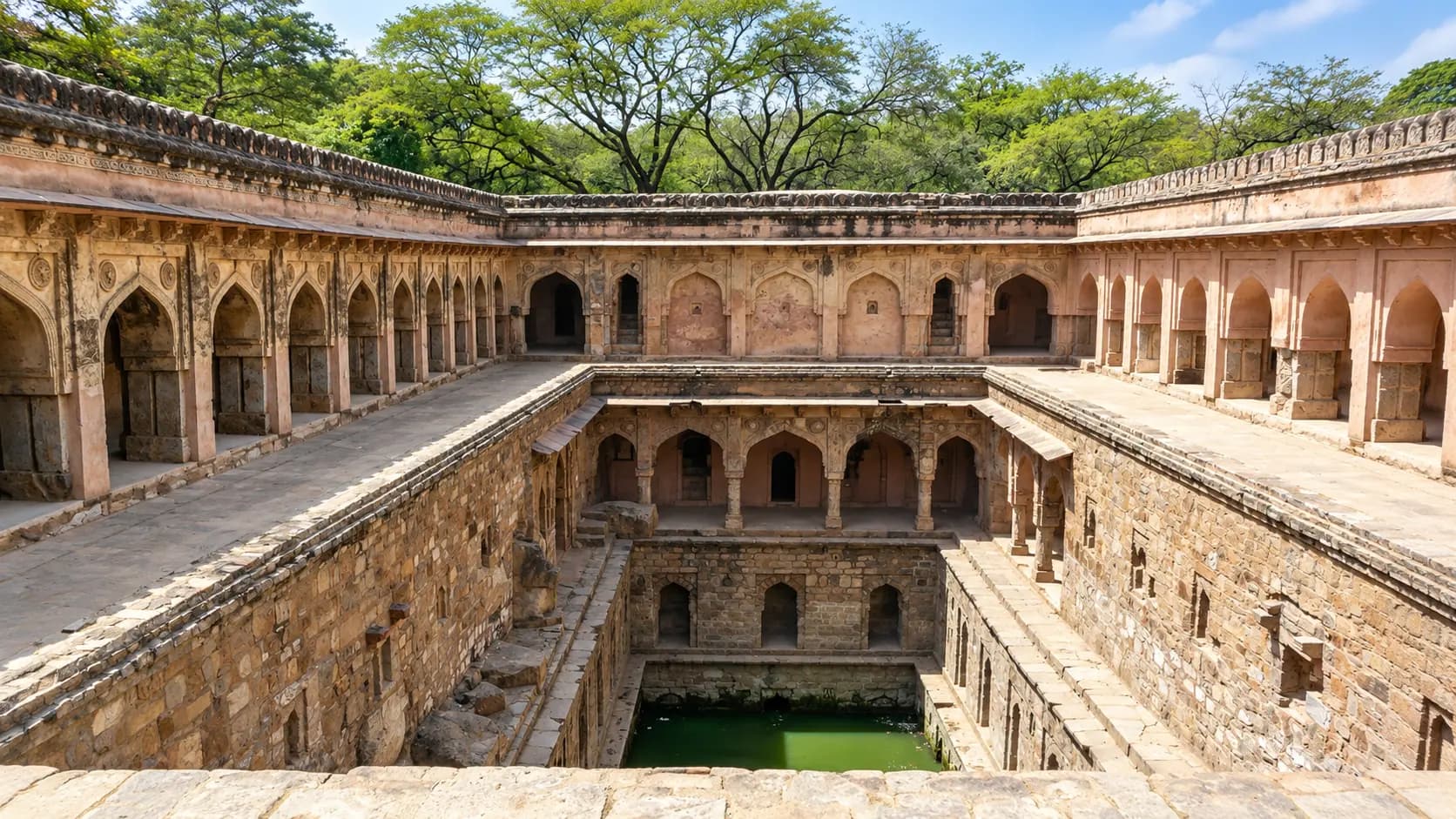
Spanning 200 acres contiguous to Qutub Minar, Mehrauli Archaeological Park contains over 100 historical monuments spanning a millennium of continuous habitation. Highlights include the magnificent sixteenth-century stepwell Rajon ki Baoli, the grand tomb of Jamali Kamali, the tomb of Sultan Balban (featuring the subcontinent's earliest surviving true arch), and Thomas Metcalfe's nineteenth-century colonial folly Dilkusha. It offers an unhurried, atmospheric heritage walk through tranquil scrub forest.
3. Dilli Haat INA (Approx. 3.5 km Northeast)
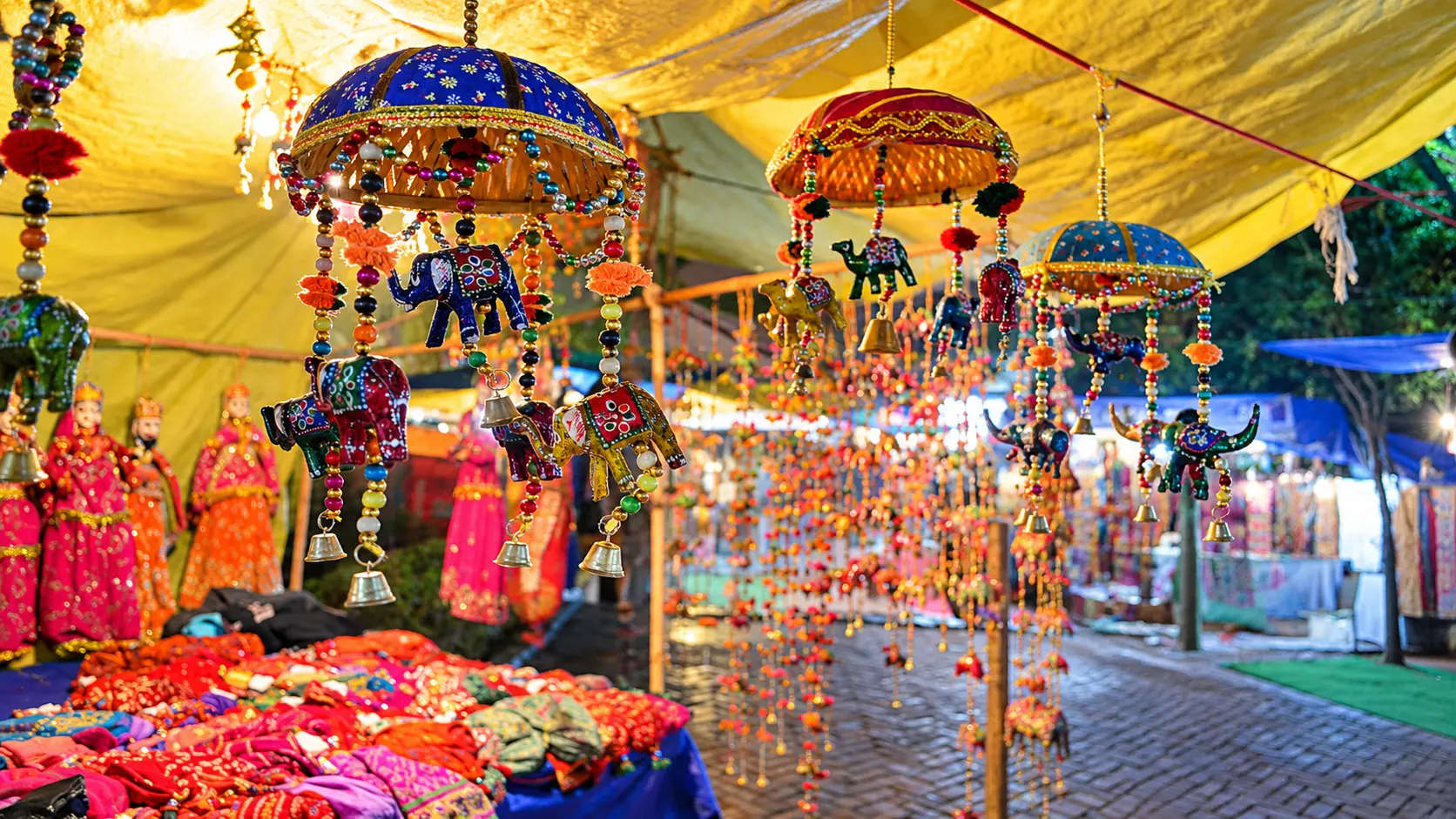
Located at INA Colony on Sri Aurobindo Marg, Dilli Haat is an open-air handicraft and culinary bazaar operated by Delhi Tourism. Featuring over 160 rotational craft stalls allotted to master weavers and artisans from across the Indian states, along with 25 authentic state food pavilions, it is the premier destination in Delhi for purchasing genuine textiles, pottery, and tribal metalcraft, followed by regional gastronomic tasting. Reachable within 10 minutes via metro to Dilli Haat - INA Station.
4. Safdarjung Tomb (Approx. 4 km Northeast)
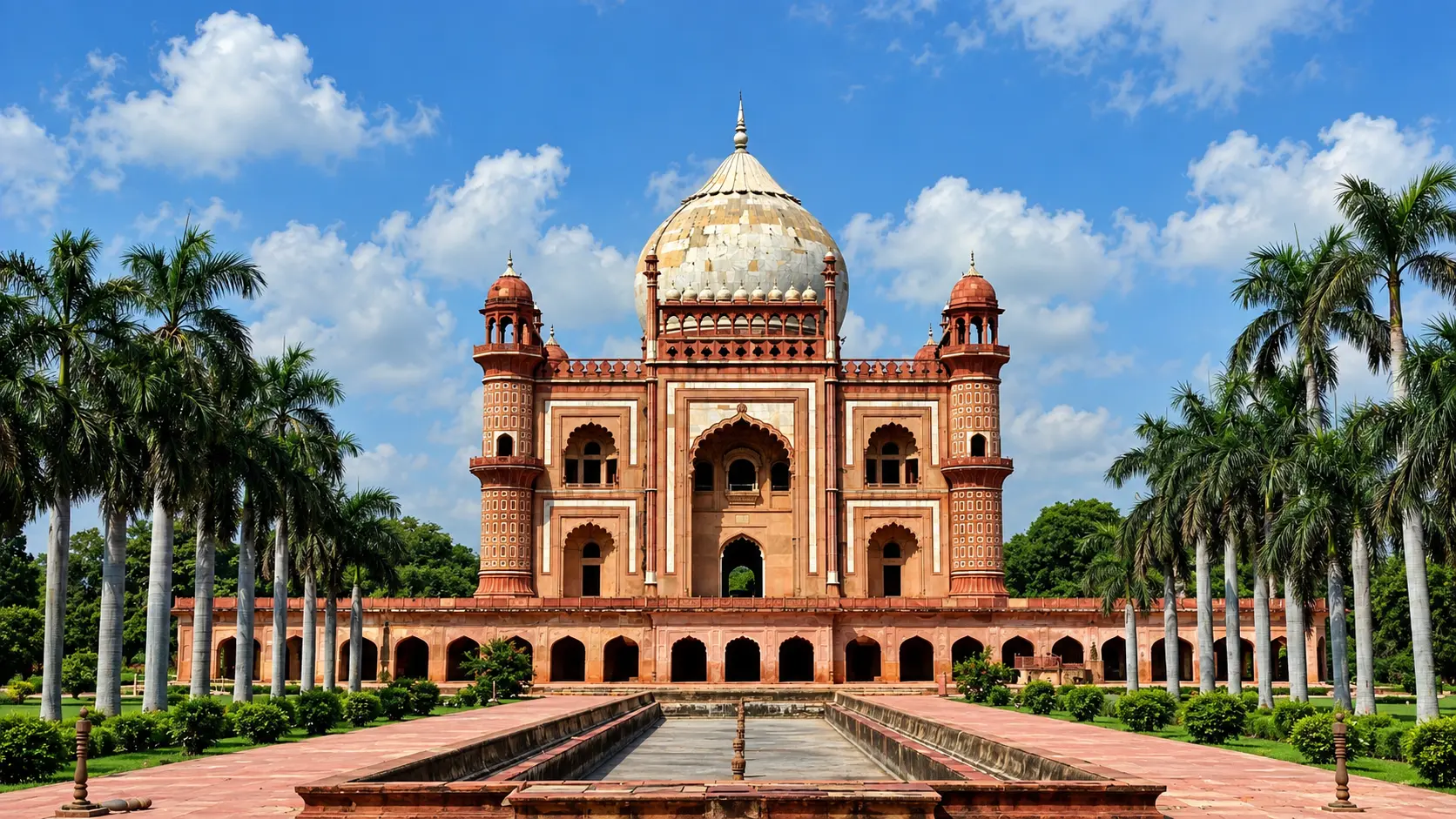
The final grand garden tomb of the Mughal architectural tradition, built in 1754 CE for Nawab Safdarjung, Prime Minister of the Mughal Empire. Constructed of buff sandstone and red stone with intricate plaster interiors and surrounded by a classical four-part charbagh walled garden, it offers an exceptionally quiet, uncrowded architectural experience directly accessible via Jor Bagh Metro Station on the Yellow Line.
5. Siri Fort Ruins and Asiad Village (Approx. 2.5 km East)
For travelers interested in medieval military engineering, the fragmented stone rubble ramparts of Siri Fort - for which the Hauz Khas reservoir was originally excavated by Sultan Alauddin Khalji - can be explored along August Kranti Marg and inside the Siri Fort Sports Complex and residential enclave. Portions of the fourteenth-century fort walls, bastions, and the Tohfewala Gumbad still stand amid residential green spaces.
In pictures
The practical bits
Before you go.
Plan ahead
To make the most of your excursion to Hauz Khas Village, review these four essential preparation blocks covering…Explore detailsClose details
To make the most of your excursion to Hauz Khas Village, review these four essential preparation blocks covering timing, footwear, financial logistics, and environmental stewardship:
Early Morning Monument Timing
Arrive at the ASI monument complex gate immediately at sunrise between 06:00 and 07:30 to experience the ruins in…Explore detailsClose details
Arrive at the ASI monument complex gate immediately at sunrise between 06:00 and 07:30 to experience the ruins in complete tranquility before tour groups and social media photographers arrive. Morning golden-hour light illuminates the weathered stone arches of the madrasa and reflects across the serene waters of Hauz Khas Lake, providing unhindered vistas and ideal conditions for architectural photography.
Sturdy Footwear for Uneven Terrain
Wear comfortable, closed-toe walking shoes with reliable traction.Explore detailsClose details
Wear comfortable, closed-toe walking shoes with reliable traction. Exploring Hauz Khas involves climbing uneven fourteenth-century stone stairs, traversing unpaved gravel trails along the lake embankment, navigating steep stone sills, and walking cobblestone village alleys where loose paving flags and narrow curbs require steady footing.
Digital Payments and Modest Currency Reserves
Ensure your smartphone is equipped with a functioning mobile data connection and UPI digital payment app (such as…Explore detailsClose details
Ensure your smartphone is equipped with a functioning mobile data connection and UPI digital payment app (such as Google Pay, PhonePe, or Paytm) for swift cashless monument ticketing and boutique purchases. Confirm the current charge and what it includes with the operator or service provider. Visitor admission, vehicles, parking, activities and accommodation can have separate charges.
Wildlife and Parkland Etiquette
When strolling through A.N.Explore detailsClose details
When strolling through A.N. Jha Deer Park and along the Hauz Khas Lake perimeter, strictly observe the municipal ban on feeding wildlife. Do not offer food scraps, bread, or snacks to the deer, monkeys, ducks, or peacocks, as human foods severely compromise their digestive health. Carry a reusable water bottle and dispose of all personal trash in designated municipal bins to safeguard this vital urban forest habitat.
Suggested Itineraries
Option 1: The Half-Day Heritage & Lake Walk (Approx. 3.5 Hours)
07:30 - 08:30: Morning Birding & Lake Circuit
Enter via Deer Park from Africa Avenue or the village access road.Explore detailsClose details
Enter via Deer Park from Africa Avenue or the village access road. Stroll along the western edge of Hauz Khas Lake, observing winter waterfowl, egrets, and kingfishers. Walk past the spotted deer enclosure and take in the morning forest calm.
08:30 - 10:00: Deep Archaeological Exploration
Enter the ASI monument complex through the village gate.Explore detailsClose details
Enter the ASI monument complex through the village gate. Explore Firuz Shah’s tomb, examining the vaulted ceiling plasterwork. Walk through the double-tiered classrooms of the L-shaped madrasa, taking in the stone jharokhas overlooking the reservoir. Visit the northern assembly halls, the ruined mosque, and the garden chhatris.
10:00 - 11:00: Artisanal Breakfast & Coffee
Exit into the village lane.Explore detailsClose details
Exit into the village lane. Head up to an independent third-wave espresso bar or lakeside bakery cafe for freshly brewed Indian estate coffees, croissants, or a hearty breakfast bowl while reading or sketching.
Option 2: The Full-Day Bohemian Culture, Design & Dining Experience (Approx. 6 Hours)
11:00 - 13:00: Boutique Shopping & Art Exploration
Check the current visiting hours and permitted access with the site operator before departure; ceremonies…Explore detailsClose details
Check the current visiting hours and permitted access with the site operator before departure; ceremonies, closures and visitor sessions can affect access. Browse independent fashion ateliers specializing in Khadi, block-printed silks, and experimental menswear. Browse vintage posters, vinyl records, and regional Indian folk art galleries tucked away in quaint basement and first-floor spaces.
13:00 - 14:30: Rooftop Lakeside Lunch
Settle into a terrace restaurant overlooking the green waters of Hauz Khas Lake and the monument ramparts.Explore detailsClose details
Settle into a terrace restaurant overlooking the green waters of Hauz Khas Lake and the monument ramparts. Sample authentic regional specialties, such as Kashmiri rogan josh and gushtaba, Coastal fish curry, or stone-baked artisan flatbreads.
14:30 - 16:30: Historic Monument & Park Stroll
Enter the ASI monument complex during the warm afternoon.Explore detailsClose details
Enter the ASI monument complex during the warm afternoon. Wander along the colonnaded arcades, sit beneath shaded stone archways, and photograph the interplay of light and shadow across the stone facades. Continue through the open boundary into Deer Park to view the Mughal-era Bagh-i-Alam Gumbad.
16:30 - 17:30: Sunset on the Ramparts
Return to the upper terrace of the madrasa or take a seat at a lakeside cafe terrace to watch the sunset cast a…Explore detailsClose details
Return to the upper terrace of the madrasa or take a seat at a lakeside cafe terrace to watch the sunset cast a golden hue across the water and medieval domes.
A few things you might wonder
Common questions about visiting Hauz Khas Village. Fees, visiting hours and ceremonies are researched details that may change; confirm current arrangements with the operator before travelling.
What is the historical significance of the Hauz Khas complex?
What are the ticket prices and visiting hours for the monument?
How do I reach Hauz Khas Village by Delhi Metro?
Can vehicles drive into Hauz Khas Village, and is parking available?
What kind of shops and dining options are found in the village?
Is it safe to visit Hauz Khas Village in the evening?
Explore more in South Delhi
Discover other destinations around this hub
Planning a trip to South Delhi?