Hazrat Nizamuddin Dargah
Visit Hazrat Nizamuddin Dargah in South East Delhi. Guide to Thursday qawwali timings, Amir Khusrau's tomb, stepwell history, dress code, and metro routes.
Location
South Delhi, Delhi NCR
A closer look
Your visit, at a glance.
South Delhi, Delhi Ncr
GET TO KNOW THE PLACE
In the labyrinthine heart of Nizamuddin Basti, nestled between the roaring thoroughfares of Mathura Road and Lodhi Road in South East Delhi, lies one of the most venerated…
The story of Hazrat Nizamuddin Dargah
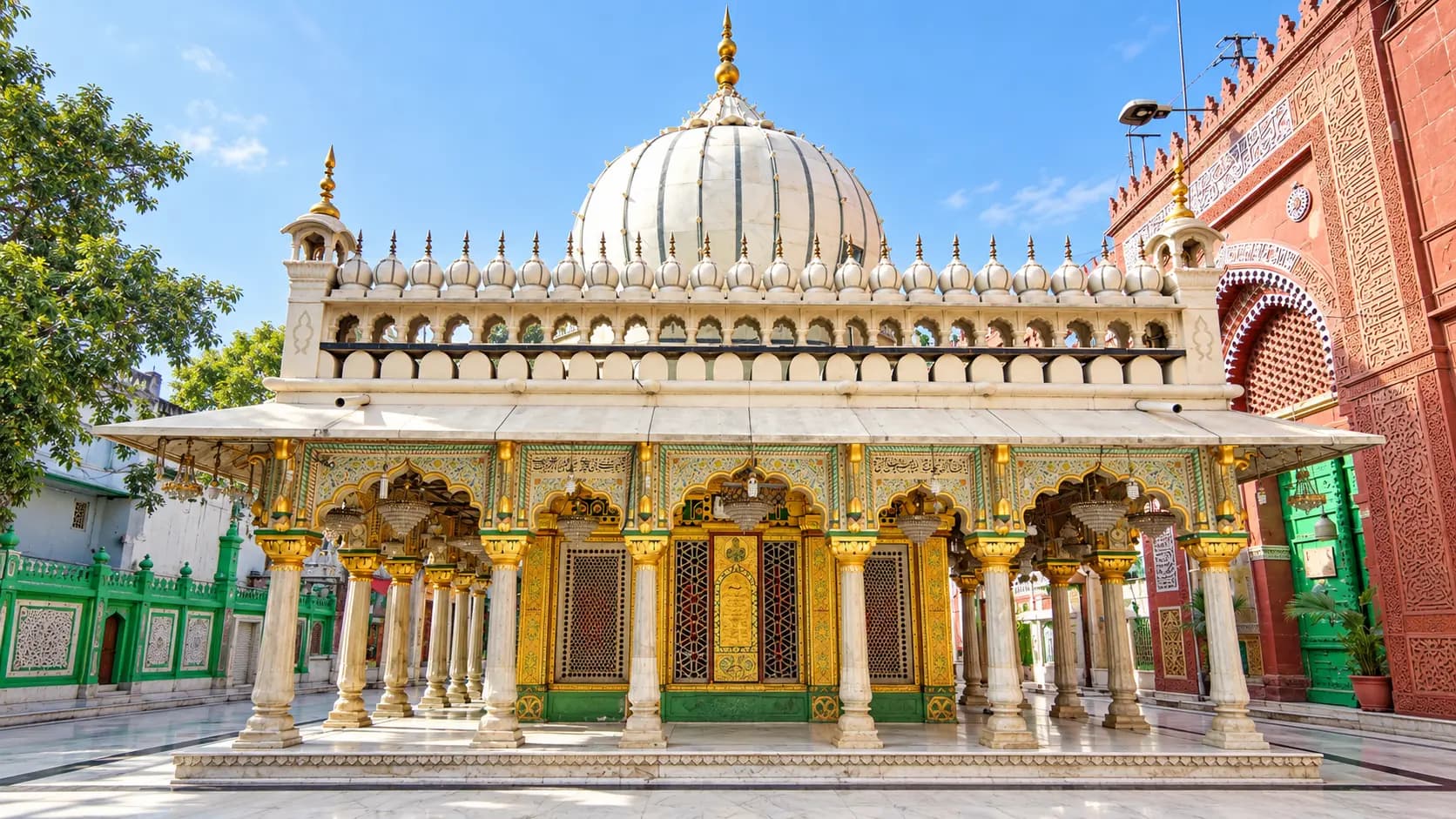
In the labyrinthine heart of Nizamuddin Basti, nestled between the roaring thoroughfares of Mathura Road and Lodhi Road in South East Delhi, lies one of the most venerated spiritual epicenters of the Islamic world: the Dargah of Hazrat Khwaja Syed Muhammad Nizamuddin Auliya. Known affectionately across the Indian subcontinent as Mahbub-e-Ilahi ("The Beloved of God") and Sultan-ul-Mashaikh ("King of Spiritual Masters"), Hazrat Nizamuddin was the fourth great spiritual successor (Pir) in the illustrious Chishti Sufi lineage of South Asia. For over seven centuries, since the saint’s passing in 1325 CE, this intimate marble shrine has stood as an enduring beacon of interfaith devotion, egalitarian humanity, and mystical lyricism.
Unlike monuments preserved merely as silent archaeological relics, Nizamuddin Dargah is a vibrant, living organism. Within its bustling, rose-scented marble courtyards, thousands of pilgrims of every conceivable religious conviction, social background, and nationality gather daily to whisper prayers, tie red cotton threads of supplication to delicate stone lattice jalis, listen to the transcendent strains of hereditary qawwali music, and partake in communal dining (langar). Surrounding the central shrine is a remarkable medieval necropolis housing the tombs of some of Indian history's most celebrated literary and royal figures - including the iconic poet-musician Hazrat Amir Khusrau, the enlightened Mughal princess Jahanara Begum, and Emperor Muhammad Shah Rangeela. Seamlessly integrated into the historic urban fabric of Nizamuddin Basti through recent conservation efforts spearheaded by the Aga Khan Trust for Culture (AKTC) and the Archaeological Survey of India (ASI), the dargah provides a deeply moving encounter with the living soul of Delhi.
Start here. Open a tile for the full details.
Why goRead details
A visit to Hazrat Nizamuddin Dargah is widely recognized as one of the most intense, authentic cultural and spiritual experiences available anywhere in South Asia. It offers a window into the mystical Chishti philosophy that shaped the syncretic fabric of medieval India (Ganga-Jamuni tehzeeb), demonstrating how love, music, and service to humanity can dissolve sectarian divides.
When to visitRead details
Visiting Hazrat Nizamuddin Dargah is feasible throughout the year, but understanding the seasonal climate, daily prayer rhythms, and special musical schedules will make your experience far richer.
Entry & permissionsRead details
Fees, visiting hours and entry rules may change. Confirm the latest details with the official operator or local authority before travelling.
Hazrat Nizamuddin Dargah is an open, inclusive sanctuary operating under generous public access principles.
Entry Fees and Financial Protocols
- Admission Charges: Completely Free. There is no entry fee, gate tariff, or mandatory ticket required to visit the shrine, attend qawwali performances, or view the medieval monuments.
- Voluntary Offerings (Nazrana): Devotees who wish to make offerings may purchase flower baskets (rose petals, marigolds, and sugar candies) or decorative cloth chadars from bazaar stalls outside the gate (typically costing ₹50 to ₹300 depending on size). Such offerings are entirely voluntary; never feel compelled to buy or pay beyond your comfort.
- Caution on Unofficial Solicitations: As with many historic pilgrimage destinations, occasional touts or self-proclaimed guides near the alleyways may offer "special prayers" or demand exorbitant donations for langar. Politely decline any aggressive solicitations; genuine shrine attendants will never demand compulsory payments.
Operating Timings
Facility / Activity | Days of Operation | Timings | Notes |
|---|---|---|---|
Shrine Courtyard & Sanctum | All 7 Days (Monday to Sunday) | 05:00 to 22:30 | Opens at morning Fajr prayer; closes after Isha prayer |
Thursday Qawwali (Sunset) | Thursdays | ~18:30 to 20:00 | Follows evening Maghrib prayer in the central courtyard |
Thursday Qawwali (Night) | Thursdays | ~21:00 to 22:30 | Follows night Isha prayer; high devotional energy |
Nizamuddin Baoli | All 7 Days | 07:00 to 18:30 | Accessible via alley west of Jama'at Khana mosque |
Basti Street Food Bazaars | All 7 Days | 12:00 to 23:30 | Peak dining hours 18:30 to 23:00 |
Dress Code and Behavior Guidelines
Because Nizamuddin Dargah is a deeply sacred, active place of worship, strict modest decorum must be maintained:
- Modest Dress: Both men and women must dress conservatively. Shoulders, arms, and legs must be fully covered (wear full-length trousers, salwar kameez, or modest jeans with long tops; avoid shorts, skirts, or sleeveless shirts).
- Mandatory Head Coverings: All visitors, regardless of gender or faith, must cover their heads before entering the marble courtyard. Men can wear cloth skullcaps (readily purchased for ₹10 - ₹20 at bazaar stalls, or borrow free cloth caps kept in baskets near the entrance). Women must drape their heads with a scarf, shawl, or dupatta.
- Shoe Removal: Footwear must be deposited at the outer shoe stalls (joota ghar) before stepping onto the marble plaza. Wearing socks is permitted and highly recommended during winter when the marble floor feels chilly.
Photography and Filming Regulations
- Handheld Smartphones: Personal, non-commercial photography and brief videography using handheld smartphones is generally accepted in the open outer courtyards and around the poet Khusrau’s tomb.
- Sanctum Etiquette: Avoid intrusive photography inside the immediate tomb chamber of Hazrat Nizamuddin out of respect for worshippers in prayer. Photography inside the sanctum is officially restricted.
- Tripods and Commercial Equipment: Operating professional cinema cameras, heavy tripods, and commercial lighting rigs requires prior written permission from the Dargah Managing Committee (Pirzadas) and the Archaeological Survey of India.
- Drone Operations: Flying drones is strictly illegal across Nizamuddin Basti and the adjacent Humayun's Tomb heritage zone due to civil aviation security restrictions.
Plan your visitRead details
Hazrat Nizamuddin Dargah is located in Nizamuddin Basti, within the Defence Colony Sub-Division of the South East Delhi revenue district. It is positioned adjacent to Mathura Road and Lodhi Road, making it readily accessible by public rapid transit, trains, and arterial roads.
Explore the full guide - choose a topic below.
Why visit?
A visit to Hazrat Nizamuddin Dargah is widely recognized as one of the most intense, authentic cultural and…Explore detailsClose details
A visit to Hazrat Nizamuddin Dargah is widely recognized as one of the most intense, authentic cultural and spiritual experiences available anywhere in South Asia. It offers a window into the mystical Chishti philosophy that shaped the syncretic fabric of medieval India (Ganga-Jamuni tehzeeb), demonstrating how love, music, and service to humanity can dissolve sectarian divides.
A Seven-Hundred-Year Living Sanctuary of Interfaith Harmony
Hazrat Nizamuddin Auliya (1238 - 1325 CE) lived through the tumultuous reigns of seven successive sultans of Delhi - including Alauddin Khalji, Mubarak Khalji, and Ghiyas-ud-din Tughlaq - yet steadfastly refused royal patronage, gold, and imperial court interference. His hospice (khanqah) at Ghiyaspur (now Nizamuddin Basti) operated on an open-door policy, welcoming emperors and destitute peasants alike, ensuring that no visitor left without food, shelter, and comfort. The Chishti philosophy he championed emphasized absolute non-violence, renunciation of material vanity, religious tolerance, and unconditional love for creation as the only true path to God.
Today, seven centuries later, that egalitarian ethos remains palpable. On any given afternoon, Hindu pilgrims, Sikh families, Muslim devotees, Christian travelers, and international scholars sit shoulder to shoulder on the polished white marble floor, bowing their heads before the saint's flower-strewn sepulcher. The shrine is a living refutation of sectarianism, where faith is experienced not as dogmatic doctrine, but as an open-hearted embrace.
The Spiritual Birthplace of Qawwali Music
For musicologists and lovers of world music, Nizamuddin Dargah is hallowed ground. It was here, in the late thirteenth and early fourteenth centuries, that the saint's foremost disciple, Hazrat Amir Khusrau (1253 - 1325 CE), created the musical genre of Qawwali (Sama). Drawing upon Persian court poetry, Arabic devotional meters, and indigenous North Indian Braj Bhasha folk musical structures, Khusrau forged a dynamic musical form specifically designed to induce mystical ecstasy and spiritual awakening.
Every Thursday evening, the courtyard outside the saint's tomb transforms into an open-air auditory cathedral. Hereditary lineages of musicians known as the Qawwal Bachhe - who trace their unbroken musical training directly back to the disciples trained by Amir Khusrau himself - gather to perform timeless compositions such as "Chhaap Tilak Sab Chheeni", "Dama Dam Mast Qalandar", and "Man Kunto Maula". Accompanied by the drone of harmoniums, the driving rhythms of the dholak, and communal hand-clapping, the music swells from tender lyrical yearning into hypnotic, ecstatic crescendos that leave audiences spellbound.
An Unrivaled Medieval and Mughal Necropolis
Because Hazrat Nizamuddin was so deeply revered, centuries of Mughal emperors, royal princesses, ministers, scholars, and poets sought burial within his spiritual shadow, believing his sanctity would grant them peace in the afterlife.
- Tomb of Amir Khusrau: Directly facing his master across the courtyard, the poet who died of a broken heart six months after Nizamuddin’s passing rests in a stunning red sandstone and marble tomb enclosure.
- Tomb of Princess Jahanara Begum (1614 - 1681 CE): The accomplished eldest daughter of Emperor Shah Jahan and Empress Mumtaz Mahal chose not a grand domed mausoleum, but a simple, open-air marble enclosure carpeted with living green turf. Her tomb inscription remains one of the most moving epitaphs in world literature: "Let nothing cover my grave save the green grass; for grass is the best covering for the grave of the humble."
- Jama'at Khana Mosque (1312 - 1313 CE): Built during the reign of Sultan Alauddin Khalji by his eldest son Khizr Khan, this imposing red sandstone mosque is the oldest surviving building in the entire precinct, featuring majestic horseshoe arches, intricate Quranic inscriptions, and structural geometry identical to the famous Alai Darwaza at the Qutub Minar.
- Tomb of Mirza Ghalib & Chaunsath Khamba: Located just outside the inner courtyard within the historic basti lanes, visitors can pay homage to Urdu literature’s greatest classical poet, Mirza Asadullah Khan Ghalib, and explore Chaunsath Khamba (the "Sixty-Four Pillars"), a breathless 1623 CE open hall carved entirely from pure white Makrana marble.
Gastronomic and Sensory Immersion in Nizamuddin Basti
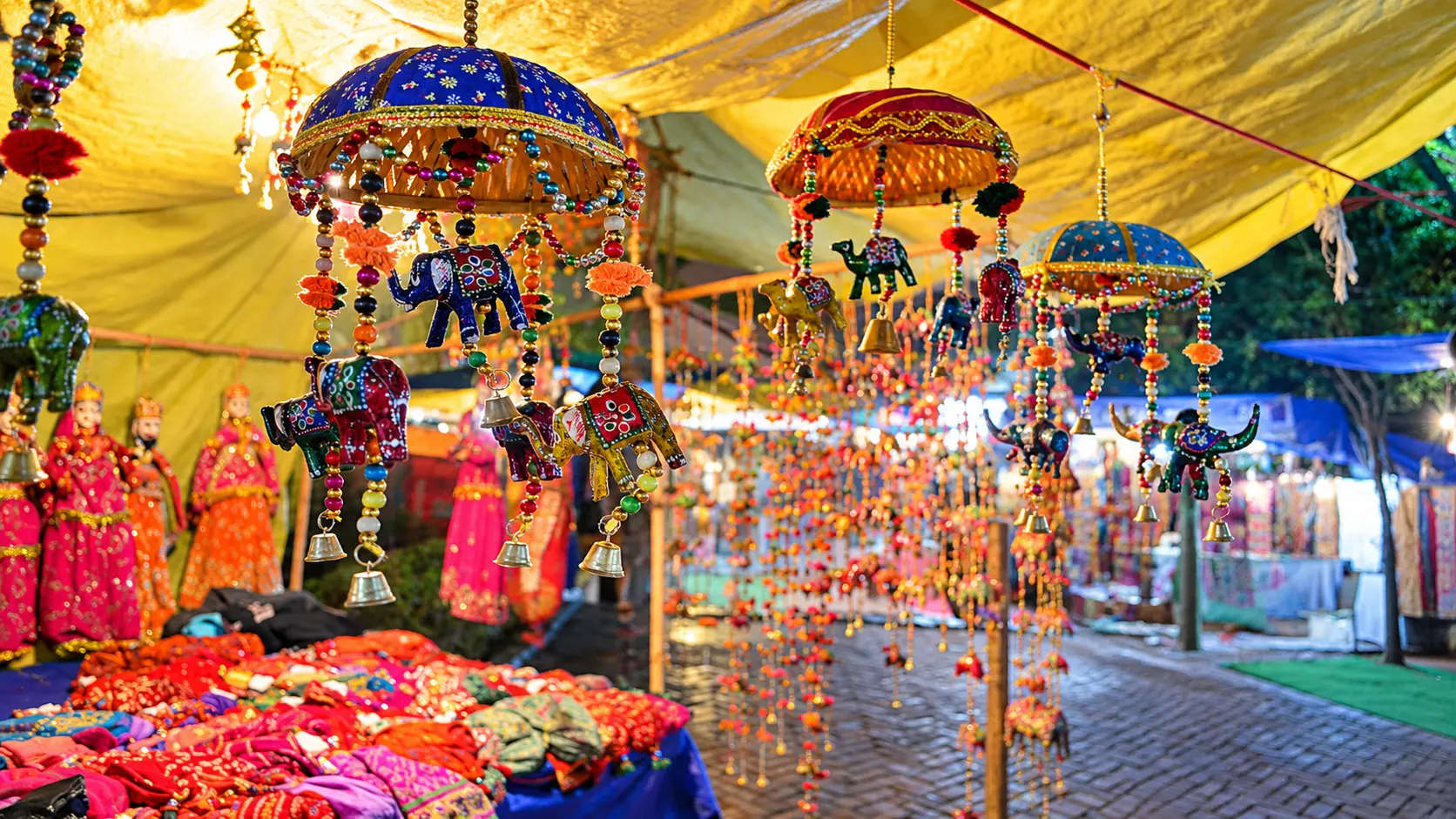
Entering Nizamuddin Basti is a feast for the senses. The narrow pedestrian approach alleys are lined with colorful bazaar stalls displaying mountain heaps of fragrant pink Damask rose petals, rolled velvet green and red chadars (embroidered offering cloths), attar (natural perfume oils of jasmine, rose, and sandalwood), prayer beads, and steaming platters of traditional sweetmeats like sohan halwa and mithai. For food lovers, Nizamuddin Basti is world-famous for historic Mughlai street gastronomy, where centuries-old recipes produce succulent mutton seekh kebabs, Nihari simmered overnight with bone marrow, aromatic chicken biryani, rumali rotis tossed into paper-thin disks, and rich saffron-scented shahi tukda.
What to expect
Visiting Nizamuddin Dargah is a vibrant, deeply sensory experience.Explore detailsClose details
Visiting Nizamuddin Dargah is a vibrant, deeply sensory experience. Because the shrine sits deep inside a high-density, centuries-old urban settlement, the transition from modern Delhi's traffic into the spiritual sanctum involves a brief walk through narrow alleys bustling with pilgrims, vendors, and aroma.
1. The Approach Through Nizamuddin Basti
From the drop-off point on Lodhi Road or Mathura Road, visitors walk approximately 200 to 300 meters through the main bazaar alley of Nizamuddin Basti.
- Bazaar Energy: The pedestrian corridor is alive with commerce. Shopkeepers sell traditional prayer caps, floral garlands, devotional literature, and sweets for distribution to the needy. You will hear sacred verses playing from small speakers, the rhythmic sizzle of street food woks, and the greetings of shopkeepers.
- Shoe Storage Protocols: Before stepping onto the raised marble threshold of the dargah courtyard, all visitors must remove their footwear. Confirm the current charge and what it includes with the operator or service provider. Visitor admission, vehicles, parking, activities and accommodation can have separate charges.
2. The Main Courtyard and Nizamuddin’s Shrine
Passing through the arched portal, you step into a central marble courtyard open to the sky.
- The Shrine Architecture: In the center rises the mausoleum of Hazrat Nizamuddin Auliya. Built atop a square plan, the current white marble structure is crowned by an octagonal fluted drum and a bulbous dome detailed with delicate mother-of-pearl inlay. The perimeter is enclosed by intricately pierced marble jali screens through which natural light filters into the inner chamber.
- The Sanctum Sanctorum: Inside the cool, dim chamber, the saint’s grave is draped in rich embroidered silk and velvet cloths, piled high with fresh red rose petals, marigolds, and surrounded by burning sandalwood incense. Devotees circle the cenotaph reverently, reciting the Fatiha, offering quiet supplications, or kissing the outer wooden railing. Non-Muslims and visitors of all backgrounds are treated with warm hospitality. (Note: Women generally pray, meditate, and tie prayer threads from the outer marble jali screen perimeter rather than entering the immediate inner grave chamber, per traditional shrine customs).
3. The Shrine of Hazrat Amir Khusrau
Directly facing the main dargah across the courtyard stands the tomb of Amir Khusrau.
- Courtyard Focal Point: Encased within a pierced red sandstone screen topped with an arched marble pavilion, Khusrau’s resting place is equally revered. Devotees believe that prayers offered at Nizamuddin's shrine are made complete only by first honoring his beloved spiritual son, Khusrau. The courtyard between these two tombs serves as the stage for Thursday evening qawwali performances.
4. Surrounding Royal Enclosures
Wandering along the courtyard perimeters reveals quiet marble porticos containing imperial burials:
- Princess Jahanara’s Enclosure: A tranquil, unroofed marble chamber carved with delicate floral arabesques, its earthen floor carpeted in lush grass, embodying the princess’s mystic rejection of imperial ostentation.
- Emperor Muhammad Shah’s Tomb: Nearby lies Emperor Muhammad Shah Rangeela (1702 - 1748), entombed within pierced marble jali screens alongside family members.
- Jama'at Khana Mosque: Flanking the western side of the courtyard, the three-bay red sandstone mosque stands in majestic solemnity. Its monumental central archway and carved Quranic epigraphy provide a cool, quiet prayer hall for contemplation away from the courtyard bustle.
5. The Nizamuddin Baoli
Located just behind the western wall of the dargah complex lies the fourteenth-century Nizamuddin Baoli.
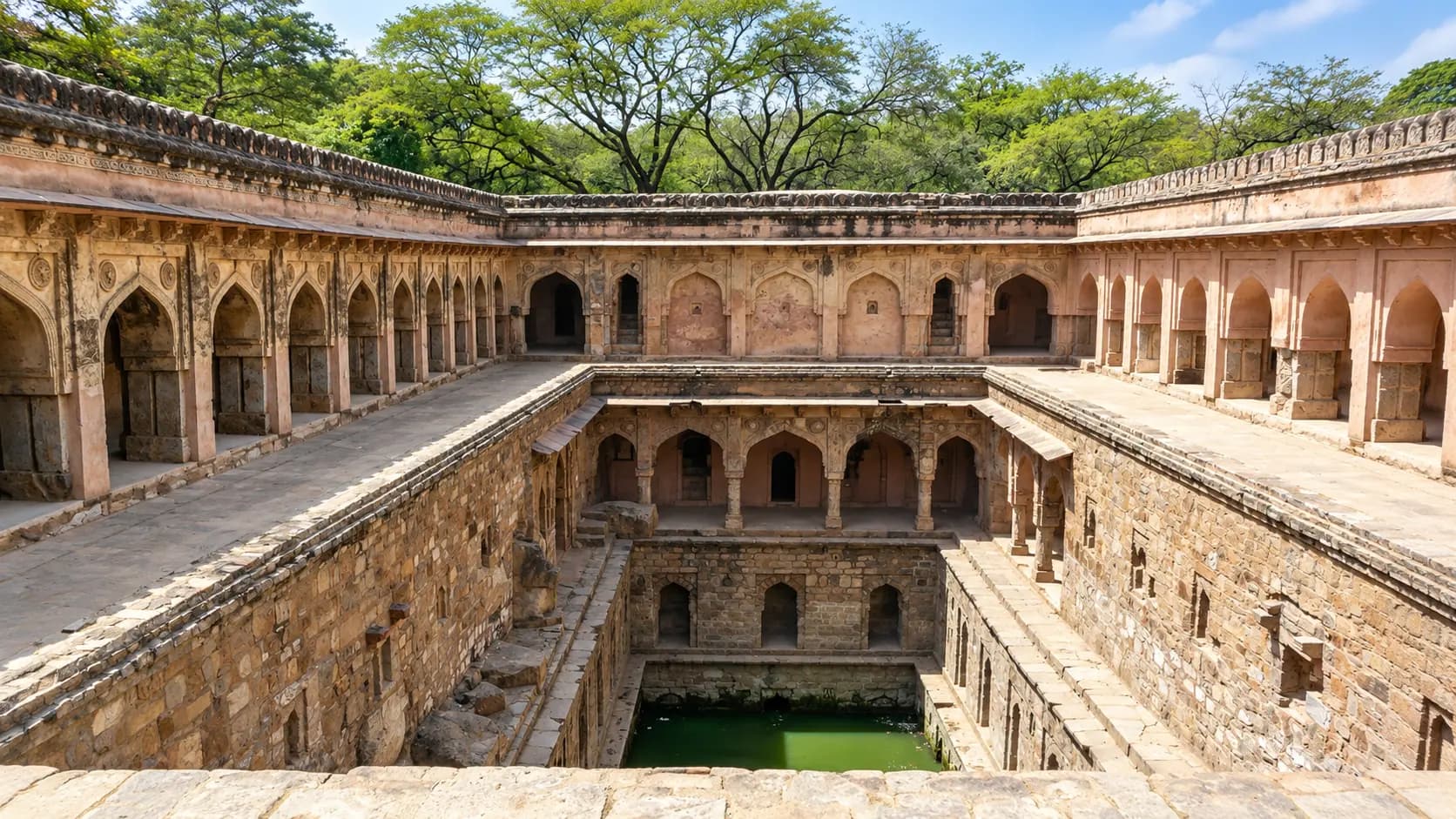
- Hydrological Wonder: Commissioned by Hazrat Nizamuddin in 1321 - 1322 CE, this four-tiered stone stepwell was excavated at the same time Sultan Ghiyas-ud-din Tughlaq was building his fortress at Tughlaqabad. The sultan commanded that all masons work exclusively on his fort, banning the sale of lamp oil to the Sufi hospice. Legend records that Nizamuddin blessed the spring water, allowing the laborers to burn water in their lamps and complete the stepwell by night.
- Ecological Revival: By the early 2000s, the baoli had become heavily polluted with municipal wastewater and debris. In a landmark conservation effort from 2008 to 2014, the Aga Khan Trust for Culture (AKTC) thoroughly desilted the 80-foot-deep stepwell, stabilized collapsed structural walls, diverted sewage lines, and revived the natural subterranean freshwater springs, restoring the baoli into Delhi’s only functioning medieval stepwell fed by clean, flowing groundwater.
Best time to visit
Visiting Hazrat Nizamuddin Dargah is feasible throughout the year, but understanding the seasonal climate, daily…Explore detailsClose details
Visiting Hazrat Nizamuddin Dargah is feasible throughout the year, but understanding the seasonal climate, daily prayer rhythms, and special musical schedules will make your experience far richer.
Winter (October to March) - Peak Visiting Season
The cooler months offer the most comfortable weather for exploring the crowded basti and sitting on the open marble courtyard.
- Atmospheric Comfort: Daytime temperatures range between 18°C and 25°C, with crisp, brisk evenings dropping to 8°C - 12°C. Walking barefoot on the marble courtyard flags is pleasant and refreshing during these months.
- Crowd Levels: Winter evenings, particularly on Thursdays, draw significant crowds. Arriving early ensures comfortable seating for music sessions.
Summer (April to June) - Intense Heat
Summer in Delhi brings scorching temperatures exceeding 42°C during peak midday hours.
- Courtyard Temperature: Check the current visiting hours and permitted access with the site operator before departure; ceremonies, closures and visitor sessions can affect access. Green jute mats are laid across primary walking channels by shrine volunteers, but early morning (06:00 to 09:00) or late evening (after 18:30) visits are strongly advised during summer.
- Hydration: Carry water and stay in shaded colonnades during afternoon visits.
The Thursday Qawwali Experience
If you wish to witness live traditional qawwali singing, Thursday is the quintessential day to visit.
- Performance Sessions: Qawwali typically takes place in two distinct sessions on Thursday evenings:
- Sunset Session: Commences immediately following Maghrib prayers (around 18:30 to 20:00).
- Night Session: Commences after Isha prayers (around 21:00 to 22:30).
- Arrival Strategy: The courtyard fills up completely by 17:30. Arrive by 17:00, store your shoes, and find a seated spot on the marble floor near Amir Khusrau’s tomb to enjoy the performance comfortably.
Annual Urs Festivals (High Mystical Celebrations)
The dargah commemorates two major annual Urs (death anniversaries, symbolizing the mystic’s spiritual union with the Divine):
- Urs of Hazrat Nizamuddin Auliya: Held in the Islamic month of Rabi al-Thani (dates vary annually by lunar calendar), drawing tens of thousands of Sufi devotees from across the globe for three continuous days and nights of spiritual recitations, poetry, and nocturnal qawwali.
- Urs of Hazrat Amir Khusrau: Commemorated in the month of Shawwal (typically occurring in spring or autumn), celebrating the poet’s life with extraordinary classical concerts and poetry symposia (mushairas).
How to reach
Hazrat Nizamuddin Dargah is located in Nizamuddin Basti, within the Defence Colony Sub-Division of the South East…Explore detailsClose details
Hazrat Nizamuddin Dargah is located in Nizamuddin Basti, within the Defence Colony Sub-Division of the South East Delhi revenue district. It is positioned adjacent to Mathura Road and Lodhi Road, making it readily accessible by public rapid transit, trains, and arterial roads.
By Delhi Metro (Fastest and Most Convenient)
Delhi's metro network connects to Nizamuddin via two strategic stations:
-
Jawaharlal Nehru (JLN) Stadium Metro Station (Violet Line):
- Located approximately 1.2 km west along Lodhi Road.
- For visitors arriving from Central Delhi (Kashmere Gate, Mandi House, Central Secretariat) or South Delhi (Kalkaji, Badarpur, Faridabad), take the Violet Line to JLN Stadium Station.
- Exit via Gate 2 onto Lodhi Road. Confirm the current charge and what it includes with the operator or service provider. Visitor admission, vehicles, parking, activities and accommodation can have separate charges. Alternatively, it is an easy 12-minute walk east past the India Habitat Centre and Lodhi Hotel.
-
Sarai Kale Khan - Nizamuddin Metro Station (Pink Line):
- Located approximately 1.5 km east of the dargah along the Ring Road, adjacent to the Hazrat Nizamuddin Railway Station.
- Ideal for visitors traveling from East Delhi (Mayur Vihar, Anand Vihar) or South/West Delhi (Lajpat Nagar, Dilli Haat INA, South Campus).
- From the station exit, take an auto-rickshaw or e-rickshaw across the Mathura Road flyover to the Nizamuddin Basti entrance (travel time: 6 - 8 minutes).
By Train (Hazrat Nizamuddin Railway Station - NZM)
Hazrat Nizamuddin Railway Station is one of Delhi's primary inter-city rail terminals, handling major express, Rajdhani, and Vande Bharat trains connecting southern, western, and central India. The station is located just 1 km east of the dargah. Arriving train passengers can simply hire an auto-rickshaw or walk 15 minutes through the railway footbridge and Mathura Road underpass into Nizamuddin Basti.
By Bus (Delhi Transport Corporation - DTC)
Multiple DTC bus routes serve Mathura Road and Lodhi Road:
- Key Bus Stops: Alight at Nizamuddin Police Station Bus Stop on Mathura Road, or Lodhi Hotel / Nizamuddin West Stop on Lala Lajpat Rai Marg.
- Walking Connection: From either bus stop, the pedestrian pathway into Nizamuddin Basti is less than 300 meters away.
By Auto-Rickshaw and App-Based Cabs
Pre-paid three-wheelers, auto-rickshaws, and rideshare cabs (Uber, Ola) operate continuously throughout South East Delhi.
- Drop-off Destination: Set your app destination to "Nizamuddin Basti Police Booth" or "Lodhi Hotel Nizamuddin West Gate".
- Pedestrian Transition: Due to narrow alleys, all vehicular transport must stop at the outer gates; proceed on foot along the paved bazaar alley directly to the shrine courtyard.
By Private Car & Parking Information
Driving a private car into the interior lanes of Nizamuddin Basti is impossible. If driving:
- Recommended Parking: Use the municipal surface parking lot at the Subz Burj / Mathura Road roundabout, the parking lot near the Humayun's Tomb entrance, or park at the Scope Complex / CGO Complex parking facilities on Lodhi Road. From there, take an e-rickshaw or walk into the basti.
Airport Connections
- Indira Gandhi International Airport (DEL): Located approximately 16 km west. The fastest vehicular route is via the Barapullah Elevated Road connecting directly into Lodhi Road and Mathura Road (travel time: 30 to 45 minutes depending on traffic).
Entry, timings and permissions
Fees, visiting hours and entry rules may change.Explore detailsClose details
Fees, visiting hours and entry rules may change. Confirm the latest details with the official operator or local authority before travelling.
Hazrat Nizamuddin Dargah is an open, inclusive sanctuary operating under generous public access principles.
Entry Fees and Financial Protocols
- Admission Charges: Completely Free. There is no entry fee, gate tariff, or mandatory ticket required to visit the shrine, attend qawwali performances, or view the medieval monuments.
- Voluntary Offerings (Nazrana): Devotees who wish to make offerings may purchase flower baskets (rose petals, marigolds, and sugar candies) or decorative cloth chadars from bazaar stalls outside the gate (typically costing ₹50 to ₹300 depending on size). Such offerings are entirely voluntary; never feel compelled to buy or pay beyond your comfort.
- Caution on Unofficial Solicitations: As with many historic pilgrimage destinations, occasional touts or self-proclaimed guides near the alleyways may offer "special prayers" or demand exorbitant donations for langar. Politely decline any aggressive solicitations; genuine shrine attendants will never demand compulsory payments.
Operating Timings
Facility / Activity | Days of Operation | Timings | Notes |
|---|---|---|---|
Shrine Courtyard & Sanctum | All 7 Days (Monday to Sunday) | 05:00 to 22:30 | Opens at morning Fajr prayer; closes after Isha prayer |
Thursday Qawwali (Sunset) | Thursdays | ~18:30 to 20:00 | Follows evening Maghrib prayer in the central courtyard |
Thursday Qawwali (Night) | Thursdays | ~21:00 to 22:30 | Follows night Isha prayer; high devotional energy |
Nizamuddin Baoli | All 7 Days | 07:00 to 18:30 | Accessible via alley west of Jama'at Khana mosque |
Basti Street Food Bazaars | All 7 Days | 12:00 to 23:30 | Peak dining hours 18:30 to 23:00 |
Dress Code and Behavior Guidelines
Because Nizamuddin Dargah is a deeply sacred, active place of worship, strict modest decorum must be maintained:
- Modest Dress: Both men and women must dress conservatively. Shoulders, arms, and legs must be fully covered (wear full-length trousers, salwar kameez, or modest jeans with long tops; avoid shorts, skirts, or sleeveless shirts).
- Mandatory Head Coverings: All visitors, regardless of gender or faith, must cover their heads before entering the marble courtyard. Men can wear cloth skullcaps (readily purchased for ₹10 - ₹20 at bazaar stalls, or borrow free cloth caps kept in baskets near the entrance). Women must drape their heads with a scarf, shawl, or dupatta.
- Shoe Removal: Footwear must be deposited at the outer shoe stalls (joota ghar) before stepping onto the marble plaza. Wearing socks is permitted and highly recommended during winter when the marble floor feels chilly.
Photography and Filming Regulations
- Handheld Smartphones: Personal, non-commercial photography and brief videography using handheld smartphones is generally accepted in the open outer courtyards and around the poet Khusrau’s tomb.
- Sanctum Etiquette: Avoid intrusive photography inside the immediate tomb chamber of Hazrat Nizamuddin out of respect for worshippers in prayer. Photography inside the sanctum is officially restricted.
- Tripods and Commercial Equipment: Operating professional cinema cameras, heavy tripods, and commercial lighting rigs requires prior written permission from the Dargah Managing Committee (Pirzadas) and the Archaeological Survey of India.
- Drone Operations: Flying drones is strictly illegal across Nizamuddin Basti and the adjacent Humayun's Tomb heritage zone due to civil aviation security restrictions.
Nearby places to consider
Nizamuddin Basti is situated at the epicenter of Delhi’s historic cultural corridor, making it effortless to…Explore detailsClose details
Nizamuddin Basti is situated at the epicenter of Delhi’s historic cultural corridor, making it effortless to combine your dargah visit with several of the capital’s most renowned monuments:
1. Humayun’s Tomb Complex (Approx. 600 m East)
Directly across Mathura Road lies the magnificent UNESCO World Heritage-listed mausoleum of Emperor Humayun, built in 1565 - 1572 CE by his widow Empress Bega Begum. As the architectural prototype that inspired the Taj Mahal, this grand red sandstone and white marble garden tomb is surrounded by classical four-part charbagh water gardens, the restored sixteenth-century tomb-enclosure of Isa Khan Niyazi, and the state-of-the-art underground Humayun's Tomb Site Museum. Easily reached via an 8-minute walk across the pedestrian footbridge over Mathura Road.
2. Sunder Nursery Heritage Park (Approx. 700 m Northeast)
Adjoining Humayun’s Tomb, Sunder Nursery is a 90-acre sixteenth-century heritage park meticulously restored by the Aga Khan Trust for Culture. Featuring fifteen conserved Mughal monuments, marble fountains, formal Persian watercourses, an amphitheater, and Delhi’s first micro-habitat arboretum showcasing hundreds of native tree species, it is the city's premier park for leisurely picnics, birdwatching, and weekend organic farmers' markets.
3. Ghalib Academy and Museum (Approx. 150 m West in Basti)
Located right inside Nizamuddin Basti near the entrance to Chaunsath Khamba, the Ghalib Academy is dedicated to the life, poetry, and letters of the nineteenth-century Urdu poet Mirza Asadullah Khan Ghalib. The compound houses Ghalib's marble tomb, a curated museum displaying his handwritten manuscripts, original letters, nineteenth-century coins, attire, and a specialized library of Urdu literature.
4. Lodhi Gardens (Approx. 2.5 km West)
Located a short 6-minute auto-rickshaw ride westbound along Lodhi Road, this 90-acre public park combines lush rolling lawns, ancient shade trees, and flowerbeds with majestic fifteenth-century tombs of the Sayyid and Lodhi dynasties, including the monumental domes of Bada Gumbad, Sheesh Gumbad, and the octagonal mausoleum of Muhammad Shah.
5. National Crafts Museum & Hastkala Akademi (Approx. 3 km North)
Situated near Pragati Maidan along Bhairon Marg, this sprawling village-style open-air museum showcases India's rich indigenous craft traditions. Explore authentic tribal mud-and-thatch dwellings, examine rare historic handloom textiles and bronze sculptures, and watch master weavers, block-printers, and potters demonstrate their craft in live courtyards.
In pictures
The practical bits
Before you go.
Plan ahead
To ensure a seamless, respectful, and culturally enriching visit to Hazrat Nizamuddin Dargah, review these four…Explore detailsClose details
To ensure a seamless, respectful, and culturally enriching visit to Hazrat Nizamuddin Dargah, review these four fundamental preparation blocks covering dress, shoes, timing, and respectful engagement:
Conservative Attire and Head Coverings
Dress in full-coverage, modest clothing covering your shoulders, upper arms, and legs down to the ankles.Explore detailsClose details
Dress in full-coverage, modest clothing covering your shoulders, upper arms, and legs down to the ankles. Confirm the current charge and what it includes with the operator or service provider. Visitor admission, vehicles, parking, activities and accommodation can have separate charges.
Footwear and Shoe Minding Strategy
Wear shoes that slip on and off easily, as you will need to deposit them outside the courtyard gate before…Explore detailsClose details
Wear shoes that slip on and off easily, as you will need to deposit them outside the courtyard gate before entering. Store your shoes with an official attendant at the monitored municipal shoe counter (joota ghar) at the entrance gate and pocket the brass or plastic token provided. Confirm the current charge and what it includes with the operator or service provider. Visitor admission, vehicles, parking, activities and accommodation can have separate charges. During winter months (December to February), wear warm socks to comfortably navigate the cold marble floor.
Early Thursday Arrival for Qawwali Seating
If your goal is to experience the famous Thursday evening Sufi qawwali performances, plan to arrive at the shrine…Explore detailsClose details
If your goal is to experience the famous Thursday evening Sufi qawwali performances, plan to arrive at the shrine by 17:00 to 17:30. The central marble courtyard between the tombs of Nizamuddin and Amir Khusrau becomes tightly packed with hundreds of devotees and listeners by 18:00. Arriving early guarantees you a comfortable seated spot on the marble floor with clear sightlines and optimal acoustics.
Respectful Boundaries and Avoiding Solicitations
Maintain a calm, respectful demeanor within the inner sanctum.Explore detailsClose details
Maintain a calm, respectful demeanor within the inner sanctum. While voluntary offerings of flowers or small donations into locked official charity boxes (dandis) are welcome, politely ignore independent touts or self-proclaimed guides in the alleys who claim you must pay mandatory sums for entry or langar. Confirm the current charge and what it includes with the operator or service provider. Visitor admission, vehicles, parking, activities and accommodation can have separate charges.
Suggested 3-Hour Spiritual & Cultural Trail Itinerary
16:00 - 16:45: Nizamuddin Baoli & Urban Heritage Walk
Arrive via JLN Stadium Metro Station and enter Nizamuddin Basti.Explore detailsClose details
Arrive via JLN Stadium Metro Station and enter Nizamuddin Basti. Follow the narrow stone lanes past the seventeenth-century Chaunsath Khamba (Sixty-Four Pillars) and the Tomb of Mirza Ghalib at the Ghalib Academy. Proceed to the fourteenth-century Nizamuddin Baoli, admiring the restored subterranean stepwell waters. 2.
16:45 - 17:15: Courtyard Entry & Historic Tombs
Check the current visiting hours and permitted access with the site operator before departure; ceremonies…Explore detailsClose details
Check the current visiting hours and permitted access with the site operator before departure; ceremonies, closures and visitor sessions can affect access. Walk past the imposing fourteenth-century red sandstone facade of the Jama'at Khana Mosque. Visit the tranquil, open-air grassy tomb enclosure of Princess Jahanara Begum and the tomb of Emperor Muhammad Shah Rangeela. 3.
17:15 - 18:00: Homage at the Holy Shrines
Pay your respects at the flower-adorned shrine of Hazrat Nizamuddin Auliya, observing the intricate pierced…Explore detailsClose details
Pay your respects at the flower-adorned shrine of Hazrat Nizamuddin Auliya, observing the intricate pierced marble screens and mother-of-pearl dome. Cross the courtyard to pay homage at the tomb of Hazrat Amir Khusrau. 4.
18:00 - 19:30: The Magic of Thursday Qawwali
Take a seated position on the marble floor near Khusrau’s tomb as twilight falls and lamps illuminate the…Explore detailsClose details
Take a seated position on the marble floor near Khusrau’s tomb as twilight falls and lamps illuminate the courtyard. Settle in for the stirring post-Maghrib qawwali session, listening to the hereditary Qawwal Bachhe sing 700-year-old Sufi poetry. 5.
19:30 - 20:30: Historic Basti Street Food Dinner
Retrieve your footwear and exit into the bustling market street.Explore detailsClose details
Retrieve your footwear and exit into the bustling market street. Savor authentic Nizamuddin Mughlai specialties - sample fresh mutton seekh kebabs, butter-soaked chicken tikka, fragrant rumali roti, and sweet saffron kheer from legendary neighborhood eateries like Ghalib Kebab Corner or Karim's.
A few things you might wonder
Common questions about visiting Hazrat Nizamuddin Dargah. Fees, visiting hours and ceremonies are researched details that may change; confirm current arrangements with the operator before travelling.
Who was Hazrat Nizamuddin Auliya, and why is this dargah so revered?
What is the best time to attend the famous Thursday qawwali performances?
Is there an entrance fee to visit Hazrat Nizamuddin Dargah?
What is the dress code and visitor etiquette inside the shrine?
Can non-Muslims and international tourists visit the dargah?
How do I reach Hazrat Nizamuddin Dargah by Delhi Metro?
Explore more in South Delhi
Discover other destinations around this hub
Planning a trip to South Delhi?