Chhatarpur Temple
Comprehensive guide to Chhatarpur Temple (Shri Adhya Katyayani Shaktipith) in South Delhi.
Location
South Delhi, Delhi NCR
A closer look
Your visit, at a glance.
South Delhi, Delhi Ncr
GET TO KNOW THE PLACE
---
The story of Chhatarpur Temple
Start here. Open a tile for the full details.
Why goRead details
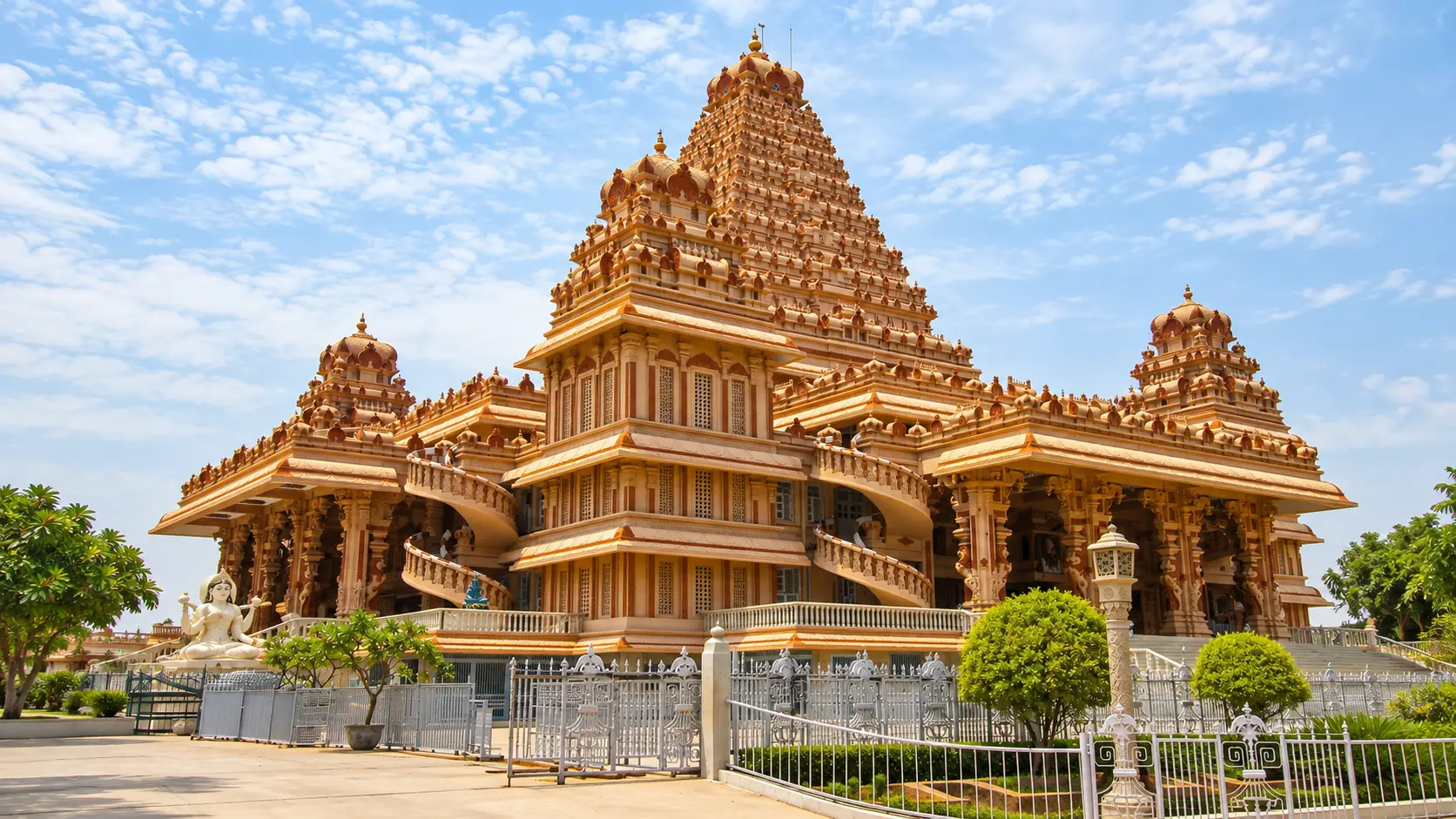
Rising like a brilliant white marble citadel against the ancient quartzite outcrops of the southern Delhi Ridge, Chhatarpur Temple - formally designated as Shri Adhya Katyayani Shaktipith Mandir - is one of the most magnificent, sprawling, and spiritually vibrant Hindu temple complexes in modern India. Covering an astonishing 70 acres (approx. 28 hectares) along Main Chhatarpur Road in the South Delhi revenue district, this monumental sanctuary was the largest Hindu temple complex in India and the second largest in the world (surpassed only by Cambodia's Angkor Wat) prior to the completion of Swaminarayan Akshardham in 2005. Established in 1974 by the revered ascetic master Sant Baba Nagpal Ji (1925 - 1998), Chhatarpur Temple stands as a monument to deep devotion, architectural syncretism, and massive humanitarian service.
When to visitRead details
Entry & permissionsRead details
Fees, visiting hours and entry rules may change. Confirm the latest details with the official operator or local authority before travelling.
Visiting Hours and Schedule
- Complex Operating Hours: Open daily from 06:00 AM to 10:00 PM, 365 days a year.
- Deity Resting Recess (Bhog / Vishram): Certain inner sub-sanctums observe an afternoon recess between 12:00 PM and 04:00 PM, during which curtains are drawn before the idols; however, the main courtyards, gardens, viewing galleries, and the 101-foot Hanuman monument remain open continuously.
- Navratri Operating Schedule: During the nine days of Chaitra and Sharad Navratri, the temple operates 24 hours a day, remaining open through the night for continuous darshan and aarti.
- Langar Timings: The community dining hall serves lunch from approximately 11:30 AM to 03:00 PM, and dinner from 07:00 PM to 09:30 PM.
Tariff Structure
Category / Service | Tariff Rate (INR) | Remarks / Applicable Terms |
|---|---|---|
General Temple Entry (All Devotees) | Free (₹0) | Complimentary access for all |
Darshan of Primary & Sub-Shrines | Free (₹0) | No VIP or special ticketing needed |
101-Foot Hanuman Monument Viewing | Free (₹0) | Open-air southern perimeter |
Daily Community Langar Meal | Free (₹0) | Unlimited satvik vegetarian meal |
Complimentary Shoe Custody Counter | Free (₹0) | Managed by temple volunteers |
Handheld Smartphone Still Photos | Free (₹0) | Permitted in outer courtyards only |
Dedicated Surface Car Parking | Free / Nominal (₹20-₹40) | Managed by Temple Trust |
Regulations, Photography and Sanctum Guidelines
- Sanctum Photography Ban: While casual handheld photography is permitted in the open marble courtyards and garden plazas, photography and video recording inside the inner sanctums (garbhagrihas) is strictly prohibited. Security staff and temple priests monitor sanctum areas closely.
- Dress Code: Devotees must dress modestly. Modest Indian attire (kurta-pyjama, saree, salwar-kameez) or modest Western clothing (full-length trousers, jeans, shirts with sleeves) is required. Shorts, mini-skirts, sleeveless shirts, and revealing clothing are strictly forbidden.
- Footwear Rules: Footwear must be removed before stepping onto any raised marble terrace or courtyard. Do not carry shoes in open plastic bags into temple halls; deposit them at the designated shoe counters outside.
- Commercial Filming: Filming commercial movies, television serials, music videos, or promotional campaigns requires advance written permission, script review, and formal licensing approval from the Shri Adhya Katyayani Shaktipith Mandir Trust Administration.
- Strict Drone Ban: The operation of unmanned aerial vehicles (UAVs / drones) is strictly prohibited across the 70-acre temple complex and surrounding airspace under Delhi Police security regulations.
Plan your visitRead details
Chhatarpur Temple is situated along Main Chhatarpur Road in South Delhi, strategically connected to central Delhi and Gurugram via the Delhi Metro and arterial highways.
Explore the full guide - choose a topic below.
Why visit?
Rising like a brilliant white marble citadel against the ancient quartzite outcrops of the southern Delhi Ridge…Explore detailsClose details
Rising like a brilliant white marble citadel against the ancient quartzite outcrops of the southern Delhi Ridge, Chhatarpur Temple - formally designated as Shri Adhya Katyayani Shaktipith Mandir - is one of the most magnificent, sprawling, and spiritually vibrant Hindu temple complexes in modern India. Covering an astonishing 70 acres (approx. 28 hectares) along Main Chhatarpur Road in the South Delhi revenue district, this monumental sanctuary was the largest Hindu temple complex in India and the second largest in the world (surpassed only by Cambodia's Angkor Wat) prior to the completion of Swaminarayan Akshardham in 2005. Established in 1974 by the revered ascetic master Sant Baba Nagpal Ji (1925 - 1998), Chhatarpur Temple stands as a monument to deep devotion, architectural syncretism, and massive humanitarian service.
The spiritual nucleus of the sanctuary is dedicated to Goddess Katyayani, the fierce, radiant, and benevolent sixth manifestation of Navadurga. In Hindu Shakta philosophy, Goddess Katyayani was formed from the concentrated cosmic energy of the divine trinity - Brahma, Vishnu, and Shiva - to slay the demon Mahishasura and restore righteousness to the universe. What draws millions of pilgrims to Chhatarpur is the extraordinary beauty and spiritual aura of the main sanctum: an eight-armed, golden-gilded icon of the Goddess seated proudly astride a roaring golden lion, brandishing celestial weapons while offering protection (Abhayamudra) to her devotees. During the sacred nine nights of the Navratri festivals (celebrated in autumn and spring), the inner sanctum gates are thrown open around the clock, transforming the complex into a mesmerizing sea of floral garlands, chanting priests, and over one hundred thousand pilgrims per day participating in nocturnal prayer vigils.
Beyond its theological significance, Chhatarpur Temple is a visual and architectural masterpiece. Constructed almost entirely from glistening white Makrana marble imported from Rajasthan, complemented by finely carved red sandstone, the complex seamlessly blends the architectural traditions of North and South India. Towering multi-tiered South Indian gopurams (pyramidal temple gateways) rise above North Indian Nagara-style curvilinear shikharas, flanked by intricately carved marble colonnades, delicate pierced lattice screens (jalis), and expansive open courtyards. Anchoring the southern perimeter is a colossal 101-foot-tall (approx. 31-meter) vermilion-orange colossus of Lord Hanuman, standing proudly against the horizon. Supported by a sprawling community kitchen (langar) that distributes hot, wholesome satvik vegetarian meals to tens of thousands of visitors daily without charge, Chhatarpur Temple offers a deeply enriching, inclusive, and visually dazzling encounter with living Hindu devotion.
What to expect
Covering 70 acres of undulating land in the Saket / Mehrauli sub-division of South Delhi, Chhatarpur Temple is…Explore detailsClose details
Covering 70 acres of undulating land in the Saket / Mehrauli sub-division of South Delhi, Chhatarpur Temple is divided into several sprawling architectural zones connected by wide, tree-shaded avenues and pristine white marble promenades. The complex is clean, meticulously maintained, and accessible.
       +-------------------------------------------------------------+
       |             MAIN CHHATARPUR ROAD ENTRANCE GATES             |
       |    (Extensive Free Shoe Counters, Bag Check & Parking)      |
       +-------------------------------------------------------------+
                                      |
                                      v
  +------------------------------------------------------------------+
  | SECTION 1: THE MAIN MAA KATYAYANI TEMPLE COMPLEX                 |
  | - Majestic Multi-Tier White Makrana Marble Gopuram Gateway       |
  | - Paved Marble Courtyard with Intricately Carved Stone Pillars   |
  | - The Garbhagriha (Inner Sanctum of Goddess Katyayani)           |
  | - Darshan Kaksha (Year-Round Elevated Glass Viewing Gallery)     |
  | - The Sacred Kalpavriksha (Thread-Tying Wish-Fulfilling Tree)    |
  +------------------------------------------------------------------+
                                      |
                                      v
  +------------------------------------------------------------------+
  | SECTION 2: SUBSIDIARY DEVOTIONAL SANCTUARIES                     |
  | - Lord Shiva Sanctuary (Gauri Nageshwar Mandir & Sacred Shivling)|
  | - Sri Ram-Sita & Lakshmana Mandir (Ayodhya-Style Inlay)          |
  | - Radha-Krishna & Ganesha Shrines (Intricate Marble Sculptures)  |
  | - Goddess Ashtabhuja & Mahishasuramardini Shrines                |
  +------------------------------------------------------------------+
                                      |
                                      v
  +------------------------------------------------------------------+
  | SECTION 3: THE MEMORIAL & MONUMENTAL COLOSSUS                    |
  | - Sant Baba Nagpal Ji Samadhi Mandir (Founder's White Tomb)      |
  | - The Monumental 101-Foot Hanuman Colossus (Orange Icon)         |
  | - Vedic Scripture Library, Charity Dispensary & Souvenir Stalls  |
  +------------------------------------------------------------------+
                                      |
                                      v
  +------------------------------------------------------------------+
  | SECTION 4: THE MEGA COMMUNITY KITCHEN (LANGAR / ANNAKSHETRA)     |
  | - Vast Dining Halls Serving Free Satvik Vegetarian Meals         |
  | - Clean RO Drinking Water Kiosks & Modern Sanitation Facilities  |
  +------------------------------------------------------------------+
The Primary Sanctum: Maa Katyayani Mandir
The central focus of the temple is the multi-story temple pavilion dedicated to Goddess Katyayani. Constructed from dazzling white Makrana marble, the shrine features a soaring, South Indian-inspired gopuram gateway carved with thousands of miniature celestial dancers (apsaras), deities, and floral rosettes.
Entering the sanctum, visitors pass through an ornate pillared assembly hall (mandapa) adorned with silver-embossed doors and shimmering chandeliers. The Goddess sits elevated upon an intricately carved marble altar:
- Iconography: Depicted as an imposing, life-size golden idol with eight arms (Ashtabhuja), Goddess Katyayani holds a radiant sword, a trident (trishul), a lotus blossom, a discuss (chakra), a mace (gada), and a bow, while her lower hands display gestures of fearlessness (Abhayamudra) and boons (Varadamudra). She is seated upon a lifelike brass-and-gold lion.
- The Golden Bedchamber (Shayan Kaksha): Adjacent to the sanctum is a private ceremonial suite furnished with a solid silver-plated bed, dressing table, and royal wardrobe, where priests perform daily evening retirement rituals for the Goddess.
- Viewing Protocols: During normal days throughout the year, the inner sanctum doors remain closed to the public to maintain ritual sanctity; visitors view the Goddess through an adjacent, elevated viewing gallery (Darshan Kaksha) equipped with brass railings. However, during the nine days of Navratri, the inner sanctum doors are unlocked, permitting devotees to enter the sanctum directly for close darshan.
The Sacred Wish-Fulfilling Tree (Kalpavriksha)
Standing within the open paved courtyard near the main Katyayani shrine is a majestic, ancient sacred tree revered by pilgrims as the Kalpavriksha (the wish-fulfilling tree). Thousands of visitors perform circumambulation (pradakshina) around its massive trunk, tying sacred sacred red-and-yellow cotton threads (moli or kalawa) onto its lower branches while whispering silent prayers for marriage, childbirth, health, and prosperity. When a devotee’s prayer is fulfilled, custom dictates that they return to the temple to untie a thread, donate sweets (prasad), or contribute to the community langar.
The Subsidiary Shrines and Multi-Faith Harmony
The 70-acre complex houses more than twenty beautifully detailed secondary temples, each functioning as a complete place of worship:
- Gauri Nageshwar Mandir (Lord Shiva): Situated on the opposite side of the main courtyard, this sanctum is dedicated to Lord Shiva. It houses a large, polished black stone Shivling sheltered under a massive nine-headed brass Sheshnag serpent canopy, surrounded by marble carvings of Goddess Parvati, Lord Ganesha, and Lord Kartikeya.
- Sri Ram-Sita and Lakshmana Mandir: Built in classic North Indian Nagara style with a soaring spired shikhara, this sanctum enshrines life-size white marble statues of Lord Rama, Goddess Sita, Lakshmana, and a kneeling Lord Hanuman, decorated in royal silk brocades and gold crowns.
- Radha-Krishna and Ganesha Shrines: Exquisite white marble sanctuaries featuring fine relief carvings that depict the divine Raas Leela of Krishna and Gopis, alongside a dedicated shrine to Lord Ganesha where devotees pray before embarking on new ventures.
- Sant Baba Nagpal Ji Samadhi Mandir: Consecrated in memory of the temple’s founder, who passed away in 1998, this tranquil, air-conditioned white marble memorial pavilion is surrounded by lotus pools and landscaped rose gardens. It preserves his personal wooden sandals (paduka), walking staff, simple robes, and historic photographs documenting the miraculous transformation of barren Chhatarpur scrubland into a magnificent spiritual haven.
+---------------------------------------------------------------------------------------------------+
|                        KEY SHRINES & MONUMENTS AT CHHATARPUR TEMPLE                               |
+------------------------------+--------------------+---------------------+-------------------------+
| Shrine / Feature             | Presiding Deity    | Architectural Style | Key Significance        |
+------------------------------+--------------------+---------------------+-------------------------+
| Maa Katyayani Mandir         | Goddess Katyayani  | South Indian Gopuram| 8-armed golden idol     |
| Gauri Nageshwar Mandir       | Lord Shiva         | North Indian Nagara | Black stone Shivling    |
| Ram-Sita Mandir              | Sri Ram & Sita     | Classical Nagara    | Full Ayodhya parivar    |
| The 101-Foot Hanuman Colossus| Lord Hanuman       | Monumental Scultpure| Tallest statue in South |
| The Kalpavriksha             | Sacred Pipal Tree  | Natural Tree Shrine | Sacred thread tying     |
| Baba Nagpal Samadhi          | Sant Baba Nagpal Ji| Pure White Marble   | Founder's memorial      |
| Mega Langar Annakshetra      | Anna Poorna        | Multi-Tier Hall     | Free satvik meals       |
+------------------------------+--------------------+---------------------+-------------------------+
The 101-Foot Monumental Hanuman Colossus
At the southern extremity of the complex stands the colossal 101-foot-tall (approx. 31-meter) statue of Lord Hanuman. Sculpted in vibrant vermilion-orange stucco, the colossus depicts Hanuman in a powerful standing posture, holding his golden mace (gada) in his left hand while resting his right hand upon his chest in eternal devotion to Lord Rama. Visible for miles across the Mehrauli-Gurugram skyline and from passing Delhi Metro Yellow Line trains, this monumental landmark is one of the tallest religious statues in northern India, drawing thousands of devotees on Tuesdays and Saturdays.
The Mega Langar Hall (Annakshetra)
A central pillar of Sant Baba Nagpal Ji’s spiritual mission was Annadaan - the sacred, unconditional feeding of all human beings. Chhatarpur Temple operates an immense, multi-story community dining hall (Annakshetra) equipped with mechanized bread-making units, giant steam cauldrons, and spotless stainless-steel dining tables. Every day of the year, from early morning until late evening, visitors and pilgrims of all religious backgrounds, castes, and social strata are welcomed to sit together and partake in a nourishing, free satvik vegetarian meal comprising hot rotis, dal, seasonal vegetable curry, rice, and sweet halwa. During the peak Navratri festival, the kitchen operates continuously, preparing and serving over 100,000 meals each day.
Best time to visit
October to November (Autumn / Post-Monsoon): An exceptional time to visit.Explore detailsClose details
Seasonal Guidelines
- October to November (Autumn / Post-Monsoon): An exceptional time to visit. Temperatures are mild and pleasant (20°C to 28°C) with dry, sunny skies. The vast marble courtyards are comfortable to walk barefoot, and the autumn festive energy is exhilarating.
- Sharad Navratri (September/October): The absolute pinnacle of religious celebration at Chhatarpur. Over the nine sacred nights, the entire 70-acre complex is draped in millions of fairy lights and fresh flower garlands imported from across India. Check the current visiting hours and permitted access with the site operator before departure; ceremonies, closures and visitor sessions can affect access.
- December to February (Winter - Optimal Visiting Window): Widely regarded as the most comfortable season for exploring the expansive outdoor grounds. Crisp, cool winter days (10°C to 22°C) make strolling between the various temples and ascending the marble stairs invigorating. Early morning visits feature a gentle mist enveloping the white marble gopurams, creating an ethereal, heavenly atmosphere.
- March (Early Spring): A lovely transitional month with comfortable temperatures (18°C to 28°C).
- Chaitra Navratri (March/April): The spring manifestation of the nine-night festival brings massive pilgrim gatherings, vibrant night illuminations, and festive prasad distribution.
- April to June (Summer - Avoid Midday Sun): Scorching summer heat routinely pushes daytime temperatures above 40°C to 44°C. Crucial Visitor Precaution: Because footwear must be removed before entering the temple courtyards, the white Makrana marble - while cooler than dark stone - absorbs intense solar heat by midday, making barefoot walking painful between 11:30 AM and 04:00 PM. Visitors during summer should schedule their visits strictly during the early morning (06:00 AM to 09:30 AM) or late evening (06:00 PM to 09:30 PM). Coir runners are laid across main paths, but wearing white cotton socks is advisable.
- July to September (Monsoon): Heavy rainfall washes the white marble gopurams clean, while the surrounding gardens become lush and green. Devotees celebrate the holy month of Shravan (dedicated to Lord Shiva), with grand Monday celebrations at the Gauri Nageshwar temple.
+---------------------------------------------------------------------------------------------------+
|                           SEASONAL CLIMATE & FESTIVAL CALENDAR AT CHHATARPUR                      |
+-------------------+--------------------+----------------------------------+-----------------------+
| Season            | Months             | Climate Conditions               | Highlights & Events   |
+-------------------+--------------------+----------------------------------+-----------------------+
| Autumn Festivals  | October - November | Mild, sunny (18°C - 30°C);       | Sharad Navratri peak; |
|                   |                    | clear skies, dry air             | 24-hr darshan, aarti  |
+-------------------+--------------------+----------------------------------+-----------------------+
| Peak Winter       | December - January | Crisp, chilly (8°C - 20°C);      | Ideal barefoot walks; |
|                   |                    | peaceful morning mist            | hot langar halwa      |
+-------------------+--------------------+----------------------------------+-----------------------+
| Spring Season     | February - March   | Warm, pleasant (16°C - 28°C);    | Chaitra Navratri;     |
|                   |                    | blooming garden borders          | Shivratri celebrations|
+-------------------+--------------------+----------------------------------+-----------------------+
| Summer Heat       | April - June       | Scorching hot (30°C - 44°C);     | Early morning visits; |
|                   |                    | MARBLE GETS HOT MIDDAY           | evening illumination  |
+-------------------+--------------------+----------------------------------+-----------------------+
| Monsoon Season    | July - September   | Humid, rain showers (26°C - 35°C)| Shravan Shiv pujas;   |
|                   |                    | clean white marble surfaces      | lush green landscapes |
+-------------------+--------------------+----------------------------------+-----------------------+
How to reach
Chhatarpur Temple is situated along Main Chhatarpur Road in South Delhi, strategically connected to central Delhi…Explore detailsClose details
Chhatarpur Temple is situated along Main Chhatarpur Road in South Delhi, strategically connected to central Delhi and Gurugram via the Delhi Metro and arterial highways.
       +-------------------------------------------------------------+
       |             REGIONAL ACCESS & TRANSPORT MATRIX              |
       +-------------------------------------------------------------+
                                      |
         +----------------------------+---------------------------+
         |                                                        |
         v                                                        v
  [METRO TRANSIT]                                          [ROADWAY ACCESS]
  - Chhatarpur Station (Yellow Line):                      - Main Chhatarpur Road:
    800 m north (~10 min walk or 3 min                       Direct multi-lane corridor connecting
    e-rickshaw ride directly to main gate).                  to Mehrauli-Badarpur & MG Roads.
  - Sultanpur Station (Yellow Line):                       - Mehrauli-Gurugram (MG) Road:
    1.5 km west along MG Road. Direct 15-min link to DLF CyberCity
  - Qutub Minar Station (Yellow Line):                       and central Gurugram commercial hub.
    2.0 km north via Mehrauli.
                                      |
         +----------------------------+---------------------------+
         |                                                        |
         v                                                        v
  [RAILWAY TERMINALS]                                      [AIRPORT CONNECTIONS]
  - New Delhi Railway Station (NDLS): 18 km                - Indira Gandhi Int'l Airport (DEL):
    (approx. 35 min direct ride on Yellow Line).             13 km northwest (~25 min via
  - Hazrat Nizamuddin Station (NZM): 16 km                   Mehrauli-Mahipalpur Road).
    (approx. 35 min via Outer Ring Road).
By Delhi Metro (Fastest and Recommended)
- Chhatarpur Metro Station (Yellow Line / Line 2 - Closest Station): Located approximately 800 meters north of the main temple entrance. Confirm the current charge and what it includes with the operator or service provider. Visitor admission, vehicles, parking, activities and accommodation can have separate charges. The Yellow Line provides a seamless, direct connection without train transfers to Rajiv Chowk (Connaught Place), New Delhi Railway Station, Kashmere Gate, and Millennium City Centre Gurugram.
- Sultanpur Metro Station (Yellow Line / Line 2): Situated roughly 1.5 kilometers west along Mehrauli-Gurugram Road, convenient for travelers arriving from Gurugram.
By Road and Personal Vehicles
- From Central Delhi / Connaught Place: Travel south via Aurobindo Marg through AIIMS, IIT flyover, and Mehrauli, continuing onto Main Chhatarpur Road. Driving time is approximately 35 to 45 minutes in normal traffic.
- From Gurugram: Travel north along the Mehrauli-Gurugram (MG) Road past Sikanderpur and Sultanpur, turning right onto Main Chhatarpur Road. Driving time from DLF Cyber Hub or IFFCO Chowk is roughly 15 to 20 minutes.
- Dedicated Surface Parking: The temple complex features extensive, dedicated, tree-shaded surface parking lots managed by the Mandir Trust along Main Chhatarpur Road. Parking is available free of charge or for a nominal municipal fee, capable of accommodating hundreds of cars, two-wheelers, and chartered tourist buses.
By Rail and Air
- Indira Gandhi International Airport (DEL): Located just 13 kilometers northwest of Chhatarpur Temple. A pre-paid taxi or app-based cab (Uber/Ola) takes approximately 25 to 30 minutes via the Mehrauli-Mahipalpur Road and Vasant Kunj bypass.
- New Delhi Railway Station (NDLS): Positioned 18 kilometers north. Board the underground Yellow Line Metro directly at New Delhi Station and disembark at Chhatarpur Station (approx. 35 minutes of travel).
- Hazrat Nizamuddin Railway Station (NZM): Situated roughly 16 kilometers northeast. Travel via the Outer Ring Road and Mehrauli-Badarpur Road; travel time is roughly 35 minutes by taxi.
Entry, timings and permissions
Fees, visiting hours and entry rules may change.Explore detailsClose details
Fees, visiting hours and entry rules may change. Confirm the latest details with the official operator or local authority before travelling.
Visiting Hours and Schedule
- Complex Operating Hours: Open daily from 06:00 AM to 10:00 PM, 365 days a year.
- Deity Resting Recess (Bhog / Vishram): Certain inner sub-sanctums observe an afternoon recess between 12:00 PM and 04:00 PM, during which curtains are drawn before the idols; however, the main courtyards, gardens, viewing galleries, and the 101-foot Hanuman monument remain open continuously.
- Navratri Operating Schedule: During the nine days of Chaitra and Sharad Navratri, the temple operates 24 hours a day, remaining open through the night for continuous darshan and aarti.
- Langar Timings: The community dining hall serves lunch from approximately 11:30 AM to 03:00 PM, and dinner from 07:00 PM to 09:30 PM.
Tariff Structure
Category / Service | Tariff Rate (INR) | Remarks / Applicable Terms |
|---|---|---|
General Temple Entry (All Devotees) | Free (₹0) | Complimentary access for all |
Darshan of Primary & Sub-Shrines | Free (₹0) | No VIP or special ticketing needed |
101-Foot Hanuman Monument Viewing | Free (₹0) | Open-air southern perimeter |
Daily Community Langar Meal | Free (₹0) | Unlimited satvik vegetarian meal |
Complimentary Shoe Custody Counter | Free (₹0) | Managed by temple volunteers |
Handheld Smartphone Still Photos | Free (₹0) | Permitted in outer courtyards only |
Dedicated Surface Car Parking | Free / Nominal (₹20-₹40) | Managed by Temple Trust |
Regulations, Photography and Sanctum Guidelines
- Sanctum Photography Ban: While casual handheld photography is permitted in the open marble courtyards and garden plazas, photography and video recording inside the inner sanctums (garbhagrihas) is strictly prohibited. Security staff and temple priests monitor sanctum areas closely.
- Dress Code: Devotees must dress modestly. Modest Indian attire (kurta-pyjama, saree, salwar-kameez) or modest Western clothing (full-length trousers, jeans, shirts with sleeves) is required. Shorts, mini-skirts, sleeveless shirts, and revealing clothing are strictly forbidden.
- Footwear Rules: Footwear must be removed before stepping onto any raised marble terrace or courtyard. Do not carry shoes in open plastic bags into temple halls; deposit them at the designated shoe counters outside.
- Commercial Filming: Filming commercial movies, television serials, music videos, or promotional campaigns requires advance written permission, script review, and formal licensing approval from the Shri Adhya Katyayani Shaktipith Mandir Trust Administration.
- Strict Drone Ban: The operation of unmanned aerial vehicles (UAVs / drones) is strictly prohibited across the 70-acre temple complex and surrounding airspace under Delhi Police security regulations.
Nearby places to consider
Located approximately 2.5 kilometers north via Mehrauli, this 12th-century victory tower stands 72.5 meters high…Explore detailsClose details
Qutub Minar (UNESCO World Heritage Site)
Located approximately 2.5 kilometers north via Mehrauli, this 12th-century victory tower stands 72.5 meters high as the world’s tallest brick minaret. The surrounding archaeological complex features the 4th-century iron pillar of Chandragupta II, the Quwwat-ul-Islam Mosque, and the tomb of Iltutmish.
Mehrauli Archaeological Park
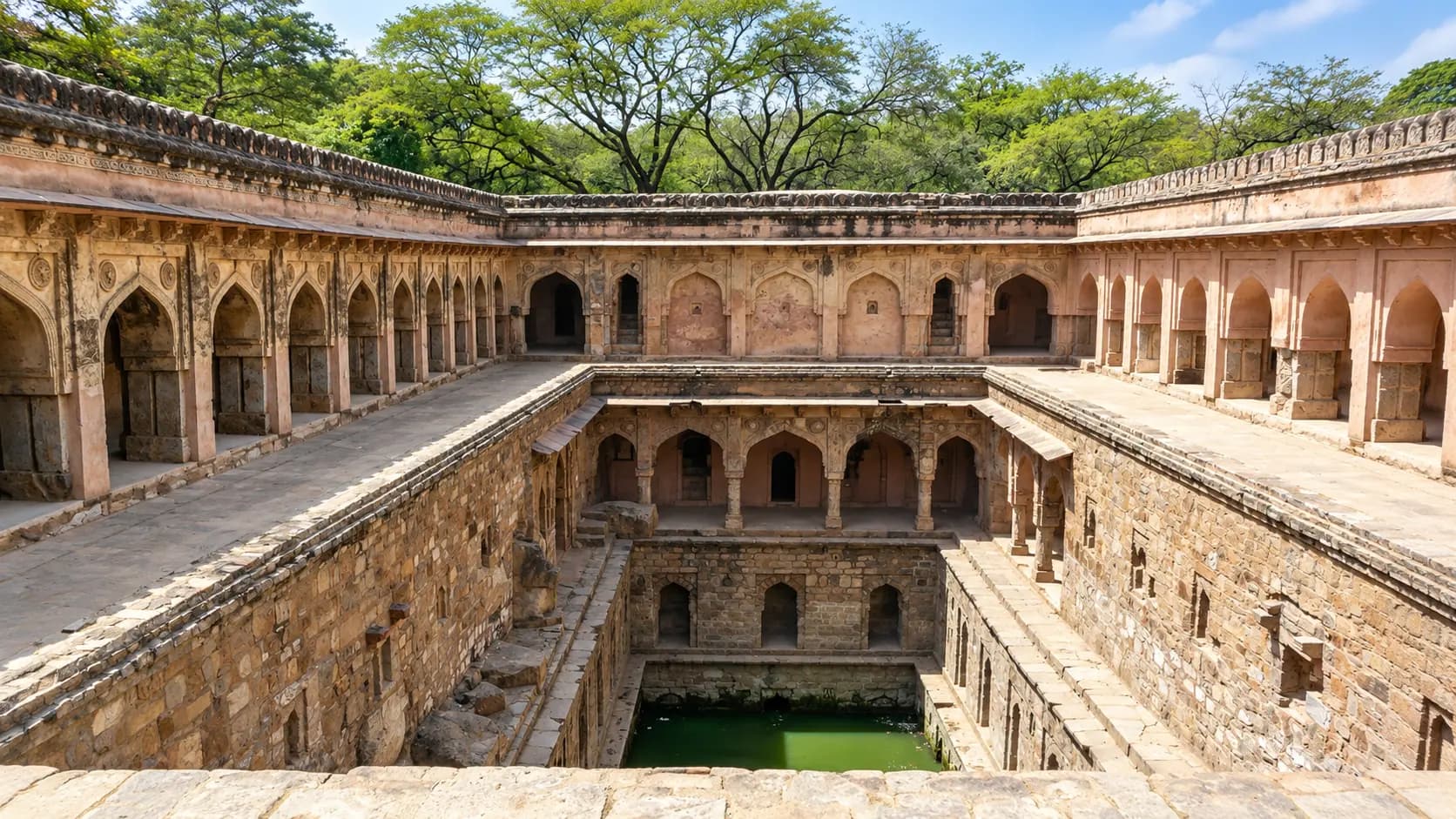
Situated roughly 3.0 kilometers north, this 200-acre heritage park contains over 100 historical monuments spanning 1,000 years of Delhi's history. Key highlights include Jamali Kamali Mosque and Tomb, the stepwells of Rajon ki Baoli and Gandhak ki Baoli, and the 16th-century tomb of Adham Khan.
Ahinsa Sthal (Lord Mahavira Statue)
Located just 2.0 kilometers north atop a rocky knoll on the Mehrauli-Badarpur Road junction, Ahinsa Sthal is a serene Jain memorial featuring a magnificent carved stone colossus of Lord Mahavira seated in deep lotus meditation, surrounded by tranquil rock gardens and prayer gazebos.
Garden of Five Senses (Said-ul-Ajaib)
Situated approximately 3.5 kilometers northeast in Said-ul-Ajaib, this 20-acre landscaped park developed by Delhi Tourism is designed to stimulate all five human senses. It features fragrant herb gardens, spiraling water cascades, modern outdoor sculptures, solar energy exhibits, and open-air cafes.
In pictures
The practical bits
Before you go.
Footwear Removal and Storage
All footwear must be removed before entering any temple courtyard; deposit your shoes at the large, complimentary…Explore detailsClose details
All footwear must be removed before entering any temple courtyard; deposit your shoes at the large, complimentary shoe counters situated near the main entrance gates, where volunteers issue numbered brass tokens; during the warm months from April to October, carry a pair of clean white cotton socks in your pocket to protect your soles from hot marble stone.
Modesty and Temple Etiquette
Visitors must dress respectfully in attire covering shoulders and knees; sleeveless tops, tank tops, short…Explore detailsClose details
Visitors must dress respectfully in attire covering shoulders and knees; sleeveless tops, tank tops, short skirts, and athletic shorts are inappropriate for entering sacred sanctums; while head coverings are not mandatory, many pilgrims choose to drape a scarf or dupatta over their heads as a sign of devotional respect.
Navratri Crowd Management
If visiting during the peak nine days of Navratri, be prepared for immense crowds exceeding 100,000 pilgrims…Explore detailsClose details
If visiting during the peak nine days of Navratri, be prepared for immense crowds exceeding 100,000 pilgrims daily; follow the barricaded queue lines patiently, keep children close by, and avoid bringing large bags or backpacks, as enhanced police metal detectors operate at all entrances.
Partaking in Free Langar Meals
Do not miss the opportunity to visit the community dining hall (Annakshetra); meals are served continuously and…Explore detailsClose details
Do not miss the opportunity to visit the community dining hall (Annakshetra); meals are served continuously and are completely free; remove your footwear outside the dining hall, sit cross-legged on the clean floor runners, accept food with both hands, and finish everything served on your plate to respect the sacred nature of the offering.
A few things you might wonder
Common questions about visiting Chhatarpur Temple. Fees, visiting hours and ceremonies are researched details that may change; confirm current arrangements with the operator before travelling.
Who founded Chhatarpur Temple, and which deity is the primary focus of worship?
How large is Chhatarpur Temple, and what materials was it built from?
Is there an entrance fee to visit Chhatarpur Temple, and what are its daily timings?
What is the significance of the 101-foot Hanuman statue at Chhatarpur?
Can visitors eat at Chhatarpur Temple, and how does the langar system work?
Which metro station is closest to Chhatarpur Temple, and how do I get there?
Explore more in South Delhi
Discover other destinations around this hub
Planning a trip to South Delhi?