Khari Baoli Spice Market
Comprehensive guide to Khari Baoli in Central Delhi.
Location
Old Delhi, Delhi NCR
A closer look
Your visit, at a glance.
Old Delhi, Delhi Ncr
GET TO KNOW THE PLACE
---
The story of Khari Baoli Spice Market
Start here. Open a tile for the full details.
Why goRead details
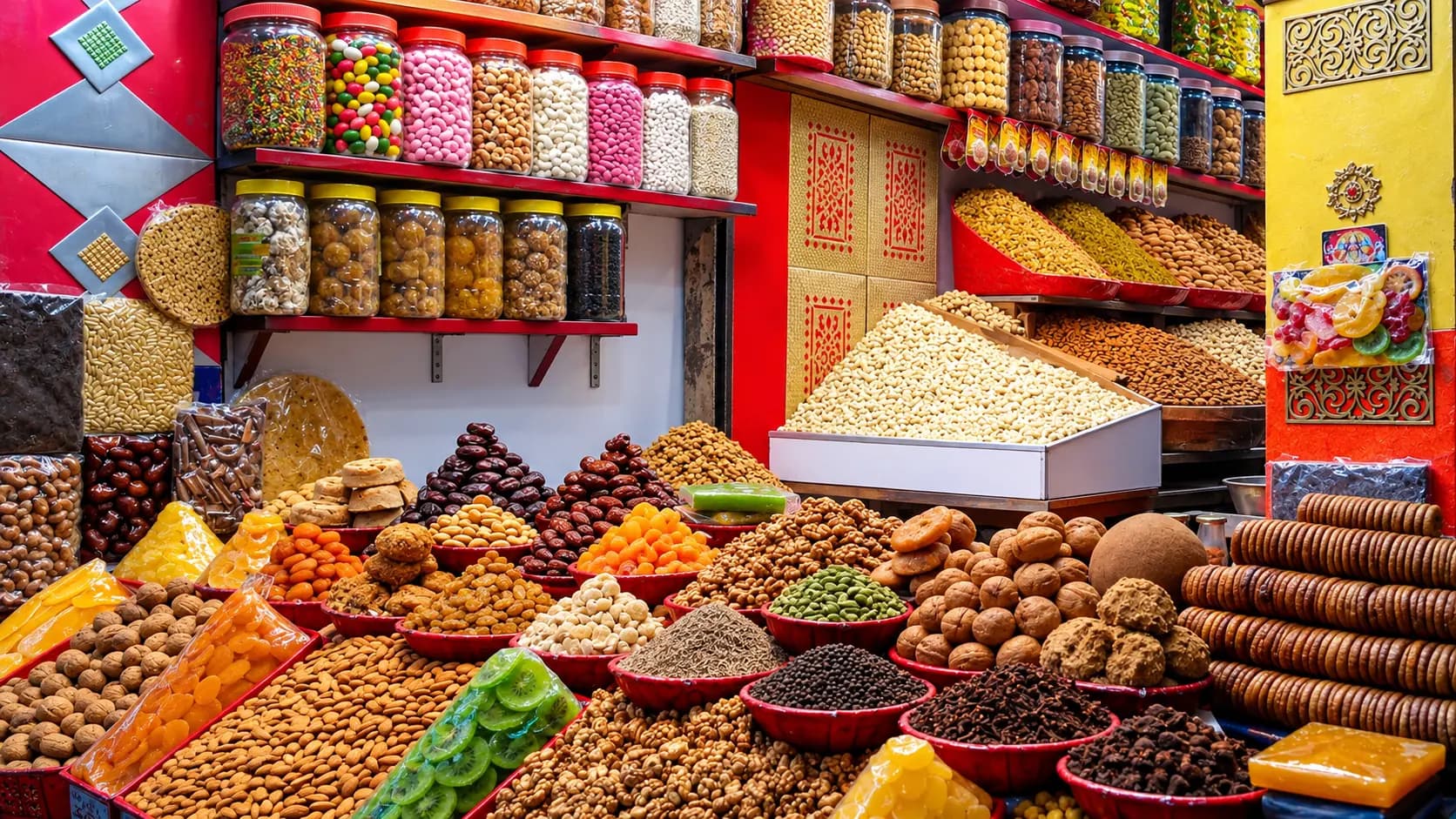
Few commercial environments in the world provide as overwhelming, intoxicating, and historically authentic a sensory assault as Khari Baoli. Located immediately adjacent to the red sandstone Fatehpuri Masjid at the western terminus of Chandni Chowk in Central Delhi, this legendary trading district has operated continuously since the mid-17th century as Asia’s largest wholesale spice and dry-fruit market. Long before modern multinational commodity exchanges and container freight corridors existed, Khari Baoli was the beating commercial heart of the Mughal Empire - a vital trans-Asian clearinghouse where camel caravans arriving from the Silk Road, oxcarts from the Deccan plateau, and river barges from Bengal unloaded aromatic treasures that once determined global trade routes and sparked the Age of Discovery.
When to visitRead details
Entry & permissionsRead details
Fees, visiting hours and entry rules may change. Confirm the latest details with the official operator or local authority before travelling.
Operating Schedule and Market Hours
- General Market Hours: Monday through Saturday, 10:00 AM to 08:00 PM for retail shopping, photo tours, and pedestrian exploration.
- Wholesale Commercial Loading: 06:00 AM to 11:00 AM (the peak period for truck unloading, handcart logistics, and wholesale auctions in Gadodia Market).
- Weekly Closure: Khari Baoli is strictly closed on Sundays for wholesale commerce. While a few informal street hawkers and dry fruit vendors operate along the outer streets, all wholesale katras, godowns, and Gadodia Market are locked shut on Sundays. Plan your visit strictly between Monday and Saturday.
Admission Tariffs
Category / Service | Tariff Rate (INR) | Remarks / Access Terms |
|---|---|---|
General Market & Katra Access | Free (₹0) | Unrestricted public street access |
Gadodia Market Courtyard Entry | Free (₹0) | Active commercial clearinghouse |
Gadodia Market Rooftop Access | Free / Voluntary Tip | ₹50 - ₹100 tip to building watchman |
Handheld Smartphone Photography | Free (₹0) | Personal non-commercial use only |
Cycle-Rickshaw Ride (One-Way) | ₹30 - ₹50 per ride | Negotiated local fare from metro |
Saffron (High-Grade Pure / Gram) | ₹250 - ₹450 per gram | Current market rate for Mongra |
Mamra Almonds (Wholesale / Kg) | ₹1,800 - ₹3,200 per kg | Graded Afghan/Iranian origin |
Regulations, Photography and Commercial Protocols
- Free Public Access: Khari Baoli is an open municipal bazaar; no tickets, entrance passes, or entry fees are required to explore its streets and public katras.
- Photography Guidelines: Personal, handheld mobile phone photography and casual mirrorless camera usage are permitted throughout the market. Photographers should always request verbal permission before photographing individual merchants or porters at close range, as working laborers are heavily engaged in physical hauling.
- Gadodia Market Rooftop Etiquette: The upper balconies and rooftop of Gadodia Market are private commercial property managed by the local merchant association. While visitors are generally welcomed, ascend quietly, avoid blocking stairways, do not climb onto parapet edges, and offer a modest tip (₹50 to ₹100) to the security guard who unlocks the rooftop door.
- Commercial Filming Permits: Professional film crews, television productions, commercial advertisements, and media documentaries requiring tripods, studio lighting, or audio booms require prior written approval and licensing permits from the Municipal Corporation of Delhi (MCD) and the Delhi Police (Kotwali Division).
- Strict Drone Ban: Drones and unmanned aerial vehicles (UAVs) are strictly illegal across Khari Baoli and Old Delhi under central aviation security laws and local police regulations.
Plan your visitRead details
Khari Baoli is situated at the western end of the Chandni Chowk axis in Central Delhi, adjoining Fatehpuri Masjid and Old Delhi Railway Station, served by multiple transit lines.
Respiratory Protection and Sensory Precautions
The air in Khari Baoli - particularly inside Gadodia Market and near chilli unloading docks - is heavily saturated with fine airborne capsaicin and ground spice dust; all visitors should carry an N95 protective face mask or a tightly woven cotton bandana to cover their nose and mouth, along with a bottle of drinking water to soothe throat tickling and involuntary coughing (dhasak).
Explore the full guide - choose a topic below.
Why visit?
Few commercial environments in the world provide as overwhelming, intoxicating, and historically authentic a…Explore detailsClose details
Few commercial environments in the world provide as overwhelming, intoxicating, and historically authentic a sensory assault as Khari Baoli. Located immediately adjacent to the red sandstone Fatehpuri Masjid at the western terminus of Chandni Chowk in Central Delhi, this legendary trading district has operated continuously since the mid-17th century as Asia’s largest wholesale spice and dry-fruit market. Long before modern multinational commodity exchanges and container freight corridors existed, Khari Baoli was the beating commercial heart of the Mughal Empire - a vital trans-Asian clearinghouse where camel caravans arriving from the Silk Road, oxcarts from the Deccan plateau, and river barges from Bengal unloaded aromatic treasures that once determined global trade routes and sparked the Age of Discovery.
Today, Khari Baoli remains a vibrant, thriving, multi-billion-rupee commercial phenomenon. As you step from the paved pedestrian boulevard of Chandni Chowk into the dense, shadowed lanes of Khari Baoli, the visual and olfactory landscape transforms abruptly. The air becomes thick and golden, heavily saturated with the pungent, sneeze-inducing dust of millions of dried red chillies, the sweet floral warmth of whole green cardamom pods, the medicinal bite of raw turmeric root, the sharp pungency of black pepper, and the luxurious, honeyed aroma of pure Kashmiri saffron (kesar). Thousands of multi-generational wholesale merchant houses - many tracing their business lineage across seven or eight unbroken generations - operate from compact, wooden-fronted shops (gaddis) where proprietors sit cross-legged on white cotton mattresses (chandni) surrounded by soaring pyramids of spices, gleaming copper balances, and ledgers (bahi-khata).
Beyond the ground-level street trade, the architectural and cultural centerpiece of Khari Baoli is Gadodia Market (Katra Ishwar Bhawan). Built in the 1920s by the wealthy philanthropist Seth Lakshmi Narayan Gadodia, this colossal, multi-tiered colonial-Mughal trading quadrangle features a cavernous central courtyard where muscular porters (palledars) expertly hoist 80-kilogram burlap sacks of chillies onto handcarts amidst calls of "Hato! Bachke!" (Make way!). Ascending the dark, spice-dusted stone stairwells of Gadodia Market to its expansive rooftop terrace rewards travelers with one of the most breathtaking, bird’s-eye panoramas in North India: an unobstructed view overlooking the bustling courtyards below, the soaring red-and-white domes of Fatehpuri Masjid, and the endless sea of historic Old Delhi rooftops. For food lovers, photographers, cultural explorers, and culinary adventurers, Khari Baoli offers an unforgettable encounter with the living commerce that built an empire.
What to expect
Covering an intricate network of narrow streets, covered arched alleys (katras), and warehouse courtyards in the…Explore detailsClose details
Covering an intricate network of narrow streets, covered arched alleys (katras), and warehouse courtyards in the Kotwali sub-division of Central Delhi, Khari Baoli is an intense, fast-paced commercial environment. The market does not cater primarily to tourists; it is a serious, high-volume agricultural commodities exchange where hundreds of tonnes of spices change hands every hour.
       +-------------------------------------------------------------+
       |             FATEHPURI MASJID (WESTERN GATEWAY)              |
       |         (Western Terminus of Chandni Chowk Promenade)       |
       +-------------------------------------------------------------+
                                      |
                                      v
  +------------------------------------------------------------------+
  | SECTION 1: KHARI BAOLI MAIN STREET ENTRANCE                      |
  | - Retail & Semi-Wholesale Spice Shops; Jute & Burlap Sacks       |
  | - Kashmiri & Iranian Saffron Displays; Green & Black Cardamom    |
  | - Cloves, Cinnamon Sticks, Mace, Nutmeg, Star Anise              |
  +------------------------------------------------------------------+
                                      |
                                      v
  +------------------------------------------------------------------+
  | SECTION 2: GADODIA MARKET (KATRA ISHWAR BHAWAN - 1920s)          |
  | [Four-Story Colonial-Mughal Brick & Sandstone Trading Quad]      |
  |                                                                  |
  |  +------------------------+          +------------------------+  |
  |  | Central Ground Courtyd |<-------->| Palledar Loading Docks |  |
  |  | - 80kg Chilli Sacks    |          | - Handcart (Thela) Hub |  |
  |  | - Intensive Spice Dust |          | - Weighing Balances    |  |
  |  +------------------------+          +------------------------+  |
  |              |                                    |              |
  |              v                                    v              |
  |  +------------------------+          +------------------------+  |
  |  | Upper Floor Godowns    |          | Rooftop Terrace View   |  |
  |  | - Wholesale Offices    |          | - Panoramic Old Delhi  |  |
  |  | - Saffron Sorting Labs |          | - Fatehpuri Domes View |  |
  |  +------------------------+          +------------------------+  |
  +------------------------------------------------------------------+
                                      |
                                      v
  +------------------------------------------------------------------+
  | SECTION 3: DRY FRUITS & AYURVEDIC HERBS (CHURCH MISSION ROAD)    |
  | - Afghan Almonds (Mamra Badam), Cashews, Pistachios, Walnuts     |
  | - Dried Figs (Anjeer), Apricots, Raisins, Persian Dates          |
  | - Ayurvedic Botanicals: Shilajit, Amla, Shikakai, Reetha, Salts  |
  +------------------------------------------------------------------+
The Origins of the Name: The Vanished Saline Stepwell
The historical origins of Khari Baoli predate the construction of Emperor Shah Jahan’s walled city of Shahjahanabad. The name literally translates to "Salty Stepwell" (Khari = saline or brackish; Baoli = a stepped well reservoir). Around 1551 CE, during the reign of Islam Shah Suri (the son of the legendary Afghan ruler Sher Shah Suri), a nobleman named Khwaja Abdullah Khan constructed a fortified gateway and a deep masonry stepwell along the western trade route approaching Old Delhi.
Unlike the sweet subterranean aquifers found elsewhere along the Yamuna floodplains, the water emerging in this baoli was naturally brackish and mineral-dense. Because it was too salty for human drinking, the stepwell became the designated watering and bathing trough for the thousands of pack horses, camels, and transport bullocks that hauled commercial grain and trade goods into Delhi from Rajasthan and Punjab. When Emperor Shah Jahan founded Shahjahanabad in the 1640s and his royal consort Fatehpuri Begum erected the grand Fatehpuri Masjid in 1650, the area surrounding the stepwell evolved into the imperial capital's wholesale produce and spice bazaar. In the 1930s, during British municipal urban widening and sanitation programs, the dilapidated subterranean stepwell was filled with earth and paved over, but its historic name remains permanently immortalized.
The Commodities: A Masterclass in Global Spices and Botanicals
Khari Baoli’s product inventory spans thousands of natural botanical substances, sourced from every corner of the Indian subcontinent, the Middle East, Central Asia, and Africa:
- Dried Red Chillies (Mirch): The most visually striking and pungent commodity in the market. Mountains of dried whole red chillies are piled high in burlap sacks, arriving from major cultivation centers across India. Varieties include fiery Guntur Sannam from Andhra Pradesh, deeply crinkled and mildly spicy Byadagi chillies from Karnataka (prized for their rich crimson color in butter chicken and curries), and aromatic Kashmiri chillies. In the deeper katras, mechanized spice pulverizers grind whole pods into fine, scarlet powders, releasing potent airborne capsaicin.
- Cardamom, Cloves, and Cinnamon: Burlap bags overflow with plump, fragrant green cardamom pods (chhoti elaichi) from the misty plantations of the Idukki hills in Kerala, smoky black cardamom pods (badi elaichi) harvested in the eastern Himalayas of Sikkim, dark whole cloves (laung) from Zanzibar and Madagascar, and curled, fragrant bark quills of Ceylon cinnamon (dalchini).
- Kashmiri and Iranian Saffron (Kesar): The most precious and closely guarded commodity in Khari Baoli. Stored in locked steel safes inside wholesale trade offices, pure saffron threads are sold by the gram. Merchants display delicate wooden and tin boxes containing deep red stigmas of authentic Mongra saffron from the plateau fields of Pampore in Kashmir, alongside high-grade Persian Negin saffron from Khorasan.
- Seed Spices and Whole Aromatics: Large burlap bags are packed with earthy cumin seeds (jeera) from Gujarat and Rajasthan, bright green fennel seeds (saunf), coriander seeds (dhania), fenugreek (methi), black onion seeds (kalonji), carom seeds (ajwain), yellow and black mustard (rai), whole nutmeg (jaiphal), and golden-orange webs of mace (javitri).
- Dry Fruits and Nuts: Concentrated particularly along Church Mission Road and the northern market wings, merchants trade in premium dry fruits imported along ancestral overland trade routes: prized sweet-oil-rich Mamra almonds imported from Afghanistan and Iran, roasted and raw cashew kernels (kaju) from Goa and Mangalore, emerald pistachio nuts (pista), whole walnuts in shell (akhrot) from Kashmir, sun-dried Turkish figs (anjeer), dried wild apricots (khubani), and golden Afghan raisins (kishmish).
- Ayurvedic Herbs, Resins, and Mineral Salts: Khari Baoli remains India’s largest market for traditional Ayurvedic, Unani, and herbal medicines. In specialized shops, one can find raw chunks of pink Himalayan rock salt (sendha namak), sulfurous black salt (kala namak), pure resinous shilajit extracted from Himalayan cliffs, dried gooseberry (amla), soapnuts (reetha), liquorice root (mulethi), sandalwood shavings, and dried edible rose petals (gulkand).
+---------------------------------------------------------------------------------------------------+
|                        COMMODITY & REGIONAL SOURCING MATRIX AT KHARI BAOLI                        |
+------------------------------+--------------------+---------------------+-------------------------+
| Commodity                    | Hindi/Urdu Name    | Primary Geographic  | Primary Culinary /      |
|                              |                    | Provenance          | Commercial Application  |
+------------------------------+--------------------+---------------------+-------------------------+
| Saffron                      | Kesar / Zafaran    | Kashmir & Iran      | Biryanis, sweets, ittar |
| Red Chillies (Whole/Powder)  | Lal Mirch          | Guntur & Byadagi    | Curry pastes, seasoning |
| Green Cardamom               | Chhoti Elaichi     | Kerala (Idukki)     | Chai, desserts, curries |
| Black Cardamom               | Badi Elaichi       | Sikkim & Nepal      | Garam masala, biryani   |
| Cloves                       | Laung              | Zanzibar & Kerala   | Whole tempering, masala |
| Cinnamon Quills              | Dalchini           | Sri Lanka & Kerala  | Sweet & savory cooking  |
| Cumin Seeds                  | Jeera              | Gujarat & Rajasthan | Essential tadka base    |
| Mamra Almonds                | Mamra Badam        | Afghanistan & Iran  | Premium table nuts      |
| Dried Figs & Apricots        | Anjeer / Khubani   | Turkey & Kashmir    | Confectionery, snacks   |
| Rock Salt & Black Salt       | Sendha / Kala Namak| Himalayas & Punjab  | Fasting, chaat, curing  |
| Turmeric Fingers (Whole)     | Sabut Haldi        | Nizamabad & Sangli  | Medicinal, color, spice |
+------------------------------+--------------------+---------------------+-------------------------+
Gadodia Market: The Architectural Beating Heart
No exploration of Khari Baoli is complete without venturing into Gadodia Market (Katra Ishwar Bhawan). Constructed between 1923 and 1924, this imposing, fortress-like brick-and-mortar quadrangle was designed specifically for wholesale agricultural trading. Entering through a towering stone archway flanked by heavy iron-reinforced wooden gates, visitors step into a bustling interior courtyard surrounded by four soaring levels of open-air balconies supported by sturdy brick pillars.
On the ground floor, the atmosphere is electric. Handcarts loaded with hundreds of burlap sacks are maneuvered through narrow gaps with clockwork precision. Manual laborers - known as palledars - carry towering loads balanced effortlessly on their backs, their shirts coated in red chilli dust. The air reverberates with the clatter of iron wheels, the shouts of auctioneers negotiating prices per quintal, and the rhythmic sound of heavy gunny sacks hitting stone paving.
The Rooftop Panorama
Ascending the weathered, dimly lit spiral stairways located at the corners of Gadodia Market leads up to the sprawling rooftop terrace. Emerging onto the roof is an exhilarating experience: the overwhelming spice dust and noise of the courtyard below recede, replaced by fresh breezes and an astonishing 360-degree panoramic view of Old Delhi.
Confirm the current charge and what it includes with the operator or service provider. Visitor admission, vehicles, parking, activities and accommodation can have separate charges.
Best time to visit
October to November (Autumn / Pre-Diwali Peak Season): An extraordinary period to experience Khari Baoli.Explore detailsClose details
Seasonal Breakdown
- October to November (Autumn / Pre-Diwali Peak Season): An extraordinary period to experience Khari Baoli. Temperatures are pleasant (20°C to 28°C) with dry, sunny skies. This is the busiest commercial season of the year, as merchants and retail buyers from across India converge to purchase new-crop saffron, whole spices, and dry fruits for the grand festival of Diwali and the winter wedding season. The energy, color, and display volume are at their absolute annual peak.
- December to February (Winter - Optimal Visiting Season): Widely considered the most comfortable season for walking through the crowded, non-air-conditioned alleys of Khari Baoli. Crisp winter weather (10°C to 22°C) keeps the air fresh, reducing the stinging intensity of airborne spice dust. Steaming street refreshments - such as hot masala chai, roasted nuts, and sizzling samosas - are available at every corner.
- March (Early Spring): A pleasant transitional month with mild daytime temperatures (18°C to 28°C) before the onset of oppressive summer heat.
- April to June (Summer - Avoid Midday): Extreme summer temperatures frequently soar beyond 42°C to 45°C. In the enclosed brick katras of Khari Baoli, trapped humidity and intense heat exacerbate the burning sensation of airborne chilli and pepper dust. Travelers visiting during the summer must arrive early in the morning - between 08:30 AM and 10:30 AM - to explore the wholesale loading operations before afternoon heat becomes unbearable.
- July to September (Monsoon): Heavy monsoon downpours make the stone paving slick, and humidity levels exceed 85%. While the wholesale trade continues indoors, rain can create puddles in secondary unpaved alleys, and dampness can cause spice powders to clump.
+---------------------------------------------------------------------------------------------------+
|                           SEASONAL CLIMATE & COMMERCIAL DYNAMICS AT KHARI BAOLI                   |
+-------------------+--------------------+----------------------------------+-----------------------+
| Season            | Months             | Climate Conditions               | Commercial Activity   |
+-------------------+--------------------+----------------------------------+-----------------------+
| Autumn Festival   | October - November | Mild, dry (18°C - 30°C);         | Peak Diwali & wedding |
|                   |                    | crisp, clear air                 | dry fruit rush        |
+-------------------+--------------------+----------------------------------+-----------------------+
| Peak Winter       | December - January | Crisp, chilly (8°C - 20°C);      | Saffron arrivals;     |
|                   |                    | low heat, manageable spice dust  | ideal walking weather |
+-------------------+--------------------+----------------------------------+-----------------------+
| Spring Season     | February - March   | Warm, pleasant (16°C - 28°C);    | Active wholesale trade|
|                   |                    | comfortable strolling weather    | Holi color/spice rush |
+-------------------+--------------------+----------------------------------+-----------------------+
| Summer Heat       | April - June       | Scorching hot (30°C - 44°C);     | Early morning visits; |
|                   |                    | INTENSE AIRBORNE CHILLI DUST     | carry protective mask |
+-------------------+--------------------+----------------------------------+-----------------------+
| Monsoon Season    | July - September   | Humid, rain showers (26°C - 35°C)| Indoor trade godowns; |
|                   |                    | slick cobblestone alleys         | chai & pakoras active |
+-------------------+--------------------+----------------------------------+-----------------------+
How to reach
Khari Baoli is situated at the western end of the Chandni Chowk axis in Central Delhi, adjoining Fatehpuri Masjid…Explore detailsClose details
Khari Baoli is situated at the western end of the Chandni Chowk axis in Central Delhi, adjoining Fatehpuri Masjid and Old Delhi Railway Station, served by multiple transit lines.
       +-------------------------------------------------------------+
       |             REGIONAL ACCESS & TRANSPORT MATRIX              |
       +-------------------------------------------------------------+
                                      |
         +----------------------------+---------------------------+
         |                                                        |
         v                                                        v
  [METRO TRANSIT]                                          [RAILWAY TERMINALS]
  - Chandni Chowk Station (Yellow Line):                   - Old Delhi Railway Station (DLI):
    Gate 1 exit -> 700 m west via Fatehpuri                  600 m north via Church Mission Road
    (8 min walk along promenade).                            (7 min walk or 4 min rickshaw).
  - Chawri Bazaar Station (Yellow Line):                   - New Delhi Railway Station (NDLS):
    1.0 km south via Ballimaran & Lal Kuan.                  2.5 km south (1 stop via Yellow Line).
  - Tis Hazari Station (Red Line):                         - Hazrat Nizamuddin Station (NZM):
    1.2 km north via Mori Gate.                              10 km south via Ring Road.
                                      |
         +----------------------------+---------------------------+
         |                                                        |
         v                                                        v
  [CYCLE-RICKSHAW & VEHICLE DROP-OFF]                      [AIRPORT CONNECTIONS]
  - Cycle-Rickshaws:                                       - Indira Gandhi Int'l Airport (DEL):
    Available outside Chandni Chowk & Chawri Bazaar          19 km southwest (~40 min via Airport
Confirm the current charge and what it includes with the operator or service provider. Visitor admission, vehicles, parking, activities and accommodation can have separate charges. Express Line from New Delhi Station).
  - Vehicular Drop-Off:
    Drop-off on Church Mission Road or SPM Marg;
    parking at Gandhi Maidan Multi-Level Garage (600m).
By Delhi Metro (Fastest and Recommended)
- Chandni Chowk Metro Station (Yellow Line / Line 2 - Recommended): Located approximately 700 meters east. Exit through Gate 1 onto the newly pedestrianized red sandstone Chandni Chowk boulevard. Walk westward for approximately 8 minutes past Town Hall and Katra Neel to the prominent red sandstone façade of Fatehpuri Masjid. Khari Baoli Road begins immediately along the northern flank of the mosque. Confirm the current charge and what it includes with the operator or service provider. Visitor admission, vehicles, parking, activities and accommodation can have separate charges.
- Chawri Bazaar Metro Station (Yellow Line / Line 2): Located approximately 1.0 kilometer south. Exit via Gate 2 or 3 and take a cycle-rickshaw northward through Ballimaran and Lal Kuan to Khari Baoli.
- Tis Hazari Metro Station (Red Line / Line 1): Positioned roughly 1.2 kilometers north, useful for visitors arriving from North Delhi (Rohini, Pitampura).
By Indian Railways
- Old Delhi Railway Station (Delhi Junction - DLI): Situated just 600 meters north of Khari Baoli. Exiting through the main railway portico onto Shyama Prasad Mukherjee Marg, walk south along Church Mission Road past the historic St. Stephen’s Church and the Fatehpuri dry fruit market, reaching the entrance of Khari Baoli in less than 7 minutes.
- New Delhi Railway Station (NDLS): Positioned 2.5 kilometers south. Board the Yellow Line Metro from New Delhi Station to Chandni Chowk (two stops, 4 minutes).
By Road, Taxis, and Personal Vehicles
Because private cars and commercial app-based cabs cannot enter the narrow, crowded lanes of Khari Baoli:
- Drop-off Points: Direct your taxi driver to drop you at Church Mission Road (near Old Delhi Railway Station) or along Shyama Prasad Mukherjee Marg (SPM Marg) on the northern fringe of Fatehpuri.
- Parking Facilities: Do not attempt to drive a personal vehicle into the market. Park at the Gandhi Maidan Multi-Level Car Parking facility near Town Hall (approx. 600 meters east), proceeding from there via cycle-rickshaw or an easy 8-minute walk.
Entry, timings and permissions
Fees, visiting hours and entry rules may change.Explore detailsClose details
Fees, visiting hours and entry rules may change. Confirm the latest details with the official operator or local authority before travelling.
Operating Schedule and Market Hours
- General Market Hours: Monday through Saturday, 10:00 AM to 08:00 PM for retail shopping, photo tours, and pedestrian exploration.
- Wholesale Commercial Loading: 06:00 AM to 11:00 AM (the peak period for truck unloading, handcart logistics, and wholesale auctions in Gadodia Market).
- Weekly Closure: Khari Baoli is strictly closed on Sundays for wholesale commerce. While a few informal street hawkers and dry fruit vendors operate along the outer streets, all wholesale katras, godowns, and Gadodia Market are locked shut on Sundays. Plan your visit strictly between Monday and Saturday.
Admission Tariffs
Category / Service | Tariff Rate (INR) | Remarks / Access Terms |
|---|---|---|
General Market & Katra Access | Free (₹0) | Unrestricted public street access |
Gadodia Market Courtyard Entry | Free (₹0) | Active commercial clearinghouse |
Gadodia Market Rooftop Access | Free / Voluntary Tip | ₹50 - ₹100 tip to building watchman |
Handheld Smartphone Photography | Free (₹0) | Personal non-commercial use only |
Cycle-Rickshaw Ride (One-Way) | ₹30 - ₹50 per ride | Negotiated local fare from metro |
Saffron (High-Grade Pure / Gram) | ₹250 - ₹450 per gram | Current market rate for Mongra |
Mamra Almonds (Wholesale / Kg) | ₹1,800 - ₹3,200 per kg | Graded Afghan/Iranian origin |
Regulations, Photography and Commercial Protocols
- Free Public Access: Khari Baoli is an open municipal bazaar; no tickets, entrance passes, or entry fees are required to explore its streets and public katras.
- Photography Guidelines: Personal, handheld mobile phone photography and casual mirrorless camera usage are permitted throughout the market. Photographers should always request verbal permission before photographing individual merchants or porters at close range, as working laborers are heavily engaged in physical hauling.
- Gadodia Market Rooftop Etiquette: The upper balconies and rooftop of Gadodia Market are private commercial property managed by the local merchant association. While visitors are generally welcomed, ascend quietly, avoid blocking stairways, do not climb onto parapet edges, and offer a modest tip (₹50 to ₹100) to the security guard who unlocks the rooftop door.
- Commercial Filming Permits: Professional film crews, television productions, commercial advertisements, and media documentaries requiring tripods, studio lighting, or audio booms require prior written approval and licensing permits from the Municipal Corporation of Delhi (MCD) and the Delhi Police (Kotwali Division).
- Strict Drone Ban: Drones and unmanned aerial vehicles (UAVs) are strictly illegal across Khari Baoli and Old Delhi under central aviation security laws and local police regulations.
Nearby places to consider
Located directly at the eastern entrance of Khari Baoli, this grand 1650 CE red sandstone congregational mosque…Explore detailsClose details
Fatehpuri Masjid
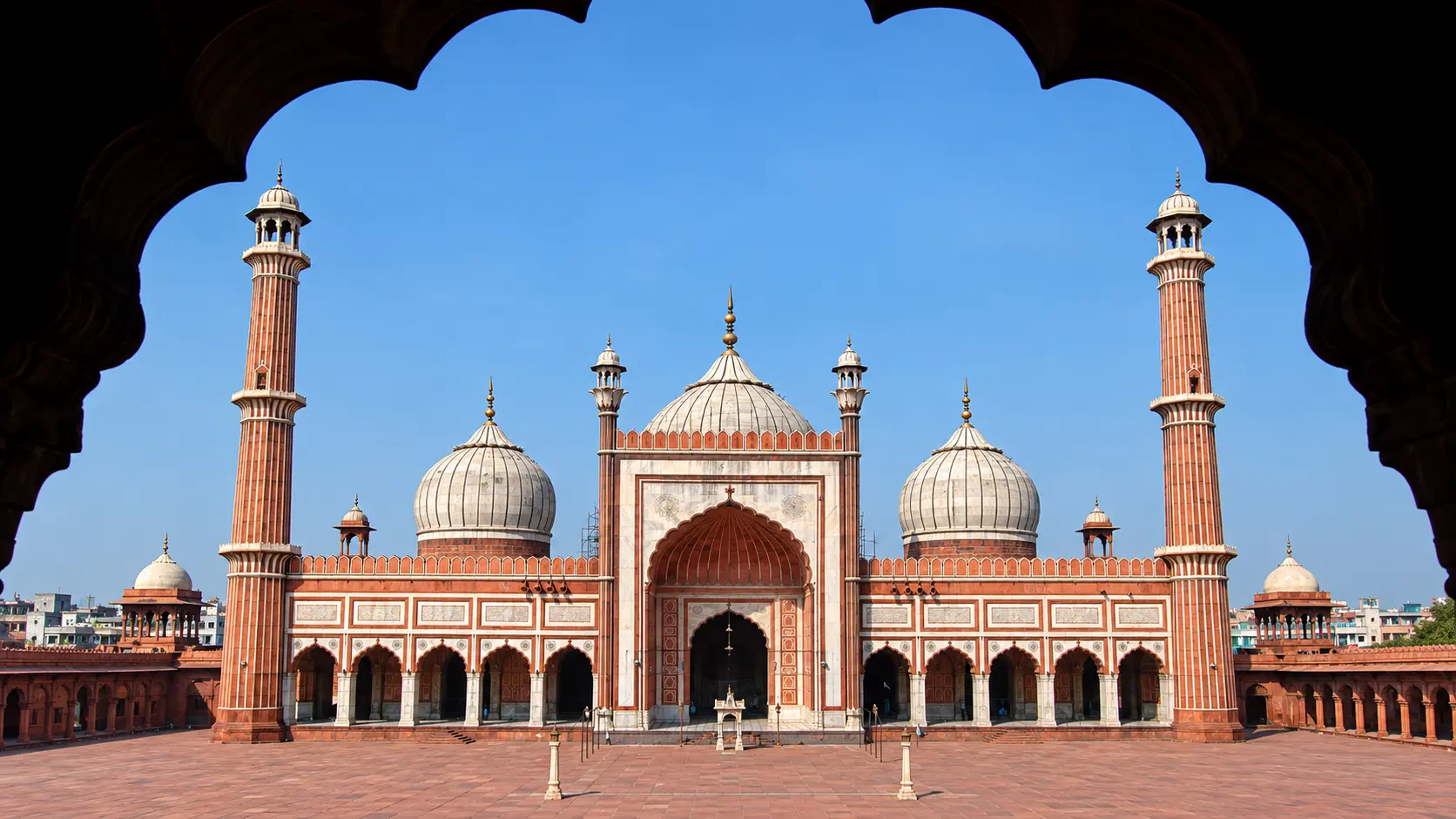
Located directly at the eastern entrance of Khari Baoli, this grand 1650 CE red sandstone congregational mosque was commissioned by Fatehpuri Begum, one of Emperor Shah Jahan’s wives. It features a vast serene courtyard, traditional water ablution pool, and quiet shaded cloisters that offer an immediate peaceful respite from the chaotic energy of the spice market.
Chandni Chowk Pedestrian Boulevard
Extending 1.3 kilometers east from Fatehpuri Masjid to the Red Fort, this newly redeveloped red sandstone promenade is completely pedestrianized between 09:00 AM and 09:00 PM. It is packed with historic jewelry bazaars (Dariba Kalan), wedding haberdashery (Kinari Bazaar), and legendary century-old street food stalls.
Paranthe Wali Gali
Located roughly 800 meters east off Chandni Chowk, this historic 1870s culinary alley is renowned for serving golden, deep-fried stuffed whole-wheat flatbreads filled with spiced potatoes, cauliflower, paneer, dry fruits, and rabri, accompanied by sweet pumpkin curry and tangy chutneys.
Mirza Ghalib Ki Haveli
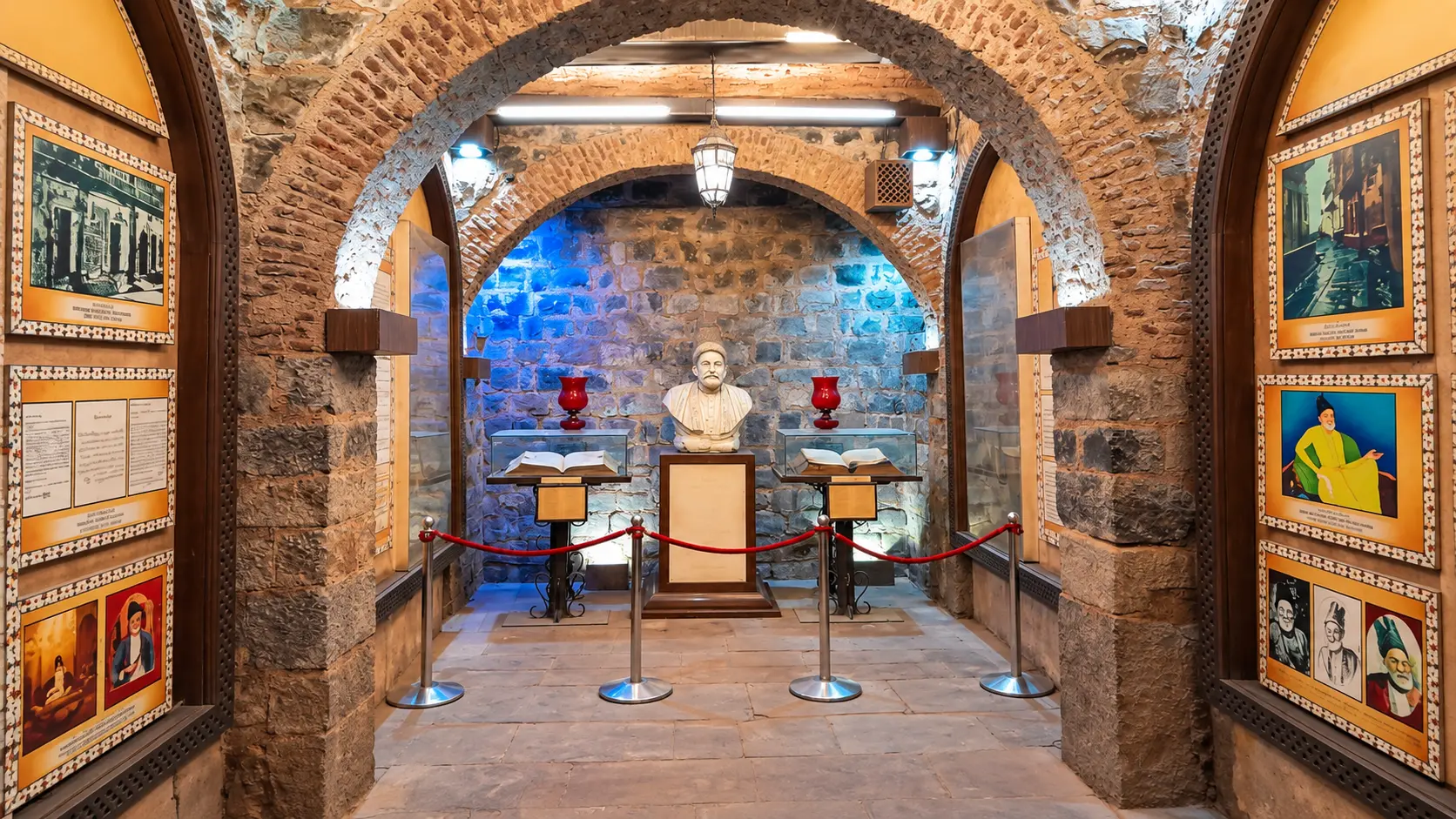
Situated approximately 700 meters southeast in Gali Qasim Jan, Ballimaran, this restored 19th-century lakhori-brick residence was the home of classical Urdu poet Mirza Ghalib. Maintained by the Delhi Government as a permanent memorial museum, it houses his handwritten manuscripts, personal artifacts, and trilingual poetry displays.
In pictures
The practical bits
Before you go.
Respiratory Protection and Sensory Precautions
The air in Khari Baoli - particularly inside Gadodia Market and near chilli unloading docks - is heavily…Explore detailsClose details
The air in Khari Baoli - particularly inside Gadodia Market and near chilli unloading docks - is heavily saturated with fine airborne capsaicin and ground spice dust; all visitors should carry an N95 protective face mask or a tightly woven cotton bandana to cover their nose and mouth, along with a bottle of drinking water to soothe throat tickling and involuntary coughing (dhasak).
Eye Protection and Hand Hygiene
Wear sunglasses to shield your eyes from floating spice particles and dust; under no circumstances should you rub…Explore detailsClose details
Wear sunglasses to shield your eyes from floating spice particles and dust; under no circumstances should you rub your eyes, nose, or lips after handling whole spices or touching market burlap sacks, as contact with raw chilli oils causes severe burning; carry antiseptic hand wipes.
Footwear and Crowded Lane Logistics
Wear closed-toe, durable walking shoes with non-slip rubber soles; the lanes of Khari Baoli are paved with…Explore detailsClose details
Wear closed-toe, durable walking shoes with non-slip rubber soles; the lanes of Khari Baoli are paved with irregular stone cobbles, often dusted with grain chaff, dry husks, or wet vegetable washings; avoid sandals, open-toed shoes, or delicate footwear.
Shopping and Packing Strategies
If planning to purchase spices, saffron, or dry fruits, carry a sturdy canvas tote bag or backpack; reputable…Explore detailsClose details
If planning to purchase spices, saffron, or dry fruits, carry a sturdy canvas tote bag or backpack; reputable merchants provide complimentary vacuum-sealed, heavy-duty foil packaging that preserves freshness and prevents spice aromas from penetrating your luggage on return international flights.
A few things you might wonder
Common questions about visiting Khari Baoli Spice Market. Fees, visiting hours and ceremonies are researched details that may change; confirm current arrangements with the operator before travelling.
Why is the market called Khari Baoli, and where was the original stepwell?
What is Gadodia Market, and can tourists visit its rooftop?
Is it safe to visit Khari Baoli, and what health precautions should I take?
What are the opening hours of Khari Baoli, and is the market open on Sundays?
What are the best items to buy in Khari Baoli, and can tourists purchase small retail quantities?
Which metro station is closest to Khari Baoli, and how do I walk there?
Explore more in Old Delhi
Discover other destinations around this hub
More Hubs in Delhi Ncr
Continue exploring other travel hubs in this state
Planning a trip to Old Delhi?