Ghalib Ki Haveli
Discover Mirza Ghalib Ki Haveli in Ballimaran, Central Delhi.
Location
Old Delhi, Delhi NCR
A closer look
Your visit, at a glance.
Old Delhi, Delhi Ncr
GET TO KNOW THE PLACE
---
The story of Ghalib Ki Haveli
Start here. Open a tile for the full details.
Why goRead details
In the labyrinthine heart of the historic walled city of Shahjahanabad, tucked away from the roar of modern arterial highways, lies one of South Asia’s most sacred literary pilgrimage destinations: Ghalib Ki Haveli. Situated inside the evocative, shadowy alleyway of Gali Qasim Jan in the Ballimaran quarter of Central Delhi, this weathered 19th-century residence was the home of Mirza Asadullah Baig Khan (1797 - 1869) - universally revered across the globe by his pen name, Mirza Ghalib. As the undisputed preeminent poet of the classical Urdu and Persian languages, Ghalib stands alongside Shakespeare, Dante, and Rumi as a towering titan of world literature. He resided in this humble, lakhori-brick mansion during the tragic final decade of his tumultuous life, from approximately 1860 until his death on February 15, 1869.
When to visitRead details
Entry & permissionsRead details
Fees, visiting hours and entry rules may change. Confirm the latest details with the official operator or local authority before travelling.
Operating Schedule and Hours
- Days of Operation: Open Tuesday through Sunday.
- Museum Hours: 10:00 AM to 05:00 PM daily.
- Weekly Closure: The museum is strictly closed on Mondays for regular maintenance, cleaning, and archival conservation.
- National Holiday Closures: Closed on statutory national holidays: Republic Day (26 January), Independence Day (15 August), and Gandhi Jayanti (2 October).
Admission Tariffs
Visitor Category | Tariff Rate (INR) | Remarks / Terms of Admission |
|---|---|---|
Indian Citizens (Adults/Children) | Free (₹0) | Complimentary public admission |
Foreign Tourists (All Ages) | Free (₹0) | Complimentary public admission |
School & University Student Groups | Free (₹0) | Prior notice appreciated for talks |
Handheld Mobile Still Photography | Free (₹0) | Personal non-commercial use only |
Cycle-Rickshaw Transit (One-Way) | ₹30 - ₹50 per trip | Standard local fare from metro |
Regulations, Photography and Conservation Protocols
- Free Admission: The Government of NCT of Delhi operates Ghalib Ki Haveli as a public cultural institution; no admission tickets, online reservations, or entry fees are required. Visitors simply sign their name and place of origin in the visitor register maintained at the front reception desk.
- Photography Guidelines: Personal, handheld mobile phone photography and casual camera usage are permitted throughout the courtyard and exhibition rooms free of charge. Visitors must refrain from using camera flash units directly against historic paper manuscripts, as intense artificial light degrades organic inks and vintage rag paper.
- Commercial and Media Permissions: Filming television documentaries, feature films, music videos, or professional fashion shoots involving tripods, external studio lighting, or sound booms requires advance written clearance and statutory permit fees approved by the Department of Archaeology, Government of NCT of Delhi (Vikas Bhawan-II, Civil Lines, Delhi).
- Strict Drone Prohibition: Operating drones, quadcopters, or unmanned aerial devices is strictly illegal throughout Old Delhi and Ballimaran under national security laws and Delhi Police regulations.
- Monument Etiquette: Smoking, consuming tobacco or alcohol, chewing betel leaves (paan), and spitting are strictly forbidden on the premises. Visitors are requested to speak softly in reverence to the literary memory of the poet.
Plan your visitRead details
Ghalib Ki Haveli is situated in the historic Ballimaran neighborhood of Central Delhi, easily reachable via the Delhi Metro network, followed by a short pedestrian walk or cycle-rickshaw ride.
Explore the full guide - choose a topic below.
Why visit?
In the labyrinthine heart of the historic walled city of Shahjahanabad, tucked away from the roar of modern…Explore detailsClose details
In the labyrinthine heart of the historic walled city of Shahjahanabad, tucked away from the roar of modern arterial highways, lies one of South Asia’s most sacred literary pilgrimage destinations: Ghalib Ki Haveli. Situated inside the evocative, shadowy alleyway of Gali Qasim Jan in the Ballimaran quarter of Central Delhi, this weathered 19th-century residence was the home of Mirza Asadullah Baig Khan (1797 - 1869) - universally revered across the globe by his pen name, Mirza Ghalib. As the undisputed preeminent poet of the classical Urdu and Persian languages, Ghalib stands alongside Shakespeare, Dante, and Rumi as a towering titan of world literature. He resided in this humble, lakhori-brick mansion during the tragic final decade of his tumultuous life, from approximately 1860 until his death on February 15, 1869.
To visit Ghalib Ki Haveli is to step across the threshold of an epochal transition in Indian civilization. Living here in the twilight years of the Mughal Empire, Ghalib bore witness to the catastrophic collapse of the world he loved. Following the brutal suppression of the 1857 Indian Uprising (the First War of Independence) by British imperial troops, the vibrant courtly culture of Delhi was shattered: the last Mughal emperor, Bahadur Shah Zafar (Ghalib’s royal patron), was tried and exiled to Burma; royal princes were executed; mosques were turned into military barracks; and thousands of Delhi's poets, scholars, and citizens were banished or hanged. Confined to his rooms in Gali Qasim Jan amidst crushing poverty, chronic illness, and profound grief, Ghalib penned his most melancholic, philosophically profound ghazals and revolutionized Urdu literature through his private correspondence. His letters (Khatoot-e-Ghalib) dispensed with flowery, ornamental Persianized court diction in favor of an intimate, witty, spoken prose style that chronicled the destruction of Delhi with unflinching honesty and wry self-mockery.
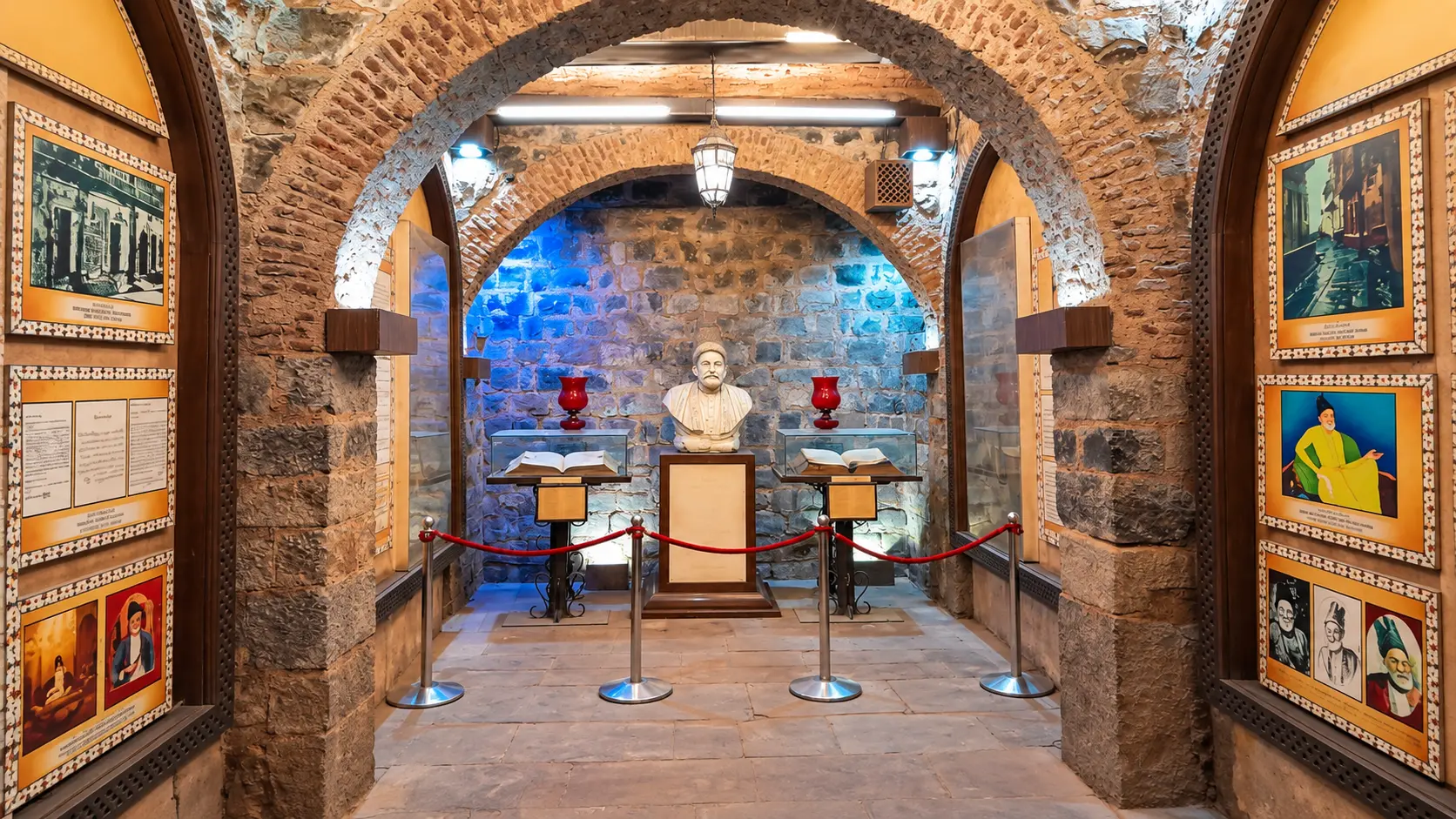
For decades following Ghalib’s death, this historic mansion suffered heartbreaking neglect. Subdivided among multiple private occupants, the courtyard was degraded into a commercial coal depot, a workshop manufacturing electric heating elements, and private residential tenements, with its architectural identity obscured under layers of soot and modern plaster. It was only through the persistent advocacy of passionate literary scholars, poets, and a landmark ruling by the Delhi High Court in the late 1990s that the Delhi Administration acquired a substantial portion of the original entrance and central courtyard. Restored meticulously by the Archaeological Survey of India using authentic Mughal lakhori bricks, lime mortar (surkhi), and carved sandstone, the haveli was formally dedicated as a permanent memorial museum on December 27, 2000, marking Ghalib’s 203rd birth anniversary. Today, visitors entering this quiet, vaulted sanctuary are greeted by a life-size sculpture of the poet, archival reproductions of his handwritten manuscripts, personal artifacts, and trilingual verse panels that bring his timeless poetry vividly back to life.
What to expect
Located approximately 500 meters north of Chawri Bazaar and 800 meters south of the main Chandni Chowk pedestrian…Explore detailsClose details
Located approximately 500 meters north of Chawri Bazaar and 800 meters south of the main Chandni Chowk pedestrian avenue, Ghalib Ki Haveli occupies an authentic, working-class residential and commercial alley in Ballimaran. The journey to the haveli is itself an integral part of the experience, requiring visitors to navigate the sensory kaleidoscope of Old Delhi - past shoe merchants, spectacle vendors, attar shops, and simmering tea cauldrons - before entering the tranquil historical interior.
       +-------------------------------------------------------------+
       |               BALLIMARAN MAIN ROAD ENTRANCE                 |
       |     (Optical Bazaars, Footwear Wholesalers, Chai Kiosks)    |
       +-------------------------------------------------------------+
                                      |
                                      v
  +------------------------------------------------------------------+
  | GALI QASIM JAN (THE LANE OF QASIM JAN)                           |
  | - Narrow medieval residential gully flanked by historic havelis  |
  | - Named after Nawab Qasim Jan, a Mughal commander from Herat     |
  | - Approach via arched entrance to the Hakim's ancestral estate   |
  +------------------------------------------------------------------+
                                      |
                                      v
  +------------------------------------------------------------------+
  | GHALIB KI HAVELI - RESTORED MEMORIAL MUSEUM                      |
  | [Mughal Lakhori Brick Gateway & Cusped Sandstone Arch]           |
  |                                                                  |
  |  +------------------------+          +------------------------+  |
  |  | Main Central Courtyard |<-------->| The Poet's Diwan Hall  |  |
  |  | - Paved stone terrace  |          | - Life-size sculpture  |  |
  |  | - Brick columns & jalis|          |   of Mirza Ghalib      |  |
  |  | - Shaded resting alcove|          | - Recreated hookah     |  |
  |  +------------------------+          | - Authentic period cap |  |
  |              |                       +------------------------+  |
  |              v                                    |              |
  |  +------------------------+                       v              |
  |  | Archival Manuscript Gal|          +------------------------+  |
  |  | - Handwritten Diwan    |          | Lifestyle & Artifacts  |  |
  |  | - Letters to Tufta     |          | - Favorite foods list  |  |
  |  | - Nastaliq calligraphy |          | - Traditional attire   |  |
  |  | - Trilingual poetry    |          | - Contemporaries' art  |  |
  |  +------------------------+          +------------------------+  |
  +------------------------------------------------------------------+
The Architectural Framework: Mughal Lakhori Brickwork
The architecture of the haveli represents classic mid-19th-century Shahjahanabad domestic vernacular. Rather than the monumental red sandstone palaces of the imperial court, this is an authentic noble townhouse (haveli), constructed using slender, kiln-fired lakhori bricks bound with traditional lime, sand, and brick-dust mortar (surkhi).
The surviving memorial section comprises an arched gateway, a vaulted entrance vestibule (deorhi), a serene open-to-sky central brick-paved courtyard, and an inner vaulted salon (dalan). The restoration stripped away modern cement plaster to reveal the warm, raw terracotta tones of the original brick arches and wooden ceiling beams. Multi-foil cusped arches frame the inner chambers, while small decorative niches (taqs) carved into the thick masonry walls recall where brass oil lamps (diyas) and porcelain flasks of wine were historically kept to illuminate Ghalib's late-night poetry sessions (mushairas).
The Museum Galleries and Permanent Collections
Within the restored chambers, the Department of Archaeology, Government of NCT of Delhi, has curated a moving, informative biographical exhibition divided into several thematic displays:
- The Life-Size Sculpture of Mirza Ghalib: Dominating the primary exhibition salon is a realistic, life-size statue of Mirza Ghalib. Sculpted in a pensive, seated posture upon a low divan covered with a white mattress and bolsters (gao-takiya), the poet is depicted in his customary attire - a long, flowing ankle-length coat (choga), a tall black Persian velvet cap (kulah), and white trousers. In his hand, he holds the long flexible pipe of a traditional brass hookah, perfectly evoking the legendary image of the master contemplating couplets while watching coils of fragrant tobacco smoke drift toward the courtyard ceiling.
- Archival Poetry Manuscripts and Calligraphy: Glass display cases and wall vitrines house high-resolution facsimiles of Ghalib’s handwritten verses. Visitors can examine pages from the Diwan-e-Ghalib inscribed in elegant, flowing Nastaliq calligraphy, containing his own marginal annotations, strikethroughs, and editorial revisions. Several letters written in his rapid, characterful hand to disciples such as Munshi Hargopal Tufta and Nawab Alauddin Khan Alai demonstrate how he transformed epistolary Urdu into an art form.
- Trilingual Poetry Panels: Flanking the courtyard walls are large, elegantly designed interpretive display boards featuring his most celebrated ghazals and couplets (ash'ar). Each verse is meticulously rendered in three scripts: original Urdu in Nastaliq, Hindi in Devanagari, and English transliteration alongside lyrical English translations, making his philosophical musings on love, mortality, existential doubt, and cosmic mystery accessible to visitors from all linguistic backgrounds.
- Lifestyle Artifacts and Personal Preferences: A charming section of the exhibition reconstructs Ghalib's daily habits, quirks, and culinary tastes:
- His Passion for Mangoes: Historical plaques recount famous anecdotes of Ghalib’s legendary, voracious love for mangoes (aam). When asked by a friend how mangoes should be, Ghalib famously replied: "There should be only two qualities in a mango - they should be sweet, and they should be plentiful!"
- French Wine and Dice Games: Displays document his affinity for fine Old Tom gin and French red wine (which he regarded as an essential stimulus for poetic inspiration), as well as his fondness for gambling at dice and cards (chausar), a habit that infamously landed him in a British jail for several months in 1847.
- Recreated Artifacts: The collection features authentic period replicas of his writing desk (rehal), reed pens (qalam), terracotta inkpots (dawat), brass spittoons (ugaldan), dining vessels, and a reproduction of the embroidered shawl presented to him by the Mughal court.
- Portraits of Ghalib’s Circle and Contemporaries: The gallery walls feature rare 19th-century lithographs, sketches, and photographs of Ghalib’s contemporaries. These include his royal patron, Emperor Bahadur Shah Zafar; his fierce poetic rival and court laureate, Sheikh Ibrahim Zauq; his mentor, Momin Khan Momin; and early British administrators of Delhi, providing vital historical context to the political upheaval that enveloped his life.
+---------------------------------------------------------------------------------------------------+
|                        PERMANENT EXHIBITION HIGHLIGHTS AT GHALIB KI HAVELI                        |
+------------------------------+--------------------+---------------------+-------------------------+
| Exhibit Component            | Medium / Form      | Historical Subject  | Significance            |
+------------------------------+--------------------+---------------------+-------------------------+
| Life-Size Poet Statue        | Realistic Resin    | Mirza Ghalib (1860s)| Depicts poet with hookah|
| Diwan-e-Ghalib Facsimiles    | Archival Paper     | Original Poetry     | Handwritten Nastaliq    |
| Khatoot-e-Ghalib (Letters)   | Manuscript Copies  | Epistolary Prose    | 1857 Delhi eyewitness   |
| Trilingual Couplet Panels    | Wall Vitrines      | Selected Ghazals    | Urdu, Hindi & English   |
| Period Hookah & Apparel      | Brass & Textiles   | Daily Mughal Life   | 19th-century artifacts  |
| Contemporary Portraits       | Lithographs/Prints | Zafar, Zauq, Momin  | Late Mughal court circle|
| Lakhori Brick Architecture   | Conserved Masonry  | Shahjahanabad Home  | Authentic 1860s haveli  |
+------------------------------+--------------------+---------------------+-------------------------+
Best time to visit
October to November (Autumn / Post-Monsoon): An exceptional season to visit Ghalib Ki Haveli.Explore detailsClose details
Seasonal Guide
- October to November (Autumn / Post-Monsoon): An exceptional season to visit Ghalib Ki Haveli. Delhi's intense summer heat has receded, giving way to pleasant daytime temperatures (20°C to 28°C) and crisp breezes. Navigating the dense, shaded pedestrian alleys of Ballimaran on foot is comfortable and invigorating.
- December to February (Winter - Optimal Visiting Window): Widely regarded as the finest time for a literary excursion to Old Delhi. Cool, misty winter weather (10°C to 20°C) complements the melancholic, reflective mood of Ghalib’s poetry.
- Special Date - December 27: Marks Ghalib’s Birth Anniversary. The haveli is festively decorated with marigold garlands, and cultural organizations host candlelit mushairas, poetry recitations, and literary seminars in the courtyard.
- Special Date - February 15: Marks Ghalib’s Death Anniversary. Literary scholars, Urdu students, and cultural luminaries gather at the haveli and his tomb in Nizamuddin to pay homage.
- March (Early Spring): A lovely transitional month with mild daytime temperatures (20°C to 26°C) before the arrival of intense summer heat.
- April to June (Summer): Extreme summer temperatures frequently exceed 40°C to 44°C in Old Delhi. The narrow, enclosed alleyways of Ballimaran trap ambient heat, making outdoor walking physically demanding during midday. Check the current visiting hours and permitted access with the site operator before departure; ceremonies, closures and visitor sessions can affect access.
- July to September (Monsoon): High humidity and heavy downpours can create puddles and mud along the unpaved threshold of secondary alleys. However, rainy days offer a romantic, evocative atmosphere reminiscent of Ghalib’s famous monsoon verses, and the museum's enclosed brick courtyard provides safe shelter from rainstorms.
+---------------------------------------------------------------------------------------------------+
|                           SEASONAL VISITING DYNAMICS AT GHALIB KI HAVELI                          |
+-------------------+--------------------+----------------------------------+-----------------------+
| Season            | Months             | Weather Conditions               | Cultural Highlights   |
+-------------------+--------------------+----------------------------------+-----------------------+
| Autumn Season     | October - November | Mild, sunny (18°C - 30°C);       | Comfortable walking;  |
|                   |                    | low humidity, clear skies        | active bazaar life    |
+-------------------+--------------------+----------------------------------+-----------------------+
| Peak Winter       | December - January | Crisp, chilly (8°C - 20°C);      | Birth anniversary     |
|                   |                    | atmospheric Old Delhi mist       | (27 Dec) celebrations |
+-------------------+--------------------+----------------------------------+-----------------------+
| Spring Season     | February - March   | Warm, pleasant (16°C - 28°C);    | Death anniversary     |
|                   |                    | comfortable strolling weather    | (15 Feb) mushairas    |
+-------------------+--------------------+----------------------------------+-----------------------+
| Summer Heat       | April - June       | Scorching hot (30°C - 44°C);     | Early morning visits; |
|                   |                    | heavy urban heat entrapment      | cool sherbets nearby  |
+-------------------+--------------------+----------------------------------+-----------------------+
| Monsoon Season    | July - September   | Humid, rain showers (26°C - 35°C)| Romantic rainy mood;  |
|                   |                    | occasional alley puddles         | quiet museum ambiance |
+-------------------+--------------------+----------------------------------+-----------------------+
How to reach
Ghalib Ki Haveli is situated in the historic Ballimaran neighborhood of Central Delhi, easily reachable via the…Explore detailsClose details
Ghalib Ki Haveli is situated in the historic Ballimaran neighborhood of Central Delhi, easily reachable via the Delhi Metro network, followed by a short pedestrian walk or cycle-rickshaw ride.
       +-------------------------------------------------------------+
       |             REGIONAL ACCESS & TRANSPORT MATRIX              |
       +-------------------------------------------------------------+
                                      |
         +----------------------------+---------------------------+
         |                                                        |
         v                                                        v
  [METRO TRANSIT]                                          [RAILWAY TERMINALS]
  - Chawri Bazaar Station (Yellow Line):                   - Old Delhi Railway Station (DLI):
    Gate 2/3 exit -> 500 m north via Nai Sarak               1.5 km north (~10 min cycle-rickshaw).
    or Ballimaran (7 min walk).                            - New Delhi Railway Station (NDLS):
  - Chandni Chowk Station (Yellow Line):                     2.5 km south (2 stops via Yellow Line).
    Gate 1 exit -> 800 m south via Town Hall.              - Hazrat Nizamuddin Station (NZM):
  - Lal Quila Station (Violet Line):                         10 km south (Nizamuddin tomb link).
    1.2 km east via Chandni Chowk promenade.
                                      |
         +----------------------------+---------------------------+
         |                                                        |
         v                                                        v
  [CYCLE-RICKSHAW & ALLEY ACCESS]                          [AIRPORT CONNECTIONS]
  - Cycle-Rickshaws:                                       - Indira Gandhi Int'l Airport (DEL):
    Available outside Chawri Bazaar and Chandni              19 km southwest (~35 min via Airport
Confirm the current charge and what it includes with the operator or service provider. Visitor admission, vehicles, parking, activities and accommodation can have separate charges. Express Line from New Delhi Station).
  - Walking Route:
    Walk down Ballimaran Road, turn east into
    Gali Qasim Jan; Haveli is 100 m on the left.
By Delhi Metro (Fastest and Most Direct)
The Delhi Metro Yellow Line provides the closest access:
- Chawri Bazaar Metro Station (Yellow Line / Line 2 - Closest Station): Located approximately 500 meters south of the haveli. Take Exit Gate 2 or Gate 3 onto the lively Chawri Bazaar roadway. Confirm the current charge and what it includes with the operator or service provider. Visitor admission, vehicles, parking, activities and accommodation can have separate charges.
- Chandni Chowk Metro Station (Yellow Line / Line 2): Situated roughly 800 meters north. Exit through Gate 1 onto the Chandni Chowk pedestrian promenade near Town Hall. Walk westward along the red sandstone promenade for roughly 300 meters, turn left into the mouth of Ballimaran Road (opposite Katra Neel), continue down Ballimaran for 350 meters, and turn into Gali Qasim Jan.
- Lal Quila Metro Station (Violet Line / Line 6): Located approximately 1.2 kilometers east. Commuters arriving via the Violet Line can walk along the pedestrianized Chandni Chowk boulevard or hire a cycle-rickshaw from Netaji Subhash Marg to Ballimaran.
By Cycle-Rickshaw and Foot
Because Gali Qasim Jan is barely 8 to 10 feet wide, motorized four-wheelers and three-wheelers cannot enter. Cycle-rickshaws are the traditional, eco-friendly transit method of Old Delhi. Confirm the current charge and what it includes with the operator or service provider. Visitor admission, vehicles, parking, activities and accommodation can have separate charges. The rickshaw will drop you at the entrance of Gali Qasim Jan, from where the haveli is located roughly 100 meters down the lane on your left, marked by a green ASI/Delhi Government informational sign.
By Railway and Road
- Old Delhi Railway Station (Delhi Junction - DLI): Situated 1.5 kilometers north. Visitors arriving on intercity trains can take a cycle-rickshaw directly from the station forecourt through Dangal Maidan and Chandni Chowk to Ballimaran in approximately 10 to 12 minutes.
- New Delhi Railway Station (NDLS): Positioned 2.5 kilometers south. Board the Yellow Line Metro at New Delhi Station and travel just one stop north to Chawri Bazaar (a 2-minute metro ride).
- Vehicular Parking: If arriving by personal car or taxi, do not attempt to drive into Ballimaran. Have your driver drop you at Church Mission Road (near Fatehpuri Masjid) or park at the Gandhi Maidan Multi-Level Parking garage near Town Hall, proceeding from there on foot or by rickshaw.
Entry, timings and permissions
Fees, visiting hours and entry rules may change.Explore detailsClose details
Fees, visiting hours and entry rules may change. Confirm the latest details with the official operator or local authority before travelling.
Operating Schedule and Hours
- Days of Operation: Open Tuesday through Sunday.
- Museum Hours: 10:00 AM to 05:00 PM daily.
- Weekly Closure: The museum is strictly closed on Mondays for regular maintenance, cleaning, and archival conservation.
- National Holiday Closures: Closed on statutory national holidays: Republic Day (26 January), Independence Day (15 August), and Gandhi Jayanti (2 October).
Admission Tariffs
Visitor Category | Tariff Rate (INR) | Remarks / Terms of Admission |
|---|---|---|
Indian Citizens (Adults/Children) | Free (₹0) | Complimentary public admission |
Foreign Tourists (All Ages) | Free (₹0) | Complimentary public admission |
School & University Student Groups | Free (₹0) | Prior notice appreciated for talks |
Handheld Mobile Still Photography | Free (₹0) | Personal non-commercial use only |
Cycle-Rickshaw Transit (One-Way) | ₹30 - ₹50 per trip | Standard local fare from metro |
Regulations, Photography and Conservation Protocols
- Free Admission: The Government of NCT of Delhi operates Ghalib Ki Haveli as a public cultural institution; no admission tickets, online reservations, or entry fees are required. Visitors simply sign their name and place of origin in the visitor register maintained at the front reception desk.
- Photography Guidelines: Personal, handheld mobile phone photography and casual camera usage are permitted throughout the courtyard and exhibition rooms free of charge. Visitors must refrain from using camera flash units directly against historic paper manuscripts, as intense artificial light degrades organic inks and vintage rag paper.
- Commercial and Media Permissions: Filming television documentaries, feature films, music videos, or professional fashion shoots involving tripods, external studio lighting, or sound booms requires advance written clearance and statutory permit fees approved by the Department of Archaeology, Government of NCT of Delhi (Vikas Bhawan-II, Civil Lines, Delhi).
- Strict Drone Prohibition: Operating drones, quadcopters, or unmanned aerial devices is strictly illegal throughout Old Delhi and Ballimaran under national security laws and Delhi Police regulations.
- Monument Etiquette: Smoking, consuming tobacco or alcohol, chewing betel leaves (paan), and spitting are strictly forbidden on the premises. Visitors are requested to speak softly in reverence to the literary memory of the poet.
Nearby places to consider
Located approximately 400 meters north at the western terminus of the Chandni Chowk promenade, this magnificent…Explore detailsClose details
Fatehpuri Masjid
Located approximately 400 meters north at the western terminus of the Chandni Chowk promenade, this magnificent 1650 CE red sandstone congregational mosque was commissioned by Fatehpuri Begum, one of Emperor Shah Jahan’s wives. It features a vast serene courtyard, traditional water ablution pool, and historic theological madrassa halls that have educated classical scholars for centuries.
Khari Baoli (Asia's Largest Spice Market)
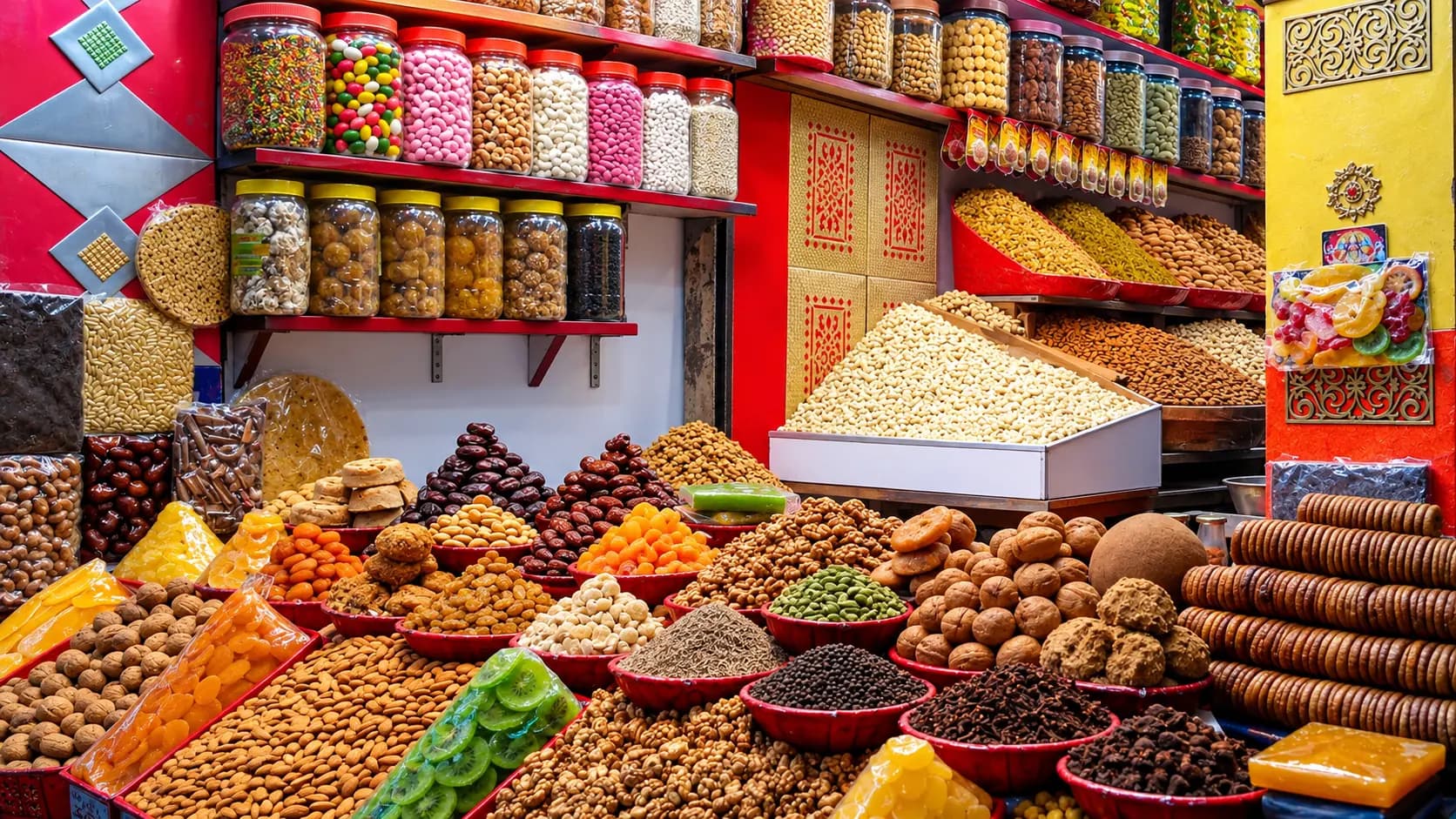
Situated immediately adjacent to Fatehpuri Masjid, roughly 450 meters north of the haveli, Khari Baoli is a bustling commercial wonderland operating since the 17th century. The air is thick with the aromatic scents of thousands of open burlap sacks overflowing with red chillies, turmeric, saffron, cardamom, dried nuts, and Ayurvedic botanicals traded by multi-generational merchant houses.
Paranthe Wali Gali and Dariba Kalan
Positioned roughly 700 meters northeast off Chandni Chowk, Paranthe Wali Gali is Old Delhi's legendary culinary alleyway, famous since the 1870s for serving golden, deep-fried stuffed flatbreads with sweet pumpkin sabzi and mint chutney. Continuing eastward leads directly into Dariba Kalan, the historic 17th-century bazaar specializing in handcrafted silver jewelry, antique coins, and traditional natural perfumes (attar).
Jama Masjid
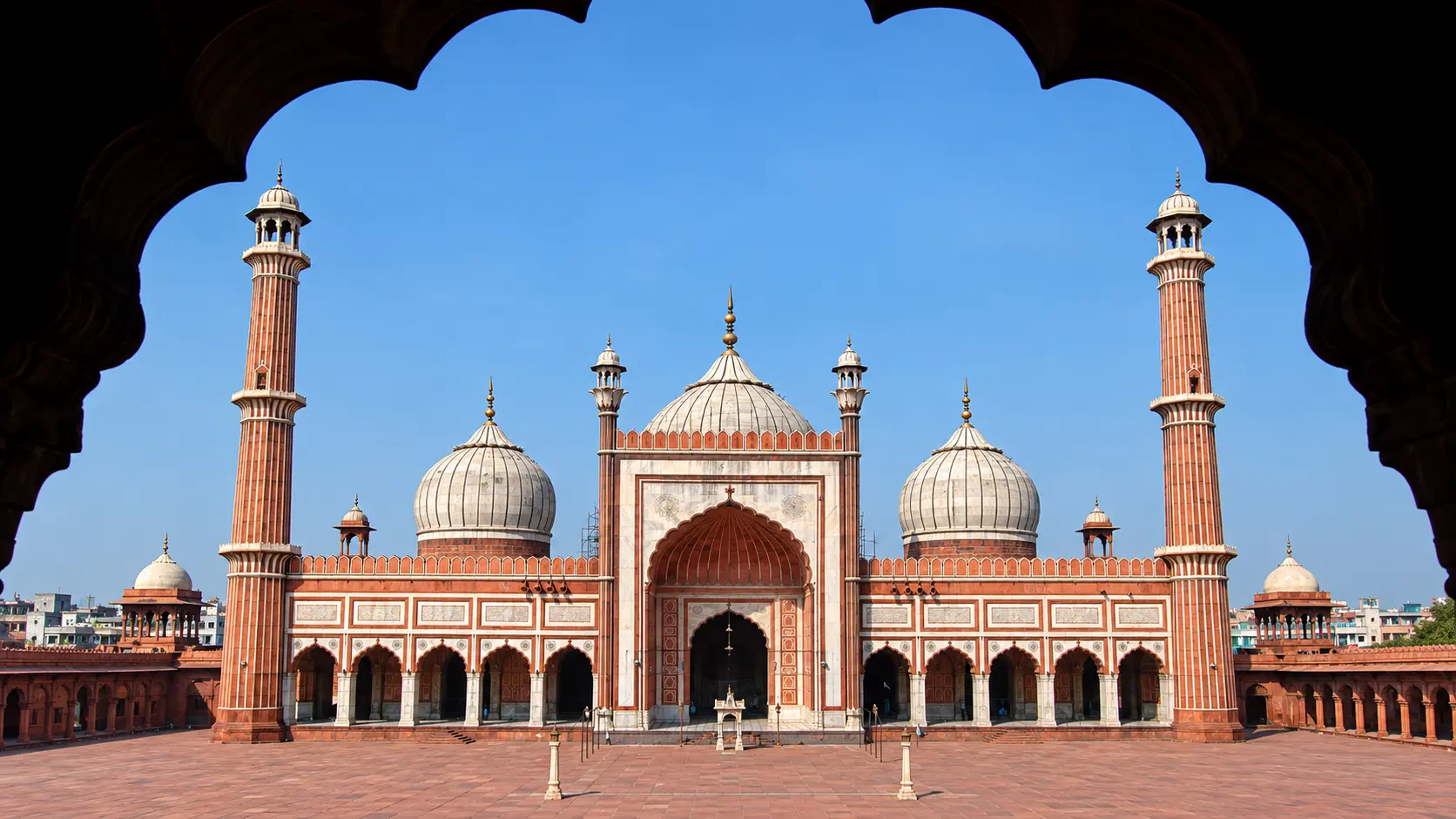
Located approximately 900 meters southeast through the vibrant lanes of Chawri Bazaar and Matia Mahal, Emperor Shah Jahan’s grand Friday Mosque is one of the largest Islamic places of worship in the world. Built between 1650 and 1656 of red sandstone and white marble, it features two 40-meter-high minarets offering sweeping panoramic vistas across the rooftops of Old Delhi.
In pictures
The practical bits
Before you go.
Pedestrian Route and Navigation
Ghalib Ki Haveli is located deep inside Gali Qasim Jan, an extremely narrow pedestrian alley inaccessible to…Explore detailsClose details
Ghalib Ki Haveli is located deep inside Gali Qasim Jan, an extremely narrow pedestrian alley inaccessible to cars, auto-rickshaws, or large vehicles; from the Ballimaran main road entrance near Fatehpuri or Chawri Bazaar, plan for a 5-to-8-minute walk on foot, watching for the modest green-and-white bilingual municipal signboards overhead.
Weekly Closure Schedule
Check the current visiting hours and permitted access with the site operator before departure; ceremonies…Explore detailsClose details
Check the current visiting hours and permitted access with the site operator before departure; ceremonies, closures and visitor sessions can affect access.
Footwear and Historic Surfaces
Wear sturdy, comfortable walking shoes suitable for crowded urban cobblestones; inside the museum galleries…Explore detailsClose details
Wear sturdy, comfortable walking shoes suitable for crowded urban cobblestones; inside the museum galleries, visitors may walk freely, though wiping shoes on entrance mats is requested to protect the restored lakhori brick floors.
Photography and Etiquette
Handheld smartphone photography is completely free and welcome inside the courtyard and gallery rooms; maintain…Explore detailsClose details
Handheld smartphone photography is completely free and welcome inside the courtyard and gallery rooms; maintain quiet, conversational tones and avoid touching glass display cases or the delicate paper manuscript facsimiles.
A few things you might wonder
Common questions about visiting Ghalib Ki Haveli. Fees, visiting hours and ceremonies are researched details that may change; confirm current arrangements with the operator before travelling.
Who was Mirza Ghalib, and why is this haveli historically significant?
Is there an entry fee to visit Ghalib Ki Haveli, and do I need to book tickets in advance?
What are the opening hours, and is the haveli open on Mondays?
What exhibits and artifacts can visitors see inside Ghalib Ki Haveli?
Which metro station is closest to Ghalib Ki Haveli, and how do I walk there?
Where is Mirza Ghalib's grave or tomb located in Delhi?
Explore more in Old Delhi
Discover other destinations around this hub
More Hubs in Delhi Ncr
Continue exploring other travel hubs in this state
Planning a trip to Old Delhi?