Jama Masjid
Comprehensive guide to Jama Masjid in Central Delhi.
Location
Old Delhi, Delhi NCR
A closer look
Your visit, at a glance.
Old Delhi, Delhi Ncr
GET TO KNOW THE PLACE
---
The story of Jama Masjid
Start here. Open a tile for the full details.
Why goRead details
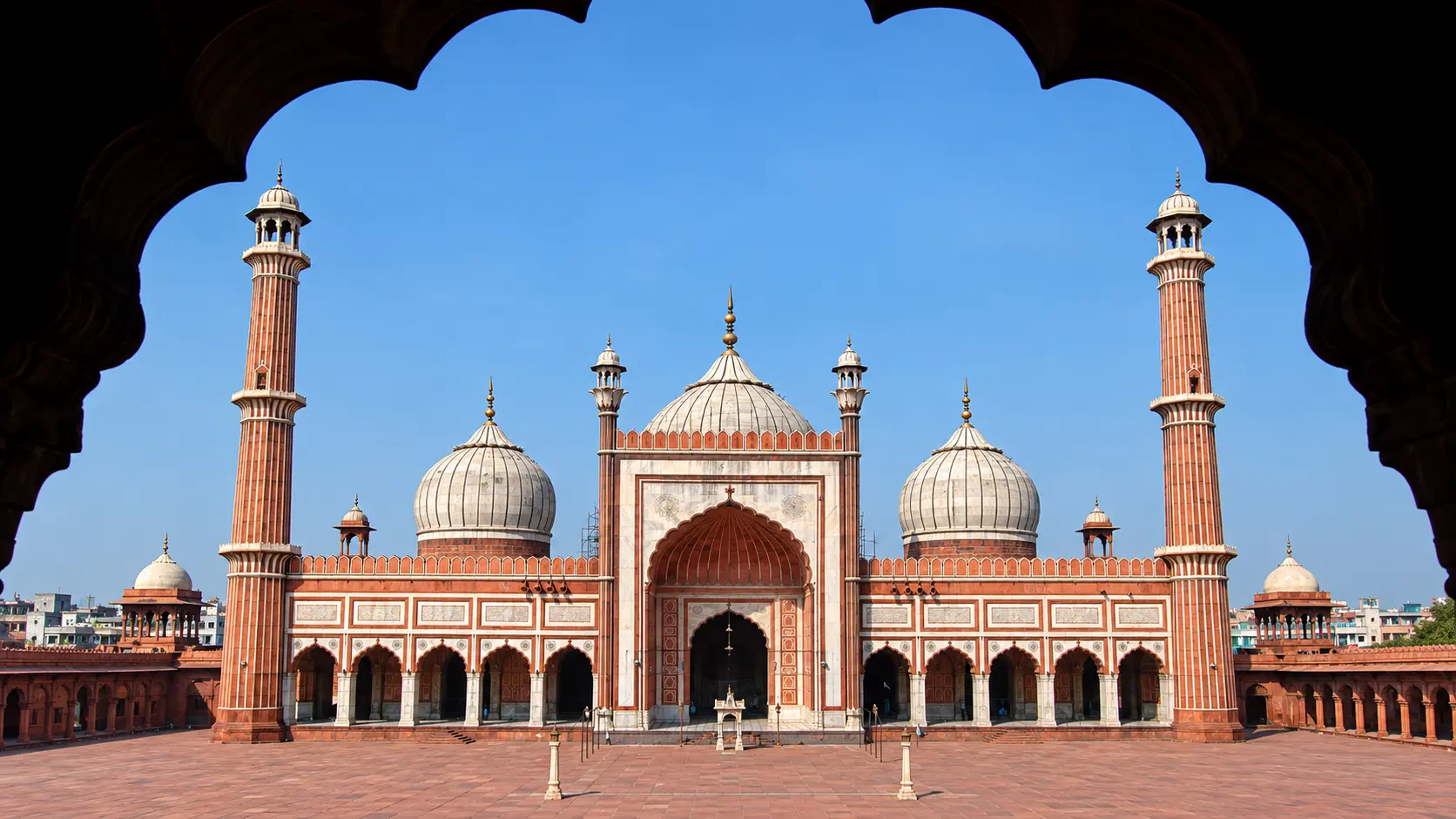
Towering majestically above the bustling rooftops, spice markets, and residential alleyways of the 17th-century walled city of Shahjahanabad, Jama Masjid stands as one of the grandest, most iconic, and architecturally sublime Islamic monuments in the world. Formally christened by its imperial patron as Masjid-i-Jahan-Numa - a poetic Persian title meaning "The Mosque that commands a View of the World" or "The World-Reflecting Mosque" - this monumental congregational sanctuary was commissioned in 1650 CE by Mughal Emperor Shah Jahan, the great builder of the Taj Mahal and the Red Fort. Confirm the current charge and what it includes with the operator or service provider. Visitor admission, vehicles, parking, activities and accommodation can have separate charges.
When to visitRead details
Entry & permissionsRead details
Fees, visiting hours and entry rules may change. Confirm the latest details with the official operator or local authority before travelling.
Visiting Hours and Schedule
- Morning Visiting Window: 07:00 AM to 12:00 PM (noon) daily.
- Afternoon Visiting Window: 01:30 PM to 06:30 PM daily.
- Prayer Closures (Non-Muslim Tourists): The courtyard is closed to non-Muslim visitors during mandatory daily prayer times (Zuhr: ~12:00 PM to 01:30 PM, Asr: ~04:00 PM to 04:30 PM, Maghrib: sunset, and Isha: night).
- Friday Schedule: On Fridays, the mosque is strictly closed to tourists from 12:00 PM to 02:00 PM for the massive congregational Jummah prayers. After 02:00 PM, tourists are admitted until 06:30 PM.
Tariff Structure and Fees
Category / Service | Tariff Rate (INR) | Remarks / Applicable Terms |
|---|---|---|
Indian Citizen General Entry | Free (₹0) | Complimentary entry for citizens |
Foreign National Entry | ₹400 per person | General admission charge |
Photography Pass (Camera/Phone) | ₹300 per device | Mandatory for taking photos |
Southern Minaret Climb (Indian) | ₹100 per person | Ticket counter at minaret base |
Southern Minaret Climb (Foreigner) | ₹300 per person | Ticket counter at minaret base |
Modesty Gown / Lungi Rental | ₹50 - ₹100 per garment | Required if attire is immodest |
Shoe Storage Counter Tip | ₹10 - ₹20 per pair | Standard gatekeeper tip |
Islamic Devotees for Daily Prayer | Free (₹0) | Exempt from all tourist fees |
Regulations, Photography and Cultural Etiquette
- Camera Permits: While tourists may carry smartphones, using any camera or smartphone to take photographs or record video inside the courtyard or prayer hall officially requires the payment of the ₹300 photography charge at the entrance gate. Mosque security guards monitor the courtyard and will inspect photography tags.
- Dress Code Enforcement: Modesty is strictly enforced. Men wearing shorts or sleeveless tank tops and women wearing skirts above the ankle, sleeveless tops, or transparent clothing must don a rented modesty robe. Women must keep their heads covered with a scarf (dupatta) at all times inside the complex.
- No Footwear on the Plinth: Shoes, sandals, and boots must be removed before stepping from the exterior stairs onto the raised marble threshold. Walking on the courtyard stone with shoes is a serious religious violation.
- Strict Drone Ban: Drones and unmanned aerial vehicles (UAVs) are strictly illegal across Jama Masjid and the entire Old Delhi airspace. The area falls within the high-security Red Fort / Central Delhi No-Fly Zone; unauthorized drone operations lead to immediate arrest, confiscation, and prosecution under the Indian Penal Code and Aircraft Act.
- Commercial Filming: Feature films, commercial advertisements, fashion photography, and professional television documentaries require formal advance written permission, script approval, and statutory commercial licensing fees approved by the Delhi Waqf Board and the Shahi Imam’s Secretariat.
Plan your visitRead details
Jama Masjid is positioned in Central Delhi immediately west of the Red Fort, benefiting from direct rapid transit connections via the Delhi Metro.
Explore the full guide - choose a topic below.
Why visit?
Towering majestically above the bustling rooftops, spice markets, and residential alleyways of the 17th-century…Explore detailsClose details
Towering majestically above the bustling rooftops, spice markets, and residential alleyways of the 17th-century walled city of Shahjahanabad, Jama Masjid stands as one of the grandest, most iconic, and architecturally sublime Islamic monuments in the world. Formally christened by its imperial patron as Masjid-i-Jahan-Numa - a poetic Persian title meaning "The Mosque that commands a View of the World" or "The World-Reflecting Mosque" - this monumental congregational sanctuary was commissioned in 1650 CE by Mughal Emperor Shah Jahan, the great builder of the Taj Mahal and the Red Fort. Confirm the current charge and what it includes with the operator or service provider. Visitor admission, vehicles, parking, activities and accommodation can have separate charges.
What immediately distinguishes Jama Masjid from almost all other historic mosques across the Indian subcontinent is its dramatic, commanding topography. Recognizing that the new imperial mosque needed to physically dominate the cityscape, Shah Jahan selected Bhojla Pahari, a high natural sandstone outcrop rising significantly above the surrounding alluvial plain. Upon this elevated bedrock, imperial architects erected a massive, raised red sandstone plinth standing more than 30 steep steps above the street level. This elevated perch elevates worshippers and visitors into a serene, ethereal realm far above the frenetic street commerce below. Reached via three magnificent flight-of-steps gateways facing east, north, and south, the mosque reveals a vast, open courtyard paved in alternating red sandstone and marble flags spanning roughly 10,000 square meters. During the major Islamic festivals of Eid-ul-Fitr and Eid-ul-Adha, as well as regular Friday congregational prayers, this colossal quadrangle fills with up to 25,000 devotees bowing in synchronized unison, creating one of the most awe-inspiring spectacles of collective spiritual devotion in global human culture.
Beyond its monumental scale, Jama Masjid is a masterpiece of late Mughal architectural harmony. Its soaring façade of deep red sandstone is dramatically offset by brilliant white marble inlays, crisp black marble geometric borders, and three monumental bulbous domes striped vertically in black and white marble and capped with glistening gilded brass finials (kalash). Flanking the prayer hall are two soaring 40-meter-high (130-foot) minarets, built of alternating vertical flutes of red sandstone and white marble. Ascending the narrow internal spiral staircase of the Southern Minaret rewards daring travelers with an unparalleled, 360-degree panoramic vista across the entirety of Delhi: from the red battlements of the Red Fort and the dense street grids of Chandni Chowk to the distant modern skyscrapers of Connaught Place. Surrounded at its base by the vibrant, historic culinary alleys of Matia Mahal - home to centuries-old kebab masters, biryani cauldrons, and sweet shops - Jama Masjid is an unmissable cultural, architectural, and spiritual pilgrimage.
What to expect
Covering a substantial footprint in the Kotwali sub-division of Central Delhi, Jama Masjid presents an…Explore detailsClose details
Covering a substantial footprint in the Kotwali sub-division of Central Delhi, Jama Masjid presents an extraordinary sequence of spatial transitions. Approaching the monument from the crowded bazaars of Chawri Bazaar or Netaji Subhash Marg, visitors ascend monumental stone staircases before emerging onto the expansive, sunlit stone terrace.
       +-------------------------------------------------------------+
       |             GATE 2 (EASTERN ROYAL GATEWAY)                  |
       |  (35 Red Sandstone Steps - Historically Reserved for Royal  |
       |   Processions Arriving Directly from Red Fort Lahori Gate)  |
       +-------------------------------------------------------------+
                                      |
                                      v
  +------------------------------------------------------------------+
  |                   THE GREAT OPEN COURTYARD (SAHN)                |
  | - 100m x 100m (10,000 sq m) Red Sandstone & Marble Plinth        |
  | - Accommodates 25,000 worshippers during congregational prayers  |
  |                                                                  |
  |            [Central White Marble Ablution Pool (Hauz)]           |
  |             (Ritual Wudu Washing for Devotees / Fountains)       |
  +------------------------------------------------------------------+
         |                                                        |
         |                                                        |
         v                                                        v
  +-----------------------------+          +-----------------------------+
  | GATE 1 (SOUTHERN GATEWAY)   |          | GATE 3 (NORTHERN GATEWAY)   |
  | - 33 Red Sandstone Steps    |          | - 39 Red Sandstone Steps    |
  | - Connects to Matia Mahal   |          | - Connects to Chandni Chowk |
  |   Food Street & Bazaar      |          | - Houses Holy Relic Chamber |
  +-----------------------------+          +-----------------------------+
                                      |
                                      v
  +------------------------------------------------------------------+
  |              THE MAIN PRAYER SANCTUARY (LIWAN)                   |
  | - 80m x 27m Deep Red Sandstone Sanctuary with 11 Arched Bays     |
  | - Soaring Central Pishtaq Archway with Black Marble Inscriptions |
  | - White Marble Mihrab (Niche Indicating Direction of Mecca)      |
  | - Elevated Marble Mimbar (Pulpit for Shahi Imam's Friday Sermon) |
  | - Three Striped Bulbous White Marble Domes with Brass Finials    |
  +------------------------------------------------------------------+
         |                                                        |
         v                                                        v
  [NORTHERN MINARET (40m)]                 [SOUTHERN MINARET (40m)]
  - Alternating Red & White Strips         - Open to visitors via 130-step
  - Closed to Public                       internal spiral stair; 360-deg views
The Three Monumental Gateways and Plinth
The mosque is approached through three grand multi-story gateways (darwazas), each rising atop a wide, cascading pyramidal flight of red sandstone steps:
- The Eastern Gate (Gate 2 - The Royal Gate): Comprising 35 massive red sandstone steps, this was historically the premier ceremonial entrance, reserved exclusively for Emperor Shah Jahan, his royal consorts, and imperial processions marching directly from the Lahori Gate of the Red Fort. The gatehouse features octagonal corner kiosks (chhatris), arched balconies (jharokhas), and carved marble panels. Today, it serves as the primary entrance for tourists arriving from the Jama Masjid Metro Station and Netaji Subhash Marg.
- The Southern Gate (Gate 1): Ascended via 33 steps, this gate faces the lively, historic Muslim quarter of Matia Mahal and the famous bazaar street leading toward Chitli Qabar. It is the most actively used entrance for local worshippers and culinary travelers heading to the nearby kebab houses.
- The Northern Gate (Gate 3): Ascended via 39 steps, this gate faces toward the Urdu Bazaar and Chandni Chowk. Adjacent to the northern vestibule lies the historic Holy Relic Chamber (Tobarruk), which preserves revered sacred artifacts attributed to the Prophet Muhammad and the fourth Caliph Ali.
The Vast Courtyard (Sahn) and Ablution Pool
Stepping through the towering gateway portals, visitors emerge onto the staggering expanse of the open courtyard (sahn). Measuring roughly 100 meters by 100 meters (10,000 square meters), the courtyard is paved with wide slabs of deep red sandstone, demarcated by narrow black and white marble inlay lines that delineate individual prayer mats (musallahs) for worshippers.
At the exact center of the courtyard sits an open, rectangular white marble ablution pool (hauz), fed by central fountain jets. Devotees sit along its marble perimeter benches to perform the ritual ablution (wudu) - washing hands, face, mouth, arms, and feet - before stepping onto the sacred prayer carpets of the sanctuary. The quadrangle is framed on the north, south, and east by continuous, covered red sandstone cloisters (riwaqs) supported by elegant multi-foil arches, providing shaded walkways where visitors can rest and observe the shifting patterns of desert sunlight.
+---------------------------------------------------------------------------------------------------+
|                            ARCHITECTURAL SPECIFICATIONS OF JAMA MASJID                            |
+------------------------------+--------------------+---------------------+-------------------------+
| Feature / Element            | Measurement        | Primary Materials   | Architectural Function  |
+------------------------------+--------------------+---------------------+-------------------------+
| Open Courtyard (Sahn)        | 100m x 100m        | Red Sandstone       | 25,000-capacity plaza   |
| Prayer Hall (Liwan)          | 80m x 27m          | Sandstone & Marble  | Enclosed prayer chamber |
| Two Minarets (Height)        | 40 meters (130 ft) | Sandstone & Marble  | Adhan towers / Viewpoint|
| Southern Minaret Interior    | 130 spiral steps   | Dressed Stone       | Public viewing balcony  |
| Three Main Domes             | Triple Bulbous     | White/Black Marble  | Crown of prayer hall    |
| Central Gateway Pishtaq      | ~20 meters high    | Red Sandstone Inlay | Monumental prayer arch  |
| Central Ablution Tank (Hauz) | 15m x 15m          | White Marble        | Ritual wudu ablution    |
| Eastern Plinth Steps         | 35 broad steps     | Red Sandstone       | Imperial royal ingress  |
+------------------------------+--------------------+---------------------+-------------------------+
The Main Prayer Hall (Liwan) and Striped Marble Domes
Dominating the western side of the courtyard, facing the holy city of Mecca (qibla), is the monumental prayer hall (liwan), measuring 80 meters in length and 27 meters in depth. Its grand façade is defined by eleven arched openings:
- The Central Pishtaq: A soaring, monumental central portal rising approximately 20 meters high, framed by white and black marble arabesques and Quranic calligraphic panels inscribed in bold Naskh script.
- Flanking Arches: The central arch is flanked on either side by five smaller, gracefully scalloped cusped arches, creating a rhythmic visual crescendo.
- The Three Marble Domes: Rising above the roofline of the prayer hall are three magnificent bulbous domes crafted of polished white Makrana marble, dramatically inlaid with vertical stripes of black marble. The central dome is slightly larger and elevated above the flanking pair, each crowned with a heavy gilded brass finial (kalash).
- The Mihrab and Mimbar: Inside the dimly lit, vaulted interior, the floor is paved with white and black marble slabs laid out in the pattern of Muslim prayer mats. In the center of the western wall sits the ornate mihrab (niche indicating the direction of prayer), carved from white marble and bordered by delicate floral reliefs. To its right stands a magnificent elevated four-step mimbar (pulpit), sculpted from a single solid block of white marble, from which the Shahi Imam delivers the Friday khutbah (sermon).
The Minarets and Panoramic Viewpoint
Flanking the prayer hall are two magnificent four-tiered octagonal minarets rising 40 meters (130 feet) into the Delhi sky. Constructed of alternating vertical flutes of red sandstone and white marble, each minaret features three projecting balconies supported by carved sandstone brackets, crowned at the summit by an open, domed marble kiosk (chhatri).
The Southern Minaret is open to visitors upon payment of an entrance ticket. Inside, a tight, dark, atmospheric winding spiral staircase of 130 stone steps leads up to the topmost viewing balcony. While the narrow staircase requires caution and good physical fitness, reaching the open gallery rewards climbers with the single finest aerial view in Old Delhi. Looking eastward, the massive red walls and Lahori Gate of the Red Fort appear framed against the Yamuna floodplains; to the north, the tree-lined pedestrian avenue of Chandni Chowk and the Sis Ganj Gurudwara stretch into the distance; to the south and west, the dense, historic fabric of Shahjahanabad dissolves into the modern cityscape of New Delhi.
The Holy Relic Chamber (Tobarruk)
In an arched chamber adjacent to the Northern Gateway (Gate 3), the mosque preserves a collection of revered Islamic relics known as the Tobarruk. Shown to devotees on special holy occasions - such as the Prophet’s birthday (Eid Milad-un-Nabi) and during the final days of Ramadan - the collection includes:
- A single strand of hair from the beard of the Prophet Muhammad, preserved in a crystal and silver reliquary.
- A pair of his leather sandals (na'al-e-mubarak).
- A footprint attributed to the Prophet impressed into a marble tablet (qadam-e-rasool).
- An ancient manuscript of a chapter (surah) of the Holy Quran inscribed upon parchment (deerskin), traditionally attributed to Caliph Ali ibn Abi Talib, the cousin and son-in-law of the Prophet.
Best time to visit
October to November (Autumn / Post-Monsoon): An ideal time to visit.Explore detailsClose details
Seasonal Guidelines
- October to November (Autumn / Post-Monsoon): An ideal time to visit. Temperatures are mild and pleasant (20°C to 28°C), and the air is clear. Walking barefoot across the open sandstone courtyard is comfortable, and morning sunlight casts a warm golden glow across the red sandstone façade.
- December to February (Winter - Optimal Visiting Season): Widely regarded as the finest period for exploring Jama Masjid. Crisp winter days (10°C to 22°C) make the outdoor courtyard and the steep 130-step climb up the Southern Minaret invigorating. Early mornings often feature dramatic Old Delhi mist swirling around the marble domes, burning off into clear, brilliant blue skies by 10:30 AM.
- March (Early Spring): A pleasant transitional window with comfortable temperatures (18°C to 28°C) before the onset of extreme summer heat.
- April to June (Summer - Midday Caution Required): Scorching summer heat routinely pushes daytime temperatures above 40°C to 44°C. Critical Precaution: The open red sandstone flags of the courtyard absorb solar radiation and become scaldingly hot under direct midday sun, making barefoot walking agonizing or impossible. Caretakers lay long strips of woven jute and coir runners across the courtyard for devotees, but tourists should visit strictly during the early morning window (07:00 AM to 09:30 AM) or late afternoon (05:00 PM to 06:30 PM). Wearing thick cotton socks is highly recommended to protect feet from hot stone.
- July to September (Monsoon): High humidity and torrential downpours can leave the stone courtyard slick. However, rain cleans the white marble domes, creating shimmering reflections in the courtyard puddles, and the dramatic monsoon cloudscapes make for stunning photography.
- The Holy Month of Ramadan: Visiting during Ramadan provides an unforgettable cultural experience. As dusk approaches, the courtyard fills with thousands of families seated around white tablecloths laden with dates, fruits, and sherbet to break their day-long fast at the sounding of the evening siren (Iftar). After night prayers (Taraweeh), the surrounding lanes of Matia Mahal come alive with bustling night bazaars, twinkling lights, and sizzling street food that operate until dawn.
+---------------------------------------------------------------------------------------------------+
|                           SEASONAL CLIMATE & TIMING MATRIX FOR JAMA MASJID                        |
+-------------------+--------------------+----------------------------------+-----------------------+
| Season            | Months             | Weather Conditions               | Highlights & Tips     |
+-------------------+--------------------+----------------------------------+-----------------------+
| Autumn Season     | October - November | Mild, clear skies (18°C - 30°C); | Comfortable barefoot  |
|                   |                    | low humidity, golden light       | walking; clear views  |
+-------------------+--------------------+----------------------------------+-----------------------+
| Peak Winter       | December - January | Crisp, chilly (8°C - 20°C);      | Minaret climb ideal;  |
|                   |                    | morning mist around domes        | steaming kebabs nearby|
+-------------------+--------------------+----------------------------------+-----------------------+
| Spring Season     | February - March   | Warm, pleasant (16°C - 28°C);    | Excellent photography;|
|                   |                    | comfortable afternoon breeze     | moderate tourist flow |
+-------------------+--------------------+----------------------------------+-----------------------+
| Summer Heat       | April - June       | Scorching hot (30°C - 44°C);     | Early morning visits  |
|                   |                    | COURTYARD STONE GETS BURNING HOT | only; bring socks!    |
+-------------------+--------------------+----------------------------------+-----------------------+
| Monsoon Season    | July - September   | Humid, rain storms (26°C - 35°C);| Clean marble domes;   |
|                   |                    | slick stone steps, dramatic sky  | reflective puddles    |
+-------------------+--------------------+----------------------------------+-----------------------+
How to reach
Jama Masjid is positioned in Central Delhi immediately west of the Red Fort, benefiting from direct rapid transit…Explore detailsClose details
Jama Masjid is positioned in Central Delhi immediately west of the Red Fort, benefiting from direct rapid transit connections via the Delhi Metro.
       +-------------------------------------------------------------+
       |             REGIONAL ACCESS & TRANSPORT MATRIX              |
       +-------------------------------------------------------------+
                                      |
         +----------------------------+---------------------------+
         |                                                        |
         v                                                        v
  [METRO TRANSIT]                                          [RAILWAY TERMINALS]
  - Jama Masjid Station (Violet Line):                     - Old Delhi Railway Station (DLI):
    Gate 2 exit -> 300 m walk to East Gate (Gate 2).         1.8 km north (~10 min cycle-rickshaw).
  - Chawri Bazaar Station (Yellow Line):                   - New Delhi Railway Station (NDLS):
    Gate 2 exit -> 500 m east via Chawri Bazaar Rd           2.0 km south (1 stop via Yellow Line).
    to South Gate (Gate 1).                                - Hazrat Nizamuddin Station (NZM):
  - Lal Quila Station (Violet Line):                         9 km south (~25 min auto/taxi).
    600 m northeast via Netaji Subhash Marg.
                                      |
         +----------------------------+---------------------------+
         |                                                        |
         v                                                        v
  [CYCLE-RICKSHAW & ALLEY ACCESS]                          [AIRPORT CONNECTIONS]
  - Cycle-Rickshaws:                                       - Indira Gandhi Int'l Airport (DEL):
    Available from all Old Delhi metro exits                 19 km southwest (~40 min via Airport
Confirm the current charge and what it includes with the operator or service provider. Visitor admission, vehicles, parking, activities and accommodation can have separate charges. Express Line from New Delhi Station).
  - Vehicular Drop-Off:
    Taxis drop at Netaji Subhash Marg or Asaf Ali Rd;
    parking at Asaf Ali Road Underground Garage.
By Delhi Metro (Fastest and Recommended)
- Jama Masjid Metro Station (Violet Line / Line 6 - Nearest Station): Located roughly 300 meters east of the mosque's Eastern Gate (Gate 2). Upon exiting through Gate 2, it is an easy 4-minute walk across the open plaza and pedestrian steps. The Violet Line connects directly to Kashmere Gate, Central Secretariat, Khan Market, Lajpat Nagar, and Faridabad.
- Chawri Bazaar Metro Station (Yellow Line / Line 2): Situated roughly 500 meters west. Confirm the current charge and what it includes with the operator or service provider. Visitor admission, vehicles, parking, activities and accommodation can have separate charges. The Yellow Line connects directly to Connaught Place (Rajiv Chowk), New Delhi Railway Station, and Gurgaon.
- Lal Quila Metro Station (Violet Line / Line 6): Positioned roughly 600 meters northeast, convenient if your itinerary combines the Red Fort and Jama Masjid in a single walking tour.
By Indian Railways
- Old Delhi Railway Station (Delhi Junction - DLI): Situated 1.8 kilometers north. Passengers arriving on intercity trains can take an authorized cycle-rickshaw from the station forecourt through Chandni Chowk to Jama Masjid in approximately 10 to 12 minutes.
- New Delhi Railway Station (NDLS): Located 2.0 kilometers south at Ajmeri Gate. Confirm the current charge and what it includes with the operator or service provider. Visitor admission, vehicles, parking, activities and accommodation can have separate charges.
By Road, Taxis, and Personal Vehicles
Because the streets surrounding Jama Masjid (Matia Mahal, Chitli Qabar, and Chawri Bazaar) are narrow and heavily pedestrianized, private cars and cabs cannot pull up directly to the mosque steps:
- Taxis and App Cabs: Instruct your driver to drop you at Netaji Subhash Marg (near the eastern approach to Gate 2) or at Asaf Ali Road / Delhi Gate to the south.
- Parking: If driving a private car, utilize the Asaf Ali Road Multi-Level Underground Parking near Delhi Gate, or the Gandhi Maidan Multi-Level Parking near Town Hall. From either garage, take a cycle-rickshaw to the mosque entrance.
Entry, timings and permissions
Fees, visiting hours and entry rules may change.Explore detailsClose details
Fees, visiting hours and entry rules may change. Confirm the latest details with the official operator or local authority before travelling.
Visiting Hours and Schedule
- Morning Visiting Window: 07:00 AM to 12:00 PM (noon) daily.
- Afternoon Visiting Window: 01:30 PM to 06:30 PM daily.
- Prayer Closures (Non-Muslim Tourists): The courtyard is closed to non-Muslim visitors during mandatory daily prayer times (Zuhr: ~12:00 PM to 01:30 PM, Asr: ~04:00 PM to 04:30 PM, Maghrib: sunset, and Isha: night).
- Friday Schedule: On Fridays, the mosque is strictly closed to tourists from 12:00 PM to 02:00 PM for the massive congregational Jummah prayers. After 02:00 PM, tourists are admitted until 06:30 PM.
Tariff Structure and Fees
Category / Service | Tariff Rate (INR) | Remarks / Applicable Terms |
|---|---|---|
Indian Citizen General Entry | Free (₹0) | Complimentary entry for citizens |
Foreign National Entry | ₹400 per person | General admission charge |
Photography Pass (Camera/Phone) | ₹300 per device | Mandatory for taking photos |
Southern Minaret Climb (Indian) | ₹100 per person | Ticket counter at minaret base |
Southern Minaret Climb (Foreigner) | ₹300 per person | Ticket counter at minaret base |
Modesty Gown / Lungi Rental | ₹50 - ₹100 per garment | Required if attire is immodest |
Shoe Storage Counter Tip | ₹10 - ₹20 per pair | Standard gatekeeper tip |
Islamic Devotees for Daily Prayer | Free (₹0) | Exempt from all tourist fees |
Regulations, Photography and Cultural Etiquette
- Camera Permits: While tourists may carry smartphones, using any camera or smartphone to take photographs or record video inside the courtyard or prayer hall officially requires the payment of the ₹300 photography charge at the entrance gate. Mosque security guards monitor the courtyard and will inspect photography tags.
- Dress Code Enforcement: Modesty is strictly enforced. Men wearing shorts or sleeveless tank tops and women wearing skirts above the ankle, sleeveless tops, or transparent clothing must don a rented modesty robe. Women must keep their heads covered with a scarf (dupatta) at all times inside the complex.
- No Footwear on the Plinth: Shoes, sandals, and boots must be removed before stepping from the exterior stairs onto the raised marble threshold. Walking on the courtyard stone with shoes is a serious religious violation.
- Strict Drone Ban: Drones and unmanned aerial vehicles (UAVs) are strictly illegal across Jama Masjid and the entire Old Delhi airspace. The area falls within the high-security Red Fort / Central Delhi No-Fly Zone; unauthorized drone operations lead to immediate arrest, confiscation, and prosecution under the Indian Penal Code and Aircraft Act.
- Commercial Filming: Feature films, commercial advertisements, fashion photography, and professional television documentaries require formal advance written permission, script approval, and statutory commercial licensing fees approved by the Delhi Waqf Board and the Shahi Imam’s Secretariat.
Nearby places to consider
Located just 500 meters northeast across Netaji Subhash Marg, this sprawling 17th-century UNESCO World Heritage…Explore detailsClose details
Red Fort (Lal Quila)
Located just 500 meters northeast across Netaji Subhash Marg, this sprawling 17th-century UNESCO World Heritage citadel of red sandstone was Emperor Shah Jahan’s royal seat. Key highlights include the Diwan-i-Aam (Hall of Public Audience), Diwan-i-Khas (Hall of Private Audience), the imperial hammams, and the Sound & Light show in the evenings.
Matia Mahal Food Street
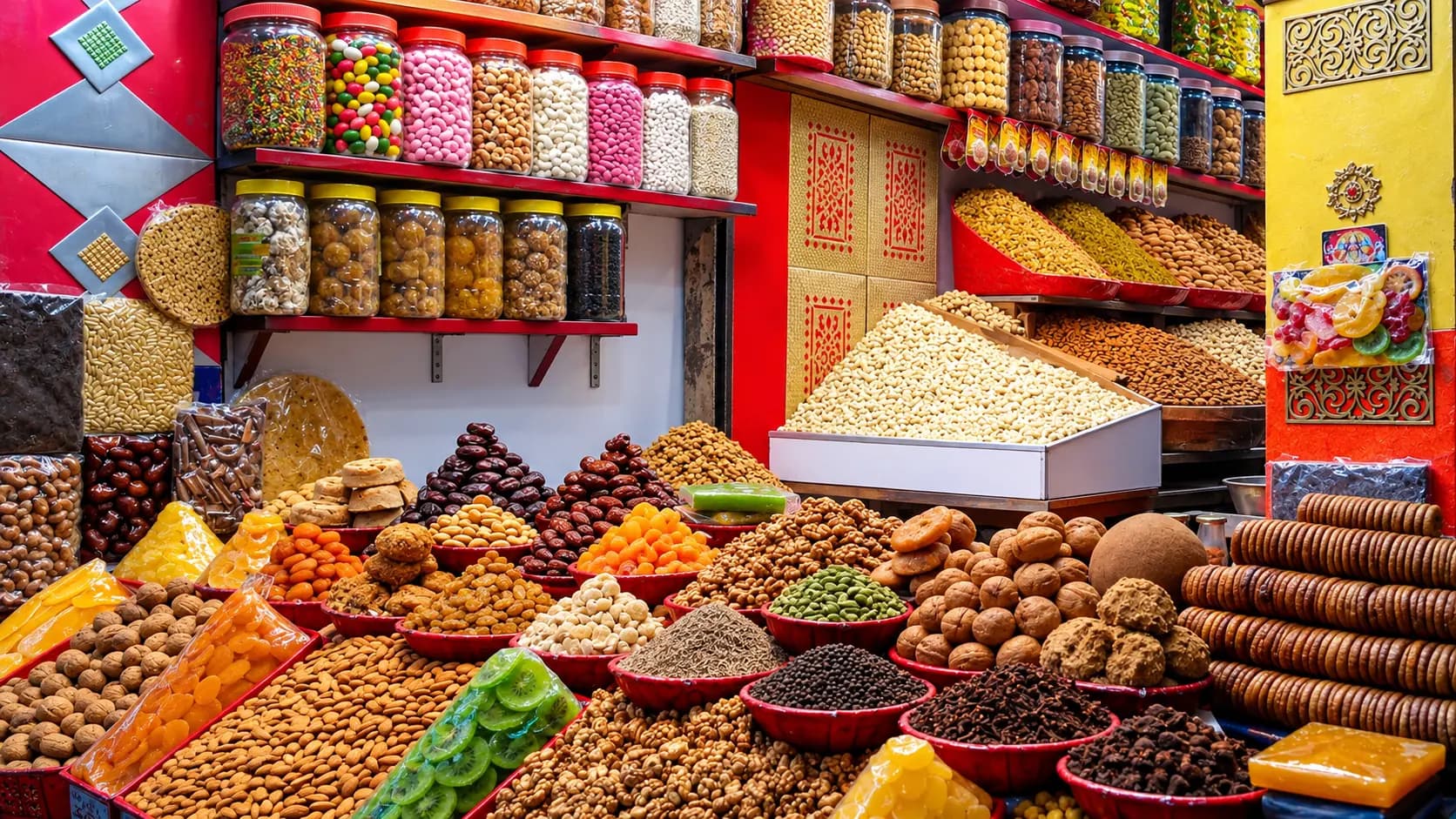
Opening directly outside Gate 1 (Southern Gate) of Jama Masjid, Matia Mahal is the historic culinary heart of Old Delhi. World-renowned among food lovers, this vibrant lane is home to legendary century-old eateries: Karim's (established 1913 by royal Mughal cooks, famous for mutton burra, seekh kebabs, and shahi korma), Al Jawahar (celebrated for chicken changezi and mutton nihari), Aslam Chicken (famed for roasted chicken drenched in melted butter and yogurt cream), and traditional sweet shops serving hot shahi tukda and rabri.
Chandni Chowk Pedestrian Promenade
Located approximately 600 meters north via Dariba Kalan or Nai Sarak, the newly redeveloped 1.3-kilometer red sandstone pedestrian boulevard stretches between Red Fort and Fatehpuri Masjid. Free from motor vehicles from 09:00 AM to 09:00 PM, it is packed with specialized jewelry bazaars, wedding accessories, and Paranthe Wali Gali.
Mirza Ghalib Ki Haveli
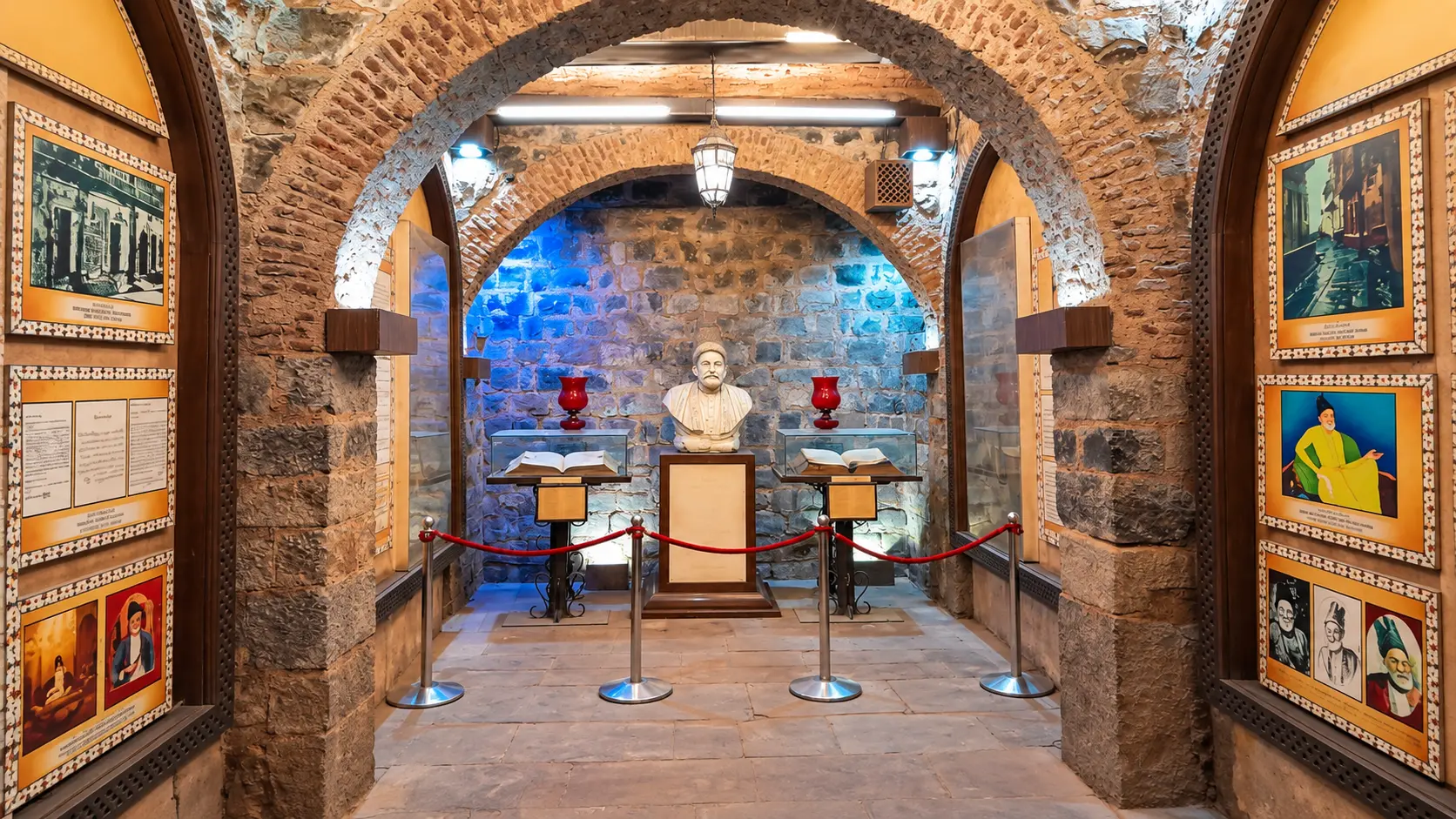
Situated roughly 900 meters northwest in Gali Qasim Jan, Ballimaran, this restored 19th-century lakhori-brick mansion was the residence of India’s supreme Urdu poet, Mirza Ghalib. Maintained as a memorial museum by the Delhi Government, it exhibits his handwritten manuscripts, life-size statue, and trilingual poetry displays.
In pictures
The practical bits
Before you go.
Courtyard Barefoot Etiquette and Footwear
Confirm the current charge and what it includes with the operator or service provider.Explore detailsClose details
Confirm the current charge and what it includes with the operator or service provider. Visitor admission, vehicles, parking, activities and accommodation can have separate charges. In hot summer months, carry a pair of clean, thick white cotton socks to protect your soles from scorching sandstone flags.
Strict Modesty and Attire Regulations
Jama Masjid is an active place of daily worship with strict dress codes; men and women must have their shoulders…Explore detailsClose details
Jama Masjid is an active place of daily worship with strict dress codes; men and women must have their shoulders, chest, and knees fully covered; shorts, sleeveless shirts, short skirts, and tight athletic wear are forbidden. Confirm the current charge and what it includes with the operator or service provider. Visitor admission, vehicles, parking, activities and accommodation can have separate charges.
Prayer Timing Schedule and Friday Closures
Check the current visiting hours and permitted access with the site operator before departure; ceremonies…Explore detailsClose details
Check the current visiting hours and permitted access with the site operator before departure; ceremonies, closures and visitor sessions can affect access.
Southern Minaret Climb Logistics
Confirm the current charge and what it includes with the operator or service provider.Explore detailsClose details
Confirm the current charge and what it includes with the operator or service provider. Visitor admission, vehicles, parking, activities and accommodation can have separate charges. Women and solo female travelers must climb in pairs or accompanied by a family member per mosque security rules.
A few things you might wonder
Common questions about visiting Jama Masjid. Fees, visiting hours and ceremonies are researched details that may change; confirm current arrangements with the operator before travelling.
Who built Jama Masjid in Delhi, and when was it completed?
How much is the entry fee for Jama Masjid, and do Indians have to pay?
What is the dress code for visitors entering Jama Masjid?
Can tourists climb the minarets of Jama Masjid, and what can you see from the top?
What are the visiting hours, and when is the mosque closed to tourists?
Which metro station is closest to Jama Masjid, and which gate should I use?
Explore more in Old Delhi
Discover other destinations around this hub
More Hubs in Delhi Ncr
Continue exploring other travel hubs in this state
Planning a trip to Old Delhi?