Chandni Chowk
Explore Chandni Chowk in Central Delhi. Complete guide to the pedestrian heritage promenade, Paranthe Wali Gali, Dariba Kalan, Gurudwara Sis Ganj, shopping, and metro access.
Location
Old Delhi, Delhi NCR
A closer look
Your visit, at a glance.
Old Delhi, Delhi Ncr
GET TO KNOW THE PLACE
---
The story of Chandni Chowk
Start here. Open a tile for the full details.
Why goRead details
Few urban boulevards on earth can rival the historical pedigree, cultural density, and sensory dynamism of Chandni Chowk. Situated in the heart of the historic 17th-century walled city of Shahjahanabad in Central Delhi, this legendary 1.3-kilometer thoroughfare has served as the commercial pulse, cultural runway, and ceremonial spine of North India for more than 370 years. Commissioned in 1650 CE by Mughal Princess Jahanara Begum - the brilliant, artistic, and influential eldest daughter of Emperor Shah Jahan - Chandni Chowk was conceived as a monumental royal vista connecting the imperial Lahori Gate of the Red Fort to the majestic congregational Fatehpuri Masjid. Its very name, translating from Urdu and Hindi as "Moonlight Square" or "Silver Crossroads," originally commemorated a wide, tranquil central reflecting pool fed by the Ali Mardan Canal, designed so that the evening moon would cast a glittering silver shimmer across its waters as royal processions passed by.
When to visitRead details
Entry & permissionsRead details
Fees, visiting hours and entry rules may change. Confirm the latest details with the official operator or local authority before travelling.
Operating Schedule and Market Timings
- Pedestrian Promenade: The 1.3-kilometer public boulevard is open and accessible 24 hours a day, 7 days a week.
- Retail Shops, Jewelers, and Fabric Showrooms: Generally open from 10:00 AM to 08:30 PM, Tuesday through Saturday.
- Traditional Sunday Closure: Most wholesale textile, electronics, paper, and hardware markets remain closed on Sundays. However, iconic street food stalls, sweetshops, restaurants, and religious shrines remain vibrantly open all day Sunday, alongside lively Sunday flea and secondhand book markets near Daryaganj and Nai Sarak.
- Religious Shrine Timings:
- Gurudwara Sis Ganj Sahib: Daylight visits recommended; confirm any after-dark access; community kitchen (langar) serves continuously.
- Sri Digambar Jain Lal Mandir: 06:00 AM to 12:00 PM and 05:30 PM to 09:00 PM daily.
- Charity Birds Hospital: 08:00 AM to 08:00 PM daily (emergency admissions 24 hours).
- Gauri Shankar Temple: 05:00 AM to 10:00 AM and 05:00 PM to 10:00 PM daily.
- Fatehpuri Masjid: Open daily from dawn prayers (Fajr) until night prayers (Isha), closing briefly between prayer times to tourists.
Admission Tariffs
Category / Facility | Tariff Rate (INR) | Remarks / Access Terms |
|---|---|---|
General Promenade Access | Free (₹0) | Unrestricted public boulevard |
Religious Shrines (All Faiths) | Free (₹0) | Modest dress & head cover required |
Charity Birds Hospital Entry | Free (₹0) | Voluntary donations accepted |
Authorized Cycle-Rickshaw Ride | ₹50 - ₹150 per trip | Negotiable depending on distance |
Handheld Mobile Photography | Free (₹0) | Personal non-commercial use |
Gandhi Maidan Car Parking (Hourly) | ₹20 - ₹50 per hour | Standard municipal parking tariff |
Regulations, Photography and Equipment Guidelines
- Vehicle Restrictions: Motorized vehicles - including private cars, commercial taxis, delivery trucks, two-wheelers, and auto-rickshaws - are strictly prohibited from entering the 1.3-kilometer promenade between 09:00 AM and 09:00 PM daily. Violations result in immediate traffic police impoundment and heavy fines under SRDC regulations.
- Photography and Filming Permits: Handheld mobile phone photography and casual tourist cameras are permitted without restriction along the public boulevard. However, commercial cinematography, television shoots, music videos, advertising campaigns, and professional shoots requiring tripods, boom microphones, or dollies require prior written clearance from the Delhi Police (Kotwali Division), the Municipal Corporation of Delhi (MCD), and the Shahjahanabad Redevelopment Corporation.
- Strict Drone Ban: The operation of unmanned aerial vehicles (drones) is strictly banned throughout Chandni Chowk and its surrounding airspace. Due to the immediate proximity of the Red Fort (a UNESCO World Heritage site and high-security national monument), the entire area is designated a zero-tolerance No-Fly Zone patrolled by Central Armed Police Forces (CAPF) and Delhi Police.
- Temple and Shrine Etiquette: Footwear must be deposited at designated shoe counters before entering religious sanctums. At Gurudwara Sis Ganj, tobacco, cigarettes, and alcohol are strictly prohibited on the premises, and heads must remain covered. Inside the Jain Bird Hospital, visitors should maintain silence to avoid stressing recuperating avian patients.
Plan your visitRead details
Located in Central Delhi between the Red Fort and Fatehpuri, Chandni Chowk is directly connected to the regional transit grid through the Delhi Metro, Indian Railways, and arterial road networks.
Explore the full guide - choose a topic below.
Why visit?
Few urban boulevards on earth can rival the historical pedigree, cultural density, and sensory dynamism of…Explore detailsClose details
Few urban boulevards on earth can rival the historical pedigree, cultural density, and sensory dynamism of Chandni Chowk. Situated in the heart of the historic 17th-century walled city of Shahjahanabad in Central Delhi, this legendary 1.3-kilometer thoroughfare has served as the commercial pulse, cultural runway, and ceremonial spine of North India for more than 370 years. Commissioned in 1650 CE by Mughal Princess Jahanara Begum - the brilliant, artistic, and influential eldest daughter of Emperor Shah Jahan - Chandni Chowk was conceived as a monumental royal vista connecting the imperial Lahori Gate of the Red Fort to the majestic congregational Fatehpuri Masjid. Its very name, translating from Urdu and Hindi as "Moonlight Square" or "Silver Crossroads," originally commemorated a wide, tranquil central reflecting pool fed by the Ali Mardan Canal, designed so that the evening moon would cast a glittering silver shimmer across its waters as royal processions passed by.
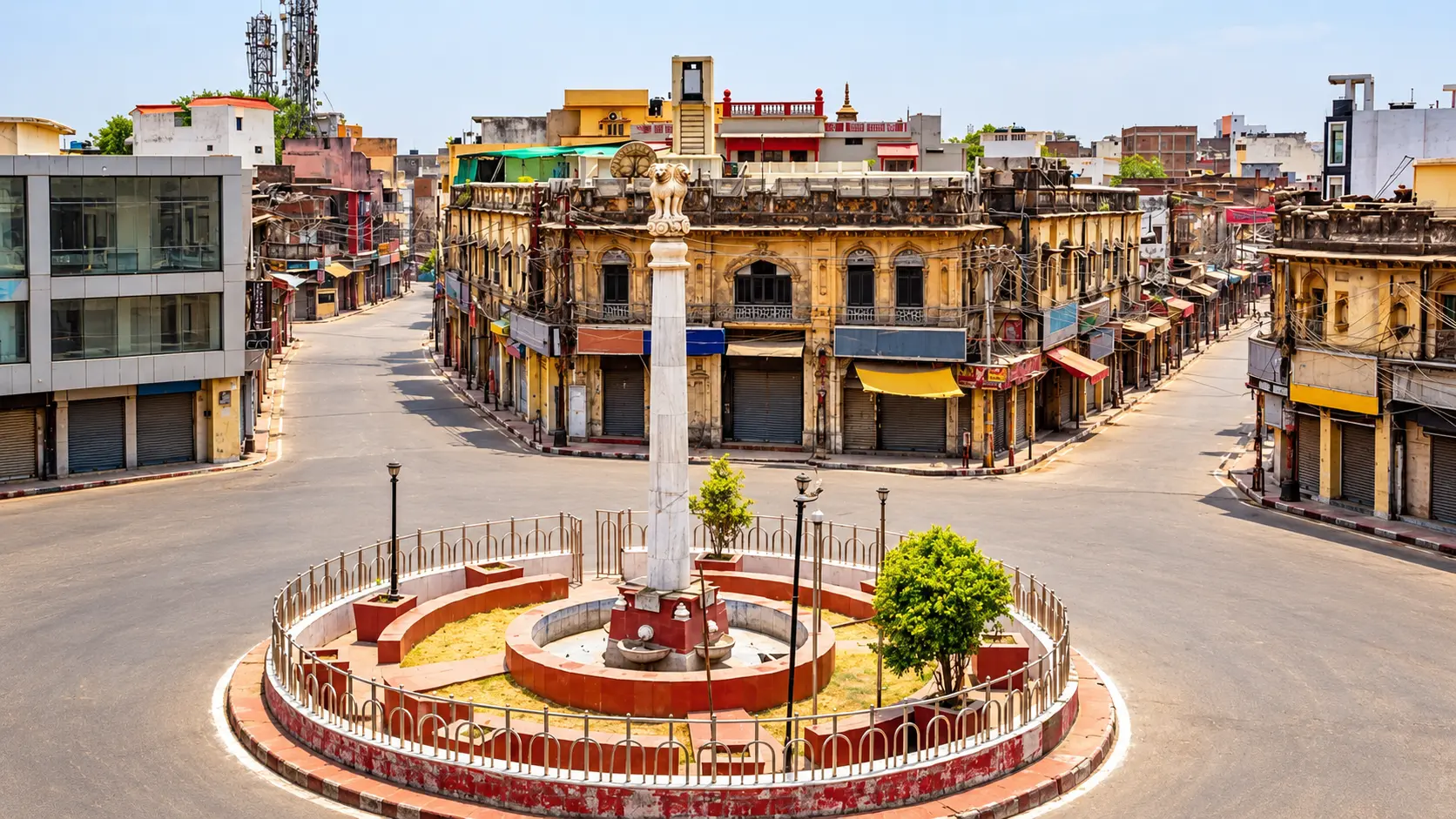
Today, following an ambitious and transformative revitalization completed by the Shahjahanabad Redevelopment Corporation (SRDC) and the Municipal Corporation of Delhi, Chandni Chowk has emerged into a 21st-century pedestrian marvel while preserving its layered heritage. The chaotic tangles of overhead electrical wiring and deafening automobile congestion that once choked the street have been replaced by a sprawling Non-Motorized Vehicle (NMV) pedestrian boulevard, paved in handsome red sandstone and polished granite cobbles, framed by ornamental Mughal-inspired streetlights, bollards, and central landscaped resting islands. Free from cars and motorcycles between 09:00 AM and 09:00 PM daily, the avenue allows travelers to comfortably stroll down the path of Mughal emperors, Persian conquerors, British colonial viceroys, and generations of Indian merchants.
What makes Chandni Chowk an incomparable destination is its extraordinary syncretic spiritual and architectural landscape. Within a span of less than a single kilometer along the main avenue stand prominent places of worship representing five major world faiths: the 17th-century red shikharas of Sri Digambar Jain Lal Mandir (complete with its unique Charity Birds Hospital), the ancient Hindu Gauri Shankar Temple, the classical colonial pediments of the 1814 Central Baptist Church, the hallowed gilded domes of Gurudwara Sis Ganj Sahib marking the martyrdom of Guru Tegh Bahadur, and the golden cupolas of the 1721 Sunehri Masjid, framed against the towering red domes of Fatehpuri Masjid. Diverging into the labyrinthine secondary alleyways (galis and katras), visitors discover specialized wholesale bazaars trading in ancestral silver jewelry (Dariba Kalan), wedding haberdashery (Kinari Bazaar), and textiles (Katra Neel), alongside the legendary, aromatic food stalls of Paranthe Wali Gali, century-old jalebi confectioners, and cooling dahi bhalla shops. Chandni Chowk is not merely a tourist attraction; it is the living, beating soul of Old Delhi.
What to expect
Spanning roughly 1.3 kilometers from east to west in the Kotwali sub-division of Central Delhi, Chandni Chowk…Explore detailsClose details
Spanning roughly 1.3 kilometers from east to west in the Kotwali sub-division of Central Delhi, Chandni Chowk presents an immersive, multi-sensory urban experience. The street is wide, measuring approximately 35 to 40 yards across, and is completely pedestrianized during daylight and evening hours.
       +-------------------------------------------------------------+
       |             RED FORT (LAL QUILA) - LAHORI GATE              |
       |               (Eastern Terminus of Promenade)               |
       +-------------------------------------------------------------+
                                      |
                                      v
  +------------------------------------------------------------------+
  | SECTION 1: THE MULTI-FAITH SPIRITUAL GATEWAY                     |
  | - Sri Digambar Jain Lal Mandir & Charity Birds Hospital (1656 CE)|
  | - Gauri Shankar Shaivite Temple (800-year-old Shiva Lingam)      |
  | - Central Baptist Church (1814 CE - European Classical Façade)   |
  | - Bhagirath Palace (Begum Samru's Haveli / Wholesale Electronics)|
  +------------------------------------------------------------------+
                                      |
                                      v
  +------------------------------------------------------------------+
  | SECTION 2: THE HERITAGE HEART & MARTYRDOM MEMORIAL               |
  | - Gurudwara Sis Ganj Sahib (Martyrdom Site of Guru Tegh Bahadur) |
  | - Sunehri Masjid (Roshan-ud-Daula Mosque - Nadir Shah 1739 Stand)|
  | - Fountain Chowk (Bhai Mati Das Memorial / Historic Chawk)       |
  | - Entry to Dariba Kalan (Silver Bazaar) & Paranthe Wali Gali     |
  +------------------------------------------------------------------+
                                      |
                                      v
  +------------------------------------------------------------------+
  | SECTION 3: CIVIC COMMERCE & THE CLOTH BAZAARS                    |
  | - Municipal Town Hall (Victorian Neoclassical Landmark, 1863 CE) |
  | - Site of Historic Clock Tower (Ghantaghar, collapsed 1951)      |
  | - Katra Neel (Wholesale Fabrics, Silk, Linen, Cotton Bazaars)    |
  | - Nai Sarak Junction (Wholesale Stationery & Academic Books)     |
  +------------------------------------------------------------------+
                                      |
                                      v
  +------------------------------------------------------------------+
  | SECTION 4: SPICE WEALTH & THE WESTERN TERMINUS                   |
  | - Khari Baoli Junction (Asia's Largest Wholesale Spice Market)   |
  | - Fatehpuri Masjid (1650 CE Red Sandstone Mosque by Royal Wife)  |
  +------------------------------------------------------------------+
The Architectural and Spiritual Axis
Walking west from the Red Fort end (opposite Netaji Subhash Marg and Lal Quila Metro Station), visitors encounter an unbroken timeline of religious harmony and monumental architecture:
- Sri Digambar Jain Lal Mandir and Charity Birds Hospital: Dominating the eastern entrance directly facing the Red Fort, this striking red sandstone temple dates back to 1656 CE, built during the reign of Emperor Shah Jahan. Dedicated to Lord Parshvanatha, the 23rd Jain Tirthankara, the temple's interior is adorned with gilded stucco work and marble relief carvings. Behind the main prayer hall lies the world-renowned Charity Birds Hospital, established in 1956 in accordance with Jain tenets of absolute non-violence (ahimsa). The hospital treats thousands of sick, injured, and rescued avian patients each year, providing free surgical intervention, orthopedic splints, and aviary rehabilitation.
- Gauri Shankar Temple: Situated immediately adjacent to the Jain temple, this revered Hindu sanctuary is dedicated to Lord Shiva and Goddess Parvati. According to temple lore, the central lingam - a smooth, 800-year-old brown stone encased in a solid silver yoni - was enshrined by a wounded Maratha soldier named Appa Gangadhar after he experienced a divine vision guaranteeing his recovery in battle. The temple is especially vibrant on Mondays and during the festival of Maha Shivratri, filled with the resonance of brass bells, conch shells, and offerings of fresh bael leaves, milk, and marigold garlands.
- Central Baptist Church: Located slightly west on the southern side of the road, this pristine colonial church was constructed in 1814 by the Baptist Missionary Society of London following the establishment of British administrative authority in Delhi. Featuring a neo-classical portico supported by stout circular stone pillars and a pedimented roofline, the church stands as one of the oldest Christian mission centers in northern India, offering quiet sanctuary from the bustle of the bazaar.
- Gurudwara Sis Ganj Sahib: The emotional and historical spiritual anchor of Chandni Chowk, this towering Sikh shrine marks the exact spot under an ancient banyan tree where Guru Tegh Bahadur, the Ninth Sikh Guru, was publicly beheaded on November 11, 1675, by order of Mughal Emperor Aurangzeb for refusing to renounce his faith and defending the religious freedoms of Kashmiri Pandits. Originally commemorated by Sikh general Sardar Baghel Singh in 1783, the present gilded multi-tier marble gurudwara was erected in 1930. Inside, the soothing strains of live Gurbani Kirtan resonate 24 hours a day, and the community kitchen (Guru ka Langar) serves wholesome hot vegetarian meals to thousands of visitors every day without charge, regardless of caste, religion, or social status.
- Sunehri Masjid (Golden Mosque): Perched upon an elevated stone terrace near the Fountain Chowk intersection, this compact three-domed mosque was built in 1721 CE by Nawab Roshan-ud-Daula Zafar Khan, a noble in the court of Emperor Muhammad Shah. Its domes were originally gilded with real gold leaf, earning its name. The mosque holds a grim place in history: from its elevated terrace on March 22, 1739, the Persian emperor Nadir Shah drew his sword and commanded the infamous general massacre (Katl-e-Aam) of Delhi’s civilian population following an urban skirmish, leading to the slaughter of an estimated 30,000 citizens in nine hours.
- Town Hall: Situated roughly midway along the northern perimeter of the promenade, Town Hall is a stately, lemon-yellow Victorian neo-classical edifice completed in 1863 as the Lawrence Institute. Built upon the former site of Princess Jahanara's royal caravanserai, the building served as the municipal administrative headquarters of Delhi for over a century until the municipal offices relocated to the Civic Centre on Minto Road in 2010. Its landscaped forecourt once housed a bronze statue of Queen Victoria (removed after Indian independence and replaced with a statue of freedom fighter Swami Shraddhanand).
- Fatehpuri Masjid: Anchoring the western terminus of Chandni Chowk, this massive red sandstone mosque was built in 1650 CE by Fatehpuri Begum, one of Emperor Shah Jahan's royal consorts. Featuring a soaring central gateway (pishtaq), a sprawling open courtyard paved in sandstone flags, and striped bulbous domes, Fatehpuri Masjid provided a spiritual counterweight to the imperial Jama Masjid, serving the bustling merchant class and caravans entering Delhi from the western trade routes of Punjab and Afghanistan.
+---------------------------------------------------------------------------------------------------+
|                        HERITAGE LANDMARKS ALONG CHANDNI CHOWK PROMENADE                          |
+------------------------------+--------------------+---------------------+-------------------------+
| Landmark                     | Inception / Date   | Architectural Style | Cultural / Religious    |
+------------------------------+--------------------+---------------------+-------------------------+
| Sri Digambar Jain Lal Mandir | 1656 CE            | Jain Red Sandstone  | Jainism; Bird Hospital  |
| Gauri Shankar Temple         | ~12th C. / 1761 CE | Hindu Nagara Style  | Shaivite Hindu Shrine   |
| Central Baptist Church       | 1814 CE            | European Classical  | Christian Baptist       |
| Gurudwara Sis Ganj Sahib     | 1783 / 1930 CE     | Sikh Classical      | Sikh Martyrdom Shrine   |
| Sunehri Masjid               | 1721 CE            | Late Mughal Gilded  | Islamic Historic Mosque |
| Town Hall                    | 1863 CE            | Victorian Classical | Civic Municipal Hall    |
| Fatehpuri Masjid             | 1650 CE            | Shah Jahani Mughal  | Congregational Mosque   |
| Begum Samru Palace           | 1806 CE            | Anglo-Mughal Fusion | Commercial Electronics  |
+------------------------------+--------------------+---------------------+-------------------------+
The Specialized Bazaars and Commercial Katras
Branching off from the central 1.3-kilometer avenue are dozens of historic, specialized bazaars (katras and kuchas), each operating as an autonomous guild dedicated to a specific craft or commodity:
- Dariba Kalan (The Street of Incomparable Pearls): Originating from the Persian word Dur-e-be-baha ("incomparable pearl"), this narrow lane opens south of the Sis Ganj Gurudwara. Dating to the founding of Shahjahanabad, Dariba Kalan is India's premier historic trading lane for handcrafted silver jewelry, bridal polki ornaments, filigree silverware, antique coins, and pure botanical perfumes (ittar / attar) distilled through ancestral copper deg-bhapka stills in Kannauj.
- Kinari Bazaar (The Trimmings Market): Intersecting with Dariba Kalan and leading toward Chawri Bazaar, Kinari Bazaar is a glittering alleyway specializing in bridal trousseau adornments, gold and silver zari threads, metallic gotta-patti borders, embroidered brocades, royal wedding turbans (pagris), and handcrafted floral garlands.
- Paranthe Wali Gali (The Lane of Fried Breads): World-famous among culinary travelers, this tiny lane branch off Chandni Chowk was established in the 1870s when Brahmin sweetmakers and cooks from Agra and Gwalior opened specialized eateries. Today, surviving family shops - such as Pandit Gaya Prasad Shiv Charan (established 1872) and Babu Ram Paranthe Wala - fry whole-wheat paranthas in pure desi ghee inside massive cast-iron tawas, filling them with savory concoctions ranging from spiced potatoes, cauliflower, and paneer to exotic fillings like green peas, crushed bitter gourd (karela), rabri, and dry fruits, served alongside sweet pumpkin curry (sitaphal), sour tamarind chutney, and mixed pickle.
- Khari Baoli (The Salt Stepwell Spice Market): Positioned immediately adjacent to Fatehpuri Masjid at the western terminus, Khari Baoli has operated since the mid-17th century as Asia's largest wholesale spice market. The air here is pungent with the airborne scents of thousands of open burlap sacks laden with fiery Kashmiri chillies, Iranian saffron, green cardamom from the Western Ghats, dried ginger, cloves, star anise, dried plums, and medicinal Ayurvedic roots, traded by multi-generational merchant houses.
- Katra Neel (The Fabric and Indigo Bazaar): Located opposite the Town Hall, Katra Neel was established by Gujarati indigo (neel) merchants and cloth dyers who supplied the Mughal court. Marked by historic arched gateways that were sealed shut at night for security during medieval times, Katra Neel is Delhi's paramount wholesale destination for pure silks, satins, crepes, chintz, and bridal fabrics.
- Bhagirath Palace (The Electronics Hub): Tucked behind the main boulevard on the north side, this dense market occupies the grounds of the majestic 1806 palace of Begum Samru, the formidable ruler of Sardhana. Today, the classical colonnaded mansion is enveloped by Asia's largest wholesale electrical market, featuring hundreds of shops packed with crystal chandeliers, industrial switchgear, LED systems, and vintage lighting fixtures.
- Nai Sarak (The New Street of Books): Constructed by the British following the 1857 Revolt to slice through dense medieval housing between Chandni Chowk and Chawri Bazaar, Nai Sarak is North India's preeminent wholesale book and stationery market, renowned for academic textbooks, competitive exam guides, law volumes, and custom-bound ledgers (bahi-khata).
Best time to visit
October to November (Autumn / Post-Monsoon): An exceptional period to explore Chandni Chowk.Explore detailsClose details
Seasonal Guidelines
- October to November (Autumn / Post-Monsoon): An exceptional period to explore Chandni Chowk. Daytime temperatures average 22°C to 28°C with clear skies and low humidity. The markets are decorated in full festive splendor for Navratri, Dussehra, and Diwali, with Dariba Kalan and Kinari Bazaar illuminated by thousands of festive lights and shoppers purchasing bridal finery.
- December to February (Winter): Widely regarded as the most pleasant season for walking the 1.3-kilometer outdoor promenade. Crisp winter temperatures (10°C to 20°C) make extensive foot exploration invigorating. Steaming street foods - such as hot kulhad milk simmered with saffron and malai, sizzling jalebis in desi ghee, piping hot Daulat ki Chaat (a delicate seasonal foam dessert made from churned milk exposed to night winter dew), and freshly fried paranthas - are enjoyed at their absolute prime.
- March (Early Spring): A delightful transitional month with mild daytime temperatures (20°C to 27°C) before the onset of oppressive summer heat.
- April to June (Summer): Daytime temperatures frequently soar past 40°C to 44°C. While the pedestrian promenade has been planted with young shade trees and features drinking water kiosks, walking the open stone boulevard under direct midday sun is physically exhausting. Travelers visiting in summer should plan excursions strictly during the early morning (07:00 AM to 09:30 AM) or after sunset (06:30 PM to 09:00 PM).
- July to September (Monsoon): The rainy season brings humid conditions and heavy rainfall that can create puddles along narrow unpaved alleys. However, rainy afternoons offer a nostalgic ambiance in Old Delhi's tea shops and sweet stalls, and the pedestrian boulevard's modernized stormwater drainage prevents the severe waterlogging that historically plagued the area.
+---------------------------------------------------------------------------------------------------+
|                           SEASONAL CLIMATE & AMBIANCE AT CHANDNI CHOWK                            |
+-------------------+--------------------+----------------------------------+-----------------------+
| Season            | Months             | Climate & Walking Conditions     | Highlights & Food     |
+-------------------+--------------------+----------------------------------+-----------------------+
| Autumn Festivals  | October - November | Mild, dry (18°C - 30°C);         | Diwali shopping rush; |
|                   |                    | energetic festive crowds         | festive sweets, gifts |
+-------------------+--------------------+----------------------------------+-----------------------+
| Peak Winter       | December - January | Crisp, chilly (8°C - 20°C);      | Daulat ki Chaat season|
|                   |                    | ideal for extensive walking      | hot milk, paranthas   |
+-------------------+--------------------+----------------------------------+-----------------------+
| Spring Transition | February - March   | Warm, sunny (16°C - 28°C);       | Comfortable strolling;|
|                   |                    | pleasant afternoon breezes       | Holi shopping colors  |
+-------------------+--------------------+----------------------------------+-----------------------+
| Summer Heat       | April - June       | Scorching hot (30°C - 44°C);     | Early morning walks;  |
|                   |                    | avoid midday walking tours       | rabri falooda, kulfi  |
+-------------------+--------------------+----------------------------------+-----------------------+
| Monsoon Season    | July - September   | Humid, rain showers (26°C - 35°C)| Chai, samosas, kachori|
|                   |                    | dynamic historic atmosphere      | active wholesale trade|
+-------------------+--------------------+----------------------------------+-----------------------+
How to reach
Located in Central Delhi between the Red Fort and Fatehpuri, Chandni Chowk is directly connected to the regional…Explore detailsClose details
Located in Central Delhi between the Red Fort and Fatehpuri, Chandni Chowk is directly connected to the regional transit grid through the Delhi Metro, Indian Railways, and arterial road networks.
       +-------------------------------------------------------------+
       |             REGIONAL ACCESS & TRANSPORT MATRIX              |
       +-------------------------------------------------------------+
                                      |
         +----------------------------+---------------------------+
         |                                                        |
         v                                                        v
  [METRO TRANSIT]                                          [RAILWAY TERMINALS]
  - Chandni Chowk Station (Yellow Line):                   - Old Delhi Railway Station (DLI):
    Gates 1 & 5 exit directly onto promenade.                500 m north (~6 min walk via Town Hall).
  - Lal Quila Station (Violet Line):                       - New Delhi Railway Station (NDLS):
    200 m from Red Fort / Jain Mandir end.                   2.5 km south (2 stops via Yellow Line).
  - Chawri Bazaar Station (Yellow Line):                   - Hazrat Nizamuddin Station (NZM):
    700 m south via Nai Sarak.                               10 km south (direct via Violet Line).
                                      |
         +----------------------------+---------------------------+
         |                                                        |
         v                                                        v
  [VEHICULAR DROP-OFF & PARKING]                           [AIRPORT TRANSIT]
  - Gandhi Maidan Multi-Level Parking:                     - Indira Gandhi Int'l Airport (DEL):
    300 m north of Town Hall (cars & taxis).                 19 km southwest (~35 min via Airport
  - Netaji Subhash Marg Drop-off:                            Express Line from New Delhi Station).
    Eastern terminus drop-off point near Red Fort.
By Delhi Metro (Strongly Recommended)
The Delhi Metro network is the most efficient, hassle-free mode of transit:
- Chandni Chowk Metro Station (Yellow Line / Line 2): Situated underground beneath the market, this station provides direct access. Gate 1 and Gate 5 open directly onto the red sandstone pedestrian promenade near the Town Hall and Nai Sarak junction. The Yellow Line connects directly to Rajiv Chowk (Connaught Place), New Delhi Railway Station, Kashmere Gate, and Gurgaon.
- Lal Quila Metro Station (Violet Line / Line 6): Situated at the eastern terminus of the street, this station is ideal if your itinerary begins at the Red Fort, Digambar Jain Lal Mandir, or Gauri Shankar Temple. Exiting through Gate 1 or Gate 2 brings you within 200 meters of the promenade entrance. The Violet Line connects directly to Central Secretariat, Khan Market, Lajpat Nagar, and Faridabad.
- Chawri Bazaar Metro Station (Yellow Line): Located one stop south of Chandni Chowk, this station is convenient for approaching Chandni Chowk from the south through the book markets of Nai Sarak or the brass and wedding invitation card markets of Chawri Bazaar.
By Indian Railways
- Old Delhi Railway Station (Delhi Junction - DLI): Situated just 500 meters north of Chandni Chowk. Passengers arriving on long-distance trains can exit through the main station portico, cross the road to Dangal Maidan, and reach Town Hall in less than 7 minutes on foot or via a cycle-rickshaw.
- New Delhi Railway Station (NDLS): Positioned 2.5 kilometers south at Paharganj/Ajmeri Gate. Travelers can board the Yellow Line Metro from the underground metro station at NDLS and reach Chandni Chowk in just two stops (4 minutes of train travel).
By Road, Taxis, and Personal Vehicles
Because private motor vehicles (cars, motorcycles, auto-rickshaws, and app-based cabs) are strictly banned from entering the 1.3-kilometer promenade between 09:00 AM and 09:00 PM daily, visitors arriving by car or taxi must utilize designated drop-off points and parking facilities:
- Drop-off Points: Taxis and auto-rickshaws can drop passengers at Netaji Subhash Marg (near Red Fort/Lal Mandir) for the eastern entrance, or at Church Mission Road near Fatehpuri Masjid for the western entrance.
- Designated Parking: If driving a personal vehicle, park at the modern Gandhi Maidan Multi-Level Car Parking facility located roughly 300 meters north of Town Hall, or the surface parking lots at Dangal Maidan near Old Delhi Railway Station. From the parking garage, it is an easy 3-minute walk onto the pedestrian boulevard.
Entry, timings and permissions
Fees, visiting hours and entry rules may change.Explore detailsClose details
Fees, visiting hours and entry rules may change. Confirm the latest details with the official operator or local authority before travelling.
Operating Schedule and Market Timings
- Pedestrian Promenade: The 1.3-kilometer public boulevard is open and accessible 24 hours a day, 7 days a week.
- Retail Shops, Jewelers, and Fabric Showrooms: Generally open from 10:00 AM to 08:30 PM, Tuesday through Saturday.
- Traditional Sunday Closure: Most wholesale textile, electronics, paper, and hardware markets remain closed on Sundays. However, iconic street food stalls, sweetshops, restaurants, and religious shrines remain vibrantly open all day Sunday, alongside lively Sunday flea and secondhand book markets near Daryaganj and Nai Sarak.
- Religious Shrine Timings:
- Gurudwara Sis Ganj Sahib: Daylight visits recommended; confirm any after-dark access; community kitchen (langar) serves continuously.
- Sri Digambar Jain Lal Mandir: 06:00 AM to 12:00 PM and 05:30 PM to 09:00 PM daily.
- Charity Birds Hospital: 08:00 AM to 08:00 PM daily (emergency admissions 24 hours).
- Gauri Shankar Temple: 05:00 AM to 10:00 AM and 05:00 PM to 10:00 PM daily.
- Fatehpuri Masjid: Open daily from dawn prayers (Fajr) until night prayers (Isha), closing briefly between prayer times to tourists.
Admission Tariffs
Category / Facility | Tariff Rate (INR) | Remarks / Access Terms |
|---|---|---|
General Promenade Access | Free (₹0) | Unrestricted public boulevard |
Religious Shrines (All Faiths) | Free (₹0) | Modest dress & head cover required |
Charity Birds Hospital Entry | Free (₹0) | Voluntary donations accepted |
Authorized Cycle-Rickshaw Ride | ₹50 - ₹150 per trip | Negotiable depending on distance |
Handheld Mobile Photography | Free (₹0) | Personal non-commercial use |
Gandhi Maidan Car Parking (Hourly) | ₹20 - ₹50 per hour | Standard municipal parking tariff |
Regulations, Photography and Equipment Guidelines
- Vehicle Restrictions: Motorized vehicles - including private cars, commercial taxis, delivery trucks, two-wheelers, and auto-rickshaws - are strictly prohibited from entering the 1.3-kilometer promenade between 09:00 AM and 09:00 PM daily. Violations result in immediate traffic police impoundment and heavy fines under SRDC regulations.
- Photography and Filming Permits: Handheld mobile phone photography and casual tourist cameras are permitted without restriction along the public boulevard. However, commercial cinematography, television shoots, music videos, advertising campaigns, and professional shoots requiring tripods, boom microphones, or dollies require prior written clearance from the Delhi Police (Kotwali Division), the Municipal Corporation of Delhi (MCD), and the Shahjahanabad Redevelopment Corporation.
- Strict Drone Ban: The operation of unmanned aerial vehicles (drones) is strictly banned throughout Chandni Chowk and its surrounding airspace. Due to the immediate proximity of the Red Fort (a UNESCO World Heritage site and high-security national monument), the entire area is designated a zero-tolerance No-Fly Zone patrolled by Central Armed Police Forces (CAPF) and Delhi Police.
- Temple and Shrine Etiquette: Footwear must be deposited at designated shoe counters before entering religious sanctums. At Gurudwara Sis Ganj, tobacco, cigarettes, and alcohol are strictly prohibited on the premises, and heads must remain covered. Inside the Jain Bird Hospital, visitors should maintain silence to avoid stressing recuperating avian patients.
Nearby places to consider
Located directly across Netaji Subhash Marg at the eastern terminus of Chandni Chowk, this massive 17th-century…Explore detailsClose details
Red Fort (Lal Quila)
Located directly across Netaji Subhash Marg at the eastern terminus of Chandni Chowk, this massive 17th-century UNESCO World Heritage red sandstone citadel served as the seat of Mughal imperial power from 1648 to 1857. Key architectural highlights include the Diwan-i-Aam (Hall of Public Audience), Diwan-i-Khas (Hall of Private Audience), Moti Masjid, and the covered Chhatta Chowk bazaar.
Jama Masjid
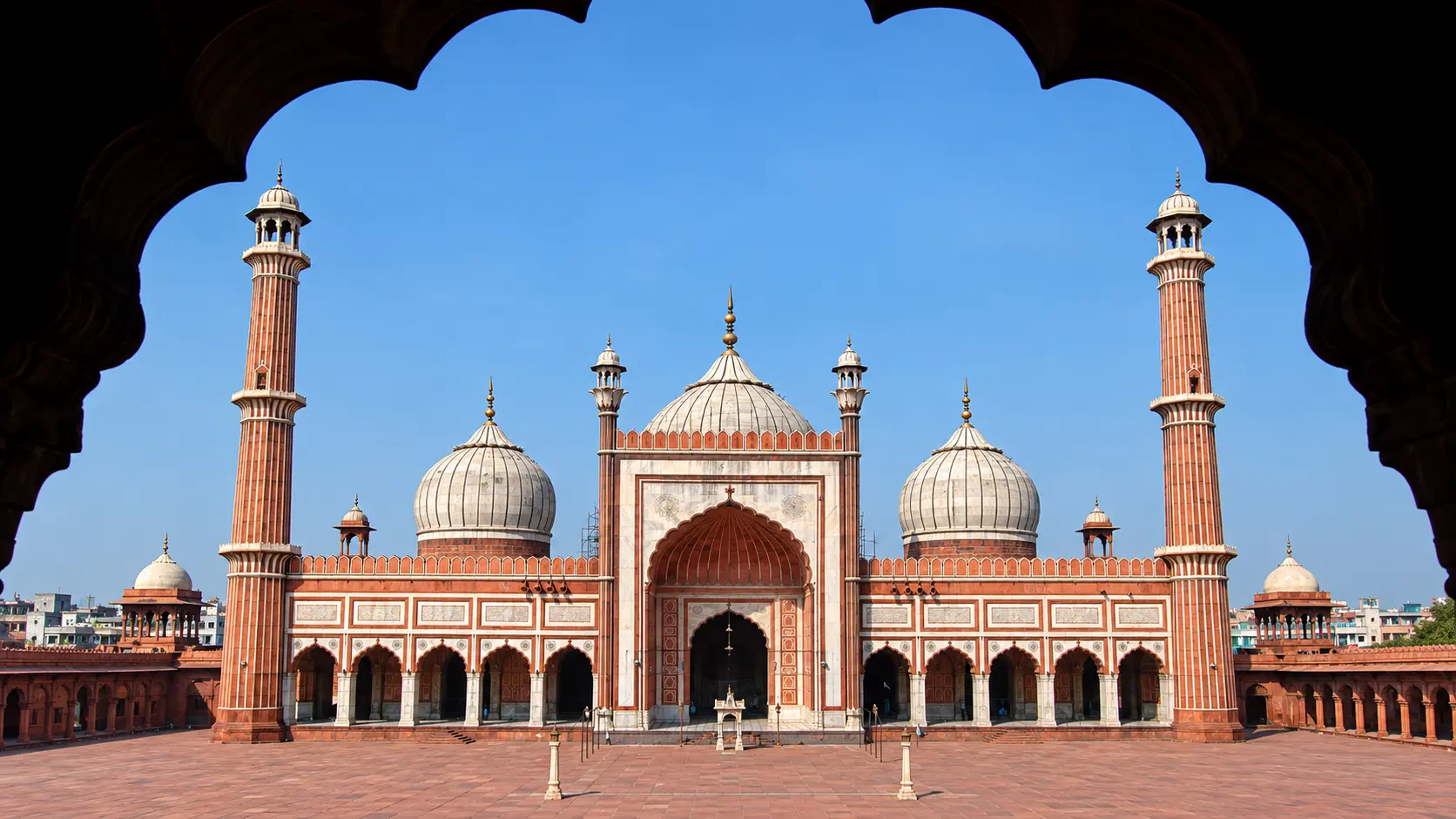
Situated roughly 600 meters south of Chandni Chowk via Dariba Kalan or Esplanade Road, Emperor Shah Jahan's congregational Friday Mosque is one of the largest mosques in India. Built of red sandstone and white marble between 1650 and 1656, it features a vast courtyard accommodating 25,000 worshippers, two 40-meter-high minarets, and three grand flight-of-steps gateways.
Mirza Ghalib ki Haveli
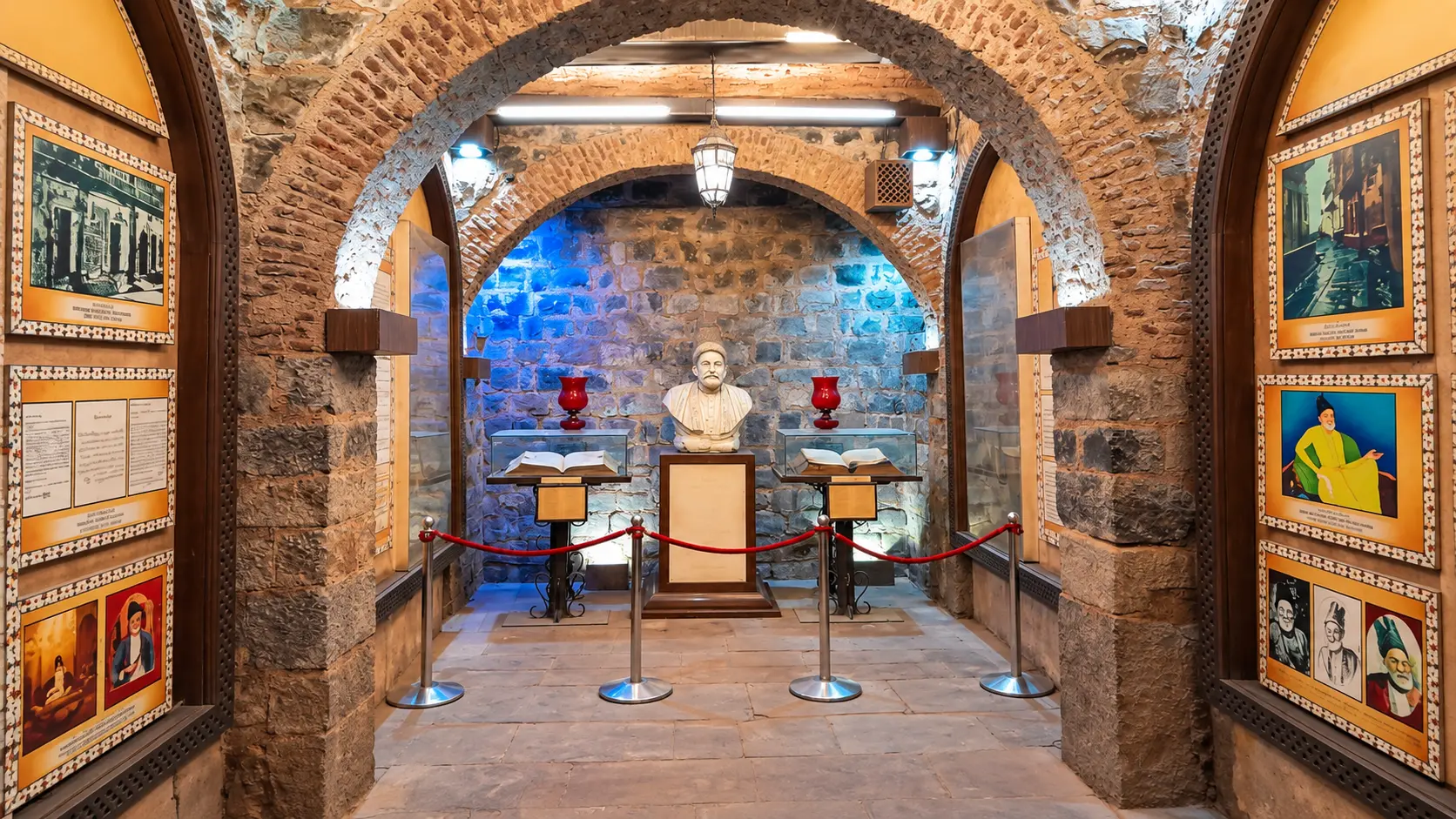
Located approximately 800 meters southwest in the Gali Qasim Jan alley of Ballimaran, this preserved 19th-century brick-and-mortar residence was the home of India's most celebrated Urdu and Persian poet, Mirza Asadullah Khan Ghalib (1797 - 1869). Conserved by the Archaeological Survey of India, the haveli houses a permanent museum exhibiting Ghalib's handwritten poetry manuscripts, period attire, and a life-size statue of the poet.
Raj Ghat and Memorial Parks
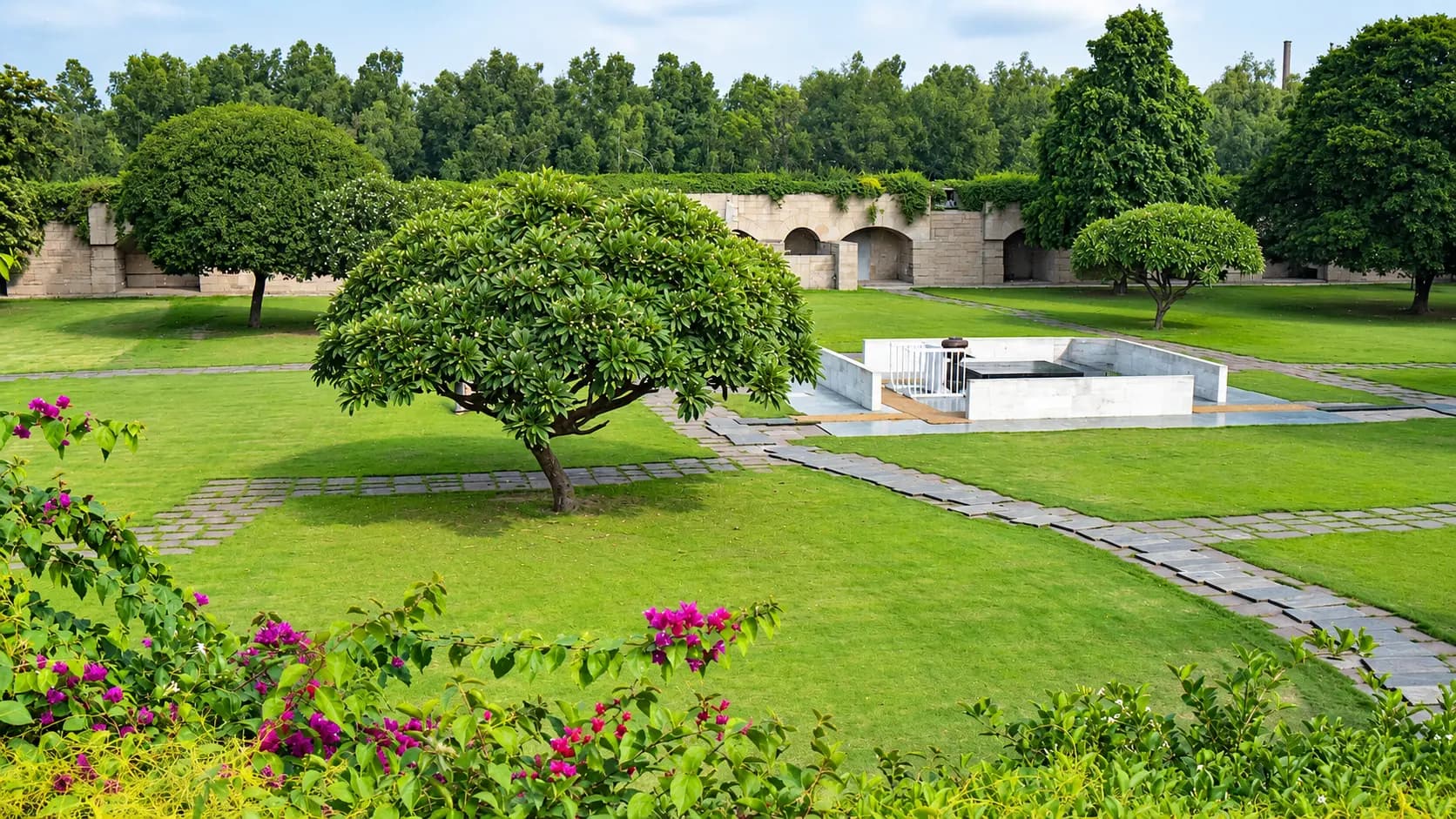
Located roughly 2.0 kilometers southeast on the banks of the Yamuna River, Raj Ghat is the solemn black marble memorial marking the cremation spot of Mahatma Gandhi. Surrounded by serene manicured lawns and sacred tree plantings from world leaders, it offers a peaceful historical contrast to the energy of the Old Delhi bazaars.
In pictures
The practical bits
Before you go.
Promenade Walking and Footwear
The newly paved pedestrian boulevard spans 1.3 kilometers end-to-end, meaning a round-trip walking tour exploring…Explore detailsClose details
The newly paved pedestrian boulevard spans 1.3 kilometers end-to-end, meaning a round-trip walking tour exploring branching side lanes typically covers 3.5 to 5 kilometers of continuous walking; wear durable, comfortable, closed-toe walking shoes that can be easily removed when entering temples, gurdwaras, and mosques.
Metro Station Ingress and Egress
Arrive via the Delhi Metro Yellow Line at Chandni Chowk Metro Station, using Gate 1 or Gate 5 to emerge directly…Explore detailsClose details
Arrive via the Delhi Metro Yellow Line at Chandni Chowk Metro Station, using Gate 1 or Gate 5 to emerge directly onto the pedestrian promenade near Town Hall, avoiding above-ground roadway congestion outside Old Delhi Railway Station.
Modesty and Head Coverings
Visitors planning to enter Gurudwara Sis Ganj Sahib, Fatehpuri Masjid, or Digambar Jain Lal Mandir must dress…Explore detailsClose details
Visitors planning to enter Gurudwara Sis Ganj Sahib, Fatehpuri Masjid, or Digambar Jain Lal Mandir must dress modestly with shoulders and knees fully covered, and carry a clean cotton handkerchief, scarf, or bandana to cover their hair prior to entering sanctum areas.
Cash and Digital Payment Logistics
Confirm the current charge and what it includes with the operator or service provider.Explore detailsClose details
Confirm the current charge and what it includes with the operator or service provider. Visitor admission, vehicles, parking, activities and accommodation can have separate charges.
A few things you might wonder
Common questions about visiting Chandni Chowk. Fees, visiting hours and ceremonies are researched details that may change; confirm current arrangements with the operator before travelling.
Who designed Chandni Chowk, and what is the historical origin of its name?
Is Chandni Chowk pedestrian-only, and are cars allowed inside the market?
What are the most famous historic street foods to try in Chandni Chowk?
Which metro station is closest to Chandni Chowk and its specialized markets?
Are the shops and bazaars in Chandni Chowk open on Sundays?
What is the dress code and etiquette for visiting religious shrines along Chandni Chowk?
Explore more in Old Delhi
Discover other destinations around this hub
More Hubs in Delhi Ncr
Continue exploring other travel hubs in this state
Planning a trip to Old Delhi?