Waste to Wonder Park
Explore Waste to Wonder Park in South East Delhi. Discover the Seven Wonders of the World crafted from 150 tonnes of scrap metal, night illumination, tickets, and timings.
Location
New Delhi, Delhi NCR
A closer look
Your visit, at a glance.
New Delhi, Delhi Ncr
GET TO KNOW THE PLACE
---
The story of Waste to Wonder Park
Start here. Open a tile for the full details.
Why goRead details
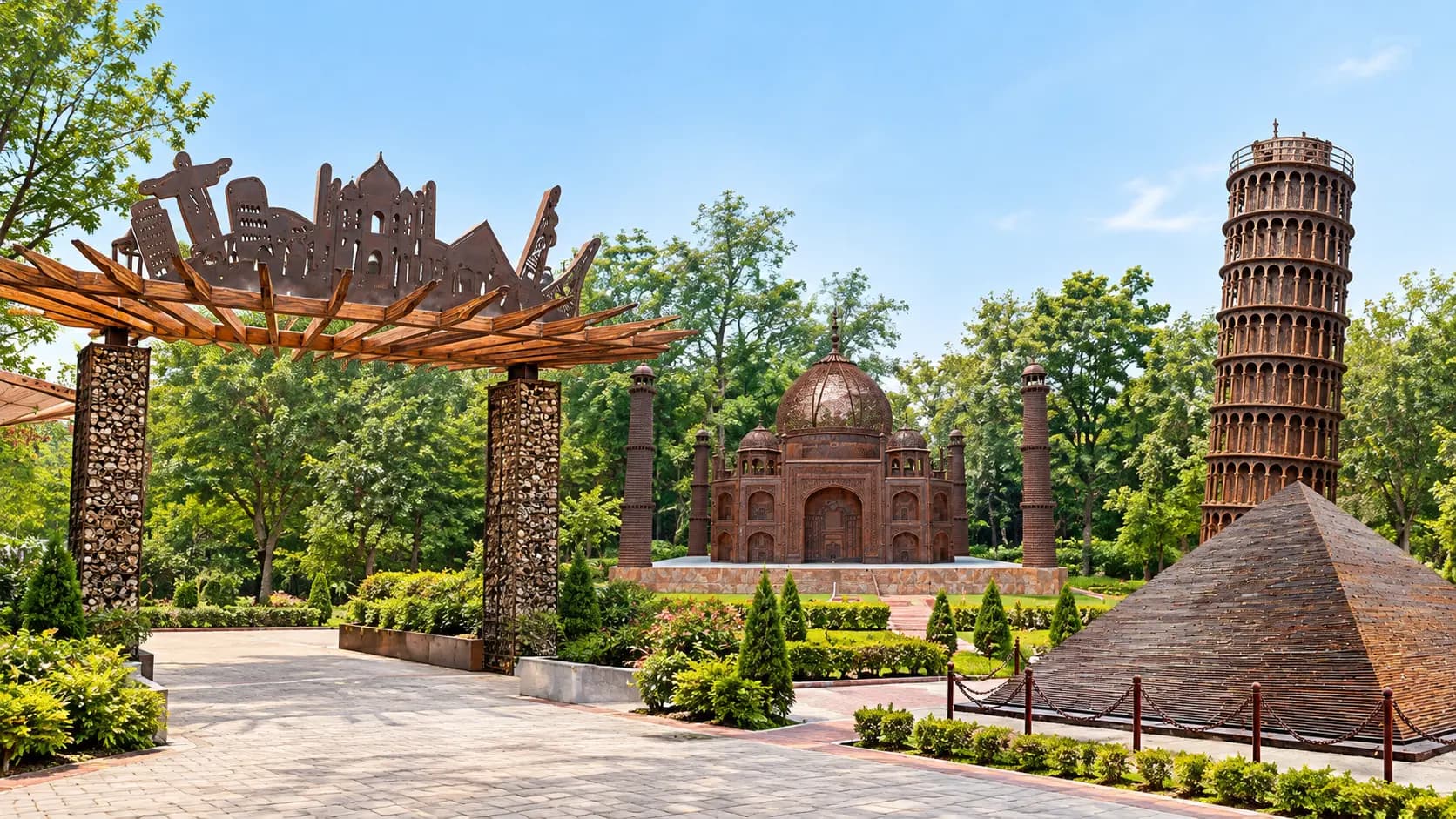
In an era where global metropolitan centers face mounting waste management challenges, New Delhi has produced an inspiring, whimsical, and internationally recognized masterwork of environmental upcycling: the Waste to Wonder Theme Park. Spanning seven beautifully landscaped acres near Sarai Kale Khan in South East Delhi, this unique attraction is the world's first public theme park dedicated entirely to monumental scrap-metal sculpture. Developed in 2019 by the Municipal Corporation of Delhi (MCD) as a flagship project of the nationwide Swachh Bharat Abhiyan (Clean India Mission), the park breathes dazzling new artistic life into over 150 tonnes of discarded industrial, automotive, and municipal waste, transforming junkyard scrap into faithful, scale-model replicas of the Seven Wonders of the World.
When to visitRead details
Entry & permissionsRead details
Fees, visiting hours and entry rules may change. Confirm the latest details with the official operator or local authority before travelling.
Entry Fees and Ticket Categories
Admission fees to Waste to Wonder Park are set by the Municipal Corporation of Delhi (MCD) to ensure accessible public eco-tourism:
- Adults (Age 12 to 65 years): ₹50 per person.
- Children (Age 3 to 12 years): ₹25 per child.
- Senior Citizens (Age 65+ years): Free admission upon presenting valid government photo identification with proof of age (Aadhaar, Voter ID, or Passport).
- MCD School Students: Free admission for students from Municipal Corporation of Delhi schools arriving in uniform or presenting valid school ID cards.
- Toddlers: Free admission for children below the age of 3 years.
- Ticket Purchase: Tickets can be purchased at the computerized physical ticket windows outside the main entrance gate using cash, credit/debit cards, and UPI digital payments, or online in advance via the official MCD online booking portal.
Timings and Operating Schedules
- Operating Hours: Open Tuesday through Sunday from 11:00 AM to 11:00 PM.
- Ticket Counter Closure: The physical ticket windows close strictly at 10:00 PM; no admissions are granted after 10:00 PM.
- WEEKLY CLOSURE: The park is STRICTLY CLOSED ON MONDAYS all year round for weekly maintenance, sculpture welding inspections, electrical safety audits, and deep-cleaning.
- Illumination Timings: The decorative LED lighting and floodlights on the sculptures operate daily from dusk (approx. 06:30 PM in winter, 07:15 PM in summer) until the park closes at 11:00 PM.
Photography and Equipment Regulations
- Handheld Photography: Non-commercial handheld still photography, mobile phone snapshots, and social media video recording for personal use are completely free and permitted throughout all lawns and viewing zones.
- Professional Cameras & Video Shoots: Carrying professional DSLR cameras for portrait sessions, pre-wedding shoots, or commercial filming requires a nominal commercial permit fee (approx. ₹100 to ₹500) purchased at the ticketing counter.
- Commercial Productions: Large-scale commercial advertisement filming, fashion model shoots, and music videos require prior formal written approval and permit fee clearance from the Director of Horticulture, Municipal Corporation of Delhi.
- Drone Regulations: Flying uncrewed aerial vehicles (drones/UAVs) of any class over or near Waste to Wonder Park is strictly prohibited. The park is located within the high-security diplomatic transit corridor of South East Delhi, near vital railway infrastructure and government installations, falling within a strict DGCA/Delhi Police No-Fly Red Zone.
Park Etiquette and Safety Rules
- No Climbing on Sculptures: For visitor safety and monument preservation, visitors are strictly prohibited from climbing, sitting, or hanging on the scrap-metal sculptures or crossing the protective landscape cordons. Many sculptures have sharp welded steel edges that can cause injury if handled carelessly.
- Litter and Plastic Ban: Waste to Wonder is an eco-friendly zero-litter zone. Visitors must deposit all packaging, food containers, and water bottles in the designated recycling bins placed across the park.
Plan your visitRead details
Waste to Wonder Park is situated near the Rajiv Gandhi Smriti Van along the Ring Road (Mahatma Gandhi Marg) in Sarai Kale Khan, South East Delhi (PIN: 110013), directly across from Hazrat Nizamuddin Railway Station.
Explore the full guide - choose a topic below.
Why visit?
In an era where global metropolitan centers face mounting waste management challenges, New Delhi has produced an…Explore detailsClose details
In an era where global metropolitan centers face mounting waste management challenges, New Delhi has produced an inspiring, whimsical, and internationally recognized masterwork of environmental upcycling: the Waste to Wonder Theme Park. Spanning seven beautifully landscaped acres near Sarai Kale Khan in South East Delhi, this unique attraction is the world's first public theme park dedicated entirely to monumental scrap-metal sculpture. Developed in 2019 by the Municipal Corporation of Delhi (MCD) as a flagship project of the nationwide Swachh Bharat Abhiyan (Clean India Mission), the park breathes dazzling new artistic life into over 150 tonnes of discarded industrial, automotive, and municipal waste, transforming junkyard scrap into faithful, scale-model replicas of the Seven Wonders of the World.
The genius of Waste to Wonder lies in the breathtaking synergy between heavy industrial fabrication, fine artistic craftsmanship, and sustainable green engineering. Over a six-month creative marathon, five prominent Indian sculptors, seven supporting artists, and more than 70 skilled welders sifted through mountains of decommissioned MCD scrap - discarded automobile chassis, transmission gearboxes, bent iron lampposts, decommissioned water pipes, bicycle chains, truck rims, and broken park benches. Through precision plasma cutting, bending, and electric arc welding, these discarded metal fragments were meticulously reassembled into towering architectural icons: a 60-foot Eiffel Tower, a 20-foot Taj Mahal, a 35-foot Statue of Liberty, the Leaning Tower of Pisa tilted at its exact 3.97-degree angle, the Roman Colosseum, Christ the Redeemer, and the Great Pyramid of Giza.
Moreover, Waste to Wonder is an authentic eco-park that generates its own clean electricity off the grid. Equipped with a 30-kilowatt rooftop solar array and three solar-wind hybrid turbines, the park harnesses Delhi’s sun and breezes to power thousands of colorful, energy-efficient LED luminaires that bring the scrap-metal structures to life as twilight descends. When illuminated at night against the dark sky, the industrial textures of nuts, bolts, and car panels take on a glittering, steampunk-inspired majesty. Whether you are a family with curious children, a photography enthusiast searching for creative angles, or a traveler passionate about the circular economy and urban sustainability, Waste to Wonder offers a delightful, educational, and visually arresting excursion that proves waste is only waste if we fail to see its potential.
What to expect
Covering seven acres adjacent to the green expanses of Rajiv Gandhi Smriti Van, Waste to Wonder is designed…Explore detailsClose details
Covering seven acres adjacent to the green expanses of Rajiv Gandhi Smriti Van, Waste to Wonder is designed around a continuous, circular paved promenade that guides visitors through seven distinct landscaped garden zones, each dedicated to one of the world wonders. Visitors should expect an easy, accessible outdoor walking circuit, accompanied by bilingual interpretive signboards detailing the dimensions, history, and exact scrap materials used for each monument.
The Seven Wonders Replicas and Scrap Materials
- The Eiffel Tower (Paris, France): The undisputed centerpiece and tallest sculpture in the park, soaring 60 feet (18.3 meters) into the air and weighing over 40 tonnes. Fabricated using eight tonnes of structural steel scrap, automobile chassis rails, C-channels, and decommissioned municipal street lampposts, the replica reproduces the graceful lattice arches, intermediate observation platforms, and tapering spire of Gustave Eiffel's 1889 Parisian original. At night, warm golden and tricolor LED floodlights illuminate the intricate openwork steel beams.
- The Taj Mahal (Agra, India): Standing 20 feet (6.1 meters) high across a 40-foot square base, this replica is a marvel of delicate sheet-metal craftsmanship. Built using 30 tonnes of discarded metal sheets, bicycle chains, steel rods, and broken park bench frames, the structure features a bulbous central dome flanked by four multi-tiered corner minarets. Intricate laser-cut and hand-welded jali screens mimic the delicate marble lattices of the 17th-century Mughal mausoleum, with a front reflection channel reminiscent of the Yamuna Charbagh.
- The Statue of Liberty (New York, USA): Standing 35 feet (10.7 meters) tall on an elevated concrete plinth, Lady Liberty was sculpted from discarded automobile body panels, scrap metal pipes, and thousands of bicycle chains welded together to form the flowing folds of her classical drapery. Her spiked crown is fashioned from angular steel bars, while her raised torch is fitted with a functional solar-powered LED flame that glows brilliantly after dusk.
- The Leaning Tower of Pisa (Pisa, Italy): Rising 25 feet (7.6 meters) high, this replica features an engineered tilt of 3.97 degrees, perfectly mimicking the famous unintended lean of the medieval Italian bell tower. Crafted from eight tiered rings of recycled metal pipes, bicycle rims, iron chains, and curved sheet panels, the sculpture captures the delicate classical colonnades of the original Campanile.
- The Colosseum (Rome, Italy): Standing 15 feet (4.6 meters) high and spanning a 30-foot circular diameter, the Roman amphitheater was constructed using discarded automobile bumpers, metal railings, iron mesh, and sheet metal cut to recreate the crumbling, tiered arches and ruined monumental facade of ancient Rome's Flavian Amphitheatre.
- Christ the Redeemer (Rio de Janeiro, Brazil): Standing 25 feet (7.6 meters) tall upon an octagonal pedestal, this statue depicts Christ with outstretched arms spanning 22 feet. The statue's torso and arms were fashioned from scrap motorcycle engine crankcases, bent iron plates, and industrial tubing, creating a powerful silhouette that mirrors the Art Deco original atop Mount Corcovado.
- The Great Pyramid of Giza (Giza, Egypt): Rising 18 feet (5.5 meters) high, the Pyramid is the heaviest sculpture in the park, assembled from 110 tonnes of structural scrap metal. Layers of rusted steel sheets, corrugated iron, and structural angles are welded into a crisp triangular pyramid, complete with a stepped ramp and an interior viewing tunnel that illustrates how ancient engineering can be reimagined through modern recycled materials.
Renewable Energy and Eco-Friendly Infrastructure
Waste to Wonder is not merely an artistic showcase; it is a functioning laboratory of off-grid urban renewable energy. The entire park's electricity demand - including the architectural floodlights, sound systems, ticket turnstiles, and water fountains - is generated on-site:
- Solar Power: A 30 kW rooftop solar photovoltaic array installed on the visitor center and administrative buildings feeds green power directly into park battery banks.
- Wind-Solar Hybrids: Three 3 kW hybrid wind-solar micro-turbines erected along the park's eastern perimeter capture breezes from the open Yamuna floodplains to generate continuous supplementary power.
- Water Recycling: The park uses treated effluent from nearby municipal wastewater treatment facilities to irrigate its manicured lawns, seasonal flowerbeds, and decorative trees.
Nighttime Illumination and Atmosphere
While visiting during the late afternoon is fascinating for observing the raw welds, gears, and automotive parts, the park transforms into an enchanting wonderland after dark. Thousands of high-efficiency, multi-colored LED floodlights, fairy lights, and spotlights illuminate each sculpture. The Eiffel Tower glows in pulsating golden hues, the Statue of Liberty's torch radiates vibrant white-green light, and the Taj Mahal is bathed in ethereal blue and purple luminescence, making the park one of Delhi's most popular nocturnal leisure destinations.
Best time to visit
October to November (Autumn / Post-Monsoon): An exceptional time to visit.Explore detailsClose details
Seasonal Guide
- October to November (Autumn / Post-Monsoon): An exceptional time to visit. Temperatures are mild and pleasant (20°C to 28°C), evenings are cool, and the open-air park grounds are lush and green following the monsoon rains.
- December to February (Winter): Widely considered the finest season for Waste to Wonder. Crisp, chilly winter evenings (10°C to 18°C) are perfect for wrapping up in warm jackets, strolling between the illuminated sculptures, and enjoying hot tea, espresso, and steamed street food from the on-site food stalls.
- March (Early Spring): A lovely transitional month with comfortable evening temperatures (20°C to 26°C) and blooming garden borders before the arrival of intense summer heat.
- April to June (Summer): Daytime temperatures in Delhi often exceed 40°C to 44°C. Because the park features open lawns and metallic sculptures that absorb solar heat, visiting during midday or early afternoon is strongly discouraged. However, the park operates until 11:00 PM, making late evenings (07:30 PM to 10:30 PM) a popular, cool family retreat after sundown.
- July to September (Monsoon): Frequent showers clean the metallic sculptures, creating reflective puddles across the paved promenades. While humidity is high, breezy evenings can be pleasant, though sudden downpours can interrupt outdoor walking.
Optimal Time of Day
- Sunset to Twilight (05:30 PM - 07:00 PM): The absolute prime window to arrive. Arriving during dusk allows you to inspect the intricate welds, bicycle chains, and scrap engine components in clear daylight, and then watch the magical transformation as the thousands of LED floodlights switch on across the park at twilight.
- Nighttime (07:30 PM - 10:00 PM): Best for night photography, romantic strolls, and family outings under the glittering illumination. Ambient city noise drops, and the illuminated 60-foot Eiffel Tower creates a captivating visual spectacle.
How to reach
Waste to Wonder Park is situated near the Rajiv Gandhi Smriti Van along the Ring Road (Mahatma Gandhi Marg) in…Explore detailsClose details
Waste to Wonder Park is situated near the Rajiv Gandhi Smriti Van along the Ring Road (Mahatma Gandhi Marg) in Sarai Kale Khan, South East Delhi (PIN: 110013), directly across from Hazrat Nizamuddin Railway Station.
By Delhi Metro
The Delhi Metro Pink Line provides the fastest, most convenient direct access:
- Hazrat Nizamuddin Metro Station (Pink Line [Line 7]): The closest metro station, located just 300 meters northwest of the park gates. Exiting through Gate 2 or Gate 3, visitors can walk safely along a wide, well-lit pedestrian pavement directly to the park ticket pavilion in just 3 to 4 minutes.
- JLN Stadium Metro Station (Violet Line [Line 6]): Located approximately 2.5 kilometers west along Lodhi Road. Taking an autorickshaw from the station exit takes roughly 8 to 10 minutes.
- Sarai Kale Khan - Nizamuddin RRTS Station: Integrated directly with the Pink Line metro and the Namo Bharat Delhi-Meerut regional rapid transit corridor, offering seamless high-speed connectivity for visitors arriving from NCR towns like Ghaziabad and Meerut.
By Road, Taxis, and Autos
- Approaching Arteries: The park sits directly off the Ring Road (Mahatma Gandhi Marg), connected to Mathura Road, the Delhi-Noida Direct (DND) Flyway, and the Barapullah Elevated Corridor. Travel time from India Gate is approximately 10 minutes, from Connaught Place about 18 minutes, and from Noida Sector 18 about 12 minutes via the DND Flyway.
- App-Based Taxis & Auto-Rickshaws: Ride-hailing services (Uber, Ola, BluSmart) and three-wheeled autorickshaws have designated pick-up and drop-off bays right outside the main pedestrian entrance gate along the Sarai Kale Khan service lane.
- Self-Driving & Parking: Confirm the current charge and what it includes with the operator or service provider. Visitor admission, vehicles, parking, activities and accommodation can have separate charges.
From Major Transit Hubs
- From Hazrat Nizamuddin Railway Station (NZM): Located practically across the street (approx. 500 meters west). A 5-to-8-minute walk across the pedestrian foot overbridge, or a 2-minute autorickshaw ride.
- From New Delhi Railway Station (NDLS): Approximately 8 kilometers north. Take the Yellow Line from New Delhi Station to Dilli Haat-INA, then transfer to the Pink Line to Hazrat Nizamuddin (approx. 25 minutes). Alternatively, a pre-paid taxi via Mathura Road takes 20 to 30 minutes.
- From Old Delhi Railway Station (DLI): Approximately 11 kilometers north. Board the Yellow Line to Kashmere Gate, transfer to the Violet Line to Lajpat Nagar, and switch to the Pink Line to Hazrat Nizamuddin.
- From Indira Gandhi International Airport (DEL): Positioned roughly 17 kilometers west. The fastest route is boarding the Airport Express Orange Line to Dhaula Kuan, transferring to the Pink Line at Durgabai Deshmukh South Campus, and riding straight to Hazrat Nizamuddin Station (approx. 40 minutes). Alternatively, a pre-paid taxi via the Barapullah Elevated Road takes 30 to 45 minutes.
Entry, timings and permissions
Fees, visiting hours and entry rules may change.Explore detailsClose details
Fees, visiting hours and entry rules may change. Confirm the latest details with the official operator or local authority before travelling.
Entry Fees and Ticket Categories
Admission fees to Waste to Wonder Park are set by the Municipal Corporation of Delhi (MCD) to ensure accessible public eco-tourism:
- Adults (Age 12 to 65 years): ₹50 per person.
- Children (Age 3 to 12 years): ₹25 per child.
- Senior Citizens (Age 65+ years): Free admission upon presenting valid government photo identification with proof of age (Aadhaar, Voter ID, or Passport).
- MCD School Students: Free admission for students from Municipal Corporation of Delhi schools arriving in uniform or presenting valid school ID cards.
- Toddlers: Free admission for children below the age of 3 years.
- Ticket Purchase: Tickets can be purchased at the computerized physical ticket windows outside the main entrance gate using cash, credit/debit cards, and UPI digital payments, or online in advance via the official MCD online booking portal.
Timings and Operating Schedules
- Operating Hours: Open Tuesday through Sunday from 11:00 AM to 11:00 PM.
- Ticket Counter Closure: The physical ticket windows close strictly at 10:00 PM; no admissions are granted after 10:00 PM.
- WEEKLY CLOSURE: The park is STRICTLY CLOSED ON MONDAYS all year round for weekly maintenance, sculpture welding inspections, electrical safety audits, and deep-cleaning.
- Illumination Timings: The decorative LED lighting and floodlights on the sculptures operate daily from dusk (approx. 06:30 PM in winter, 07:15 PM in summer) until the park closes at 11:00 PM.
Photography and Equipment Regulations
- Handheld Photography: Non-commercial handheld still photography, mobile phone snapshots, and social media video recording for personal use are completely free and permitted throughout all lawns and viewing zones.
- Professional Cameras & Video Shoots: Carrying professional DSLR cameras for portrait sessions, pre-wedding shoots, or commercial filming requires a nominal commercial permit fee (approx. ₹100 to ₹500) purchased at the ticketing counter.
- Commercial Productions: Large-scale commercial advertisement filming, fashion model shoots, and music videos require prior formal written approval and permit fee clearance from the Director of Horticulture, Municipal Corporation of Delhi.
- Drone Regulations: Flying uncrewed aerial vehicles (drones/UAVs) of any class over or near Waste to Wonder Park is strictly prohibited. The park is located within the high-security diplomatic transit corridor of South East Delhi, near vital railway infrastructure and government installations, falling within a strict DGCA/Delhi Police No-Fly Red Zone.
Park Etiquette and Safety Rules
- No Climbing on Sculptures: For visitor safety and monument preservation, visitors are strictly prohibited from climbing, sitting, or hanging on the scrap-metal sculptures or crossing the protective landscape cordons. Many sculptures have sharp welded steel edges that can cause injury if handled carelessly.
- Litter and Plastic Ban: Waste to Wonder is an eco-friendly zero-litter zone. Visitors must deposit all packaging, food containers, and water bottles in the designated recycling bins placed across the park.
Nearby places to consider
Its central location along the Ring Road in South East Delhi places Waste to Wonder Park close to several of…Explore detailsClose details
Its central location along the Ring Road in South East Delhi places Waste to Wonder Park close to several of Delhi's premier heritage monuments, ecological parks, and cultural centers:
Humayun's Tomb
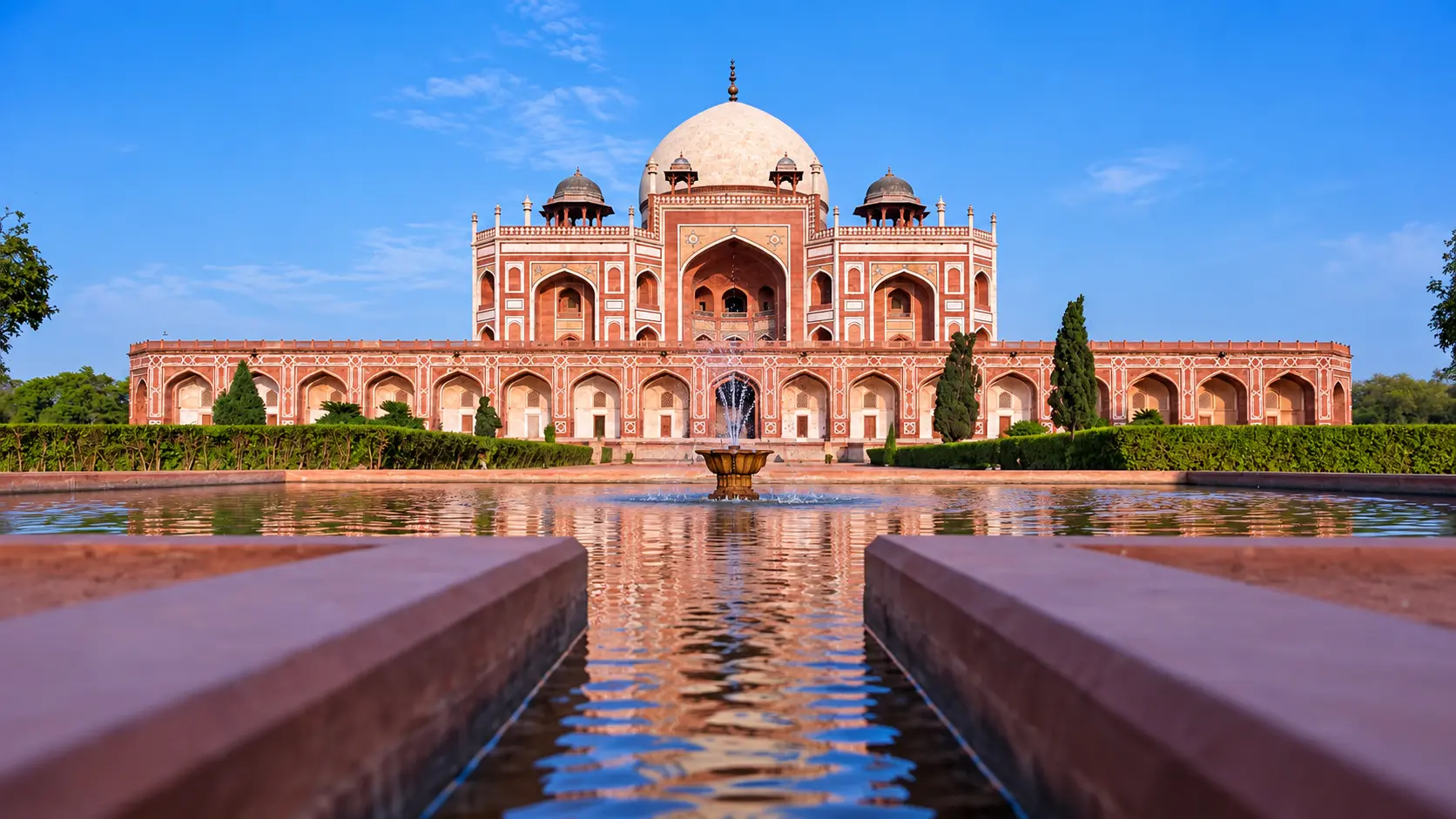
Located just 1.5 kilometers west along Mathura Road and Lodhi Road (a 5-minute auto ride), Humayun's Tomb is an inscribed UNESCO World Heritage Site (1993, Ref: 232). Commissioned in 1565 by Empress Bega Begum, this monumental red sandstone and white marble mausoleum set within a formal 30-acre Charbagh water garden served as the direct architectural blueprint for the Taj Mahal, providing a stunning historical parallel to the recycled Taj Mahal replica inside Waste to Wonder.
Sunder Nursery (Heritage River Park)
Situated roughly 1.8 kilometers west beside Humayun's Tomb, Sunder Nursery is Delhi’s celebrated 90-acre heritage ecological park. Restored by the Aga Khan Trust for Culture, it features 15 conserved 16th-century Mughal monuments, sweeping water canals, over 300 tree species, a magnificent bonsai house, and weekend organic farmers' markets, offering an idyllic daytime nature walk before your evening visit to Waste to Wonder.
Hazrat Nizamuddin Dargah
Located approximately 1.5 kilometers west in Nizamuddin Basti, this revered 14th-century Sufi shrine is dedicated to the saint Hazrat Nizamuddin Auliya. Renowned for its soul-stirring live Qawwali devotional music performances every Thursday evening, the complex also houses the marble tomb of the legendary medieval poet and musician Amir Khusrau.
Millennium Indraprastha Park
Positioned roughly 1.0 kilometer north along the Ring Road (Mahatma Gandhi Marg), Millennium Park is a sprawling 85-acre riverfront green lung developed by the Delhi Development Authority. It features manicured rolling lawns, tranquil water bodies, a children's park, and the towering white marble World Peace Stupa (Vishwa Shanti Stupa) inaugurated by the Dalai Lama in 2007.
National Science Centre
Located roughly 3.0 kilometers northwest near Pragati Maidan and Bhairon Marg, the National Science Centre is an interactive science museum featuring eight floors of hands-on exhibits, including human biology galleries, prehistoric animal animatronics, nuclear energy simulators, and 3D science cinemas, making it an enriching daytime companion for families traveling with children.
In pictures
The practical bits
Before you go.
Plan ahead
To make your trip to Waste to Wonder enjoyable, visually rewarding, and hassle-free, keep these practical tips in…Explore detailsClose details
To make your trip to Waste to Wonder enjoyable, visually rewarding, and hassle-free, keep these practical tips in mind:
Ideal Arrival Timing for Photography
Plan your arrival for around 05:00 PM to 05:30 PM during winter, or 06:00 PM during summer.Explore detailsClose details
Plan your arrival for around 05:00 PM to 05:30 PM during winter, or 06:00 PM during summer. This gives you roughly 45 minutes of natural daylight to photograph the intricate mechanical components - such as motorcycle chains on the Statue of Liberty and car bumpers on the Colosseum - before watching the dramatic illumination turn on across the park at sunset.
Dress Code and Comfortable Footwear
Wear comfortable walking shoes or sneakers, as exploring all seven sculptures, walking the paved perimeter, and…Explore detailsClose details
Wear comfortable walking shoes or sneakers, as exploring all seven sculptures, walking the paved perimeter, and browsing the food court involves about one to two kilometers of walking. In winter (December and January), carry a warm jacket or shawl, as the open lawns can become breezy after dark.
Food and Dining Strategy
While outside food and picnic hampers are not permitted past the security screening checkpoint, the park features…Explore detailsClose details
While outside food and picnic hampers are not permitted past the security screening checkpoint, the park features a vibrant food court near the central promenade offering bottled water, hot tea, espresso, ice creams, and popular Indian snacks like pav bhaji, chowmein, french fries, and samosas. Alternatively, take a 5-minute auto ride west to the Nizamuddin Dargah market for legendary street kebabs, biryani, and Mughlai curries.
Combining with Nearby South Delhi Heritage
Because Waste to Wonder is primarily an evening destination, you can easily pair it with a full-day cultural…Explore detailsClose details
Because Waste to Wonder is primarily an evening destination, you can easily pair it with a full-day cultural itinerary. Spend your morning exploring the UNESCO World Heritage Site of Humayun's Tomb (just 1.5 km west) and the peaceful 16th-century Mughal gardens of Sunder Nursery, followed by a late afternoon stroll and evening dinner at Waste to Wonder Park.
A few things you might wonder
Common questions about visiting Waste to Wonder Park. Fees, visiting hours and ceremonies are researched details that may change; confirm current arrangements with the operator before travelling.
What is Waste to Wonder Park, and who built it?
Which seven wonders are replicated in the park?
What scrap materials were used to construct the sculptures?
How is Waste to Wonder Park powered by green energy?
What are the opening hours, and is the park closed on any day?
How much is the entry ticket, and who gets free admission?
What is the best time to visit the park for photography and lighting?
Which metro station is closest to Waste to Wonder Park?
Explore more in New Delhi
Discover other destinations around this hub
More Hubs in Delhi Ncr
Continue exploring other travel hubs in this state
Planning a trip to New Delhi?