Humayun's Tomb
Visit Humayun's Tomb in New Delhi, a masterpiece of Mughal garden architecture and UNESCO World Heritage Site. Explore charbagh gardens, Isa Khan tomb, and timings.
Location
New Delhi, Delhi NCR
A closer look
Your visit, at a glance.
New Delhi, Delhi Ncr
GET TO KNOW THE PLACE
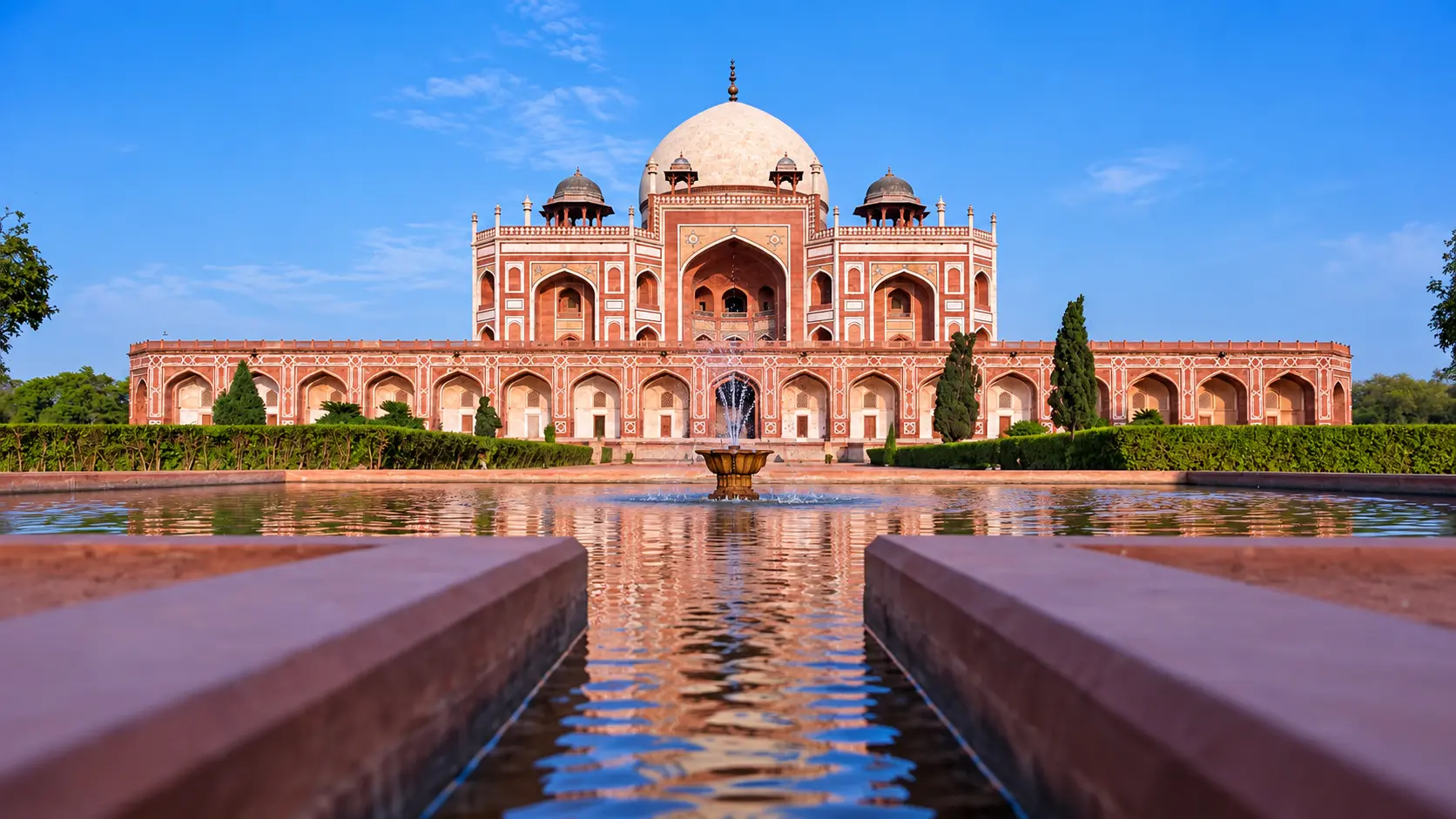
Standing with majestic geometric symmetry amidst 30 acres of immaculately restored Persian quadrilateral paradise gardens (Charbagh) along Mathura Road in South East Delhi…
The story of Humayun's Tomb
Standing with majestic geometric symmetry amidst 30 acres of immaculately restored Persian quadrilateral paradise gardens (Charbagh) along Mathura Road in South East Delhi, Humayun's Tomb is one of the supreme crowning achievements of Islamic architecture and the proud herald of the Mughal golden age. Inscribed as a UNESCO World Heritage Site in 1993 (World Heritage Ref: 232), this monumental red sandstone and white marble mausoleum was the very first monumental garden-tomb constructed on the Indian subcontinent.
The mausoleum was commissioned in 1565 - nine years after the tragic accidental death of the second Mughal emperor, Nasir al-Din Muhammad Humayun, who succumbed to injuries sustained after tumbling down the steep stone stairs of his library observatory at Purana Qila. Humayun's devoted senior widow and chief consort, Empress Bega Begum (frequently recorded in Persian chronicles as Haji Begum), dedicated her personal resources and patronage to erect a memorial worthy of her husband's regal memory. She engaged the renowned Persian master builder Mirak Mirza Ghiyas (and later his son, Sayyid Muhammad Ghiyas), who brought the refined aesthetic canons of Timurid Herat and Samarkand to blend harmoniously with indigenous Rajasthani architectural traditions and the stone masonry of the Delhi Sultanate.
Completed in 1572, Humayun's Tomb altered the architectural trajectory of South Asia forever. It introduced the revolutionary high double dome - an outer bulbous shell engineered to dominate the skyline, and an inner hemispherical vault scaled to intimate human interior proportions - and embedded the mausoleum within a vast, quadripartite geometric paradise garden divided by stone causeways and flowing watercourses. Seventy-six years later, Emperor Shah Jahan would take the precise architectural DNA of Humayun's Tomb - its soaring central dome, symmetrical corner pavilions (chhatris), grand recessed portals (iwans), and quadrilateral water gardens - and render it in translucent white marble to create the Taj Mahal at Agra. Furthermore, as the final resting place of more than 150 members of the royal Timurid dynasty, including the tragic prince Dara Shikoh, Humayun's Tomb earned the historical title "The Dormitory of the Mughals." Following an exemplary, multi-decade revitalization spearheaded by the Aga Khan Trust for Culture (AKTC) in collaboration with the Archaeological Survey of India (ASI), the monument stands today in pristine 16th-century glory, providing one of the most sublime heritage experiences in the world.
Start here. Open a tile for the full details.
Why goRead details
- A UNESCO World Heritage Masterpiece: Discover the seminal 1572 mausoleum that inaugurated the Mughal architectural renaissance and was inscribed by UNESCO under criteria (ii) and (iv) for its profound cultural influence.
- The Direct Precursor to the Taj Mahal: Trace the architectural lineage of the Taj Mahal back to its original design inspiration, observing identical structural proportions, corner chhatris, grand iwans, and double-dome engineering rendered in warm red sandstone.
- The Subcontinent's First Monumental Charbagh: Stroll through 30 acres of geometrically divided quadrilateral gardens where water flows through restored sandstone channels representing the four rivers of paradise (Jannah).
- The "Dormitory of the Mughals": Explore the crypts and arcaded chambers housing over 150 royal graves - including Emperor Humayun, Empress Bega Begum, Hamida Banu Begum (mother of Akbar), and the doomed philosopher-prince Dara Shikoh.
- Isa Khan Niyazi’s Exquisite Octagonal Tomb (1547): Admire a stunning pre-Mughal Sur-dynasty octagonal tomb and mosque decorated with vibrant turquoise and yellow tiles that predates Humayun's tomb by over two decades.
- Newly Inaugurated Underground Site Interpretation Museum: Tour an extraordinary, world-class underground museum built by the Aga Khan Trust for Culture displaying Mughal miniature paintings, excavated brass astrolabes, textiles, and architectural scale models.
- Site of the Fall of the Mughal Empire (1857): Stand at the historic threshold where the last Mughal emperor, Bahadur Shah Zafar, and his royal princes surrendered to British Major William Hodson on September 21, 1857, formally ending three centuries of Mughal rule.
- World-Class Heritage Conservation: Witness the gold standard of global monument restoration, where stonecutters, lime-plaster artisans, and master horticulturists revived original water systems, orchards, and stone masonry.
When to visitRead details
Entry & permissionsRead details
Fees, visiting hours and entry rules may change. Confirm the latest details with the official operator or local authority before travelling.
Operating Schedule and Timings
- Weekly Schedule: Open all seven days of the week, 365 days a year.
- Monument & Garden Hours: Sunrise to Sunset (typically 06:00 AM to 06:00 PM). Ticket counters open approximately 30 minutes before sunrise and close 30 minutes before sunset.
- Humayun's Tomb Site Museum: 10:00 AM to 09:00 PM (Last entry at 08:00 PM; closed on Mondays).
- Public Holidays: The monument remains fully open on all national holidays (Republic Day, Independence Day, Gandhi Jayanti).
Admission Tariffs
The Archaeological Survey of India (ASI) operates a dual-pricing system with discounts for online booking:
- Indian Nationals, SAARC, and BIMSTEC Citizens:
- Online / QR Code Payment: ₹35 per person.
- Physical Cash Ticket Counter: ₹40 per person.
- Foreign Tourists and Non-Residents:
- Online / QR Code Payment: ₹550 per person.
- Physical Cash Ticket Counter: ₹600 per person.
- Children (under 15 years): Free admission upon showing age verification.
- Video Camera Fee: ₹25 (for non-commercial handheld video recording).
- Online Booking Portal: Tickets can be purchased in advance via the official ASI ticketing website (
asi.payumoney.comorasi.nic.in) or by scanning the official QR code boards displayed at the monument entrance plaza to skip ticketing queues.
Photography and Filming Regulations
- Handheld Photography: Non-commercial personal photography and video recording using mobile phones, mirrorless cameras, and compact cameras are permitted free of extra charge.
- Prohibition of Tripods and Monopods: In accordance with ASI national monument rules, the use of professional tripods, monopods, lighting umbrellas, reflectors, and standalone video stabilization rigs is strictly prohibited during public visiting hours without prior written administrative authorization.
- Commercial and Fashion Shoots: Professional fashion photography, advertising campaigns, music video filming, and commercial film productions require formal written approval from the Superintending Archaeologist, ASI Delhi Circle (Purana Qila, New Delhi), accompanied by statutory security deposits and commercial filming fees.
- Drone Prohibition: Unmanned aerial vehicles (drones) are strictly banned across the entire monument grounds and airspace under Delhi civil aviation and national security regulations.
Plan your visitRead details
Explore the full guide - choose a topic below.
Why visit?
A UNESCO World Heritage Masterpiece: Discover the seminal 1572 mausoleum that inaugurated the Mughal…Explore detailsClose details
- A UNESCO World Heritage Masterpiece: Discover the seminal 1572 mausoleum that inaugurated the Mughal architectural renaissance and was inscribed by UNESCO under criteria (ii) and (iv) for its profound cultural influence.
- The Direct Precursor to the Taj Mahal: Trace the architectural lineage of the Taj Mahal back to its original design inspiration, observing identical structural proportions, corner chhatris, grand iwans, and double-dome engineering rendered in warm red sandstone.
- The Subcontinent's First Monumental Charbagh: Stroll through 30 acres of geometrically divided quadrilateral gardens where water flows through restored sandstone channels representing the four rivers of paradise (Jannah).
- The "Dormitory of the Mughals": Explore the crypts and arcaded chambers housing over 150 royal graves - including Emperor Humayun, Empress Bega Begum, Hamida Banu Begum (mother of Akbar), and the doomed philosopher-prince Dara Shikoh.
- Isa Khan Niyazi’s Exquisite Octagonal Tomb (1547): Admire a stunning pre-Mughal Sur-dynasty octagonal tomb and mosque decorated with vibrant turquoise and yellow tiles that predates Humayun's tomb by over two decades.
- Newly Inaugurated Underground Site Interpretation Museum: Tour an extraordinary, world-class underground museum built by the Aga Khan Trust for Culture displaying Mughal miniature paintings, excavated brass astrolabes, textiles, and architectural scale models.
- Site of the Fall of the Mughal Empire (1857): Stand at the historic threshold where the last Mughal emperor, Bahadur Shah Zafar, and his royal princes surrendered to British Major William Hodson on September 21, 1857, formally ending three centuries of Mughal rule.
- World-Class Heritage Conservation: Witness the gold standard of global monument restoration, where stonecutters, lime-plaster artisans, and master horticulturists revived original water systems, orchards, and stone masonry.
What to expect
Passing through the grand southern or western gateways, visitors enter a breathtaking vista where the immense red…Explore detailsClose details
The Monumental Mausoleum of Humayun
Passing through the grand southern or western gateways, visitors enter a breathtaking vista where the immense red sandstone mausoleum rises from an elevated platform against Delhi's open sky:
- The 7-Meter Terraced Podium: The tomb stands upon an enormous square sandstone plinth measuring 99 meters on each side and elevated 7 meters above the surrounding garden. The plinth is pierced by 56 arched alcoves that once housed visiting pilgrims, court attendants, and secondary royal cenotaphs. Ascending the steep stone staircase brings you to a vast open marble terrace offering 360-degree views across the green canopy of the Charbagh and the distant towers of New Delhi.
- The Central Octagonal Hall: Inside the mausoleum, the layout follows the Islamic hasht-behisht (eight paradises) architectural plan, featuring a central double-height octagonal chamber surrounded by eight corner rooms connected by radial corridors. In the center of the sunlit chamber, illuminated through intricate marble jali (lattice) screens, rests the simple, dignified white marble cenotaph of Emperor Humayun (the actual grave lies in a secret brick crypt directly beneath the floor).
- The White Marble Double Dome: Soaring 47 meters into the air, the double dome is constructed of an inner brick masonry vault that creates harmonious interior acoustic proportions and an outer high-raised bulbous shell clad in dazzling white marble that commands the landscape for miles around.
The Charbagh: The Quadrilateral Paradise Garden
Humayun’s Tomb introduced the Persian Charbagh concept to South Asia on a scale never before witnessed:
- Sacred Geometry: The 30-acre walled garden is divided into four primary squares by wide stone-paved causeways and sunken central water channels representing the four rivers of water, milk, honey, and wine described in the Quran. Each of the four squares is further subdivided into four smaller squares, creating a total of 16 garden plots.
- Hydraulic Precision: Historical Persian wheel systems (rehat) originally drew water from the adjacent Yamuna River into stone aqueducts and elevated cisterns, feeding water into fountains and channels that cascaded over carved scalloped stone chutes (chaddars) to aerate and cool the water. Today, thanks to the Aga Khan Trust for Culture restoration, water flows naturally through these channels once again, reflecting the red sandstone arches in shimmering calm.
- Historic Flora: The garden plots are planted with indigenous trees mentioned in historic Mughal texts - including mango, pomegranate, lime, neem, jamun, and champa - providing shaded walking avenues filled with birdsong.
Isa Khan Niyazi's Tomb and Mosque (1547)
Immediately to the right of the main entrance plaza lies an exceptional architectural complex that predates Humayun's tomb by 20 years:
- Octagonal Splendor: Built during the reign of Sher Shah Suri's son, Islam Shah Suri, this tomb belongs to Isa Khan Niyazi, a high-ranking Pashtun court noble. The tomb is built on an octagonal ground plan surrounded by a wide arcaded verandah with sloping chhajja eaves and crowned by a central dome flanked by miniature chhatris.
- Vibrant Ceramic Tiles: The parapet and dome retain original 16th-century glazed tiles in brilliant turquoise blue and bright yellow, representing the finest surviving example of pre-Mughal Sur-dynasty ornamentation in Delhi.
- Isa Khan’s Mosque: Adjacent to the tomb stands a three-bayed stone mosque with red sandstone facing, recessed mihrabs, and delicate stone jaali screens.
Arab Sarai and Satellite Monuments
- Arab Sarai (1560 - 1561): An enormous walled caravanserai featuring an imposing 14-meter-high arched gateway. Empress Bega Begum built this structure to house the 300 skilled Persian and Arab craftsmen, stone masons, calligraphers, and tile-makers whom she brought from Central Asia to execute the intricate stone carving of the main mausoleum.
- Afsarwala Tomb and Mosque (c. 1566 - 1567): Situated southwest of the Charbagh, this elegant stone tomb and three-bayed mosque are dedicated to a high-ranking officer (afsar) in the court of Emperor Akbar.
- Barber’s Tomb (Nai-ka-Gumbad, 1590 - 1591): Perched in the southeastern quadrant of the Charbagh, this gracefully proportioned double-domed sandstone pavilion houses two marble cenotaphs inscribed with Quranic verses. Historical tradition attributes it to the royal barber of the Mughal court, a position of immense personal trust.
- Bu Halima's Garden: A fortified garden enclosure with north and south gateways that forms the formal ceremonial entryway into the main complex.
The Underground Site Interpretation Museum
Inaugurated recently as the culmination of the AKTC-ASI conservation initiative:
- Sunken Architecture: Built entirely underground near the entrance gate so as not to disrupt the visual integrity of the historic Mughal skyline, this cutting-edge museum spans over 100,000 square feet.
- Exhibits: The museum showcases more than 500 rare artifacts - including 16th-century astrolabes, stone calligraphy panels, Mughal coins, historic weapons, illuminated manuscripts, and a remarkable walk-in scale model showing the architectural evolution of the Nizamuddin heritage precinct over seven centuries.
Best time to visit
The autumn, winter, and early spring months from October through March represent the absolute finest time of year…Explore detailsClose details
Seasonal Window: October to March
The autumn, winter, and early spring months from October through March represent the absolute finest time of year to visit Humayun's Tomb:
- Crisp Winter Atmosphere: Daytime temperatures in New Delhi range between 12°C and 24°C, allowing visitors to leisurely explore the expansive 30-acre gardens, climb the monument podium, and examine satellite tombs without fatigue.
- The Legendary Golden Hour: Between 03:30 PM and 05:30 PM on winter afternoons, the low-angled northern sun strikes the deep red sandstone and white marble dome, setting the entire façade ablaze with a luminous crimson and gold glow. Photographers consider this late afternoon window one of the most spectacular visual spectacles in Asia.
- Blooming Winter Flora: The Charbagh flowerbeds are cultivated with seasonal flowers, creating dazzling colorful borders along the stone water channels.
Summer Window: April to June
Summer temperatures in New Delhi routinely soar past 42°C to 45°C. The open red sandstone terrace absorbs intense heat, making midday exploration physically grueling.
- Summer Strategy: Check the current visiting hours and permitted access with the site operator before departure; ceremonies, closures and visitor sessions can affect access. The morning light is soft, the air is cool, and the gardens are peaceful, with resident peafowl, green parakeets, and kingfishers active along the water channels.
Monsoon Months: July to September
During the monsoon season, overcast skies and periodic downpours wash away Delhi's dust, lending the red sandstone a deep, saturated mahogany tone and turning the lawns an emerald green. Intermittent rain showers fill the garden channels, creating dramatic reflections for photography. Visitors should bring an umbrella and wear shoes with reliable rubber grip, as wet stone steps can be slippery.
How to reach
Humayun's Tomb is located on Mathura Road in Nizamuddin East, within the South East Delhi administrative district…Explore detailsClose details
Geographic Setting
Humayun's Tomb is located on Mathura Road in Nizamuddin East, within the South East Delhi administrative district (PIN 110013). It is positioned directly opposite the historic medieval settlement of Hazrat Nizamuddin Dargah, approximately 5 kilometers southeast of India Gate and 1.5 kilometers northwest of Hazrat Nizamuddin Railway Station.
By Delhi Metro (Fastest and Most Convenient)
Multiple Delhi Metro lines provide effortless connectivity:
- JLN Stadium Metro Station (Line 6 / Violet Line): Located approximately 1.5 kilometers west. From the station exit, auto-rickshaws take approximately 5 minutes to reach the monument ticket plaza. Walking takes about 18 minutes along Lodhi Road.
- Hazrat Nizamuddin Metro Station (Line 7 / Pink Line): Located approximately 1.5 kilometers east. Auto-rickshaws and e-rickshaws are readily available outside the station for a quick 5-minute ride to Mathura Road.
- Jor Bagh Metro Station (Line 2 / Yellow Line): Located approximately 3.0 kilometers southwest. An 8- to 10-minute auto-rickshaw ride down Lodhi Road brings you past Sunder Nursery directly to the gates.
By Train
- Hazrat Nizamuddin Railway Station (NZM): One of Delhi's primary intercity railway terminals, located just 1.5 kilometers southeast. Travelers arriving by train can reach Humayun's Tomb via a 5-minute auto-rickshaw or taxi ride.
- New Delhi Railway Station (NDLS): Situated roughly 8 kilometers northwest (~20 to 25 minutes drive via Barakhamba Road and Mathura Road).
By Private Car, Taxi, or App-Based Cab (Uber / Ola)
- From Central Delhi / Connaught Place (~7 km, 15 to 20 min): Drive south along Janpath or Kasturba Gandhi Marg to India Gate, continue along Shahjahan Road onto Lodhi Road or Mathura Road, and arrive directly at the entrance.
- From Indira Gandhi International Airport (DEL) (~18 km, 30 to 45 min): Take NH-48 toward Dhaula Kuan, connect seamlessly onto the elevated Barapullah Flyover, and take the direct exit ramp leading to Nizamuddin East / Mathura Road.
- Parking Facilities: The monument features an organized, paid municipal surface vehicle parking lot located immediately adjacent to the main ticketing plaza on Mathura Road.
Entry, timings and permissions
Fees, visiting hours and entry rules may change.Explore detailsClose details
Fees, visiting hours and entry rules may change. Confirm the latest details with the official operator or local authority before travelling.
Operating Schedule and Timings
- Weekly Schedule: Open all seven days of the week, 365 days a year.
- Monument & Garden Hours: Sunrise to Sunset (typically 06:00 AM to 06:00 PM). Ticket counters open approximately 30 minutes before sunrise and close 30 minutes before sunset.
- Humayun's Tomb Site Museum: 10:00 AM to 09:00 PM (Last entry at 08:00 PM; closed on Mondays).
- Public Holidays: The monument remains fully open on all national holidays (Republic Day, Independence Day, Gandhi Jayanti).
Admission Tariffs
The Archaeological Survey of India (ASI) operates a dual-pricing system with discounts for online booking:
- Indian Nationals, SAARC, and BIMSTEC Citizens:
- Online / QR Code Payment: ₹35 per person.
- Physical Cash Ticket Counter: ₹40 per person.
- Foreign Tourists and Non-Residents:
- Online / QR Code Payment: ₹550 per person.
- Physical Cash Ticket Counter: ₹600 per person.
- Children (under 15 years): Free admission upon showing age verification.
- Video Camera Fee: ₹25 (for non-commercial handheld video recording).
- Online Booking Portal: Tickets can be purchased in advance via the official ASI ticketing website (
asi.payumoney.comorasi.nic.in) or by scanning the official QR code boards displayed at the monument entrance plaza to skip ticketing queues.
Photography and Filming Regulations
- Handheld Photography: Non-commercial personal photography and video recording using mobile phones, mirrorless cameras, and compact cameras are permitted free of extra charge.
- Prohibition of Tripods and Monopods: In accordance with ASI national monument rules, the use of professional tripods, monopods, lighting umbrellas, reflectors, and standalone video stabilization rigs is strictly prohibited during public visiting hours without prior written administrative authorization.
- Commercial and Fashion Shoots: Professional fashion photography, advertising campaigns, music video filming, and commercial film productions require formal written approval from the Superintending Archaeologist, ASI Delhi Circle (Purana Qila, New Delhi), accompanied by statutory security deposits and commercial filming fees.
- Drone Prohibition: Unmanned aerial vehicles (drones) are strictly banned across the entire monument grounds and airspace under Delhi civil aviation and national security regulations.
Nearby places to consider
Sunder Nursery (Adjacent, direct pedestrian connection): A breathtaking 90-acre UNESCO-awarded heritage park and…Explore detailsClose details
- Sunder Nursery (Adjacent, direct pedestrian connection): A breathtaking 90-acre UNESCO-awarded heritage park and botanical garden featuring 16th-century Mughal garden monuments (including Sunderwala Burj and Lakkarwala Burj), flowing water features, over 300 tree species, a bonsai garden, and the popular Fabcafe by the lake.
- Dargah Hazrat Nizamuddin Auliya (~600 m west across Mathura Road): The legendary 14th-century Sufi shrine of Saint Nizamuddin Auliya and his disciple, poet Amir Khusrau. On Thursday evenings, the narrow marble courtyards resonate with world-famous live Qawwali devotional singing.
- National Crafts Museum & Hastkala Academy (~3 km north at Pragati Maidan): A vibrant open-air living museum showcasing traditional Indian rural architecture, tribal mud huts, terracotta sculptures, exquisite textiles, and live master artisan demonstrations.
- Purana Qila (Old Fort) (~2.5 km north on Mathura Road): The massive 16th-century stone fortress built by Sher Shah Suri and Humayun, housing the stately Qila-i-Kuhna Mosque, the Sher Mandal library observatory (where Humayun suffered his fatal fall), and a boating lake.
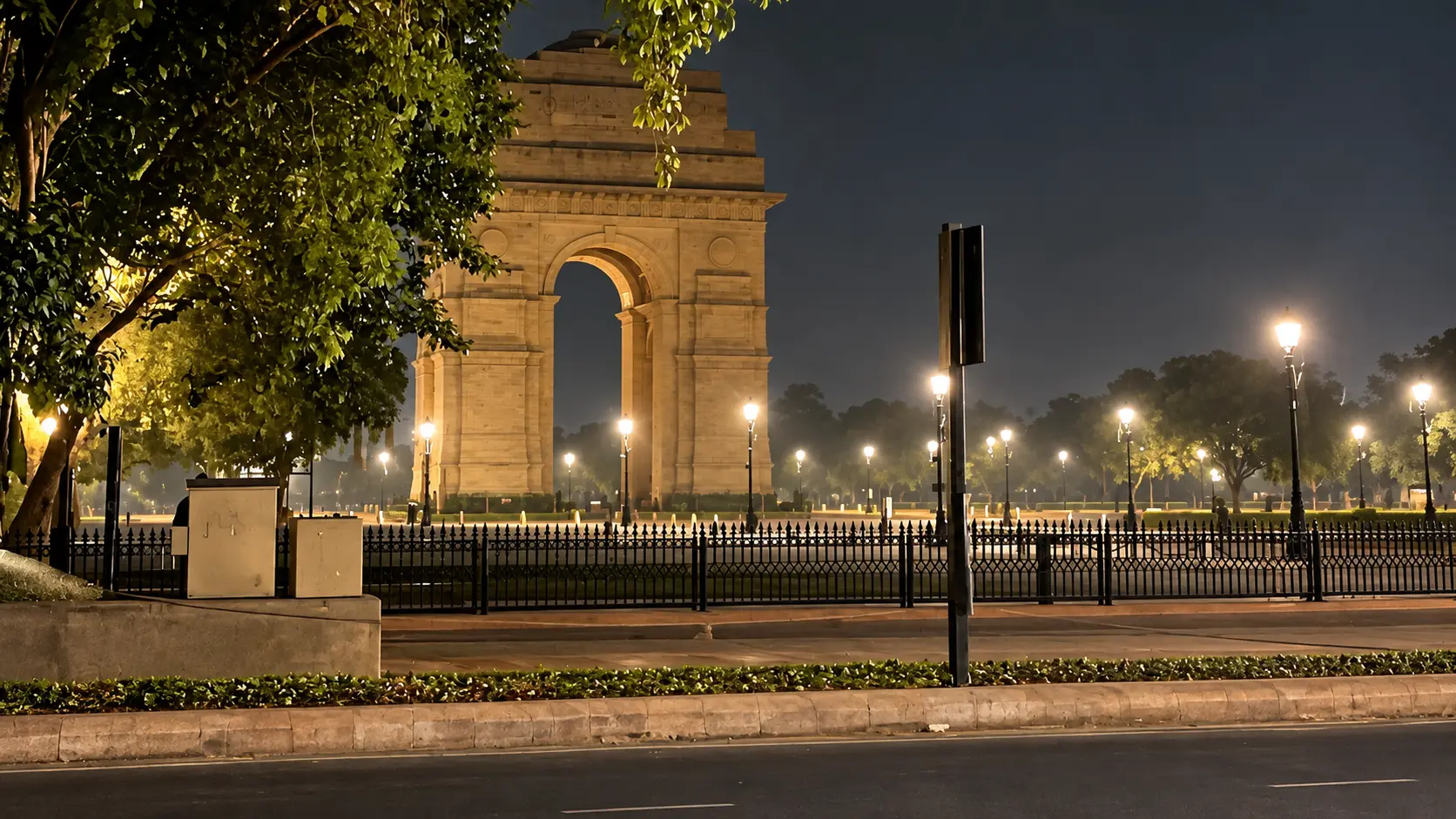
- India Gate & Kartavya Path (~4 km northwest via Lodhi Road): Sir Edwin Lutyens’ monumental 42-meter triumphal war arch memorial, set amidst sweeping manicured lawns and evening street-food promenades.
- Lodhi Gardens (~3.5 km west along Lodhi Road): A glorious 90-acre historic public park containing the 15th-century royal domed tombs of the Sayyid and Lodi dynasties set amidst ancient neem trees and jogging paths.
In pictures
The practical bits
Before you go.
Recommended Time Commitment
Plan to spend at least 2.0 to 3.5 hours inside the complex.Explore detailsClose details
Plan to spend at least 2.0 to 3.5 hours inside the complex. The 30-acre site encompasses not only Humayun's grand mausoleum, but also the octagonal tomb of Isa Khan, Bu Halima's garden, Arab Sarai, Barber's Tomb, and the underground site museum. Rushing through the complex in an hour prevents you from appreciating the intricate architectural details and tranquil garden atmosphere.
The Ideal Walking Itinerary
Explore detailsClose details
03:00 PM - 03:45 PM
Enter through the main gate.Explore detailsClose details
Enter through the main gate. Turn right immediately to explore the 1547 octagonal tomb and mosque of Isa Khan Niyazi, admiring the vibrant turquoise and yellow glazed tiles. Pass through Bu Halima's Garden. 2.
03:45 PM - 05:00 PM
Enter the monumental western gate into the Charbagh.Explore detailsClose details
Enter the monumental western gate into the Charbagh. Walk along the stone causeways to the central red sandstone mausoleum. Ascend the steep south staircase to the elevated 7-meter terrace, circumambulate the open platform, and step inside the central chamber to view the marble cenotaph and exquisite marble jali screens. Watch the red sandstone turn a glowing crimson during late afternoon golden hour. 3.
05:00 PM - 05:30 PM
Walk to the southeastern corner of the gardens to view the Barber’s Tomb (Nai-ka-Gumbad) and the high walls of…Explore detailsClose details
Walk to the southeastern corner of the gardens to view the Barber’s Tomb (Nai-ka-Gumbad) and the high walls of Arab Sarai. 4.
05:30 PM - 06:30 PM
Exit the garden gates and visit the newly opened Underground Site Interpretation Museum to inspect authentic…Explore detailsClose details
Exit the garden gates and visit the newly opened Underground Site Interpretation Museum to inspect authentic Mughal artifacts, miniature paintings, and architectural models.
Footwear Advice
Exploring the complex involves walking over 2 to 3 kilometers across paved stone causeways, gravel paths, and…Explore detailsClose details
Exploring the complex involves walking over 2 to 3 kilometers across paved stone causeways, gravel paths, and steep masonry staircases. Wear comfortable walking shoes or sneakers with good traction. When entering the upper terrace and the inner cenotaph chamber, visitors are requested to either remove their shoes or slip shoe covers over them.
Combining with Sunder Nursery
Humayun’s Tomb shares a continuous heritage boundary wall with Sunder Nursery, Delhi's magnificent 90-acre…Explore detailsClose details
Humayun’s Tomb shares a continuous heritage boundary wall with Sunder Nursery, Delhi's magnificent 90-acre heritage ecological park. A dedicated pedestrian heritage gateway connects the two complexes. Pairing a morning or afternoon at Humayun’s Tomb with a stroll through the botanical gardens, lotus ponds, and artisanal cafes of Sunder Nursery creates one of the most delightful day-trips in northern India.
A few things you might wonder
Common questions about visiting Humayun's Tomb. Fees, visiting hours and ceremonies are researched details that may change; confirm current arrangements with the operator before travelling.
What are the opening and closing hours of Humayun's Tomb?
How much is the entry ticket to Humayun's Tomb?
How does Humayun's Tomb relate to the Taj Mahal?
Who commissioned and built Humayun's Tomb?
Why is it called the "Dormitory of the Mughals"?
Which metro station is closest to Humayun's Tomb?
Can I conduct a professional photoshoot or bring a tripod?
Can I walk directly from Humayun's Tomb to Sunder Nursery?
Explore more in New Delhi
Discover other destinations around this hub
More Hubs in Delhi Ncr
Continue exploring other travel hubs in this state
Planning a trip to New Delhi?