National Museum
Visit the National Museum in New Delhi. Discover the Indus Valley Dancing Girl, sacred Buddha relics, Mughal miniatures, Chola bronzes, tickets, timings, and guide.
Location
New Delhi, Delhi NCR
A closer look
Your visit, at a glance.
New Delhi, Delhi Ncr
GET TO KNOW THE PLACE
---
The story of National Museum
Start here. Open a tile for the full details.
Why goRead details
For anyone seeking to understand the civilizational depth, philosophical breadth, and artistic brilliance of India, the National Museum in New Delhi is an indispensable pilgrimage. Located on Janpath just steps from the monumental ceremonial axis of Kartavya Path, this grand institution is India's preeminent cultural storehouse and one of the finest encyclopedic museums in the Eastern Hemisphere. Within its stately galleries, spanning three expansive floors, are preserved more than 200,000 individual works of art, archaeology, epigraphy, and decorative craftsmanship, spanning over 5,000 continuous years of human imagination - from the dawn of the Bronze Age Indus Valley Civilization to the vibrant tribal traditions of the 20th century.
When to visitRead details
- October to March (Autumn to Early Spring): The premier season for touring Delhi. Temperatures outside range between 12°C and 25°C, making it pleasant to walk from nearby metro stations and combine your museum tour with a stroll down Kartavya Path to India Gate. Visiting on sunny winter afternoons provides optimal natural illumination through the museum’s central courtyard.
- April to June (Summer): When Delhi's outdoor temperatures climb above 40°C to 44°C, the National Museum serves as an ideal air-conditioned intellectual oasis. Spend three to four comfortable hours exploring the cool interior galleries during the hottest midday hours (11:30 AM to 03:30 PM).
- July to September (Monsoon): An excellent indoor refuge during sudden monsoon downpours. The museum's galleries remain dry, calm, and relatively uncrowded on rainy weekdays.
Entry & permissionsRead details
Fees, visiting hours and entry rules may change. Confirm the latest details with the official operator or local authority before travelling.
Entry Fees and Ticket Structure
Admission to the National Museum is structured as follows:
- Indian Citizens, SAARC, and BIMSTEC Nationals: ₹20 per adult.
- Foreign Tourists (Non-SAARC / Non-BIMSTEC): ₹650 per adult. This international ticket includes a complimentary rental voucher for the multilingual audio guide (worth ₹150).
- Bonafide Students: ₹1 per student upon presenting a valid, current photo identification card from a recognized educational institution.
- Children: Free admission for all children up to 12 years of age.
- Payment Modes: Tickets can be purchased at the main ticketing counters inside the reception lobby using cash, debit/credit cards, and UPI digital payments, or online in advance via the official National Museum ticketing portal.
Timings and Operating Schedules
- Museum Operating Hours: Open Tuesday through Sunday from 10:00 AM to 06:00 PM.
- Gallery Closures: Display galleries begin closing at 05:30 PM.
- Ticket Counter Hours: The physical ticket counters close at 05:00 PM.
- WEEKLY CLOSURE: The National Museum is STRICTLY CLOSED ON MONDAYS throughout the year.
- Gazetted Holiday Closures: The museum is closed on three mandatory national holidays: Republic Day (January 26), Independence Day (August 15), and Mahatma Gandhi Jayanti (October 2).
Photography, Videography and Audio Guide Regulations
- Handheld Still Photography: Permitted throughout the permanent display galleries for personal, non-commercial purposes. A nominal camera permit fee (₹20) may apply for DSLR cameras, while mobile phone photography is generally included with admission.
- Strictly Prohibited Equipment: The use of flash photography, camera tripods, monopods, selfie sticks, external lighting rigs, and video cameras is strictly banned in all display halls to prevent light damage to ancient organic pigments and ensure unhindered visitor flow.
- Commercial Filming & Research: Commercial documentary filming, professional photoshoots, and specialized reproduction of antiquities require prior written permission, security vetting, and permit fee clearance from the Director General, National Museum.
- Audio Guides: Multilingual audio guide units can be rented at the central rotunda desk in English, Hindi, German, French, and Japanese. A valid photo ID or refundable security deposit is required for rental.
Security and Cloakroom Protocols
- All visitors must pass through security screening and metal detectors at the entrance lobby.
- Backpacks, large day bags, umbrellas, food, beverages, and liquids (except clear water bottles) must be deposited at the free visitor cloakroom located beside the security checkpoint before entering the display galleries. Small personal handbags and wallets are permitted inside.
Plan your visitRead details
The National Museum is located at the intersection of Janpath and Maulana Azad Road (PIN: 110011), in the high-security Central Vista zone of New Delhi, directly between Kartavya Path and the ministerial secretariats.
Explore the full guide - choose a topic below.
Why visit?
For anyone seeking to understand the civilizational depth, philosophical breadth, and artistic brilliance of…Explore detailsClose details
For anyone seeking to understand the civilizational depth, philosophical breadth, and artistic brilliance of India, the National Museum in New Delhi is an indispensable pilgrimage. Located on Janpath just steps from the monumental ceremonial axis of Kartavya Path, this grand institution is India's preeminent cultural storehouse and one of the finest encyclopedic museums in the Eastern Hemisphere. Within its stately galleries, spanning three expansive floors, are preserved more than 200,000 individual works of art, archaeology, epigraphy, and decorative craftsmanship, spanning over 5,000 continuous years of human imagination - from the dawn of the Bronze Age Indus Valley Civilization to the vibrant tribal traditions of the 20th century.
What distinguishes the National Museum from all other cultural repositories in South Asia is the sheer density of world-famous masterworks that define the global canon of Indian art history. Here, visitors can stand face-to-face with the iconic Dancing Girl of Mohenjo-daro (circa 2500 BCE) - a four-inch lost-wax cast bronze figurine of astonishing poise and vitality that remains the supreme artistic symbol of the Harappan world. A few halls away, visitors encounter the sacred Kapilavastu Relics, containing the authenticated 5th-century BCE bone fragments of Lord Gautama Buddha discovered during Archaeological Survey of India excavations at Piprahwa, enshrined beneath an ornate golden pagoda pavilion gifted by the Kingdom of Thailand.
Beyond individual masterpieces, the museum offers an immersive narrative of artistic evolution through India's golden ages. Behold the majestic 5th-century terracotta river goddesses Ganga and Yamuna from Ahichchhatra, the serene stone Buddhas of Sarnath and Gandhara, the dynamic bronze Nataraja of the Chola dynasty embodying cosmic dance and dissolution, and more than 17,000 exquisite miniature paintings from the imperial Mughal, Rajasthani, Deccani, and Pahari royal ateliers. Featuring rare manuscripts such as the illustrated Persian Baburnama, Sir Aurel Stein's ancient Silk Road silk paintings and frescoes from Central Asia, and the resplendent arms of Rajput and Mughal emperors, the National Museum provides an awe-inspiring encounters with the living soul of Indian heritage in a modern, climate-controlled setting.
What to expect
Visiting the National Museum is an expansive cultural expedition across three floors of permanent galleries…Explore detailsClose details
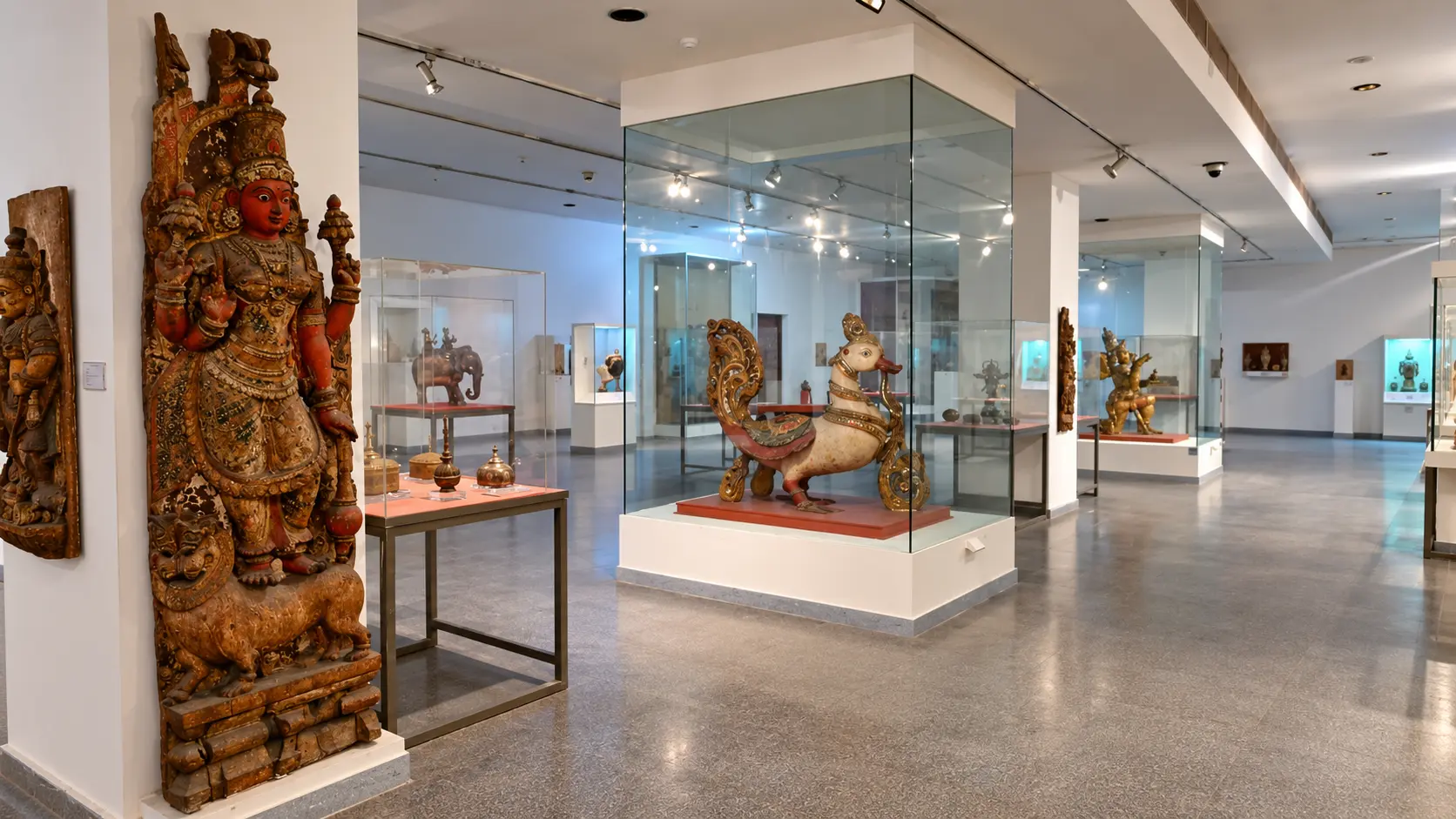
Visiting the National Museum is an expansive cultural expedition across three floors of permanent galleries, centered around an open circular central rotunda. Due to the vast scale of the collections, a comprehensive exploration requires several hours of engaged walking. The museum is equipped with modern climate control, bilingual interpretive signage in English and Hindi, and an excellent audio guide system.
Ground Floor: Archaeology, Antiquity, and Classical Sculpture
The ground floor houses the museum's foundational archaeological collections and classical stone and bronze sculptures, representing the core chronological spine of ancient Indian art:
- The Harappan Civilization Gallery: The museum's most celebrated collection and the world's premier repository of Indus Valley antiquities, displaying over 3,800 artifacts excavated from Mohenjo-daro, Harappa, Rakhigarhi, Kalibangan, Lothal, and Dholavira.
- The Dancing Girl (c. 2500 BCE): The undisputed star of the museum, this 10.5-centimeter bronze statuette, discovered by Ernest Mackay at Mohenjo-daro in 1926, depicts a young woman standing with her right hand resting insolently on her hip, her left arm covered in bangles, and her head tilted upward in timeless confidence. Cast using the sophisticated cire-perdue (lost-wax) technique, it reveals the technical virtuosity of Bronze Age metallurgists.
- The Mother Goddess & Steatite Seals: Other iconic treasures include the elaborate terracotta Mother Goddess figurine with a fan-shaped headdress, the famous steatite Pashupati Seal (depicting a seated horned yogic figure surrounded by wild animals, regarded as a prototype of Shiva), the Unicorn Seal, bronze bull carts, carnelian bead necklaces, and precision cubical stone weights.
- Early Historical & Maurya-Shunga-Satavahana Art: Displays monumental stone sculptures and architectural fragments dating from the 3rd century BCE to the 1st century CE. Notable highlights include carved sandstone crossbars and coping stones from the 2nd-century BCE Bharhut Stupa, exquisite limestone narrative medallions from the Amaravati Stupa depicting jataka tales, and early stone Yaksha figures.
- Kushana Dynasty (Gandhara & Mathura Art): Illustrates the simultaneous emergence of the anthropomorphic image of the Buddha in the 1st to 3rd centuries CE across two distinct stylistic traditions:
- Gandhara School: Grey schist stone sculptures influenced by Hellenistic and Roman classical aesthetics, portraying the Buddha with realistic flowing drapery, wavy hair, and sharp classical facial features.
- Mathura School: Spotted red sandstone sculptures crafted with robust, indigenous vitality, depicting standing Buddhas, dynamic Yakshis, and early Hindu deities.
- Gupta Dynasty Gallery (4th - 6th Century CE): Represents the golden age of classical Indian art, characterized by sublime spiritual serenity, refined anatomy, and harmonious proportions. The gallery features the famous life-sized terracotta statues of the river goddesses Ganga and Yamuna (excavated from Ahichchhatra), standing upon their mythical vehicles (the makara and the tortoise), as well as serene seated Buddhas from Sarnath and intricately carved stone Mukhalingas.
- Medieval Indian Sculptures: Showcases the regional diversification of medieval temple art from the 7th to 13th centuries CE, featuring ornate Pala-Sena black stone sculptures from Bengal and Bihar, erotic and celestial sandstone carvings from Khajuraho (Chandella dynasty), intricate chlorite schist carvings from the Hoysala dynasty of Karnataka, and towering South Indian granite sculptures.
- South Indian Bronzes: One of the world's finest collections of Chola, Pallava, and Vijayanagara metal casting. Centered in the gallery is the magnificent 12th-century Chola bronze Nataraja (Shiva as the Lord of Cosmic Dance), balanced within a ring of flames on the dwarf of ignorance (Apasmara), widely recognized as one of humanity's supreme sculptural triumphs.
First Floor: Manuscripts, Relics, and Miniature Paintings
The first floor transitions from stone into the delicate worlds of sacred relics, illuminated manuscripts, textiles, and miniature paintings:
- The Buddhist Art Gallery & The Holy Kapilavastu Relics: The spiritual heart of the museum. In the center of this darkened, reverent chamber sits a stunning gilded Thai-style pagoda shrine housing the Sacred Bone Relics of Lord Gautama Buddha. Discovered by the Archaeological Survey of India during scientific excavations at Piprahwa (identified as ancient Kapilavastu, Uttar Pradesh) in the 1970s, these authenticated relics are accompanied by soapstone caskets, gold flowers, and inscribed Brahmi urns dating to the 5th century BCE. The surrounding gallery displays Buddhist art from across Asia, including Tibetan thangkas, Nepalese gilt bronzes, and Burmese lacquerware.
- The Miniature Painting Gallery: Preserving over 17,000 paintings, this gallery is an unmatched visual feast of Indian pictorial art from the 10th to 19th centuries:
- Mughal Atelier: Masterpieces commissioned by Emperors Akbar, Jahangir, and Shah Jahan, featuring realistic court portraits, natural history studies, and dynamic battlefield illustrations from the Akbarnama and Hamzanama.
- Rajasthani Schools: Characterized by bold primary colors, intense emotional drama, and lyrical devotion, including paintings from Mewar, Bundi, Kota, and Kishangarh - featuring the legendary Bani Thani (often called the "Mona Lisa of India") painted by Nihal Chand.
- Pahari Schools: Delicate, romantic masterpieces from the Himalayan foothills, particularly the Kangra, Basohli, and Guler schools, illustrating the divine love of Radha and Krishna and episodes from the Gita Govinda.
- Manuscripts Gallery: Houses over 14,000 rare historical manuscripts in Sanskrit, Persian, Arabic, Prakrit, and Tibetan written on palm leaf, birch bark (bhojpatra), parchment, and paper. Highlights include an illustrated copy of the Baburnama in Persian containing 122 original miniature paintings, royal firmans, illuminated Qurans with calligraphy in pure gold, and ancient Buddhist sutras.
Second Floor: Decorative Arts, Arms, Textiles, and Global Collections
The upper floor celebrates Indian material culture, craftsmanship, and historic international linkages:
- Decorative Arts & Royal Jewellery: Displays masterworks of royal luxury, including carved Mughal jade vessels - most notably Emperor Jahangir's personal nephrite jade wine cup inscribed with his royal titles - intricate ivory carvings, silver hookahs, bidriware, and royal thrones. On special occasions, portions of the legendary Nizam of Hyderabad Jewellery Collection (including the colossal 185-carat Jacob Diamond) are exhibited here under high security.
- Arms and Armour Gallery: Features historic weaponry spanning six centuries, including decorated steel swords, damascened daggers (pesh-kabz), ornate matchlocks, tiger claws (bagh nakh), chainmail coats, and the personal swords and breastplates attributed to Rajput hero Maharana Pratap and Mughal Emperor Akbar.
- Central Asian Antiquities Gallery: Contains rare silk paintings, clay sculptures, textiles, and paper documents collected by the explorer Sir Aurel Stein during his pioneering expeditions along the ancient Silk Road in Xinjiang and Dunhuang (including the Caves of the Thousand Buddhas) in the early 20th century.
- Sharan Rani Backliwal Gallery of Musical Instruments: A fascinating collection of over 400 Indian classical, folk, and tribal musical instruments donated by the renowned sarod maestro Sharan Rani, including rare 18th-century rudra veenas, mayuri sitars, pakhawajs, and tabla sets.
- Pre-Columbian and Western Art: A specialized gallery showcasing rare pre-Columbian pottery, gold figurines, and textiles from the ancient Nazca, Mochica, and Mayan civilizations of South and Central America, donated by Alice and Nasli Heeramaneck.
Best time to visit
Because the National Museum is completely enclosed, air-conditioned, and climate-controlled, it can be enjoyed…Explore detailsClose details
Seasonal Guide
Because the National Museum is completely enclosed, air-conditioned, and climate-controlled, it can be enjoyed with equal comfort during any season of the year:
- October to March (Autumn to Early Spring): The premier season for touring Delhi. Temperatures outside range between 12°C and 25°C, making it pleasant to walk from nearby metro stations and combine your museum tour with a stroll down Kartavya Path to India Gate. Visiting on sunny winter afternoons provides optimal natural illumination through the museum’s central courtyard.
- April to June (Summer): When Delhi's outdoor temperatures climb above 40°C to 44°C, the National Museum serves as an ideal air-conditioned intellectual oasis. Spend three to four comfortable hours exploring the cool interior galleries during the hottest midday hours (11:30 AM to 03:30 PM).
- July to September (Monsoon): An excellent indoor refuge during sudden monsoon downpours. The museum's galleries remain dry, calm, and relatively uncrowded on rainy weekdays.
Optimal Time of Day and Week
- Weekday Mornings (Tuesday to Friday, 10:00 AM - 01:00 PM): The absolute finest time to visit. Check the current visiting hours and permitted access with the site operator before departure; ceremonies, closures and visitor sessions can affect access.
- Weekends (Saturday & Sunday): Experience significantly higher crowd volumes, especially in the Harappan and Miniature Painting rooms. If visiting on weekends, arrive early or after 02:30 PM.
- Note on Monday Closures: The museum is STRICTLY CLOSED ON MONDAYS all year round for gallery cleaning, inventory audit, and conservation work.
How to reach
The National Museum is located at the intersection of Janpath and Maulana Azad Road (PIN: 110011), in the…Explore detailsClose details
The National Museum is located at the intersection of Janpath and Maulana Azad Road (PIN: 110011), in the high-security Central Vista zone of New Delhi, directly between Kartavya Path and the ministerial secretariats.
By Delhi Metro
Confirm the current charge and what it includes with the operator or service provider. Visitor admission, vehicles, parking, activities and accommodation can have separate charges.
- Udyog Bhawan Metro Station (Yellow Line [Line 2]): The closest metro station, located approximately 700 meters south along Janpath. Taking Gate 2, it is a direct, tree-shaded 8-to-10-minute walk northward along Janpath past the national archives directly to the museum's main entrance.
- Central Secretariat Metro Station (Yellow Line [Line 2] & Violet Line [Line 6] Interchange): Positioned roughly 900 meters west along Maulana Azad Road. Exiting from Gate 3, visitors can walk east along Maulana Azad Road past Vigyan Bhavan in about 10 to 12 minutes, or take a 2-minute battery e-rickshaw ride.
- Janpath Metro Station (Violet Line [Line 6]): Located roughly 1.2 kilometers north along Janpath. A pleasant 15-minute walk south past the Eastern Court and cultural centers, or a brief 3-minute autorickshaw ride.
By Road, Taxis, and Autos
- Approaching Roads: The museum is situated right at the corner of Janpath and Maulana Azad Road, easily accessed from Connaught Place (via Janpath), South Delhi (via Aurobindo Marg and Janpath), or India Gate (via Kartavya Path and Maulana Azad Road).
- App-Based Taxis & Auto-Rickshaws: Ride-hailing services (Uber, Ola, BluSmart) and three-wheeled autorickshaws have designated drop-off bays along the Janpath service lane right outside the museum reception gate.
- Self-Driving & Parking: On-site surface parking is available inside the museum compound for visitors arriving by private vehicle, entered via the Maulana Azad Road gate. Additional paid municipal parking is available nearby on Janpath.
From Major Transit Hubs
- From New Delhi Railway Station (NDLS): Approximately 4 kilometers north. Direct 10-minute metro ride on the Yellow Line from New Delhi Station to Udyog Bhawan or Central Secretariat, followed by a brief walk.
- From Hazrat Nizamuddin Railway Station (NZM): Approximately 6 kilometers east. A 15-minute taxi or auto ride down Lodhi Road and Janpath, or take the Pink Line to Lajpat Nagar and interchange to the Violet Line to Central Secretariat.
- From Old Delhi Railway Station (DLI): Approximately 7.5 kilometers north. Direct ride on the Yellow Line from Chandni Chowk to Udyog Bhawan (approx. 15 minutes).
- From Indira Gandhi International Airport (DEL): Positioned roughly 14 kilometers southwest. Take the Airport Express Orange Line from Terminal 3 to New Delhi Station and transfer to the Yellow Line down to Udyog Bhawan, or take a pre-paid taxi via Dhaula Kuan and Sardar Patel Marg (approx. 30 to 45 minutes).
Entry, timings and permissions
Fees, visiting hours and entry rules may change.Explore detailsClose details
Fees, visiting hours and entry rules may change. Confirm the latest details with the official operator or local authority before travelling.
Entry Fees and Ticket Structure
Admission to the National Museum is structured as follows:
- Indian Citizens, SAARC, and BIMSTEC Nationals: ₹20 per adult.
- Foreign Tourists (Non-SAARC / Non-BIMSTEC): ₹650 per adult. This international ticket includes a complimentary rental voucher for the multilingual audio guide (worth ₹150).
- Bonafide Students: ₹1 per student upon presenting a valid, current photo identification card from a recognized educational institution.
- Children: Free admission for all children up to 12 years of age.
- Payment Modes: Tickets can be purchased at the main ticketing counters inside the reception lobby using cash, debit/credit cards, and UPI digital payments, or online in advance via the official National Museum ticketing portal.
Timings and Operating Schedules
- Museum Operating Hours: Open Tuesday through Sunday from 10:00 AM to 06:00 PM.
- Gallery Closures: Display galleries begin closing at 05:30 PM.
- Ticket Counter Hours: The physical ticket counters close at 05:00 PM.
- WEEKLY CLOSURE: The National Museum is STRICTLY CLOSED ON MONDAYS throughout the year.
- Gazetted Holiday Closures: The museum is closed on three mandatory national holidays: Republic Day (January 26), Independence Day (August 15), and Mahatma Gandhi Jayanti (October 2).
Photography, Videography and Audio Guide Regulations
- Handheld Still Photography: Permitted throughout the permanent display galleries for personal, non-commercial purposes. A nominal camera permit fee (₹20) may apply for DSLR cameras, while mobile phone photography is generally included with admission.
- Strictly Prohibited Equipment: The use of flash photography, camera tripods, monopods, selfie sticks, external lighting rigs, and video cameras is strictly banned in all display halls to prevent light damage to ancient organic pigments and ensure unhindered visitor flow.
- Commercial Filming & Research: Commercial documentary filming, professional photoshoots, and specialized reproduction of antiquities require prior written permission, security vetting, and permit fee clearance from the Director General, National Museum.
- Audio Guides: Multilingual audio guide units can be rented at the central rotunda desk in English, Hindi, German, French, and Japanese. A valid photo ID or refundable security deposit is required for rental.
Security and Cloakroom Protocols
- All visitors must pass through security screening and metal detectors at the entrance lobby.
- Backpacks, large day bags, umbrellas, food, beverages, and liquids (except clear water bottles) must be deposited at the free visitor cloakroom located beside the security checkpoint before entering the display galleries. Small personal handbags and wallets are permitted inside.
Nearby places to consider
Its central location on Janpath places the National Museum within minutes of some of Delhi’s most famous national…Explore detailsClose details
Its central location on Janpath places the National Museum within minutes of some of Delhi’s most famous national monuments, art galleries, and civic spaces:
Kartavya Path and India Gate
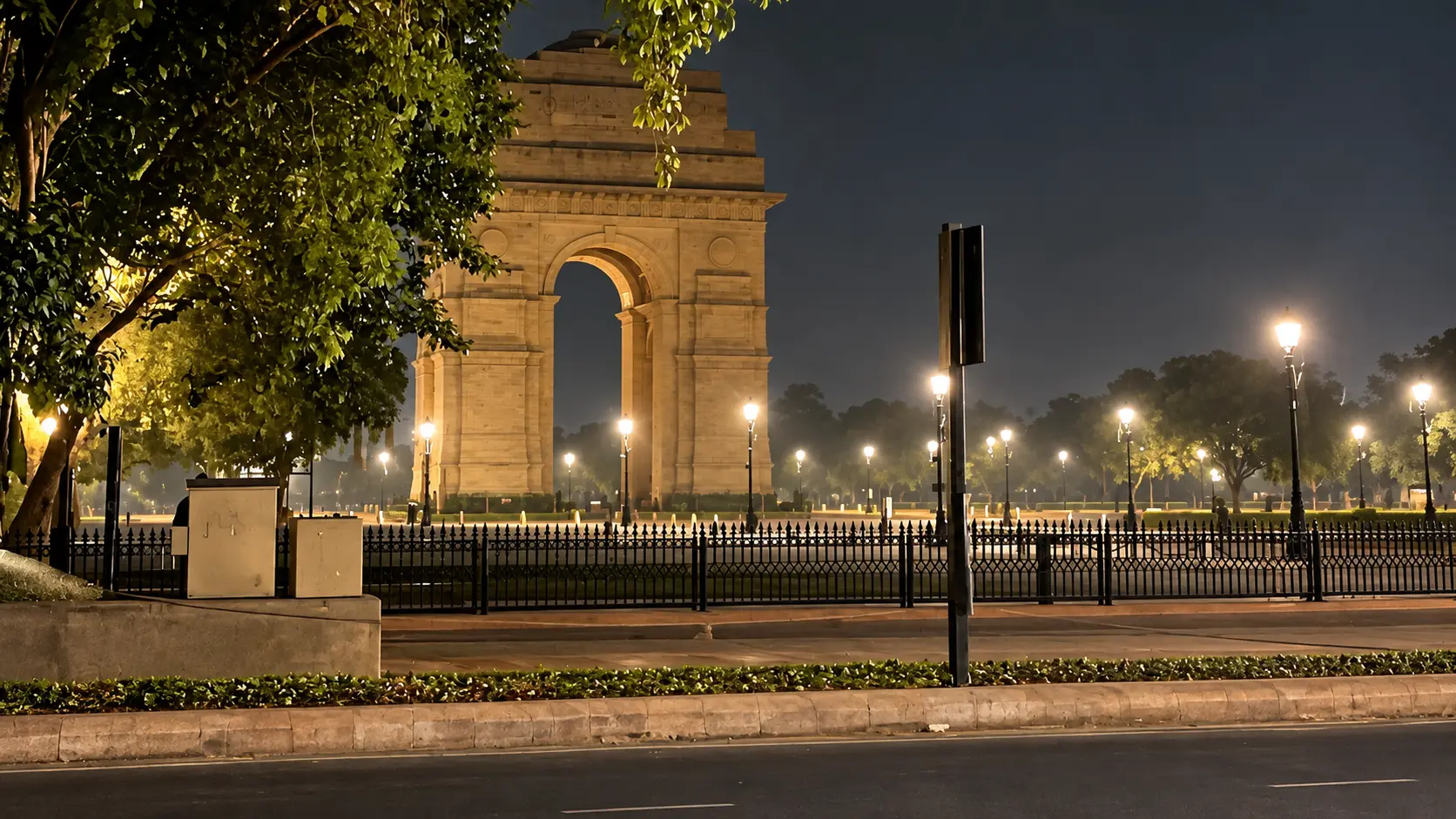
Located just 1.2 kilometers east along Maulana Azad Road and Kartavya Path (a 15-minute walk or 3-minute auto ride), India Gate is the nation's 42-meter triumphal war memorial arch. Combine your morning museum exploration with a late afternoon walk down the newly revamped Kartavya Path promenades, visit the 40-acre National War Memorial, and view the monumental black granite statue of Netaji Subhas Chandra Bose as twilight descends.
Rashtrapati Bhavan and Central Vista
Situated roughly 1.5 kilometers west along Rajpath atop Raisina Hill, Rashtrapati Bhavan is the official 340-room residence of the President of India, designed by Sir Edwin Lutyens. Visitors can book online guided tours of the presidential state rooms and the subterranean Rashtrapati Bhavan Museum, or stroll through the world-famous Amrit Udyan (Mughal Gardens) during its public opening season in February and March.
National Gallery of Modern Art (NGMA)
Located approximately 1.5 kilometers east at the India Gate C-Hexagon (housed in historic Jaipur House), the NGMA is India's premier institution for modern and contemporary visual art. It showcases world-renowned masterpieces by Raja Ravi Varma, Amrita Sher-Gil, Rabindranath Tagore, Jamini Roy, and the post-independence Progressive Artists' Group, offering a seamless artistic continuation from the ancient and medieval antiquities of the National Museum.
Indira Gandhi National Centre for the Arts (IGNCA)
Situated just 600 meters north along Janpath, the IGNCA is a premier government cultural institution dedicated to research, visual arts, and interdisciplinary folklore. It regularly hosts revolving temporary art exhibitions, cultural symposiums, open-air craft bazaars, and classical music concerts.
Gurudwara Bangla Sahib
Located roughly 2.2 kilometers northwest along Ashoka Road (a 7-minute auto ride or direct Yellow Line metro ride to Patel Chowk), Gurudwara Bangla Sahib is Delhi's most revered Sikh pilgrimage shrine, featuring a shimmering gold dome, a sacred healing sarovar, and a free community kitchen (langar) that operates round the clock.
In pictures
The practical bits
Before you go.
Plan ahead
To make the most of the National Museum's colossal collection without succumbing to museum fatigue, follow these…Explore detailsClose details
To make the most of the National Museum's colossal collection without succumbing to museum fatigue, follow these strategic guidelines:
Prioritize Core Masterpiece Highlights
If you have only two to three hours, focus your tour on the museum's "Big Four" galleries: 1.Explore detailsClose details
If you have only two to three hours, focus your tour on the museum's "Big Four" galleries:
- The Harappan Gallery on the ground floor (Dancing Girl, seals, terracotta Mother Goddess).
- The Gupta and Classical Sculpture Galleries on the ground floor (Ganga, Yamuna, Sarnath Buddhas).
- The Chola Bronze Gallery on the ground floor (Nataraja dancing Shiva).
- The Buddhist Art Gallery on the first floor (Kapilavastu holy relics of Lord Buddha).
Utilize the Audio Guide
Renting the official multilingual audio guide at the central rotunda desk significantly enhances the experience.Explore detailsClose details
Renting the official multilingual audio guide at the central rotunda desk significantly enhances the experience. The audio tour covers approximately 80 highlighted masterworks, providing rich historical context, iconographic decoding, and cultural backstories that are not fully captured in the wall labels.
Pacing and Rest Breaks
Do not attempt to read every single display label, as over 200,000 items are exhibited across three massive floors.Explore detailsClose details
Do not attempt to read every single display label, as over 200,000 items are exhibited across three massive floors. Plan a mid-visit rest break at the ground-floor Museum Cafe, where you can enjoy hot South Indian filter coffee, tea, and light snacks, or sit on the shaded stone benches of the museum's landscaped inner garden courtyard before heading to the upper floors.
Browsing the Publications Bookshop
Before leaving, allocate 20 minutes to browse the National Museum Publications and Souvenir Bookshop located near…Explore detailsClose details
Before leaving, allocate 20 minutes to browse the National Museum Publications and Souvenir Bookshop located near the exit lobby. The shop offers an exceptional selection of authoritative scholarly monographs, high-quality art prints, postcards, and certified plaster-cast replicas of the Harappan Dancing Girl, Ashokan lion capitals, and Kushana Buddhas at very affordable government prices.
A few things you might wonder
Common questions about visiting National Museum. Fees, visiting hours and ceremonies are researched details that may change; confirm current arrangements with the operator before travelling.
Where is the National Museum located, and how do I reach it by metro?
What are the opening hours of the National Museum, and is it closed on any day?
How much does the entry ticket cost, and are there student discounts?
Where is the famous Harappan "Dancing Girl" statue located inside the museum?
Does the National Museum house the holy relics of Lord Gautama Buddha?
Is photography permitted inside the National Museum galleries?
Are audio guides available, and in which languages?
Is the National Museum wheelchair accessible, and are there dining facilities on-site?
Explore more in New Delhi
Discover other destinations around this hub
More Hubs in Delhi Ncr
Continue exploring other travel hubs in this state
Planning a trip to New Delhi?