Gurudwara Bangla Sahib
Visit Gurudwara Bangla Sahib in Connaught Place, New Delhi. Complete guide covers 24/7 timings, Guru Ka Langar, sacred sarovar, history, and visitor etiquette.
Location
New Delhi, Delhi NCR
A closer look
Your visit, at a glance.
New Delhi, Delhi Ncr
GET TO KNOW THE PLACE
In the pulsing heart of India's capital city, just south of the colonial colonnades of Connaught Place along Ashoka Road, stands a luminous sanctuary of white marble, shimmering…
The story of Gurudwara Bangla Sahib
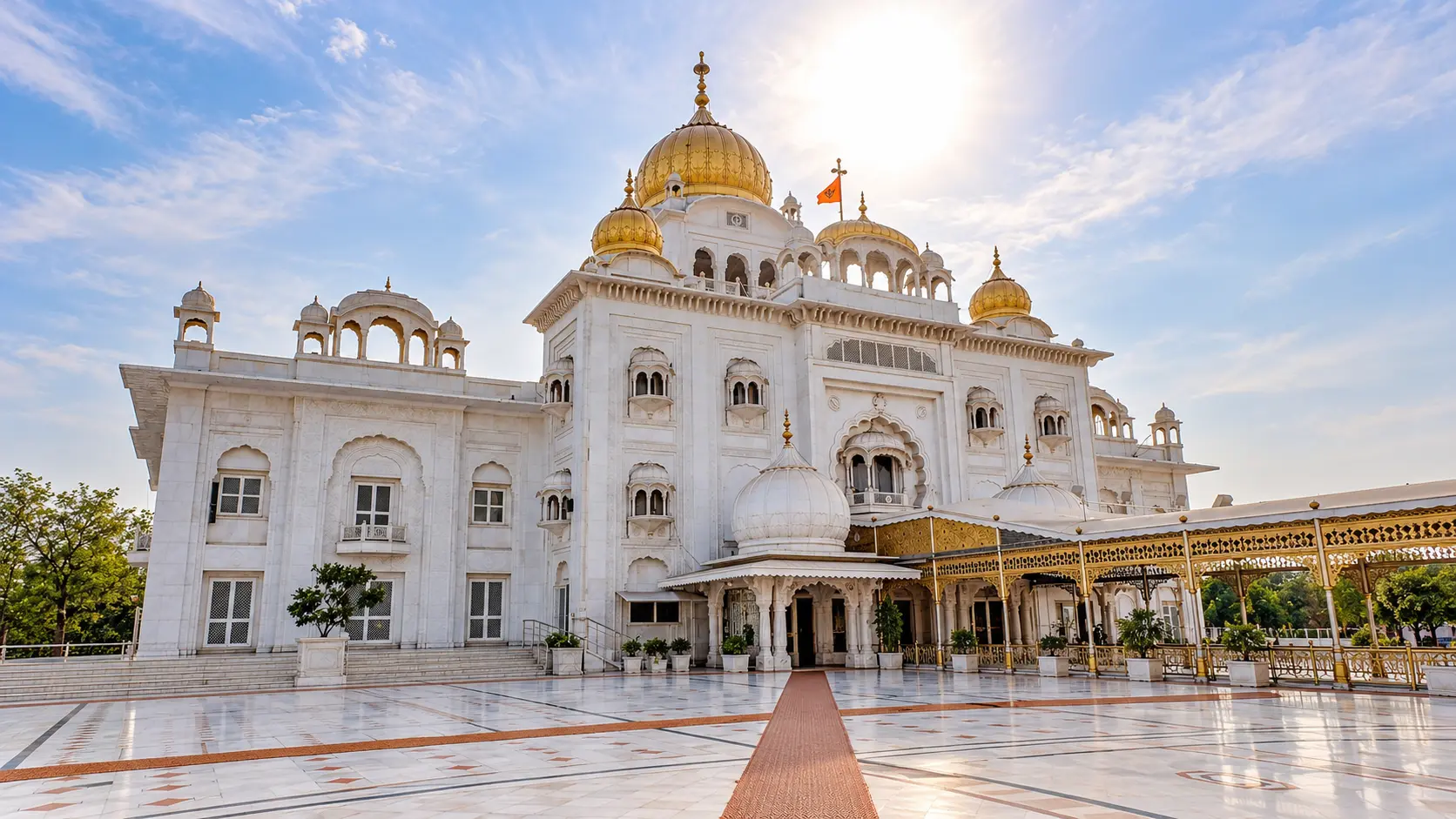
In the pulsing heart of India's capital city, just south of the colonial colonnades of Connaught Place along Ashoka Road, stands a luminous sanctuary of white marble, shimmering golden domes, and boundless human compassion: Gurudwara Bangla Sahib. Administered by the Delhi Sikh Gurdwara Management Committee (DSGMC), this world-renowned Sikh pilgrimage shrine is not merely an architectural landmark of transcendent beauty; it is an active, beating spiritual sanctuary that exemplifies the core tenets of Sikhism - unconditional equality, selfless service (seva), and divine devotion.
The sacred ground on which Bangla Sahib rests has a poignant and deeply moving history. In the mid-17th century, this estate was the expansive palatial bungalow (bangla) of Mirza Raja Jai Singh I of Amber (Jaipur), one of the foremost military commanders and statesmen in the Mughal court of Emperor Aurangzeb. In 1664, the Eighth Sikh Guru, Sri Guru Har Krishan Ji, was invited to Delhi. Guru Har Krishan Ji had assumed the spiritual mantle of the Guruship at the tender age of five following the passing of his father, Guru Har Rai Ji, and was revered by his followers as Bal Guru (the Child Guru) for his profound spiritual wisdom and tender purity. Raja Jai Singh hosted the young Guru at his personal estate.
During the Guru's stay in the capital, a catastrophic epidemic of smallpox and cholera swept through Delhi, killing thousands and plunging the population into panic. Rather than fleeing to safety, the eight-year-old Guru Har Krishan Ji walked fearlessly into the infected lanes of the city. He established a healing sanctuary at Raja Jai Singh’s bungalow, distributing clean drinking water from the haveli's deep well to afflicted men, women, and children of all castes, creeds, and religious persuasions. His blessings and pure water brought solace and recovery to thousands. In the process, the young Guru contracted smallpox himself and merged with the divine light on March 30, 1664, uttering the cryptic words "Baba Bakale" to signal that his successor, Guru Tegh Bahadur Ji, resided in the village of Bakala. In 1783, when the Sikh military leader General Sardar Baghel Singh captured Delhi, he commemorated the Guru's sacrifice by building a shrine over the holy well. Today, that small well has expanded into the magnificent Sarovar, whose sanctified water (amrit) is believed to possess divine healing properties, and whose doors remain open to humanity 24 hours a day, 365 days a year.
Start here. Open a tile for the full details.
Why goRead details
- A Global Beacon of Selfless Service (Seva): Experience the awe-inspiring living reality of Sikh egalitarianism at the Guru Ka Langar, where volunteers cook and serve wholesome, free vegetarian meals to between 25,000 and 50,000 people every single day.
- The Sacred Healing Sarovar: Sit along the tranquil white marble colonnades of a vast reflective water pool, watch schools of colorful carp swimming in crystalline waters, and collect the sacred amrit (holy water) revered for its historical healing legacy.
- Transcendent Gurbani Kirtan: Step inside the gold-plated Darbar Sahib to listen to continuous, deeply meditative live classical devotional singing performed by master ragis accompanied by harmonium and tabla.
- The Inspiring Legacy of Guru Har Krishan Ji: Connect with the profound historical memory of the Eighth Sikh Guru, who gave his own life at the age of eight while tending to victims of an epidemic in Delhi.
- Baba Baghel Singh Sikh Heritage Museum: Tour an educational multimedia museum beneath the complex that vividly chronicles the history of the ten Sikh Gurus, legendary martyrs, and the conquest of Delhi through rare paintings, dioramas, and artifacts. Confirm the current charge and what it includes with the operator or service provider. Visitor admission, vehicles, parking, activities and accommodation can have separate charges.
- State-of-the-Art Charitable Healthcare: Witness modern Sikh philanthropy in action at the campus polyclinic, providing heavily subsidized, world-class diagnostic MRI, CT scans, and dialysis treatments to the underprivileged.
- Effortless Central Delhi Transit: Located minutes from Connaught Place, accessible via a short walk from nearby Delhi Metro stations at Shivaji Stadium (Airport Express), Patel Chowk, or Rajiv Chowk.
When to visitRead details
Entry & permissionsRead details
Fees, visiting hours and entry rules may change. Confirm the latest details with the official operator or local authority before travelling.
Operating Schedule and Timings
- Weekly Schedule: Open all seven days of the week, 365 days a year.
- Operating Hours: Daylight visits recommended; confirm any after-dark access a Day without closure.
- Palki Sahib Ceremony: The ceremonial procession of the Sri Guru Granth Sahib Ji takes place early in the morning (Prakash at around 04:30 AM to 05:00 AM) and late at night (Sukhasan around 09:45 PM to 10:30 PM), accompanied by soulful chanting and trumpet fanfares.
- Langar Timings: Continuous meal service from approximately 09:00 AM to 03:00 PM (lunch) and 07:00 PM to 10:00 PM (dinner), with tea, prasad, and snacks served between meal services.
Admission Tariffs
- General Admission: Completely Free (₹0).
- Community Meals (Langar): Free of cost for all people without exception.
- Head Coverings & Shoe Storage: Provided free of charge.
- Voluntary Donations: Visitors wishing to make voluntary offerings (daan) can place cash donations into the designated Golak (donation chest) situated in front of the Guru Granth Sahib inside the Darbar Sahib, for which official receipts can be obtained from the DSGMC office.
Mandatory Protocols and Spiritual Etiquette
As a living sanctuary of profound sanctity, visitors of all backgrounds must strictly adhere to the following universal codes of conduct:
- Mandatory Head Covering: Everyone (men, women, and children) must completely cover their heads before entering the gurdwara premises. You may wear your own scarf, dupatta, bandana, or turban. Free, clean saffron and orange headscarves (rumals) are provided in large baskets near the entrance. Hats, baseball caps, and bare heads are strictly prohibited.
- Removal of Footwear: Shoes, sandals, and socks must be removed and safely deposited at the complimentary shoe stalls (Jora Ghar). You will receive a metal token; retain this token to retrieve your footwear when leaving.
- Cleansing of Feet: Immediately before ascending the marble staircase leading to the sanctum, all visitors must walk through a shallow, continuously flowing trough of clean water (Chharan Amrit) to wash their feet. Hand-washing basins are also provided.
- Modest Dress: Wear respectful, conservative clothing that covers the shoulders, chest, and knees. Avoid short skirts, sleeveless tank tops, or beachwear.
- Strict Prohibitions: Tobacco, cigarettes, bidis, e-cigarettes, alcohol, gutka, and all intoxicants are strictly forbidden anywhere on the premises. Carrying these items will cause offense and result in confiscation by security guards.
- Photography Restrictions: You are welcome to take personal, respectful photographs of the marble courtyard, sarovar, and gardens using your smartphone. However, photography and videography are strictly prohibited inside the inner Darbar Sahib sanctum where prayers are taking place. Always be mindful not to photograph devotees engaged in prayer or taking holy baths in the sarovar.
Plan your visitRead details
Explore the full guide - choose a topic below.
Why visit?
A Global Beacon of Selfless Service (Seva): Experience the awe-inspiring living reality of Sikh egalitarianism at…Explore detailsClose details
- A Global Beacon of Selfless Service (Seva): Experience the awe-inspiring living reality of Sikh egalitarianism at the Guru Ka Langar, where volunteers cook and serve wholesome, free vegetarian meals to between 25,000 and 50,000 people every single day.
- The Sacred Healing Sarovar: Sit along the tranquil white marble colonnades of a vast reflective water pool, watch schools of colorful carp swimming in crystalline waters, and collect the sacred amrit (holy water) revered for its historical healing legacy.
- Transcendent Gurbani Kirtan: Step inside the gold-plated Darbar Sahib to listen to continuous, deeply meditative live classical devotional singing performed by master ragis accompanied by harmonium and tabla.
- The Inspiring Legacy of Guru Har Krishan Ji: Connect with the profound historical memory of the Eighth Sikh Guru, who gave his own life at the age of eight while tending to victims of an epidemic in Delhi.
- Baba Baghel Singh Sikh Heritage Museum: Tour an educational multimedia museum beneath the complex that vividly chronicles the history of the ten Sikh Gurus, legendary martyrs, and the conquest of Delhi through rare paintings, dioramas, and artifacts. Confirm the current charge and what it includes with the operator or service provider. Visitor admission, vehicles, parking, activities and accommodation can have separate charges.
- State-of-the-Art Charitable Healthcare: Witness modern Sikh philanthropy in action at the campus polyclinic, providing heavily subsidized, world-class diagnostic MRI, CT scans, and dialysis treatments to the underprivileged.
- Effortless Central Delhi Transit: Located minutes from Connaught Place, accessible via a short walk from nearby Delhi Metro stations at Shivaji Stadium (Airport Express), Patel Chowk, or Rajiv Chowk.
What to expect
The architectural core of Bangla Sahib is the main prayer hall (Darbar Sahib), constructed from gleaming white…Explore detailsClose details
The Main Darbar Sahib and Sanctum Sanctorum
The architectural core of Bangla Sahib is the main prayer hall (Darbar Sahib), constructed from gleaming white Makrana marble and topped with an enormous, ribbed central onion dome clad in pure gold leaf. A tall, saffron-wrapped steel flagstaff, the Nishan Sahib, soars high above the courtyard, signaling to all travelers that food, sanctuary, and divine protection are available here:
- The Palki Sahib: Inside the air-conditioned, carpeted sanctum, the holy scripture of the Sikhs, the Sri Guru Granth Sahib Ji, rests upon an ornate, gold-embossed throne beneath an exquisite royal canopy. An attendant gently waves a ceremonial peacock-feather or yak-hair whisk (chaur sahib) over the scriptures in a gesture of deep sovereign reverence.
- Continuous Kirtan: Master musicians (ragis) sit on an elevated dais, singing verses from the holy scriptures set to classical Indian ragas. The divine acoustic melodies resonate throughout the marble halls and across the outdoor courtyards via unobtrusive sound systems, filling the space with soothing, meditative grace.
- Karah Prasad: As visitors exit the prayer hall, volunteers distribute hot Karah Prasad - a sacred sweet pudding made from equal measures of coarse wheat flour, pure clarified butter (ghee), sugar, and water, offered warm into cupped hands.
The Sacred Sarovar (Holy Water Tank)
Outside the main shrine lies the grand Sarovar, a massive rectangular water reservoir that replaced the original 17th-century well. Framed by a wide circumambulation walkway (parikrama) paved with alternating bands of white and dark marble:
- Reflections and Amrit: The surface of the pool acts as a mirror, capturing the dazzling reflections of the golden dome by day and sparkling floodlights by night. The water is populated by thousands of plump, colorful koi fish and carp that surface near the marble steps.
- Taking the Holy Dip (Isnan): Devotees descend the stone steps to take a sacred bath (isnan), seeking spiritual purification and physical wellness. Enclosed bathing pavilions are provided for women to ensure privacy.
- Amrit Dispensary: Beside the sarovar stands a dedicated distribution booth where volunteers dispense consecrated amrit into clean bottles and canisters for visitors to take home to elderly or ailing family members.
Guru Ka Langar (The Mega Community Kitchen)
Perhaps the most extraordinary and humbling experience at Gurudwara Bangla Sahib is visiting the Langar Hall. Rooted in the founding principles of Guru Nanak Dev Ji, langar was instituted to eradicate the rigid Hindu caste hierarchy by mandating that emperors and laborers, Brahmins and untouchables, sit side-by-side in a straight row (pangat) on the floor to partake of identical food:
- Industrial Scale Hospitality: The kitchen operates around the clock, producing hundreds of thousands of rotis (flatbreads), tons of slow-cooked black dal (dal makhani or yellow lentil soup), spiced seasonal vegetable curry, rice, and sweet rice pudding (kheer). Automated roti-making machines churning out 4,000 rotis per hour operate alongside dozens of devotees hand-rolling dough in communal camaraderie.
- Participating as a Guest: Walk into the cavernous langar hall, pick up a polished stainless-steel tray, spoon, and cup, and take a seat on the long jute runners spread across the floor. Swift, attentive volunteers walk along the rows serving piping-hot food and water with warmth and dignity. The food is exceptionally delicious, wholesome, and completely free.
- Participating in Seva: Any visitor, regardless of religion or nationality, is warmly welcomed to participate in seva (selfless voluntary service). You can simply roll up your sleeves and join the volunteers peeling potatoes, chopping onions, rolling rotis in the kitchen, serving water in the dining hall, or washing dishes at the massive communal water troughs.
Baba Baghel Singh Sikh Heritage Museum
Situated in the basement level of the complex near the main entrance:
- Living History: The museum is named after the legendary 18th-century Sikh general who conquered the Red Fort in 1783 and identified historical Sikh heritage sites across Delhi.
- Curated Galleries: The museum utilizes life-sized dioramas, oil paintings, holographic displays, and bilingual audio commentaries to trace the spiritual lineage of the ten Gurus, the martyrdom of Guru Arjan Dev Ji and Guru Tegh Bahadur Ji, the creation of the Khalsa by Guru Gobind Singh Ji, and the valiant campaigns of Baba Banda Singh Bahadur.
Charitable Healthcare Institutions
Bangla Sahib puts the Sikh philosophy of Sarbat da Bhala (welfare of all humanity) into modern civic practice:
- Guru Harkrishan Polyclinic & Diagnostic Center: Confirm the current charge and what it includes with the operator or service provider. Visitor admission, vehicles, parking, activities and accommodation can have separate charges.
- Bala Pritam Dawakhana: A non-profit charitable pharmacy dispensing genuine generic and branded medicines at wholesale discounted prices to ensure life-saving pharmaceuticals remain accessible to all.
Best time to visit
The autumn, winter, and early spring months from October through March represent the most comfortable period for…Explore detailsClose details
Seasonal Considerations: October to March
The autumn, winter, and early spring months from October through March represent the most comfortable period for exploring Gurudwara Bangla Sahib and walking barefoot on its expansive outdoor marble courtyards:
- Pleasant Marble Walking: Daytime temperatures between 14°C and 25°C make sitting quietly alongside the open sarovar or strolling the parikrama deeply soothing.
- Winter Sun & Evening Glow: Clear winter afternoons illuminate the golden domes against deep blue skies, while crisp winter evenings create a mystical, fog-softened atmosphere around the illuminated pool.
Summer Considerations: April to June
Summer temperatures in New Delhi routinely exceed 42°C to 45°C. The open white marble floor of the parikrama can become intensely hot under the midday sun.
- Summer Walking Tip: Thick, water-dampened jute carpets are laid along the primary walking corridors to protect visitors' bare feet from burning. However, visiting during the early morning (05:00 AM to 08:30 AM) or in the late evening and night (07:00 PM to 11:00 PM) provides a far more comfortable, serene experience.
The Magic of Night Visits
Check the current visiting hours and permitted access with the site operator before departure; ceremonies, closures and visitor sessions can affect access.
- Serene Atmosphere: The daytime bustle subsides, leaving a quiet, contemplative peace broken only by the gentle lap of water against the marble steps and the soft, continuous hum of Gurbani hymns.
- Luminous Illumination: The golden dome, marble arches, and Nishan Sahib are brilliantly illuminated by golden spotlights, casting vivid, shimmering reflections across the glassy surface of the dark sarovar.
How to reach
Gurudwara Bangla Sahib is prominently located along Ashoka Road, directly adjacent to the Gol Dak Khana (General…Explore detailsClose details
Geographic Setting
Gurudwara Bangla Sahib is prominently located along Ashoka Road, directly adjacent to the Gol Dak Khana (General Post Office) roundabout, in the New Delhi administrative district (PIN 110001). It is positioned less than a kilometer south of the Outer Circle of Connaught Place and roughly 2 kilometers north of India Gate and the central government ministries.
By Delhi Metro (Fastest and Most Efficient)
Multiple Delhi Metro stations on different lines provide quick, convenient access:
- Shivaji Stadium Metro Station (Airport Express Line): Located approximately 500 to 800 meters north. Exit the station onto Baba Kharak Singh Marg and walk south past the state handicraft emporiums directly to the gurdwara entrance (approx. 7 to 10 minutes walk). This station provides a direct 18-minute transit connection from Terminal 3 of Indira Gandhi International Airport.
- Patel Chowk Metro Station (Line 2 / Yellow Line): Located approximately 800 meters south. Exit through Gate 1 or Gate 2 onto Ashoka Road, and walk northwest toward Gol Dak Khana (approx. 10 minutes walk).
- Rajiv Chowk Metro Station (Yellow Line & Blue Line Interchange): Located approximately 1.0 to 1.2 kilometers north. Exit toward Connaught Place Block P or Outer Circle, proceed down Baba Kharak Singh Marg, and reach the temple entrance (approx. 12 to 15 minutes walk).
- Janpath Metro Station (Line 6 / Violet Line): Located approximately 1.2 kilometers southeast via Ashoka Road.
By Auto-Rickshaw, Taxi, or App-Based Cab (Uber / Ola)
- Direct Drop-Off: Auto-rickshaws and app-based cabs can drop passengers off directly at the main entrance gate on Ashoka Road or at the dedicated multi-level parking entrance. It is one of the most famous landmarks in New Delhi; every driver knows it.
- From New Delhi Railway Station (NDLS) (~2.5 km, 10 to 15 min): A quick auto-rickshaw or taxi ride down Bhavbhuti Marg and Chelmsford Road through Connaught Place brings you directly to the shrine.
- From Hazrat Nizamuddin Railway Station (NZM) (~8.5 km, 20 to 25 min): Take Mathura Road onto Subramaniam Bharti Marg, turn onto Rajesh Pilot Marg, and follow Ashoka Road straight to Gol Dak Khana.
Private Vehicle Parking
The DSGMC operates a modern, high-capacity multi-level automated car parking complex right on the gurdwara campus, accessible via a dedicated entry lane off Baba Kharak Singh Marg. The facility accommodates hundreds of private cars and two-wheelers at nominal parking fees, completely eliminating the parking headaches common to Central Delhi.
Entry, timings and permissions
Fees, visiting hours and entry rules may change.Explore detailsClose details
Fees, visiting hours and entry rules may change. Confirm the latest details with the official operator or local authority before travelling.
Operating Schedule and Timings
- Weekly Schedule: Open all seven days of the week, 365 days a year.
- Operating Hours: Daylight visits recommended; confirm any after-dark access a Day without closure.
- Palki Sahib Ceremony: The ceremonial procession of the Sri Guru Granth Sahib Ji takes place early in the morning (Prakash at around 04:30 AM to 05:00 AM) and late at night (Sukhasan around 09:45 PM to 10:30 PM), accompanied by soulful chanting and trumpet fanfares.
- Langar Timings: Continuous meal service from approximately 09:00 AM to 03:00 PM (lunch) and 07:00 PM to 10:00 PM (dinner), with tea, prasad, and snacks served between meal services.
Admission Tariffs
- General Admission: Completely Free (₹0).
- Community Meals (Langar): Free of cost for all people without exception.
- Head Coverings & Shoe Storage: Provided free of charge.
- Voluntary Donations: Visitors wishing to make voluntary offerings (daan) can place cash donations into the designated Golak (donation chest) situated in front of the Guru Granth Sahib inside the Darbar Sahib, for which official receipts can be obtained from the DSGMC office.
Mandatory Protocols and Spiritual Etiquette
As a living sanctuary of profound sanctity, visitors of all backgrounds must strictly adhere to the following universal codes of conduct:
- Mandatory Head Covering: Everyone (men, women, and children) must completely cover their heads before entering the gurdwara premises. You may wear your own scarf, dupatta, bandana, or turban. Free, clean saffron and orange headscarves (rumals) are provided in large baskets near the entrance. Hats, baseball caps, and bare heads are strictly prohibited.
- Removal of Footwear: Shoes, sandals, and socks must be removed and safely deposited at the complimentary shoe stalls (Jora Ghar). You will receive a metal token; retain this token to retrieve your footwear when leaving.
- Cleansing of Feet: Immediately before ascending the marble staircase leading to the sanctum, all visitors must walk through a shallow, continuously flowing trough of clean water (Chharan Amrit) to wash their feet. Hand-washing basins are also provided.
- Modest Dress: Wear respectful, conservative clothing that covers the shoulders, chest, and knees. Avoid short skirts, sleeveless tank tops, or beachwear.
- Strict Prohibitions: Tobacco, cigarettes, bidis, e-cigarettes, alcohol, gutka, and all intoxicants are strictly forbidden anywhere on the premises. Carrying these items will cause offense and result in confiscation by security guards.
- Photography Restrictions: You are welcome to take personal, respectful photographs of the marble courtyard, sarovar, and gardens using your smartphone. However, photography and videography are strictly prohibited inside the inner Darbar Sahib sanctum where prayers are taking place. Always be mindful not to photograph devotees engaged in prayer or taking holy baths in the sarovar.
Nearby places to consider
Connaught Place (CP) (~1 km north via Baba Kharak Singh Marg): Delhi's premier colonial-era commercial hub…Explore detailsClose details
- Connaught Place (CP) (~1 km north via Baba Kharak Singh Marg): Delhi's premier colonial-era commercial hub, featuring vibrant white colonnaded shopping circles, iconic heritage bakeries (Wenger's), bookshops, and rooftop restaurants.
- Jantar Mantar (~1.2 km east along Sansad Marg): An extraordinary UNESCO-listed 18th-century masonry astronomical observatory constructed by Maharaja Jai Singh II of Jaipur in 1724.
- Agrasen Ki Baoli (~1.8 km east on Hailey Road): A breathtaking 14th-century stepped water reservoir featuring 108 stone steps and three tiers of arched alcoves hidden amidst modern high-rises.
- Sacred Heart Cathedral (~300 m south across Gol Dak Khana): One of Delhi's oldest and largest Roman Catholic churches, designed in the Italian Neoclassical style by Henry Medd and consecrated in 1934, featuring towering white belfries and serene interior arcades.
- Pracheen Hanuman Mandir (~800 m north on Baba Kharak Singh Marg): An ancient Hindu temple dedicated to Lord Hanuman, believed to date back to the Mahabharata era, renowned for its continuous non-stop chanting of the mantra "Sri Ram, Jai Ram, Jai Jai Ram" since August 1, 1964 (a Guinness World Record).
- Rashtrapati Bhavan & Amrit Udyan (~2 km southwest via Ashoka Road): The palatial presidential palace designed by Sir Edwin Lutyens, fronted by the grand ceremonial forecourt and the magnificent Mughal-style Amrit Udyan botanical gardens.
In pictures
The practical bits
Before you go.
Recommended Time Commitment
Plan to spend 1.5 to 3.0 hours at Gurudwara Bangla Sahib.Explore detailsClose details
Plan to spend 1.5 to 3.0 hours at Gurudwara Bangla Sahib. This allows ample time to deposit shoes, wash feet, sit inside the Darbar Sahib for 20 to 30 minutes to listen to the calming Gurbani Kirtan, circumambulate the sarovar, receive Karah Prasad, enjoy a full communal meal in the Langar hall, and tour the Baba Baghel Singh Heritage Museum.
Experiencing Langar to the Fullest
Do not leave without partaking in Langar.Explore detailsClose details
Do not leave without partaking in Langar. Even if you have already eaten lunch, take a seat on the floor mat, accept a small portion of dal and roti, and drink the warm water. It is a profound, equalizing spiritual experience that connects you with thousands of fellow human beings across all divisions of race, caste, and wealth.
Volunteering (Seva) Opportunities
If you wish to experience the true soul of Sikhism, dedicate 20 to 30 minutes to seva.Explore detailsClose details
If you wish to experience the true soul of Sikhism, dedicate 20 to 30 minutes to seva. Simply walk into the dishwashing courtyard or the roti-rolling room and ask a volunteer how you can assist. You will be greeted with radiant smiles and warm hospitality, and you will leave with a profound sense of inner peace.
Combining with Central Delhi Itineraries
Due to its central location on Ashoka Road, Bangla Sahib can be seamlessly combined with a broader heritage…Explore detailsClose details
Due to its central location on Ashoka Road, Bangla Sahib can be seamlessly combined with a broader heritage exploration:
- Stroll 10 minutes north along Baba Kharak Singh Marg to explore the State Government Handicraft Emporiums (featuring crafts from Kashmir, Rajasthan, Kerala, and Gujarat) and Connaught Place.
- Walk 12 minutes east along Tolstoy Marg to visit the astronomical observatory of Jantar Mantar and the ancient stepwell of Agrasen Ki Baoli.
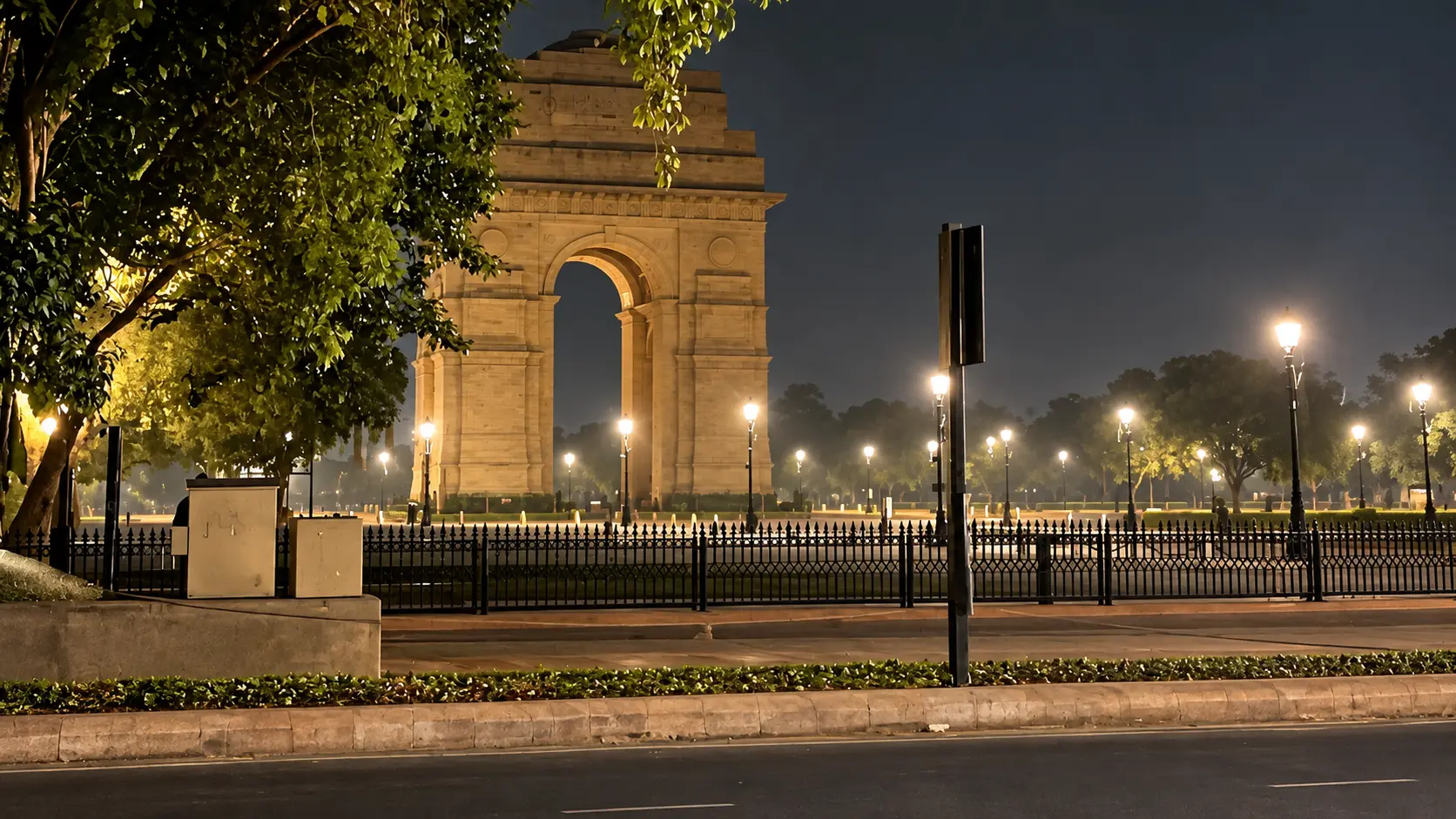
- Take a quick 5-minute auto ride south to admire India Gate, National Museum, and Kartavya Path.
A few things you might wonder
Common questions about visiting Gurudwara Bangla Sahib. Fees, visiting hours and ceremonies are researched details that may change; confirm current arrangements with the operator before travelling.
What are the opening timings of Gurudwara Bangla Sahib?
Is there an entry fee to visit Gurudwara Bangla Sahib?
Can non-Sikhs and foreign tourists visit Gurudwara Bangla Sahib?
What is the dress code and etiquette required to enter?
What is Guru Ka Langar and can anyone eat there?
Why is the water in the Sarovar considered sacred?
Is photography allowed inside Gurudwara Bangla Sahib?
Which metro station is closest to Gurudwara Bangla Sahib?
Explore more in New Delhi
Discover other destinations around this hub
More Hubs in Delhi Ncr
Continue exploring other travel hubs in this state
Planning a trip to New Delhi?