Akshardham Temple
Visit Swaminarayan Akshardham in New Delhi. Complete guide covers temple architecture, boat ride, laser water show, timings, ticket prices, and dress code.
Location
New Delhi, Delhi NCR
A closer look
Your visit, at a glance.
New Delhi, Delhi Ncr
GET TO KNOW THE PLACE
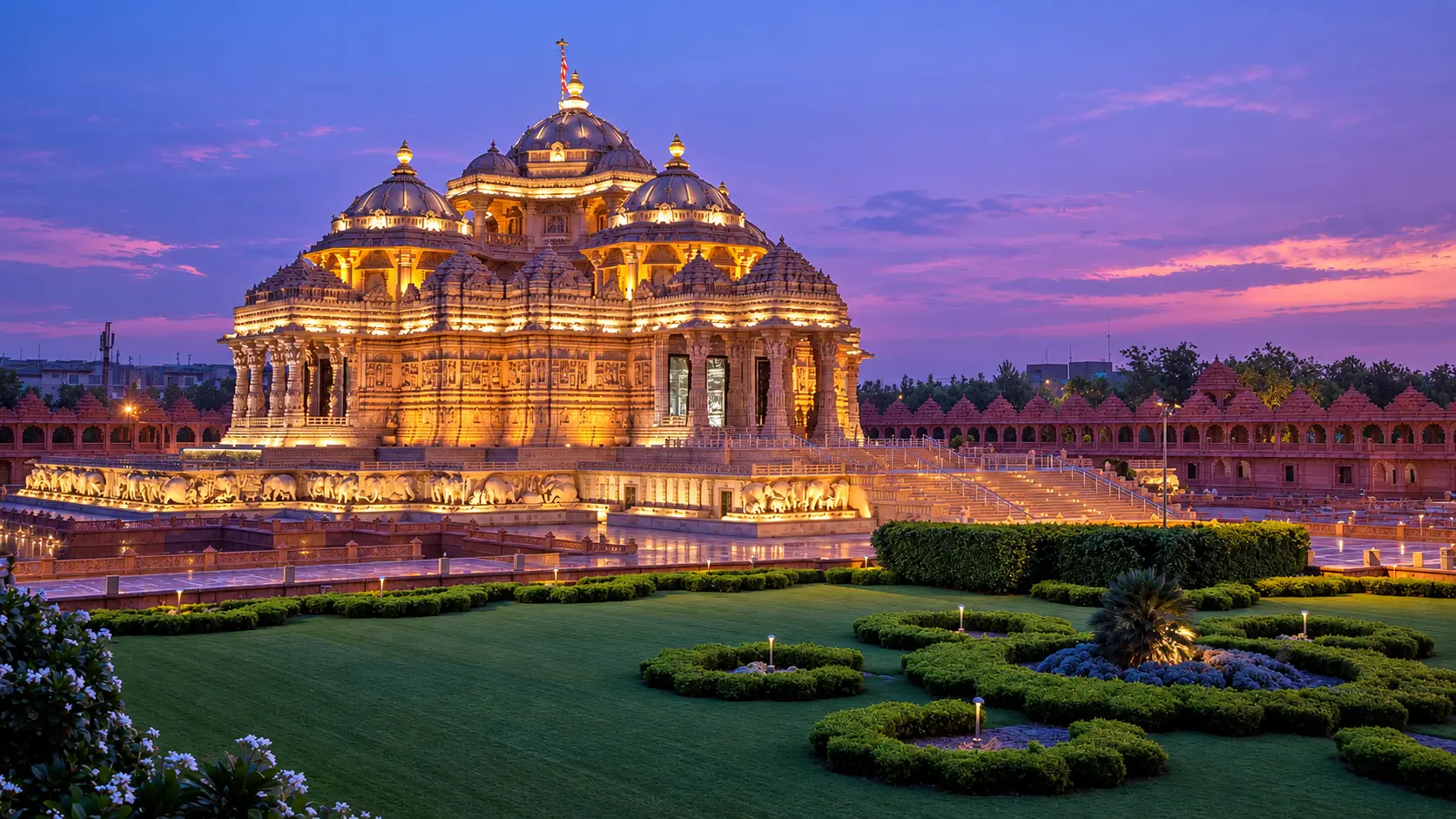
Rising in breathtaking pink sandstone and dazzling white marble along the eastern floodplains of the Yamuna River in East Delhi, Swaminarayan Akshardham (revered universally as…
The story of Akshardham Temple
Rising in breathtaking pink sandstone and dazzling white marble along the eastern floodplains of the Yamuna River in East Delhi, Swaminarayan Akshardham (revered universally as Akshardham Temple) stands as one of the most magnificent spiritual sanctuaries and architectural triumphs of modern India. Conceived by Brahmaswarup Yogiji Maharaj and realized through the visionary spiritual leadership and meticulous architectural guidance of Pramukh Swami Maharaj (1921 - 2016) of the BAPS Swaminarayan Sanstha, this sprawling 100-acre cultural campus was formally consecrated and inaugurated on November 6, 2005, in the presence of President Dr. A.P.J. Abdul Kalam and Prime Minister Dr. Manmohan Singh.
What distinguishes Akshardham from almost every other contemporary monument on Earth is its unwavering adherence to classical Hindu architectural canons. Designed in strict compliance with the ancient treatises of the Shilpa Shastra, Vastu Shastra, and Pancharatra Shastra, the central monument was engineered entirely without structural steel or iron reinforcement. Over 7,000 master sculptors and 4,000 dedicated volunteers assembled more than 6,000 tons of Rajasthani pink sandstone (Bansi Paharpur) and pristine Italian Carrara marble using ancient interlocking stone joinery engineered to endure for millennia.
Soaring 141 feet into the sky, spanning 316 feet in width, and extending 356 feet in length, the grand central Mandir features 234 intricately carved stone pillars, 9 ornate mandapam domes, 20 quadrangle stone spires (shikharas), and over 20,000 carved statues of deities, avatars, rishis, and spiritual teachers. Surrounding the base of the monument is the colossal Gajendra Pith - a relief plinth featuring 148 life-sized stone elephants weighing over 3,000 tons. Beyond the sacred shrine, the campus integrates three state-of-the-art educational exhibitions - the Sahajanand Darshan animatronics hall, the Neelkanth Darshan giant-screen cinema, and the Sanskruti Darshan 12-minute cultural boat ride - culminating after dusk in the electrifying Sahaj Anand Water Show staged inside India’s largest stepwell amphitheatre. Akshardham is an immersive, multi-sensory journey into the spiritual ethos, scientific achievements, and artistic soul of India.
Start here. Open a tile for the full details.
Why goRead details
- A Modern Wonder of Classical Indian Architecture: Marvel at a monumental 141-foot-tall temple built strictly according to ancient Vastu Shastra principles from 6,000 tons of carved stone entirely without structural steel or concrete.
- The Monumental Gajendra Pith: Walk alongside a 1,070-foot stone relief base populated by 148 life-sized carved stone elephants celebrating the sacred animal’s role in nature, history, and mythology.
- The Sanskruti Darshan Cultural Boat Ride: Embark on a magical 12-minute indoor boat journey navigating through 10,000 years of Indian civilization, from Vedic ashrams and Takshashila University to the ancient surgical breakthroughs of Sushruta.
- The Sahaj Anand Multi-Media Laser Water Show: Watch a breathtaking evening spectacle of synchronized water fountains, dancing fire bursts, multi-color lasers, and surround sound staged at the massive 2,870-step Yagnapurush Kund.
- Neelkanth Darshan Giant-Screen Cinematic Experience: Witness the gripping 40-minute movie on an 85x65-foot giant screen documenting the teenage barefoot pilgrimage of Neelkanth Varni across 12,000 kilometers of 18th-century India.
- The Sahajanand Darshan Robotics Hall: Experience timeless spiritual values of non-violence, truth, and harmony brought to life through 15 immersive dioramas with life-like animatronic figures and 3D illusions.
- Premvati Vegetarian Gastronomy: Dine inside an extraordinary subterranean food court carved in the style of the Ajanta and Ellora rock-cut caves, serving authentic regional Indian vegetarian thalis, snacks, and sweets.
- Completely Free Campus & Mandir Access: Walk the tranquil landscaped gardens, circumambulate the central sanctum, and absorb the divine atmosphere with zero general admission fee.
When to visitRead details
Entry & permissionsRead details
Fees, visiting hours and entry rules may change. Confirm the latest details with the official operator or local authority before travelling.
Operating Schedule and Visiting Timings
- Weekly Schedule: Open from Tuesday through Sunday.
- Mandatory Weekly Closure: Strictly closed every Monday for campus maintenance, deep cleaning, and internal sanctuary routines.
- Complex Entry & Security Frisking: 10:00 AM to 06:30 PM (Main entry gates close strictly at 06:30 PM; no visitor is admitted past this time).
- Mandir Darshan Timings: 10:00 AM to 08:00 PM (Mangala Aarti at 10:30 AM; Sandhya Aarti at 06:00 PM).
- Exhibition Counter Timings: 10:00 AM to 06:00 PM (Exhibitions run until 07:00 PM).
- Sahaj Anand Water Show: Commences after sunset (typically 07:15 PM to 07:45 PM in summer; 06:30 PM to 07:00 PM in winter).
Admission Tariffs
- Campus Entry, Mandir Darshan & Gardens: Completely Free (₹0).
- Combined Exhibitions Ticket (Sahajanand Darshan, Neelkanth Film, Sanskruti Boat Ride):
- Adults (12 to 59 years): ₹250 per person.
- Senior Citizens (60 years and above): ₹200 per person.
- Children (4 to 11 years): ₹150 per child.
- Children below 4 years: Free admission.
- Sahaj Anand Water Show (Musical Fountain):
- Adults and Seniors (12 years and above): ₹90 per person.
- Children (4 to 11 years): ₹60 per child.
- Children below 4 years: Free admission.
- Ticket Purchase: All exhibition and water show tickets must be purchased in person at the dedicated ticket counters inside the entrance plaza upon arrival.
Strict Security Regulations & Prohibited Items
Due to high-level national security protocols, Akshardham enforces one of the strictest security screening procedures in the world:
- Absolute Electronics Ban: No mobile phones, smartphones, cameras, smartwatches, fitness bands, USB drives, memory cards, electronic remote car keys, tablets, or laptop computers are permitted past security.
- Cloakroom Facilities: A massive, free, token-based cloakroom operated by BAPS volunteers is situated immediately before the security checkpoint. Visitors must deposit all electronic gadgets, bags, and prohibited items into secure individual lockers. Ensure you keep your wallet, cash, identity cards, and essential medications with you.
- Prohibited Items: Outside food and beverages, tobacco products, cigarettes, e-cigarettes, matchboxes, lighters, pocketknives, and large suitcases are strictly forbidden.
- Mandatory Dress Code: As a sacred place of worship, appropriate attire is mandatory:
- Upper wear must completely cover the shoulders, chest, navel, and upper arms.
- Lower wear must extend below the knees.
- If a visitor's clothing does not comply, complimentary sarong wraps are provided at the security desk upon leaving a refundable cash deposit of ₹100.
Plan your visitRead details
Explore the full guide - choose a topic below.
Why visit?
A Modern Wonder of Classical Indian Architecture: Marvel at a monumental 141-foot-tall temple built strictly…Explore detailsClose details
- A Modern Wonder of Classical Indian Architecture: Marvel at a monumental 141-foot-tall temple built strictly according to ancient Vastu Shastra principles from 6,000 tons of carved stone entirely without structural steel or concrete.
- The Monumental Gajendra Pith: Walk alongside a 1,070-foot stone relief base populated by 148 life-sized carved stone elephants celebrating the sacred animal’s role in nature, history, and mythology.
- The Sanskruti Darshan Cultural Boat Ride: Embark on a magical 12-minute indoor boat journey navigating through 10,000 years of Indian civilization, from Vedic ashrams and Takshashila University to the ancient surgical breakthroughs of Sushruta.
- The Sahaj Anand Multi-Media Laser Water Show: Watch a breathtaking evening spectacle of synchronized water fountains, dancing fire bursts, multi-color lasers, and surround sound staged at the massive 2,870-step Yagnapurush Kund.
- Neelkanth Darshan Giant-Screen Cinematic Experience: Witness the gripping 40-minute movie on an 85x65-foot giant screen documenting the teenage barefoot pilgrimage of Neelkanth Varni across 12,000 kilometers of 18th-century India.
- The Sahajanand Darshan Robotics Hall: Experience timeless spiritual values of non-violence, truth, and harmony brought to life through 15 immersive dioramas with life-like animatronic figures and 3D illusions.
- Premvati Vegetarian Gastronomy: Dine inside an extraordinary subterranean food court carved in the style of the Ajanta and Ellora rock-cut caves, serving authentic regional Indian vegetarian thalis, snacks, and sweets.
- Completely Free Campus & Mandir Access: Walk the tranquil landscaped gardens, circumambulate the central sanctum, and absorb the divine atmosphere with zero general admission fee.
What to expect
The spiritual heart of the complex is the central Mandir, set upon an elevated marble plinth and surrounded by…Explore detailsClose details
The Grand Central Mandir and Architectural Marvel
The spiritual heart of the complex is the central Mandir, set upon an elevated marble plinth and surrounded by the serene waters of the Narayan Sarovar (a sacred pool containing water brought from 151 holy rivers and lakes across India):
- External Stone Carving: Every inch of the exterior Rajasthani pink sandstone is hand-carved with mind-boggling precision. Gaze up at 20 soaring shikharas, 9 ornate mandapams, and intricate friezes depicting musicians, dancers, celestial beings, and sacred fauna.
- The Gajendra Pith (Elephant Plinth): Encircling the base of the Mandir is a monumental tribute to the elephant, an animal revered in Hindu tradition for peace, strength, and devotion. One hundred and forty-eight life-sized elephants, each carved with distinct expressions and actions, stretch across 1,070 feet of continuous relief panels.
- The Inner Sanctum (Garbhagriha): Stepping inside, the pink sandstone transitions to ethereal white Italian Carrara marble. Under a towering central dome carved with concentric lotus petals and celestial dancers stands an 11-foot-tall consecrated golden murti of Bhagwan Swaminarayan (1781 - 1830). Surrounding shrines (mandirams) house beautifully adorned marble murtis of Sita-Rama, Radha-Krishna, Shiva-Parvati, and Lakshmi-Narayana.
The Three Immersive Cultural Exhibitions
Beyond the central temple, visitors can purchase tickets to experience three world-class educational and cultural exhibitions:
- Sahajanand Darshan (Hall of Values): An engaging walk-through presentation across 15 three-dimensional dioramas. Utilizing advanced animatronic robotic figures, fiber-optic lighting, and sound projection, the exhibition brings alive the moral and spiritual teachings of Bhagwan Swaminarayan, emphasizing courage, universal peace, family harmony, and righteous conduct.
- Neelkanth Darshan (Large Format Theatre): A specially commissioned 40-minute epic film projected on a massive giant screen measuring 85 feet by 65 feet. Filmed on location across 108 heritage sites in India, it portrays the awe-inspiring true journey of Neelkanth Varni, who renounced his home in Ayodhya at age eleven and walked 12,000 kilometers barefoot across freezing Himalayan passes, dense rainforests, and arid deserts.
- Sanskruti Darshan (The Cultural Boat Ride): One of the most beloved family experiences in Delhi. Visitors board automated boats that glide smoothly along an indoor river channel through realistic animatronic sets recreating ancient India’s historic contributions to world knowledge:
- Vedic village life and universal hymns of peace.
- Ancient surgical operations, medicinal herbs, and instruments designed by Sage Sushruta (the Father of Surgery).
- Astronomy, zero, and decimal calculations pioneered by Aryabhata and Brahmagupta.
- The ancient residential university of Takshashila, where teachers instructed thousands of international scholars in 64 disciplines.
Sahaj Anand Water Show at Yagnapurush Kund
As twilight descends over Delhi, visitors gather at the Yagnapurush Kund, India’s largest replica of a traditional stepped water reservoir (baoli or kund). The monumental arena features 2,870 stone steps and 108 small shrines:
- The Narrative: The show presents a captivating 24-minute philosophical parable adapted from the Kena Upanishad, illustrating that divine power transcends pride through the story of child protagonist Nachiketa.
- Technical Virtuosity: The performance combines pressurized multi-directional water jets shooting up to 80 feet in the air, multi-colored lasers, video projections onto cascading water mist screens, underwater LED illuminations, surround sound, and controlled pyrotechnic fireballs.
Thematic Gardens and The Peace Precinct
- Bharat Upavan (Garden of India): Lush lawns decorated with over 60 life-sized bronze statues honoring India’s greatest national icons, warriors, freedom fighters (including Mahatma Gandhi and Subhas Chandra Bose), scientists (such as Dr. Homi Bhabha and C.V. Raman), and philosopher-poets.
- Yogi Hraday Kamal: A sunken lotus-shaped garden whose eight giant petals are inscribed with inspiring quotes and timeless ethical wisdom from ancient Indian scriptures and celebrated world thinkers.
Best time to visit
The autumn, winter, and early spring months from October through March represent the golden window for…Explore detailsClose details
Seasonal Window: October to March
The autumn, winter, and early spring months from October through March represent the golden window for experiencing Akshardham:
- Comfortable Daytime Exploration: With daytime temperatures hovering between 14°C and 25°C, walking along the vast open-air stone parikrama and strolling the 100-acre gardens is deeply pleasurable.
- Delightful Evening Water Show: Cool winter evenings make sitting on the open stone steps of Yagnapurush Kund for the laser water show a magical, comfortable experience. Carry a light jacket or shawl for evening shows between December and February.
- Ideal Visit Schedule: Arrive at the complex around 01:30 PM to 02:00 PM. Spend the afternoon touring the central Mandir and completing the three exhibitions, enjoy an early dinner at Premvati Food Court at 05:45 PM, and proceed to the Yagnapurush Kund by 06:15 PM for the evening water show.
Summer Window: April to June
Summer temperatures in New Delhi routinely exceed 42°C to 45°C. The expansive open-air stone courtyards absorb intense solar heat, making barefoot walking around the Mandir parikrama challenging during midday (carpeting is laid along walkways to protect visitors' feet).
- Summer Strategy: Arrive after 03:30 PM once the sun begins to dip. Complete the indoor air-conditioned exhibitions (Sahajanand and Neelkanth halls) during the hotter late afternoon, visit the central Mandir around sunset when ambient temperatures drop, and enjoy the night water show at 07:45 PM.
Monsoon Months: July to September
During the monsoon season, overcast skies provide welcome relief from intense heat. The pink sandstone takes on deep, saturated earthen tones against brooding grey skies, and the surrounding Bharat Upavan gardens look exceptionally lush and vibrant. However, sudden rain showers can lead to the cancellation of the outdoor water show; checking weather forecasts before arrival is recommended.
How to reach
Swaminarayan Akshardham is situated along the Noida Link Road / National Highway 24 (Pramukh Swami Maharaj Marg)…Explore detailsClose details
Geographic Setting
Swaminarayan Akshardham is situated along the Noida Link Road / National Highway 24 (Pramukh Swami Maharaj Marg) in East Delhi (PIN 110092), adjacent to the Commonwealth Games Village on the eastern bank of the Yamuna River. It is positioned approximately 9 kilometers east of Connaught Place and 22 kilometers east of Indira Gandhi International Airport.
By Delhi Metro (Fastest and Most Convenient)
The Delhi Metro provides by far the most hassle-free, congestion-free mode of transit:
- Akshardham Metro Station (Blue Line / Line 3): Located directly adjacent to the temple complex.
- Walking Connection: Alight at Akshardham station, take the designated station exit toward the temple, and follow the safe, covered pedestrian pathway that leads directly to the security frisking gate (approx. 350 meters, 4 to 5 minutes walk).
- Interchange Routes: Travelers on the Yellow Line can interchange seamlessly onto the Blue Line at Rajiv Chowk Metro Station; the ride to Akshardham takes only 15 minutes. Travelers on the Violet Line can interchange onto the Blue Line at Mandi House.
By Private Car, Taxi, or App-Based Cab (Uber / Ola)
- From Central Delhi / Connaught Place (~9 km, 15 to 25 min): Drive east along Kasturba Gandhi Marg or Barakhamba Road onto Sikandra Road, cross the ITO Yamuna Bridge onto Vikas Marg, turn south onto the Noida Link Road, and proceed straight to the dedicated Akshardham flyover exit.
- From South Delhi / Saket / Nehru Place (~14 km, 25 to 35 min): Take the elevated Barapullah Flyover across the Yamuna River toward Mayur Vihar / NH-24, exiting directly onto the Akshardham approach road.
- From Indira Gandhi International Airport (DEL) (~22 km, 35 to 50 min): Follow NH-48 onto the Barapullah elevated corridor or Ring Road directly to the trans-Yamuna bridge.
- Parking Facilities: Akshardham maintains an expansive, organized on-site paid surface parking lot capable of accommodating thousands of cars, two-wheelers, and tourist buses under round-the-clock security surveillance.
Entry, timings and permissions
Fees, visiting hours and entry rules may change.Explore detailsClose details
Fees, visiting hours and entry rules may change. Confirm the latest details with the official operator or local authority before travelling.
Operating Schedule and Visiting Timings
- Weekly Schedule: Open from Tuesday through Sunday.
- Mandatory Weekly Closure: Strictly closed every Monday for campus maintenance, deep cleaning, and internal sanctuary routines.
- Complex Entry & Security Frisking: 10:00 AM to 06:30 PM (Main entry gates close strictly at 06:30 PM; no visitor is admitted past this time).
- Mandir Darshan Timings: 10:00 AM to 08:00 PM (Mangala Aarti at 10:30 AM; Sandhya Aarti at 06:00 PM).
- Exhibition Counter Timings: 10:00 AM to 06:00 PM (Exhibitions run until 07:00 PM).
- Sahaj Anand Water Show: Commences after sunset (typically 07:15 PM to 07:45 PM in summer; 06:30 PM to 07:00 PM in winter).
Admission Tariffs
- Campus Entry, Mandir Darshan & Gardens: Completely Free (₹0).
- Combined Exhibitions Ticket (Sahajanand Darshan, Neelkanth Film, Sanskruti Boat Ride):
- Adults (12 to 59 years): ₹250 per person.
- Senior Citizens (60 years and above): ₹200 per person.
- Children (4 to 11 years): ₹150 per child.
- Children below 4 years: Free admission.
- Sahaj Anand Water Show (Musical Fountain):
- Adults and Seniors (12 years and above): ₹90 per person.
- Children (4 to 11 years): ₹60 per child.
- Children below 4 years: Free admission.
- Ticket Purchase: All exhibition and water show tickets must be purchased in person at the dedicated ticket counters inside the entrance plaza upon arrival.
Strict Security Regulations & Prohibited Items
Due to high-level national security protocols, Akshardham enforces one of the strictest security screening procedures in the world:
- Absolute Electronics Ban: No mobile phones, smartphones, cameras, smartwatches, fitness bands, USB drives, memory cards, electronic remote car keys, tablets, or laptop computers are permitted past security.
- Cloakroom Facilities: A massive, free, token-based cloakroom operated by BAPS volunteers is situated immediately before the security checkpoint. Visitors must deposit all electronic gadgets, bags, and prohibited items into secure individual lockers. Ensure you keep your wallet, cash, identity cards, and essential medications with you.
- Prohibited Items: Outside food and beverages, tobacco products, cigarettes, e-cigarettes, matchboxes, lighters, pocketknives, and large suitcases are strictly forbidden.
- Mandatory Dress Code: As a sacred place of worship, appropriate attire is mandatory:
- Upper wear must completely cover the shoulders, chest, navel, and upper arms.
- Lower wear must extend below the knees.
- If a visitor's clothing does not comply, complimentary sarong wraps are provided at the security desk upon leaving a refundable cash deposit of ₹100.
Nearby places to consider
National Science Centre (~7 km west near Pragati Maidan): One of northern India’s largest science museums…Explore detailsClose details
- National Science Centre (~7 km west near Pragati Maidan): One of northern India’s largest science museums, featuring interactive galleries on human biology, pre-historic life with moving dinosaurs, information technology, and fun science demonstrations.
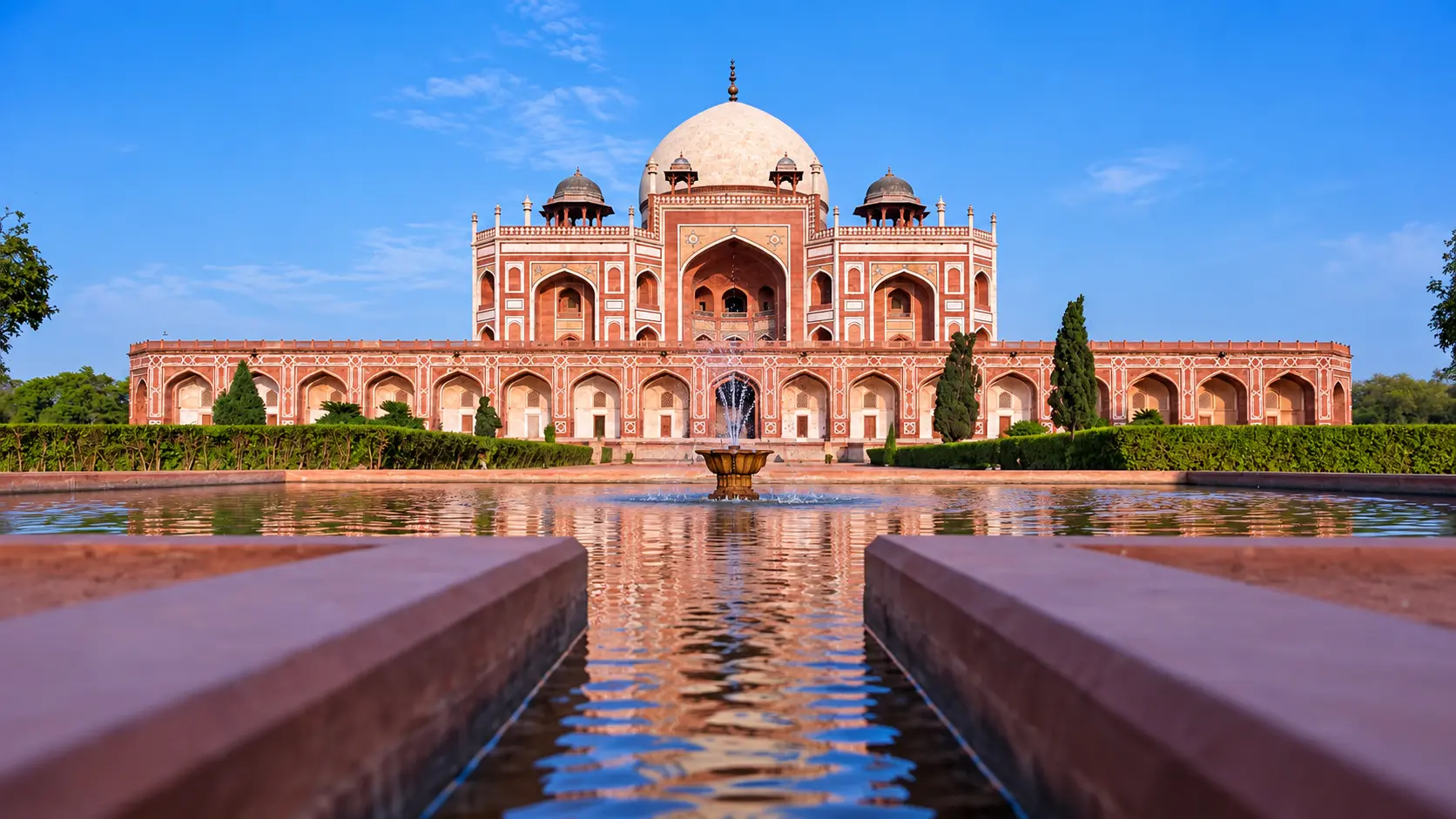
- Humayun’s Tomb (~8 km southwest via Nizamuddin Bridge): A magnificent UNESCO World Heritage Site and the architectural precursor to the Taj Mahal, set within sprawling Persian-style quadrilateral charbagh water gardens.
- Sunder Nursery (~8.5 km southwest adjacent to Humayun's Tomb): A beautifully restored 90-acre heritage ecological park featuring 16th-century Mughal monuments, tranquil water bodies, thousands of trees, and weekend artisanal farmers' markets.
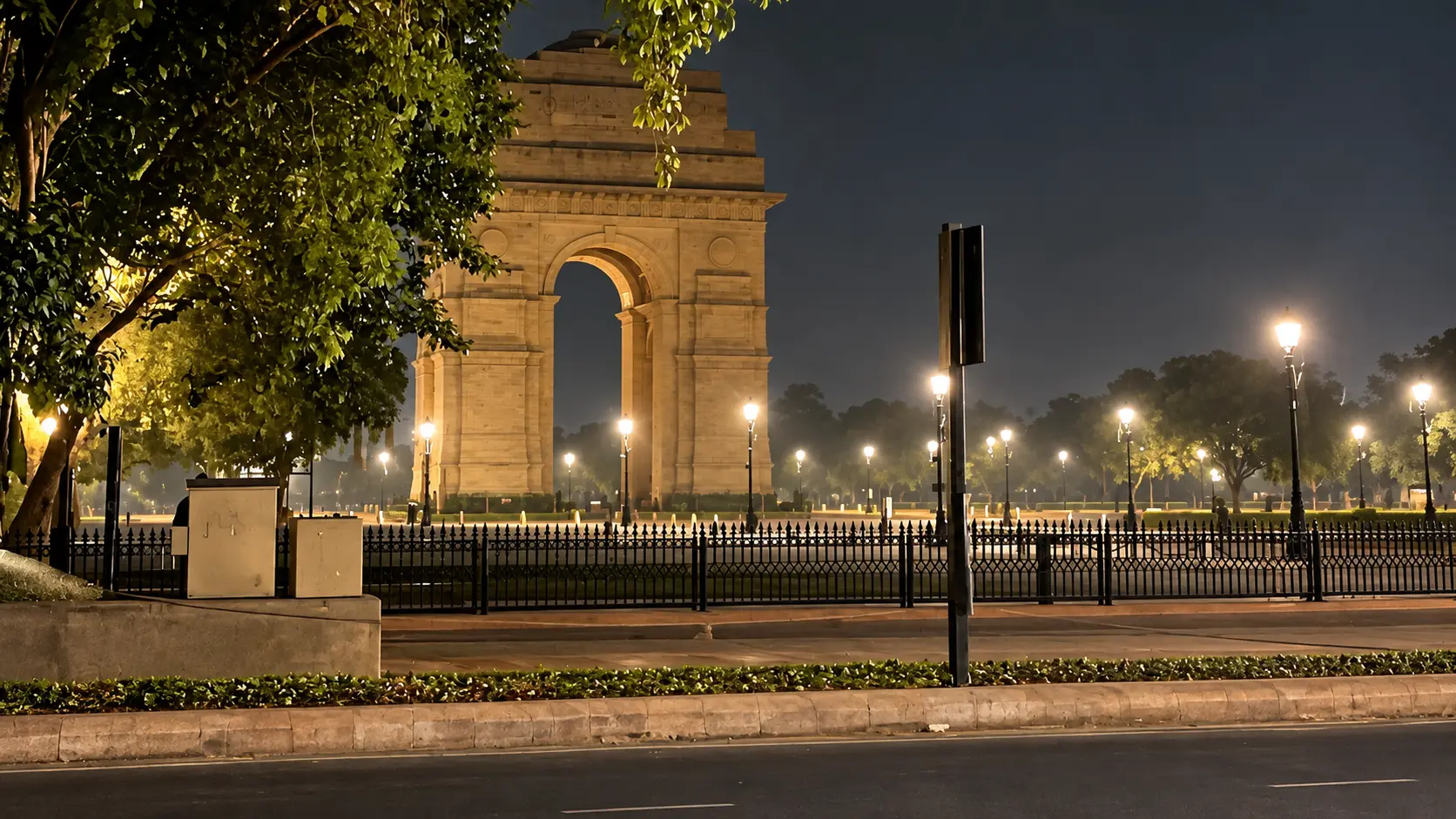
- India Gate and Kartavya Path (~9 km west via Ring Road / Tilak Marg): The ceremonial heart of New Delhi, featuring Sir Edwin Lutyens' 42-meter triumphal war arch memorial and sweeping landscaped lawns.
- Purana Qila (Old Fort) (~7.5 km west near Mathura Road): A massive 16th-century citadel built by Sher Shah Suri and Humayun, featuring the stately Qila-i-Kuhna Mosque, the Sher Mandal observatory pavilion, and a picturesque boating lake.
- National Crafts Museum (~7.5 km west at Pragati Maidan): A vibrant open-air museum preserving India's living folk craft traditions, village courtyards, tribal textiles, terracotta sculptures, and live artisan demonstrations.
In pictures
The practical bits
Before you go.
Recommended Time Commitment
Plan to dedicate a minimum of 4.0 to 6.0 hours to fully absorb Akshardham.Explore detailsClose details
Plan to dedicate a minimum of 4.0 to 6.0 hours to fully absorb Akshardham. Attempting to rush through the campus in an hour or two will leave you unable to experience the exhibitions, the boat ride, or the evening water show, which form the heart of the cultural visit.
The Ideal Afternoon-to-Evening Itinerary
Explore detailsClose details
01:30 PM - 02:00 PM
Arrive via Akshardham Metro Station.Explore detailsClose details
Arrive via Akshardham Metro Station. Deposit electronic devices and bags at the free cloakroom, pass through security, and purchase your combined exhibition and water show tickets.
02:15 PM - 03:15 PM
Tour the central Mandir, circumambulate the 1,070-foot Gajendra Pith elephant plinth, and admire the consecrated…Explore detailsClose details
Tour the central Mandir, circumambulate the 1,070-foot Gajendra Pith elephant plinth, and admire the consecrated murtis inside the garbhagriha.
03:30 PM - 05:45 PM
Check the current visiting hours and permitted access with the site operator before departure; ceremonies…Explore detailsClose details
Check the current visiting hours and permitted access with the site operator before departure; ceremonies, closures and visitor sessions can affect access.
05:45 PM - 06:30 PM
Enjoy a vegetarian dinner or snacks at the cave-themed Premvati Food Court. -Explore detailsClose details
Enjoy a vegetarian dinner or snacks at the cave-themed Premvati Food Court.
06:45 PM - 07:45 PM
Take your seats at the Yagnapurush Kund amphitheatre for the mesmerizing Sahaj Anand Water Show. -Explore detailsClose details
Take your seats at the Yagnapurush Kund amphitheatre for the mesmerizing Sahaj Anand Water Show.
08:00 PM
Retrieve your deposited belongings from the cloakroom and exit toward the metro station.Explore detailsClose details
Retrieve your deposited belongings from the cloakroom and exit toward the metro station.
Physical Footwear Protocol
In accordance with Hindu tradition, footwear must be removed before ascending the marble plinth of the central…Explore detailsClose details
In accordance with Hindu tradition, footwear must be removed before ascending the marble plinth of the central Mandir. High-capacity, organized shoe deposit stalls operated free of charge are situated at the entrance of the temple terrace. During summer months, heavy canvas carpets are laid across exposed stone walkways to prevent burning feet.
Financial Preparedness
Because mobile phones are deposited at the entrance, UPI digital payments (Google Pay, PhonePe, Paytm) cannot be…Explore detailsClose details
Because mobile phones are deposited at the entrance, UPI digital payments (Google Pay, PhonePe, Paytm) cannot be used inside the complex. Visitors must carry physical cash or debit/credit cards to purchase exhibition tickets, water show tickets, food at Premvati, and souvenirs at the bookstore.
A few things you might wonder
Common questions about visiting Akshardham Temple. Fees, visiting hours and ceremonies are researched details that may change; confirm current arrangements with the operator before travelling.
Is Akshardham Temple open on Mondays?
Is there an entry ticket to enter Akshardham Temple?
Can I carry my mobile phone or camera inside Akshardham?
What is the dress code for visiting Akshardham?
How do I reach Akshardham Temple by Delhi Metro?
What is the Sanskruti Darshan boat ride?
What time does the evening laser water fountain show start?
Are there places to eat inside Akshardham Temple?
Explore more in New Delhi
Discover other destinations around this hub
More Hubs in Delhi Ncr
Continue exploring other travel hubs in this state
Planning a trip to New Delhi?