Agrasen Ki Baoli
Visit Agrasen Ki Baoli (Ugrasen ki Baoli) on Hailey Road, New Delhi. Complete guide covers 108 steps, Tughlaq architecture, metro access, and entry timings.
Location
New Delhi, Delhi NCR
A closer look
Your visit, at a glance.
New Delhi, Delhi Ncr
GET TO KNOW THE PLACE
Amidst the roaring automotive traffic of Kasturba Gandhi Marg and the towering glass-and-concrete high-rises that define the financial skyline of modern New Delhi, there exists…
The story of Agrasen Ki Baoli
Amidst the roaring automotive traffic of Kasturba Gandhi Marg and the towering glass-and-concrete high-rises that define the financial skyline of modern New Delhi, there exists an abrupt and breathtaking threshold into the medieval past. Tucked unobtrusively along the leafy cul-de-sac of Hailey Road, less than a kilometer south of Connaught Place, Agrasen Ki Baoli (officially entered in statutory gazettes and Archaeological Survey of India registers as Uggar Sain's Baoli, Monument ID: N-DL-52) is one of the most hypnotic and structurally intact stepwells (baolis) in northern India.
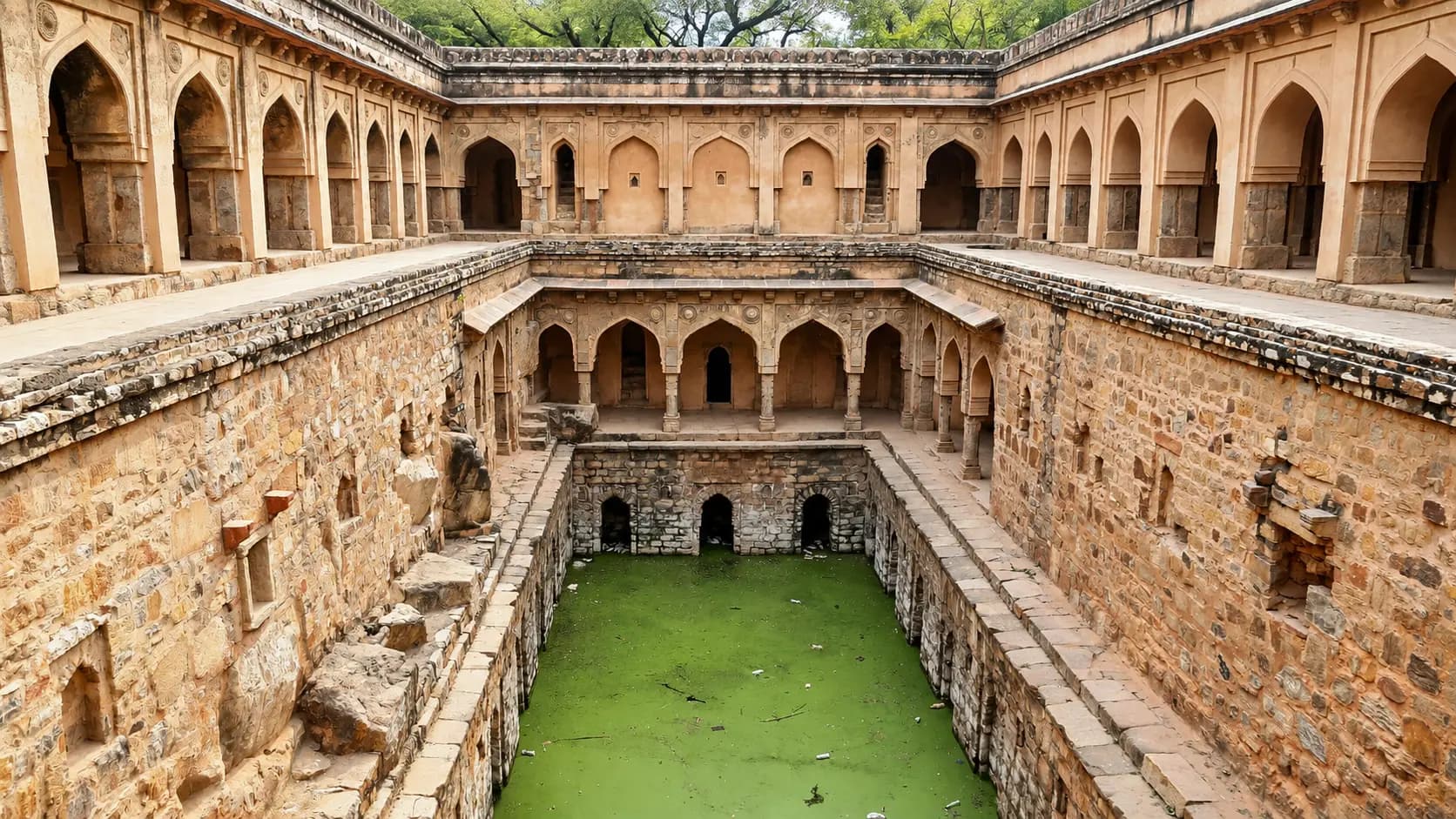
Stepping off the sun-drenched pavement and through its simple brick entrance gate, visitors encounter an astonishing subterranean abyss. Carved directly into the Delhi earth, the structure measures approximately 60 meters in length (nearly 200 feet) and 15 meters in width (50 feet). A grand, theatrical flight of 103 to 108 stone steps plunges steeply downward through three distinct architectural tiers, bordered on either side by imposing, thick rubble-stone retaining walls lined with symmetrical arched niches, recessed alcoves, and shaded colonnades. At the far northern terminus, the stepped corridor terminates at a deep, circular masonry well shaft that was once replenished by seasonal monsoon subterranean aquifers.
While enduring oral tradition and folklore attribute its original mythical foundation to Maharaja Agrasen - the revered ancient king of Agroha, Haryana, and the legendary progenitor of the Agrawal trading community - the surviving architectural fabric tells a fascinating medieval story. Stylistic and structural markers, including pointed rubble arches, stone dressing, and an adjoining mosque crowned with a rare whale-back barrel-vaulted roof, place its extant masonry firmly within the late 14th-century Tughlaq Dynasty or 15th- to early 16th-century Lodi Dynasty of the Delhi Sultanate. Today, protected as a Monument of National Importance by the Archaeological Survey of India (ASI), Agrasen Ki Baoli stands as a sublime monument to pre-industrial hydraulic engineering, a tranquil subterranean oasis amidst urban frenzy, and an internationally celebrated cinematic visual icon.
Start here. Open a tile for the full details.
Why goRead details
- A Subterranean Architectural Wonder in Central Delhi: Experience a massive 60-meter-long, three-tiered medieval stepwell concealed directly behind the modern corporate high-rises of Connaught Place and KG Marg.
- 108 Ancient Stone Steps: Descend an awe-inspiring stone staircase flanked by symmetrical multi-story arched niches that create an unforgettable dramatic visual perspective.
- Masterpiece of Sultanate Water Engineering: Examine how medieval Delhi engineers harvested monsoon runoff and harnessed subterranean aquifers to provide drinking water and cool sanctuary during blistering summers.
- Rare Medieval Mosque Architecture: Marvel at the historic stone mosque at the western rim of the baoli, featuring three arched bays and an unusual barrel-vaulted ("whale-back") roof characteristic of late Tughlaq and Lodi architecture.
- A Stark Contrast of Eras: Stand on the ancient steps and gaze upward to witness medieval rubble-masonry arches framed dramatically against modern glass skyscrapers and circling pigeons.
- Celebrated Bollywood Filming Location: Walk the exact stone steps immortalized in major Indian cinema classics - most famously as the atmospheric earthly refuge of Aamir Khan in Rajkumar Hirani's blockbuster PK, as well as in Sultan and Mom.
- Completely Free Public Access: Confirm the current charge and what it includes with the operator or service provider. Visitor admission, vehicles, parking, activities and accommodation can have separate charges.
- Effortless Metro Connectivity: Walk to the monument in under 10 to 12 minutes from nearby Delhi Metro stations at Barakhamba Road, Janpath, Mandi House, or Rajiv Chowk.
When to visitRead details
Entry & permissionsRead details
Fees, visiting hours and entry rules may change. Confirm the latest details with the official operator or local authority before travelling.
Operating Schedule and Visiting Hours
- Weekly Schedule: Open all seven days of the week (Monday through Sunday).
- Operating Hours: 09:00 AM to 05:30 PM daily (corresponding broadly to standard ASI sunrise-to-sunset heritage timings).
- Weekly Closure: None. The monument does not have a weekly closing day.
- National Holidays: The monument remains open on major national holidays (Republic Day, Independence Day, Gandhi Jayanti), though surrounding roads around India Gate and KG Marg may face traffic restrictions during ceremonial parade days.
Admission Tariffs
- General Admission: Completely Free (₹0).
- Domestic & International Visitors: There is no entry fee for Indian citizens, OCI holders, or foreign tourists.
- No Online Booking Required: Unlike ticketed ASI monuments such as Humayun's Tomb or the Red Fort, visitors do not need to book entry tickets through the ASI online ticketing portal (
asi.payumoney.com); you simply walk through the open entrance gate.
Photography and Filming Regulations
- Handheld Smartphone Photography: Casual personal photography and mobile phone videography are permitted completely free of charge. Visitors are free to photograph the architectural tiers, arches, and mosque.
- Flash Photography: Flash is discouraged inside the shaded alcoves to avoid disturbing nesting rock pigeons.
- Tripods, Monopods, and Gimbal Rigs: Under Archaeological Survey of India heritage rules, the use of professional tripods, lighting umbrellas, reflectors, and standalone video rigs is strictly prohibited during public visiting hours without written authorization.
- Commercial, Brand & Fashion Shoots: Professional fashion photography, advertising shoots, music video productions, and commercial filmmaking require formal prior written permission from the Superintending Archaeologist, Archaeological Survey of India, Delhi Circle (located at Purana Qila, New Delhi), accompanied by statutory security deposits and commercial filming fees.
- Drone Prohibition: The operation of unmanned aerial vehicles (drones) is strictly prohibited across the entire monument and central Delhi airspace due to high-security diplomatic and governmental flight restrictions.
Plan your visitRead details
Footwear and Physical Safety
The stone steps have been smoothed by centuries of foot traffic and can be slightly uneven. Wear comfortable flat walking shoes or sneakers with good grip. In the lower tiers near the circular well shaft, the stone can occasionally be damp; take deliberate, measured steps. Visitors with knee ailments or severe mobility limitations should note that descending and re-climbing all 108 steep steps requires moderate physical stamina.
Explore the full guide - choose a topic below.
Why visit?
A Subterranean Architectural Wonder in Central Delhi: Experience a massive 60-meter-long, three-tiered medieval…Explore detailsClose details
- A Subterranean Architectural Wonder in Central Delhi: Experience a massive 60-meter-long, three-tiered medieval stepwell concealed directly behind the modern corporate high-rises of Connaught Place and KG Marg.
- 108 Ancient Stone Steps: Descend an awe-inspiring stone staircase flanked by symmetrical multi-story arched niches that create an unforgettable dramatic visual perspective.
- Masterpiece of Sultanate Water Engineering: Examine how medieval Delhi engineers harvested monsoon runoff and harnessed subterranean aquifers to provide drinking water and cool sanctuary during blistering summers.
- Rare Medieval Mosque Architecture: Marvel at the historic stone mosque at the western rim of the baoli, featuring three arched bays and an unusual barrel-vaulted ("whale-back") roof characteristic of late Tughlaq and Lodi architecture.
- A Stark Contrast of Eras: Stand on the ancient steps and gaze upward to witness medieval rubble-masonry arches framed dramatically against modern glass skyscrapers and circling pigeons.
- Celebrated Bollywood Filming Location: Walk the exact stone steps immortalized in major Indian cinema classics - most famously as the atmospheric earthly refuge of Aamir Khan in Rajkumar Hirani's blockbuster PK, as well as in Sultan and Mom.
- Completely Free Public Access: Confirm the current charge and what it includes with the operator or service provider. Visitor admission, vehicles, parking, activities and accommodation can have separate charges.
- Effortless Metro Connectivity: Walk to the monument in under 10 to 12 minutes from nearby Delhi Metro stations at Barakhamba Road, Janpath, Mandi House, or Rajiv Chowk.
What to expect
Stepwells (baolis or vavs) were an ingenious architectural response to the arid and semi-arid climates of western…Explore detailsClose details
The Subterranean Architecture and Spatial Layout
Stepwells (baolis or vavs) were an ingenious architectural response to the arid and semi-arid climates of western and northern India. Unlike ordinary vertical well shafts where water had to be hauled upward via buckets and pulleys, a baoli allowed community members, pilgrims, and caravans to descend directly to the fluctuating water level via broad staircases.
- The Three Architectural Tiers: Agrasen Ki Baoli is laid out on a strict north-south axis. As you descend, the sidewalls reveal three superimposed stories of arched openings and recessed chambers. Each tier features deeply shadowed alcoves framed by pointed Islamic arches made of quartzite rubble masonry held together with lime mortar.
- Subterranean Microclimate: As you walk down the steps, the ambient temperature drops perceptibly. The thick masonry walls and subterranean depth trap cool subterranean air, illustrating how medieval travelers and local residents utilized the lower galleries as a natural air-conditioned retreat (summer palace) during scorching 45°C summer afternoons.
- The Circular Well Shaft: At the deepest northern end of the structure stands a large, circular well shaft measuring several meters in diameter. Traditionally, water from the deep aquifer rose inside this shaft and flowed through arched conduits into the open stepped reservoir. While modern urban groundwater depletion has dried up the well, the dramatic stone architecture remains completely intact.
The Western Mosque Pavilion
Perched along the elevated western terrace overlooking the stepwell is a compact, highly significant medieval mosque structure:
- The Triple-Arched Façade: The mosque features three arched openings supported by robust stone pillars, decorated with plaster medallions, stylized floral relief carvings, and Quranic calligraphy bands.
- The Barrel-Vaulted "Whale-Back" Roof: Unlike the hemispherical domes typical of Mughal sacred architecture, the central bay of this mosque is crowned with a distinctive curved, barrel-vaulted roof reminiscent of a capsized boat or whale's back. This rare architectural idiom, seen in select late Tughlaq and Lodi monuments in Delhi, provides valuable historical clues corroborating its 14th- to 15th-century provenance.
- Intricate Plasterwork: Traces of fine incised plaster detailing remain visible on the spandrels and mihrab, demonstrating the artistic craftsmanship invested in public civic amenities during the Delhi Sultanate.
The Mythological Lore and Agrasen Legend
The historical memory associated with the baoli is dual-layered:
- The Legendary King Agrasen: Agrawal tradition holds that the monument was originally commissioned in the antiquity of the Mahabharata era by Maharaja Agrasen, the legendary sovereign ruler of Agroha (near modern Hisar in Haryana). King Agrasen is venerated as an egalitarian ruler who established a society based on non-violence and mutual commercial support (the tradition of giving a brick and a coin to each new immigrant family).
- Medieval Reconstruction: Historical consensus among archaeologists, including the Archaeological Survey of India, suggests that wealthy Agrawal merchants and community leaders residing in the bustling trading city of Delhi rebuilt or renovated this ancient sacred site during the Sultanate era, retaining the patron name while adopting the prevailing Tughlaq-Lodi engineering vocabulary.
Modern Urban Environs and Cinematic Stardom
Agrasen Ki Baoli occupies an extraordinary liminal space in the geography of New Delhi:
- The Soundscape of Silence: Despite being situated mere hundreds of meters from the deafening bustle of Barakhamba Road and Tolstoy Marg, stepping down into the baoli produces an abrupt acoustic deadening. The deep stone walls baffle traffic roar, replaced by the cooing of hundreds of blue rock pigeons nesting in the upper arches.
- Cinematic Iconography: The moody, symmetrical geometry of the stepwell has made it a darling of cinematographers and street photographers. In Rajkumar Hirani's 2014 film PK, the alien protagonist (played by Aamir Khan) chooses this quiet, forgotten stepwell as his lonely shelter in the chaotic megacity. In Salman Khan's Sultan, key emotional dialogues were framed against its towering stone tiers.
Best time to visit
The autumn, winter, and early spring months from October through March represent the golden window for exploring…Explore detailsClose details
Seasonal Window: October to March
The autumn, winter, and early spring months from October through March represent the golden window for exploring Agrasen Ki Baoli and walking the heritage quarters of Central Delhi:
- Delightful Walking Weather: Daytime temperatures in New Delhi range between 15°C and 25°C, making the 10- to 15-minute stroll from Connaught Place or nearby metro stations thoroughly enjoyable.
- Sunlight and Shadows: Low winter sun angles cast dramatic geometric shadows across the three tiers of arched alcoves, creating breathtaking contrasts for architectural photography between 10:00 AM and 01:00 PM.
- Combining Heritage Walks: Pleasant winter weather allows visitors to seamlessly pair Agrasen Ki Baoli with walking tours to nearby landmarks such as Jantar Mantar, Bangla Sahib, India Gate, and the sprawling colonnades of Connaught Place.
Summer Considerations: April to June
Summer temperatures in New Delhi frequently exceed 42°C to 45°C. While the open stone staircase is fully exposed to direct overhead sunlight during midday, the lower steps and arched niches provide noticeable relief from ambient heat due to thermal subterranean insulation.
- Summer Timing Tip: Check the current visiting hours and permitted access with the site operator before departure; ceremonies, closures and visitor sessions can affect access. Wear a sunhat and carry drinking water.
Monsoon Months: July to September
During the monsoon season, overcast skies and intermittent rain bring vibrant moisture to the aged sandstone and quartzite stones. The ancient masonry takes on rich, dark, earthy hues, and the surrounding foliage along Hailey Road turns lush green. However, rainfall can make the damp, worn stone steps slick; visitors should wear shoes with reliable rubber traction and exercise caution while descending.
How to reach
Agrasen Ki Baoli is situated along Hailey Road, directly accessible off Kasturba Gandhi Marg (KG Marg) or…Explore detailsClose details
Geographic Setting
Agrasen Ki Baoli is situated along Hailey Road, directly accessible off Kasturba Gandhi Marg (KG Marg) or Barakhamba Road in the New Delhi administrative district (PIN 110001). It lies approximately 1 kilometer southeast of Connaught Place Outer Circle, flanked by residential bungalows and multi-story commercial high-rises.
By Delhi Metro (Most Convenient Transit)
Confirm the current charge and what it includes with the operator or service provider. Visitor admission, vehicles, parking, activities and accommodation can have separate charges.
- Barakhamba Road Metro Station (Line 3 / Blue Line): Nearest Station (approx. 800 meters north). Exit through Gate 3 or Gate 6, walk south along Barakhamba Road, turn right onto Hailey Road, and proceed for 300 meters. The walk takes approximately 8 to 10 minutes.
- Janpath Metro Station (Line 6 / Violet Line): Located approximately 1.0 kilometer southwest. Exit through Gate 1, walk northeast across Tolstoy Marg or KG Marg onto Hailey Road (approx. 12 minutes walk).
- Mandi House Metro Station (Blue Line & Violet Line Interchange): Located approximately 1.0 kilometer east. Exit toward Sikandra Road, walk westward along Barakhamba Road onto Hailey Road (approx. 12 minutes walk).
- Rajiv Chowk Metro Station (Yellow Line & Blue Line Interchange): Located approximately 1.2 kilometers northwest. Exit toward Connaught Place Block E/F, proceed down KG Marg, and turn left onto Hailey Road (approx. 15 minutes walk).
By Auto-Rickshaw, Taxi, or App-Based Cab (Uber / Ola)
- Direct Drop-Off: Auto-rickshaws and app-based cabs can drop passengers off directly in front of the baoli’s entrance gate on Hailey Road. It is a well-known landmark among local auto and cab drivers.
- From Indira Gandhi International Airport (DEL) (~15 km, 30 to 45 min): Take the Airport Express Line directly to Shivaji Stadium or New Delhi Metro Station, then transfer to a cab or auto-rickshaw to Hailey Road. Alternatively, take a pre-paid taxi via Sardar Patel Marg and Mother Teresa Crescent directly into Central Delhi.
- From New Delhi Railway Station (NDLS) (~2.5 km, 10 min): A short auto-rickshaw or taxi ride down Bhavbhuti Marg and Tolstoy Marg brings you directly to the entrance.
By Private Car & Parking Guidance
While driving to Hailey Road is straightforward from KG Marg or Barakhamba Road, vehicular parking is extremely limited. Hailey Road is a narrow, two-lane residential lane with no designated off-street parking lot for the monument. Visitors arriving by private car must rely on limited roadside paid municipal parking slots or park in the multi-level underground parking facilities at Connaught Place Block B / Shivaji Stadium or KG Marg and walk to the site.
Entry, timings and permissions
Fees, visiting hours and entry rules may change.Explore detailsClose details
Fees, visiting hours and entry rules may change. Confirm the latest details with the official operator or local authority before travelling.
Operating Schedule and Visiting Hours
- Weekly Schedule: Open all seven days of the week (Monday through Sunday).
- Operating Hours: 09:00 AM to 05:30 PM daily (corresponding broadly to standard ASI sunrise-to-sunset heritage timings).
- Weekly Closure: None. The monument does not have a weekly closing day.
- National Holidays: The monument remains open on major national holidays (Republic Day, Independence Day, Gandhi Jayanti), though surrounding roads around India Gate and KG Marg may face traffic restrictions during ceremonial parade days.
Admission Tariffs
- General Admission: Completely Free (₹0).
- Domestic & International Visitors: There is no entry fee for Indian citizens, OCI holders, or foreign tourists.
- No Online Booking Required: Unlike ticketed ASI monuments such as Humayun's Tomb or the Red Fort, visitors do not need to book entry tickets through the ASI online ticketing portal (
asi.payumoney.com); you simply walk through the open entrance gate.
Photography and Filming Regulations
- Handheld Smartphone Photography: Casual personal photography and mobile phone videography are permitted completely free of charge. Visitors are free to photograph the architectural tiers, arches, and mosque.
- Flash Photography: Flash is discouraged inside the shaded alcoves to avoid disturbing nesting rock pigeons.
- Tripods, Monopods, and Gimbal Rigs: Under Archaeological Survey of India heritage rules, the use of professional tripods, lighting umbrellas, reflectors, and standalone video rigs is strictly prohibited during public visiting hours without written authorization.
- Commercial, Brand & Fashion Shoots: Professional fashion photography, advertising shoots, music video productions, and commercial filmmaking require formal prior written permission from the Superintending Archaeologist, Archaeological Survey of India, Delhi Circle (located at Purana Qila, New Delhi), accompanied by statutory security deposits and commercial filming fees.
- Drone Prohibition: The operation of unmanned aerial vehicles (drones) is strictly prohibited across the entire monument and central Delhi airspace due to high-security diplomatic and governmental flight restrictions.
Nearby places to consider
Connaught Place (CP) (~1 km northwest): The iconic colonial-era Georgian-style circular shopping arcade designed…Explore detailsClose details
- Connaught Place (CP) (~1 km northwest): The iconic colonial-era Georgian-style circular shopping arcade designed by Robert Tor Russell. Featuring white stucco colonnades across Inner, Middle, and Outer Circles, it offers premier shopping, artisanal cafes, heritage bookstores (like Oxford Bookstore), and lively dining.
- Jantar Mantar (~1.2 km west along Tolstoy Marg / Sansad Marg): An extraordinary 18th-century open-air astronomical observatory built by Maharaja Jai Singh II of Jaipur in 1724. Its monumental masonry instruments - including the towering Samrat Yantra sundial - were designed to track planetary movements and predict celestial phenomena with naked-eye precision.
- Gurudwara Bangla Sahib (~1.8 km west via Ashoka Road): One of Delhi’s most revered Sikh pilgrimage centers, known for its dazzling gold-leaf dome, serene sacred water pool (sarovar), soothing devotional kirtan, and a legendary communal kitchen (langar) that feeds tens of thousands of people daily without charge.
- National Museum, New Delhi (~2 km south on Janpath): India’s premier repository of cultural heritage, housing over 200,000 priceless artifacts spanning 5,000 years of civilization - including Harappan Bronze Age relics (the famous Dancing Girl), Buddhist masterworks, and Chola bronzes.
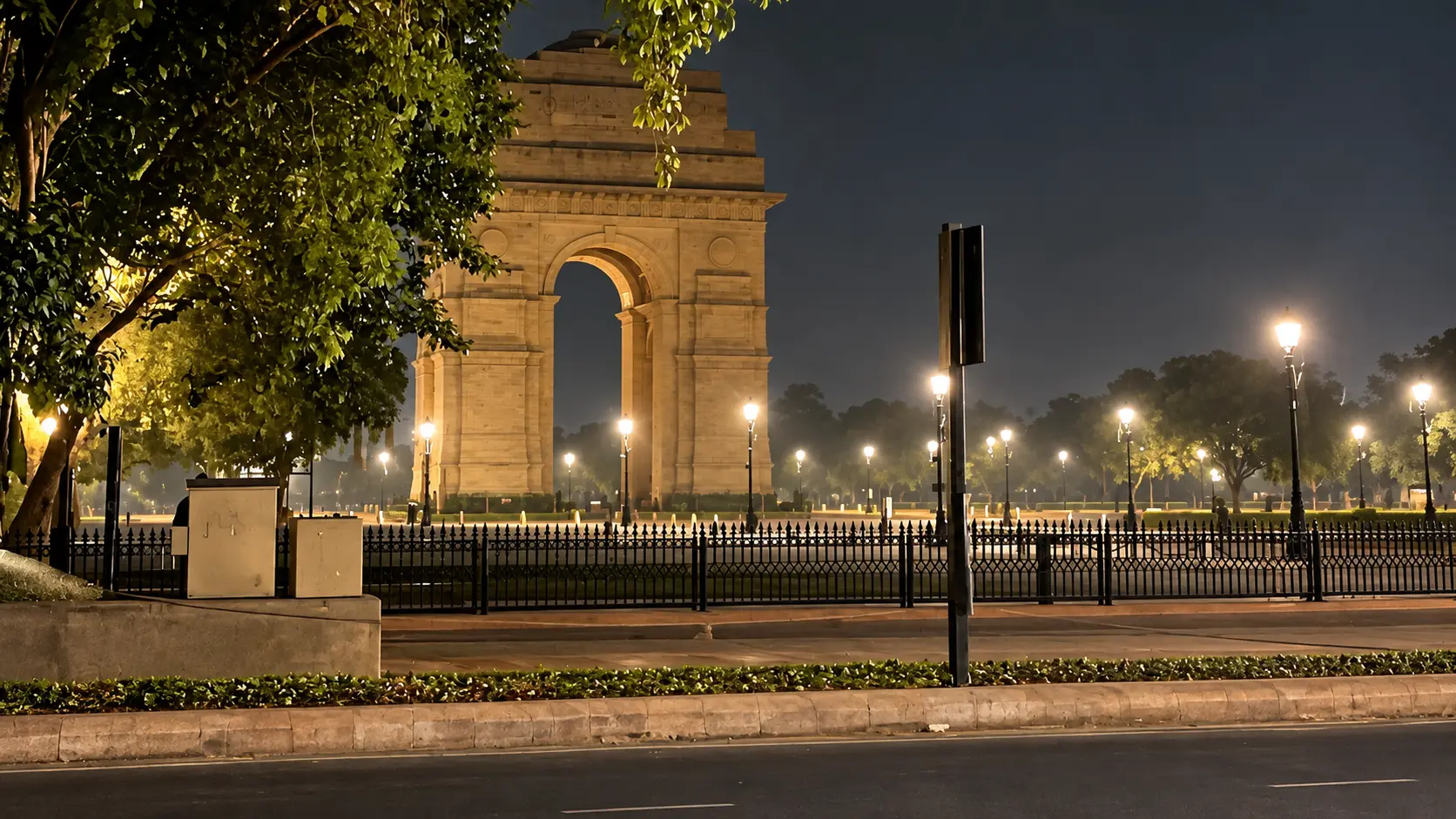
- India Gate and Kartavya Path (~2.2 km south via KG Marg): The iconic 42-meter triumphal arch war memorial designed by Sir Edwin Lutyens, fronting the sprawling, landscaped lawns of Kartavya Path leading to Rashtrapati Bhavan.
- Lodhi Gardens (~4 km south via Lodhi Road): A magnificent 90-acre heritage park containing the 15th-century royal domed tombs of the Sayyid and Lodi sultans set amidst manicured lawns and ancient trees.
In pictures
The practical bits
Before you go.
Ideal Time Allocation
Plan to spend between 45 minutes and 1.5 hours at Agrasen Ki Baoli.Explore detailsClose details
Plan to spend between 45 minutes and 1.5 hours at Agrasen Ki Baoli. This allows sufficient time to slowly descend the 108 stone steps, examine the three levels of vaulted arches, study the architecture of the western mosque, sit in the cool lower galleries, and capture photographs from multiple perspectives.
Crowd Mitigation and Optimal Timing
Agrasen Ki Baoli is exceptionally popular among college students, local youth, street photographers, and…Explore detailsClose details
Agrasen Ki Baoli is exceptionally popular among college students, local youth, street photographers, and Instagram creators, especially on weekend afternoons. Check the current visiting hours and permitted access with the site operator before departure; ceremonies, closures and visitor sessions can affect access.
Footwear and Physical Safety
The stone steps have been smoothed by centuries of foot traffic and can be slightly uneven.Explore detailsClose details
The stone steps have been smoothed by centuries of foot traffic and can be slightly uneven. Wear comfortable flat walking shoes or sneakers with good grip. In the lower tiers near the circular well shaft, the stone can occasionally be damp; take deliberate, measured steps. Visitors with knee ailments or severe mobility limitations should note that descending and re-climbing all 108 steep steps requires moderate physical stamina.
Combining with Connaught Place Dining
Because the monument does not maintain an on-site cafeteria, combine your visit with a meal in nearby Connaught…Explore detailsClose details
Because the monument does not maintain an on-site cafeteria, combine your visit with a meal in nearby Connaught Place or along Kasturba Gandhi Marg. Within a 5- to 10-minute walk from Hailey Road, you will find iconic culinary institutions - including the historic United Coffee House, Wenger's Bakery (famous for shami kebabs and pastries), Saravana Bhavan for South Indian filter coffee and dosas, and Haldiram's on KG Marg for traditional street snacks.
A few things you might wonder
Common questions about visiting Agrasen Ki Baoli. Fees, visiting hours and ceremonies are researched details that may change; confirm current arrangements with the operator before travelling.
What are the opening and closing timings of Agrasen Ki Baoli?
Is there an entry fee for visiting Agrasen Ki Baoli?
Which metro station is closest to Agrasen Ki Baoli?
How many steps does Agrasen Ki Baoli have?
Why is Agrasen Ki Baoli famous in Bollywood films?
Who built Agrasen Ki Baoli and how old is it?
Is Agrasen Ki Baoli haunted?
Can I conduct a professional pre-wedding or fashion photoshoot with a tripod?
Explore more in New Delhi
Discover other destinations around this hub
More Hubs in Delhi Ncr
Continue exploring other travel hubs in this state
Planning a trip to New Delhi?