Palani Murugan Temple
Essential visitor guide to Arulmigu Dhandayuthapani Swamy Temple in Palani, Tamil Nadu. Explore the Navapashanam idol, GI panchamirtham, ropeway, winch & darshan.
Location
Kodaikanal & Palani, Tamil Nadu
A closer look
Your visit, at a glance.
Kodaikanal Palani, Tamil Nadu
GET TO KNOW THE PLACE
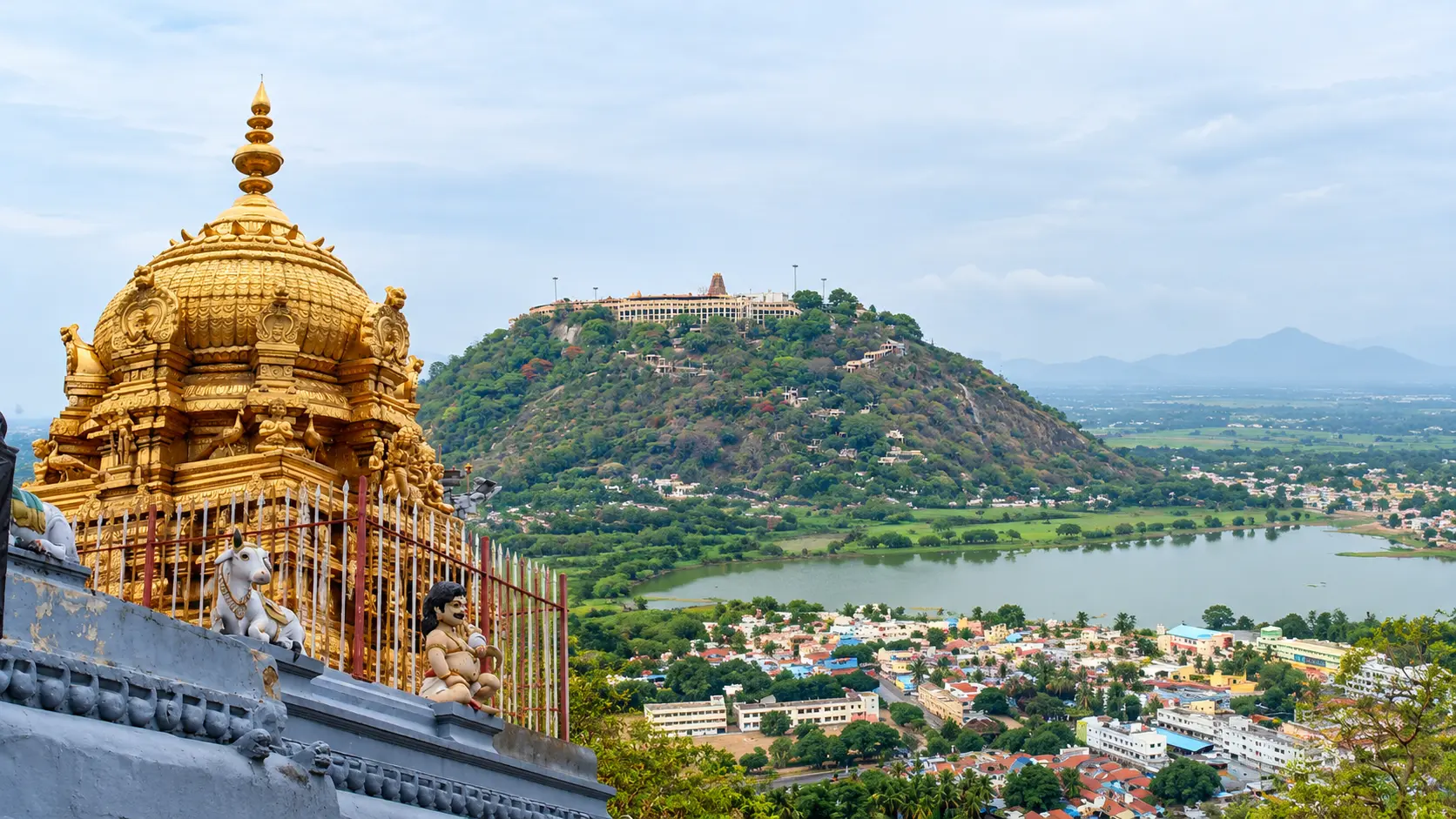
Perched majestically atop the conical granite monolith of Sivagiri Hill in Palani, Dindigul District, Tamil Nadu, Arulmigu Dhandayuthapani Swamy Temple - revered throughout the…
The story of Palani Murugan Temple
Perched majestically atop the conical granite monolith of Sivagiri Hill in Palani, Dindigul District, Tamil Nadu, Arulmigu Dhandayuthapani Swamy Temple - revered throughout the world as Palani Murugan Temple - is the spiritual epicentre of Murugan worship in South India. Rising 150 metres above the surrounding agrarian plains at an elevation of 450 metres (1,476 feet), the temple is celebrated as the third and most prominent of the Arupadai Veedu (the Six Sacred Abodes of Lord Murugan). Here, the warrior god of Tamil literature and Hindu lore is enshrined not with battle armor, but in the tender, ascetic guise of a youthful mendicant - Dhandayuthapani, meaning "the Lord who wields a staff" - having renounced all royal regalia after losing the divine fruit of wisdom to his brother Ganesha.
Beyond its immense mythological significance, Palani is celebrated for two world-renowned cultural wonders: the enigmatic Navapashanam idol, an alchemical marvel sculpted from nine medicinal and mineral poisons by the ancient Tamil Siddha master Sage Bogar, and the divine Palani Panchamirtham, a centuries-old sacred confection that became the first temple prasad in Tamil Nadu to receive a coveted Geographical Indication (GI) tag. Whether you undertake the spiritual ascent climbing the 693 stone steps alongside foot pilgrims bearing decorated kavadis, ride the vintage electric haulage winch up the granite cliff, or take in the sweeping panoramic vistas from the aerial ropeway, Palani offers an awe-inspiring immersion into ancient Tamil spirituality.
Start here. Open a tile for the full details.
Why goRead details
When to visitRead details
- Winter Season (November to February): This is the most pleasant and comfortable season for visiting Palani. Daily temperatures range between 18°C and 30°C. Mornings and evenings are pleasantly breezy, making the climb up the 693 stone steps easy and enjoyable.
- Summer Season (March to June): Summers are fiercely hot, with midday temperatures regularly climbing past 38°C to 41°C. The bare granite stones of the hill can become scorching underfoot. If visiting during summer, plan your temple climb either in the early morning between 05:30 and 08:30 or in the late evening after 17:30.
- Monsoon Season (July to October): The region receives moderate showers from the Southwest Monsoon and heavier downpours from the Northeast Monsoon (October to November). The surrounding countryside turns lush and green, and temperatures remain moderate. However, wet stone steps can become slick, and ropeway operations may be temporarily suspended during sudden high-wind squalls.
Entry & permissionsRead details
Fees, visiting hours and entry rules may change. Confirm the latest details with the official operator or local authority before travelling.
Operating Hours and Puja Schedules
- Temple Opening: Open daily seven days a week from 06:00 to 20:00 (extended up to 21:30 or later on major festival days).
- Sanctum Entry Timings: Darshan is available throughout the day, briefly pausing for 15 to 20 minutes during the scheduled six daily pujas (06:30, 08:00, 09:00, 12:00, 17:30, and 20:00).
- Winch and Ropeway Hours:
- Haulage Winch: 06:00 to 20:00 (continuous departures).
- Aerial Ropeway: 07:00 to 13:00 and 14:00 to 19:30 (closed for routine technical inspection between 13:00 and 14:00 daily).
Darshan Fees and Ticketing Categories
- General Free Darshan (Dharma Darshanam): Completely free of charge. Expect wait times of 45 minutes to 2 hours on normal weekdays, and 3 to 6 hours on weekends and festivals.
- Special Fast-Track Darshan Queues:
- ₹20 Darshan Ticket: Moderate queue acceleration.
- ₹100 Special Darshan Ticket: Expedited entry through dedicated corridors.
- ₹300 VIP Special Entry Ticket: Fastest access corridor near the sanctum.
- Hill Transit Tickets (One-Way):
- Haulage Winch: ₹30 to ₹50 per person
- Aerial Ropeway: ₹50 to ₹100 per person
- Ritual Tokens:
- Tonsuring (Head Shaving / Mottai): ₹10
- Special Panchamirtham Jar (500g): Standard temple counter rates typically range from ₹35 to ₹50 per container.
Strict Dress Code Regulations
Under official Tamil Nadu HR&CE Department directives, conservative temple attire is mandatory for all visitors:
- Men: Must wear a traditional dhoti (veshti), pyjama, or formal trousers. Shirts, vests, and upper garments must be removed and draped over the shoulder upon entering the inner prakaram and sanctum enclosure. Western shorts, Bermudas, lungis, and torn jeans are strictly prohibited.
- Women: Must wear a traditional saree, half-saree (pavadai), or salwar kameez / churidar with a properly pinned dupatta. Sleeveless blouses, western shorts, miniskirts, leggings, and tight crop tops are barred.
- Footwear: Footwear is strictly prohibited on the hill summit and along the step pathway. Free and paid shoe cloakrooms are available at the base stations.
Electronic Devices and Photography Bans
Photography, videography, camera-equipped mobile phones, and recording equipment are strictly banned inside the sanctum complex and inner corridors by order of the Madras High Court and HR&CE Department. Visitors must deposit all mobile phones and cameras in designated computerized cloakroom counters at the hill base or summit entrance before entering the queue lines.
Plan your visitRead details
Explore the full guide - choose a topic below.
Why visit?
For millions of devotees across Tamil Nadu, Kerala, Sri Lanka, Malaysia, Singapore, and the global Tamil…Explore detailsClose details
The Preeminent Abode among the Arupadai Veedu
For millions of devotees across Tamil Nadu, Kerala, Sri Lanka, Malaysia, Singapore, and the global Tamil diaspora, Palani is the ultimate pilgrimage destination. While all six abodes (Tiruparankundram, Tiruchendur, Palani, Swamimalai, Tiruttani, and Pazhamudircholai) are sacred, Palani holds a uniquely intimate place in the hearts of pilgrims. It embodies the philosophy of absolute spiritual renunciation and the pursuit of inner wisdom (gnana). Devotees believe that visiting Palani washes away worldly delusions, cures physical ailments, and bestows mental clarity. The energy of the hill - echoing with the rhythmic chants of "Vetri Vel Muruganukku... Haroharohara!" and the resonant clatter of brass bells - is palpable from the moment you set foot in the town.
The Alchemical Marvel of the Navapashanam Idol
The primary sanctum idol of Dhandayuthapani Swamy is unlike any other murti in the Hindu world. According to ancient Siddha texts and epigraphic lore, the icon was sculpted and consecrated by the revered 3rd-century BCE Tamil Siddha alchemist Sage Bogar. Rather than carving it from traditional granite or casting it from panchaloha (five metals), Bogar synthesized an extraordinary alloy known as Navapashanam - composed of nine poisonous minerals, including purified mercury, sulphur, cinnabar, arsenic, and rare highland medicinal ores. Through secret alchemical formulas, Bogar stabilized the toxic compounds into a solid, resilient material possessing miraculous curative properties. Scientific analyses have shown that when sacred substances - such as milk, tender coconut water, sandalwood paste, or panchamirtham - are poured over the idol during ritual abhishekam, they absorb micro-traces of mineral compounds that act as potent medicinal remedies. Bogar's subterranean tomb shrine (Jiva Samadhi) is located within the temple corridor itself, venerated by thousands of seekers of esoteric spirituality.
The GI-Tagged Divine Ambrosia: Palani Panchamirtham
No visit to Palani is complete without partaking in Palani Panchamirtham, the sanctified prasad of the temple. In 2019, Palani Panchamirtham achieved international intellectual property recognition when it was awarded a prestigious Geographical Indication (GI) tag by the Government of India - the very first temple prasad in Tamil Nadu to receive this honor. Handcrafted according to a strict traditional recipe, it blends five primary natural ingredients: small, sweet Virupachi mountain bananas grown in the Palani hills, unrefined country sugar (jaggery) from the sugarcane fields of Alangayam, pure cow ghee, wild forest honey, and fragrant green cardamom, with minor additions of dates and sugar candy. Prepared without a single drop of water or any artificial chemical preservatives, the confection boasts a rich, golden-brown paste consistency with an astonishing shelf life of several months at room temperature.
Three Exhilarating Modes of Ascent
Ascending Sivagiri Hill is an adventure in itself, catering to every fitness level and spiritual inclination:
- The 693 Stone Steps: The traditional path followed by devout pilgrims. Carved directly into the western flank of the granite hill, the broad stone staircase is fully covered by protective sunshades and equipped with resting landings, ceiling fans, and drinking water kiosks.
- The Haulage Winch (Funicular Train): Operating since 1966, the temple runs three electric haulage winch cars running on parallel steel tracks up a steep 36-degree incline. The 8-minute journey offers a thrilling, nostalgic ascent with wide glass windows overlooking the town.
- The Aerial Mono-Cable Ropeway: Introduced to modernise hill transit, the modern enclosed passenger cable car glides effortlessly across the vertical cliff face, transporting visitors from the base station to the hilltop in just three minutes while providing breathtaking panoramic vistas of the surrounding paddy fields and the rising wall of the Western Ghats.
What to expect
The bustling foothill precinct around Sivagiri Hill is known as Adivaram.Explore detailsClose details
Arrival at the Sacred Foothills (Adivaram)
The bustling foothill precinct around Sivagiri Hill is known as Adivaram. Here, the atmosphere is intensely vibrant, lined with hundreds of authorized stalls selling Panchamirtham containers, brass puja items, framed pictures of Murugan, and garlands of fragrant oleander and jasmine flowers. Adivaram is home to the base stations for the Winch, Ropeway, and Stairway, alongside extensive administrative complexes: tonsuring halls (Mottai Mandapam) where thousands of devotees fulfill vows by having their heads shaved, public bathing ghats, shoe cloakrooms, and mobile phone storage lockers.
The Hilltop Temple Architecture
Reaching the summit, you step onto a wide, flagstone-paved perimeter courtyard surrounding the sacred sanctum. The temple exhibits classic late Pandya and Nayaka architectural elements, dominated by an intricately carved golden vimana (Swarna Vimana) that shines brilliantly under the South Indian sun. The inner prakaram (corridor) features sculpted granite pillars, oil-lamp corridors, and secondary shrines dedicated to Lord Ganesha (Patta Vinayagar), Sage Bogar, and Goddess Parvati (Parvathiamman). The sanctum itself is bathed in warm oil-lamp glow, where the ascetic form of Murugan - standing gracefully with shaved head, loincloth, and sacred staff - radiates transcendent serenity.
The Six Daily Ritual Services (Aru Kala Puja)
Worship in the sanctum follows a meticulous, centuries-old agamic schedule featuring six grand daily worship services (Aru Kala Puja):
- 06:30 - Vila Puja: Check the current visiting hours and permitted access with the site operator before departure; ceremonies, closures and visitor sessions can affect access.
- 08:00 - Sirukalasanthi: Morning offering of sacred food and floral decoration.
- 09:00 - Kalasanthi: Check the current visiting hours and permitted access with the site operator before departure; ceremonies, closures and visitor sessions can affect access.
- 12:00 - Uchikalam: The grand midday puja, where the deity is worshipped in magnificent royal attire (Raja Alankaram), crowned with jewels and silk brocade.
- 17:30 - Sayarakshai: Check the current visiting hours and permitted access with the site operator before departure; ceremonies, closures and visitor sessions can affect access.
- 20:00 - Rakkalam: The final night ceremony, during which the deity is adorned in a simple ascetics' garb for cosmic sleep.
Annadhanam (Free Sacred Dining)
Under the visionary Tamil Nadu HR&CE Annadhanam scheme, Palani Murugan Temple operates one of the largest free mass dining programs in India. Every day between 11:30 and 15:30, thousands of pilgrims of all castes, creeds, and economic backgrounds are served fresh, piping-hot traditional South Indian meals - including sambar rice, rasam, kootu, poriyal, buttermilk, and payasam - on banana leaves in sprawling, spotless dining halls on the hilltop and at the foothill campus.
Best time to visit
Palani is situated in the inland plains at the base of the Western Ghats, experiencing warm to hot tropical…Explore detailsClose details
Seasonal Weather Patterns
Palani is situated in the inland plains at the base of the Western Ghats, experiencing warm to hot tropical weather throughout the year.
- Winter Season (November to February): This is the most pleasant and comfortable season for visiting Palani. Daily temperatures range between 18°C and 30°C. Mornings and evenings are pleasantly breezy, making the climb up the 693 stone steps easy and enjoyable.
- Summer Season (March to June): Summers are fiercely hot, with midday temperatures regularly climbing past 38°C to 41°C. The bare granite stones of the hill can become scorching underfoot. If visiting during summer, plan your temple climb either in the early morning between 05:30 and 08:30 or in the late evening after 17:30.
- Monsoon Season (July to October): The region receives moderate showers from the Southwest Monsoon and heavier downpours from the Northeast Monsoon (October to November). The surrounding countryside turns lush and green, and temperatures remain moderate. However, wet stone steps can become slick, and ropeway operations may be temporarily suspended during sudden high-wind squalls.
Key Festivals and Massive Gatherings
- Thaipusam (January / February): The supreme festival of Palani, commemorating Goddess Parvati bestowing the divine spear (Vel) upon Murugan to vanquish the demon Surapadman. Over two million pilgrims flood Palani during this 10-day extravaganza. Devotees walk hundreds of kilometres barefoot (Pada Yatra) from across Tamil Nadu, carrying elaborate flower-and-feather structures (Kavadis) and brass pots of holy theertham across their shoulders. The atmosphere of devotion during Thaipusam is electric and overwhelming.
- Panguni Uthiram (March / April): Commemorating the celestial wedding of Lord Murugan and Goddess Valli, this 10-day spring festival is celebrated by vast processions carrying holy water from the sacred Kodumudi river to perform abhishekams for the deity atop the hill.
- Vaikasi Visakam (May / June): Celebrating the birthday of Lord Murugan with grand golden chariot (Thanga Ther) processions.
How to reach
Arulmigu Dhandayuthapani Swamy Temple is situated on Sivagiri Hill in the town of Palani, Dindigul District…Explore detailsClose details
Geographic Location
Arulmigu Dhandayuthapani Swamy Temple is situated on Sivagiri Hill in the town of Palani, Dindigul District, Tamil Nadu (pin code 624601). It is positioned 60 km northwest of Dindigul, 65 km north of Kodaikanal, 105 km southeast of Coimbatore, and 115 km northwest of Madurai.
By Train
Palani Railway Station (PLNI) is situated just 2 km from the temple base (Adivaram). Auto-rickshaws and town buses connect the railway station to the hill foot in under 10 minutes. The station is located on the broad-gauge line connecting Dindigul, Pollachi, Coimbatore, and Palakkad, with daily direct express and passenger trains from:
- Chennai Central / Egmore (overnight Palani Express)
- Coimbatore Junction
- Madurai Junction
- Tiruchendur (connecting the coastal abode to the hill abode)
- Palakkad (Kerala)
By Air
- Coimbatore International Airport (CJB): Located approximately 105 km northwest. A 2.5-hour taxi drive via Pollachi and Udumalaipettai connects Coimbatore Airport to Palani along excellent four-lane highways.
- Madurai International Airport (IXM): Located approximately 125 km southeast (about 2.5 to 3 hours drive via Batlagundu / Sempatty).
- Both airports handle extensive domestic flights from Chennai, Bengaluru, Mumbai, Delhi, and Hyderabad, as well as direct international flights from the Gulf and Southeast Asia.
By Road and Intercity Bus
Palani is one of the most accessible temple towns in South India, serviced by round-the-clock bus connectivity:
- Central Bus Terminus (Palani): Located 1.5 km from the temple base. The Tamil Nadu State Transport Corporation (TNSTC) and Kerala State RTC operate direct express buses every 15 to 30 minutes to and from:
- Coimbatore (via Pollachi)
- Dindigul
- Madurai (via Oddanchatram)
- Tiruchirappalli (Trichy)
- Salem and Erode
- Bengaluru and Palakkad
- The Mountain Route from Kodaikanal: A spectacular 65-kilometre ghat road (the Palani-Kodai Ghat Road) winds down through 14 thrilling hairpin turns, coffee plantations, and forest reserves from Kodaikanal to Palani. The journey takes approximately 2 to 2.5 hours by taxi or TNSTC ghat bus.
Entry, timings and permissions
Fees, visiting hours and entry rules may change.Explore detailsClose details
Fees, visiting hours and entry rules may change. Confirm the latest details with the official operator or local authority before travelling.
Operating Hours and Puja Schedules
- Temple Opening: Open daily seven days a week from 06:00 to 20:00 (extended up to 21:30 or later on major festival days).
- Sanctum Entry Timings: Darshan is available throughout the day, briefly pausing for 15 to 20 minutes during the scheduled six daily pujas (06:30, 08:00, 09:00, 12:00, 17:30, and 20:00).
- Winch and Ropeway Hours:
- Haulage Winch: 06:00 to 20:00 (continuous departures).
- Aerial Ropeway: 07:00 to 13:00 and 14:00 to 19:30 (closed for routine technical inspection between 13:00 and 14:00 daily).
Darshan Fees and Ticketing Categories
- General Free Darshan (Dharma Darshanam): Completely free of charge. Expect wait times of 45 minutes to 2 hours on normal weekdays, and 3 to 6 hours on weekends and festivals.
- Special Fast-Track Darshan Queues:
- ₹20 Darshan Ticket: Moderate queue acceleration.
- ₹100 Special Darshan Ticket: Expedited entry through dedicated corridors.
- ₹300 VIP Special Entry Ticket: Fastest access corridor near the sanctum.
- Hill Transit Tickets (One-Way):
- Haulage Winch: ₹30 to ₹50 per person
- Aerial Ropeway: ₹50 to ₹100 per person
- Ritual Tokens:
- Tonsuring (Head Shaving / Mottai): ₹10
- Special Panchamirtham Jar (500g): Standard temple counter rates typically range from ₹35 to ₹50 per container.
Strict Dress Code Regulations
Under official Tamil Nadu HR&CE Department directives, conservative temple attire is mandatory for all visitors:
- Men: Must wear a traditional dhoti (veshti), pyjama, or formal trousers. Shirts, vests, and upper garments must be removed and draped over the shoulder upon entering the inner prakaram and sanctum enclosure. Western shorts, Bermudas, lungis, and torn jeans are strictly prohibited.
- Women: Must wear a traditional saree, half-saree (pavadai), or salwar kameez / churidar with a properly pinned dupatta. Sleeveless blouses, western shorts, miniskirts, leggings, and tight crop tops are barred.
- Footwear: Footwear is strictly prohibited on the hill summit and along the step pathway. Free and paid shoe cloakrooms are available at the base stations.
Electronic Devices and Photography Bans
Photography, videography, camera-equipped mobile phones, and recording equipment are strictly banned inside the sanctum complex and inner corridors by order of the Madras High Court and HR&CE Department. Visitors must deposit all mobile phones and cameras in designated computerized cloakroom counters at the hill base or summit entrance before entering the queue lines.
Nearby places to consider
Located at the base of the hill in Palani town, this ancient 14th-century temple is dedicated to Goddess…Explore detailsClose details
Periyanayaki Amman Temple (Aavudaiyar Kovil)
Located at the base of the hill in Palani town, this ancient 14th-century temple is dedicated to Goddess Periyanayaki Amman (Parvati) and Lord Shiva. Known as the "Town Temple" or Periyakovil, it showcases grand Nayaka-style carved monolithic pillared halls (mandapas) and towering gopurams. The temple car festival (Ther Thiruvizha) during Panguni Uthiram starts from this sanctum.
Thiru Avinankudi Temple
Situated right at the foot of Sivagiri Hill, this is the historic first temple of Palani, celebrated in early Sangam poetry. According to tradition, Lord Murugan rested here before ascending the hill. Surrounded by a sacred temple tank (theertham), pilgrims traditionally worship at Thiru Avinankudi before commencing their climb up the stone steps of Sivagiri Hill.
Kodaikanal Hill Station
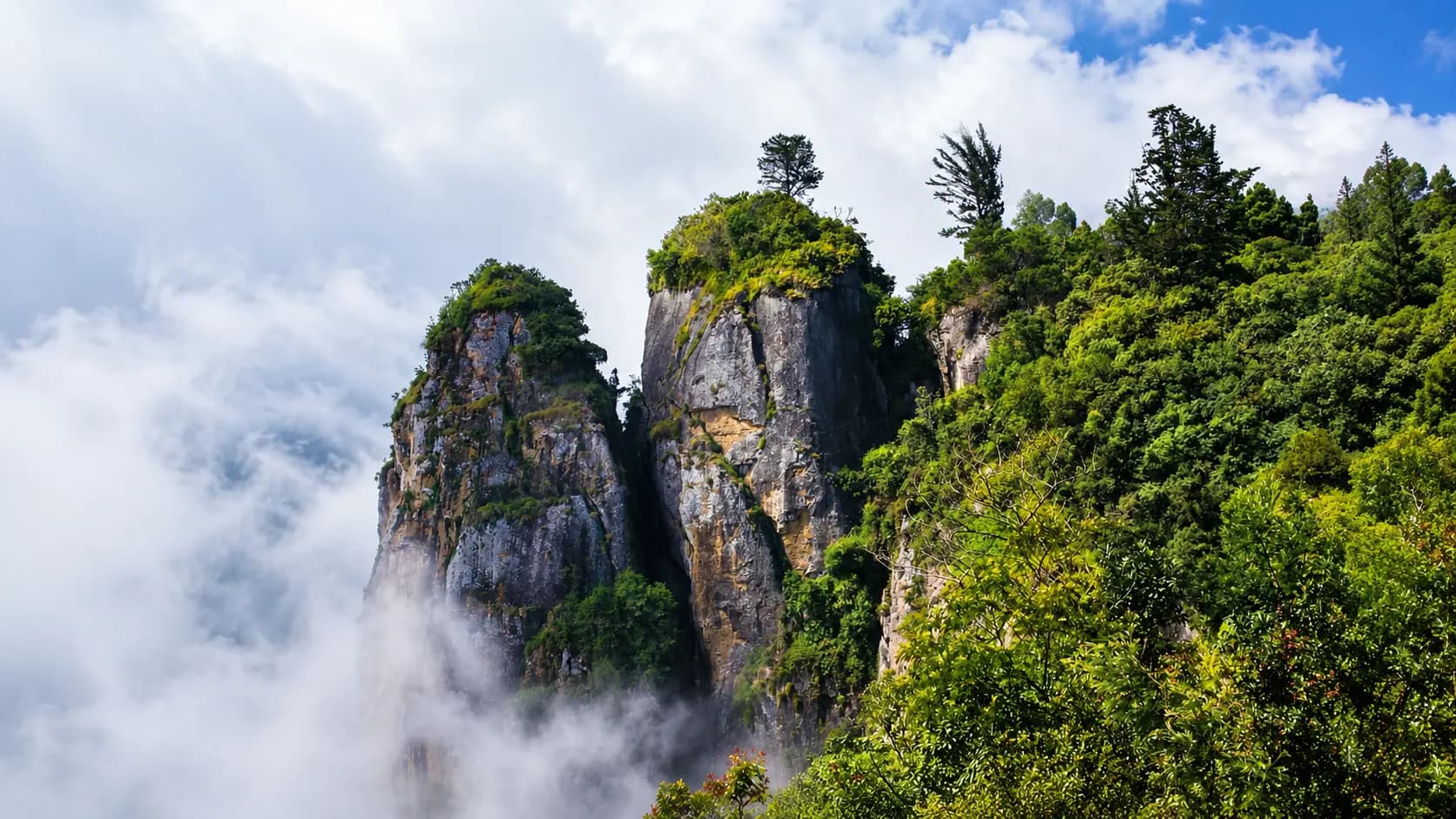
Located just 65 km south via the breathtaking Palani-Kodai Ghat Road, Kodaikanal is one of South India's premier mountain retreats. A 2.5-hour scenic drive ascends through 14 hairpin turns from the plains of Palani to the crisp mountain heights of Kodai Lake, Coaker's Walk, and Pillar Rocks, making a combined Palani-Kodaikanal itinerary one of Tamil Nadu's most popular travel routes.
Amaravathi Dam and Crocodile Bank
Located approximately 35 km west near Udumalaipettai, Amaravathi Dam is a scenic irrigation reservoir set against the Indira Gandhi Wildlife Sanctuary (Anamalai Tiger Reserve). Adjacent to the dam is the Amaravathi Crocodile Bank, the largest mugger crocodile breeding centre in Tamil Nadu, nestled within lush forested terrain.
Thirumoorthy Hills and Waterfalls
Situated 45 km west near Udumalaipettai, Thirumoorthy Hills features the sacred Sri Amanalingeswarar Temple dedicated to the Hindu trinity of Shiva, Vishnu, and Brahma. A gentle 1.5-km trek upstream through rocky forest glades leads to the cascading waters of Panchalingam Waterfalls, fed by the pristine streams of the Anamalai mountain range.
In pictures
The practical bits
Before you go.
Choosing Your Ascent Strategy
If you have average physical fitness, walking up the 693 stone steps is deeply rewarding.Explore detailsClose details
If you have average physical fitness, walking up the 693 stone steps is deeply rewarding. The path is fully shaded, breezy, and provides a continuous sense of pilgrimage alongside chanting devotees; the climb takes about 25 to 40 minutes. For senior citizens, families with toddlers, or visitors with knee problems, take the Haulage Winch or Ropeway. To avoid waiting 45+ minutes in queue for the ropeway, purchase your transit tokens early in the morning before 07:30. A popular combination is to ride the winch or ropeway up to the summit, and walk down the steps on the return journey.
Timing Your Visit
Check the current visiting hours and permitted access with the site operator before departure; ceremonies…Explore detailsClose details
Check the current visiting hours and permitted access with the site operator before departure; ceremonies, closures and visitor sessions can affect access. Weekdays (Tuesday to Thursday) are significantly less crowded than weekends (Saturday and Sunday), Karthigai star days, and full-moon (Pournami) nights. If visiting during the colossal Thaipusam festival (January/February), be prepared for extraordinary crowd densities where darshan lines can take between 6 and 10 hours.
Purchasing Authentic Panchamirtham
Be cautious of private roadside vendors selling counterfeit or commercial panchamirtham in plastic jars outside…Explore detailsClose details
Be cautious of private roadside vendors selling counterfeit or commercial panchamirtham in plastic jars outside the temple. To ensure you receive the authentic, GI-certified divine prasad prepared under strict hygienic standards by the HR&CE Department, purchase your sealed tins or plastic jars exclusively from the official temple-operated prasad counters located on the hilltop inside the outer prakaram and at the central administrative building at the hill foot.
Baggage and Security Management
Travel as light as possible.Explore detailsClose details
Travel as light as possible. Leave bulky backpacks, leather belts, wallets, cameras, and extra electronic devices in your hotel room or vehicle. Only carry essential cash, photo ID, and ritual offerings in a small cloth bag. Security screening including metal detector doorways is mandatory at all entry gates.
A few things you might wonder
Common questions about visiting Palani Murugan Temple. Fees, visiting hours and ceremonies are researched details that may change; confirm current arrangements with the operator before travelling.
Why is Palani Murugan Temple historically and spiritually unique?
What is the significance of the GI-tagged Palani Panchamirtham?
How can elderly visitors or travellers with mobility issues reach the hilltop?
Are cameras and mobile phones permitted inside the temple?
What is the dress code for visiting Palani Murugan Temple?
Can I get free food at the temple?
How far is Palani from Kodaikanal, and what is the best way to travel between them?
Where should I purchase authentic Palani Panchamirtham?
Explore more in Kodaikanal Palani
Discover other destinations around this hub

More Hubs in Tamil Nadu
Continue exploring other travel hubs in this state
Planning a trip to Kodaikanal Palani?