Mannavanur Lake
Essential visitor guide to Mannavanur Lake near Kodaikanal, Tamil Nadu. Explore rolling meadows, coracle boating, ICAR sheep research farm, timings & entry fees.
Location
Kodaikanal & Palani, Tamil Nadu
A closer look
Your visit, at a glance.
Kodaikanal Palani, Tamil Nadu
GET TO KNOW THE PLACE
Nestled within a secluded, sun-drenched highland bowl approximately 35 kilometres west of Kodaikanal town, Mannavanur Lake is one of the most idyllic, visually breathtaking, and…
The story of Mannavanur Lake
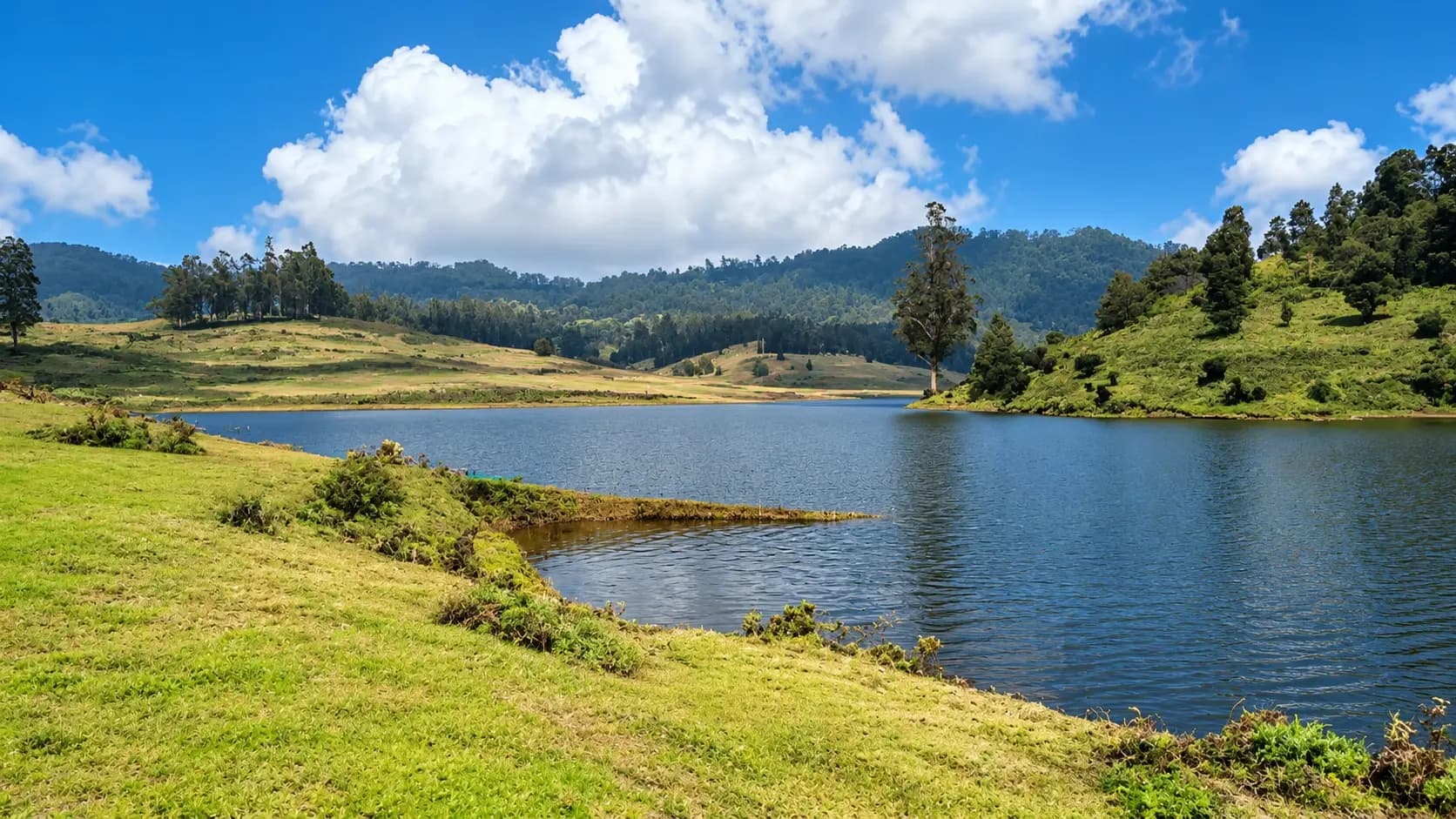
Nestled within a secluded, sun-drenched highland bowl approximately 35 kilometres west of Kodaikanal town, Mannavanur Lake is one of the most idyllic, visually breathtaking, and peaceful eco-tourism destinations in Tamil Nadu’s Dindigul District. Sitting at an altitude of 1,930 metres (6,332 feet) above sea level in the upper reaches of the Palani Hills, Mannavanur presents an entirely different aesthetic from the busy colonial heart of central Kodaikanal. Here, commercial hotels and congested bazaar streets give way to vast, undulating green meadows reminiscent of Swiss alpine pastures, punctuated by fragrant stands of towering maritime pine, silver wattle, and indigenous shola woodland.
Operated under the sustainable oversight of the Tamil Nadu Forest Department, Mannavanur Lake has emerged as a premier retreat for discerning travellers seeking quiet contemplation, pastoral beauty, and gentle highland adventures. Whether you glide across the mirror-like waters in a traditional circular bamboo coracle, wander freely across vast meadows where flocks of fine-wool sheep graze serenely, or marvel at the ancient amphitheatre of terraced step farms clinging to the mountain slopes of nearby Poombarai, a journey to Mannavanur reveals the unspoiled agrarian soul of the Western Ghats.
Start here. Open a tile for the full details.
Why goRead details
When to visitRead details
- Post-Monsoon and Winter (September to March): This is unequivocally the most scenic and rewarding window to visit. Following the monsoon rains, the entire valley is carpeted in intense emerald green, the reservoir is full to the brim, and wildflower blooms dot the pastures. Daytime temperatures range from a very comfortable 14°C to 18°C under clear, azure skies. In December and January, morning temperatures frequently drop to 5°C to 8°C, creating crisp frosty mornings that quickly give way to radiant sunshine.
- Summer Season (April to June): Mannavanur provides a glorious escape from the heat of the plains, with temperatures hovering pleasantly between 16°C and 24°C. While the grass takes on a golden-green hue as summer progresses, the weather remains breezy and refreshing, making it an excellent time for coracle boating and meadow walks.
- Monsoon Season (July to August): The Southwest Monsoon brings heavy cloudbursts, persistent mist, and strong mountain winds. While the misty valley looks atmospheric and dramatic, heavy rains often lead to the suspension of coracle boating, and the narrow 35-kilometre mountain road from Kodaikanal can occasionally experience fallen branches or localized rockslides.
Entry & permissionsRead details
Fees, visiting hours and entry rules may change. Confirm the latest details with the official operator or local authority before travelling.
Operating Schedule
- Daily Timings: Open seven days a week from 09:00 to 17:00.
- Ticket Counter: Closes at 16:30.
- Campus Departure: All visitors must vacate the lakeside meadows and eco-tourism campus by 17:00, as night-time transit through the surrounding reserve forest buffer is restricted.
Entry Tariffs and Boating Fees
- General Admission (Forest Eco-Tourism):
- Adults: ₹20 per person
- Children (Ages 5 to 12): ₹10 per child
- Children under 5: Free
- Camera Tariffs:
- Still Camera / DSLR: ₹50 per unit
- Commercial Video Camera: ₹200 per unit
- Boating Charges (Managed by Eco-Tourism Committee):
- Traditional Coracle Ride: ₹100 to ₹150 per person (approx. 20 minutes, including life jacket)
- Sit-on-Top Kayaking: ₹150 to ₹200 per person (approx. 20 minutes)
- Vehicle Parking Fees:
- Two-Wheelers: ₹20
- Cars / Jeeps / SUVs: ₹40
- Minibuses / Tempo Travellers: ₹80
Essential Rules and Safety Mandates
- Compulsory Life Jackets: By order of the Tamil Nadu Forest Department, wearing a properly fastened life jacket is strictly compulsory for every person boarding a coracle or kayak. No exceptions are made.
- Strict Prohibition on Swimming: Swimming, wading, or bathing in the reservoir is strictly illegal. The water is deep, chilly, and underlain with soft silt and submerged reeds that present significant drowning risks.
- Plastic-Free Eco-Sensitive Zone: Single-use plastic water bottles, disposable polythene carry bags, and plastic food wrappers are strictly banned. Forest guards at the gate may inspect bags. Please carry refillable metal bottles and bring all trash back to town.
- Respect for Farm Research and Livestock: While visitors are free to observe the grazing sheep and pastoral landscape of the neighbouring ICAR-CSWRI facility from public trails, visitors must not chase, harass, or feed the animals, nor enter restricted laboratory breeding barns without prior institutional permission.
Plan your visitRead details
Explore the full guide - choose a topic below.
Why visit?
The most striking visual feature of Mannavanur Lake is the sweeping grassland landscape that encircles the water.Explore detailsClose details
Pristine Alpine-Style Rolling Meadows
The most striking visual feature of Mannavanur Lake is the sweeping grassland landscape that encircles the water. Unlike the heavily developed and paved perimeter of Kodaikanal Lake, Mannavanur's shores are composed of soft, undulating turf that rolls gently down to the water’s edge. Free from commercial storefronts, concrete retaining walls, and vehicular noise, the meadows offer immense open space where visitors can sit on the grass, watch horses and sheep roam across the hillsides, and listen to the whisper of mountain breezes rustling through pine needles. The panoramic vistas - framed by dark green pine forests and blue mountain ridges fading into the horizon - make it a dream destination for landscape painters, photographers, and nature enthusiasts.
Traditional Coracle Boating and Kayaking
A signature highlight of visiting Mannavanur Lake is the opportunity to experience coracle boating. A coracle (parisal in Tamil) is an ancient, circular bowl-shaped boat traditionally crafted from woven bamboo lattices, waterproofed with canvas or plastic sheeting, and navigated using a single wooden paddle. Handled by expert local boatmen trained by the Forest Department, the coracles spin gently as they glide across the peaceful reservoir, offering a novel, water-level perspective of the waterfowl, reed beds, and surrounding hills. For more active visitors, single and tandem sit-on-top kayaks are available, allowing you to paddle independently across the calm, sheltered bays of the lake.
The ICAR Central Sheep and Wool Research Institute
Directly bordering the lake campus is the Southern Regional Research Centre (SRRC) of the prestigious Indian Council of Agricultural Research - Central Sheep and Wool Research Institute (ICAR-CSWRI). Established in 1965, this expansive government research facility spans several hundred acres of prime temperate grassland. The institute is dedicated to scientific breeding, genetic improvement, and pasture research for fine-wool and dual-purpose sheep breeds - including the Bharat Merino and Chokla - as well as meat and wool rabbit breeds like the Soviet Chinchilla, White Giant, and Angora. Seeing hundreds of fluffy white sheep grazing across emerald slopes against the backdrop of blue mountain skies is a charming pastoral sight rarely found elsewhere in South India.
The Terraced Agricultural Wonder of Poombarai
The journey to Mannavanur is as rewarding as the destination itself. The route winds through the historic village of Poombarai, home to an astonishing terraced agricultural bowl that has been cultivated for over five centuries. Mountain slopes are sculpted into hundreds of tiered green steps cultivating temperate highland crops, most notably carrots, French beans, potatoes, and the famous Kodaikanal Malai Poondu (hill garlic). Granted Geographical Indication (GI) tag status for its high antioxidant levels, intense pungency, and long medicinal shelf-life, this garlic is dried in woven braids and sold fresh by local farmers at roadside stalls along the route.
What to expect
Arriving in Mannavanur village, visitors turn off the rural road onto a short approach lane leading to the Forest…Explore detailsClose details
The Arrival and Forest Eco-Tourism Precinct
Arriving in Mannavanur village, visitors turn off the rural road onto a short approach lane leading to the Forest Department Eco-Tourism ticket gate. After paying a nominal entrance fee, you step onto a wide, well-kept grassy pathway that descends gently toward the reservoir. The campus is immaculately maintained, with rustic wooden benches, stone-lined paths, and clear directional signboards emphasizing wildlife preservation and strict anti-littering rules.
The Lake and Boating Embarkation Pier
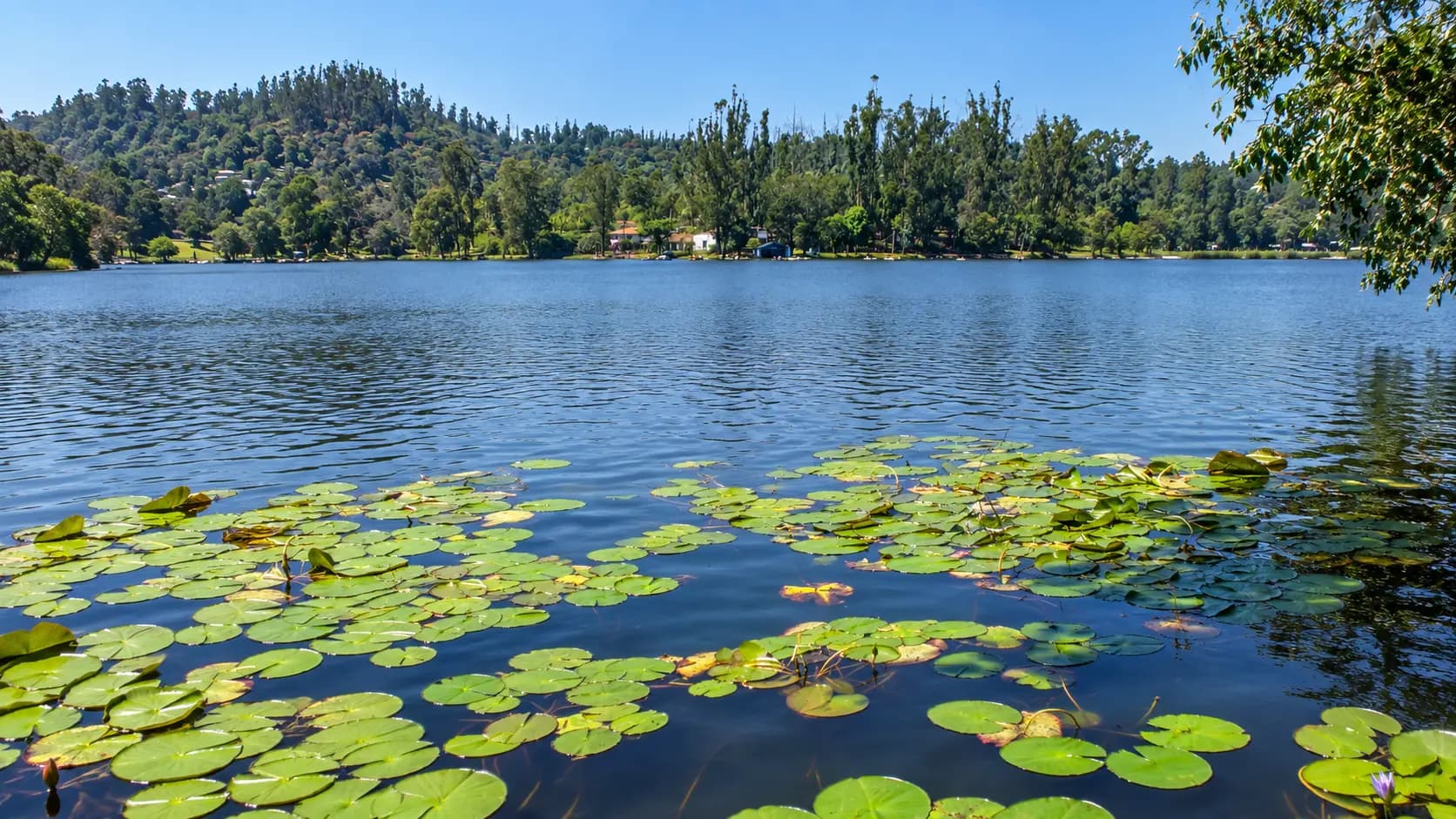
The lake itself is an irregular mountain reservoir fed by natural streams flowing down from the upper Palani ridges. A modest wooden boarding jetty on the eastern bank serves as the launch point for coracles and kayaks. Forest Department staff provide sanitized, approved life jackets and assist passengers into the gently swaying coracles. The water is remarkably clear, reflecting the drifting clouds and deep blue skies of the highlands, while patches of native reeds along the shoreline shelter small populations of wild ducks and wading birds.
Walking Trails and Meadow Exploration
Beyond the boating jetty, visitors are free to wander across the extensive meadow hillsides that border the water. Walking trails wind along the contours of the reservoir, leading into shaded pine groves where the ground is carpeted with soft brown pine needles and pinecones. The air is remarkably crisp, clean, and cool, infused with the natural aroma of pine resin and wild mountain herbs. The broad expanses of grass provide wonderful spots for relaxed family strolls, quiet reading, or simply lying back to gaze at the soaring raptors riding mountain thermals above.
Village Produce and Rural Hospitality
Near the entrance gate and parking area, small village-run kiosks offer refreshing local refreshments: freshly brewed piping-hot tea made with highland cardamom, boiled sweet corn, freshly fried banana fritters, and crisp mountain carrots pulled straight from the morning harvest. Local farmers display woven bunches of smoked Malai Poondu (hill garlic), pure wildflower honey harvested from forest beehives, homemade fruit preserves, and organic spices.
Best time to visit
Mannavanur enjoys a brisk, temperate highland climate year-round, with conditions generally slightly cooler and…Explore detailsClose details
Seasonal Weather Patterns
Mannavanur enjoys a brisk, temperate highland climate year-round, with conditions generally slightly cooler and windier than central Kodaikanal due to its open valley topography.
- Post-Monsoon and Winter (September to March): This is unequivocally the most scenic and rewarding window to visit. Following the monsoon rains, the entire valley is carpeted in intense emerald green, the reservoir is full to the brim, and wildflower blooms dot the pastures. Daytime temperatures range from a very comfortable 14°C to 18°C under clear, azure skies. In December and January, morning temperatures frequently drop to 5°C to 8°C, creating crisp frosty mornings that quickly give way to radiant sunshine.
- Summer Season (April to June): Mannavanur provides a glorious escape from the heat of the plains, with temperatures hovering pleasantly between 16°C and 24°C. While the grass takes on a golden-green hue as summer progresses, the weather remains breezy and refreshing, making it an excellent time for coracle boating and meadow walks.
- Monsoon Season (July to August): The Southwest Monsoon brings heavy cloudbursts, persistent mist, and strong mountain winds. While the misty valley looks atmospheric and dramatic, heavy rains often lead to the suspension of coracle boating, and the narrow 35-kilometre mountain road from Kodaikanal can occasionally experience fallen branches or localized rockslides.
Ideal Hours of the Day
Plan to arrive at Mannavanur between 09:30 and 11:30 AM or during the early afternoon between 13:30 and 15:30. Arriving during these hours ensures warm sunshine for walking the open meadows and guarantees calm water conditions for coracle boating. Check the current visiting hours and permitted access with the site operator before departure; ceremonies, closures and visitor sessions can affect access.
How to reach
Mannavanur Lake is located in Mannavanur Village Panchayat, Kodaikanal Taluk, Dindigul District, Tamil Nadu (pin…Explore detailsClose details
Geographic Location and Route
Mannavanur Lake is located in Mannavanur Village Panchayat, Kodaikanal Taluk, Dindigul District, Tamil Nadu (pin code 624103). It is positioned roughly 35 km west of Kodaikanal town centre.
The Scenic Drive from Kodaikanal (Step-by-Step)
The journey from Kodaikanal town to Mannavanur takes approximately 1 hour and 15 minutes to 1.5 hours each way:
- Depart Kodaikanal via Upper Shola Road or Observatory Road, passing the historic Kodaikanal Solar Observatory and Pine Forest.
- Descend along the winding, scenic ghat road past Gundar Falls, following signposts towards Poombarai.
- Pause at the Poombarai Village Viewpoint (approx. 18 km from Kodaikanal) to admire the breathtaking panoramic vista of the multi-tiered terraced valley and the ancient Kuzhanthai Velappar Temple nestled in the ravine.
- Continue west past Poombarai along the paved rural road winding through pine plantations, rolling hills, and vegetable farms until you arrive at the entrance to Mannavanur village and the lake eco-tourism gate.
Transport Options
- Private Taxi / Hired Cab (Recommended): The most practical, comfortable, and flexible way to visit Mannavanur is to hire a private tourist taxi from Kodaikanal town. Confirm the current charge and what it includes with the operator or service provider. Visitor admission, vehicles, parking, activities and accommodation can have separate charges.
- Self-Drive Cars and Motorcycles: The road is fully asphalted and in generally good condition, but it is narrow with numerous blind hairpin turns, steep gradients, and occasional encounters with rural transport buses and farm tractors. Confident mountain driving skills are required.
- Public TNSTC Buses: Tamil Nadu State Transport Corporation operates a limited schedule of ordinary rural buses connecting Kodaikanal Bus Stand to Mannavanur village (typically 4 to 5 departures daily, including morning services around 06:30, 09:00, and 12:00). Confirm the current charge and what it includes with the operator or service provider. Visitor admission, vehicles, parking, activities and accommodation can have separate charges.
Distances from Major Gateways
- Kodaikanal Town Centre: 35 km east (~1.5 hours)
- Kodai Road Railway Station (KQN): ~115 km east (~3.5 hours)
- Madurai International Airport (IXM): ~170 km southeast (~5 hours)
- Coimbatore International Airport (CJB): ~210 km northwest (~6 hours)
Entry, timings and permissions
Fees, visiting hours and entry rules may change.Explore detailsClose details
Fees, visiting hours and entry rules may change. Confirm the latest details with the official operator or local authority before travelling.
Operating Schedule
- Daily Timings: Open seven days a week from 09:00 to 17:00.
- Ticket Counter: Closes at 16:30.
- Campus Departure: All visitors must vacate the lakeside meadows and eco-tourism campus by 17:00, as night-time transit through the surrounding reserve forest buffer is restricted.
Entry Tariffs and Boating Fees
- General Admission (Forest Eco-Tourism):
- Adults: ₹20 per person
- Children (Ages 5 to 12): ₹10 per child
- Children under 5: Free
- Camera Tariffs:
- Still Camera / DSLR: ₹50 per unit
- Commercial Video Camera: ₹200 per unit
- Boating Charges (Managed by Eco-Tourism Committee):
- Traditional Coracle Ride: ₹100 to ₹150 per person (approx. 20 minutes, including life jacket)
- Sit-on-Top Kayaking: ₹150 to ₹200 per person (approx. 20 minutes)
- Vehicle Parking Fees:
- Two-Wheelers: ₹20
- Cars / Jeeps / SUVs: ₹40
- Minibuses / Tempo Travellers: ₹80
Essential Rules and Safety Mandates
- Compulsory Life Jackets: By order of the Tamil Nadu Forest Department, wearing a properly fastened life jacket is strictly compulsory for every person boarding a coracle or kayak. No exceptions are made.
- Strict Prohibition on Swimming: Swimming, wading, or bathing in the reservoir is strictly illegal. The water is deep, chilly, and underlain with soft silt and submerged reeds that present significant drowning risks.
- Plastic-Free Eco-Sensitive Zone: Single-use plastic water bottles, disposable polythene carry bags, and plastic food wrappers are strictly banned. Forest guards at the gate may inspect bags. Please carry refillable metal bottles and bring all trash back to town.
- Respect for Farm Research and Livestock: While visitors are free to observe the grazing sheep and pastoral landscape of the neighbouring ICAR-CSWRI facility from public trails, visitors must not chase, harass, or feed the animals, nor enter restricted laboratory breeding barns without prior institutional permission.
Nearby places to consider
Situated 16 km east of Mannavanur on the return road to Kodaikanal, Poombarai is a picturesque hillside village…Explore detailsClose details
Poombarai Village and Kuzhanthai Velappar Temple
Situated 16 km east of Mannavanur on the return road to Kodaikanal, Poombarai is a picturesque hillside village famous for its ancient Sri Kuzhanthai Velappar Temple. Believed to have been consecrated by the legendary Tamil Siddha sage Bogar (who also crafted the sacred Navapashanam idol at Palani Murugan Temple), this temple is over a thousand years old. The village is surrounded by a spectacular amphitheatre of stepped agricultural terraces cultivating carrots and garlic.
Kodaikanal Solar Observatory
Located approximately 28 km east of Mannavanur on the outskirts of Kodaikanal, this historic astronomical observatory was established in 1899 by the Indian Institute of Astrophysics. Situated at an elevation of 2,343 metres, it houses a solar telescope, historical astronomical instruments, and a popular public museum displaying solar flares, sunspots, and cosmic phenomena.
Pine Forest (Kodaikanal)
Located along the route between Kodaikanal and Poombarai, this vast plantation of soaring pine trees was planted in 1906 by British conservator Mr. H.D. Bryant. The dense canopy filters sunlight into ethereal geometric shafts, creating an enchanting woodland atmosphere that has served as the filming backdrop for dozens of Indian cinema productions.
Guna Caves (Devil's Kitchen)
Situated roughly 25 km east along the Pillar Rocks road, Guna Caves are deep, cavernous rock chasms formed between three colossal granite boulders. Surrounded by twisted shola tree roots and thick mountain mist, the caves acquired their popular name from the acclaimed 1991 Tamil movie Guna. A secure cliffside walkway and viewing deck allow visitors to look into the mysterious ravine safely.
Pillar Rocks
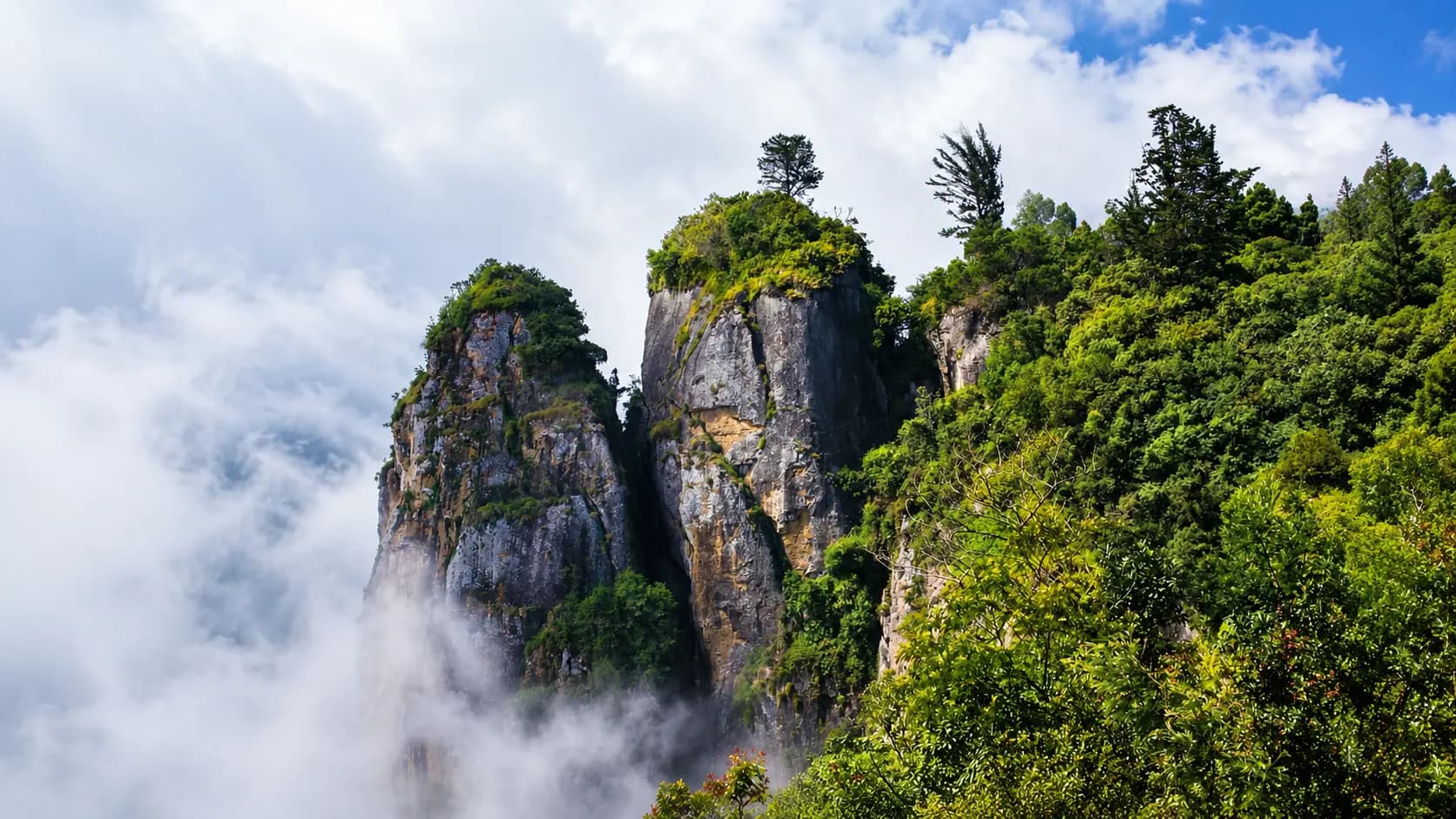
Located 24 km east of Mannavanur, Pillar Rocks is a geological marvel consisting of three vertical granite rock boulders rising over 122 metres (400 feet) into the sky. Flanked by deep gorges and manicured municipal gardens, it offers spectacular photographic vistas of the cliffs and valleys.
In pictures
The practical bits
Before you go.
Time Allocation and Itinerary Structure
Visiting Mannavanur Lake requires a half-day commitment (roughly 4 to 5 hours total).Explore detailsClose details
Visiting Mannavanur Lake requires a half-day commitment (roughly 4 to 5 hours total). Allocate 3 hours for the round-trip driving journey from Kodaikanal (1.5 hours each way), and 1.5 to 2 hours on-site at Mannavanur for coracle boating, walking across the meadows, and relaxing. An ideal morning itinerary departs Kodaikanal at 09:00, stops at the Poombarai viewpoint at 09:45, explores Mannavanur from 10:30 to 12:30, and returns to Kodaikanal in time for a late lunch.
Clothing and Mountain Protection
The open meadows at Mannavanur offer very little shade, meaning you will be exposed to direct high-altitude…Explore detailsClose details
The open meadows at Mannavanur offer very little shade, meaning you will be exposed to direct high-altitude sunlight while simultaneously feeling cool mountain winds. Wear a wide-brimmed sun hat, sunglasses, and high-SPF sunscreen. Dress in comfortable layers - a light t-shirt paired with a fleece jacket or windbreaker is ideal, as temperatures can feel surprisingly cool when breezes pick up across the water.
Footwear Recommendations
Sturdy, comfortable walking shoes or sneakers are essential.Explore detailsClose details
Sturdy, comfortable walking shoes or sneakers are essential. Navigating the sloping grassy meadows, dirt footpaths, and rustic wooden coracle embarkation ramps requires good tread and ankle support. Avoid high heels, slippery leather shoes, or delicate footwear that might be soiled by damp grass or pastoral soil.
Food and Hydration
While small village kiosks near the entrance gate offer tea, packaged biscuits, boiled sweet corn, and freshly…Explore detailsClose details
While small village kiosks near the entrance gate offer tea, packaged biscuits, boiled sweet corn, and freshly fried fritters, there are no upscale multi-cuisine restaurants in Mannavanur. If you plan to spend several hours in the valley, consider carrying light snacks, sandwiches, fresh fruit, and ample drinking water in reusable bottles. Remember to pack out all waste.
A few things you might wonder
Common questions about visiting Mannavanur Lake. Fees, visiting hours and ceremonies are researched details that may change; confirm current arrangements with the operator before travelling.
How far is Mannavanur Lake from Kodaikanal town, and how long does the drive take?
What is unique about the sheep farm at Mannavanur?
Is coracle boating safe for young children and non-swimmers?
Can we stay overnight at Mannavanur Lake?
What is Kodaikanal Malai Poondu, and can I buy it at Mannavanur?
Are private cars and self-drive vehicles allowed all the way to Mannavanur?
Is food and drinking water available at Mannavanur Lake?
Are pets allowed inside the Mannavanur Eco-Tourism campus?
Explore more in Kodaikanal Palani
Discover other destinations around this hub
More Hubs in Tamil Nadu
Continue exploring other travel hubs in this state
Planning a trip to Kodaikanal Palani?