Sultanpur National Park
Complete guide to Sultanpur National Park in Gurugram, a premier Ramsar wetland on the Central Asian Flyway. Explore migratory birds, watch towers, timings, and fees.
Location
Gurugram, Delhi NCR
A closer look
Your visit, at a glance.
Gurugram, Delhi Ncr
GET TO KNOW THE PLACE
Just fifteen kilometers northwest of the glass-and-steel skyscrapers of Gurugram, where corporate office parks yield to the open mustard fields and acacia scrublands of the rural…
The story of Sultanpur National Park
Just fifteen kilometers northwest of the glass-and-steel skyscrapers of Gurugram, where corporate office parks yield to the open mustard fields and acacia scrublands of the rural Haryana plains, lies one of South Asia’s most celebrated wetland sanctuaries: Sultanpur National Park. Spanning 142.52 hectares (approximately 352 acres) in Farrukhnagar tehsil of Gurugram district, this protected ecological gem is an internationally recognized wetland under the Ramsar Convention (Ramsar Site No. 2457). Centered on a historic shallow freshwater lake (jheel) fed by seasonal monsoonal runoff and surrounded by open savannah, reed beds, and indigenous thorn scrub, Sultanpur serves as a vital wintering haven and feeding station along the transcontinental Central Asian Flyway.
The sanctuary’s conservation lineage is legendary. Long prized by local rulers and colonial officers as a duck-shooting ground, the ecological uniqueness of Sultanpur Jheel was brought to global prominence in the late 1960s by British ornithologist and Delhi Birdwatching Society honorary secretary Peter Jackson. Recognizing that expanding agricultural reclamation and drainage threatened this irreplaceable stopover, Jackson appealed directly to Prime Minister Indira Gandhi. An avid naturalist herself, Gandhi intervened decisively, urging the Haryana Government to accord statutory protection to the wetland. The site was formally notified as a Bird Sanctuary in 1971 under the Punjab Wildlife Preservation Act and later upgraded to full National Park status in July 1991 under the national Wildlife (Protection) Act, 1972. In May 2021, its global significance was permanently consecrated with its designation as a Ramsar Wetland of International Importance.
Today, Sultanpur National Park is a haven for ornithologists, wildlife photographers, and nature lovers across the National Capital Region (Delhi NCR). Every winter, between October and March, more than 250 species of birds congregate across its shimmering waters and marshy shores. Vast flotillas of migratory waterfowl that breed thousands of kilometers away in the Siberian tundra, the Tibetan plateau, and Central Asia - including bar-headed geese, greylag geese, northern pintails, northern shovelers, and Eurasian wigeons - mingle with majestic resident waders like the sarus crane, painted stork, and black-necked stork. Equipped with four elevated observation watch towers, a gentle 3.5-kilometer perimeter walking path, a modern interpretation center, and the adjoining Haryana Tourism Rosy Pelican complex, Sultanpur provides one of the finest birdwatching experiences in the entire subcontinent.
Start here. Open a tile for the full details.
Why goRead details
- Ramsar-Designated Wetland of Global Renown: Explore an internationally celebrated wetland ecosystem recognized under Ramsar Site No. 2457 as a crucial ecological link on the Central Asian Flyway.
- Over 250 Documented Avian Species: Observe an astonishing density of resident and migratory birds, including massive flocks of winter waterfowl, elegant waders, colorful kingfishers, and predatory raptors.
- Trans-Himalayan Winter Migrants: Witness birds that complete epic journeys across the high Himalayas - such as bar-headed geese flying at jetliner altitudes, greylag geese, northern pintails, and common teals.
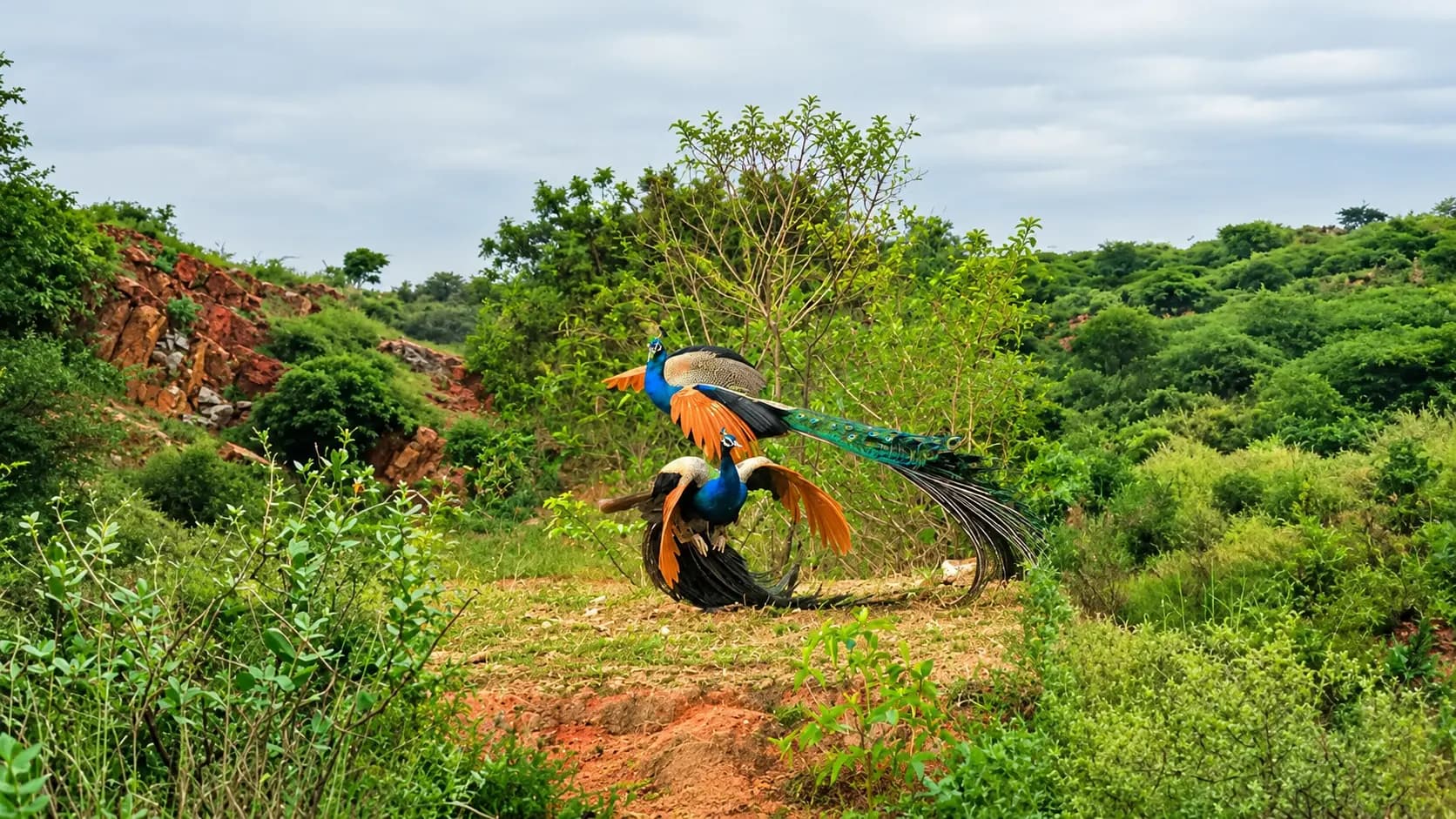
- Iconic Indian Resident Birds: Spot the majestic Sarus Crane (the world's tallest flying bird, standing up to 1.8 meters), black-necked storks, painted storks, Asian openbills, and Haryana's official state bird, the black francolin.
- Four Elevated Observation Watch Towers: Ascend multi-level steel observation platforms situated around the lake perimeter for 360-degree panoramic binocular and telephoto viewing.
- Scenic 3.5-Kilometer Wetland Walking Trail: Stroll along well-maintained, vehicle-free perimeter earthen bunds shaded by native babul, khejri, and neem trees.
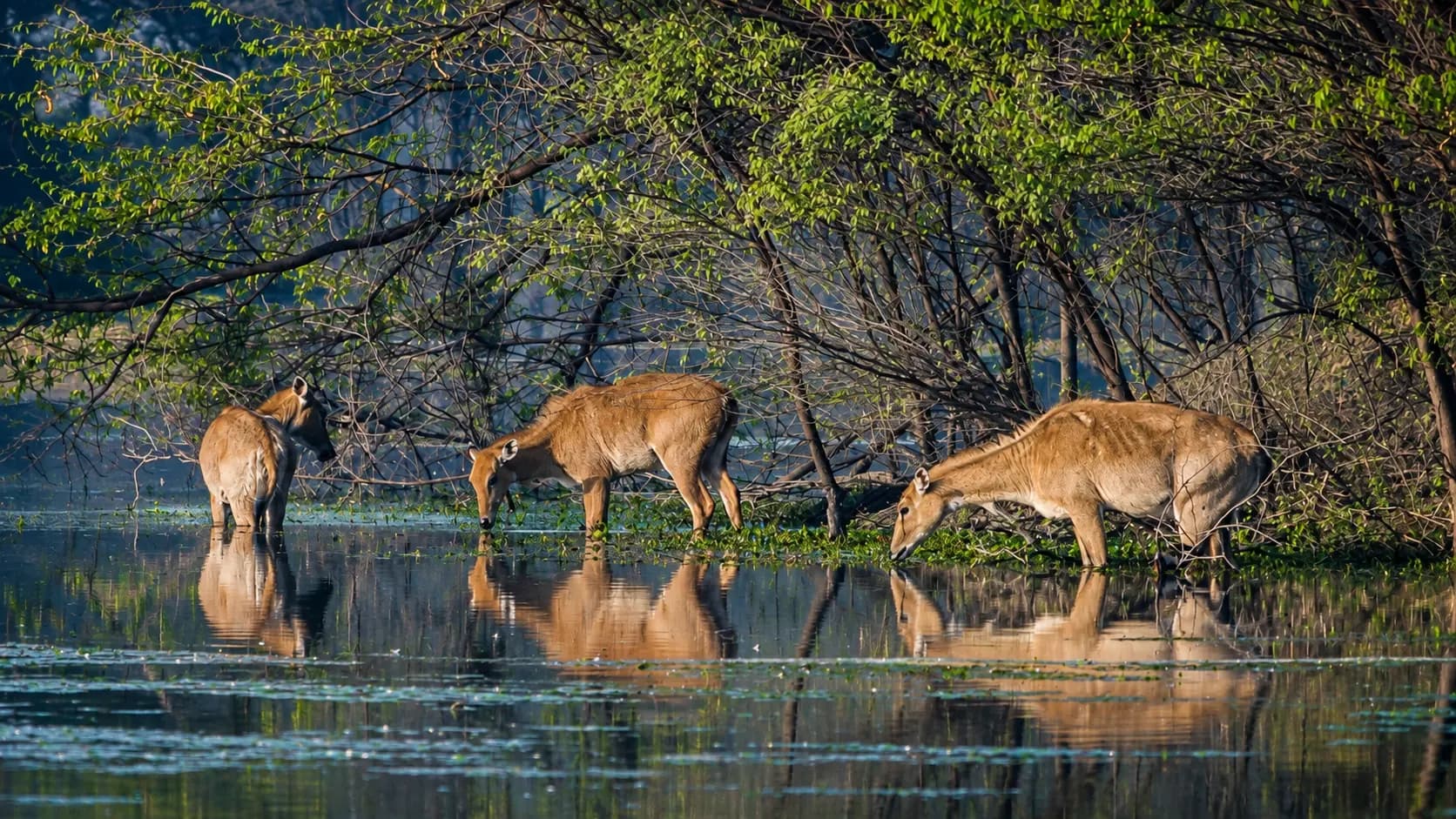
- Mammalian Wildlife Encounters: Spot wild herds of blue bull (Nilgai), elusive golden jackals, jungle cats, Indian hares, and Bengal monitor lizards grazing in the lakeside scrublands.
- Effortless Proximity to Gurugram & Delhi: Enjoy a pristine, peaceful wilderness immersion located just 15 km from central Gurugram and 45 km from central Delhi.
When to visitRead details
Entry & permissionsRead details
Fees, visiting hours and entry rules may change. Confirm the latest details with the official operator or local authority before travelling.
Operating Schedule and Timings
- Weekly Schedule: Open from Wednesday through Monday.
- Visiting Hours: 07:00 AM to 04:30 PM (Last entry tickets are issued at 04:00 PM).
- Mandatory Weekly Closure: Strictly closed every Tuesday to allow the wetland habitat a full day of ecological rest, bird disturbance mitigation, and staff cleaning operations.
- Mandatory Annual Breeding Closure: Strictly closed from June 1 to September 30 every year for monsoon rejuvenation and avian breeding. The park reopens annually on October 1.
Admission Tariffs and Vehicle Charges
The Haryana Forest and Wildlife Department maintains nominal, highly subsidized entrance tariffs:
- Indian Nationals: ₹5 per person.
- Foreign Tourists: ₹40 per person.
- Children (aged 5 to 11 years): ₹2 per child.
- Children (below 5 years): Free admission.
- Camera Fees:
- Still Compact Camera: ₹25
- DSLR / Mirrorless Camera: ₹50
- Non-Commercial Video Camera: ₹500
- Parking Charges:
- Two-Wheelers / Motorcycles: ₹10
- Cars, Jeeps, and SUVs: ₹50
- Tourist Buses: ₹100
- Binocular Rental: High-powered optical binoculars can be rented at the wildlife office counter near the gate (nominal rental fee of approx. ₹50 to ₹100, refundable security deposit required).
Strict Sanctuary Regulations and Code of Conduct
To safeguard the sensitive wetland ecology and prevent disturbance to wildlife, the park administration strictly enforces the following statutory rules:
- No Plastic Zone: Single-use plastic bags, disposable water pouches, and plastic wrappers are strictly prohibited inside the sanctuary. Forest guards inspect bags at the entrance gate.
- Prohibition of Loud Noises: Loudspeakers, portable Bluetooth music players, shouting, whistling, and vehicle honking are strictly prohibited. Visitors are expected to maintain hushed wilderness silence.
- Stay on Designated Pathways: Visitors must remain strictly on the paved and graded perimeter walking trails and marked watch tower approaches. Stepping off trails into marshy reed beds, climbing earthen bund fences, or attempting to wade into the water is an offense under the Wildlife (Protection) Act, 1972.
- No Drones or Remote Aircraft: Unmanned aerial vehicles (drones) are strictly banned throughout the national park air space. Flying a drone will lead to immediate confiscation of equipment and legal prosecution.
- No Feeding or Harassment of Wildlife: Feeding birds, throwing stones, chasing nilgai, or attempting to flush roosting owls or nightjars is strictly prohibited.
- Commercial Filming Permissions: Commercial feature films, documentary video shoots, and professional fashion photoshoots require formal prior written sanction and security deposits from the Chief Wildlife Warden, Haryana Forest Department in Panchkula.
Plan your visitRead details
Explore the full guide - choose a topic below.
Why visit?
Ramsar-Designated Wetland of Global Renown: Explore an internationally celebrated wetland ecosystem recognized…Explore detailsClose details
- Ramsar-Designated Wetland of Global Renown: Explore an internationally celebrated wetland ecosystem recognized under Ramsar Site No. 2457 as a crucial ecological link on the Central Asian Flyway.
- Over 250 Documented Avian Species: Observe an astonishing density of resident and migratory birds, including massive flocks of winter waterfowl, elegant waders, colorful kingfishers, and predatory raptors.
- Trans-Himalayan Winter Migrants: Witness birds that complete epic journeys across the high Himalayas - such as bar-headed geese flying at jetliner altitudes, greylag geese, northern pintails, and common teals.
- Iconic Indian Resident Birds: Spot the majestic Sarus Crane (the world's tallest flying bird, standing up to 1.8 meters), black-necked storks, painted storks, Asian openbills, and Haryana's official state bird, the black francolin.
- Four Elevated Observation Watch Towers: Ascend multi-level steel observation platforms situated around the lake perimeter for 360-degree panoramic binocular and telephoto viewing.
- Scenic 3.5-Kilometer Wetland Walking Trail: Stroll along well-maintained, vehicle-free perimeter earthen bunds shaded by native babul, khejri, and neem trees.
- Mammalian Wildlife Encounters: Spot wild herds of blue bull (Nilgai), elusive golden jackals, jungle cats, Indian hares, and Bengal monitor lizards grazing in the lakeside scrublands.
- Effortless Proximity to Gurugram & Delhi: Enjoy a pristine, peaceful wilderness immersion located just 15 km from central Gurugram and 45 km from central Delhi.
What to expect
Sultanpur National Park is structured around a central shallow freshwater lake whose water levels expand…Explore detailsClose details
The Core Wetland and Habitat Mosaic
Sultanpur National Park is structured around a central shallow freshwater lake whose water levels expand dramatically during the post-monsoon autumn and gradually recede through the spring. To enhance micro-habitats for diverse bird guilds, the Haryana Forest and Wildlife Department has engineered artificial earthen mounds, islands, and planted reed beds across the water spread:
- Open Water Zones: The deeper central areas of the jheel provide undisturbed swimming and diving territory for deep-water divers and dabbling ducks, including common pochards, ferruginous pochards, tufted ducks, and gadwalls.
- Marshy Margins and Mudflats: The gently sloping muddy shores attract wading shorebirds with probing bills - such as black-tailed godwits, ruffs, common greenshanks, wood sandpipers, and little stints.
- Islands and Perching Trees: Scattered earthen islands crowned with partially submerged Acacia nilotica (babul) trees serve as communal roosting, nesting, and sunbathing platforms for cormorants, darters, painted storks, and egrets.
- Open Grasslands and Thorn Scrub: Surrounding the perimeter bunds are dry deciduous woodlands and semi-arid scrub savannah dominated by Prosopis cineraria (khejri), Ziziphus mauritiana (ber), Salvadora persica (pilu), and tall elephant grass, harboring terrestrial birds and mammals.
The Avian Spectacular: Seasons of Mobility
The park's avian composition shifts dynamically across the calendar, reaching its breathtaking zenith during the winter months:
- Waterfowl Armadas (November to February): Tens of thousands of migratory ducks and geese settle onto the lake. Visitors can watch undulating formations of bar-headed geese - celebrated for their physiological ability to fly over Mount Everest - grazing on the grassy bunds alongside heavy greylag geese. Floating rafts of hundreds of northern pintails, with their elegant slender necks, feed alongside dabbling northern shovelers, Eurasian wigeons, common teals, and garganeys.
- Waders, Storks, and Herons: The shallows host towering sarus cranes, usually seen in devoted lifelong monogamous pairs striding gracefully across the marsh grasses. Flocks of painted storks sweep their sensitive, half-opened beaks through the muddy water, while solitary black-necked storks, with their iridescent purple-black heads and bright red legs, hunt fish with lightning strikes.
- Raptors and Birds of Prey: The winter concentration of waterfowl naturally attracts formidable birds of prey. Observers frequently spot the greater spotted eagle, steppe eagle, western marsh harrier quartering low over the reed beds, black-winged kite, shikra, and peregrine falcon scanning the waters from bare acacia branches.
- Woodland and Bush Birds: Away from the water, the wooded fringes are alive with terrestrial birds. Haryana's state bird, the black francolin, frequently announces its presence with a sharp, rhythmic mechanical call from scrub thickets. Visitors also encounter the Indian roller with its iridescent turquoise plumage, Eurasian hoopoe, green bee-eater, coppersmith barbet, rufous treepie, and elusive nightjars roosting camouflaged on tree trunks.
The Mammalian and Reptilian Residents
While primarily renowned for its avifauna, Sultanpur National Park shelters a healthy population of native terrestrial wildlife:
- Nilgai (Blue Bull): India's largest antelope species roams the park grounds freely. Family herds composed of tan females and large, slate-grey adult males can be observed grazing nonchalantly along the trail edges and resting under the shade of neem trees.
- Carnivores and Small Mammals: Golden jackals are frequently spotted trotting across the pathways during the early morning hours or heard howling in eerie chorus near sunset. The jungle cat, Indian hare, and small Indian mongoose inhabit the scrub undergrowth.
- Reptiles: During warm sunny winter afternoons, large Bengal monitor lizards often bask on exposed earthen mounds, while harmless checkered keelback water snakes navigate the shallow marsh weeds.
Park Infrastructure and Visitor Amenities
- Observation Watch Towers: Four sturdy, elevated metal watch towers are strategically placed along the perimeter walking circuit. Ascending these towers provides elevated viewing platforms that elevate observers above the shoreline reeds, offering unobstructed views across the entirety of the jheel. They are indispensable for setting up spotting scopes and long telephoto lenses.
- The Interpretation Center: Located near the park entrance gate, the air-conditioned visitor center features detailed dioramas illustrating the ecological food web of the wetland, interactive push-button bird call stations, informative bilingual displays on the Central Asian Flyway, and preserved taxidermy specimens.
- Rosy Pelican Tourist Complex: Operated by Haryana Tourism, this resort complex is situated directly adjacent to the park entry. It provides a full-service multi-cuisine restaurant serving hot breakfasts, tea, and North Indian meals, shaded lawn gardens, and air-conditioned guest rooms for travelers wishing to stay overnight for dawn birdwatching sessions.
Best time to visit
The optimal period for visiting Sultanpur National Park is undeniably the winter corridor between November and…Explore detailsClose details
The Golden Window: November to February
The optimal period for visiting Sultanpur National Park is undeniably the winter corridor between November and February:
- Peak Migratory Density: By late November, the full contingent of trans-Himalayan migrants has arrived and established territory across the wetland. Flock counts reach their maximum numbers in December and January.
- Pleasant Winter Climate: Daytime temperatures in Gurugram hover between a delightful 14°C and 22°C, making the 3.5-kilometer walking circuit comfortable and invigorating.
- Photography Lighting: Crisp winter sunlight and soft morning golden hours provide ideal lighting conditions for telephoto wildlife photography.
- Winter Fog Advisory: During late December and January, dense early-morning radiation fog frequently shrouds the wetland until 09:00 AM or 09:30 AM. Check the current visiting hours and permitted access with the site operator before departure; ceremonies, closures and visitor sessions can affect access.
Shoulder Months: October and March
- October: The park reopens on October 1 following its mandatory monsoon closure. Early winter migrants (such as northern pintails, garganeys, and sandpipers) begin trickling in, and the wetland is lush, vibrant, and filled with fresh rainwater. Daytime temperatures can be warm (28°C to 34°C), so early morning visits are strongly advised.
- March: Migratory waterfowl begin staging in dense flocks in preparation for their northward return flights over the Himalayas. Many waterfowl display vibrant breeding plumage. Temperatures begin rising, so plan your visit between 07:00 AM and 10:30 AM.
Mandatory Annual Seasonal Closure: June 1 to September 30
Important Travel Notice: Sultanpur National Park is completely closed to the public every year from June 1 through September 30. This mandatory four-month closure allows resident birds (such as sarus cranes, spot-billed ducks, and painted storks) to breed, nest, and fledge their young without human disturbance, while allowing the wetland ecosystem and aquatic vegetation to regenerate naturally during the monsoon rains. The park officially reopens every year on October 1.
How to reach
Sultanpur National Park is situated along the Gurugram-Jhajjar Highway (State Highway 15A) in Sultanpur village…Explore detailsClose details
Geographic Setting and Corridor
Sultanpur National Park is situated along the Gurugram-Jhajjar Highway (State Highway 15A) in Sultanpur village, Farrukhnagar tehsil of Gurugram district, Haryana (PIN 122505). It is positioned approximately 15 kilometers northwest of Gurugram city center and roughly 45 kilometers southwest of Connaught Place in Central Delhi.
By Private Car or Hired Taxi (Recommended)
Driving by private vehicle or booking a round-trip taxi represents the most convenient and flexible transit option:
- From Central Delhi / Connaught Place (~45 km, 1 hr 15 min to 1 hr 30 min): Drive south along NH-48 past Dhaula Kuan and Indira Gandhi International Airport into Gurugram. Take the elevated corridor past Rajiv Chowk, exit onto Railway Road / Basai Road, continue past the Basai wetland onto State Highway 15A through Dhankot and Chandu villages, and proceed straight to the clearly marked entrance gate of Sultanpur National Park on your right.
- Via Dwarka Expressway: Travelers departing from West Delhi, Dwarka, or IGI Airport can take the high-speed Dwarka Expressway (NH-248BB), exit near Sector 102/104, and connect seamlessly onto SH 15A, reducing travel time to approximately 35 to 45 minutes.
- From Central Gurugram / Cyber Hub (~20 km, 35 to 45 min): Head west along Old Delhi-Gurgaon Road or Sheetla Mata Road onto Railway Road, proceed through Basai onto SH 15A, and follow the highway straight to Sultanpur.
- Parking Facilities: The park entrance features an organized, guarded surface parking lot accommodating over 100 private cars, two-wheelers, and tourist buses.
By Delhi Metro & Connecting Road Transit
- Nearest Metro Station: The closest rapid transit terminus is Millennium City Centre (formerly HUDA City Centre) on the Delhi Metro Yellow Line, located approximately 18 kilometers southeast of the park.
- Connecting Transit: From Millennium City Centre or IFFCO Chowk Metro Stations, hire an app-based cab (Uber or Ola) or an auto-rickshaw directly to the park gate.
- Return Planning: While app cabs readily accept fares from Gurugram to Sultanpur, finding an on-demand cab for the return trip from Sultanpur can sometimes require extended wait times. It is strongly advised to book an app-cab on an hourly rental package or negotiate a round-trip wait fare with a local taxi or auto driver.
By Indian Railways
- Local Railhead: The nearest local railway station is Garhi Harsaru Junction (GHH), located just 4 kilometers south of the park along the Delhi-Rewari line; however, train services are restricted to regional passenger shuttles.
- Major Rail Terminals: Gurugram Railway Station (GGN) is situated roughly 14 kilometers east, with frequent express connections across northern and western India. New Delhi Railway Station (NDLS) is approximately 48 kilometers distant.
By Air
- Indira Gandhi International Airport (DEL): Located approximately 35 kilometers northeast of the park. The drive via Dwarka Expressway or NH-48 takes roughly 45 to 60 minutes depending on highway traffic density.
Entry, timings and permissions
Fees, visiting hours and entry rules may change.Explore detailsClose details
Fees, visiting hours and entry rules may change. Confirm the latest details with the official operator or local authority before travelling.
Operating Schedule and Timings
- Weekly Schedule: Open from Wednesday through Monday.
- Visiting Hours: 07:00 AM to 04:30 PM (Last entry tickets are issued at 04:00 PM).
- Mandatory Weekly Closure: Strictly closed every Tuesday to allow the wetland habitat a full day of ecological rest, bird disturbance mitigation, and staff cleaning operations.
- Mandatory Annual Breeding Closure: Strictly closed from June 1 to September 30 every year for monsoon rejuvenation and avian breeding. The park reopens annually on October 1.
Admission Tariffs and Vehicle Charges
The Haryana Forest and Wildlife Department maintains nominal, highly subsidized entrance tariffs:
- Indian Nationals: ₹5 per person.
- Foreign Tourists: ₹40 per person.
- Children (aged 5 to 11 years): ₹2 per child.
- Children (below 5 years): Free admission.
- Camera Fees:
- Still Compact Camera: ₹25
- DSLR / Mirrorless Camera: ₹50
- Non-Commercial Video Camera: ₹500
- Parking Charges:
- Two-Wheelers / Motorcycles: ₹10
- Cars, Jeeps, and SUVs: ₹50
- Tourist Buses: ₹100
- Binocular Rental: High-powered optical binoculars can be rented at the wildlife office counter near the gate (nominal rental fee of approx. ₹50 to ₹100, refundable security deposit required).
Strict Sanctuary Regulations and Code of Conduct
To safeguard the sensitive wetland ecology and prevent disturbance to wildlife, the park administration strictly enforces the following statutory rules:
- No Plastic Zone: Single-use plastic bags, disposable water pouches, and plastic wrappers are strictly prohibited inside the sanctuary. Forest guards inspect bags at the entrance gate.
- Prohibition of Loud Noises: Loudspeakers, portable Bluetooth music players, shouting, whistling, and vehicle honking are strictly prohibited. Visitors are expected to maintain hushed wilderness silence.
- Stay on Designated Pathways: Visitors must remain strictly on the paved and graded perimeter walking trails and marked watch tower approaches. Stepping off trails into marshy reed beds, climbing earthen bund fences, or attempting to wade into the water is an offense under the Wildlife (Protection) Act, 1972.
- No Drones or Remote Aircraft: Unmanned aerial vehicles (drones) are strictly banned throughout the national park air space. Flying a drone will lead to immediate confiscation of equipment and legal prosecution.
- No Feeding or Harassment of Wildlife: Feeding birds, throwing stones, chasing nilgai, or attempting to flush roosting owls or nightjars is strictly prohibited.
- Commercial Filming Permissions: Commercial feature films, documentary video shoots, and professional fashion photoshoots require formal prior written sanction and security deposits from the Chief Wildlife Warden, Haryana Forest Department in Panchkula.
Nearby places to consider
Heritage Transport Museum (~36 km southwest via Farrukhnagar or NH-48): India’s premier transport museum in…Explore detailsClose details
- Heritage Transport Museum (~36 km southwest via Farrukhnagar or NH-48): India’s premier transport museum in Tauru, spanning over 90,000 square feet across four air-conditioned floors, showcasing over 75 vintage automobiles, an authentic 1930s royal railway saloon, and historic aviation artifacts.
- Farrukhnagar Historic Fort & Baoli (~10 km northwest along SH 15A): Founded in 1732 by Faujdar Khan, this historic Mughal-era settlement features the impressive Dilli Darwaza, the octagonal Ali Gosh Khan Stepwell (Baoli), and the Sheesh Mahal, offering a fascinating glimpse into 18th-century regional architecture.
- Basai Wetland (~10 km southeast near Gurugram): A vital unprotected peri-urban wetland marsh renowned among local birders as an extraordinary habitat for bitterns, rails, crakes, waterhens, and thousands of winter waterfowl that commute between Basai and Sultanpur.
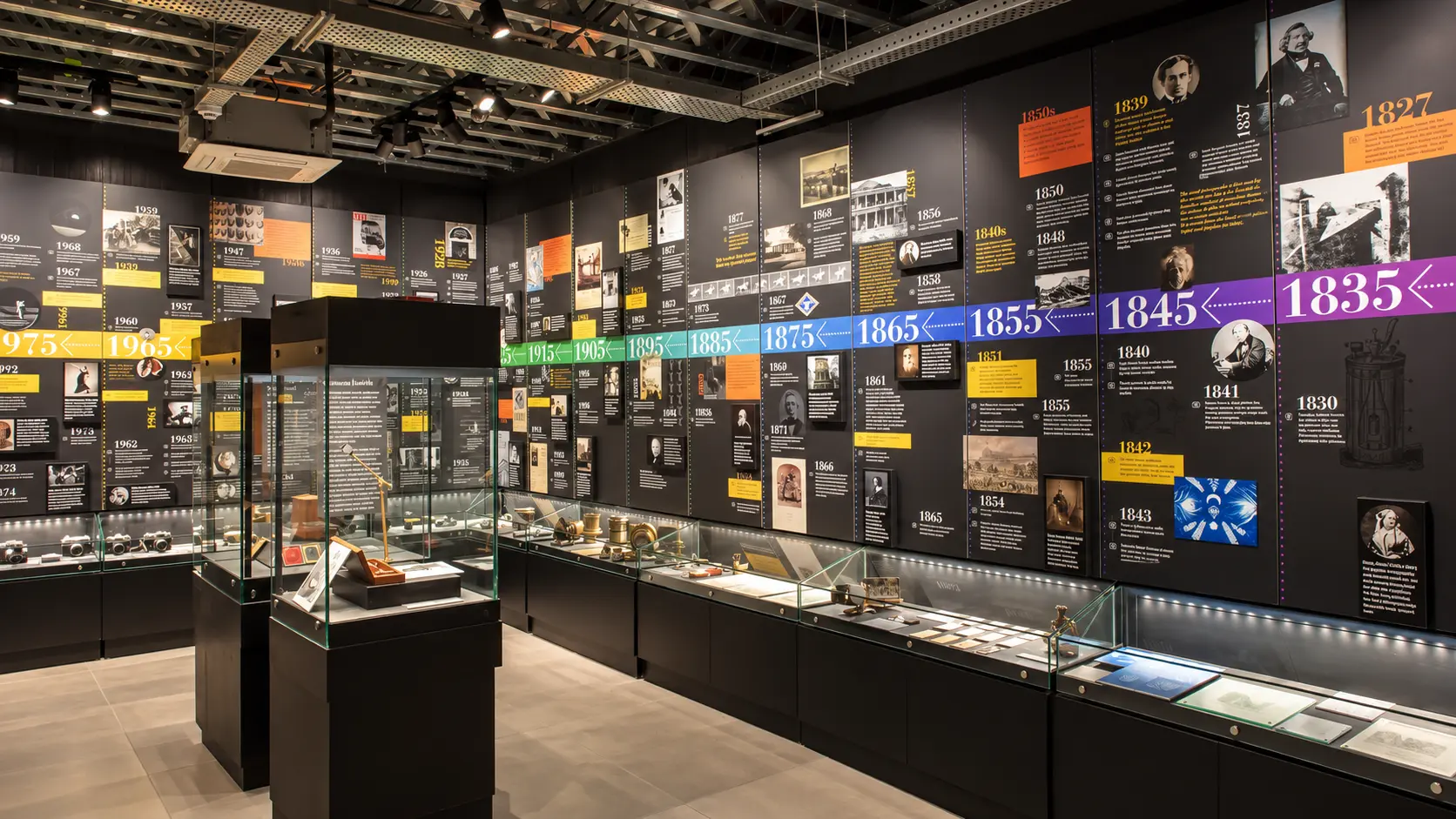
- Museo Camera Gurugram (~24 km east in DLF Phase 4, Gurugram): Southeast Asia’s largest photography museum, housing over 3,000 antique cameras, the historic Kulwant Roy freedom archive, dynamic contemporary galleries, and the Fig at Museo garden cafe.
- Aravalli Biodiversity Park Gurugram (~22 km east near DLF Phase 3 / MG Road): A sprawling 392-acre re-wilded ecological park featuring four walking trails through restored indigenous semi-arid forest, home to over 200 species of resident birds and native mammals.
In pictures
The practical bits
Before you go.
Ideal Time Allocation
Budget at least 3.0 to 4.5 hours inside the park.Explore detailsClose details
Budget at least 3.0 to 4.5 hours inside the park. The complete walking loop around the perimeter of the jheel measures approximately 3.5 kilometers. Walking this distance at a relaxed, unhurried pace, climbing all four watch towers, pausing for binocular observation, and visiting the interpretation center requires a minimum of three hours.
Optimum Time of Day
Early morning between 07:00 AM and 10:30 AM is the premier window for birdwatching.Explore detailsClose details
Early morning between 07:00 AM and 10:30 AM is the premier window for birdwatching. Waterfowl are actively foraging, morning light illuminates the eastern watch towers, and raptors begin taking wing as morning thermals develop. Late afternoons from 02:30 PM to 04:30 PM are also productive as birds return to roosting trees, though the park gates close promptly at 04:30 PM.
Essential Gear Checklist
Explore detailsClose details
Optics
A good pair of binoculars (8x42 or 10x42) is indispensable for identifying distant shorebirds and swimming ducks.Explore detailsClose details
A good pair of binoculars (8x42 or 10x42) is indispensable for identifying distant shorebirds and swimming ducks. For serious photographers, a telephoto lens of at least 400mm to 600mm focal length is highly recommended.
Field Guide
Carry a printed field guide to Indian birds (such as Salim Ali's The Book of Indian Birds or Grimmett & Inskipp's…Explore detailsClose details
Carry a printed field guide to Indian birds (such as Salim Ali's The Book of Indian Birds or Grimmett & Inskipp's Birds of the Indian Subcontinent) or a digital bird identification app.
Clothing
Wear neutral, earthy clothing tones (greens, browns, greys, and tans) that blend naturally with the scrub…Explore detailsClose details
Wear neutral, earthy clothing tones (greens, browns, greys, and tans) that blend naturally with the scrub environment. Avoid bright fluorescent clothing (such as red, neon pink, or bright orange) that alarms nervous waterfowl.
Comfortable Footwear
Wear sturdy, comfortable walking shoes or light hiking boots suitable for a 3.5-kilometer gravel and earthen…Explore detailsClose details
Wear sturdy, comfortable walking shoes or light hiking boots suitable for a 3.5-kilometer gravel and earthen trail circuit.
Hydration
Carry your own reusable, non-plastic water bottle. Water dispensers are available near the entrance gate.Explore detailsClose details
Carry your own reusable, non-plastic water bottle. Water dispensers are available near the entrance gate.
Dining Strategy
Outside cooked food and picnic hampers are prohibited on the walking trails to prevent littering and monkey…Explore detailsClose details
Outside cooked food and picnic hampers are prohibited on the walking trails to prevent littering and monkey feeding. Enjoy a pre-visit tea or a hearty post-birdwatching lunch at the Haryana Tourism Rosy Pelican restaurant located immediately beside the main entrance gate, which serves hot parathas, sandwiches, dosas, and North Indian vegetarian and non-vegetarian thalis.
A few things you might wonder
Common questions about visiting Sultanpur National Park. Fees, visiting hours and ceremonies are researched details that may change; confirm current arrangements with the operator before travelling.
Is Sultanpur National Park open all year round?
What day of the week is Sultanpur National Park closed?
What is the entry ticket price for Sultanpur National Park?
Can I hire binoculars at the park?
Are drones or aerial cameras allowed inside Sultanpur National Park?
How long is the walking trail around Sultanpur lake?
Are there places to eat at Sultanpur National Park?
What is the best month to see migratory birds at Sultanpur?
Explore more in Gurugram
Discover other destinations around this hub


More Hubs in Delhi Ncr
Continue exploring other travel hubs in this state
Planning a trip to Gurugram?