Tirathgarh Waterfalls
Plan your trip to Tirathgarh Waterfalls in Bastar, Chhattisgarh's 300-foot multi-tiered cascade. Complete guide covers Shiva temple, timings, and travel tips.
Location
Bastar, Chhattisgarh
A closer look
Your visit, at a glance.
Bastar, Chhattisgarh
GET TO KNOW THE PLACE
Tumbling like a shimmering curtain of white silk across stepped ledges of ancient dark sandstone in southern Chhattisgarh, Tirathgarh Waterfalls (frequently spelt Teerathgarh…
The story of Tirathgarh Waterfalls
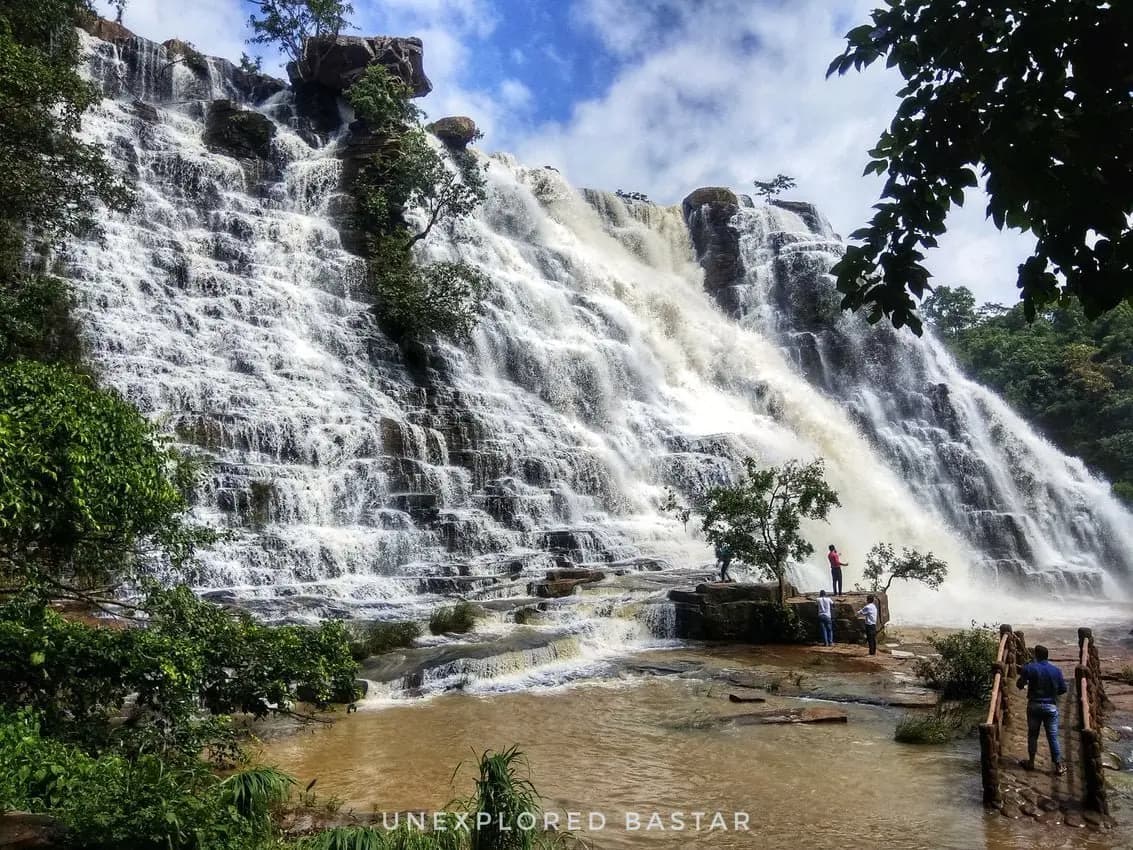
Tumbling like a shimmering curtain of white silk across stepped ledges of ancient dark sandstone in southern Chhattisgarh, Tirathgarh Waterfalls (frequently spelt Teerathgarh Waterfalls) is one of Central India's most picturesque and architecturally dramatic natural cataracts. Situated on the perennial Mugabahar River (also written as Munga Bahar, a key tributary of the Kanger River) in Bastar District, roughly 35 kilometres southwest of Jagdalpur, the cataract plunges a total vertical drop of approximately 91 metres (300 feet) through a succession of stepped terraces into a forested gorge.
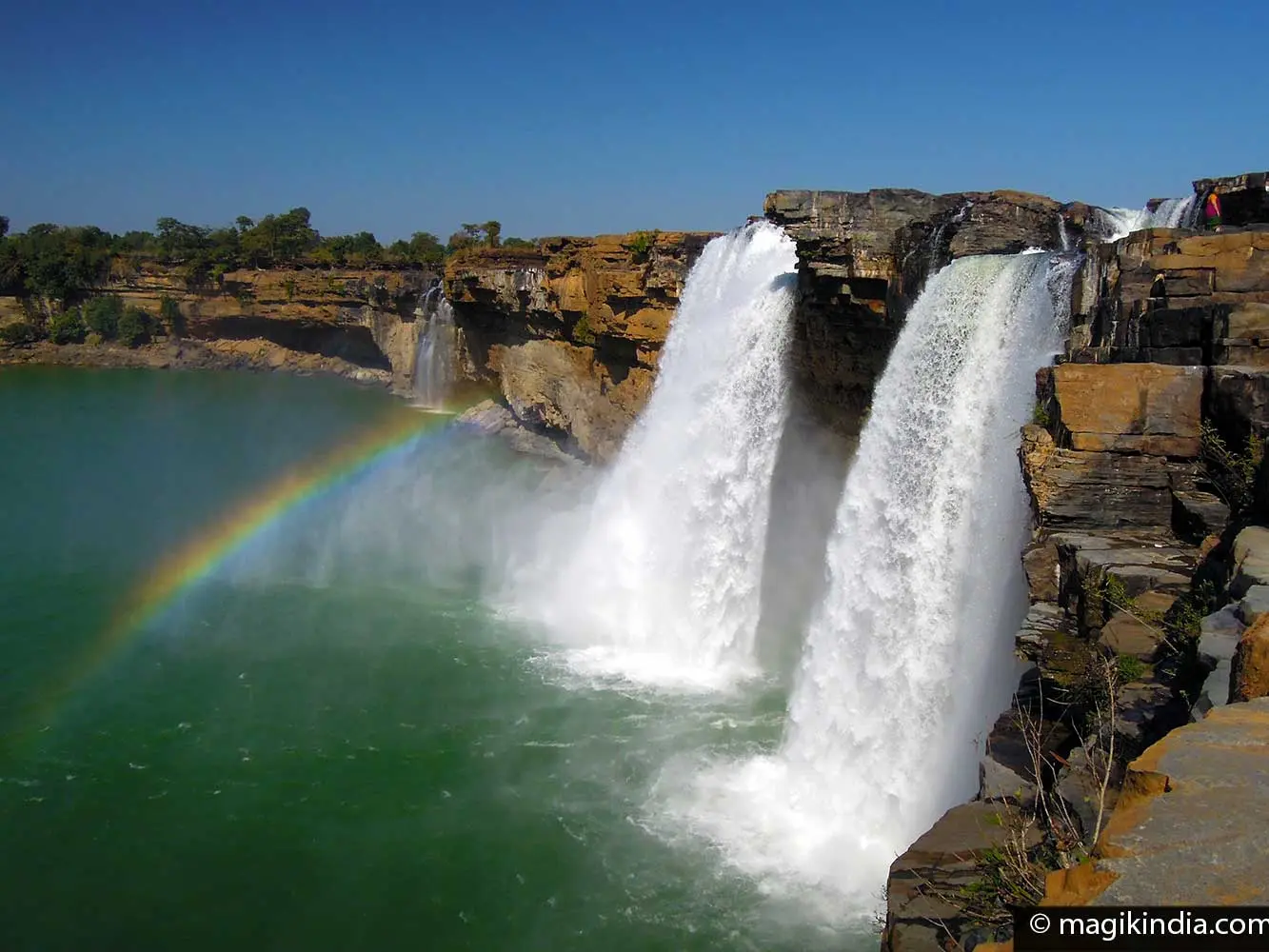
Widely celebrated as the "Milky Falls of Bastar", Tirathgarh presents a striking visual contrast to the colossal horizontal horseshoe crescent of Chitrakote Waterfalls on the Indravati River. While Chitrakote is famous for its massive volume and roaring muddy monsoon torrent, Tirathgarh is renowned for its crystalline, multi-tiered elegance. The rushing clear mountain waters break over successive horizontal sandstone shelves, aerating into frothy, brilliant white sheets that cascade like bridal veils against blackish-red rock cliffs, framed by the lush green canopy of moist peninsular sal forests. Adding to its mystical allure, an ancient whitewashed rock-cut shrine dedicated to Lord Shiva and Goddess Parvati sits peacefully on a massive stone knoll nestled between the cascading tiers, making Tirathgarh a celebrated confluence of primeval geology, tranquil wilderness, and sacred indigenous heritage.
Start here. Open a tile for the full details.
Why goRead details
- The 300-Foot Stepped Milky Falls: Marvel at one of India's most photogenic waterfalls, cascading 91 metres over multiple horizontal sandstone terraces in frothy white veils.
- The Sacred Shiva-Parvati Rock Temple: Cross stone bridges to visit an ancient whitewashed shrine dedicated to Lord Shiva and Goddess Parvati perched on a rocky island outcrop directly between the waterfall tiers.
- Multi-Level Viewing Pavilions: Admire the cascade from multiple perspectives - from high panoramic cliffside watchtowers down to the churning plunge pools at the base of the lower tier.
- An Exhilarating Gorge Descent: Walk down an engineered stone staircase of over 200 steps equipped with safety handrails that winds through verdant tropical forest.
- Pristine Sal Forest Ecology: Experience the rich flora and birdlife of the Kanger Valley forest corridor, home to butterflies, hornbills, and vibrant wild orchids.
- Perfect Synergy with Kanger Valley Circuits: Easily combine your trip with the subterranean karst wonders of Kutumsar Caves and the scenic river rapids of Kanger Dhara located just a few kilometres away.
When to visitRead details
- July to October (Monsoon Season): The southwest monsoon fills the Mugabahar River to its maximum volume. Tirathgarh roars with tremendous vitality, the multi-tiered white curtains expanding across the sandstone ledges in an awe-inspiring display of elemental power. Heavy airborne spray drifts across the gorge steps, and the surrounding sal forest is lush, emerald-green, and alive with rushing streams. Waterproof protection for cameras and cautious walking on damp stone steps are essential.
- November to February (Peak Winter Season): This is the ideal time of year for general travelers, families, and photographers. The heavy monsoon floods have subsided into a consistent, crystal-clear mountain stream, while the water retains sufficient volume to maintain the glorious "milky veil" effect. Daytime temperatures hover comfortably between 18°C and 26°C, skies are brilliant sapphire blue, and the gorge steps are dry and safe to navigate.
- March to June (Summer Season): As summer progresses, river discharge gradually declines. The cascade segments into multiple slender, silvery ribbons coursing through rock channels. While less roaring and thunderous than in winter, the shaded canyon beneath the sal canopy remains noticeably cooler than the surrounding open plains, and the exposed sandstone stratification provides fascinating insights for geology enthusiasts.
Entry & permissionsRead details
Fees, visiting hours and entry rules may change. Confirm the latest details with the official operator or local authority before travelling.
Tariffs & Hours of Operation
Parameter | Details / Tariff |
|---|---|
Waterfall Operating Hours | 06:00 AM to 06:00 PM daily |
Ticket Counter Closure | 05:00 PM daily |
Adult Entry Ticket | ₹30 per person |
Child Entry Ticket (Under 5) | Free admission |
Two-Wheeler Parking Fee | ₹20 |
Car / SUV Parking Fee | ₹50 |
Still Camera Fee | ₹25 |
Commercial Drones / Filming | Prohibited without written approval from Bastar District Administration |
Safety Guidelines & Visitor Regulations
Because Tirathgarh is a powerful natural cascade with multi-tiered rock shelves, deep plunge pools, and steep staircases, visitors must observe key safety rules:
- Strict Prohibition on Deep Swimming: Swimming directly beneath the powerful vertical drops or in the middle plunge pools is strictly prohibited. The churning falling water generates violent underwater whirlpools, and submerged jagged boulders present severe injury and drowning hazards. Wading ankle-deep in shallow, calm peripheral rocky channels is permitted under supervision.
- Hold Handrails on Stone Steps: The 200+ stone steps descending to the canyon floor can be moist and slippery from waterfall mist and airborne spray. Always hold the steel safety handrails firmly, especially during the monsoon season.
- Do Not Cross Safety Railings: Never climb over the perimeter steel fences or stand on wet, moss-covered sandstone ledges near the drop-offs to take photographs or selfies.
- Zero-Plastic Eco-Sanctuary: Tirathgarh is a protected eco-tourism precinct. Discarding plastic bottles, food wrappers, or polythene bags into the river or forest is strictly prohibited. Deposit all waste in designated bins at the upper parking plaza.
- Respect Sacred Temple Sanctity: Maintain decorum and remove footwear before stepping onto the raised sanctum platform of the ancient Shiva-Parvati temple on the central rock knoll.
Plan your visitRead details
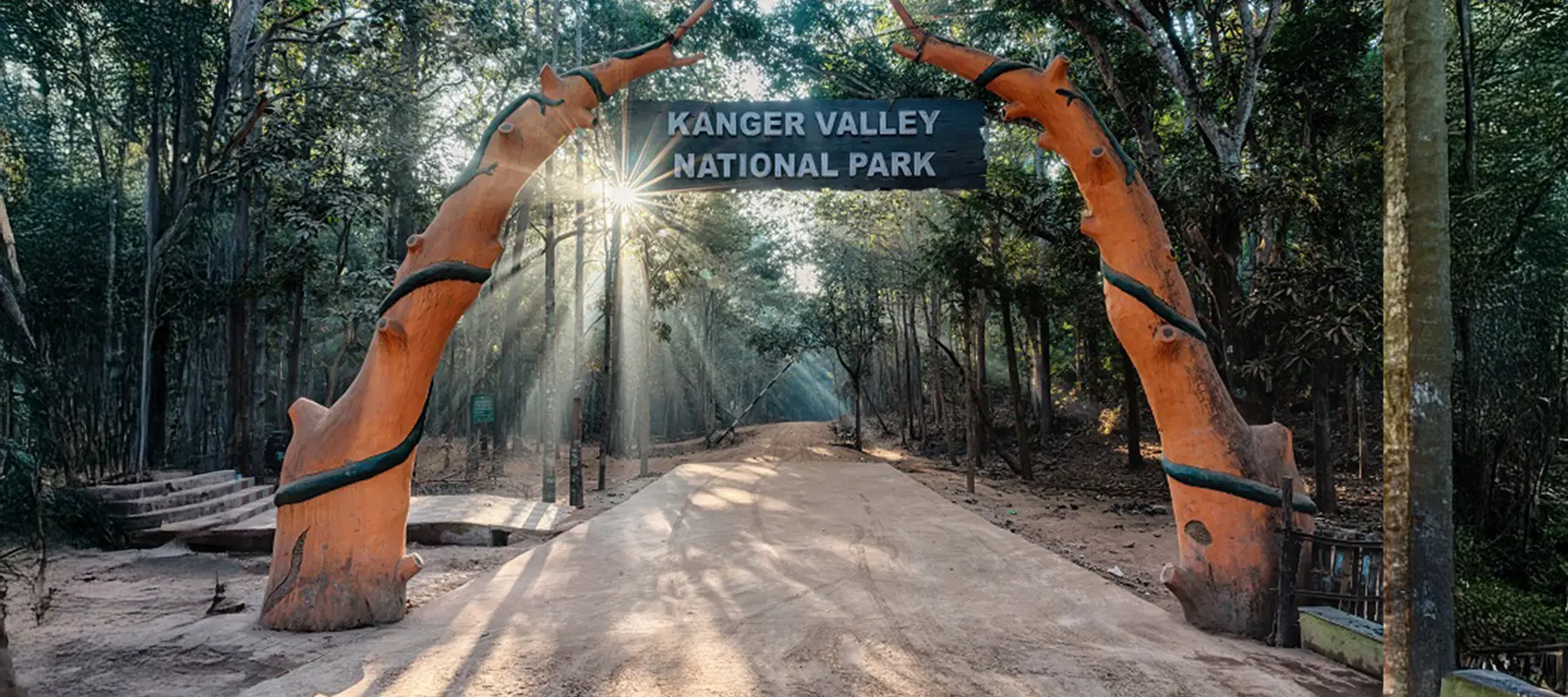
Tirathgarh Waterfalls is located adjacent to the western gate of Kanger Valley National Park in Bastar District, approximately 35 kilometres southwest of Jagdalpur.
Water Safety and Swimming Precautions
While the calm, shallow margins of the lower pools may appear inviting, deep open-pool swimming directly beneath the cascading water is strictly prohibited due to dangerous undertows and submerged rocky shelves. Keep a close watch on children near the riverbanks and obey all forest department warning signboards.
Explore the full guide - choose a topic below.
Why visit?
The 300-Foot Stepped Milky Falls: Marvel at one of India's most photogenic waterfalls, cascading 91 metres over…Explore detailsClose details
- The 300-Foot Stepped Milky Falls: Marvel at one of India's most photogenic waterfalls, cascading 91 metres over multiple horizontal sandstone terraces in frothy white veils.
- The Sacred Shiva-Parvati Rock Temple: Cross stone bridges to visit an ancient whitewashed shrine dedicated to Lord Shiva and Goddess Parvati perched on a rocky island outcrop directly between the waterfall tiers.
- Multi-Level Viewing Pavilions: Admire the cascade from multiple perspectives - from high panoramic cliffside watchtowers down to the churning plunge pools at the base of the lower tier.
- An Exhilarating Gorge Descent: Walk down an engineered stone staircase of over 200 steps equipped with safety handrails that winds through verdant tropical forest.
- Pristine Sal Forest Ecology: Experience the rich flora and birdlife of the Kanger Valley forest corridor, home to butterflies, hornbills, and vibrant wild orchids.
- Perfect Synergy with Kanger Valley Circuits: Easily combine your trip with the subterranean karst wonders of Kutumsar Caves and the scenic river rapids of Kanger Dhara located just a few kilometres away.
What to expect
Tirathgarh Waterfalls is a classic geological example of a multi-tiered stepped block cataract.Explore detailsClose details
The Stepped Block Geomorphology
Tirathgarh Waterfalls is a classic geological example of a multi-tiered stepped block cataract. The Mugabahar River, flowing through the plateau of southern Bastar, encounters an abrupt fault scarp where alternating layers of hard Vindhyan sandstone and softer shale have eroded unevenly over millions of years.
       GEOLOGICAL PROFILE OF TIRATHGARH CASCADES
                     [Mugabahar River Flow]
                                │
                                ▼
      ═════════════════════════════════════════════════
       Upper Forest Plateau & Parking Plaza (550 m MSL)
      ═════════════════════════╗
                               ║   UPPER CASCADE
                               ║   (Approx. 35 Metres)
                               ║   [First Plunge Tier]
                               ║
            ┌──────────────────╜───────────────────┐
            │       MIDDLE STONE TERRACE           │
            │  • Shiva-Parvati Rock Temple         │
            │  • Pedestrian Stone Footbridge       │
            └──────────────────┬───────────────────┘
                               ║
                               ║   LOWER CASCADE
                               ║   (Approx. 45-50 Metres)
                               ║   [Stepped Secondary Tiers]
                               ║
      ~~~~~~~~~~~~~~~~~~~~~~~~~╜
       Lower Plunge Basin & Forest Stream (Gorge Bed)
       (Spray Zone, Forest Walking Trails & Boulders)
      ─────────────────────────────────────────────────
Instead of dropping in a single vertical plunge, the river strikes the upper sandstone ledge and drops approximately 35 metres, fractures across an expansive horizontal rock terrace, gathers in natural stone channels, and then tumbles over a second and third tier of stepped shelves, dropping a total cumulative height of 91 metres (300 feet). This tiered staircase formation causes the falling water to churn continuously with air, transforming the clear stream into a dense, foaming white spray that gives the waterfall its "milky" appearance.
The "Milky Falls" Aesthetic: Contrast of Stone & Foam
What makes Tirathgarh an artistic masterpiece of nature is its vivid colour contrast:
- Dark Khondalite and Sandstone Bedrock: The rock face consists of deep purplish-black, charcoal-grey, and rusty red sandstone layers, polished smooth by millions of years of rushing water.
- Foaming White Water: As the river spills over dozens of horizontal ridges, the water fractures into thousands of fine rivulets that coalesce into broad, lace-like curtains of pure, brilliant white foam.
- Emerald Forest Frame: Towering Shorea robusta (sal) trees, wild mango, bamboo clumps, and thick creepers embrace the gorge on all sides, creating a lush emerald backdrop that amplifies the waterfall's striking radiance.
The Ancient Shiva-Parvati Rock Temple
Nestled dramatically upon a natural rock knoll situated right in the middle of the riverbed between the upper and middle tiers stands an ancient whitewashed shrine dedicated to Lord Shiva and Goddess Parvati.
       VISITOR ZONES AT TIRATHGARH WATERFALLS
                 Upper Parking & Forest Checkpoint
                                │
            ┌───────────────────┴───────────────────┐
            │        UPPER VIEWPOINT WATCHTOWERS    │
            │   (Bird's-Eye Panoramic Views of Falls)
            └───────────────────┬───────────────────┘
                                │ (Descend 100+ stone steps)
                                ▼
            ┌───────────────────────────────────────┐
            │        MIDDLE TERRACE & TEMPLE        │
            │  • Shiva-Parvati Whitewashed Shrine   │
            │  • Rocky Island Observation Platform  │
            │  • Pedestrian Bridge across Stream    │
            └───────────────────┬───────────────────┘
                                │ (Descend remaining 100+ steps)
                                ▼
            ┌───────────────────────────────────────┐
            │         LOWER PLUNGE POOL BASIN       │
            │  • Frothy Base Spray & Mist Zone      │
            │  • River Boulder Formations           │
            │  • Forest Canopy Stream Bank          │
            └───────────────────────────────────────┘
According to regional folklore, the hermits and sages of Bastar performed penance (tapasya) on this isolated rocky island centuries ago, revering the perpetual flow of the holy Mugabahar River as a divine manifestation of the celestial Ganga flowing through Lord Shiva's matted locks. Devotees and visitors can cross an engineered concrete-and-stone pedestrian bridge spanning the frothing river channels to reach the temple precinct, where bells ring out against the soothing roar of the cascading waters. During festivals such as Maha Shivaratri and the auspicious month of Shravan, local tribal villagers gather here in colorful attire to perform traditional pujas and offer sacred bilva leaves.
The Gorge Descent: Over 200 Stone Steps
To truly appreciate the multi-tiered magnificence of Tirathgarh, visitors must embark on the gorge walk. The Chhattisgarh Tourism Board and Forest Department have constructed a well-maintained stone staircase comprising over 200 steps, complete with sturdy steel handrails and midway resting landings:
- Upper Watchtower Promenade: At the road level near the parking plaza, high watchtowers provide an expansive bird's-eye perspective of the entire 300-foot waterfall system cutting through the dense forest canopy.
- Midway Terrace & Footbridge: As you descend the first 100 steps, you arrive level with the base of the upper tier. Here, a pedestrian bridge crosses the rushing stream, leading directly to the Shiva-Parvati temple knoll and offering dramatic close-up views of the upper white curtain plunging into a bubbling green pool.
- Lower Canyon Floor: Continuing down the remaining 100+ steps brings you right to the boulder-strewn bed of the lower canyon. Here, looking upward at the towering staircase of cascading water, cool mist envelopes you, and the rhythmic roar of the falling water echoes off the canyon walls.
Best time to visit
SEASONAL VISITABILITY OVERVIEW FOR TIRATHGARH…Explore detailsClose details
Seasonal Guide
Season | Months | Water Flow | Visiting Recommendation |
|---|---|---|---|
Monsoon | July - October | Maximum Volume; Roaring | Spectacle of power; full milky curtains; steps can be slick; lush surroundings |
Post-Monsoon & Winter | November - February | Optimal Crystalline Flow | Best overall season; pleasant temperatures, safe stairs, ideal photo. |
Summer | March - June | Moderate to Low Flow | Lower volume; multiple thin streams; warm midday; visit early morning. |
- July to October (Monsoon Season): The southwest monsoon fills the Mugabahar River to its maximum volume. Tirathgarh roars with tremendous vitality, the multi-tiered white curtains expanding across the sandstone ledges in an awe-inspiring display of elemental power. Heavy airborne spray drifts across the gorge steps, and the surrounding sal forest is lush, emerald-green, and alive with rushing streams. Waterproof protection for cameras and cautious walking on damp stone steps are essential.
- November to February (Peak Winter Season): This is the ideal time of year for general travelers, families, and photographers. The heavy monsoon floods have subsided into a consistent, crystal-clear mountain stream, while the water retains sufficient volume to maintain the glorious "milky veil" effect. Daytime temperatures hover comfortably between 18°C and 26°C, skies are brilliant sapphire blue, and the gorge steps are dry and safe to navigate.
- March to June (Summer Season): As summer progresses, river discharge gradually declines. The cascade segments into multiple slender, silvery ribbons coursing through rock channels. While less roaring and thunderous than in winter, the shaded canyon beneath the sal canopy remains noticeably cooler than the surrounding open plains, and the exposed sandstone stratification provides fascinating insights for geology enthusiasts.
Optimal Time of Day
The finest hours to visit Tirathgarh are early morning (08:00 AM to 11:00 AM) and late afternoon (03:00 PM to 05:30 PM). During the morning, sunlight filters diagonally through the sal canopy, illuminating the frothy white cascades against the dark shadowed rock walls. Late afternoon brings warm golden light that bathes the whitewashed Shiva temple and the upper tiers, creating magnificent conditions for landscape photography.
How to reach
Tirathgarh Waterfalls is located adjacent to the western gate of Kanger Valley National Park in Bastar District…Explore detailsClose details
Geographic Connectivity
Tirathgarh Waterfalls is located adjacent to the western gate of Kanger Valley National Park in Bastar District, approximately 35 kilometres southwest of Jagdalpur.
       REGIONAL TRANSIT MAP TO TIRATHGARH WATERFALLS
                     Raipur (State Capital / Major Airport - 335 km)
                               │
                               ▼
                           Jagdalpur
             (District HQ / Railhead / Bastar Hub)
                               │
              ┌────────────────┴────────────────┐
              │                                 │
              ▼                                 ▼
    Jagdalpur Railway Station           Jagdalpur Airport
          (JDB - 35 km)                    (JAG - 37 km)
                               │
                               │ (NH-30 South - 30 km toward Sukma/Darbha)
                               ▼
                    TIRATHGARH ROAD JUNCTION
                               │
                               │ (5 km paved forest link road)
                               ▼
                    TIRATHGARH WATERFALLS
                 (Upper Parking & Entrance)
Access Modes
- By Air:
- Jagdalpur Airport (JAG): Situated roughly 37 kilometres northeast of Tirathgarh. Operates scheduled domestic flights connecting Bastar to Raipur and Hyderabad under the regional UDAN scheme. Taxis and private rental vehicles can be hired directly at the airport terminal for the 45-minute drive.
- Swami Vivekananda Airport, Raipur (RPR): The premier domestic air hub of Chhattisgarh, located approximately 335 kilometres north. Connects non-stop to Delhi, Mumbai, Bengaluru, Kolkata, Chennai, and Hyderabad. Chauffeur-driven rental cars and intercity AC sleeper buses operate along NH-30 between Raipur and Jagdalpur.
- By Train:
- Jagdalpur Railway Station (JDB): The closest major railhead, located 35 kilometres northeast of the waterfall. Serviced daily by the scenic Visakhapatnam - Kirandul passenger and express line (crossing Araku Valley) as well as overnight trains to Raipur, Durg, and Bhubaneswar. Pre-paid cabs, rental SUVs, and auto-rickshaws are available outside the station.
- By Road:
- From Jagdalpur: The journey takes about 40 to 45 minutes along National Highway 30 (Jagdalpur - Sukma highway). Drive 30 kilometres south to the well-marked Tirathgarh Junction (near Netanar/Darbha), then turn left onto the 5-kilometre smoothly paved forest road that leads through dense sal forest directly to the waterfall parking plaza.
- Public Bus Transit: Regular state transport and private buses running between Jagdalpur and Sukma or Dantewada stop at the Tirathgarh road junction on NH-30. From the highway junction, local auto-rickshaws and shared jeeps ferry visitors the remaining 5 kilometres to the falls.
Entry, timings and permissions
Fees, visiting hours and entry rules may change.Explore detailsClose details
Fees, visiting hours and entry rules may change. Confirm the latest details with the official operator or local authority before travelling.
Tariffs & Hours of Operation
Parameter | Details / Tariff |
|---|---|
Waterfall Operating Hours | 06:00 AM to 06:00 PM daily |
Ticket Counter Closure | 05:00 PM daily |
Adult Entry Ticket | ₹30 per person |
Child Entry Ticket (Under 5) | Free admission |
Two-Wheeler Parking Fee | ₹20 |
Car / SUV Parking Fee | ₹50 |
Still Camera Fee | ₹25 |
Commercial Drones / Filming | Prohibited without written approval from Bastar District Administration |
Safety Guidelines & Visitor Regulations
Because Tirathgarh is a powerful natural cascade with multi-tiered rock shelves, deep plunge pools, and steep staircases, visitors must observe key safety rules:
- Strict Prohibition on Deep Swimming: Swimming directly beneath the powerful vertical drops or in the middle plunge pools is strictly prohibited. The churning falling water generates violent underwater whirlpools, and submerged jagged boulders present severe injury and drowning hazards. Wading ankle-deep in shallow, calm peripheral rocky channels is permitted under supervision.
- Hold Handrails on Stone Steps: The 200+ stone steps descending to the canyon floor can be moist and slippery from waterfall mist and airborne spray. Always hold the steel safety handrails firmly, especially during the monsoon season.
- Do Not Cross Safety Railings: Never climb over the perimeter steel fences or stand on wet, moss-covered sandstone ledges near the drop-offs to take photographs or selfies.
- Zero-Plastic Eco-Sanctuary: Tirathgarh is a protected eco-tourism precinct. Discarding plastic bottles, food wrappers, or polythene bags into the river or forest is strictly prohibited. Deposit all waste in designated bins at the upper parking plaza.
- Respect Sacred Temple Sanctity: Maintain decorum and remove footwear before stepping onto the raised sanctum platform of the ancient Shiva-Parvati temple on the central rock knoll.
Nearby places to consider
A visit to Tirathgarh Waterfalls naturally complements other premier cultural, wildlife, and natural attractions…Explore detailsClose details
A visit to Tirathgarh Waterfalls naturally complements other premier cultural, wildlife, and natural attractions across Bastar:
- Kanger Valley National Park (Western Entry Gate): A 200.58-square-kilometre virgin biosphere reserve home to the vocal Bastar Hill Myna, wild water buffalo, leopards, and pristine sal forests.
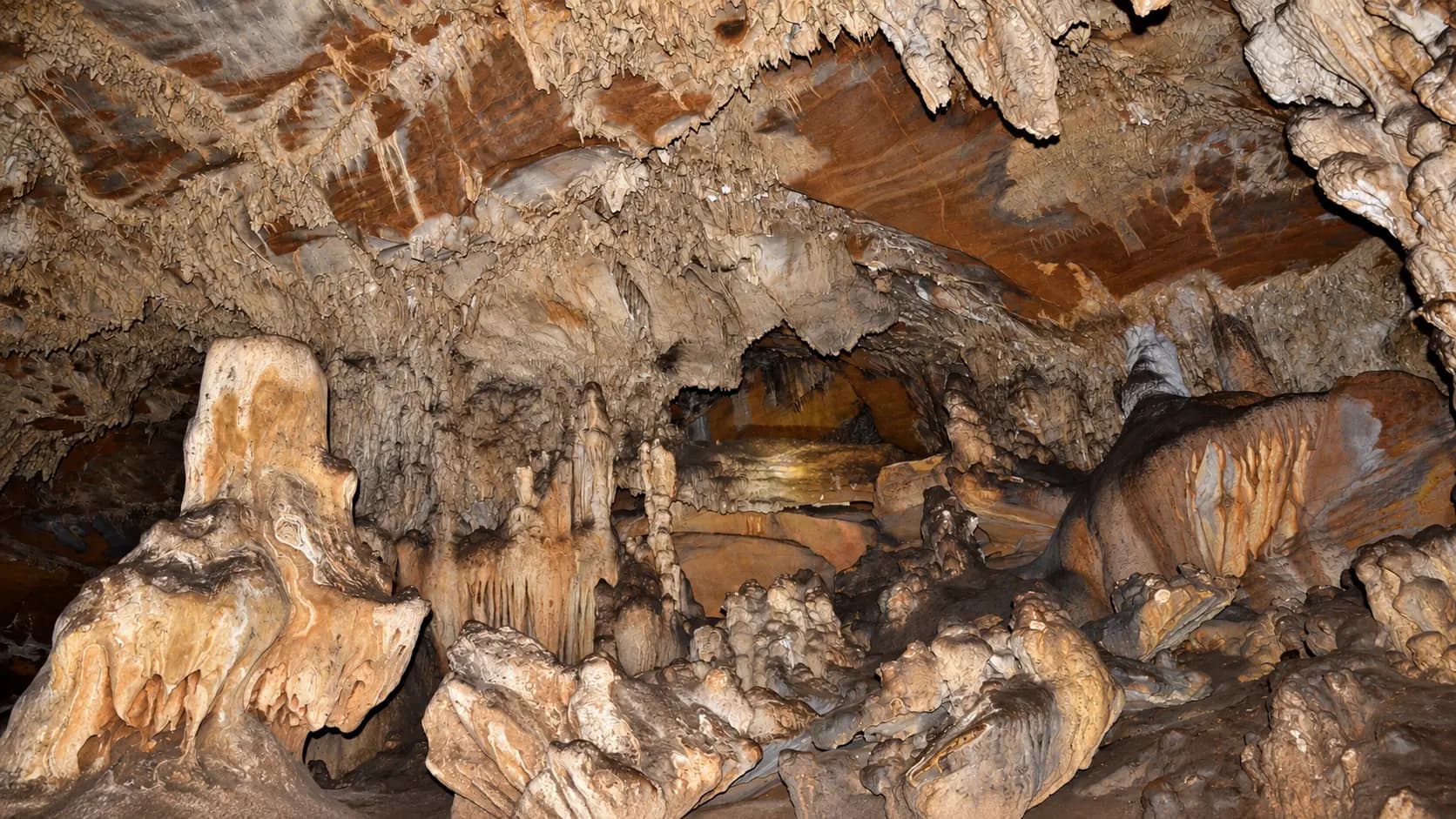
- Kutumsar Caves (15 km southeast): The renowned subterranean karst limestone cavern featuring colossal stalactites, stalagmites, and the world-famous blind cave fish (Nemacheilus evezardi).
- Kanger Dhara Rapids (10 km east inside the park): A picturesque series of frothing river rapids and limestone cascades along the Kanger River, perfect for birdwatching and picnicking.
- Chitrakote Waterfalls (65 km northwest): India's widest waterfall, known as the "Niagara of India", plunging 29 metres across a colossal 300-metre horseshoe sandstone cliff on the Indravati River.
- Danteshwari Temple, Dantewada (55 km southwest): The celebrated 14th-century Shakti Peetha temple situated at the confluence of the Dankini and Shankhini rivers, sacred to millions across Central India.
- Bastar Anthropological Museum & Palace, Jagdalpur (35 km north): Outstanding cultural repositories in Jagdalpur detailing the customs, traditional attire, and rich metal crafts of Bastar's indigenous tribes.
In pictures
The practical bits
Before you go.
Staircase Descent and Physical Readiness
Exploring Tirathgarh involves descending and subsequently climbing back up a long flight of more than 200 stone…Explore detailsClose details
Exploring Tirathgarh involves descending and subsequently climbing back up a long flight of more than 200 stone steps cut into the rocky gorge wall. While resting landings and sturdy handrails are provided, visitors with limited mobility, knee ailments, or cardiovascular conditions should pace themselves carefully or enjoy the magnificent bird's-eye views from the upper watchtowers.
Footwear for Wet Sandstone Steps
The spray from the tumbling cascades keeps the stone steps and viewing walkways constantly damp, promoting…Explore detailsClose details
The spray from the tumbling cascades keeps the stone steps and viewing walkways constantly damp, promoting slippery micro-algae growth. Wear sturdy walking shoes, sports sneakers, or high-traction trekking sandals equipped with non-slip rubber outsoles. Avoid smooth-soled leather shoes, flip-flops, or high heels that can easily slip on wet stone.
Water Safety and Swimming Precautions
While the calm, shallow margins of the lower pools may appear inviting, deep open-pool swimming directly beneath…Explore detailsClose details
While the calm, shallow margins of the lower pools may appear inviting, deep open-pool swimming directly beneath the cascading water is strictly prohibited due to dangerous undertows and submerged rocky shelves. Keep a close watch on children near the riverbanks and obey all forest department warning signboards.
Combining Your Visit with Kanger Valley Attractions
Tirathgarh is situated immediately adjacent to Kanger Valley National Park, making it ideal to combine into a…Explore detailsClose details
Tirathgarh is situated immediately adjacent to Kanger Valley National Park, making it ideal to combine into a full-day Bastar wilderness circuit. Plan your itinerary to explore the subterranean marvels of Kutumsar Caves in the morning, followed by an afternoon visit to Tirathgarh Waterfalls when the sun illuminates the cascading milky veils.
A few things you might wonder
Common questions about visiting Tirathgarh Waterfalls. Fees, visiting hours and ceremonies are researched details that may change; confirm current arrangements with the operator before travelling.
What is the total height of Tirathgarh Waterfalls, and on which river is it located?
Why is Tirathgarh nicknamed the 'Milky Falls of Bastar'?
Is there a temple located inside the Tirathgarh Waterfalls complex?
How many steps must visitors climb to explore Tirathgarh Waterfalls?
Is swimming permitted in the plunge pools at Tirathgarh Waterfalls?
What are the visiting hours and entry charges for Tirathgarh Waterfalls?
What is the best time of year to visit Tirathgarh Waterfalls?
How far is Tirathgarh Waterfalls from Jagdalpur, and how can travelers reach it?
Explore more in Bastar
Discover other destinations around this hub
More Hubs in Chhattisgarh
Continue exploring other travel hubs in this state
Planning a trip to Bastar?