Kanger Valley National Park
Explore Kanger Valley National Park in Bastar, home to Bastar Hill Myna, limestone caves, and Tirathgarh Falls. Complete guide to safaris, permits, and timings.
Location
Bastar, Chhattisgarh
A closer look
Your visit, at a glance.
Bastar, Chhattisgarh
GET TO KNOW THE PLACE
Spanning 200.58 square kilometres of breathtaking forested hills, deep limestone gorges, and ancient riverine valleys in southern Chhattisgarh, Kanger Valley National Park…
The story of Kanger Valley National Park
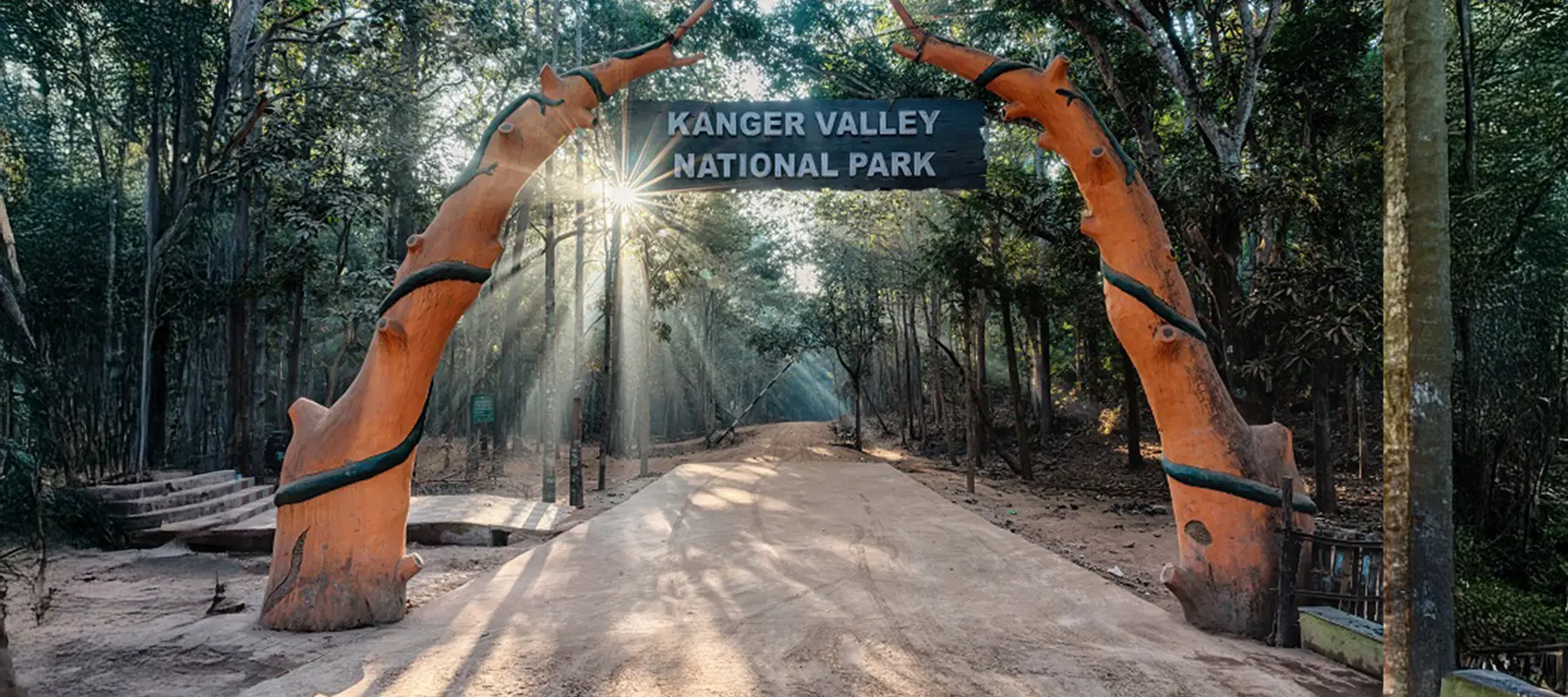
Spanning 200.58 square kilometres of breathtaking forested hills, deep limestone gorges, and ancient riverine valleys in southern Chhattisgarh, Kanger Valley National Park (locally known as Kanger Ghati National Park) is one of India's most ecologically diverse and geologically fascinating biosphere reserves. Located in Bastar District, roughly 27 to 30 kilometres southeast of the cultural city of Jagdalpur, this pristine wilderness reserve was officially declared a National Park on July 22, 1982 under the Wildlife Protection Act.
Named after the perennial Kanger River, which flows for 34 kilometres northwest to southeast through the core of the park, Kanger Valley is celebrated as the premier sanctuary of two official state symbols: the charismatic Bastar Hill Myna (Gracula religiosa peninsularis), the official State Bird of Chhattisgarh world-renowned for its vocal genius and ability to articulate human speech, and the endangered Wild Water Buffalo (Bubalus arnee), the official State Animal. Above ground, the park showcases towering moist peninsular sal forests, rushing river rapids, and thunderous waterfalls like Tirathgarh; beneath the forest floor lies an astonishing subterranean world of prehistoric karst limestone caverns adorned with millions-of-years-old stalactites and stalagmites.
Start here. Open a tile for the full details.
Why goRead details
- Home of the Bastar Hill Myna: Observe Chhattisgarh's official State Bird in its native sal canopy, renowned for its glossy black feathers, bright yellow wattles, and uncanny ability to mimic human voices and forest sounds.
- Prehistoric Subterranean Limestone Caves: Venture into deep subterranean caverns - including Kutumsar Cave, Kailash Cave, and Dandak Cave - to marvel at colossal stalactites, stalagmites, and blind cave-dwelling fauna.
- Spectacular Waterfalls & Cascades: Witness the breathtaking multi-tiered Tirathgarh Waterfalls cascading 300 feet over stepped sandstone ledges on the Mugabahar River, and explore the churning rapids of Kanger Dhara.
- A Biodiversity Hotspot of Central India: Spot leopards, sloth bears, chital (spotted deer), barking deer, sambar, wild boars, Indian giant flying squirrels, and marsh crocodiles.
- Pristine Virgin Sal Forests: Breathe the purest air amid dense canopies of towering Shorea robusta (sal), teak, bamboo thickets, and rare medicinal flora.
- Empowered Tribal Eco-Guiding: Experience authentic community-based conservation led by trained indigenous Muria and Dhurwa tribal guides who share their intimate botanical and cultural knowledge.
When to visitRead details
- November to February (Peak Season): This is the undisputed prime window to explore Kanger Valley. The monsoon floodwaters have completely drained from the limestone caves, leaving subterranean chambers clean and safe to explore. Daytime temperatures are delightfully mild (18°C to 25°C), while nights are pleasantly crisp (11°C to 14°C). Migratory forest birds arrive, and the Bastar Hill Myna is actively vocal across the sal canopy.
- March to May (Spring / Early Summer): As summer approaches, deciduous trees shed leaves, increasing visibility into the forest understory. Large mammals such as chital, barking deer, wild boar, and leopards frequently visit the remaining water pools along the Kanger River. Caves remain cool (consistently around 25°C underground) even when surface temperatures climb.
- June 16 to October 31 (Monsoon Closure): During the heavy southwest monsoon, the Kanger River and its subterranean tributaries swell dramatically. Water floods the lower passages of Kutumsar, Kailash, and Dandak caves, making underground entry lethally hazardous. Consequently, all subterranean caves are strictly closed to visitors during the monsoon. While the peripheral Tirathgarh Waterfalls remains open and looks thunderously magnificent during monsoon, safari drives into the core jungle are restricted.
Entry & permissionsRead details
Fees, visiting hours and entry rules may change. Confirm the latest details with the official operator or local authority before travelling.
Tariffs & Hours of Operation
Parameter | Details / Tariff |
|---|---|
Park Gate Opening Hours | 06:00 AM to 06:00 PM daily |
Entry Ticket Counter Closes | 04:30 PM daily |
Indian Adult Entry Fee | ₹50 per person |
Child Entry Fee (Ages 5-12) | ₹25 per child (Under 5 free) |
Light Motor Vehicle (Car/Jeep) | ₹150 per vehicle |
Heavy Vehicle / Minibus Entry | ₹300 per vehicle |
Mandatory Tribal Eco-Guide Fee | ₹100 to ₹200 per vehicle |
Open Safari Gypsy Rental | ₹1,500 to ₹2,000 per circuit |
Kutumsar Cave Entry Ticket | Approx. ₹25 per person |
Commercial Filming / Drones | Prohibited without written approval from Chief Wildlife Warden, Raipur |
Park Regulations & Visitor Etiquette
Kanger Valley is a fragile, strictly protected ecological haven. All visitors must adhere to established national park guidelines:
- Mandatory Forest Guide: No private vehicle is permitted to enter the park interior without an authorized, certified tribal eco-guide aboard.
- Strict Prohibition on Touching Cave Formations: Touching, breaking, or scratching stalactites and stalagmites inside the caves is strictly prohibited. Natural calcite formations grow at a rate of less than one centimetre every century; human touch leaves skin oils that halt mineral deposition and permanently blackens the crystals.
- Speed Limits & Wildlife Right-of-Way: The maximum vehicle speed limit inside the park is 20 km/h. Honking horns, loud music, and aggressive revving are strictly prohibited. Wildlife always has the right of way.
- Zero-Plastic & Anti-Littering Mandate: Kanger Valley is a designated zero-plastic eco-zone. Visitors must carry back all plastic bottles and wrappers. Discarding waste in the forest or inside caves attracts heavy fines.
- No Unescorted Trekking: Wandering off marked trails into dense sal undergrowth on foot without forest guards is prohibited due to the presence of wild sloth bears, leopards, and venomous snakes.
Plan your visitRead details
Kanger Valley National Park is situated in southern Bastar District, approximately 27 to 30 kilometres southeast of Jagdalpur city center, lying along the corridor between the Bastar plateau and the Odisha border.
Timing Your Visit for Cave Accessibility
The subterranean limestone caves inside Kanger Valley (Kutumsar, Kailash, and Dandak) are strictly closed during the monsoon season from June 16 to October 31 because rising groundwater and subterranean torrents flood the lower chambers. Plan your trip between November and April if spelunking and cave exploration are your primary objectives.
Jungle Etiquette and Safety Precautions
Kanger Valley is a wild, undisturbed tropical sanctuary home to leopards, sloth bears, and wild boars. Always maintain silence during safari drives, wear neutral earth-toned clothing (khaki, olive green, brown), stay close to your guide inside cave chambers, and carry a reliable personal flashlight with spare batteries alongside the guide's solar lamp.
Explore the full guide - choose a topic below.
Why visit?
Home of the Bastar Hill Myna: Observe Chhattisgarh's official State Bird in its native sal canopy, renowned for…Explore detailsClose details
- Home of the Bastar Hill Myna: Observe Chhattisgarh's official State Bird in its native sal canopy, renowned for its glossy black feathers, bright yellow wattles, and uncanny ability to mimic human voices and forest sounds.
- Prehistoric Subterranean Limestone Caves: Venture into deep subterranean caverns - including Kutumsar Cave, Kailash Cave, and Dandak Cave - to marvel at colossal stalactites, stalagmites, and blind cave-dwelling fauna.
- Spectacular Waterfalls & Cascades: Witness the breathtaking multi-tiered Tirathgarh Waterfalls cascading 300 feet over stepped sandstone ledges on the Mugabahar River, and explore the churning rapids of Kanger Dhara.
- A Biodiversity Hotspot of Central India: Spot leopards, sloth bears, chital (spotted deer), barking deer, sambar, wild boars, Indian giant flying squirrels, and marsh crocodiles.
- Pristine Virgin Sal Forests: Breathe the purest air amid dense canopies of towering Shorea robusta (sal), teak, bamboo thickets, and rare medicinal flora.
- Empowered Tribal Eco-Guiding: Experience authentic community-based conservation led by trained indigenous Muria and Dhurwa tribal guides who share their intimate botanical and cultural knowledge.
What to expect
Kanger Valley occupies a distinct geological transition zone where the sandstone Bastar plateau gives way to…Explore detailsClose details
The Geography & Riverine Topography
Kanger Valley occupies a distinct geological transition zone where the sandstone Bastar plateau gives way to rugged limestone ridges and river basins leading toward the Eastern Ghats. The park's terrain is intensely undulating, with elevations ranging from 338 metres in deep river gorges to 781 metres along surrounding forested ridges.
       SCHEMATIC LAYOUT OF KANGER VALLEY NATIONAL PARK
                       [To Jagdalpur - 27 km via NH-30]
                                      ▲
                                      │
            ┌─────────────────────────┴─────────────────────────┐
            │             KOTAMSAR ENTRY BARRIER                │
            │   (Forest Reception, Guide Desk & Check-Post)     │
            └─────────────────────────┬─────────────────────────┘
                                      │
         ┌────────────────────────────┼────────────────────────────┐
         │                            │                            │
         ▼                            ▼                            ▼
  Tirathgarh Falls             Kutumsar Cave                 Kanger Dhara
  (300 ft Cascades on          (Stalactites &               (Limestone Rapids
  Mugabahar River)             Blind Cave Fish)              on Kanger River)
         │                            │                            │
         └────────────────────────────┼────────────────────────────┘
                                      │
                                      ▼
                        KANGER RIVER VALLEY (Core)
                                      │
                                      ▼
                        Bhaisadarha Crocodile Pool
                     (Mugger Basking / Sabari Basin)
The lifeblood of the entire ecosystem is the Kanger River, a crystal-clear perennial watercourse that cuts through hard sandstone and soluble limestone beds. Along its course, the river carves out dramatic gorges, quiet deep pools (daharas), and bubbling rapids. The park forms a vital hydrological corridor, feeding the Sabari (Kolab) River system that ultimately merges with the mighty Godavari.
The Bastar Hill Myna: Voice of the Forest
Among birdwatchers and ornithologists, Kanger Valley is revered as the undisputed global capital of the Bastar Hill Myna (Gracula religiosa peninsularis). Recognized as the State Bird of Chhattisgarh, this medium-sized starling possesses velvety jet-black plumage with a brilliant purple-green iridescent sheen, prominent bright yellow-orange fleshy wattles behind the eyes and nape, and a heavy orange bill.
Parameter | Details |
|---|---|
Conservation Status | State Bird of Chhattisgarh; Schedule I protected under Wildlife Act |
Prime Habitat | Cavity-bearing mature Sal (Shorea robusta) trees in dense valley valleys |
Vocal Characteristics | Extraordinary range of whistles, shrieks, and flawless mimicry of human speech and environmental noises |
Diet | Frugivorous & nectarivorous (wild figs, mahua nectar, berries, and insects) |
Best Spotting Hours | 06:30 AM to 09:00 AM & 04:00 PM to dusk |
Unlike ordinary common mynas seen around human settlements, the Hill Myna is strictly an arboreal, deep-forest dweller that nests in high natural tree hollows of ancient sal trees. In the early morning hours, their clear, resonant whistles and metallic flute-like calls echo across the canopy of Kanger Valley. Dedicated conservation efforts by the Chhattisgarh Forest Department, including artificial nesting boxes and habitat protection, have helped stabilize the wild population of this iconic bird.
Karst Limestone Caverns: Journey into the Underworld
The southern section of Kanger Valley is world-famous for its spectacular subterranean karst limestone formations. Over tens of millions of years, acidic rainwater seeping through surface fractures in the limestone bedrock dissolved underground cavities, carving out immense subterranean halls decorated with natural calcite sculptures:
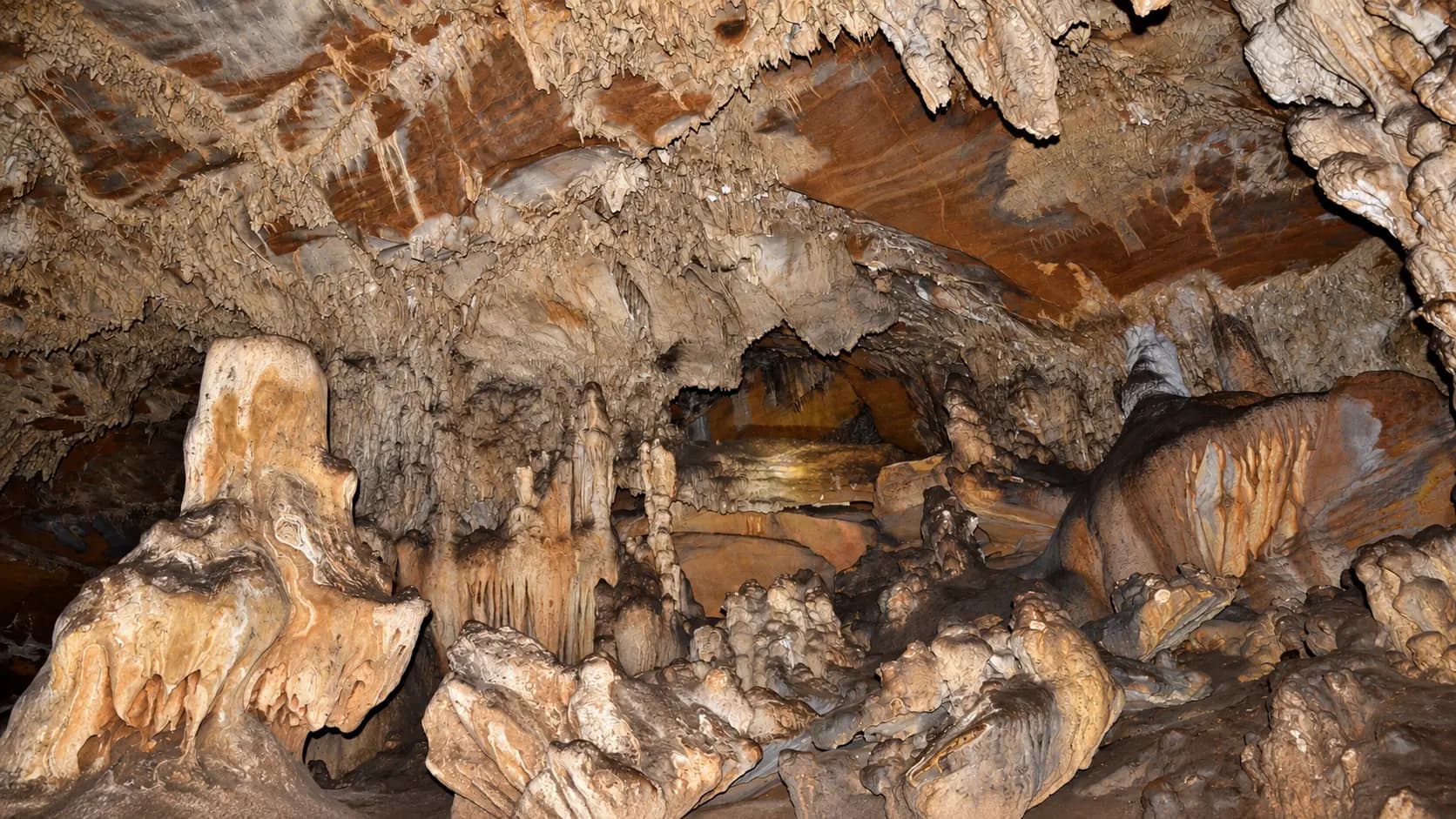
- Kutumsar Cave: Located 12 kilometres into the forest from the Kotamsar barrier, Kutumsar is India's most famous limestone show cave. Descending through a narrow vertical crevice, visitors enter a pitch-black labyrinth extending more than 330 metres into the earth. Colossal stalactites (calcite deposits hanging like icicles from the ceiling) and massive stalagmites (pillars rising from the floor) create eerie, majestic subterranean chambers. The cave is home to a world-famous troglobitic species: the blind cave fish (Nemacheilus evezardi), which has lost its eyes and skin pigmentation through millions of years of adaptation to total darkness.
- Kailash Cave: Discovered in 1993 on a small hillock near the Kanger River, this 250-metre-long cave features magnificent stalagmitic formations that resemble mythological figures, including a colossal stalagmite revered by locals as a natural Shiva Lingam. When struck gently, hollow calcite columns inside the cave emit musical, bell-like tones.
- Dandak Cave: Characterized by wide, cavernous halls and symmetrical flowstone curtains, Dandak Cave offers an adventurous subterranean walk requiring scrambling over natural stone terraces.
   STALACTITE & STALAGMITE FORMATION IN KANGER CAVES
       Limestone Bedrock with Acidic Rainwater Seepage
    ══════════════════════════════════════════════════════
               │   │   │ (Slow Calcite Dripping)
               ▼   ▼   ▼
               │   │   │  ◄─── STALACTITES (Hanging down)
               :   :   :
               .   .   .  (Drip Path across total darkness)
               :   :   :
              ┌┴┐ ┌┴┐ ┌┴┐ ◄─── STALAGMITES (Growing upward)
    ══════════════════════════════════════════════════════
        Subterranean Cave Floor with Underground Streams
Waterfalls and Aquatic Sanctuaries
In addition to its subterranean wonders, Kanger Valley is adorned with pristine surface waters:
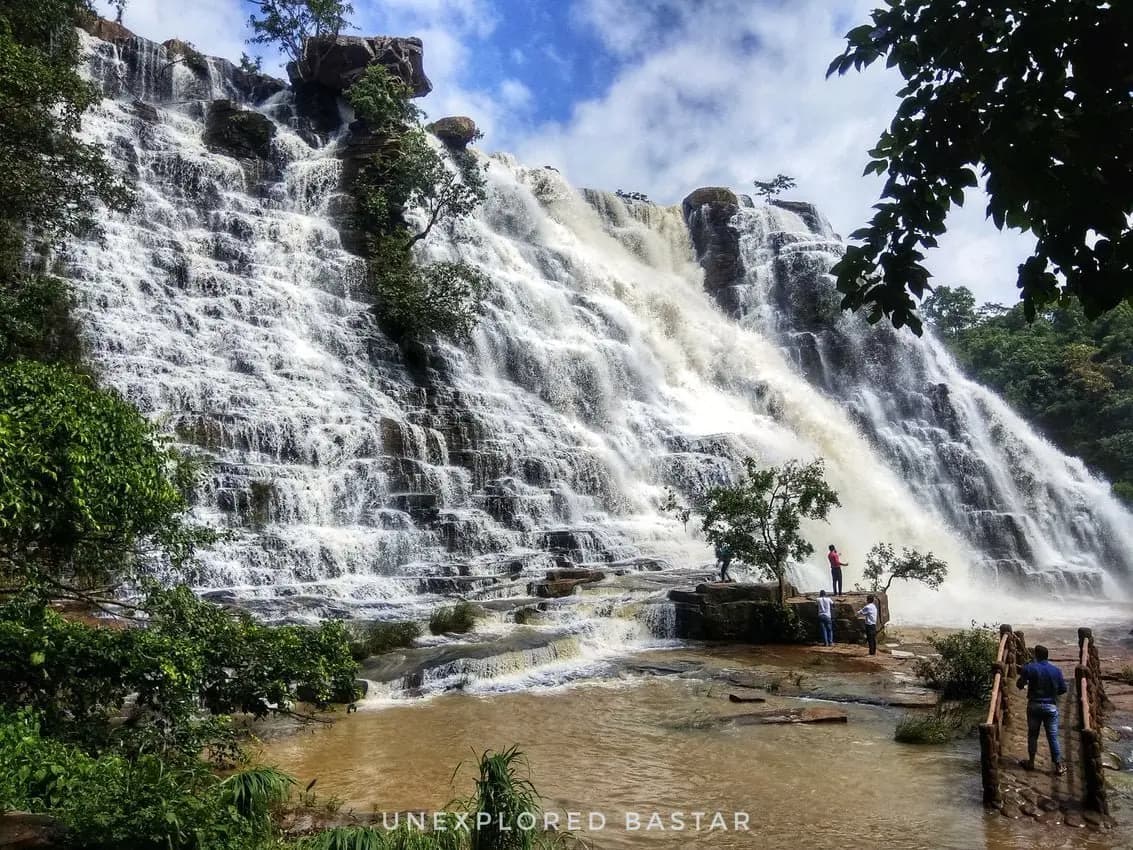
- Tirathgarh Waterfalls: Situated on the Mugabahar River near the western boundary of the park, this spectacular 300-foot multi-tiered waterfall tumbles down a series of stepped sandstone ledges into a wide, forested gorge. White water curtains drape across dark rock faces like silk sheets, making Tirathgarh one of the most photographed waterfalls in Central India.
- Kanger Dhara: A picturesque series of cascading rapids and rock pools along the Kanger River, where the water churns through narrow limestone fissures. Surrounded by tranquil bamboo thickets, it is a favored resting spot for picnickers and birdwatchers.
- Bhaisadarha Crocodile Sanctuary: Located in the deep southern interior of the park where the Kanger River widens into a deep, cliff-bordered natural lake, Bhaisadarha is a protected natural haven for the marsh crocodile (Crocodylus palustris). Visitors standing on rocky bluffs can frequently spot large adult crocodiles basking on rock ledges in the midday sun.
Community Eco-Guiding: Empowering Indigenous Youth
A standout success of Kanger Valley National Park is its progressive community ecotourism model. Recognizing that local indigenous tribes (Muria, Dhurwa, and Gond) possess generational wisdom regarding forest ecology, the Forest Department formed the Kanger Ghati Eco-Guide Cooperative.
Every vehicle entering the park is assigned a certified local tribal guide. These knowledgeable young men and women guide visitors safely through the pitch-black cave chambers using solar lamps, identify camouflaged wildlife and bird calls in the sal canopy, explain traditional medicinal uses of forest plants, and ensure that tourists adhere strictly to conservation and anti-littering regulations.
Best time to visit
SEASONAL VISITABILITY SCORECARD FOR KANGER VALLEY…Explore detailsClose details
Seasonal Guide
Season | Months | Temp Range | Visiting Status & Notes |
|---|---|---|---|
Peak Season (Winter) | November - February | 12°C - 27°C | Best overall time; all caves open; pleasant days; prime birdwatching window. |
Spring / Early Summer | March - May | 20°C - 35°C | Excellent for wildlife; animals congregate at waterholes; caves open. |
Monsoon (Heavy Rains) | June 16 - October 31 | 24°C - 32°C | CORE CAVES CLOSED; park roads restricted; falls in full spate. |
- November to February (Peak Season): This is the undisputed prime window to explore Kanger Valley. The monsoon floodwaters have completely drained from the limestone caves, leaving subterranean chambers clean and safe to explore. Daytime temperatures are delightfully mild (18°C to 25°C), while nights are pleasantly crisp (11°C to 14°C). Migratory forest birds arrive, and the Bastar Hill Myna is actively vocal across the sal canopy.
- March to May (Spring / Early Summer): As summer approaches, deciduous trees shed leaves, increasing visibility into the forest understory. Large mammals such as chital, barking deer, wild boar, and leopards frequently visit the remaining water pools along the Kanger River. Caves remain cool (consistently around 25°C underground) even when surface temperatures climb.
- June 16 to October 31 (Monsoon Closure): During the heavy southwest monsoon, the Kanger River and its subterranean tributaries swell dramatically. Water floods the lower passages of Kutumsar, Kailash, and Dandak caves, making underground entry lethally hazardous. Consequently, all subterranean caves are strictly closed to visitors during the monsoon. While the peripheral Tirathgarh Waterfalls remains open and looks thunderously magnificent during monsoon, safari drives into the core jungle are restricted.
How to reach
Kanger Valley National Park is situated in southern Bastar District, approximately 27 to 30 kilometres southeast…Explore detailsClose details
Geographic Orientation
Kanger Valley National Park is situated in southern Bastar District, approximately 27 to 30 kilometres southeast of Jagdalpur city center, lying along the corridor between the Bastar plateau and the Odisha border.
       REGIONAL TRANSIT MAP TO KANGER VALLEY
                     Raipur (Major Airport - 330 km via NH-30)
                               │
                               ▼
                           Jagdalpur
             (District HQ / Railhead / Bastar Hub)
                               │
              ┌────────────────┴────────────────┐
              │                                 │
              ▼                                 ▼
    Jagdalpur Railway Station           Jagdalpur Airport
          (JDB - 30 km)                    (JAG - 32 km)
                               │
                               │ (NH-30 South - 27 km toward Sukma)
                               ▼
                    KOTAMSAR ENTRY BARRIER
               (Park Reception & Safari Check-Post)
                               │
         ┌─────────────────────┼─────────────────────┐
         │ (10 km west)        │ (12 km south)       │ (8 km southeast)
         ▼                     ▼                     ▼
  Tirathgarh Falls      Kutumsar Cave           Kanger Dhara
Access Modes
- By Air:
- Jagdalpur Airport (JAG): Located roughly 32 kilometres north of Kotamsar Gate. Operates scheduled domestic flights connecting Bastar to Raipur and Hyderabad under the regional UDAN scheme. Taxis and rental safari vehicles can be hired directly from the airport terminal (approx. 40 minutes drive).
- Swami Vivekananda Airport, Raipur (RPR): Situated approximately 330 kilometres north. Connects non-stop to major Indian metros (Delhi, Mumbai, Bengaluru, Kolkata, Hyderabad). Travelers can take intercity trains, luxury sleeper buses, or chauffeur-driven cars via NH-30 from Raipur to Jagdalpur.
- By Train:
- Jagdalpur Railway Station (JDB): The closest major railhead, located 30 kilometres north of the park entrance. Connected by direct daily express trains to Visakhapatnam (VSKP) (via the scenic Araku Valley mountain line) and overnight express routes to Raipur, Durg, and Bhubaneswar. Pre-paid taxis, autos, and safari booking agents operate outside the station.
- By Road:
- From Jagdalpur: The park is easily reached via National Highway 30 (the Jagdalpur - Sukma - Konta highway). The smooth, paved four-lane/two-lane highway leads directly to the Kotamsar Barrier (27 km) in about 35 minutes.
- Public Bus Services: Frequent state transport and private buses ply NH-30 between Jagdalpur and Sukma/Dantewada. Ask the conductor to drop you at the Kotamsar Naka (Kotamsar Gate). From the gate, you must hire an authorized forest safari gypsy and guide to enter the protected park interior.
Entry, timings and permissions
Fees, visiting hours and entry rules may change.Explore detailsClose details
Fees, visiting hours and entry rules may change. Confirm the latest details with the official operator or local authority before travelling.
Tariffs & Hours of Operation
Parameter | Details / Tariff |
|---|---|
Park Gate Opening Hours | 06:00 AM to 06:00 PM daily |
Entry Ticket Counter Closes | 04:30 PM daily |
Indian Adult Entry Fee | ₹50 per person |
Child Entry Fee (Ages 5-12) | ₹25 per child (Under 5 free) |
Light Motor Vehicle (Car/Jeep) | ₹150 per vehicle |
Heavy Vehicle / Minibus Entry | ₹300 per vehicle |
Mandatory Tribal Eco-Guide Fee | ₹100 to ₹200 per vehicle |
Open Safari Gypsy Rental | ₹1,500 to ₹2,000 per circuit |
Kutumsar Cave Entry Ticket | Approx. ₹25 per person |
Commercial Filming / Drones | Prohibited without written approval from Chief Wildlife Warden, Raipur |
Park Regulations & Visitor Etiquette
Kanger Valley is a fragile, strictly protected ecological haven. All visitors must adhere to established national park guidelines:
- Mandatory Forest Guide: No private vehicle is permitted to enter the park interior without an authorized, certified tribal eco-guide aboard.
- Strict Prohibition on Touching Cave Formations: Touching, breaking, or scratching stalactites and stalagmites inside the caves is strictly prohibited. Natural calcite formations grow at a rate of less than one centimetre every century; human touch leaves skin oils that halt mineral deposition and permanently blackens the crystals.
- Speed Limits & Wildlife Right-of-Way: The maximum vehicle speed limit inside the park is 20 km/h. Honking horns, loud music, and aggressive revving are strictly prohibited. Wildlife always has the right of way.
- Zero-Plastic & Anti-Littering Mandate: Kanger Valley is a designated zero-plastic eco-zone. Visitors must carry back all plastic bottles and wrappers. Discarding waste in the forest or inside caves attracts heavy fines.
- No Unescorted Trekking: Wandering off marked trails into dense sal undergrowth on foot without forest guards is prohibited due to the presence of wild sloth bears, leopards, and venomous snakes.
Nearby places to consider
A visit to Kanger Valley National Park pairs naturally with other premier cultural and natural landmarks of…Explore detailsClose details
A visit to Kanger Valley National Park pairs naturally with other premier cultural and natural landmarks of Bastar:
- Tirathgarh Waterfalls (Inside Park / Western Border): A spectacular 300-foot multi-tiered white water cataract cascading over stepped sandstone blocks on the Mugabahar River, framed by dense sal forest.
- Kutumsar Caves (12 km inside park): The centerpiece subterranean limestone show cave of Kanger Valley, celebrated for its massive stalactites, blind cave fish (Nemacheilus evezardi), and cavernous chambers.
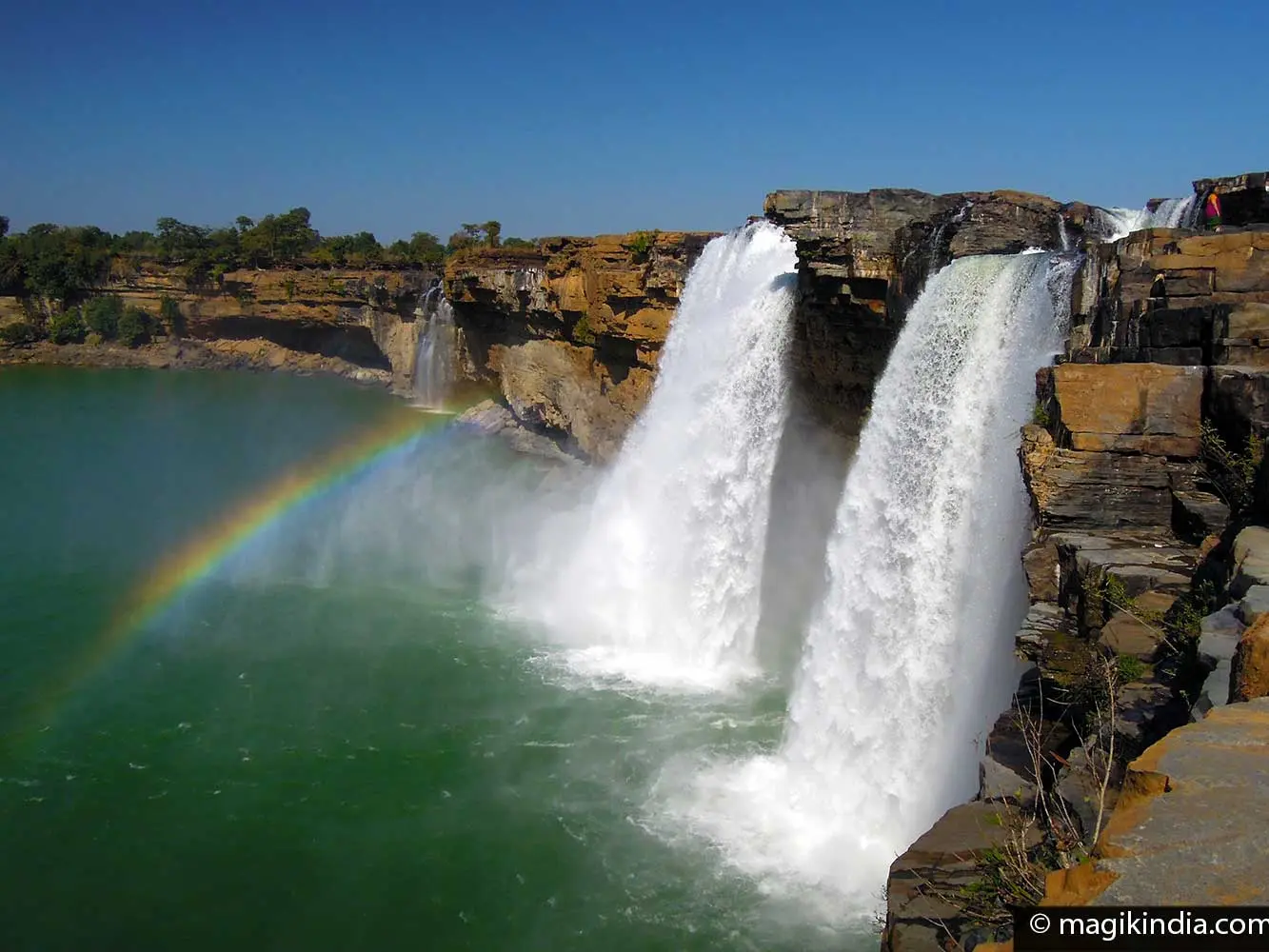
- Chitrakote Waterfalls (65 km northwest): India's widest waterfall, known as the "Niagara of India", plunging 29 metres across a 300-metre horseshoe cliff on the Indravati River.
- Bastar Anthropological Museum, Jagdalpur (30 km north): A fascinating ethnological museum detailing the customs, ritual masks, headgear, weaponry, and lifestyles of Bastar's diverse indigenous tribes.
- Bastar Palace, Jagdalpur (30 km north): The historic royal residence of the Kakatiya dynasty rulers of Bastar, featuring traditional architecture and central courtyards.
- Danteshwari Temple, Dantewada (60 km southwest): The revered 14th-century Shakti Peetha temple located at the confluence of the Dankini and Shankhini rivers, sacred to millions of tribal and non-tribal devotees.
In pictures
The practical bits
Before you go.
Mandatory Forest Entry Permits and Eco-Guides
Before entering the park at Kotamsar Gate on National Highway 30, you must register your vehicle, purchase entry…Explore detailsClose details
Before entering the park at Kotamsar Gate on National Highway 30, you must register your vehicle, purchase entry permits, and take an authorized tribal eco-guide on board. These guides are essential not only for navigating the unmarked jungle roads, but also for providing solar lamps and vital safety directions inside the pitch-black caverns.
Timing Your Visit for Cave Accessibility
The subterranean limestone caves inside Kanger Valley (Kutumsar, Kailash, and Dandak) are strictly closed during…Explore detailsClose details
The subterranean limestone caves inside Kanger Valley (Kutumsar, Kailash, and Dandak) are strictly closed during the monsoon season from June 16 to October 31 because rising groundwater and subterranean torrents flood the lower chambers. Plan your trip between November and April if spelunking and cave exploration are your primary objectives.
Vehicle Selection and Ground Clearance
While the approach highway along NH-30 is smoothly paved, the internal jungle tracks connecting Kotamsar Gate to…Explore detailsClose details
While the approach highway along NH-30 is smoothly paved, the internal jungle tracks connecting Kotamsar Gate to Kutumsar Cave, Kanger Dhara, and Bhaisadarha are unpaved gravel and earthen forest paths with occasional rocky outcrops. Vehicles with high ground clearance (SUVs, Boleros, or forest safari gypsies) are strongly recommended over low-slung hatchbacks or sedans.
Jungle Etiquette and Safety Precautions
Kanger Valley is a wild, undisturbed tropical sanctuary home to leopards, sloth bears, and wild boars.Explore detailsClose details
Kanger Valley is a wild, undisturbed tropical sanctuary home to leopards, sloth bears, and wild boars. Always maintain silence during safari drives, wear neutral earth-toned clothing (khaki, olive green, brown), stay close to your guide inside cave chambers, and carry a reliable personal flashlight with spare batteries alongside the guide's solar lamp.
A few things you might wonder
Common questions about visiting Kanger Valley National Park. Fees, visiting hours and ceremonies are researched details that may change; confirm current arrangements with the operator before travelling.
What is the historical and ecological significance of Kanger Valley National Park?
Why is the Bastar Hill Myna so famous, and can it be spotted in Kanger Valley?
Are the limestone caves in Kanger Valley open throughout the year?
Is it mandatory to hire a guide when visiting Kanger Valley National Park?
What kind of vehicle is required for a jungle safari inside Kanger Valley?
Can tourists stay overnight inside Kanger Valley National Park?
What unique aquatic creatures live inside Kutumsar Cave?
What are the visiting hours and entry charges for Kanger Valley National Park?
Explore more in Bastar
Discover other destinations around this hub
More Hubs in Chhattisgarh
Continue exploring other travel hubs in this state
Planning a trip to Bastar?