Kutumsar Caves
Explore subterranean Kutumsar Caves in Kanger Valley, Bastar. Complete guide to stalactites, blind cave fish, timings, entry permits, and safety.
Location
Bastar, Chhattisgarh
A closer look
Your visit, at a glance.
Bastar, Chhattisgarh
GET TO KNOW THE PLACE
Hidden beneath the towering canopy of dense sal forests in the core zone of Kanger Valley National Park, Kutumsar Caves (often written as Kotamsar Caves or Kotumsar Caves) is one…
The story of Kutumsar Caves
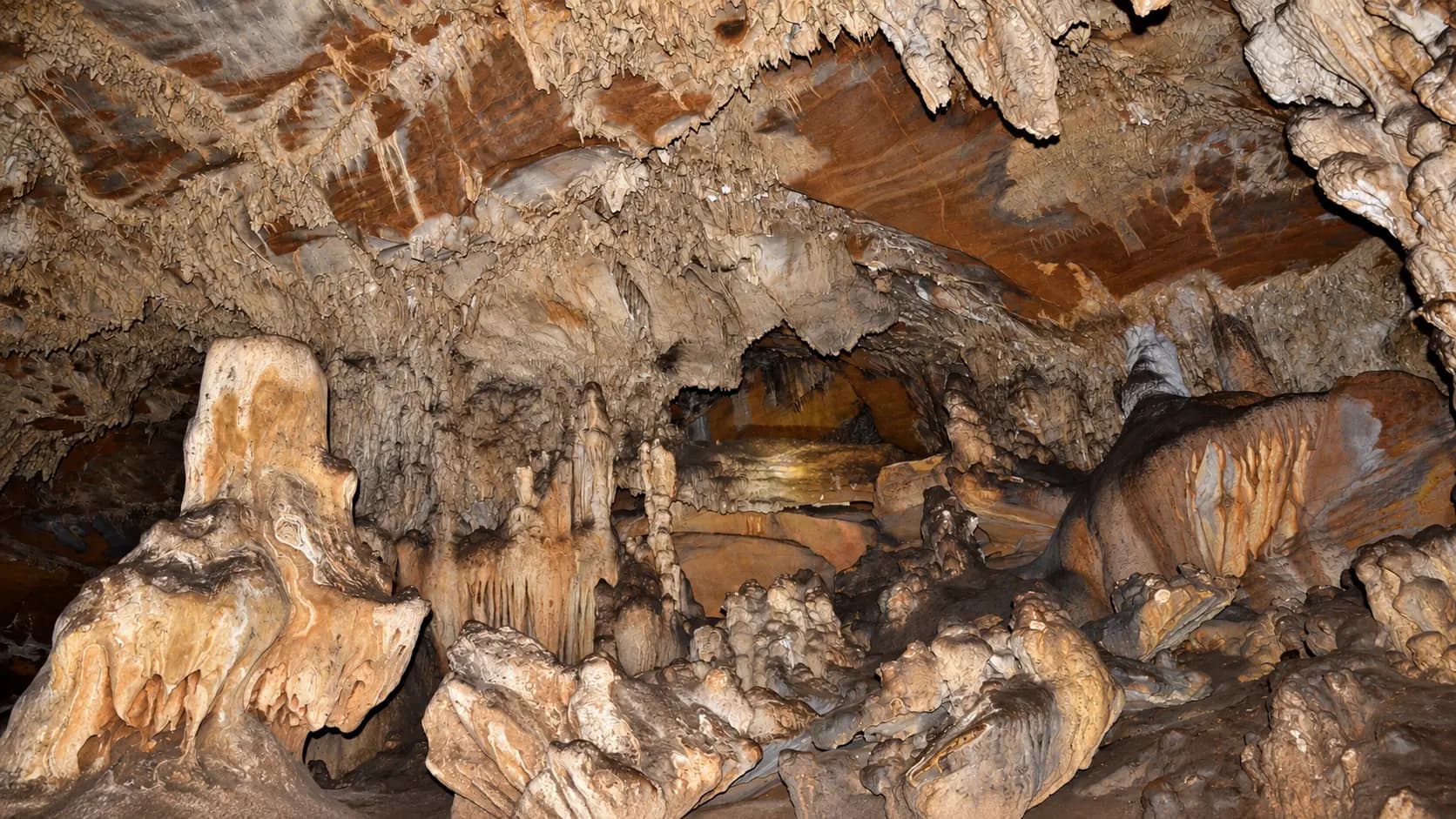
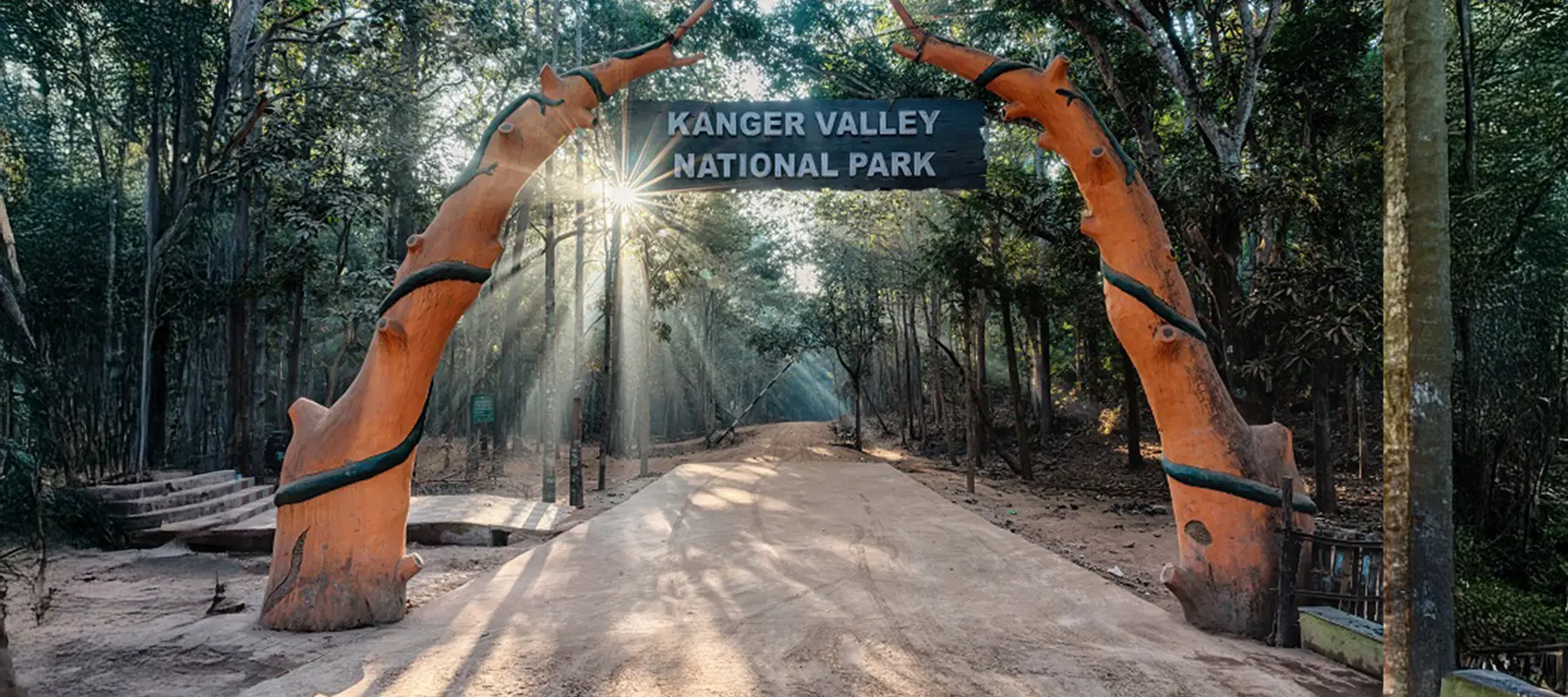
Hidden beneath the towering canopy of dense sal forests in the core zone of Kanger Valley National Park, Kutumsar Caves (often written as Kotamsar Caves or Kotumsar Caves) is one of India's most breathtaking subterranean natural wonders. Situated in Bastar District in southern Chhattisgarh, roughly 38 to 40 kilometres south of Jagdalpur and 12 kilometres into the forest from the Kotamsar barrier on National Highway 30, this ancient karst limestone labyrinth plunges 35 to 40 metres (115 to 130 feet) vertically into the earth.
Known to indigenous Dhurwa and Gond tribes for centuries as Gopansar ("The Hidden Cave"), the cave was first systematically explored, surveyed, and introduced to international speleological science in 1951 by renowned Raipur-based geographer and professor Dr. Shankar Tiwari. Extending across a surveyed length of over 330 metres (approx. 1,080 feet) through a succession of cathedral-like underground chambers, Kutumsar presents a spellbinding subterranean wonderland of colossal stalactites, towering stalagmites, fused calcite pillars, and tranquil pools. Beyond its geological majesty, the cave is globally celebrated among evolutionary biologists as the exclusive habitat of the blind cave fish (Nemacheilus evezardi) - a remarkable troglobitic species that has evolved over millions of years in total darkness, completely shedding its eyesight and body pigmentation.
Start here. Open a tile for the full details.
Why goRead details
- India's Premier Subterranean Karst Wonder: Descend 40 metres beneath the forest floor into one of the longest, most intricate, and well-preserved natural limestone show caves in South Asia.
- Spectacular Calcite Speleothems: Marvel at an astonishing variety of prehistoric cave formations, including glistening stalactites hanging from vaulted ceilings, massive stalagmites rising like stone pagodas, and fused crystalline columns.
- The Sacred Shiva Lingam Stalagmite: Pay reverence before a smooth, naturally formed stalagmite in the central chamber, venerated by local tribal communities as an auspicious manifestation of Lord Shiva.
- Encounter the Blind Cave Fish: Peer into subterranean groundwater pools to spot Nemacheilus evezardi, the world-famous blind, translucent loach that navigates perpetual aphotic darkness using tactile barbels.
- Constant Subterranean Microclimate: Step out of the tropical heat into an insulated subterranean realm maintaining a stable year-round temperature of 25°C to 28°C and near 100% relative humidity.
- Thrilling Caving Adventure: Squeeze through a narrow vertical rock crevice and navigate steep steel staircases led by local tribal eco-guides equipped with solar lamps.
When to visitRead details
Due to subterranean hydrology and severe safety considerations, Kutumsar Caves operates on a strict seasonal schedule:
Entry & permissionsRead details
Fees, visiting hours and entry rules may change. Confirm the latest details with the official operator or local authority before travelling.
Tariffs & Operating Schedule
Parameter | Details / Tariff |
|---|---|
Cave Operating Hours | 08:00 AM to 04:00 PM daily |
Last Descent Permitted | 03:30 PM daily |
Cave Entry Fee | ₹25 per person |
National Park Adult Entry Fee | ₹50 per person |
National Park Child Entry Fee | ₹25 per child (Under 5 free) |
Light Motor Vehicle Entry Fee | ₹150 per car / SUV |
Mandatory Tribal Eco-Guide Fee | ₹100 to ₹200 per group (Solar lamp) |
Open Safari Gypsy Rental | ₹1,500 to ₹2,000 per circuit |
Monsoon Closure Period | June 16 to October 31 (Strict) |
Cave Conservation Rules & Visitor Etiquette
Kutumsar Caves is an extraordinarily fragile geological sanctuary that has evolved over hundreds of millennia. All visitors must strictly comply with conservation regulations:
- Strict Prohibition on Touching Speleothems: Never touch stalactites, stalagmites, or calcite draperies. The natural oils and acids on human fingertips disrupt mineral crystallization and cause living white calcite to permanently turn black and die.
- No Writing or Graffiti: Scratching names or defacing cave walls is a serious punishable offense under the Wildlife Protection Act and Forest Conservation laws.
- Mandatory Tribal Eco-Guide: Entering the cave without an authorized Forest Department eco-guide is strictly prohibited. The guides carry high-powered portable solar lamps, know safe footing routes, and monitor visitor groups.
- No Smoking or Open Flames: Smoking, lighting matches, burning camphor, or using open-flame torches inside the cave is strictly banned because subterranean air circulation is limited, and smoke suffocates roosting bats and delicate troglobites.
- Zero-Plastic & Waste Mandate: Kutumsar is a strict zero-litter zone. Do not bring food, chewing gum, plastic cups, or water bottles down into the cave chambers.
Plan your visitRead details
Kutumsar Caves is situated deep inside the core sal forest of Kanger Valley National Park in Bastar District, approximately 38 to 40 kilometres south of Jagdalpur city center.
Health Considerations and Claustrophobia Caution
Descending 40 metres underground through a narrow crevice into high humidity and pitch-black chambers can be physically demanding and emotionally disorienting. Travelers suffering from severe asthma, cardiovascular ailments, high blood pressure, or acute claustrophobia should refrain from entering deep chambers, or should remain in the open twilight vestibule near the upper stairs.
Explore the full guide - choose a topic below.
Why visit?
India's Premier Subterranean Karst Wonder: Descend 40 metres beneath the forest floor into one of the longest…Explore detailsClose details
- India's Premier Subterranean Karst Wonder: Descend 40 metres beneath the forest floor into one of the longest, most intricate, and well-preserved natural limestone show caves in South Asia.
- Spectacular Calcite Speleothems: Marvel at an astonishing variety of prehistoric cave formations, including glistening stalactites hanging from vaulted ceilings, massive stalagmites rising like stone pagodas, and fused crystalline columns.
- The Sacred Shiva Lingam Stalagmite: Pay reverence before a smooth, naturally formed stalagmite in the central chamber, venerated by local tribal communities as an auspicious manifestation of Lord Shiva.
- Encounter the Blind Cave Fish: Peer into subterranean groundwater pools to spot Nemacheilus evezardi, the world-famous blind, translucent loach that navigates perpetual aphotic darkness using tactile barbels.
- Constant Subterranean Microclimate: Step out of the tropical heat into an insulated subterranean realm maintaining a stable year-round temperature of 25°C to 28°C and near 100% relative humidity.
- Thrilling Caving Adventure: Squeeze through a narrow vertical rock crevice and navigate steep steel staircases led by local tribal eco-guides equipped with solar lamps.
What to expect
Kutumsar Caves was carved out of ancient, horizontally bedded limestone deposits belonging to the Cuddapah and…Explore detailsClose details
The Geological Genesis: Millions of Years in Darkness
Kutumsar Caves was carved out of ancient, horizontally bedded limestone deposits belonging to the Cuddapah and Vindhyan geological systems. Over millions of years, monsoon rainwater charged with atmospheric and soil carbon dioxide (carbonic acid) seeped slowly through microscopic fissures in the forest floor above.
       GEOLOGICAL CROSS-SECTION OF KUTUMSAR CAVE
               Dense Sal Forest Canopy (560 m MSL)
      ═══════════════════════════════════════════════════
       Upper Soil & Karst Bedrock Seepage
      ══════════════════════════╗  ╔══════════════════════
                                ║  ║ ◄── Narrow Entrance
                                ║  ║     Fissure / Steps
                                ║  ║     (Descend 35-40 m)
                                ║  ║
            ┌───────────────────╜  ╙───────────────────┐
            │            FIRST MAIN CHAMBER            │
            │   (Twilight Zone / Roosting Microbats)   │
            └───────────────────┬──────────────────────┘
                                │
            ┌───────────────────┴──────────────────────┐
            │           SECOND CENTRAL CHAMBER         │
            │  • Colossal Stalactites & Stalagmites    │
            │  • Natural Shiva Lingam Formation        │
            └───────────────────┬──────────────────────┘
                                │
            ┌───────────────────┴──────────────────────┐
            │          DEEP APHOTIC POOL CHAMBER       │
            │  • Perpetual Pitch Darkness              │
            │  • Blind Cave Fish (Nemacheilus evezardi)│
            │  • Reduced Oxygen Levels                 │
            └──────────────────────────────────────────┘
As this acidic water dissolved the soluble calcium carbonate (calcite), it excavated cavernous underground voids. When the water table dropped, air filled the subterranean chambers. Slowly, droplet by droplet, mineral-saturated water dripping from the ceiling evaporated and released carbon dioxide, depositing microscopic layers of crystalline calcite:
- Stalactites: Slender, hollow "soda straws" and massive fluted icicles of stone hanging from the ceiling.
- Stalagmites: Solid, rounded mounds and tapering spires growing upward from the floor where mineral droplets fell.
- Pillars and Draperies: Where a stalactite and stalagmite meet, they fuse into monumental stone pillars that resemble the fluted columns of a Greek temple, while sheet flow creates undulating "cave bacon" and stone draperies.
Because calcite deposits grow at a glacial rate of approximately one centimetre every 100 to 300 years, the colossal multi-metre formations inside Kutumsar represent hundreds of thousands of years of uninterrupted geological artistry.
The Rediscovery Narrative: From Gopansar to Tiwari's Legacy
For centuries, local Dhurwa and Gond tribes knew of a mysterious, bottomless hole in the forest floor emitting cool air and the soft chirping of crickets, which they called Gopansar ("the hidden chasm"). Fearing subterranean spirits and venomous serpents, locals rarely ventured beyond the twilight zone of the entrance.
In 1951, Dr. Shankar Tiwari, an intrepid professor of geography from Raipur, led the first scientific expedition into the cave. Equipped with primitive kerosene lanterns, hemp ropes, and wooden ladders, Dr. Tiwari and his team squeezed through the constricted entry crevice and mapped the sprawling underground chambers. Their surveys revealed one of India's speleological masterpieces and brought Kutumsar to global scientific prominence. In honour of his pioneering work, the endemic subterranean cave cricket discovered here was scientifically named Kempiola shankari.
Troglobitic Biology: Life in Perpetual Darkness
The most scientifically profound feature of Kutumsar Caves is its unique subterranean ecosystem. In the deep aphotic zone - hundreds of feet away from the entrance, where not a single photon of sunlight has penetrated for millions of years - life has adapted in extraordinary ways:
Species | Common Name | Evolutionary Adaptation |
|---|---|---|
Nemacheilus evezardi (Schistura sp.) | Blind Cave Fish (Kotamsar Blind Loach) | Complete loss of eyes; no skin pigmentation; hyper-sensitive sensory lateral lines & barbels |
Kempiola shankari | Blind Cave Cricket | Elongated antennae; sensory hairs; adapted to near-100% humidity |
Rhinolophus sp. | Horseshoe Bat (Microbat) | Echolocation; roosts in ceiling pockets of upper entrance chamber |
The Blind Cave Fish (Nemacheilus evezardi) is a true troglobite. Confined to isolated, crystal-clear groundwater pools deep inside the cave, these 5-to-8-centimetre-long loaches possess translucent, pale pinkish-white bodies through which internal organs can be faintly seen. Through regressive evolution, their optical nerves and eyes have completely degenerated, covered by a layer of smooth skin. To survive in total darkness, they have evolved highly sensitive tactile barbels around the mouth and an amplified lateral line system that detects minute pressure waves caused by tiny copepods and subterranean aquatic insects.
The Sacred Shiva Lingam Stalagmite
In the spacious second chamber of the cave, visitors encounter a magnificent natural stalagmite rising smoothly from the flat limestone floor. Resembling a classical Shiva Lingam, this formation has become an object of deep spiritual reverence for both local tribal villagers and pilgrims from across Central India.
Every year during Maha Shivaratri in February or March, tribal devotees descend into the cave carrying brass pots of water and wild forest flowers to offer prayers before this natural geological lingam. The juxtaposition of primeval speleology and living indigenous faith creates an unforgettable, mystical atmosphere.
The Subterranean Microclimate & Visitor Experience
Walking into Kutumsar Cave is an extraordinary sensory transition. As you descend the steep 35-metre metal staircase through the narrow entrance cleft:
- Temperature & Humidity: The outside tropical heat drops away instantly, replaced by a cool, moist subterranean ambiance. The temperature inside remains constant at 25°C to 28°C, while relative humidity reaches 95% to 100%. Moisture continually condenses on the cave walls, producing a rhythmic, hypnotic drip-drip-drip sound that echoes through the silence.
- The Absolute Aphotic Zone: When your guide turns off their solar lamp for just ten seconds in the deep chamber, you experience absolute darkness - a total absence of light so complete that your eyes cannot adjust, accompanied by a profound, cathedral-like silence broken only by falling water drops.
- Oxygen Levels: Because the cave has only one narrow entrance chimney and relies on subterranean groundwater movement for air circulation, the concentration of oxygen decreases slightly in the deepest dead-end chambers (typically around 18% to 19% compared to 21% on the surface). Visitors are advised to walk at an easy, measured pace.
Best time to visit
Due to subterranean hydrology and severe safety considerations, Kutumsar Caves operates on a strict seasonal…Explore detailsClose details
Seasonal Operational Calendar
Due to subterranean hydrology and severe safety considerations, Kutumsar Caves operates on a strict seasonal schedule:
Period | Operational Status | Visiting Conditions |
|---|---|---|
November 1 to February 28 | OPEN (Peak Window) | Best overall season; dry chambers, mild surface weather, pleasant trek. |
March 1 to June 15 | OPEN (Summer Window) | Caves remain refreshingly cool (25°C); warm surface temperatures; visit early. |
June 16 to October 31 | STRICTLY CLOSED (Monsoon Closure) | High monsoon flooding; underground torrents fill chambers; lethal hazard. |
- November to February (Peak Season): This is the ideal window to visit Kutumsar Caves. The monsoon floodwaters have completely subsided, underground walkways are dry and clear of silt, and surface weather across Kanger Valley National Park is pleasantly cool and sunny. Combining a morning cave exploration with an afternoon safari drive or a visit to nearby Tirathgarh Waterfalls is effortless.
- March to June 15 (Summer Season): While outdoor temperatures across Bastar can reach 38°C to 40°C in May, the interior of Kutumsar Cave remains consistently comfortable at 25°C to 28°C, providing a natural air-conditioned retreat. Plan your visit for early morning (08:30 AM to 11:00 AM) to avoid the midday heat on the surface forest walk.
- June 16 to October 31 (Strict Monsoon Closure): During the southwest monsoon, torrential rains saturate the Kanger plateau. Subterranean drainage channels swell into underground rivers, completely submerging the lower passages and chambers of Kutumsar under metres of water. To protect human life, the Forest Department strictly closes the cave from June 16 to October 31. No exceptions are made for any category of traveler.
How to reach
Kutumsar Caves is situated deep inside the core sal forest of Kanger Valley National Park in Bastar District…Explore detailsClose details
Geographic Orientation
Kutumsar Caves is situated deep inside the core sal forest of Kanger Valley National Park in Bastar District, approximately 38 to 40 kilometres south of Jagdalpur city center.
       TRANSIT MAP TO KUTUMSAR CAVES
                     Raipur (Major Airport - 340 km via NH-30)
                               │
                               ▼
                           Jagdalpur
             (District HQ / Railhead / Bastar Hub)
                               │
              ┌────────────────┴────────────────┐
              │                                 │
              ▼                                 ▼
    Jagdalpur Railway Station           Jagdalpur Airport
          (JDB - 40 km)                    (JAG - 42 km)
                               │
                               │ (NH-30 South - 27 km toward Sukma)
                               ▼
                    KOTAMSAR ENTRY BARRIER
               (Park Reception & Forest Check-Post)
                               │
                               │ (12 km unpaved forest safari road)
                               ▼
                     KUTUMSAR CAVE SITE
                 (Forest Clearing & Entry Chute)
Access Modes
- By Air:
- Jagdalpur Airport (JAG): Located 42 kilometres north of Kutumsar Cave. Operates daily scheduled domestic flights connecting Bastar with Raipur and Hyderabad. Taxis and private SUVs can be hired directly from the airport terminal.
- Swami Vivekananda Airport, Raipur (RPR): The primary domestic air hub, located roughly 340 kilometres north. Connects non-stop to Delhi, Mumbai, Bengaluru, Kolkata, and Hyderabad. Chauffeur-driven cabs, intercity AC express buses, and express trains connect Raipur to Jagdalpur (5.5 to 6 hours drive via NH-30).
- By Train:
- Jagdalpur Railway Station (JDB): The nearest major railhead, located 40 kilometres north. Serviced by the iconic Visakhapatnam - Kirandul passenger and express trains, as well as daily trains to Raipur and Bhubaneswar. Pre-paid taxis and rental vehicles are available outside the station.
- By Road:
- From Jagdalpur: Drive south along the smooth four-lane National Highway 30 (Jagdalpur - Sukma highway) for 27 kilometres to reach the Kotamsar Barrier. Here, you purchase park permits and register your vehicle.
- Internal Forest Safari Road: From Kotamsar Barrier, an unpaved 12-kilometre earthen and gravel forest road winds through dense sal and bamboo jungle to the Kutumsar Cave surface parking clearing. A vehicle with good ground clearance (SUV, Bolero, or hired 4x4 open safari gypsy) is strongly recommended for this section.
- Public Bus Commuters: Board any state transport bus from Jagdalpur toward Sukma/Dantewada, alight at Kotamsar Naka on the highway, and hire a waiting forest safari gypsy with an authorized guide to take you the 12 km into the cave site.
Entry, timings and permissions
Fees, visiting hours and entry rules may change.Explore detailsClose details
Fees, visiting hours and entry rules may change. Confirm the latest details with the official operator or local authority before travelling.
Tariffs & Operating Schedule
Parameter | Details / Tariff |
|---|---|
Cave Operating Hours | 08:00 AM to 04:00 PM daily |
Last Descent Permitted | 03:30 PM daily |
Cave Entry Fee | ₹25 per person |
National Park Adult Entry Fee | ₹50 per person |
National Park Child Entry Fee | ₹25 per child (Under 5 free) |
Light Motor Vehicle Entry Fee | ₹150 per car / SUV |
Mandatory Tribal Eco-Guide Fee | ₹100 to ₹200 per group (Solar lamp) |
Open Safari Gypsy Rental | ₹1,500 to ₹2,000 per circuit |
Monsoon Closure Period | June 16 to October 31 (Strict) |
Cave Conservation Rules & Visitor Etiquette
Kutumsar Caves is an extraordinarily fragile geological sanctuary that has evolved over hundreds of millennia. All visitors must strictly comply with conservation regulations:
- Strict Prohibition on Touching Speleothems: Never touch stalactites, stalagmites, or calcite draperies. The natural oils and acids on human fingertips disrupt mineral crystallization and cause living white calcite to permanently turn black and die.
- No Writing or Graffiti: Scratching names or defacing cave walls is a serious punishable offense under the Wildlife Protection Act and Forest Conservation laws.
- Mandatory Tribal Eco-Guide: Entering the cave without an authorized Forest Department eco-guide is strictly prohibited. The guides carry high-powered portable solar lamps, know safe footing routes, and monitor visitor groups.
- No Smoking or Open Flames: Smoking, lighting matches, burning camphor, or using open-flame torches inside the cave is strictly banned because subterranean air circulation is limited, and smoke suffocates roosting bats and delicate troglobites.
- Zero-Plastic & Waste Mandate: Kutumsar is a strict zero-litter zone. Do not bring food, chewing gum, plastic cups, or water bottles down into the cave chambers.
Nearby places to consider
A visit to Kutumsar Caves integrates seamlessly into a comprehensive day of exploration across Bastar's natural…Explore detailsClose details
A visit to Kutumsar Caves integrates seamlessly into a comprehensive day of exploration across Bastar's natural wonderland:
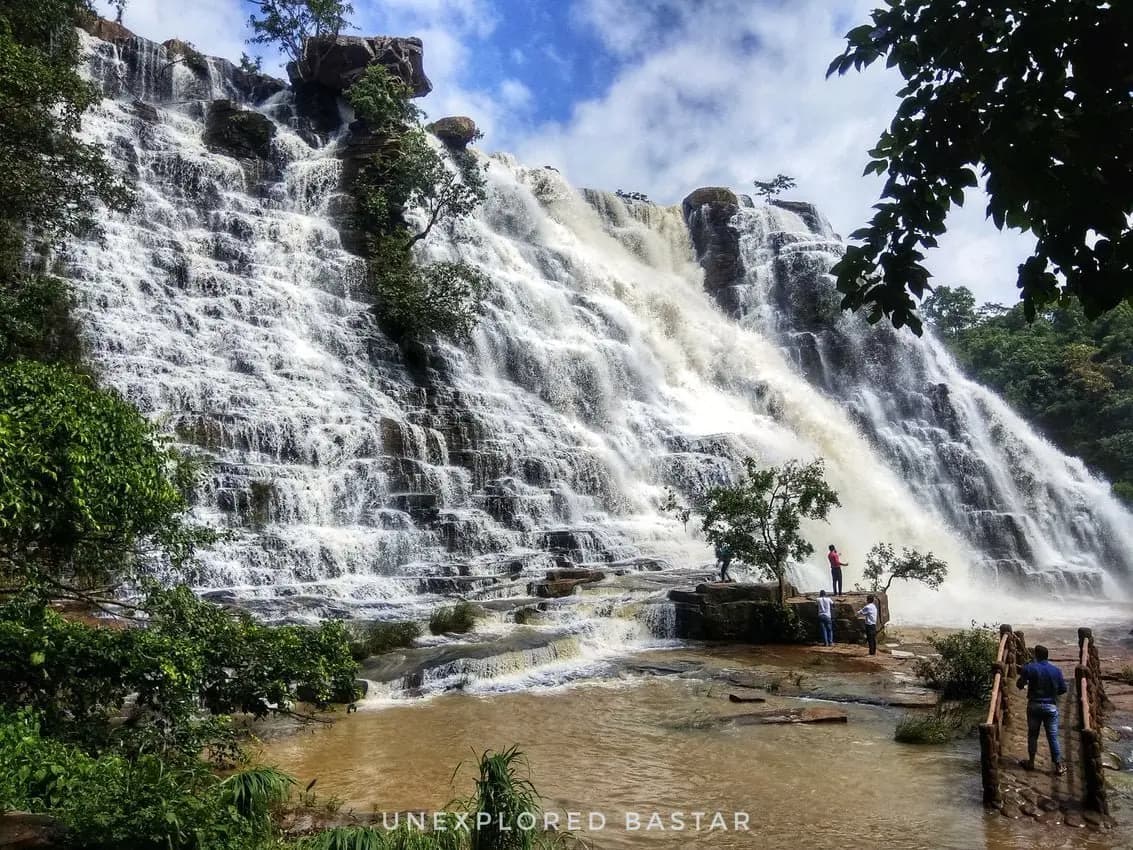
- Tirathgarh Waterfalls (15 km northwest inside the park): A spectacular 300-foot multi-tiered white water cataract cascading over stepped sandstone blocks on the Mugabahar River, framed by dense sal forest.
- Kanger Dhara Rapids (8 km northeast inside the park): Picturesque river cascades along the Kanger River where waters froth through narrow limestone crevices, surrounded by peaceful picnic clearings.
- Kailash Cave & Dandak Cave (10 km within park): Two additional limestone caves in Kanger Valley featuring massive flowstone formations, musical stone pillars, and adventurous subterranean halls.
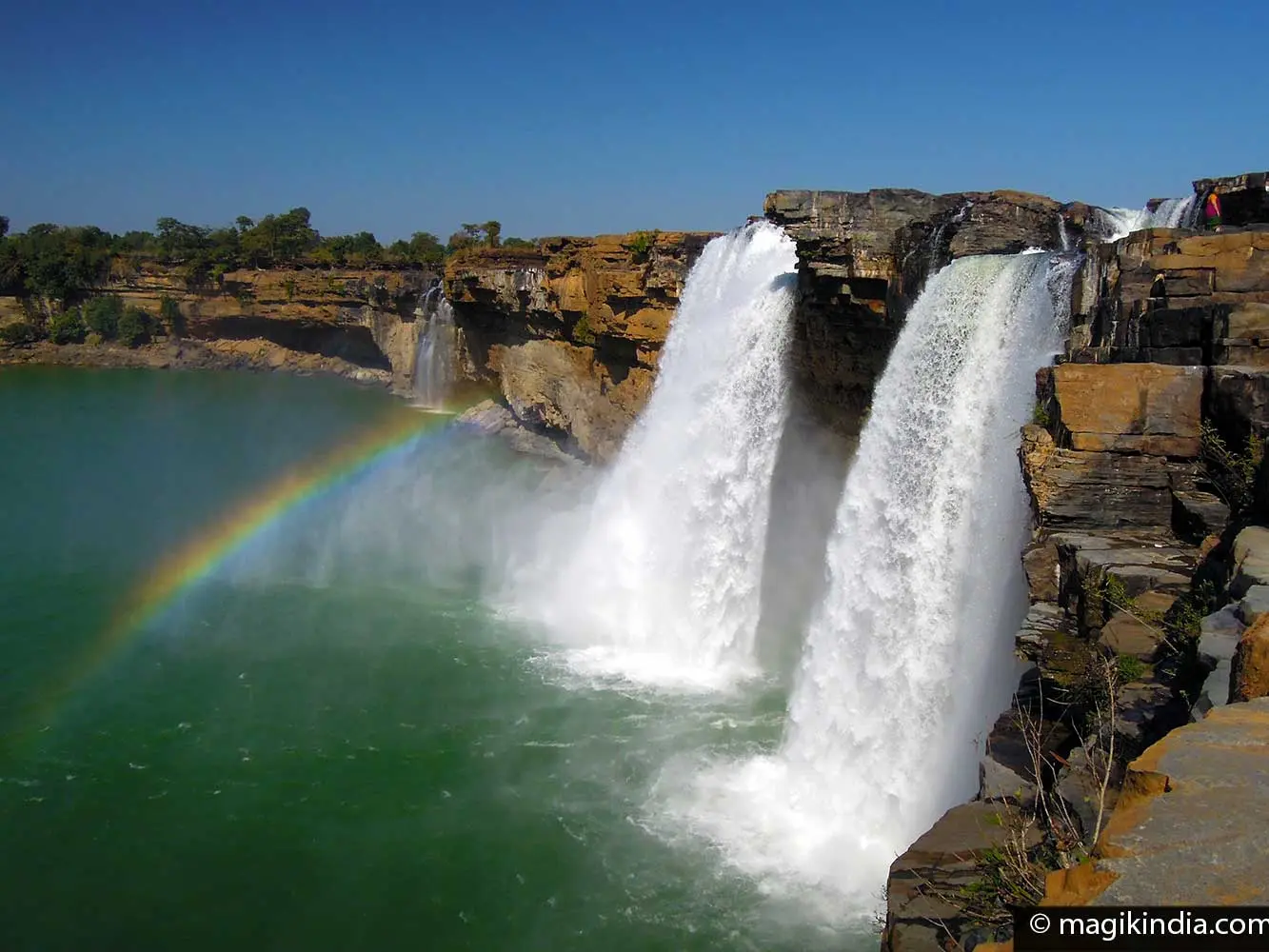
- Chitrakote Waterfalls (65 km northwest): India's widest waterfall, known as the "Niagara of India", plunging 29 metres across a 300-metre horseshoe cliff on the Indravati River.
- Bhaisadarha Crocodile Pool (14 km south inside the park): A serene deep-water reservoir on the Kanger River that serves as a protected sanctuary for basking marsh crocodiles.
- Bastar Anthropological Museum, Jagdalpur (38 km north): An invaluable cultural repository showcasing tribal attire, ritual headgear, musical instruments, and traditional artifacts from Bastar's indigenous communities.
In pictures
The practical bits
Before you go.
Strict Seasonal Operation and Monsoon Flood Closures
Kutumsar Caves are accessible exclusively between November 1 and June 15 each year, and are strictly closed to…Explore detailsClose details
Kutumsar Caves are accessible exclusively between November 1 and June 15 each year, and are strictly closed to all visitors from June 16 through October 31. Because underground torrents and rising groundwater completely submerge the lower chambers during the monsoon, never attempt to plan a caving trip during the rainy season.
Health Considerations and Claustrophobia Caution
Descending 40 metres underground through a narrow crevice into high humidity and pitch-black chambers can be…Explore detailsClose details
Descending 40 metres underground through a narrow crevice into high humidity and pitch-black chambers can be physically demanding and emotionally disorienting. Travelers suffering from severe asthma, cardiovascular ailments, high blood pressure, or acute claustrophobia should refrain from entering deep chambers, or should remain in the open twilight vestibule near the upper stairs.
Footwear and Maneuvering Steep Metal Ladders
The vertical descent into Kutumsar Cave involves navigating a steep, narrow staircase and stepping across wet…Explore detailsClose details
The vertical descent into Kutumsar Cave involves navigating a steep, narrow staircase and stepping across wet, slippery limestone boulders. Wear sturdy walking shoes or hiking sneakers with deep-groove rubber treads that provide reliable traction on wet rock surfaces. Completely avoid smooth-soled formal shoes, open flip-flops, or high-heeled sandals.
Lighting and Photography Equipment
Beyond the entrance fissure, Kutumsar Cave is completely enveloped in pitch-black darkness.Explore detailsClose details
Beyond the entrance fissure, Kutumsar Cave is completely enveloped in pitch-black darkness. While your mandatory forest eco-guide will provide a high-powered solar LED lamp, carrying an additional personal headlamp or compact flashlight with fresh batteries allows you to inspect intricate calcite formations up close. If taking photographs, ensure your camera has excellent low-light ISO performance, and avoid harsh direct flash units near roosting microbats.
A few things you might wonder
Common questions about visiting Kutumsar Caves. Fees, visiting hours and ceremonies are researched details that may change; confirm current arrangements with the operator before travelling.
What is the historical and scientific significance of Kutumsar Caves?
Why is Kutumsar Cave strictly closed during the monsoon season?
What are the blind cave fish, and how do they survive inside Kutumsar Cave?
How physically demanding is the descent into Kutumsar Cave?
Can tourists visit Kutumsar Cave without a forest guide?
Are there bats living inside Kutumsar Caves, and are they dangerous?
What is the temperature and humidity like inside Kutumsar Caves?
What entry fees are required to visit Kutumsar Caves?
Explore more in Bastar
Discover other destinations around this hub
More Hubs in Chhattisgarh
Continue exploring other travel hubs in this state
Planning a trip to Bastar?