Kondakarla Ava
Explore Kondakarla Ava in Andhra Pradesh. Official guide covers the freshwater lake bird sanctuary, traditional palm-log boat rides, lotus blooms, and timings.
Location
Eastern Ghats, Andhra Pradesh
A closer look
Your visit, at a glance.
Eastern Ghats, Andhra Pradesh
GET TO KNOW THE PLACE
Resting quietly in the lush agricultural heartland of Atchutapuram and Munagapaka Mandals in Andhra Pradesh's Anakapalli District, Kondakarla Ava (officially celebrated as…
The story of Kondakarla Ava
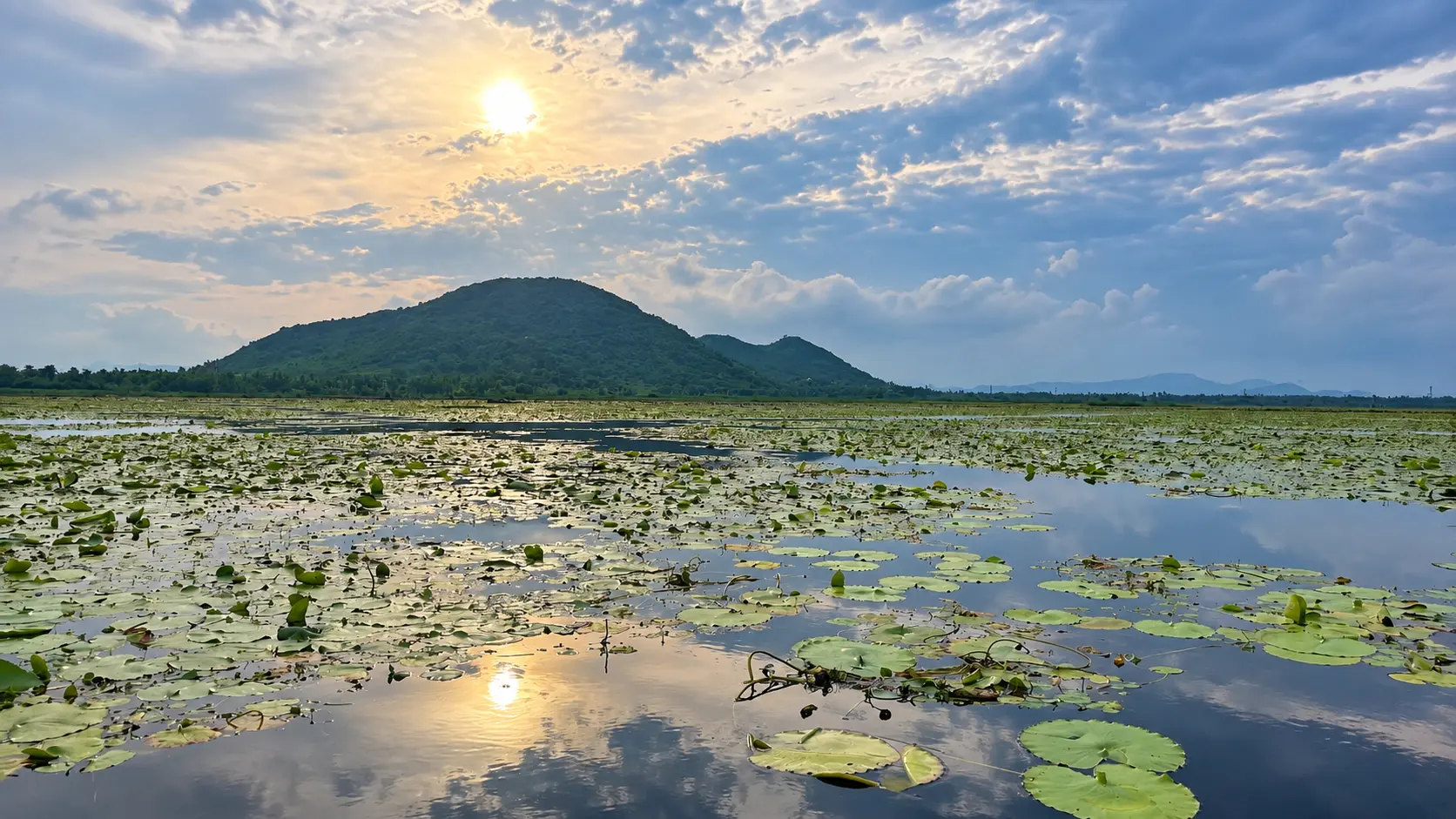
Resting quietly in the lush agricultural heartland of Atchutapuram and Munagapaka Mandals in Andhra Pradesh's Anakapalli District, Kondakarla Ava (officially celebrated as Kondakarla Ava Bird Sanctuary & Wetland) is an ecological paradise and the second-largest natural freshwater lake in the state, second only to Lake Kolleru. Positioned at an elevation of 18 metres (59 feet) above mean sea level in a coastal floodplain basin framed by the forested foothill ridges of the Eastern Ghats, this magnificent 405-hectare (1,000-acre) wetland represents one of the most vital aquatic sanctuaries in southern India.
The word Ava in the regional Telugu dialect translates directly to a natural lake, marsh, or flood-basin wetland. Fed by seasonal streams cascading down from the Eastern Ghats and overflow channels of the Sarada River, Kondakarla Ava transforms throughout the year into an immense sea of sacred pink lotus blossoms (Nelumbo nucifera), white water lilies, and dense cattail reeds. Recognized nationally as an Important Bird and Biodiversity Area (IBA) and a proposed state Conservation Reserve, the wetland provides a fertile haven for more than one hundred species of resident waterbirds and thousands of winter migratory waterfowl traveling along the Central Asian Flyway. What elevates Kondakarla Ava from an ordinary birding site into an unforgettable cultural journey is its unique boating tradition: exploring the labyrinth of lotus channels aboard handcrafted palm-log catamarans punted silently by local fishermen, making it a peaceful, therapeutic retreat for nature lovers, ornithologists, and travelers.
Start here. Open a tile for the full details.
Why goRead details
- Andhra Pradesh's Second-Largest Freshwater Lake: Discover a sprawling natural wetland encompassing over 405 hectares of open water, floating vegetation, and reed beds framed by scenic hill silhouettes.
- Vast Floating Meadows of Blooming Lotus: Glide through dense, endless carpets of vibrant pink sacred lotuses and fragrant white water lilies that open in thousands to greet the morning sun.
- An Avian Wonderland for Birdwatchers: Spot over 100 species of resident and migratory waterbirds, including Pheasant-tailed Jacanas running across lily pads, Asian Openbill Storks, Painted Storks, Cotton Pygmy Geese, and winter teals.
- The Iconic Palm-Log Catamaran Experience: Ride on traditional, eco-friendly rafts handcrafted by lashing two large hollowed palm-tree trunks together, punted noiselessly through the reeds by village fishermen.
- Ancient Hilltop Temple of Lord Venkateswara: Take a boat to the base of Kondakarla Konda and climb the stone stairs to an ancient hilltop shrine offering breathtaking 360-degree views across the entire lake.
- Peaceful, Uncommercialized Countryside Ecotourism: Escape the noise of coastal cities and commercial resorts to enjoy a slow-paced, therapeutic rural sanctuary with clean air and bird songs.
When to visitRead details
The wetland's water levels, floral coverage, and bird populations shift markedly across the calendar:
Entry & permissionsRead details
Fees, visiting hours and entry rules may change. Confirm the latest details with the official operator or local authority before travelling.
- Admission & Boating Tariffs:
- Sanctuary Entry Ticket: A nominal village environmental ticket of ₹10 to ₹20 per person is collected at the entrance barrier.
- Traditional Catamaran Boat Rides: Fares are managed by the local village boatmen cooperative. A shared ride costs approximately ₹50 to ₹100 per person (sharing the raft with other travelers). For a private raft with two comfortable chairs, the typical rate is ₹300 to ₹500 for a 45-to-60-minute leisurely excursion, which includes visiting the lotus channels and waiting at the temple landing.
- Vehicle Parking: ₹20 for two-wheelers; ₹30 to ₹50 for cars.
- Operating Hours:
- Open daily from 7:00 AM to 5:00 PM.
- Local boatmen are present at the jetty starting around 6:30 AM, accommodating early-morning bird photographers who arrive at dawn.
- Permissions & Ecological Etiquette:
- No special forest department permits or wildlife passes are required for general day visitors.
- Plastic & Waste Ban: As an ecologically sensitive wetland and proposed Conservation Reserve, bringing single-use plastic bags, disposable thermocol plates, or glass bottles onto the boats is strictly prohibited. Carry all trash back to the village bins.
- Wildlife Decorum: Avoid loud music, shouting, or throwing food at the birds. Punting boats move quietly to allow everyone to experience nature undisturbed.
- Lotus Harvesting Prohibited: Plucking lotus flowers, pulling water lily pads, or damaging aquatic vegetation is strictly forbidden to protect the aquatic ecosystem.
Plan your visitRead details
Kondakarla Ava is well-connected to major coastal transit hubs in northern Andhra Pradesh:
Explore the full guide - choose a topic below.
Why visit?
Andhra Pradesh's Second-Largest Freshwater Lake: Discover a sprawling natural wetland encompassing over 405…Explore detailsClose details
- Andhra Pradesh's Second-Largest Freshwater Lake: Discover a sprawling natural wetland encompassing over 405 hectares of open water, floating vegetation, and reed beds framed by scenic hill silhouettes.
- Vast Floating Meadows of Blooming Lotus: Glide through dense, endless carpets of vibrant pink sacred lotuses and fragrant white water lilies that open in thousands to greet the morning sun.
- An Avian Wonderland for Birdwatchers: Spot over 100 species of resident and migratory waterbirds, including Pheasant-tailed Jacanas running across lily pads, Asian Openbill Storks, Painted Storks, Cotton Pygmy Geese, and winter teals.
- The Iconic Palm-Log Catamaran Experience: Ride on traditional, eco-friendly rafts handcrafted by lashing two large hollowed palm-tree trunks together, punted noiselessly through the reeds by village fishermen.
- Ancient Hilltop Temple of Lord Venkateswara: Take a boat to the base of Kondakarla Konda and climb the stone stairs to an ancient hilltop shrine offering breathtaking 360-degree views across the entire lake.
- Peaceful, Uncommercialized Countryside Ecotourism: Escape the noise of coastal cities and commercial resorts to enjoy a slow-paced, therapeutic rural sanctuary with clean air and bird songs.
What to expect
A visit to Kondakarla Ava is a tranquil, early-morning immersion into a living wetland ecosystem: [Kondakarla…Explore detailsClose details
A visit to Kondakarla Ava is a tranquil, early-morning immersion into a living wetland ecosystem:
[Kondakarla Village Trailhead & Parking] ====(Walk along Bund)====> [Traditional Catamaran Boat Jetty]
                                                                                |
                       +------------------------------------------------+-------------------------------+
                       |                                                                                |
                       v                                                                                v
  [Silent Punting through Lotus Channels]                                                  [Kondakarla Konda Hilltop]
  - Handcrafted Twin Palm-Log Rafts                                                        - Lord Venkateswara Temple
  - Close-Range Bird Photography                                                           - 360-Degree Lake Panorama
1. The Earthen Bund and Village Approach
Arriving at Kondakarla village, a narrow shaded road lined with coconut palms and tamarind trees leads to an earthen bund flanking the water's edge. The morning air is crisp and cool, filled with the resonant calls of swamphens, cormorants, and herons echoing across the misty water. A modest parking ground and a cluster of thatched stalls selling fresh tender coconuts, hot tea, and biscuits welcome travelers.
2. Boarding the Indigenous Palm-Log Catamarans
At the water's edge, visitors board one of the most ingenious traditional watercraft found anywhere in India:
- Raft Construction: Rather than utilizing modern fiberglass motorboats that would churn muddy waters, emit fuel exhaust, and frighten feeding birds, local fishermen construct rafts by lashing two thick, seasoned palm-tree trunks (Borassus flabellifer) or hollowed wooden dugouts side-by-side with heavy coir ropes and bamboo poles. A pair of simple wooden armchairs or a wooden bench is fixed securely onto the crossbeams.
- Silent Punting: Standing at the rear of the twin-log raft, a village boatman uses a long, single bamboo pole to push against the shallow lakebed. The boat glides silently, parting floating lily pads and lotus leaves without disturbing the resting waterfowl just feet away.
3. Exploring the Lotus Meadows and Bird Sanctuaries
As the raft enters the deeper open channels, the surface of the lake turns into a dazzling carpet of pink and white lotus blossoms. Sunlight glints off crystal-clear water where schools of freshwater fish dart among submerged eelgrass (Vallisneria). Birdwatchers can observe:
- Jacanas on Floating Leaves: Pheasant-tailed Jacanas and Bronze-winged Jacanas with their elongated, spider-like toes walking effortlessly across floating lotus pads, hunting insects and snails.
- Stork and Heron Rookeries: Elegant Painted Storks, Asian Openbill Storks, Grey Herons, and Purple Herons standing motionless in the shallows before striking with lightning speed.
- Migratory Flocks: In winter, large flocks of Northern Pintails, Garganeys, and Spot-billed Ducks swimming in synchronized rafts across open water pools.
4. Ascent to the Hilltop Temple
Most boat tours navigate to the eastern shoreline at the base of Kondakarla Konda, a steep rocky hillock rising directly out of the lake. Visitors disembark and climb approximately 100 to 150 stone steps leading up to an ancient, whitewashed temple dedicated to Lord Venkateswara, with an adjacent natural cave shrine consecrated to Lord Shiva. From the temple terrace, the view looking west across the shimmering, lotus-draped expanse of the lake - with the misty blue outlines of the Eastern Ghats in the distance - is one of the most breathtaking vistas in coastal Andhra Pradesh.
Best time to visit
The wetland's water levels, floral coverage, and bird populations shift markedly across the calendar: Recommended…Explore detailsClose details
The wetland's water levels, floral coverage, and bird populations shift markedly across the calendar:
Season | Months | Environmental Conditions & Avian Life | Travel Recommendations |
|---|---|---|---|
Peak Winter & Migration | November to February | Brimming freshwater levels; pleasant cool mornings (16°C - 24°C); arrival of thousands of migratory waterfowl. | Supreme Visiting Window: The absolute best time for birdwatchers and photographers. Bird counts peak; weather is delightful; morning mist adds magic to boat rides. |
Post-Monsoon & Lotus Bloom | August to October | High water spread (405+ hectares); dense, vibrant pink lotus blossoms in full flowering peak; lush green reeds. | Peak Floral Season: Spectacular for landscape photography and romantic boat rides through dense flower channels; morning humidity is moderate. |
Spring | March to April | Receding water lines; warm days (28°C - 34°C); resident birds active with nesting rituals in reed beds. | Quiet Birding: Good for seeing resident jacanas and storks; visit early at sunrise to avoid midday heat. |
Summer | May to June | Shallow water pools; dry mudflats; hot days (35°C - 40°C); lotus plants die back to rhizomes. | Low Season: Hot and humid; water levels recede significantly; boating operations are restricted to deeper central pockets. |
Recommended Time of Day: Arrive at the lake edge by 06:30 AM to 07:00 AM. Early morning offers still, glassy water, opening lotus blossoms, peak bird feeding activity, and the best lighting for photography before the harsh midday sun sets in. A late afternoon visit between 03:30 PM and 05:30 PM is also rewarding for golden-hour sunset reflections.
How to reach
Kondakarla Ava is well-connected to major coastal transit hubs in northern Andhra Pradesh: [Visakhapatnam (50…Explore detailsClose details
Kondakarla Ava is well-connected to major coastal transit hubs in northern Andhra Pradesh:
[Visakhapatnam (50 km)] ====(NH-16 Southbound)====> [Anakapalli (20 km)] ====(Atchutapuram Road)====> [Kondakarla Ava]
                                                              |
                                                              +======(Munagapaka Feeder Road)========+
By Road (Private Car, Taxi, or Bus)
- From Visakhapatnam City (50 km, 1.5 hours): Head southwest along National Highway 16 (NH-16 / Chennai - Kolkata highway) through Gajuwaka and Steel Plant. Near Anakapalli or Lankelapalem, turn south onto the Atchutapuram - Yelamanchili road, following clear signboards leading directly to Kondakarla village.
- From Anakapalli Town (20 km, 30 to 35 minutes): Drive south via the Munagapaka - Atchutapuram rural corridor. Taxis, rental vehicles, and auto-rickshaws are readily available in Anakapalli town.
- Round-Trip Auto-Rickshaw Hire: Travelers arriving in Anakapalli by train can hire an auto-rickshaw from Anakapalli station. Confirm the current charge and what it includes with the operator or service provider. Visitor admission, vehicles, parking, activities and accommodation can have separate charges.
- Public Bus Services: APSRTC operates regular rural buses between Anakapalli RTC Bus Stand and Atchutapuram / Kondakarla village every 30 to 60 minutes.
By Rail
- Anakapalli Railway Station (AKP, 20 km): A major rail stop on the Howrah - Chennai mainline, serviced by dozens of daily express trains.
- Visakhapatnam Junction (VSKP, 50 km) & Duvvada Station (DVD, 35 km): Major rail hubs with pre-paid taxi stands.
By Air
- Visakhapatnam International Airport (VTZ, ~45 km): The closest operating airport, connecting to major metropolitan centers across India. Pre-paid airport cabs can be chartered directly to Kondakarla Ava.
Entry, timings and permissions
Fees, visiting hours and entry rules may change.Explore detailsClose details
Fees, visiting hours and entry rules may change. Confirm the latest details with the official operator or local authority before travelling.
- Admission & Boating Tariffs:
- Sanctuary Entry Ticket: A nominal village environmental ticket of ₹10 to ₹20 per person is collected at the entrance barrier.
- Traditional Catamaran Boat Rides: Fares are managed by the local village boatmen cooperative. A shared ride costs approximately ₹50 to ₹100 per person (sharing the raft with other travelers). For a private raft with two comfortable chairs, the typical rate is ₹300 to ₹500 for a 45-to-60-minute leisurely excursion, which includes visiting the lotus channels and waiting at the temple landing.
- Vehicle Parking: ₹20 for two-wheelers; ₹30 to ₹50 for cars.
- Operating Hours:
- Open daily from 7:00 AM to 5:00 PM.
- Local boatmen are present at the jetty starting around 6:30 AM, accommodating early-morning bird photographers who arrive at dawn.
- Permissions & Ecological Etiquette:
- No special forest department permits or wildlife passes are required for general day visitors.
- Plastic & Waste Ban: As an ecologically sensitive wetland and proposed Conservation Reserve, bringing single-use plastic bags, disposable thermocol plates, or glass bottles onto the boats is strictly prohibited. Carry all trash back to the village bins.
- Wildlife Decorum: Avoid loud music, shouting, or throwing food at the birds. Punting boats move quietly to allow everyone to experience nature undisturbed.
- Lotus Harvesting Prohibited: Plucking lotus flowers, pulling water lily pads, or damaging aquatic vegetation is strictly forbidden to protect the aquatic ecosystem.
Nearby places to consider
Kondakarla Ava’s position south of the Visakhapatnam urban corridor makes it an ideal pairing with other…Explore detailsClose details
Kondakarla Ava’s position south of the Visakhapatnam urban corridor makes it an ideal pairing with other cultural, historic, and coastal highlights:
[Visakhapatnam City & RK Beach] (50 km northeast)
                 ^
                 |
        [Bojjannakonda Buddhist Caves] (22 km northwest)
                 |
                 v
       [KONDAKARLA AVA] ====(25 km southwest)====> [Panchadarla Dharmalingeswara Temple]
                 |
          (20 km south)
                 v
[Pudimadaka Coastal Beach]- Bojjannakonda & Lingalakonda Buddhist Sites (22 km northwest near Anakapalli): Spectacular 4th-to-9th-century CE rock-cut Buddhist heritage complexes featuring monastic caves, rock-hewn stupas, monolithic chaityas, and sculpted Buddha figures.
- Panchadarla Dharmalingeswara Temple (25 km southwest): A historic 9th-to-12th-century Eastern Chalukya temple complex dedicated to Lord Shiva, famous for five perennial mountain springs (Pancha Dharalu) cascading into a sacred temple pool.
- Pudimadaka Fishing Village & Beach (20 km south): A picturesque, uncrowded coastal fishing village featuring a natural bay, wooden catamarans on the sand, and a historic coastal lighthouse.
- Simhachalam Temple Complex (55 km northeast): The renowned 11th-century hilltop temple of Sri Varaha Lakshmi Narasimha Swamy, featuring ornate Kalinga architectural carvings.
- Araku Valley & Eastern Ghats (105 km northwest): Ascend the Ananthagiri Ghats to explore high-altitude coffee plantations, Borra Caves, and the Araku Tribal Museum.
In pictures
The practical bits
Before you go.
Plan ahead
Ensure an enriching, comfortable, and memorable birding excursion to Kondakarla Ava by keeping these four…Explore detailsClose details
Ensure an enriching, comfortable, and memorable birding excursion to Kondakarla Ava by keeping these four practical planning blocks in mind:
Maximizing Early Morning Birding and Light
The secret to an unforgettable experience at Kondakarla Ava is arriving before the sun climbs high.Explore detailsClose details
The secret to an unforgettable experience at Kondakarla Ava is arriving before the sun climbs high. Check the current visiting hours and permitted access with the site operator before departure; ceremonies, closures and visitor sessions can affect access. Plan an early departure from Visakhapatnam around 05:00 AM or stay overnight in nearby Anakapalli town.
Opting for Sun and Insect Protection
The traditional palm-log catamarans are completely open-air with no overhead canopy.Explore detailsClose details
The traditional palm-log catamarans are completely open-air with no overhead canopy. Once on the water, you will be exposed to direct sunlight for an hour or more. Wear a wide-brimmed sun hat, polarized sunglasses (which help you see fish beneath the water surface), lightweight long-sleeved cotton clothing, and apply skin-safe sunscreen. Because wetlands harbor morning insects and mosquitoes near the shoreline, applying insect repellent lotion before boarding is highly recommended.
Carrying Essentials and Cash Readiness
There are no formal restaurants, cafes, or ATMs at Kondakarla Ava; the trailhead features only basic village…Explore detailsClose details
There are no formal restaurants, cafes, or ATMs at Kondakarla Ava; the trailhead features only basic village stalls selling tea, mineral water, and tender coconuts. Pack your own drinking water, light snacks, and breakfast fruits if traveling with children. Crucially, digital UPI mobile payments can be unreliable due to spotty mobile internet coverage on the lake bund. Confirm the current charge and what it includes with the operator or service provider. Visitor admission, vehicles, parking, activities and accommodation can have separate charges.
Photography Gear and Binoculars
To capture the shy waterfowl and jacanas without intruding into their space, bring binoculars (8x42 or 10x42 are…Explore detailsClose details
To capture the shy waterfowl and jacanas without intruding into their space, bring binoculars (8x42 or 10x42 are ideal for wetland birding) and a telephoto camera lens (at least 300mm to 500mm focal length). A waterproof dry-bag or strap for your camera is advisable, as minor water splashes can occur when the bamboo punting pole is lifted in and out of the water.
A few things you might wonder
Common questions about visiting Kondakarla Ava. Fees, visiting hours and ceremonies are researched details that may change; confirm current arrangements with the operator before travelling.
Where is Kondakarla Ava located, and which district is it in?
Why is Kondakarla Ava famous?
What kind of boats are used for riding at Kondakarla Ava?
How much does a boat ride cost at Kondakarla Ava?
What birds can you spot at Kondakarla Ava?
Can tourists visit the hilltop temple at Kondakarla Ava?
What are the opening hours for Kondakarla Ava?
How do you travel from Visakhapatnam to Kondakarla Ava?
Explore more in Eastern Ghats
Discover other destinations around this hub

More Hubs in Andhra Pradesh
Continue exploring other travel hubs in this state
Planning a trip to Eastern Ghats?