Surajkund
Discover 10th-century Surajkund reservoir and the world-famous International Crafts Mela in Faridabad, Delhi NCR. Complete guide to history, timings, and metro access.
Location
Faridabad, Delhi NCR
A closer look
Your visit, at a glance.
Faridabad, Delhi Ncr
GET TO KNOW THE PLACE
Nestled against the undulating, forest-clad quartzite ridges of the ancient Aravalli mountain range in Faridabad District, Haryana, Surajkund (literally translated as "The Lake…
The story of Surajkund
Nestled against the undulating, forest-clad quartzite ridges of the ancient Aravalli mountain range in Faridabad District, Haryana, Surajkund (literally translated as "The Lake of the Sun" or "The Pool of the Sun") is one of India's most extraordinary medieval hydraulic monuments. Situated in the southern reaches of the National Capital Region (Delhi NCR), approximately 8 kilometres south of South Delhi (Tughlaqabad / Saket) and 20 kilometres from central Connaught Place, this monumental stone amphitheatre covers an expansive area of over six hectares.
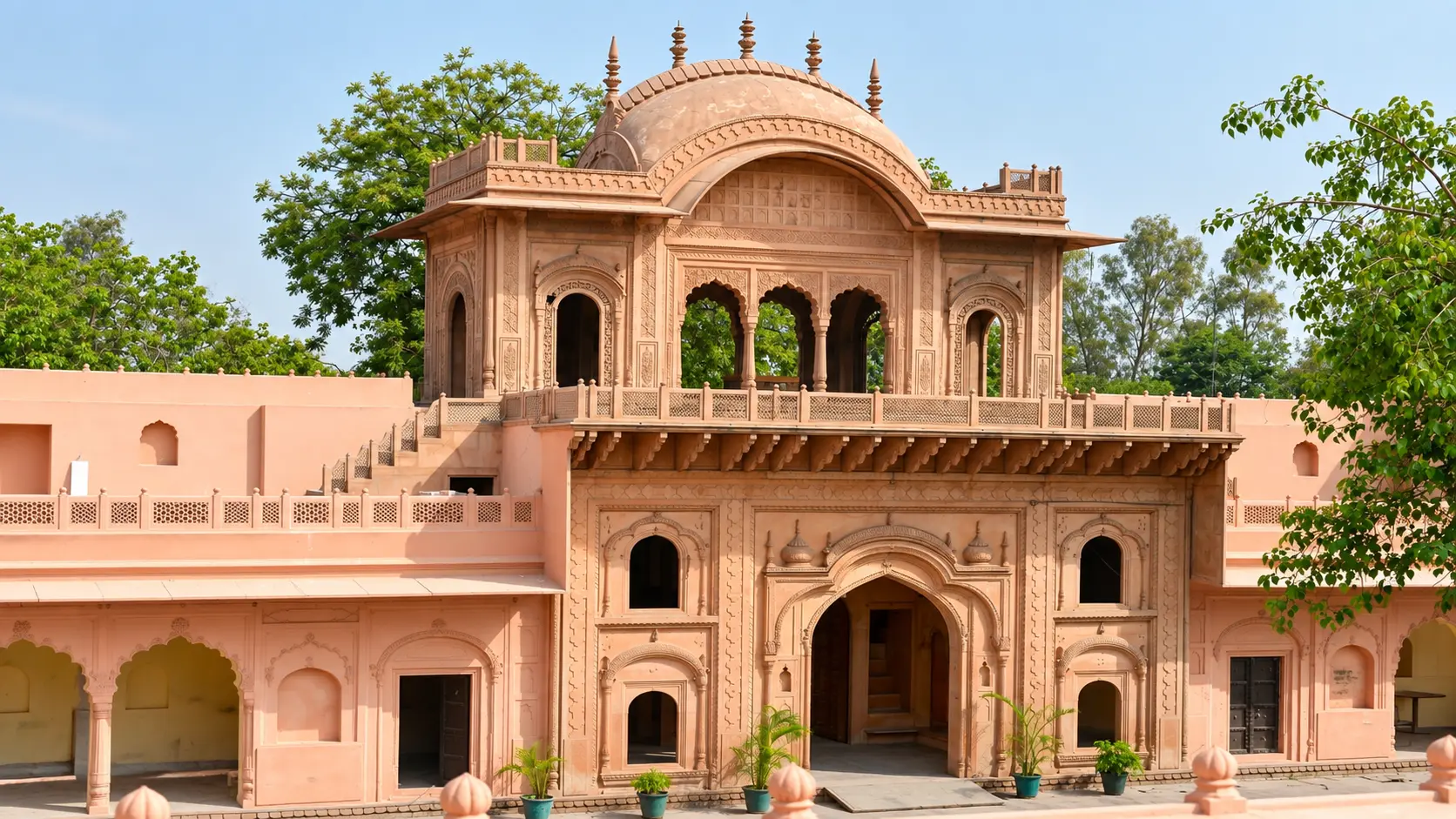
Engineered in the 10th century CE by Surajpal, a sun-worshipping monarch of the Tomar Rajput dynasty who ruled the Delhi region prior to the medieval Islamic conquests, Surajkund was designed in the symbolic shape of a rising sun or crescent amphitheatre. Constructed from dressed blocks of local Aravalli quartzite, the stepped reservoir captured precious monsoon runoff from the surrounding forest valleys to supply drinking and irrigation water while serving as a sacred solar sanctuary centered around a 10th-century Sun Temple (Surya Mandir). Later maintained and restored in the 14th century by Sultan Feroz Shah Tughlaq, the monument is protected today as a Monument of National Importance by the Archaeological Survey of India (ASI). Globally, Surajkund has achieved iconic status as the permanent venue of the annual Surajkund International Crafts Mela - the largest handicrafts and folk cultural festival in the world - held every February.
Start here. Open a tile for the full details.
Why goRead details
- A 1,000-Year-Old Stepped Sun Amphitheatre: Walk among the monumental stone ghats and ancient ramps of an authentic 10th-century Tomar dynasty hydraulic marvel built before the founding of medieval Delhi.
- Venue of the World's Largest Crafts Mela: Experience the vibrant kaleidoscope of the annual Surajkund International Crafts Mela in February, featuring over a thousand master artisans and folk dancers from across India and 40+ partner nations.
- Relics of Ancient Solar Worship: Inspect the weathered stone foundations, fluted columns, and carved stone steps of the 10th-century Sun Temple overlooking the eastern horizon.
- Masterpiece of Aravalli Hydraulic Engineering: Learn how Surajkund formed part of an ancient regional rainwater-harvesting network connected to the nearby 8th-century Anangpur Dam.
- Scenic Aravalli Forest Ridge Setting: Enjoy peaceful morning walks, fresh breezes, and native birdwatching along the wooded ridges of the southern Aravalli wildlife corridor.
- Seamless Delhi Metro Connectivity: Reach the site effortlessly via the Delhi Metro Violet Line, with Badarpur Border and Tughlakabad metro stations located just 4.5 kilometres away.
When to visitRead details
- October to March (Peak Season): This is unequivocally the finest time of year to visit Surajkund. The Delhi NCR winter brings crisp, brilliant blue skies, pleasant afternoon temperatures (16°C to 22°C), and comfortable walking conditions across the open stone terraces.
- February (The Crafts Mela Window): If your goal is to experience vibrant folk culture, world-class artisanal shopping, regional food delicacies, and international musical concerts, visit during the first two weeks of February. Plan to spend at least 4 to 6 hours immersing yourself in the mela grounds.
- Monsoon (July to September): The southwest monsoon transforms the surrounding dry Aravalli scrub into a vibrant, emerald-green forest landscape. Rainwater collects in the ancient stone basin, restoring the visual spectacle of the reservoir as a genuine waterbody. Morning visits during monsoon provide dramatic, misty views of the amphitheatre against lush hills.
Entry & permissionsRead details
Fees, visiting hours and entry rules may change. Confirm the latest details with the official operator or local authority before travelling.
Tariffs & Hours of Operation
Parameter | Details / Tariff |
|---|---|
ASI Monument Operating Hours | 06:00 AM to 06:00 PM daily (Sunrise to sunset throughout year) |
Crafts Mela Operating Hours (Annual February window) | 10:30 AM to 08:30 PM daily |
ASI Monument Ticket (Indian) | ₹25 per person (Online: ₹20) |
ASI Monument Ticket (Foreign) | ₹300 per person (Online: ₹250) |
Children Under 15 Years | Free admission to ASI monument |
Crafts Mela Ticket (Weekdays) | ₹120 per person |
Crafts Mela Ticket (Weekends) | ₹180 per person |
Two-Wheeler Parking Fee | ₹30 |
Car / SUV Parking Fee | ₹100 |
Still Photography (Smartphones) | Free of charge |
Professional Video / Drones | Requires prior written ASI / Mela Authority authorization |
Monument Conservation Rules & Visitor Etiquette
As an ancient protected Monument of National Importance under the Archaeological Survey of India, visitors must observe strict preservation standards:
- Do Not Deface Ancient Stonework: Scratching names or carving graffiti on the 1,000-year-old quartzite blocks, temple plinths, or ramps is a punishable criminal offense under the Ancient Monuments and Archaeological Sites and Remains Act.
- Observe Boundary Railings: To prevent accidents and protect fragile stone edges, visitors must not climb over perimeter fences or attempt to jump down the steep, narrow lower stone tiers into the reservoir basin.
- No Swimming or Bathing: Bathing, washing clothes, or swimming in the reservoir pool is strictly prohibited at all times.
- Zero-Plastic Eco-Zone: Surajkund borders the protected Aravalli forest corridor. Discarding plastic bottles, wrappers, or food waste in the reservoir basin or surrounding lawns is strictly prohibited. Use the designated waste bins provided near the entrance gates.
- Drone Prohibitions: Flying camera drones over the archaeological monument or the crowded mela grounds is strictly banned without advance written clearance from the ASI, local police, and civil aviation authorities.
Plan your visitRead details
Surajkund is situated along Surajkund Road in Faridabad District, Haryana, nestled directly on the border with South Delhi, roughly 8 kilometres south of Tughlaqabad and 20 kilometres south of central Delhi.
Explore the full guide - choose a topic below.
Why visit?
A 1,000-Year-Old Stepped Sun Amphitheatre: Walk among the monumental stone ghats and ancient ramps of an…Explore detailsClose details
- A 1,000-Year-Old Stepped Sun Amphitheatre: Walk among the monumental stone ghats and ancient ramps of an authentic 10th-century Tomar dynasty hydraulic marvel built before the founding of medieval Delhi.
- Venue of the World's Largest Crafts Mela: Experience the vibrant kaleidoscope of the annual Surajkund International Crafts Mela in February, featuring over a thousand master artisans and folk dancers from across India and 40+ partner nations.
- Relics of Ancient Solar Worship: Inspect the weathered stone foundations, fluted columns, and carved stone steps of the 10th-century Sun Temple overlooking the eastern horizon.
- Masterpiece of Aravalli Hydraulic Engineering: Learn how Surajkund formed part of an ancient regional rainwater-harvesting network connected to the nearby 8th-century Anangpur Dam.
- Scenic Aravalli Forest Ridge Setting: Enjoy peaceful morning walks, fresh breezes, and native birdwatching along the wooded ridges of the southern Aravalli wildlife corridor.
- Seamless Delhi Metro Connectivity: Reach the site effortlessly via the Delhi Metro Violet Line, with Badarpur Border and Tughlakabad metro stations located just 4.5 kilometres away.
What to expect
Surajkund represents an invaluable, tangible link to the pre-Islamic history of Delhi.Explore detailsClose details
The 10th-Century Tomar Dynasty Genesis
Surajkund represents an invaluable, tangible link to the pre-Islamic history of Delhi. During the 8th to 11th centuries CE, the Tomar Rajputs ruled the territory of Haryana-desa, establishing their royal capital at Lal Kot (in modern Mehrauli, South Delhi) under King Anangpal I.
       CHRONOLOGICAL MILESTONES OF SURAJKUND
┌──────────────────────────────────────────────────────────┐
│  8th Century CE: Construction of Anangpur Dam            │
│  King Anangpal Tomar constructs an upstream gravity dam  │
│  across an Aravalli gorge to trap monsoon runoff.        │
├──────────────────────────────────────────────────────────┤
│  10th Century CE: Genesis of Surajkund                   │
│  King Surajpal engineers the semicircular stepped stone  │
│  reservoir and Sun Temple dedicated to Lord Surya.       │
├──────────────────────────────────────────────────────────┤
│  1351 - 1388 CE: Medieval Tughlaq Restoration            │
│  Sultan Feroz Shah Tughlaq repairs damaged stone steps,   │
│  building lime-mortar ramps for regional water security. │
├──────────────────────────────────────────────────────────┤
│  1987: Launch of the National Crafts Mela                │
│  Haryana Tourism inaugurates the annual crafts mela to   │
│  preserve indigenous Indian handicrafts and handlooms.   │
├──────────────────────────────────────────────────────────┤
│  Present Day: ASI National Monument & Global Mela Hub    │
│  Protected ancient heritage monument and venue of the    │
│  world's largest international handicrafts fair.         │
└──────────────────────────────────────────────────────────┘
The Tomar kings were devoted worshippers of the Sun God (Surya). According to historical chronicles and bardic traditions, Prince Surajpal (son of Anangpal Tomar) selected this natural rocky depression at the foot of the Aravalli hills to build a massive reservoir. The project served a dual purpose: practical water harvesting to sustain agricultural settlements and military garrisons, and spiritual devotion as an open-air solar amphitheatre where devotees greeted the dawn sun reflected upon sacred waters.
Architectural Design: The Rising Sun Amphitheatre
The architectural geometry of Surajkund is magnificent. Rather than adopting a conventional square or rectangular stepwell (baoli) design, the Tomar engineers fashioned the reservoir in the shape of a rising sun / semicircular crescent amphitheatre, spanning approximately 130 metres in diameter across roughly 6 hectares.
       GROUND PLAN OF ANCIENT SURAJKUND RESERVOIR
                          [North]
                             ▲
                             │
            ┌────────────────┴────────────────┐
            │        ARAVALLI FOREST RIDGE    │
            │   (Rainwater Catchment Slopes)  │
            └────────────────┬────────────────┘
                             │
            ┌────────────────┼────────────────┐
            │    RUINED SUN TEMPLE FOUNDATIONS│
            │   (Western High Embankment)     │
            └────────────────┬────────────────┘
                             │
        ╔════════════════════╧════════════════════╗
        ║    SEMICIRCULAR STEPPED MASONRY GHATS   ║
        ║   (Dressed Quartzite Blocks / Tiers)    ║
        ║                                         ║
        ║       ~~~~~~~~~~~~~~~~~~~~~~~~~         ║
        ║       CENTRAL RESERVOIR POOL            ║
        ║       (Water Basin / 'Kund')            ║
        ║       ~~~~~~~~~~~~~~~~~~~~~~~~~         ║
        ║                                         ║
        ║   Stone Cattle & Elephant Ramps         ║
        ╚════════════════════╤════════════════════╝
                             │
                             ▼
                    [South / East Entry]
Surajkund Road & Mela Grounds- Ashlar Quartzite Masonry: The stepped embankment is constructed from hard, locally quarried Aravalli quartzite blocks laid in dry ashlar masonry and secured with iron clamps and medieval lime mortar.
- Stepped Terraces (Ghats): Wide horizontal tiers descend gracefully from the upper perimeter down to the water level. These stepped platforms allowed bathers to access the water regardless of seasonal fluctuations in depth.
- Animal Ramps (Kund-Gahs): Strategically integrated into the southern and eastern flanks are broad, gently inclined stone ramps designed to allow royal elephants, cavalry horses, and domestic livestock to descend safely to drink without damaging the pedestrian steps.
- The Sun Temple Ruins: On the elevated western embankment overlooking the entire basin sit the stone plinths, carved pillar bases, and fallen lintels of a 10th-century Sun Temple. Devotees stood here at daybreak, offering morning prayers (arghya) facing eastward as the morning sun rose over the water.
- Upstream Hydrological Harmony (Anangpur Dam): Surajkund did not function in isolation. Located approximately 2.5 kilometres southwest lies Anangpur Dam (built in the 8th century CE), a solid stone gravity dam constructed across an Aravalli canyon to trap rushing monsoon streams, slowly releasing surplus water through stone sluice channels down into Surajkund.
The Medieval Tughlaq Restoration
During the 14th century, the third sultan of the Tughlaq dynasty, Feroz Shah Tughlaq (who founded Feroz Shah Kotla in Delhi), recognized the continuing strategic and agricultural utility of Surajkund. Historical inscriptions and architectural features confirm that Feroz Shah extensively restored the crumbling Tomar stone steps, reconstructed eroded embankments using lime mortar (chuna), and excavated interconnecting drainage canals to feed water toward his royal city of Tughlaqabad.
The Surajkund International Crafts Mela: A Global Spectacle
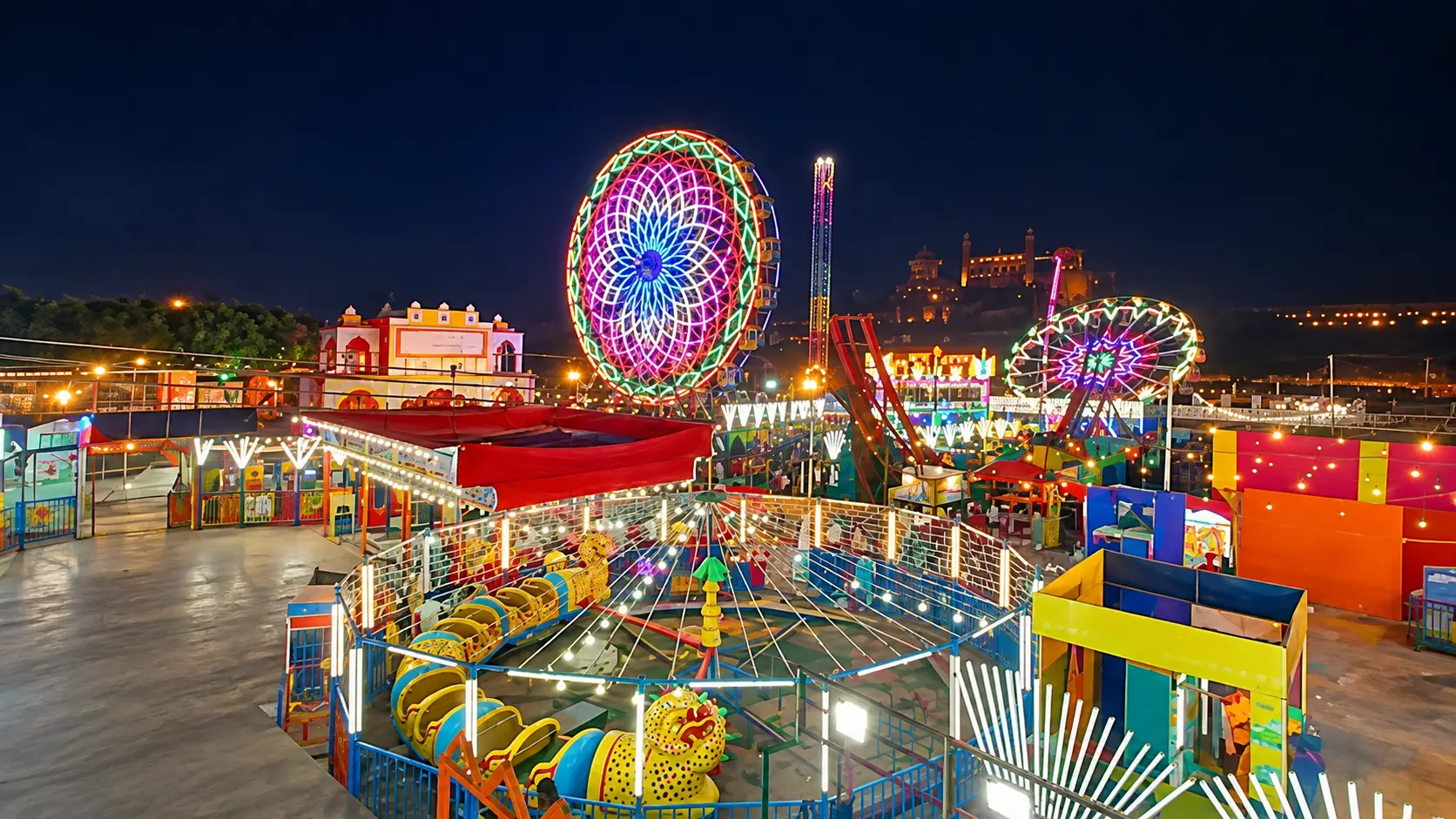
While the ancient stone reservoir stands in silent, dignified antiquity throughout most of the year, the adjacent grounds burst into a riot of color, rhythm, and aroma every February during the Surajkund International Crafts Mela:
Parameter | Details |
|---|---|
Annual Operational Window | First fortnight of February (approx. February 1 to 16/18 daily) |
Organizing Authorities | Surajkund Mela Authority & Haryana Tourism in partnership with Ministries of Tourism, Textiles, Culture & MEA |
Scale & Footfall | Over 1,000 master craftspersons; over 1.5 million international & national visitors annually |
International Participation | Craft delegations, musicians, and artisans from over 40 partner nations |
Concept Framework | Features a rotating Indian 'Theme State' and 'International Partner' |
Cultural Performances | Continuous folk dances, classical recitals, puppet shows across open-air chaupals and Natyashala amphitheatres |
- The Village Bazaar Atmosphere: The mela grounds are designed as a picturesque, sprawling rural Indian village. Clay-plastered huts with thatched roofs line winding brick lanes, organized by craft disciplines: handloom textiles (Pashmina, Chanderi, Banarasi, Kanjeevaram), terracotta pottery, woodcraft, brass metalwork, leather mojris, and stone sculptures.
- The Theme State & Partner Nation: Each year, a designated Indian State (such as Rajasthan, Gujarat, Kerala, or Himachal Pradesh) constructs an authentic life-size replica of its regional architectural landmarks - such as traditional haveli gates or carved temple pavilions - and showcases its regional culinary heritage and performing arts. A designated International Partner Country (or grouping of nations from Africa, Latin America, or Central Asia) displays its own indigenous craft traditions.
- Open-Air Chaupals & Natyashala: Multiple rustic open-air stages (chaupals) host non-stop folk music, Kalbelia and Bhangra dances, Qawwali recitals, and regional theatre, while the main Natyashala amphitheatre hosts mega classical dance concerts under the evening stars.
Best time to visit
SEASONAL VISITABILITY SCORECARD FOR SURAJKUND…Explore detailsClose details
Seasonal Guide
Season | Months | Temp Range | Visiting Status & Notes |
|---|---|---|---|
Peak Season (Winter & Crafts Mela) | October - March | 12°C - 25°C | Best overall time; crisp sunny days, Crafts Mela in February, ideal walks. |
Spring (Shoulder) | April | 22°C - 35°C | Warm; comfortable in the early morning (06:00 AM) for heritage photography. |
Summer (Off-Season) | May - June | 28°C - 42°C | Hot; open unshaded stone; visit only during dawn (06:00 - 08:30 AM). |
Monsoon | July - September | 26°C - 34°C | Reservoir partially fills; Aravalli hills turn lush and green; humid air. |
- October to March (Peak Season): This is unequivocally the finest time of year to visit Surajkund. The Delhi NCR winter brings crisp, brilliant blue skies, pleasant afternoon temperatures (16°C to 22°C), and comfortable walking conditions across the open stone terraces.
- February (The Crafts Mela Window): If your goal is to experience vibrant folk culture, world-class artisanal shopping, regional food delicacies, and international musical concerts, visit during the first two weeks of February. Plan to spend at least 4 to 6 hours immersing yourself in the mela grounds.
- Monsoon (July to September): The southwest monsoon transforms the surrounding dry Aravalli scrub into a vibrant, emerald-green forest landscape. Rainwater collects in the ancient stone basin, restoring the visual spectacle of the reservoir as a genuine waterbody. Morning visits during monsoon provide dramatic, misty views of the amphitheatre against lush hills.
Optimal Time of Day for Sightseeing
On non-mela days, the ideal times to explore the ASI archaeological monument are early morning (06:30 AM to 09:30 AM) and late afternoon (03:30 PM to 05:30 PM):
- Morning brings the soft dawn sunlight rising across the eastern horizon, illuminating the stone amphitheatre precisely as its 10th-century designers intended.
- Late afternoon provides warm, golden-hour illumination across the weathered quartzite stonework, creating spectacular photographic conditions without the midday sun.
How to reach
Surajkund is situated along Surajkund Road in Faridabad District, Haryana, nestled directly on the border with…Explore detailsClose details
Geographic Orientation
Surajkund is situated along Surajkund Road in Faridabad District, Haryana, nestled directly on the border with South Delhi, roughly 8 kilometres south of Tughlaqabad and 20 kilometres south of central Delhi.
       REGIONAL TRANSIT MAP TO SURAJKUND
                     Central Delhi (Connaught Place - 20 km)
                               │
                               │ (Delhi Metro Violet Line / Mathura Road)
                               ▼
                        South Delhi (Saket / Tughlaqabad)
                               │
              ┌────────────────┴────────────────┐
              │                                 │
              ▼                                 ▼
   Badarpur Border Metro Station       Tughlakabad Metro Station
      (Violet Line - 4.5 km)             (Violet Line - 5.0 km)
                               │
                               │ (Auto / Taxi along Surajkund Road - 10 mins)
                               ▼
                           SURAJKUND
              (Ancient Reservoir & Mela Grounds)
Access Modes
- By Delhi Metro (Recommended Mode):
- Surajkund is exceptionally convenient to reach via the Delhi Metro Violet Line.
- The closest metro stations are Badarpur Border Metro Station (approx. 4.5 km away) and Tughlakabad Metro Station (approx. 5 km away). Both stations provide direct connections to central Delhi stations including Central Secretariat, Janpath, Mandi House, and Kashmere Gate. Confirm the current charge and what it includes with the operator or service provider. Visitor admission, vehicles, parking, activities and accommodation can have separate charges.
- By Road (Car, Taxi, or Rideshare):
- From South Delhi: Take Mehrauli - Badarpur (MB) Road to the Surajkund crossing, then turn south onto Surajkund Road (approx. 20 minutes from Greater Kailash or Saket).
- From Central Delhi: Drive south along Mathura Road (NH-19 / NH-44) via Ashram and the Badarpur border, turning onto Surajkund Road (approx. 20 km / 35 to 45 minutes).
- From Gurugram: Take the scenic Gurgaon - Faridabad expressway through the Aravalli hills, connecting to Surajkund Road in about 35 minutes (28 km).
- By Train:
- Hazrat Nizamuddin Railway Station (NZM): Located roughly 18 kilometres north, easily reachable via taxi or auto in about 30 minutes.
- New Delhi Railway Station (NDLS): Situated 25 kilometres north, directly connected via Delhi Metro (Yellow Line interchange at Central Secretariat to Violet Line).
- Faridabad Railway Station (FDB): Located 12 kilometres south.
- By Air:
- Indira Gandhi International Airport, New Delhi (DEL): Located approximately 25 to 28 kilometres northwest of Surajkund. Pre-paid airport taxis take roughly 45 to 60 minutes via the Mehrauli - Badarpur Road or Outer Ring Road.
Entry, timings and permissions
Fees, visiting hours and entry rules may change.Explore detailsClose details
Fees, visiting hours and entry rules may change. Confirm the latest details with the official operator or local authority before travelling.
Tariffs & Hours of Operation
Parameter | Details / Tariff |
|---|---|
ASI Monument Operating Hours | 06:00 AM to 06:00 PM daily (Sunrise to sunset throughout year) |
Crafts Mela Operating Hours (Annual February window) | 10:30 AM to 08:30 PM daily |
ASI Monument Ticket (Indian) | ₹25 per person (Online: ₹20) |
ASI Monument Ticket (Foreign) | ₹300 per person (Online: ₹250) |
Children Under 15 Years | Free admission to ASI monument |
Crafts Mela Ticket (Weekdays) | ₹120 per person |
Crafts Mela Ticket (Weekends) | ₹180 per person |
Two-Wheeler Parking Fee | ₹30 |
Car / SUV Parking Fee | ₹100 |
Still Photography (Smartphones) | Free of charge |
Professional Video / Drones | Requires prior written ASI / Mela Authority authorization |
Monument Conservation Rules & Visitor Etiquette
As an ancient protected Monument of National Importance under the Archaeological Survey of India, visitors must observe strict preservation standards:
- Do Not Deface Ancient Stonework: Scratching names or carving graffiti on the 1,000-year-old quartzite blocks, temple plinths, or ramps is a punishable criminal offense under the Ancient Monuments and Archaeological Sites and Remains Act.
- Observe Boundary Railings: To prevent accidents and protect fragile stone edges, visitors must not climb over perimeter fences or attempt to jump down the steep, narrow lower stone tiers into the reservoir basin.
- No Swimming or Bathing: Bathing, washing clothes, or swimming in the reservoir pool is strictly prohibited at all times.
- Zero-Plastic Eco-Zone: Surajkund borders the protected Aravalli forest corridor. Discarding plastic bottles, wrappers, or food waste in the reservoir basin or surrounding lawns is strictly prohibited. Use the designated waste bins provided near the entrance gates.
- Drone Prohibitions: Flying camera drones over the archaeological monument or the crowded mela grounds is strictly banned without advance written clearance from the ASI, local police, and civil aviation authorities.
Nearby places to consider
A visit to Surajkund integrates perfectly with other renowned architectural, ecological, and cultural attractions…Explore detailsClose details
A visit to Surajkund integrates perfectly with other renowned architectural, ecological, and cultural attractions across South Delhi and Faridabad:
- Anangpur Dam (2.5 km southwest): An extraordinary 8th-century stone gravity dam constructed across an Aravalli gorge by King Anangpal Tomar, considered one of India's earliest hydraulic engineering landmarks.
- Tughlaqabad Fort, South Delhi (8 km north): The monumental 14th-century ruined stone citadel of the Tughlaq dynasty, featuring massive sloping ramparts, 13 underground granaries, and the fortified marble tomb of Ghiyas-ud-din Tughlaq.
- Asola Bhatti Wildlife Sanctuary & Neeli Jheel (6 km west): A 32-square-kilometre protected Aravalli wilderness featuring nature trails, native wildlife (leopards, nilgai, blackbuck), and the deep turquoise waters of the Neeli Jheel quarry lake.
- Raja Nahar Singh Palace, Ballabhgarh (22 km southeast): The splendid 18th-century fortified haveli palace of freedom fighter Raja Nahar Singh, restored by Haryana Tourism as a boutique hotel and restaurant.
- Qutub Minar Complex, South Delhi (16 km northwest): The UNESCO World Heritage Site boasting the 73-metre brick minaret, the 4th-century Iron Pillar of Delhi, and exquisite Indo-Islamic stone carvings.
- Lotus Temple, South Delhi (14 km north): The world-renowned Baháʼí House of Worship shaped like a blooming white marble lotus flower, offering a serene sanctuary for silent meditation.
In pictures
The practical bits
Before you go.
Navigating the Annual International Crafts Mela
If visiting during the celebrated Surajkund International Crafts Mela in the first half of February, anticipate…Explore detailsClose details
If visiting during the celebrated Surajkund International Crafts Mela in the first half of February, anticipate massive crowds, particularly on Saturday and Sunday afternoons when daily attendance frequently exceeds 100,000 visitors. Check the current visiting hours and permitted access with the site operator before departure; ceremonies, closures and visitor sessions can affect access.
Footwear for Exploring the Stepped Quartzite Reservoir
The monumental amphitheatre features steep tiers, wide stone terraces, and inclined ramps composed of rough…Explore detailsClose details
The monumental amphitheatre features steep tiers, wide stone terraces, and inclined ramps composed of rough, weathered Aravalli quartzite that can be uneven underfoot. Wear comfortable walking shoes, sneakers, or supportive sandals with reliable non-slip rubber soles that provide firm ankle support, completely avoiding high heels or smooth leather-soled shoes.
Sun Protection and Outdoor Preparation
The vast open masonry reservoir is completely unshaded across its stone terraces, with the light-colored…Explore detailsClose details
The vast open masonry reservoir is completely unshaded across its stone terraces, with the light-colored quartzite reflecting significant midday heat even during the winter months. Carry a personal refillable water bottle, wear UV-protective sunglasses, apply sunscreen, and carry a lightweight sun hat or umbrella, especially if you plan to explore the monument between 11:00 AM and 03:00 PM.
Combining Your Excursion with Nearby Aravalli Landmarks
Surajkund is located directly on the forested border connecting South Delhi and Faridabad, making it effortless…Explore detailsClose details
Surajkund is located directly on the forested border connecting South Delhi and Faridabad, making it effortless to combine with complementary historic and ecological attractions. Pair your morning exploration of Surajkund with an afternoon visit to the colossal 14th-century ruins of Tughlaqabad Fort located just 8 kilometres north, or take a short 2.5-kilometre side excursion to discover the ancient 8th-century Anangpur Dam.
A few things you might wonder
Common questions about visiting Surajkund. Fees, visiting hours and ceremonies are researched details that may change; confirm current arrangements with the operator before travelling.
Who originally built Surajkund, and during which historical century?
What is the unique architectural shape of the Surajkund reservoir?
What is the Surajkund International Crafts Mela, and when is it held?
How can travelers reach Surajkund by Delhi Metro?
What are the entry ticket prices and visiting hours for the Surajkund monument?
Is there an upstream dam connected to the Surajkund reservoir?
Did Sultan Feroz Shah Tughlaq play a role in restoring Surajkund?
Are food stalls, hotels, and restaurant facilities available near Surajkund?
Explore more in Faridabad
Discover other destinations around this hub
More Hubs in Delhi Ncr
Continue exploring other travel hubs in this state
Planning a trip to Faridabad?