Raja Nahar Singh Palace
Explore 18th-century Raja Nahar Singh Palace (Ballabhgarh Fort) in Faridabad, Delhi NCR. Complete guide covers 1857 history, architecture, metro access, and timings.
Location
Faridabad, Delhi NCR
A closer look
Your visit, at a glance.
Faridabad, Delhi Ncr
GET TO KNOW THE PLACE
Nestled proudly amidst the vibrant historic bazaar of Ballabhgarh in Faridabad District, Haryana, the Raja Nahar Singh Palace (also known as Ballabhgarh Fort Palace or Nahar…
The story of Raja Nahar Singh Palace
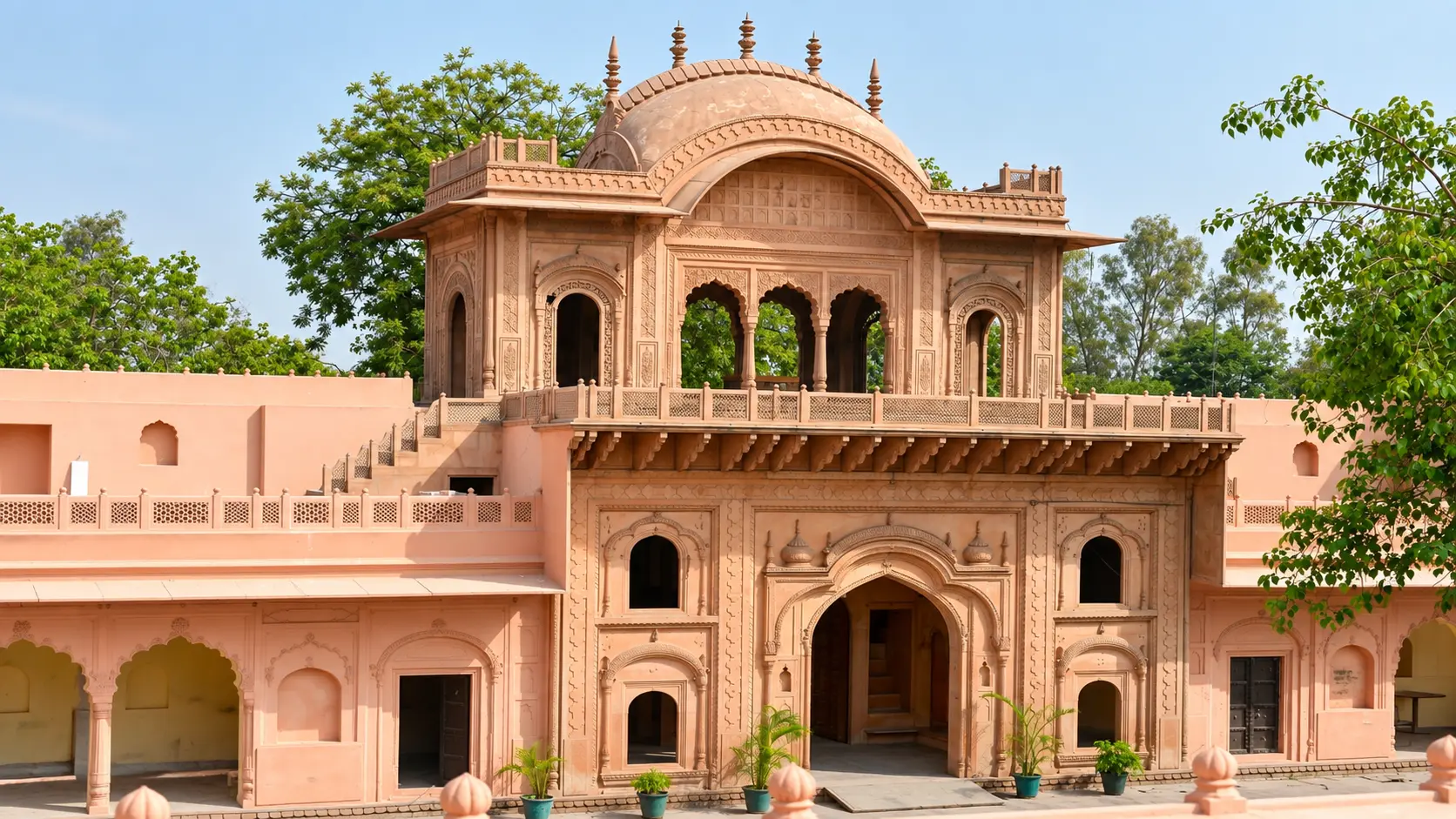
Nestled proudly amidst the vibrant historic bazaar of Ballabhgarh in Faridabad District, Haryana, the Raja Nahar Singh Palace (also known as Ballabhgarh Fort Palace or Nahar Singh Haveli) stands as one of the most magnificent 18th-century heritage landmarks in the National Capital Region (Delhi NCR). Situated roughly 40 kilometres south of central New Delhi (Connaught Place) and 1.2 kilometres from the terminal station of the Delhi Metro Violet Line, this splendidly fortified haveli palace offers travelers an authentic glimpse into the royal lifestyle, architectural elegance, and patriotic heroism of 18th- and 19th-century northern India.
Begun around 1739 CE under Rao Balram (the founding king from whom Ballabhgarh takes its name) and expanded across four successive generations, the palace reached its historical and architectural zenith under Raja Nahar Singh (1821 - 1858). A charismatic sovereign and fearless freedom fighter, Raja Nahar Singh played a pivotal leadership role in the First War of Indian Independence (1857), commanding the southern defense of Mughal Delhi before sacrificing his life on the British gallows at Chandni Chowk. Crafted from rich red sandstone, slender lakhori bricks, and gleaming lime plaster (chuna), the palace features ornate sandstone cupolas (chhatris), scalloped Mughal archways, intricate stone jali latticework, and segregated royal courtyards. Today, meticulously conserved by the Haryana Tourism Corporation as a boutique heritage hotel, fine-dining restaurant, and cultural venue, the palace transports visitors into an era of chivalric valor, royal grace, and architectural splendor.
Start here. Open a tile for the full details.
Why goRead details
- An Authentic 18th-Century Fortified Palace in Delhi NCR: Explore a genuine royal fortress palace complete with massive bastions, iron-studded gateways, and regal courtyards just a short metro ride from central Delhi.
- Tribute to an 1857 Uprising Hero: Learn the inspiring story of Raja Nahar Singh, the valiant king who guarded the southern gateways of Delhi during the 1857 Indian Mutiny and was executed for his steadfast patriotism.
- Exquisite Mughal-Rajasthani Haveli Architecture: Admire delicate red sandstone chhatris, fluted scalloped arches, traditional overhanging jharokhas, and cooling wind-tower pavilions.
- The Celebrated Kartik Cultural Festival: Witness world-class classical Indian dance, music, and folk theatre performances held under the stars in the palace courtyard every autumn.
- Royal Heritage Dining at Darbar Restaurant: Enjoy authentic North Indian and Mughlai cuisine inside the antique Sheesh Mahal and Diwan-e-Aam audience chambers operated by Haryana Tourism.
- Effortless Delhi Metro Connectivity: Arrive easily via the Delhi Metro Violet Line, which terminates at Raja Nahar Singh Metro Station just 1.2 kilometres from the palace gates.
When to visitRead details
- October to March (Peak Season): This is unequivocally the finest time of year to visit Raja Nahar Singh Palace. Delhi NCR enjoys crisp, pleasant winter sunshine, with daytime temperatures hovering comfortably between 16°C and 24°C. Walking through the open sandstone courtyards and climbing to the rooftop chhatris is an absolute pleasure.
- Kartik Cultural Festival Window (October/November): Visiting during the annual Kartik Festival is an unforgettable cultural experience. The palace is decorated with hundreds of traditional earthen lamps (diyas) and fairy lights, while classical sitar, sarod, and Kathak performances resonate through the ancient stone halls under the autumn night sky.
- April to June (Summer Season): Summers across Faridabad are intensely hot and dry, with midday temperatures frequently crossing 40°C. If visiting during summer, plan your trip for the late afternoon (from 04:00 PM onward) to tour the palace in cooler evening temperatures before enjoying dinner inside the air-conditioned Darbar Restaurant.
Entry & permissionsRead details
Fees, visiting hours and entry rules may change. Confirm the latest details with the official operator or local authority before travelling.
Tariffs & Operating Schedule
Parameter | Details / Tariff |
|---|---|
Sightseeing Operating Hours | 09:00 AM to 06:00 PM daily |
Heritage Restaurant Hours | 11:00 AM to 10:30 PM daily |
Adult Sightseeing Ticket | ₹20 per person |
Child Sightseeing Ticket | Free admission (Children under 10) |
Dining & Hotel Guests | Free entry to palace grounds |
Two-Wheeler Parking Fee | ₹20 |
Car / SUV Parking Fee | ₹50 |
Still Photography (Smartphones) | Free of charge |
Pre-Wedding / Commercial Shoots | Commercial tariff applies (Contact Haryana Tourism management) |
Visitor Etiquette & Conservation Guidelines
Raja Nahar Singh Palace is an ancient state-protected monument and an active boutique heritage hospitality property. Visitors must respect the historic environment:
- Protect the Antique Frescoes and Jali Screens: Do not touch, scratch, or lean against the fragile 18th-century wall paintings, lime plaster reliefs, or carved sandstone jali screens.
- Respect Guest Privacy: Certain upper residential wings are reserved exclusively for overnight hotel guests. Sightseers must respect all 'Private - Hotel Guests Only' signboards and confine tours to public courtyards and open halls.
- Zero-Litter Mandate: Help keep the historic royal courtyards pristine. Discard packaging and water bottles only in designated waste receptacles provided across the verandas.
- Commercial Photography Authorizations: Taking casual vacation snapshots with smartphones or compact cameras is permitted without charge. However, professional model portfolios, pre-wedding photoshoots with lighting gear, and commercial videography require advance written permission and fee payment at the Haryana Tourism administrative desk.
Plan your visitRead details
Raja Nahar Singh Palace is located at Ambedkar Chowk in the historical heart of Ballabhgarh town in Faridabad District, situated approximately 40 kilometres south of central New Delhi along the National Highway 19 (NH-44) Delhi - Agra highway corridor.
Explore the full guide - choose a topic below.
Why visit?
An Authentic 18th-Century Fortified Palace in Delhi NCR: Explore a genuine royal fortress palace complete with…Explore detailsClose details
- An Authentic 18th-Century Fortified Palace in Delhi NCR: Explore a genuine royal fortress palace complete with massive bastions, iron-studded gateways, and regal courtyards just a short metro ride from central Delhi.
- Tribute to an 1857 Uprising Hero: Learn the inspiring story of Raja Nahar Singh, the valiant king who guarded the southern gateways of Delhi during the 1857 Indian Mutiny and was executed for his steadfast patriotism.
- Exquisite Mughal-Rajasthani Haveli Architecture: Admire delicate red sandstone chhatris, fluted scalloped arches, traditional overhanging jharokhas, and cooling wind-tower pavilions.
- The Celebrated Kartik Cultural Festival: Witness world-class classical Indian dance, music, and folk theatre performances held under the stars in the palace courtyard every autumn.
- Royal Heritage Dining at Darbar Restaurant: Enjoy authentic North Indian and Mughlai cuisine inside the antique Sheesh Mahal and Diwan-e-Aam audience chambers operated by Haryana Tourism.
- Effortless Delhi Metro Connectivity: Arrive easily via the Delhi Metro Violet Line, which terminates at Raja Nahar Singh Metro Station just 1.2 kilometres from the palace gates.
What to expect
The story of the palace begins with the rise of the Ballabhgarh princely state during the turbulent decline of…Explore detailsClose details
The Historical Genesis: From Rao Balram to Raja Nahar Singh
The story of the palace begins with the rise of the Ballabhgarh princely state during the turbulent decline of the Mughal Empire in the early 18th century. Around 1739 CE, Rao Balram (affectionately known as Ballu), a bold and enterprising Jat chieftain, established his capital here and laid the foundations of a fortified palace and garrison town, which came to be known as Ballabhgarh ("The Fort of Balram").
       CHRONOLOGICAL MILESTONES OF RAJA NAHAR SINGH PALACE
┌──────────────────────────────────────────────────────────┐
│  Circa 1739 CE: Founding by Rao Balram                   │
│  Construction of the fortified palace and bastions begins│
│  establishing the royal seat of Ballabhgarh state.       │
├──────────────────────────────────────────────────────────┤
│  1839 - 1857: The Golden Era of Raja Nahar Singh         │
│  Raja Nahar Singh ascends the throne; expands courtyards,│
│  frescoed pavilions, and administrative Darbar hall.     │
├──────────────────────────────────────────────────────────┤
│  1857: The First War of Indian Independence              │
│  Nahar Singh allies with Bahadur Shah Zafar; guards      │
│  Delhi's southern entrance against British regiments.    │
├──────────────────────────────────────────────────────────┤
│  January 9, 1858: Martyrdom at Chandni Chowk             │
│  Raja Nahar Singh is executed by hanging in Delhi on his │
│  35th birthday; palace and estates confiscated.          │
├──────────────────────────────────────────────────────────┤
│  Present Day: Haryana Tourism Heritage Property          │
│  Restored as a boutique hotel, restaurant, and cultural  │
│  venue hosting the annual Kartik Cultural Festival.      │
└──────────────────────────────────────────────────────────┘
The palace grew incrementally across four generations of rulers - Rao Bisan Singh, Raja Ajit Singh, and Raja Ram Singh - before reaching its completed grandeur under Raja Nahar Singh, who ascended the throne in 1839. Nahar Singh was an enlightened ruler who modernized his army, introduced progressive agricultural irrigation, patronized classical musicians and stone artisans, and constructed the magnificent frescoed Sheesh Mahal (Palace of Mirrors) and public reception halls.
The Heroism of 1857: Guarding the Southern Gates of Delhi
When the flame of revolution ignited across northern India in May 1857, Raja Nahar Singh openly defied British authority. Recognizing the aged Mughal Emperor Bahadur Shah Zafar as the legitimate sovereign of India, Nahar Singh took upon himself the critical military responsibility of defending Delhi's southern approaches.
With a disciplined force of 5,000 cavalry and infantry, Nahar Singh fortified the entire corridor between Ballabhgarh, Faridabad, and Badarpur. He successfully repelled British supply convoys advancing from Agra and Mathura, established safe communication channels for the freedom fighters, and provided food, gunpowder, and financial subsidies to the besieged rebel government inside the walled city of Delhi.
Following the tragic fall of Delhi to British forces under General Wilson in September 1857, British commanders realized they could not conquer Ballabhgarh by direct military assault. Instead, they lured Raja Nahar Singh to Delhi under the false pretense of negotiating an honorable treaty. Upon his arrival at the British camp, he was treacherously arrested, tried by a military commission, and condemned to death. On January 9, 1858 - the very day he turned 35 years old - Raja Nahar Singh was publicly hanged in front of the Kotwali at Chandni Chowk in Delhi. He met his death with serene dignity, refusing to beg for royal clemency. His royal fortress, treasury, and ancestral estates were seized by the colonial administration, bringing an end to the sovereign dynasty of Ballabhgarh.
Architectural Layout: A Masterpiece of Haveli Fort Design
Raja Nahar Singh Palace is built in the distinctive Mughal-Rajasthani haveli architecture, combining the defensive solidity of a medieval bastion with the airy elegance of a pleasure palace:
       GROUND PLAN OF RAJA NAHAR SINGH PALACE
                          [North]
                             ▲
                             │
            ┌────────────────┴────────────────┐
            │         ZENANA MAHAL            │
            │   (Private Women's Apartments,  │
            │    Frescoed Bedchambers)        │
            └────────────────┬────────────────┘
                             │
            ┌────────────────┼────────────────┐
            │        CENTRAL COURTYARD        │
            │   (Open Lawn, Marble Fountain,  │
            │    Kartik Festival Stage)       │
            └────────────────┬────────────────┘
                             │
            ┌────────────────┴────────────────┐
            │         MARDANA MAHAL           │
            │   (Diwan-e-Aam, Audience Court, │
            │    Darbar Restaurant)           │
            └────────────────┬────────────────┘
                             │
            ┌────────────────┴────────────────┐
            │         SHEESH MAHAL            │
            │   (Mirror Inlay Work & Jharokhas│
            └────────────────┬────────────────┘
                             │
                             ▼
                    [Main Entrance Gate]
Ambedkar Chowk / Market Road- Building Materials: The palace was constructed using fine lakhori bricks (slender, exceptionally durable medieval kiln-fired clay bricks) bound with traditional lime mortar mixed with crushed brick, jaggery, and marble dust (chuna), faced with dressed slabs of red sandstone brought from the Aravalli quarries.
- The Exterior Fortifications: The outer perimeter presents high, formidable stone walls topped with defensive parapets, pierced with arrow slits (musketry loops) and crowned by octagonal corner watch bastions. Heavy, iron-studded wooden gates (darwazas) protected the palace from cavalry charges.
- The Courtyard System: Built around two primary courtyards designed to optimize cooling air currents during hot North Indian summers:
- Mardana Mahal (Public Outer Court): The administrative zone where the king held court, greeted envoys, and addressed subjects. It features the Diwan-e-Aam, a magnificent colonnaded hall with cusped horseshoe arches resting on fluted sandstone pillars. Today, this space houses the royal-themed Darbar Restaurant.
- Zenana Mahal (Private Inner Court): The residential sanctum of the royal women, entered through secluded corridors. It is enveloped by multi-storeyed verandas featuring delicate stone jali latticework screens that allowed the queens to observe courtyard ceremonies while remaining completely hidden from public view.
- Jharokhas and Chhatris: Beautiful overhanging stone balconies (jharokhas) jut gracefully from the upper floors, carried on richly carved stone brackets depicting floral motifs and lotus petals. Atop the roofline sit graceful octagonal domed pavilions (chhatris), whose open pillared sides catch cooling breezes and offer panoramic views over the old town.
- Sheesh Mahal (Palace of Mirrors): A private upper chamber adorned with intricate Belgian glass mirror inlay, gilded lime-plaster relief moldings, and delicate floral murals depicting classical musical modes (ragas) and scenes from Hindu epics.
The Modern Avatar: Heritage Hotel & Kartik Cultural Festival
Recognizing the historic and architectural value of the crumbling monument, the Government of Haryana acquired the palace and entrusted its comprehensive conservation to the Haryana Tourism Corporation. The restoration was executed with great architectural sensitivity, preserving antique carved wooden doors, original lime frescoes, and stone jalis:
- Boutique Heritage Lodging: Haryana Tourism converted select royal suites into heritage guest rooms, allowing visitors to stay overnight in genuine 18th-century chambers equipped with antique four-poster beds, period brass lamps, and modern attached bathrooms.
- The Darbar Restaurant & Lounge: The palace restaurant serves authentic royal North Indian, Mughlai, and traditional Haryanvi delicacies beneath the fluted arches of the Diwan-e-Aam, offering an atmospheric dining experience.
- The Kartik Cultural Festival: Every year during the auspicious Hindu month of Kartik (October/November), the palace courtyard becomes the illuminated open-air stage for the prestigious Kartik Cultural Festival. Organized by Haryana Tourism and the North Zone Cultural Centre, this multi-day extravaganza gathers celebrated maestros of Indian classical dance (Kathak, Bharatanatyam, Odissi), vocal music, folk dancers from across India, and traditional handicraft artisans, reviving the regal cultural aura of 19th-century Ballabhgarh.
Best time to visit
SEASONAL VISITABILITY SCORECARD FOR RAJA NAHAR SINGH PALACE…Explore detailsClose details
Seasonal Guide
Season | Months | Temp Range | Visiting Status & Notes |
|---|---|---|---|
Peak Season (Autumn/Winter | October - March | 12°C - 26°C | Best overall time; crisp sunshine, Kartik Festival, delightful courtyard walks |
Spring (Shoulder) | April | 22°C - 34°C | Warm; comfortable in the morning and late evening; pleasant restaurant dining |
Summer (Off-Season) | May - June | 28°C - 42°C | Hot & dry; visit indoor air-conditioned chambers or late evening for dinner |
Monsoon | July - September | 26°C - 35°C | Humid; rain washes the red sandstone; lush courtyard greenery; check forecast. |
- October to March (Peak Season): This is unequivocally the finest time of year to visit Raja Nahar Singh Palace. Delhi NCR enjoys crisp, pleasant winter sunshine, with daytime temperatures hovering comfortably between 16°C and 24°C. Walking through the open sandstone courtyards and climbing to the rooftop chhatris is an absolute pleasure.
- Kartik Cultural Festival Window (October/November): Visiting during the annual Kartik Festival is an unforgettable cultural experience. The palace is decorated with hundreds of traditional earthen lamps (diyas) and fairy lights, while classical sitar, sarod, and Kathak performances resonate through the ancient stone halls under the autumn night sky.
- April to June (Summer Season): Summers across Faridabad are intensely hot and dry, with midday temperatures frequently crossing 40°C. If visiting during summer, plan your trip for the late afternoon (from 04:00 PM onward) to tour the palace in cooler evening temperatures before enjoying dinner inside the air-conditioned Darbar Restaurant.
Ideal Daily Itinerary Window
The optimal daily visiting window is from 03:00 PM to 06:30 PM:
- Arrive at the palace by 03:00 PM when the bright afternoon sunlight casts warm amber tones across the red sandstone jharokhas and arches.
- Spend an hour touring the courtyards, admiring the Sheesh Mahal, and reading the historic 1857 exhibition gallery.
- Relax with masala tea and snacks in the courtyard veranda around 04:30 PM.
- Capture golden-hour photography from the rooftop chhatris between 05:00 PM and 05:45 PM as twilight settles over the historic Ballabhgarh skyline.
- Conclude your visit with a royal dinner at the Darbar Restaurant before boarding the Delhi Metro back to central Delhi.
How to reach
Raja Nahar Singh Palace is located at Ambedkar Chowk in the historical heart of Ballabhgarh town in Faridabad…Explore detailsClose details
Geographic Orientation
Raja Nahar Singh Palace is located at Ambedkar Chowk in the historical heart of Ballabhgarh town in Faridabad District, situated approximately 40 kilometres south of central New Delhi along the National Highway 19 (NH-44) Delhi - Agra highway corridor.
       REGIONAL TRANSIT MAP TO RAJA NAHAR SINGH PALACE
                      Central Delhi (Connaught Place)
                               │
                               │ (Delhi Metro Violet Line / NH-19 - 40 km)
                               ▼
                        Central Faridabad
                               │
                               │ (10 km south along Delhi-Mathura Road)
                               ▼
               Raja Nahar Singh (Ballabhgarh) Metro Station
                      (Violet Line Terminal Station)
                               │
                               │ (1.2 km via Ambedkar Chowk - 5 mins)
                               ▼
                   RAJA NAHAR SINGH PALACE
                 (Ballabhgarh Fort Precinct)
Access Modes
- By Delhi Metro (Recommended Mode):
- The palace is exceptionally well-connected via the Delhi Metro Violet Line. The southern terminus of this line is Raja Nahar Singh (Ballabhgarh) Metro Station, which connects directly without transfers to major Delhi interchange hubs including Kashmere Gate, Mandi House, Central Secretariat, Lajpat Nagar, and Kalkaji Mandir. Confirm the current charge and what it includes with the operator or service provider. Visitor admission, vehicles, parking, activities and accommodation can have separate charges.
- By Road (Car, Taxi, or Rideshare):
- From Central Delhi: Drive south along Mathura Road (NH-19 / NH-44) via Ashram, Badarpur elevated tollway, and central Faridabad directly to Ballabhgarh (approx. 40 km / 60 to 75 minutes, depending on traffic).
- From Gurugram: Take the Faridabad - Gurgaon road through the Aravalli hills to Faridabad (approx. 35 km / 50 minutes), then proceed south along Mathura Road to Ballabhgarh.
- App-based cabs (Uber and Ola) operate freely across the Delhi - Faridabad corridor.
- By Train:
- Ballabhgarh Railway Station (BVA): Located just 1.5 kilometres from the palace, served by numerous Northern Railway passenger and suburban shuttle trains running between New Delhi, Nizamuddin, Mathura, and Agra.
- Faridabad Railway Station (FDB): A major railhead located 10 kilometres north, served by premier superfast and express trains on the Delhi - Mumbai mainline.
- By Air:
- Indira Gandhi International Airport, New Delhi (DEL): Situated approximately 45 kilometres northwest of the palace. Pre-paid airport cabs take approximately 70 to 90 minutes via the Mehrauli - Badarpur corridor or via the Southern Peripheral Road and Faridabad - Gurgaon highway.
Entry, timings and permissions
Fees, visiting hours and entry rules may change.Explore detailsClose details
Fees, visiting hours and entry rules may change. Confirm the latest details with the official operator or local authority before travelling.
Tariffs & Operating Schedule
Parameter | Details / Tariff |
|---|---|
Sightseeing Operating Hours | 09:00 AM to 06:00 PM daily |
Heritage Restaurant Hours | 11:00 AM to 10:30 PM daily |
Adult Sightseeing Ticket | ₹20 per person |
Child Sightseeing Ticket | Free admission (Children under 10) |
Dining & Hotel Guests | Free entry to palace grounds |
Two-Wheeler Parking Fee | ₹20 |
Car / SUV Parking Fee | ₹50 |
Still Photography (Smartphones) | Free of charge |
Pre-Wedding / Commercial Shoots | Commercial tariff applies (Contact Haryana Tourism management) |
Visitor Etiquette & Conservation Guidelines
Raja Nahar Singh Palace is an ancient state-protected monument and an active boutique heritage hospitality property. Visitors must respect the historic environment:
- Protect the Antique Frescoes and Jali Screens: Do not touch, scratch, or lean against the fragile 18th-century wall paintings, lime plaster reliefs, or carved sandstone jali screens.
- Respect Guest Privacy: Certain upper residential wings are reserved exclusively for overnight hotel guests. Sightseers must respect all 'Private - Hotel Guests Only' signboards and confine tours to public courtyards and open halls.
- Zero-Litter Mandate: Help keep the historic royal courtyards pristine. Discard packaging and water bottles only in designated waste receptacles provided across the verandas.
- Commercial Photography Authorizations: Taking casual vacation snapshots with smartphones or compact cameras is permitted without charge. However, professional model portfolios, pre-wedding photoshoots with lighting gear, and commercial videography require advance written permission and fee payment at the Haryana Tourism administrative desk.
Nearby places to consider
A visit to Raja Nahar Singh Palace can be seamlessly combined into an enriching heritage and nature day trip…Explore detailsClose details
A visit to Raja Nahar Singh Palace can be seamlessly combined into an enriching heritage and nature day trip across Faridabad and southern Delhi NCR:
- Surajkund Ancient Sun Reservoir (22 km northwest): A monumental 10th-century semi-circular stepped stone amphitheatre and sun reservoir built by Tomar King Surajpal, world-famous for hosting the International Crafts Mela every February.
- Badkhal Lake & Eco-Tourism Ridge (15 km northwest): A scenic basin surrounded by ancient rocky Aravalli hills, popular for weekend hiking, birdwatching, and Haryana Tourism resort stays.
- Aravalli Biodiversity Park, Gurugram (35 km west via Gurgaon-Faridabad Road): A massive 380-acre ecologically restored dry deciduous wilderness sanctuary featuring walking trails, native woodland trees, and rich avian life.
- Tughlaqabad Fort, South Delhi (25 km north via Mathura Road): The colossal, ruined 14th-century stone fortress city built by Ghiyas-ud-din Tughlaq, featuring massive sloping stone bastions and royal mausoleums.
- Asola Bhatti Wildlife Sanctuary (20 km northwest): A sprawling protected Aravalli wilderness harboring leopards, striped hyenas, blackbucks, and the scenic deep blue waterbodies of Neeli Jheel.
- Qutub Minar Complex, South Delhi (30 km northwest): The celebrated UNESCO World Heritage Site featuring India's tallest brick minaret, 12th-century Quwwat-ul-Islam Mosque, and the ancient Iron Pillar of Delhi.
In pictures
The practical bits
Before you go.
Metro Transit vs. Market Driving
The palace is located in the bustling heritage market of old Ballabhgarh near Ambedkar Chowk, where streets are…Explore detailsClose details
The palace is located in the bustling heritage market of old Ballabhgarh near Ambedkar Chowk, where streets are narrow, bustling, and subject to dense pedestrian and commercial traffic. Arriving via the Delhi Metro Violet Line at Raja Nahar Singh Metro Station and taking a quick 5-minute e-rickshaw to the gates is far more convenient and stress-free than attempting to navigate and park large private cars in the congested market alleys.
Checking Private Event and Wedding Schedules
Because Haryana Tourism operates Raja Nahar Singh Palace as a boutique heritage hotel and banquet destination…Explore detailsClose details
Because Haryana Tourism operates Raja Nahar Singh Palace as a boutique heritage hotel and banquet destination, the central open courtyard and banquet lawn are occasionally booked for private royal weddings, corporate dinners, or catered evening functions during the winter season (especially November to February). Call ahead to Haryana Tourism's Ballabhgarh desk to confirm that public sightseeing courtyards are fully accessible on the day of your planned visit.
Dining at the Royal Darbar Restaurant
Consider timing your tour to conclude with lunch or dinner at the on-site Darbar Restaurant, situated inside the…Explore detailsClose details
Consider timing your tour to conclude with lunch or dinner at the on-site Darbar Restaurant, situated inside the historic Diwan-e-Aam hall. Dining under authentic cusped arches with views of the illuminated stone courtyards adds a delightful culinary dimension to your historical exploration, with prices being very reasonable for a heritage palace setting.
Attending the Kartik Cultural Festival
If planning a visit in October or November, check Haryana Tourism's cultural calendar for the dates of the annual…Explore detailsClose details
If planning a visit in October or November, check Haryana Tourism's cultural calendar for the dates of the annual Kartik Cultural Festival. Attending this event allows you to experience the palace at its most vibrant, complete with traditional folk arts, classical musical recitals, and illuminated royal battlements.
A few things you might wonder
Common questions about visiting Raja Nahar Singh Palace. Fees, visiting hours and ceremonies are researched details that may change; confirm current arrangements with the operator before travelling.
Who was Raja Nahar Singh, and why is this palace named after him?
Who originally built the palace in Ballabhgarh, and when?
Can tourists visit Raja Nahar Singh Palace by Delhi Metro?
Is Raja Nahar Singh Palace an operating hotel or a tourist monument?
What architectural style is displayed at Raja Nahar Singh Palace?
What is the Kartik Cultural Festival held at the palace?
What are the entry ticket prices and visiting hours for the palace?
Can visitors book pre-wedding photography shoots at the palace?
Explore more in Faridabad
Discover other destinations around this hub
More Hubs in Delhi Ncr
Continue exploring other travel hubs in this state
Planning a trip to Faridabad?