Okhla Bird Sanctuary
Comprehensive guide to Okhla Bird Sanctuary in Gautam Buddha Nagar, Noida. Explore Yamuna wetlands, 320+ bird species, observation towers, tickets, timings, and metro transit.
Location
Noida, Delhi NCR
Best Time
UP Ecotourism recommends November - March for birdwatching; sightings vary.
A closer look
Your visit, at a glance.
Noida, Delhi Ncr
GET TO KNOW THE PLACE
---
The story of Okhla Bird Sanctuary
Start here. Open a tile for the full details.
Why goRead details
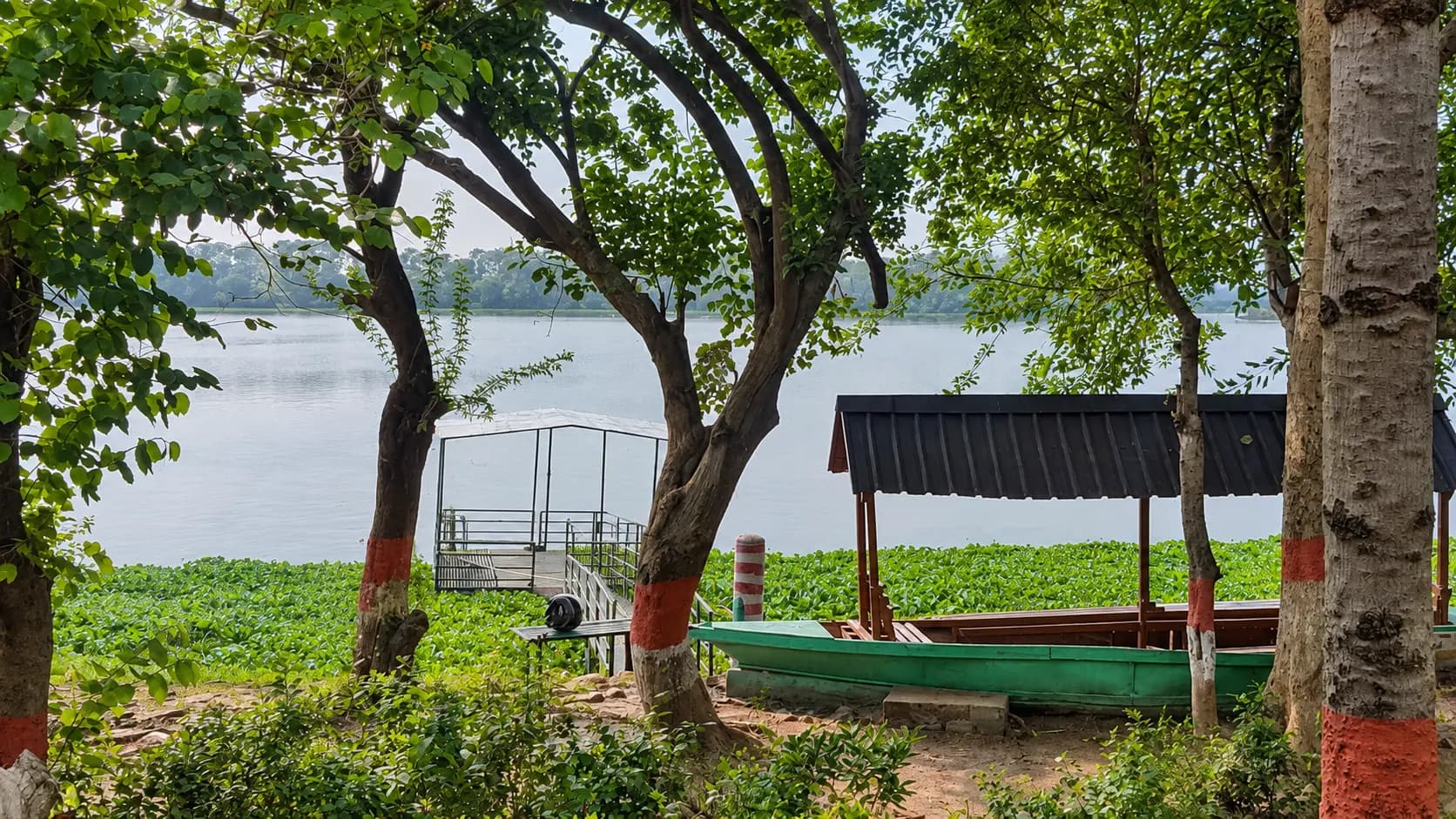
In the midst of the sprawling, high-density metropolis of the National Capital Region, where towering glass commercial towers, six-lane expressways, and dense residential sectors dominate the skyline, Okhla Bird Sanctuary exists as an astonishing ecological oasis. Straddling the exact boundary where the holy Yamuna River departs the National Capital Territory of Delhi and flows into the historic plains of Uttar Pradesh, this 4-square-kilometer (400-hectare) protected wetland reserve is one of the premier avian destinations in Northern India. Notified by the Government of Uttar Pradesh in 1990 under Section 18 of the Wildlife Protection Act, 1972, and recognized globally by BirdLife International as an Important Bird and Biodiversity Area (IBA Site Code IN-UP-09), the sanctuary protects an expansive freshwater lacustrine ecosystem created by the engineering of the historic Okhla Barrage and Weir.
When to visitRead details
Entry & permissionsRead details
Fees, visiting hours and entry rules may change. Confirm the latest details with the official operator or local authority before travelling.
Operating Hours and Schedule
Okhla Bird Sanctuary is managed by the Uttar Pradesh Forest Department and is open seven days a week:
- Winter Season (15 October to 15 March): 07:00 AM to 05:30 PM daily.
- Summer Season (16 March to 14 October): 06:30 AM to 05:30 PM daily.
- Ticketing Counter Cut-off: Ticket sales cease at 05:00 PM daily (30 minutes prior to reserve closure). Visitors must exit through the gates by 05:30 PM as forest guards conduct sweep patrols along the bundh trail.
Tariff Structure and Fees
Category / Service | Tariff Rate (INR) | Remarks / Applicable Terms |
|---|---|---|
Indian Citizen General Entry | ₹30 per adult | Valid for single day admission |
Indian Student Entry | ₹10 per student | Valid student institutional ID req |
Foreign National Entry | ₹350 per person | Valid passport / ID required |
Still Camera (Amateur / DSLR) | ₹500 per camera unit | Mirrorless/DSLR personal gear |
Non-Commercial Video Camera | ₹1,000 per unit | Handheld video recording gear |
Commercial Feature / Documentary | ₹10,000+ per shooting day | Prior written DFO/CWW permit req |
Bicycle Trail Entry | ₹50 per bicycle | Personal or rented bicycle |
Light Motor Vehicle Entry (Car) | ₹100 per vehicle | Limited designated access only |
Two-Wheeler Entry (Motorcycle) | ₹50 per vehicle | Limited designated access only |
Regulations, Photography and Equipment Guidelines
- Camera Permits: Personal smartphone photography and compact digital point-and-shoot cameras incur no additional charge. Visitors carrying interchangeable-lens DSLR or mirrorless cameras with telephoto zoom lenses must declare their equipment at the ticket counter and pay the ₹500 still camera fee to receive an equipment tag.
- Drone Ban: The operation of unmanned aerial vehicles (UAVs / drones) is strictly prohibited throughout the sanctuary under Indian wildlife and aviation defense security laws. Unauthorized drone flying will result in immediate confiscation of equipment and criminal prosecution under the Wildlife Protection Act, 1972.
- Audio Playback: Using mobile bird-calling apps, Bluetooth speakers, or mouth whistles to lure wildlife is strictly forbidden.
- Plastic and Waste Ban: Single-use plastic bags, disposable water bottles, and littering are strictly prohibited. Visitors must pack out all personal trash and utilize designated waste bins at the gatehouses.
- Commercial Filming: Professional film crews, commercial advertisement teams, and documentary filmmakers must obtain formal written permission and pay commercial tariffs authorized by the Divisional Forest Officer (DFO), Gautam Buddha Nagar, and the Chief Wildlife Warden, Uttar Pradesh.
Plan your visitRead details
Okhla Bird Sanctuary benefits from exceptional multi-modal transport connectivity, located directly on the border connecting South Delhi and Noida.
Transit and Metro Accessibility
Travelers can reach the sanctuary seamlessly via the Delhi Metro Magenta Line, alighting directly at the Okhla Bird Sanctuary Metro Station, whose exit gates sit within 250 meters walking distance of the sanctuary's Gate 1 entrance on Kalindi Kunj Road.
Explore the full guide - choose a topic below.
Why visit?
In the midst of the sprawling, high-density metropolis of the National Capital Region, where towering glass…Explore detailsClose details
In the midst of the sprawling, high-density metropolis of the National Capital Region, where towering glass commercial towers, six-lane expressways, and dense residential sectors dominate the skyline, Okhla Bird Sanctuary exists as an astonishing ecological oasis. Straddling the exact boundary where the holy Yamuna River departs the National Capital Territory of Delhi and flows into the historic plains of Uttar Pradesh, this 4-square-kilometer (400-hectare) protected wetland reserve is one of the premier avian destinations in Northern India. Notified by the Government of Uttar Pradesh in 1990 under Section 18 of the Wildlife Protection Act, 1972, and recognized globally by BirdLife International as an Important Bird and Biodiversity Area (IBA Site Code IN-UP-09), the sanctuary protects an expansive freshwater lacustrine ecosystem created by the engineering of the historic Okhla Barrage and Weir.
For naturalists, professional ornithologists, wildlife photographers, and urban travelers seeking respite from city clamor, Okhla Bird Sanctuary presents an unmissable spectacle. Positioned directly along the Central Asian Flyway (CAF) - one of the nine major global avian migration corridors - the sanctuary serves as an indispensable winter refuge, refuelling hub, and moulting staging ground for over 320 recorded species of birds. Every autumn, as freezing polar weather envelopes the Siberian tundra, the steppes of Kazakhstan, and the high-altitude glacial lakes of Ladakh and Tibet, tens of thousands of long-distance migratory wildfowl embark on trans-continental journeys south across the towering barrier of the Himalayas. They descend into the sheltered, food-rich shallows of Okhla in breathtaking numbers: vast rafts of northern shovelers, northern pintails, Eurasian wigeons, gadwalls, common teals, common pochards, red-crested pochards, and the iconic bar-headed geese - birds celebrated for their physiological capacity to sustain flight at altitudes exceeding 7,000 meters.
Beyond its migratory waterfowl, Okhla's mosaic of microhabitats - comprising open deepwater channels, vast reedbeds of Typha and Phragmites, exposed silt mudflats, and riparian babool-shisham woodland - harbors a thriving resident community. The vibrant plumage of the grey-headed swamphen, the delicate foraging strides of pheasant-tailed and bronze-winged jacanas on floating water lilies, the imposing silhouettes of black-necked and painted storks, and the stealthy sweeps of Western marsh harriers hunting over the reeds create a dynamic wildlife drama. Most remarkably, this wilderness is accessible directly via public rapid transit, with the Delhi Metro's Magenta Line depositing visitors a mere 250 meters from the sanctuary gatehouse. Visiting Okhla Bird Sanctuary offers a profound reminder of nature's resilience, demonstrating how a carefully preserved riparian wetland can sustain global biodiversity on the threshold of a modern megacity.
What to expect
Covering approximately 3.5 to 4.0 square kilometers (398 to 400 hectares) in Dadri tehsil of Gautam Buddha Nagar…Explore detailsClose details
Covering approximately 3.5 to 4.0 square kilometers (398 to 400 hectares) in Dadri tehsil of Gautam Buddha Nagar district, Okhla Bird Sanctuary is designed linearly along the eastern bank of the Yamuna River. Visitors enter through managed forest checkposts and proceed along a continuous 3.5-kilometer elevated embankment (bundh) road that provides unobstructed views across the water on one side and a tranquil riparian woodland buffer on the other.
       +-------------------------------------------------------------+
       |                  OKHLA BARRAGE / WEIR                       |
       |       (River Yamuna Inflow from National Capital Delhi)     |
       +-------------------------------------------------------------+
                                      |
                                      v
  +--------------------+   +---------------------+   +--------------------+
  |  Gate 1 Entrance   |   |   Deepwater Basin   |   |   Gate 2 Entrance  |
  | (DMRC Metro Stn,   |-->|   Central Reservoir |<--| (Noida Sector 95,  |
  |  Kalindi Kunj Rd)  |   | (Pochards & Geese)  |   |  Forest Range Off) |
  +--------------------+   +---------------------+   +--------------------+
                                      |
         +----------------------------+---------------------------+
         |                                                        |
         v                                                        v
  +-----------------------+                            +----------------------+
  | Western Littoral Zone |                            | Eastern Embankment   |
  |  Extensive Reed Beds  |                            | Graded Nature Trail  |
  | (Typha & Phragmites)  |                            | Elevated Machans 1-3 |
  | Warblers, Crake, Rail |                            | Woodland Passerines  |
  +-----------------------+                            +----------------------+
         |                                                        |
         +----------------------------+---------------------------+
                                      |
                                      v
       +-------------------------------------------------------------+
       |               DOWNSTREAM SILT SHALLOWS & SANDBARS           |
       |    (Sandpipers, Plovers, Black-Necked Storks, River Terns)   |
       +-------------------------------------------------------------+
The Ecological Zones and Landscape Features
The sanctuary's biological richness stems from its varied ecological zones, each catering to specialized avian guilds:
- The Open Deepwater Reservoir: Upstream of the Okhla Barrage gates, the river broadens into a tranquil lacustrine pool ranging in depth from 1.5 to 4.0 meters. This open waterbody is the primary habitat for diving waterfowl, including common pochards (Aythya ferina), red-crested pochards (Netta rufina), tufted ducks (Aythya fuligula), and little grebes (Tachybaptus ruficollis), which surface frequently to shake water droplets from their plumage.
- The Western Emergent Reed Marshlands: Across the western bank, stretching toward Okhla village and Sarita Vihar, lies an expansive jungle of emergent reed marshland dominated by elephant grass (Typha elephantina), common reed (Phragmites karka), and giant cane (Arundo donax). These dense, waving thickets act as a biological sound buffer against urban noise while providing nesting, sheltering, and foraging sanctums for secretive species such as Baillon's crakes, white-breasted waterhens, water rails, and clamorous reed warblers.
- The Silt Shallows, Mudflats, and Riverine Sandbars: Depending on river discharge and the opening of the barrage sluices, extensive alluvial silt beds and exposed mudflats emerge in the central and southern reaches. Packed with benthic invertebrates, aquatic larvae, worms, and small mollusks, these mud shelves attract dense congregations of shorebirds, including black-winged stilts, wood sandpipers, common greenshanks, little ringed plovers, and elegant black-headed ibises.
- The Riparian Woodland and Embankment Canopy: The 3.5-kilometer eastern bundh trail is flanked by mature terrestrial forest featuring babool (Acacia nilotica), vilayati kikar (Prosopis juliflora), shisham (Dalbergia sissoo), peepal (Ficus religiosa), cluster fig (Ficus racemosa), and jamun (Syzygium cumini). This green canopy is alive with arboreal passerines, woodpeckers, barbets, hornbills, and predatory owls roosting in tree hollows.
The Avian Community: Migratory and Resident Specialists
With more than 320 documented bird species, Okhla offers an exceptional biodiversity inventory:
- Central Asian Migratory Waterfowl (October to March): The northern shoveler (Spatula clypeata) is the most visible dabbler, using its paddle-shaped bill to filter food across shallow surface water. Northern pintails (Anas acuta), with their needle-sharp tail feathers and elegant chocolate-brown heads, forage alongside gadwalls (Mareca strepera) and common teals (Anas crecca). In late autumn, migratory bar-headed geese (Anser indicus) and greylag geese (Anser anser) arrive to graze upon riverine mudflats and crop fields.
- Resident Wetland Birds: The grey-headed swamphen (Porphyrio poliocephalus) is ubiquitous, displaying brilliant violet-turquoise plumage and massive crimson frontal shields as it stalks through reed stems. Pheasant-tailed jacanas (Hydrophasianus chirurgus) and bronze-winged jacanas (Metopidius indicus) scamper effortlessly across floating water hyacinth mats (Eichhornia crassipes). Painted storks (Mycteria leucocephala) sweep the shallows with their sensitive curved bills, while solitary, near-threatened black-necked storks (Ephippiorhynchus asiaticus) stand like sentinels on distant sandbanks.
- Raptors and Aerial Hunters: The Western marsh harrier (Circus aeruginosus) is the definitive apex hunter of the marsh, coursing low above the reed canopy with its wings held in a shallow 'V' to ambush resting ducks. Greater spotted eagles (Clanga clanga) and steppe eagles (Aquila nipalensis) perch atop transmission towers, while river terns (Sterna aurantia) and pied kingfishers (Ceryle rudis) hover over open water before plunge-diving for fish.
- Woodland and Scrub Birds: The trail trees echo with the metallic calls of coppersmith barbets (Psilopogon haemacephalus), the ringing whistles of white-throated kingfishers (Halcyon smyrnensis), and the buoyant flights of Indian grey hornbills (Ocyceros birostris). In the winter underbrush, jewel-like bluethroats (Luscinia svecica), Siberian stonechats (Saxicola maurus), and red-breasted flycatchers (Ficedula parva) flit through leaf litter.
+---------------------------------------------------------------------------------------------------+
|                            REPRESENTATIVE AVIAN TAXA AT OKHLA BIRD SANCTUARY                      |
+------------------------------+------------------------------+-------------------+-----------------+
| Common Name                  | Scientific Name              | Resident / Migrant| Habitat Guild   |
+------------------------------+------------------------------+-------------------+-----------------+
| Bar-headed Goose             | Anser indicus                | Winter Migrant    | Open Reservoir  |
| Northern Pintail             | Anas acuta                   | Winter Migrant    | Open Lake/Mud   |
| Northern Shoveler            | Spatula clypeata             | Winter Migrant    | Shallows/Reeds  |
| Common Pochard               | Aythya ferina                | Winter Migrant    | Deep Basin      |
| Red-crested Pochard          | Netta rufina                 | Winter Migrant    | Deep Basin      |
| Indian Spot-billed Duck      | Anas poecilorhyncha          | Year-round Breed  | Reed Margins    |
| Grey-headed Swamphen         | Porphyrio poliocephalus      | Year-round Breed  | Dense Typha Bed |
| Pheasant-tailed Jacana       | Hydrophasianus chirurgus     | Year-round Breed  | Floating Flora  |
| Painted Stork                | Mycteria leucocephala        | Resident/Nomadic  | Silt Shallows   |
| Black-necked Stork           | Ephippiorhynchus asiaticus   | Rare Resident     | Downstream Sand |
| Oriental Darter              | Anhinga melanogaster         | Breeding Resident | Open Reservoir  |
| Western Marsh Harrier        | Circus aeruginosus           | Winter Migrant    | Reedbeds Aerial |
| Greater Spotted Eagle        | Clanga clanga                | Winter Migrant    | Canopy/Islands  |
| Pied Kingfisher              | Ceryle rudis                 | Year-round Breed  | Open Water Edge |
| White-throated Kingfisher    | Halcyon smyrnensis           | Year-round Breed  | Scrub/Bundh     |
| Common Kingfisher            | Alcedo atthis                | Year-round Breed  | Canals/Shallows |
| Bluethroat                   | Luscinia svecica             | Winter Migrant    | Moist Reed Base |
| Clamorous Reed Warbler       | Acrocephalus stentoreus      | Breeding Resident | Dense Typha     |
+------------------------------+------------------------------+-------------------+-----------------+
Observation Towers (Machans) and Walking Infrastructure
To enhance wildlife viewing while preserving wetland integrity, the Uttar Pradesh Forest Department has erected three elevated observation watchtowers (machans) along the bundh trail:
- Machan 1 (Northern Watchtower): Situated approximately 800 meters south of Gate 1, this multi-tier wooden watchtower provides an elevated vantage over the northern barrage pool and the main inflow canal. It is the premier platform for counting diving pochards and observing cormorant roosts on submerged timbers.
- Machan 2 (Central Watchtower): Located near the 1.8-kilometer midpoint of the trail, Machan 2 directly faces the vast western Typha reedbeds and an expansive mudflat delta. This is widely considered the finest photography station in the park, offering front-row views of marsh harriers hunting over the reeds and mixed flocks of painted storks, spoonbills, and shovelers feeding along the silt shelves.
- Machan 3 (Southern Watchtower): Located approximately 2.8 kilometers south of Gate 1, near the approach to Gate 2, Machan 3 overlooks the narrower downstream reaches of the Yamuna River, where water recedes into shallow sandbars favored by grazing geese, sandpipers, and river terns.
Mammalian and Herpetological Life
While avifauna is Okhla's primary draw, visitors will encounter notable mammalian and reptile species. Herds of nilgai (blue bull) - Asia's largest antelope - roam freely through the marshy islands and woodland clearings, frequently wading belly-deep through the water to graze on aquatic succulents. Golden jackals (Canis aureus) patrol the reed margins at dawn and dusk, hunting rodents and scavenging fish carcasses. Indian grey mongooses (Urva edwardsii) dart across the bundh trail, while troops of rhesus macaques forage in the woodland canopy. On sunny winter afternoons, Indian flapshell turtles (Lissemys punctata) and softshell turtles (Nilssonia gangetica) haul out onto exposed silt hummocks to bask, alongside harmless checkered keelback water snakes (Fowlea piscator) navigating the quiet reed channels.
Best time to visit
November to February (Peak Winter Season - Highly Recommended): The absolute finest time to visit Okhla Bird…Explore detailsClose details
Seasonal Breakdown
- November to February (Peak Winter Season - Highly Recommended): The absolute finest time to visit Okhla Bird Sanctuary. Temperatures range from crisp mornings of 8°C to pleasant afternoons of 22°C. The sanctuary reaches maximum avian abundance, with tens of thousands of migratory waterfowl and waders populating every corner of the wetland. While early morning fog can be dense in late December and January, arriving around 09:30 AM allows the sun to burn off low-lying haze, illuminating the birds in clear, golden winter light.
- October and March (Transitional Shoulder Months): October marks the arrival of the earliest migratory scouts - shovelers, pintails, and teals - under warm, sunny skies (20°C to 32°C). March brings lengthening days, warming temperatures (18°C to 30°C), and the departure of migratory flocks. During March, waterfowl display their vibrant breeding plumages and perform courtship rituals across the open water before taking flight toward their northern nesting grounds.
- April to June (Summer Season): Scorching summer heat grips the NCR, with daytime temperatures routinely exceeding 40°C to 44°C. Midday visits are strongly discouraged due to extreme heat and glare. However, early morning visits between 06:00 AM and 08:30 AM can be rewarding for seeing resident breeders - including pheasant-tailed jacanas with full breeding plumes, nesting spot-billed ducks, and river terns patrolling low water channels.
- July to September (Monsoon Season): The southwest monsoon rejuvenates the Yamuna basin, flushing the sanctuary with rainwater and transforming the reedbeds into a verdant emerald wilderness. While humidity is high and sudden downpours are frequent, the monsoon is the primary breeding season for resident marsh birds, with heronries active and juvenile birds learning to forage.
+---------------------------------------------------------------------------------------------------+
|                           SEASONAL BIRDING PHENOLOGY AT OKHLA BIRD SANCTUARY                     |
+-------------------+--------------------+----------------------------------+-----------------------+
| Season            | Months             | Weather Conditions               | Avian Highlights      |
+-------------------+--------------------+----------------------------------+-----------------------+
| Autumn Arrival    | October - November | Mild, pleasant (18°C - 30°C);    | Initial arrival of    |
|                   |                    | clear skies, morning mist        | shovelers, pintails,  |
|                   |                    |                                  | teals, and harriers   |
+-------------------+--------------------+----------------------------------+-----------------------+
| Peak Winter       | December - January | Chilly, dense fog (5°C - 18°C);  | Maximum species count |
|                   |                    | calm surface waters              | and density; pochards,|
|                   |                    |                                  | geese, storks, gulls  |
+-------------------+--------------------+----------------------------------+-----------------------+
| Spring Departure  | February - March   | Warm, sunny (15°C - 28°C);       | Waterfowl in breeding |
|                   |                    | active pre-migratory feeding     | plumage; northward    |
|                   |                    |                                  | passage migrants      |
+-------------------+--------------------+----------------------------------+-----------------------+
| Summer Breeding   | April - June       | Hot, dry, scorching (30°C - 44°C)| Resident breeding;    |
|                   |                    | low water levels, silt banks     | jacanas, swamphens,   |
|                   |                    |                                  | terns, spot-bills     |
+-------------------+--------------------+----------------------------------+-----------------------+
| Monsoon Rejuvenate| July - September   | Humid, rainstorms (26°C - 35°C); | High river discharge, |
|                   |                    | flushed wetlands, lush flora     | heronries active,     |
|                   |                    |                                  | breeding waterbirds   |
+-------------------+--------------------+----------------------------------+-----------------------+
How to reach
Okhla Bird Sanctuary benefits from exceptional multi-modal transport connectivity, located directly on the border…Explore detailsClose details
Okhla Bird Sanctuary benefits from exceptional multi-modal transport connectivity, located directly on the border connecting South Delhi and Noida.
       +-------------------------------------------------------------+
       |             REGIONAL ACCESS & TRANSPORT MATRIX              |
       +-------------------------------------------------------------+
                                      |
         +----------------------------+---------------------------+
         |                                                        |
         v                                                        v
  [METRO TRANSIT]                                          [ROADWAY ACCESS]
  - DMRC Magenta Line:                                     - Kalindi Kunj Road:
    Okhla Bird Sanctuary Station                             Connects Sarita Vihar/Mathura
    (250m to Gate 1 Entrance)                                Road (South Delhi) to Noida.
  - Interchange Hub:                                       - Noida-Greater Noida Expressway:
    Botanical Garden Station (2.5 km)                        Direct connection to Central
    (Blue Line <-> Magenta Line)                             Noida, Expressway Sectors, Pari Chowk.
                                      |
         +----------------------------+---------------------------+
         |                                                        |
         v                                                        v
  [RAILWAY TERMINALS]                                      [AIRPORT CONNECTIONS]
  - Hazrat Nizamuddin (NZM): 9 km                          - Indira Gandhi Int'l Airport (DEL):
    (20 min via Ring Rd / Sarai Kale Khan)                   25 km west.
  - New Delhi Railway Station (NDLS): 18 km                - Direct connection via Magenta Line
    (40 min via Yellow Line -> Blue/Magenta)                 Metro from Terminal 1-IGI Airport.
By Delhi Metro (Fastest and Most Convenient)
The Delhi Metro network provides a direct connection to the sanctuary:
- Okhla Bird Sanctuary Metro Station (Magenta Line / Line 8): The station is situated directly adjacent to Gate 1. Upon exiting the concourse through Gate 1, visitors need only walk approximately 250 meters eastward along the paved roadside pedestrian path to reach the ticket booth. The Magenta Line connects directly to Janakpuri West, Hauz Khas (Yellow Line interchange), Kalkaji Mandir (Violet Line interchange), and Terminal 1 of the Indira Gandhi International Airport.
- Botanical Garden Metro Station (Interchange Hub): Located approximately 2.5 kilometers northeast in Sector 37 of Noida, Botanical Garden serves as a major interchange between the Blue Line (Dwarka to Noida Electronic City/Vaishali) and the Magenta Line. Commuters traveling from Connaught Place (Rajiv Chowk) or East Delhi can take the Blue Line to Botanical Garden, transfer to the Magenta Line for just one stop, or take a quick 8-minute e-rickshaw directly to Gate 1.
By Road and Personal Vehicle
- From South Delhi: Travel via Mathura Road through Ashram Chowk, Sarita Vihar, or Jasola, continuing eastward onto Kalindi Kunj Road. Cross the Okhla Barrage bridge over the Yamuna River; the entrance to Gate 1 is located immediately on your right upon crossing into Uttar Pradesh. Driving time from Nehru Place, Greater Kailash, or Saket is roughly 20 to 30 minutes in normal traffic.
- From Central Delhi: Follow the Ring Road (Mahatma Gandhi Marg) south past Sarai Kale Khan, continue through Ashram toward Kalindi Kunj. Driving time from India Gate or Connaught Place is approximately 30 to 40 minutes.
- From Noida and Greater Noida: Vehicles can take the Noida-Greater Noida Expressway, turning off toward Sector 94 and Sector 95 to access Gate 2 directly, or continue along the perimeter road toward Kalindi Kunj to enter via Gate 1.
By Rail and Air
- Hazrat Nizamuddin Railway Station (NZM): The closest major intercity railway terminal, situated roughly 9 kilometers northwest. A taxi, auto-rickshaw, or ride-share vehicle takes approximately 20 to 25 minutes via Ring Road and Kalindi Kunj.
- New Delhi Railway Station (NDLS): Positioned 18 kilometers northwest. Travelers can take the Yellow Line Metro from New Delhi Station to Hauz Khas, change to the Magenta Line, and arrive at Okhla Bird Sanctuary station in approximately 40 minutes.
- Indira Gandhi International Airport (DEL): Located 25 kilometers west. Passengers arriving at Terminal 1 can board the Magenta Line Metro directly at the airport station and ride straight to Okhla Bird Sanctuary without a single transfer, a journey of approximately 45 minutes.
Entry, timings and permissions
Fees, visiting hours and entry rules may change.Explore detailsClose details
Fees, visiting hours and entry rules may change. Confirm the latest details with the official operator or local authority before travelling.
Operating Hours and Schedule
Okhla Bird Sanctuary is managed by the Uttar Pradesh Forest Department and is open seven days a week:
- Winter Season (15 October to 15 March): 07:00 AM to 05:30 PM daily.
- Summer Season (16 March to 14 October): 06:30 AM to 05:30 PM daily.
- Ticketing Counter Cut-off: Ticket sales cease at 05:00 PM daily (30 minutes prior to reserve closure). Visitors must exit through the gates by 05:30 PM as forest guards conduct sweep patrols along the bundh trail.
Tariff Structure and Fees
Category / Service | Tariff Rate (INR) | Remarks / Applicable Terms |
|---|---|---|
Indian Citizen General Entry | ₹30 per adult | Valid for single day admission |
Indian Student Entry | ₹10 per student | Valid student institutional ID req |
Foreign National Entry | ₹350 per person | Valid passport / ID required |
Still Camera (Amateur / DSLR) | ₹500 per camera unit | Mirrorless/DSLR personal gear |
Non-Commercial Video Camera | ₹1,000 per unit | Handheld video recording gear |
Commercial Feature / Documentary | ₹10,000+ per shooting day | Prior written DFO/CWW permit req |
Bicycle Trail Entry | ₹50 per bicycle | Personal or rented bicycle |
Light Motor Vehicle Entry (Car) | ₹100 per vehicle | Limited designated access only |
Two-Wheeler Entry (Motorcycle) | ₹50 per vehicle | Limited designated access only |
Regulations, Photography and Equipment Guidelines
- Camera Permits: Personal smartphone photography and compact digital point-and-shoot cameras incur no additional charge. Visitors carrying interchangeable-lens DSLR or mirrorless cameras with telephoto zoom lenses must declare their equipment at the ticket counter and pay the ₹500 still camera fee to receive an equipment tag.
- Drone Ban: The operation of unmanned aerial vehicles (UAVs / drones) is strictly prohibited throughout the sanctuary under Indian wildlife and aviation defense security laws. Unauthorized drone flying will result in immediate confiscation of equipment and criminal prosecution under the Wildlife Protection Act, 1972.
- Audio Playback: Using mobile bird-calling apps, Bluetooth speakers, or mouth whistles to lure wildlife is strictly forbidden.
- Plastic and Waste Ban: Single-use plastic bags, disposable water bottles, and littering are strictly prohibited. Visitors must pack out all personal trash and utilize designated waste bins at the gatehouses.
- Commercial Filming: Professional film crews, commercial advertisement teams, and documentary filmmakers must obtain formal written permission and pay commercial tariffs authorized by the Divisional Forest Officer (DFO), Gautam Buddha Nagar, and the Chief Wildlife Warden, Uttar Pradesh.
Nearby places to consider
Located approximately 10 kilometers northwest beside Humayun's Tomb in Nizamuddin, Sunder Nursery is Delhi’s…Explore detailsClose details
Sunder Nursery (Heritage Eco-Park)
Located approximately 10 kilometers northwest beside Humayun's Tomb in Nizamuddin, Sunder Nursery is Delhi’s celebrated 90-acre heritage ecological park. Designed by the Aga Khan Trust for Culture, it features 15 conserved 16th-century Mughal monuments, sweeping water canals, over 300 tree species, a magnificent bonsai enclosure, and vibrant birdlife, serving as a tranquil cultural and horticultural counterpart to Okhla.
Waste to Wonder Theme Park
Situated roughly 8 kilometers northwest near Sarai Kale Khan, Waste to Wonder is an eco-tourism park featuring monumental scale-model replicas of the Seven Wonders of the World crafted entirely from over 150 tonnes of recycled scrap metal and automotive parts. Powered completely by on-site solar panels and wind turbines, it is an inspiring evening destination for families and photography enthusiasts.
Lotus Temple (Bahá'í House of Worship)
Positioned roughly 7 kilometers west in Kalkaji, the Lotus Temple is an architectural masterpiece shaped like an unfurling white marble lotus blossom with 27 free-standing petals. Open to people of all faiths, its serene prayer hall and 26 acres of manicured ponds and gardens provide a contemplative cultural retreat easily accessible via the Magenta Line Metro from Okhla Bird Sanctuary.
ISKCON Temple Delhi (Glory of India Vedic Cultural Centre)
Located just 7.5 kilometers west atop Hare Krishna Hill in East of Kailash, this magnificent temple complex is renowned for its soaring red-stone spires, intricate frescoes depicting the Bhagavad Gita, multi-media animatronic museum exhibits, and Govinda's vegetarian restaurant, offering a rich spiritual and culinary stop.
In pictures
The practical bits
Before you go.
Entry Timings and Seasonal Hours
Check the current visiting hours and permitted access with the site operator before departure; ceremonies…Explore detailsClose details
Check the current visiting hours and permitted access with the site operator before departure; ceremonies, closures and visitor sessions can affect access.
Ticketing and Optical Equipment Fees
Confirm the current charge and what it includes with the operator or service provider.Explore detailsClose details
Confirm the current charge and what it includes with the operator or service provider. Visitor admission, vehicles, parking, activities and accommodation can have separate charges.
Optical Gear and Field Apparel
Visitors must carry binoculars with at least 8x or 10x magnification, an angled spotting scope for distant…Explore detailsClose details
Visitors must carry binoculars with at least 8x or 10x magnification, an angled spotting scope for distant open-water rafts of wildfowl, and wear muted earth-toned field apparel such as olive green, khaki, or deep brown to avoid spooking timid marshland waders.
Transit and Metro Accessibility
Travelers can reach the sanctuary seamlessly via the Delhi Metro Magenta Line, alighting directly at the Okhla…Explore detailsClose details
Travelers can reach the sanctuary seamlessly via the Delhi Metro Magenta Line, alighting directly at the Okhla Bird Sanctuary Metro Station, whose exit gates sit within 250 meters walking distance of the sanctuary's Gate 1 entrance on Kalindi Kunj Road.
A few things you might wonder
Common questions about visiting Okhla Bird Sanctuary. Fees, visiting hours and ceremonies are researched details that may change; confirm current arrangements with the operator before travelling.
What is the best time of year and day to observe migratory birds at Okhla Bird Sanctuary?
How do I reach Okhla Bird Sanctuary using public transport from Central Delhi?
Are private vehicles permitted inside Okhla Bird Sanctuary, or is walking mandatory?
What entry fees apply to photography equipment and foreign visitors at the sanctuary gates?
Is it safe to visit Okhla Bird Sanctuary alone, and what basic amenities are available inside?
Are drones, angling, or personal pet animals permitted inside the sanctuary boundary?
More Hubs in Delhi Ncr
Continue exploring other travel hubs in this state
Planning a trip to Noida?